Making A Long-Expected Party

Here’s a look at how we made yesterday’s A Long-Expected Party.

The menu

  • Potato and cream soup
  • Roast pork with apples, root vegetables, and ginger gravy
  • Roasted asparagus
  • Stuffed pears
  • Red wine

erikchef1As Elves love song and Dwarves love the gems of the earth, so Hobbits love their food. We know more about Hobbit food than about the cuisine of any other culture on Middle Earth, so it is a surprise to find that in the description of the festivities for Bilbo Baggins’s 111th birthday, we learn nothing about what was actually on the table. (Though clearly there was plenty of it, whatever it was.) That means that for our very first Middle Earth dinner, we have to use a little imagination. Fortunately, there’s a lot to go on.

Since this is a party of special magnificence (with supplies brought in all the way from Dale), I’ve tried to make a combination of typical Hobbit fare with a few special or exotic twists.

Continue reading

Dining in Middle Earth: A Long-Expected Party

“When every guest had been welcomed and was finally inside the gate, there were songs, dances, music, games, and, of course, food and drink. There were three official meals: lunch, tea, and dinner (or supper). But lunch and tea were marked chiefly by the fact that at those times all the guests were sitting down and eating together. At other times there were merely lots of people eating and drinking – continuously from elevenses until six-thirty, when the fireworks started.”

LotR Dinner1

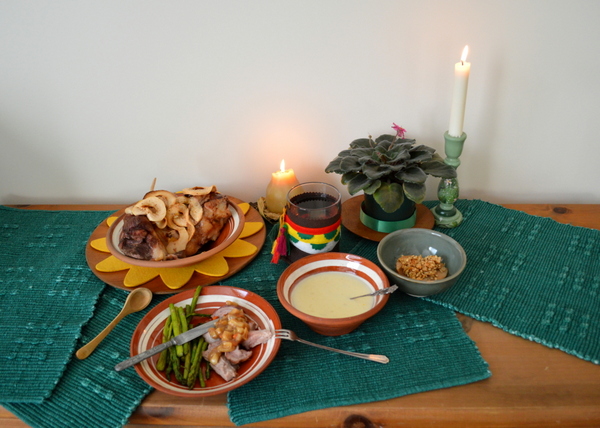
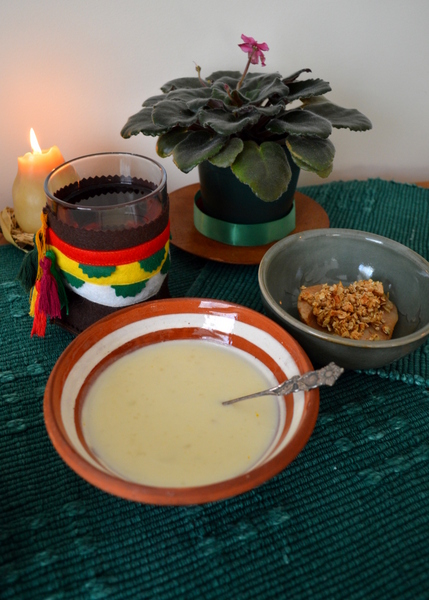
Our version of Bilbo Baggins’s party of special magnificence begins with an appetizer of potato and cream soup, followed by roast pork and root vegetables served with ginger gravy and asparagus on the side. It ends in dessert, with baked stuffed pears. (Of course, in proper Hobbit fashion, you may start and end with whatever you like.) A glass of red wine washes it all down.

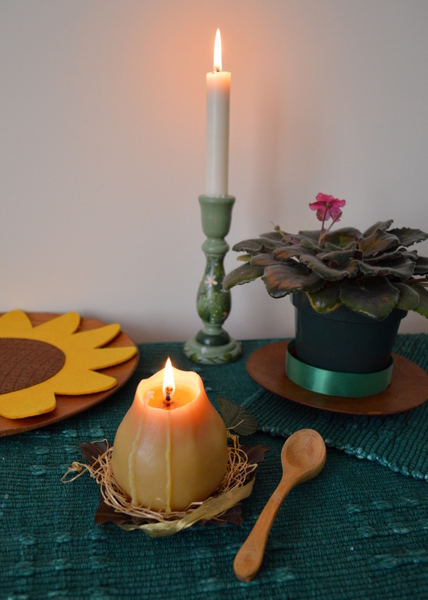
LotR Dinner1 Soup DessertOur imagined table comes with a variety of kitchenware styles. Glass and green glazed crockery complement basic redware pottery. There are wood and metal utensils, including a fork and silver soup spoon. The colors green and yellow were pulled from the general description of Hobbits’ preferences. A potted plant and candles finish off the table setting.

LotR Dinner1 Decor2Check out what’s it about in the introduction, or read the how-to!

Images by Eppu Jensen

Geeks eat, too! Second Breakfast is an occasional feature in which we talk about food with geeky connections and maybe make some of our own. Yum!

New Beowulf Adaptation: Return to the Shieldlands

ITV Studios is producing a new Beowulf adaptation. Named Beowulf: Return to the Shieldlands, the mini-series puts a modern spin on one of the oldest poems in Old English. According to Esquire Network:

“Based on the complex protagonist of a classic poem written between the eighth and tenth century, Beowulf takes place in a mythological place, The Shieldlands, and challenges the notions of good and evil, heroes and villains, and the rule of law against one’s moral code. The drama stars Kieran Bew (DA VINCI’S DEMONS), in the lead role Beowulf; multi-award- winning actor William Hurt (DAMAGES); acclaimed actress Joanne Whalley (WOLF HALL); Ed Speleers (DOWNTON ABBEY) and David Ajala (BLACK BOX).”

IMDB Beowulf Return to the Shieldlands
Beowulf: Return to the Shieldlands, ITV via IMDB

Beowulf: RttS started airing in U.K early January 2016, and Esquire Network is bringing it to U.S. January 23. Location work for the production was shot in the north east of England, in county Durham and Northumberland; 13 episodes have been produced so far. The show has a very perfunctory Instagram account and a more active Facebook page. There’s also a behind the scenes piece with live action clips:

Beowulf Behind The Scenes The World Revealed with Kieran Bew and Ed Speleers via Esquire Network

Beowulf: RttS definitely holds some promise. Apart from being inspired by Actual History(TM) and Anglo-Saxons / Old English to boot, it sounds like there’s some gender-bending (International Business Times reports a “new female thane”); in addition, photos include not just white men among the cast (see MedievalPOC and Farawaysite.com).

IMDB Beowulf Return to the Shieldlands2
Beowulf: Return to the Shieldlands, ITV via IMDB

While I’m excited about the recent resurgence of genre films and tv productions in general, I’m discouraged by the apparent lack of quality control that comes with trying to ride the trend to make a quick buck. (Vikings, The Mortal Instruments: City of Bones, or 2015 Fantastic Four, anyone?)

Sadly, it sounds like Beowulf: RttS might be one of them: according to U.K news site Metro, viewers criticize the series for its “unconvincing CGI, stilted dialogue and unrealistic action sequences” and as “a blatant rip-off ” of Game of Thrones. I can add to the list some decidedly silly costuming and a peculiar combination of plausible and fanciful in the sets and props. I’m torn whether to give it a shot or not – on one hand, it’s based on Beowulf, for crying out loud; on the other, WTF is going on with the design!?

In the Seen on Screen occasional feature, we discuss movies and television shows of interest.

Dining in Middle Earth

“As for the Hobbits of the Shire, with whom these tales are concerned, in the days of their peace and prosperity they were a merry folk… with mouths apt to laughter, and to eating and drinking. And laugh they did, and eat, and drink, often and heartily, being fond of simple jests at all times, and of six meals a day (when they could get them).”

So Tolkien introduces us to his Hobbits, lovers of good food and good company. There is plenty of eating and drinking in The Lord of the Rings, from humble Hobbit fare to Elven delicacies, from the foraged meals of rangers in the wild to the feasts of great kings.

In 2016, we’re taking up a project to eat our way through The Lord of the Rings. Every month, we’ll prepare and present a dinner inspired by foods from the novel, working our way through the story from Bilbo’s 111th birthday party to Frodo’s return to the Shire. Along the way, there are some meals that Tolkien describes in such detail that we can read the menu straight from the page. In other places, he offers only tantalizing hints that require us to engage in gastronomical-literary archaeology to fill a table.

Napkin Knife Spoon

We’re doing our best to stay true to the novel in the project, so where Tolkien gives us a clear idea of what the characters eat, we stick to it. When we have to figure something out on our own, we use clues from The Lord of the Rings and The Hobbit and ideas from historical cookery to guide us.

We’ll share the results of our work with you around the middle of the month. A post introducing the month’s meal and showing the results of our labors will come out on a Wednesday. The following day, we’ll offer a behind-the-scenes view of how we researched the food, decided on a menu, prepared the dishes, and designed the setting, complete with recipes you can try for yourselves. We’ll collect links to all the entries on this post, so you can always come back here to get caught up, or check the dining in Middle Earth tag to find them all.

A note on the behind-the-scenes posts: we’ll be referencing passages from the book and since there are many different editions of the text with different paginations, we’re using the book and chapter divisions given in Tolkien’s table of contents. For example, the first half of The Fellowship of the Ring is identified as Book 1. In that book, chapter 4 is “A Short Cut to Mushrooms,” so we reference that chapter as (1.4); we reference Hobbit chapters with (H).

January: A Long-Expected Party / Making A Long-Expected Party

February: A Farewell Feast in Bag End / Making A Farewell Feast in Bag End

March: Supper at the Prancing Pony / Making Supper at the Prancing Pony

April: Food in the Wild / Making Food in the Wild

May: In the House of Elrond / Making In the House of Elrond

June: Dinner with Durin’s Folk / Making Dinner with Durin’s Folk

July: Of Herbs and Stewed Rabbit / Making Herbs and Stewed Rabbit

August: Rangers’ Rations / Making Rangers’ Rations

September: The Courtesy of the Golden Hall / Making The Courtesy of the Golden Hall

October: Flotsam and Jetsam / Making Flotsam and Jetsam

November: The Return of the King / Making the Return of the King

December: A Proper 1420 / Making a Proper 1420

Image by Eppu Jensen

Geeks eat, too! Second Breakfast is an occasional feature in which we talk about food with geeky connections and maybe make some of our own. Yum!

Ostrich for Breakfast, Ostrich for Lunch, Ostrich for Dinner

Or: Some History behind Ostrich Riding, Part 6 of 7

Background: I ran into two historical images from California with ostriches used as transportation. That got me wondering about the history of ostrich riding. And that lead me down quite a rabbit hole.

I’ve divided my findings into separate posts (find them with the ostrich riding tag). Warning: serious early history and language nerdery ahead in Serious Academic Voice.

TL;DR – Tracing ostrich riding to a 3rd century BCE tomb find (a statue of Arsinoe II) from Egypt doesn’t hold up. The use of various ostrich products in human material culture dates back thousands of years. A few ancient depictions involve humans handling ostriches; however, extant sources don’t tell us whether ostriches were merely hunted or whether they were also tamed in the ancient world. The most promising source seems to be a description of a magnificent parade put together by Arsinoe II’s husband-brother Ptolemy II. This Grand Procession included eight chariots drawn by pairs of ostriches, and the ostriches may have been ridden by boys in costumes.

I had hoped to find a nice, neat selection of ancient texts putting the Greek word for ‘ostrich’ in context, but even a cursory look reveals that the history of the word strouthos is complex. At best, we can say that there are no immediate red flags either in the original Greek or modern English translations for Arsinoe II’s statue or Ptolemy II’s Grand Procession. The poem Berenice’s Lock was said to contain further evidence of ostriches as mounts in Ptolemaic Egypt after Arsinoe II’s death. Instead, what we seem to have is a case of poetic ambiguity translated with poetic license and taken uncritically as evidence.

Some centuries after Arsinoe II and Ptolemy II, ostrich riding may appear in the Roman Empire. Claims in some secondary sources turn out unverifiable, however. Researching primary sources helps but a little: on one hand, many of these texts either have problematic histories or their authorship or accuracy may be questionable; on the other, ostriches tend to appear in context of fighting in gladiatorial games, not being ridden or raced. Surviving visual art only confirms the appearance of ostriches in hunting and arena scenes the Roman territories, not riding or chariot-pulling. A description in the life of Emperor Firmus comes closest, but Historia Augusta, the source of his life, is considered unreliable.

Below is the long story.

Continue reading

November 2015: Nordic Book Club in NYC Reads Jääskeläinen

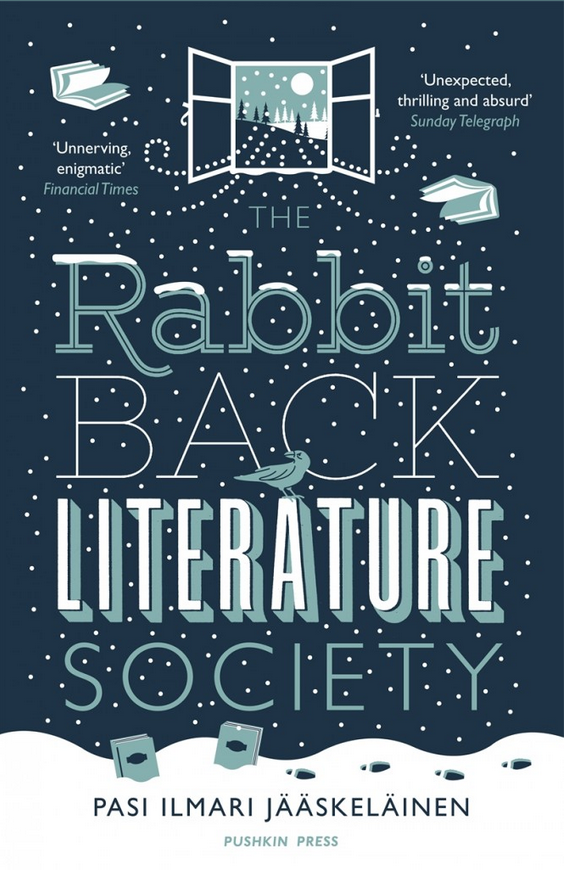
Scandinavia House in New York City runs a new Nordic book club, and this November’s book is The Rabbit Back Literature Society by Finnish author Pasi Ilmari Jääskeläinen.

Jaaskelainen Rabbit Back Lit Soc

Novelist and short-story writer Jääskeläinen writes realistic fantasy (to translate his term reaalifantasia). The Rabbit Back Literature Society, published in 2014 in UK and 2015 in US, is Jääskeläinen’s first novel and the first of his works to be translated into English (from the original Lumikko ja yhdeksän muuta, 2006).

Here’s the publisher’s description:

“Only very special people are chosen by children’s author Laura White to join ‘The Society’, an elite group of writers in the small town of Rabbit Back.

“Now a tenth member has been selected: Ella, literature teacher and possessor of beautifully curving lips.

“But soon Ella discovers that the Society is not what it seems. What is its mysterious ritual, ‘The Game’? What explains the strange disappearance that occurs at Laura’s winter party, in a whirlwind of snow? Why are the words inside books starting to rearrange themselves? Was there once another tenth member, before her?

“Slowly, disturbing secrets that had been buried come to light…

“In this chilling, darkly funny novel, the uncanny brushes up against the everyday in the most beguiling and unexpected of ways.”

The only other piece of Jääskeläinen in English at this writing is Where the Trains Turn (orig. Missä junat kääntyvät, 2000), published in November 2014 by Tor.com.

Apart from Finnish SFF, the book club program for this fall contains Danish contemporary fiction and two Swedish crime thrillers. From scandinaviahouse.org:

“Read and discuss Scandinavian literature in translation as part of Nordic Book Club – ASF’s newest literary series. This season’s selections include Swedish crime thrillers, Danish contemporary fiction, and Finnish fantasy. Discussions typically take place the last Tuesday of the month in the Halldór Laxness Library at Scandinavia House and online at scandinaviahouse.org.”

Jääskeläinen’s book will be discussed on November 24, 2015, at 6 pm at Scandinavia House, 58 Park Ave (Manhattan). The entry is free.

Image: Pushkin Press.

Post edited for style.

Hey, look! We found a thing on the internet! We thought it was cool, and wanted to share it with you.

A Lock of Hair Swept off to the Heavens… on an Ostrich?

Or: Some History behind Ostrich Riding, Part 5 of 7

Background: I ran into two historical images from California with ostriches used as transportation. That got me wondering about the history of ostrich riding. And that lead me down quite a rabbit hole.

I’ve divided my findings into separate posts (find them with the ostrich riding tag). Warning: serious early history and language nerdery ahead in Serious Academic Voice.

TL;DR – Tracing ostrich riding to a 3rd century BCE tomb find (a statue of Arsinoe II) from Egypt doesn’t hold up. The use of various ostrich products in human material culture dates back thousands of years. A few ancient depictions involve humans handling ostriches; however, extant sources don’t tell us whether ostriches were merely hunted or whether they were also tamed in the ancient world. The most promising source seems to be a description of a magnificent parade put together by Arsinoe II’s husband-brother Ptolemy II. This Grand Procession included eight chariots drawn by pairs of ostriches, and the ostriches may have been ridden by boys in costumes.

I had hoped to find a nice, neat selection of ancient texts putting the Greek word for ‘ostrich’ in context, but even a cursory look reveals that the history of the word strouthos is complex. At best, we can say that there are no immediate red flags either in the original Greek or modern English translations for Arsinoe II’s statue or Ptolemy II’s Grand Procession. The poem Berenice’s Lock was said to contain further evidence of ostriches as mounts in Ptolemaic Egypt after Arsinoe II’s death. Instead, what we seem to have is a case of poetic ambiguity translated with poetic license and taken uncritically as evidence.

Below is the long story.

Continue reading

Take the Mirror Empire Quiz

To mentally prepare myself for reading Empire Ascendant by Kameron Hurley, the middle book in the Worldbreaker saga, I took a quiz to find out which character from The Mirror Empire I might be.

Hurley Mirror Empire Cover

I am… Ghrasia Madah:

“You’re a pragmatic defender, with a dim view of stories and mythology, because you’ve been mythologized yourself, and didn’t much like the taste of the world afterward. A hero, a legend, most days you just try to stand very tall so that people don’t notice you aren’t exactly a physical match for the woman they read about in storybooks.

“You fall a bit too hard for young, whip-smart men with mother issues, but after twenty years married to two of the ‘right’ sorts of men, maybe this is nice change.”

I’ll take pragmatic, but otherwise it’s not very accurate. Ghrasia is a tough, no-nonsense, unpretentious, and persistent lady, though, which I appreciate.

Which Mirror Empire character are you?

Q&A is an occasional feature in which we share our responses to quizzes, questions, and quirky ideas for your entertainment.

Rothfuss Scores a Multi-Platform Deal for Kingkiller Chronicle

Author Patrick Rothfuss is known for the charity Worldbuilders and his Kingkiller Chronicle – a trilogy of The Name of the Wind (published 2007), The Wise Man’s Fear (2011), and a thus far unnamed, unpublished final installment.

Rothfuss Book Covers Fall 2015
Patrick Rothfuss / DAW.

Rothfuss just shared some great news: The Chronicle was signed by Lionsgate for a “big narratively intertwined multi-platform development deal” (in Rothfuss’s words). The plan is to produce a tv-series with a connecting movie and a video game – how awesome is that?

But it doesn’t end there. Says Rothfuss:

“You see, I never expected a studio would treat me like a human being. But through this whole process, Lionsgate has treated me with amazing respect. I’ve made what to me seem like reasonable requests, and they responded to them… reasonably. And I’m not just talking about pretty words here, they’re making contractual agreements granting me control of things. They haven’t just been reasonable, they’ve been kind, and understanding. […]

“Lionsgate is making its own press release today and there will be stories in all manner of Hollywood news outlets pretty soon. It’s not a coincidence that my blog is launching up on the very same day as their big announcement. In the same hour, even. Lionsgate coordinated with me so I could share this news on my blog at the same time they’re launching their story.

“This was important to me because if you read my blog or follow me on social media… well… you’re a part of the reason my books are a big deal. A lot of you have been a part of my team for years, and I wanted the chance to tell you about this piece of news myself rather than have you hear it on the street.

The fact that Lionsgate was willing to go to some lengths to let me launch this blog simultaneously with their press release is another good sign, in my opinion. It shows they respect me, and it shows they respect you guys, too.”

Sounds good to me! Scratch that – it sounds great. Empathy and respect make valuable capital for businesses, too. I’ll surely be keeping an eye on this project. And the best of luck to Rothfuss in the development process!

The Story of Kullervo: Tolkien Inspired by the Finnish Folk Epic

J. R. R. Tolkien’s The Story of Kullervo edited by Verlyn Flieger will be published only a few weeks from now in the U.S. The October release was preceded by a late August launch in the U.K.

HarperCollins.
HarperCollins.

According to the publisher’s statement,

“Kullervo son of Kalervo is perhaps the darkest and most tragic of all J.R.R. Tolkien’s characters. ‘Hapless Kullervo’, as Tolkien called him, is a luckless orphan boy with supernatural powers and a tragic destiny.

“Brought up in the homestead of the dark magician Untamo, who killed his father, kidnapped his mother, and who tries three times to kill him when still a boy, Kullervo is alone save for the love of his twin sister, Wanona, and guarded by the magical powers of the black dog, Musti. When Kullervo is sold into slavery he swears revenge on the magician, but he will learn that even at the point of vengeance there is no escape from the cruellest of fates.

“Tolkien wrote that The Story of Kullervo was ‘the germ of my attempt to write legends of my own’, and was ‘a major matter in the legends of the First Age’; his Kullervo was the ancestor of Túrin Turambar, tragic incestuous hero of The Silmarillion. In addition to being a powerful story in its own right, The Story of Kullervo – published here for the first time with the author’s drafts, notes and lecture-essays on its source-work, The Kalevala, is a foundation stone in the structure of Tolkien’s invented world.”

As The Kalevala is my national epic, it feels odd to see the storylines and names used with little or no change by a celebrated international author. I’m used to thinking of my country and culture as small and unimportant. Perhaps that is our strength, after all – we’ve managed to hold on to some unique features in our little corner of Europe.

If the original folk epic interests you, an English-language version of The Kalevala is available for free at Project Gutenberg.

This post has been edited for formatting.