Updated Competence Porn Viewing List

It’s over three years since I posted my Competence Porn Viewing List. Time for an update, I think. 🙂 I’ve both added and dropped a few items.

As I mentioned in my original post, there is quite a bit of variance in the use of the term competence porn. Here, as a refresher, is what I mean by it:

  • Typically has multiple competent, intelligent characters of different skills or areas of expertise working together, often towards a fairly big goal.
  • Involves complex problem-solving. Can but need not include a heist.
  • It helps if women are being awesome,
  • and/or, it helps if the characters are learning to work together.
  • It needs to be fun or rewarding on some level. (This is highly subjective. YMMV.)

I’ll first reveal my favorites and then give my reasoning why each of the works made it onto my listing.

In alphabetical order, here is my short viewing list:

  • The Avengers / Avengers Assemble
  • Black Panther
  • Charlie’s Angels (2019)
  • Elementary (2012-2019)
  • Jurassic World: Dominion
  • Leverage (2008-2012)
  • The Martian
  • Ocean’s Eight
  • Passengers
  • Rogue One
  • Wonder Woman

And a back-up list with works that fulfill some criteria, fail others, but that I nevertheless like enough:

  • Black Widow
  • Captain Marvel
  • Godzilla (2014, directed by Gareth Edwards)
  • Miss Marple (the series with Joan Hickson)
  • Murdoch Mysteries
  • Oppenheimer

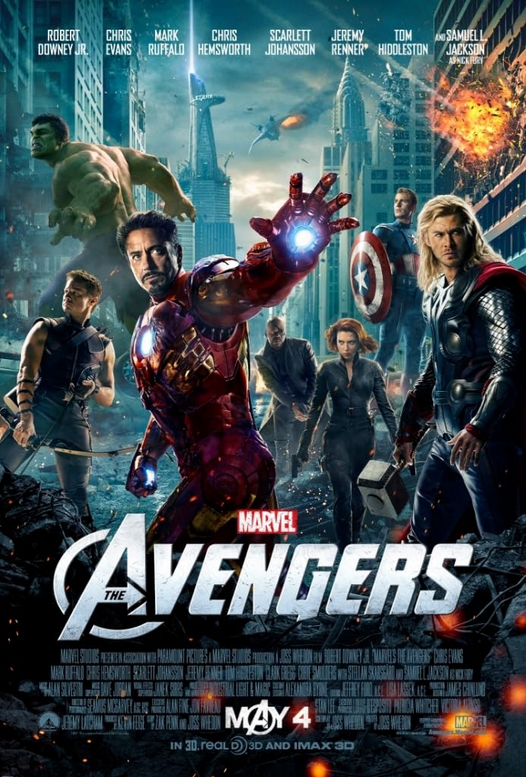
The Avengers / Avengers Assemble

IMDB Avengers 2012 Poster

(According to IMDB, Marvel has started to call this movie Avengers Assemble. Right then.)

Too few women getting too little screen time, otherwise a fantastic learning-to-work-together story. It also helps that the threat is mostly external (i.e., no infighting).

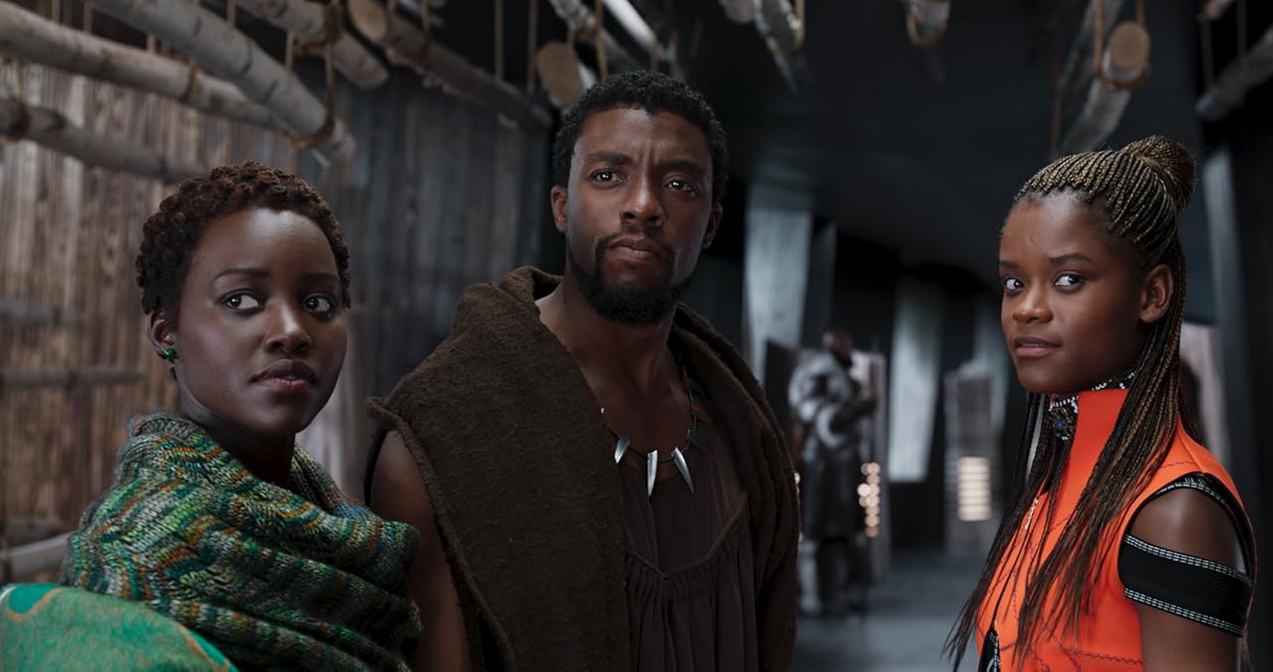
Black Panther

IMDB Black Panther Trio

Like I said in our random thoughts post on Black Panther, it’s outright GLORIOUS to see that WOMEN ARE PEOPLE in their own right, with their own interior lives. And such a spread of different women, too, each doing their thing according to their interests and skills. So many intelligent people (on both sides of the law), with plenty of problems to solve.

Still remains the best, IMO, among the Marvel Cinematic Universe movies. RIP, Mr. Boseman.

Charlie’s Angels

IMDB Charlies Angels 2019 Poster

I find the protagonist Elena (played by Naomi Scott) very irritating; on the other hand, Jane and Sabina (Ella Balinska’s and Kristen Stewart’s characters) plus Boz and Bosley (Elizabeth Banks and Djimon Hounsou) are great. Stewart has a bad rep, I guess, and I guess primarily from the Twilight movies (the only things I have seen her in), but on the basis of her performance here I’d suggest she does have skills but was just badly directed in that series. Anyway, it’s a learning to work together story, which I like a lot, and all the women down to the side characters are awesome.

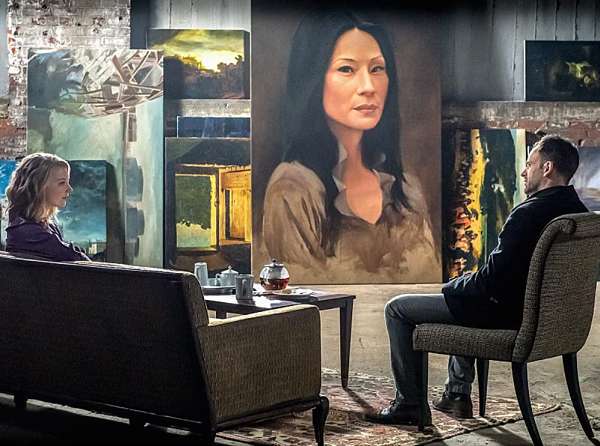
Elementary (2012-2019)

IMDB Elementary s2 e12 The Diabolical Kind

A modernized version of Sherlock Holmes set loose in New York City with a gender-flipper Watson. Both Jonny Lee Miller and Lucy Liu are fantastic as the detective duo, and the smart NYPD cast, Captain Gregson and Detective Bell (played by Aidan Quinn and Jon Michael Hill), also contribute their fair share. The Ms. Hudson and Moriarty versions were also interesting, but all in all there are too few women. (Still half of the population, hello?) Nevertheless, the astounding cases, quality acting, and scenes of real NYC in all its glitter and grime continue to keep my interest despite some less successful story lines.

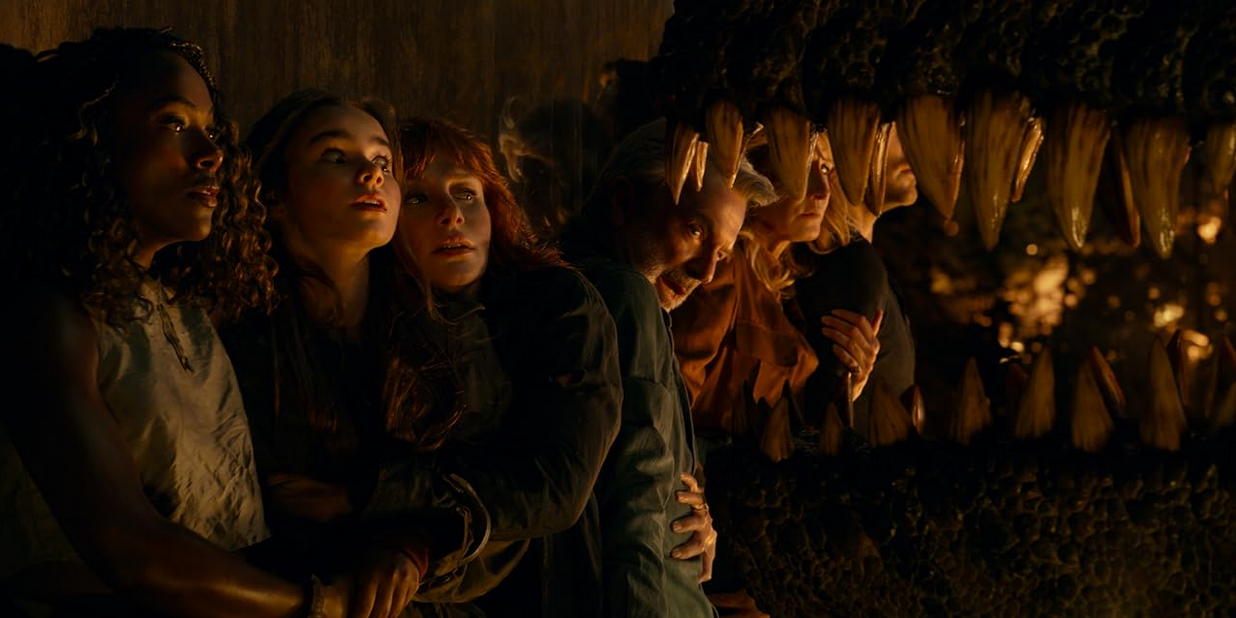
Jurassic World: Dominion

IMDB Jurassic World Dominion Scareds

Finally a significant portion of women in a mixed cast! (And not everyone is glaringly white.) And everyone gets to be awesome—not to mention terrified of the dinos—regardless of what’s in their pants, as they should. So much working together. No heist, but escaping alive counts as problem-solving, too!

Leverage (2008-2012)

IMDB Leverage Group Shot

Yes, yes, yes—ticks all the boxes despite some unevenness in the writing. If only it didn’t have Nate nor the actor, Timothy Hutton; I’m so fed up with wallow-y man pain (and, whoo boy, does he wallow) with or without alcohol, but it’s infinitely worse with.

The three youngsters should’ve had a series of their own; THAT would’ve been great, and I would throw money at it!

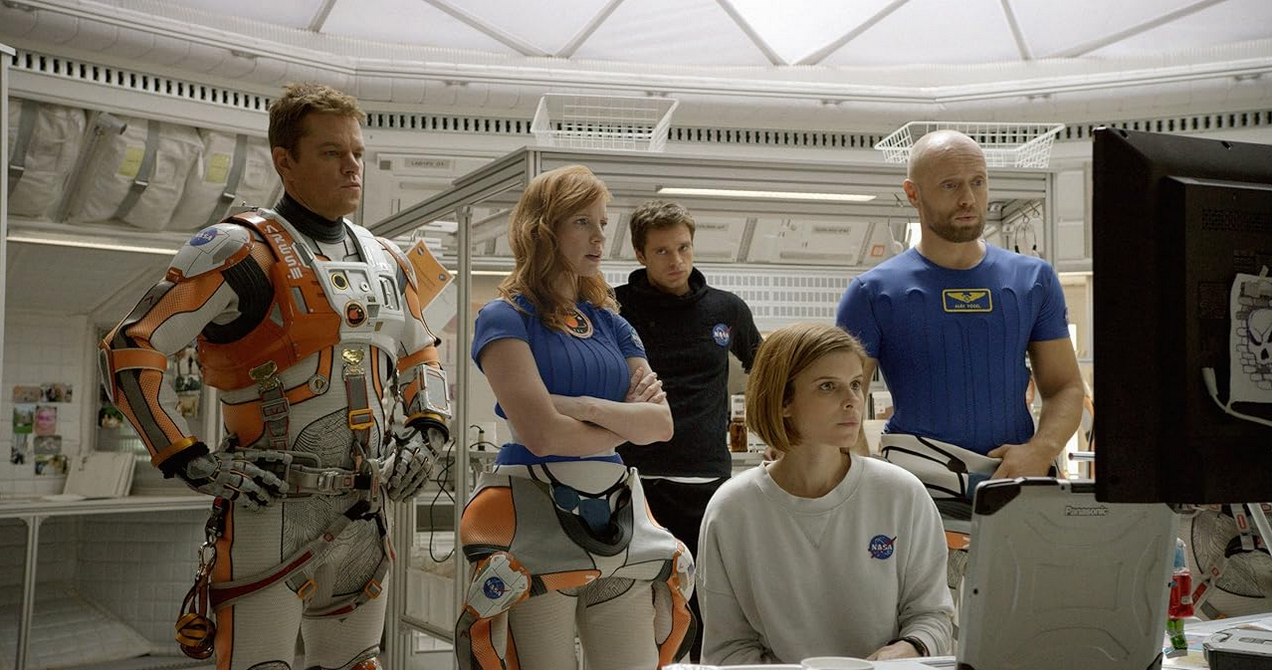
The Martian

IMDB Martian Inside Mars Base

No heist, but: People working together? Check. Women being awesome? Check. Competent characters? A very big check. Extra bonus for wholesome spud nutrition. (The only minus comes from women amounting to about a third of the more significant roles. It’s better than 10 or 20 %, but come on.)

Ocean’s Eight

IMDB Oceans Eight Poster

Yes, yes, YES! (Despite Sandra Bullock, Anne Hathaway, and Helena Bonham Carter, who all are far from favorites of mine.) Cate Blanchett, Mindy Kaling, and Rihanna were fabulous. The heist is simply staggering, and it helps it’s also a learning to work together story in part.


Passengers

IMDB Passengers

I resisted seeing Passengers for a long time (and probably would never have seen it if I hadn’t received the disc from a relative’s estate), because the marketing materials at the time of its release made it sound digustingly creepy, coercive, and unsafe. Turns out, they really did lie through their teeth.

The main protagonist’s behavior is creepy at one point, that is true, but he owns up to his actions and doesn’t get to escape the consequences, which makes a difference. The actual characters are all competent and intelligent (while the AI-driven ones aren’t even supposed to). They certainly end up working together towards a big goal, learning as they go. Complex issues are indeed at play. Beautiful space imagery and other visuals. So, there are enough rewarding features to include Passengers on my list for now.

Rogue One

IMDB Rogue One Poster

Although in the beginning we only see a glimpse of Jyn Erso’s childhood and we hear little of how she lived afterwards, it’s clear that she can handle herself, backwards and blindfolded if needs be. I enjoy seeing just how the Rogue One group slowly comes together to run their desperate mission. It needs more women, though.

Rogue One is clearly the least fun of my six competence porn stories, which makes it really hard to put into words why it’s on my list. I just know that it is.

Wonder Woman

IMDB Wonder Woman Shot

There are some plotholes and/or weaknesses I’d rather do without, but the learning to work together aspect of the story nevertheless makes the movie work for me. And—need I say it?—SO many awesome women. I could spend more time seeing Amazon action on Themyscira!

Images via IMDB: The Avengers. Black Panther. Charlie’s Angels. Elementary (s. 2, ep. 12, “The Diabolical Kind”). Leverage. The Martian. Ocean’s Eight. Passengers. Rogue One. Wonder Woman.

A New Trailer for Avengers: Doomsday

A new trailer for Avengers: Doomsday is out:

Avengers: Doomsday | Official Trailer | In Theaters December 18 by Marvel Entertainment on YouTube

My internal dialogue following the trailer monologue went something like this:

  • “Something’s coming.”
  • Isn’t it always? *internal sigh*
  • “Something we may not be able to deter.”
  • Uh-huh… This isn’t new, either. Superhero stories like these are a dime a dozen.
  • “Before this day is done, we shall be faced with an unthinkable decision.”
  • Rrriiight. *yawn*

So, basically, Marvel lost my interest in under 30 seconds, which is a shame, since there were a number of quite nice character moments in the teaser trailers released early this year. Everything this trailer is doing points to a huge, enormous challenge that sounds so much like just about every other supe storyline culmination in existence. Ho-hum.

For me, the only delightful moments were the meeting of Thor and Steve Rogers (complete with Mjölnir zzzooping to Steve’s hand) and seeing a glimpse of Shang-Chi. I’ve been waiting for the Marvel Cinematic Universe to return to him like they intimated. (Then again, we’ve never seen Kang—understandable from a real-world perspective—or the Eternals again, either, even though for a while it seemed both would become a large-ish part of the MCU.)

I still can’t tell whether Doomsday is worth my while to see in the theater; hopefully there’s another, clearer trailer before the opening night.

At this writing, the UK and US release date for Avengers: Doomsday is December 18, 2026.

Quotes: History Was Full of People

My recent reading has serendipitously included a many empires, both fictional and factual.

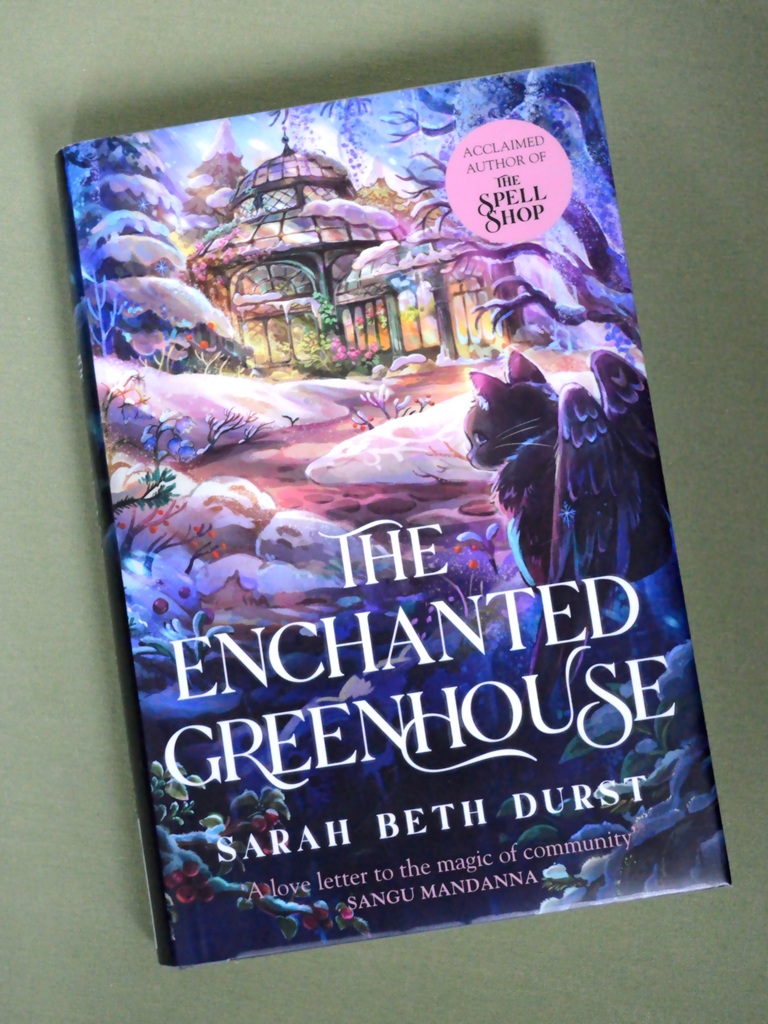
“’Empires are not …‘ She trailed off before she said anything truly treasonous. Librarians of Alyssium were trained to be impartial, but how could anyone who studied history not have feelings about it? She’d never understood that. History was full of people, all of whom had lives and dreams that were affected by the dry laws and military actions that filled university textbooks. Emperor Mevorin liked to insist every action taken by the empire was for the good of its people, but far too many of its actions throughout history had been for the good of the empire, which was not—regardless of what the emperor espoused—the same thing. An empire, unchecked, was a selfish beast of insatiable hunger.” [original emphasis]

– Terlu Perna in The Enchanted Greenhouse by Sarah Beth Durst

Current Reading The Enchanted Greenhouse Sm

It’s not the empire aspect that grabbed me about this quote, however. History is indeed full of people, and I have a homebrew hypothesis why that fact is often forgotten.

We’re living through a phase when science and/or technology are seen as the most important lens(es) to view life through (unlike, say, during Renaissance or the Age of Enlightenment). Scientific research seeks to observe phenomena objectively, quantifying them, and removing as many hints of the personal as possible.

There was a time when there was discussion within history and other humanities about emulating that approach (e.g. cliometrics), but in the past 30 to 40 years or so, research focus in the social sciences has been shifting more towards the individual experience.

However, since the rest of society is still wearing pink science love goggles, this shift hasn’t broken through to mainstream discussions yet. Hence, the lay public—including the character in the above quotation—is under the false impression that historians do not regard history as concerning actual people.

Again, this is a personal crackpot theory of mine.

The book’s protagonist, Terlu, does also remind me of my high school teachers in a way. In my senior year, during the prep for our finals, teachers would spend some time in class iterating how important their subject is. It got almost comical one day when class after class literally every single one of them said a variation of “These things are so important” or whatever—each surely aware of the spread of subjects on offer at our school, and of our work load, not to mention the fact that even at high school level some of us students had already started on our paths towards specializing in our future fields.

In a way that was good, though—we clearly had motivated teachers who cared about their fields. Terlu in the quotation above also is clearly very passionate about her interests, to the extent of being blind to a host of other considerations in life, and it shows. She’s also young, and that also shows.

(There is a more curmudgeonly comment I’d like to make as well: “university textbooks” are the kindergarten version of academia. History at university level is a very different beast from the rote learning of names and dates that the lower levels of education pretend constitutes history. If Terlu imagines “university textbooks” or other basic treatises contain the whole of what historical research is, she’s a staggeringly more junior librarian than the novel purports and greener than a St. Patrick’s Day parade. *grumbling in librarian-married-to-a-historian*)

Durst, Sarah Beth. The Enchanted Greenhouse. London: Pan Macmillan, 2025, pp. 105-106.

Image by Eppu Jensen

Second Trailer for Dune: Part Three

A longer trailer for Dune: Part Three has been released:

Dune: Part Three | Official Trailer by Warner Bros. et al. on YouTube

The story continues with lots of drama and backstabbingwouldn’t be Dune without it, would it? There’s also a lot of angst, which isn’t this big a part of how I remember Dune from the books. I don’t remember Scytale (Robert Pattison’s character) either. Perhaps it’s time for a re-read.

The combination of music, sets, and visuals continues to impress, even if I care less for the adapted story than the original novels.

Dune: Part Three is set to release on December 17 or 18, 2026.

For Hobbit-y Holidays

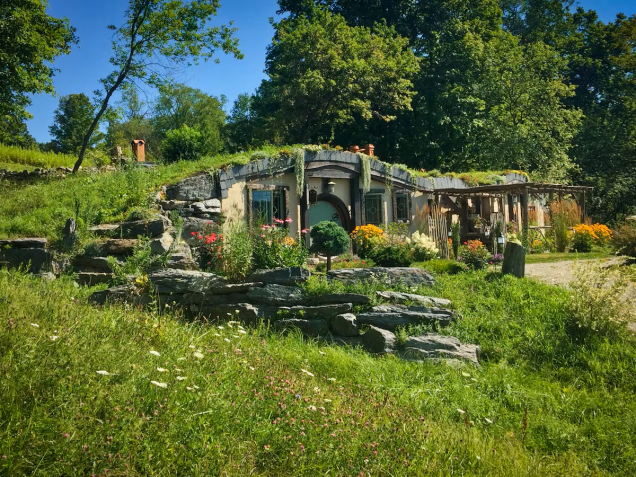
In a hill, in the ground, there was an earthen home. Not a nasty one, of course, but comfy and cozy, as Hobbit holes are wont to be.

Airbnb Middletown Springs Hobbit House

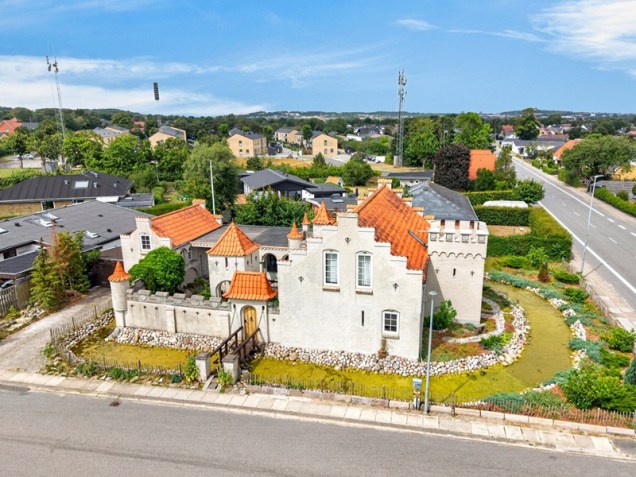
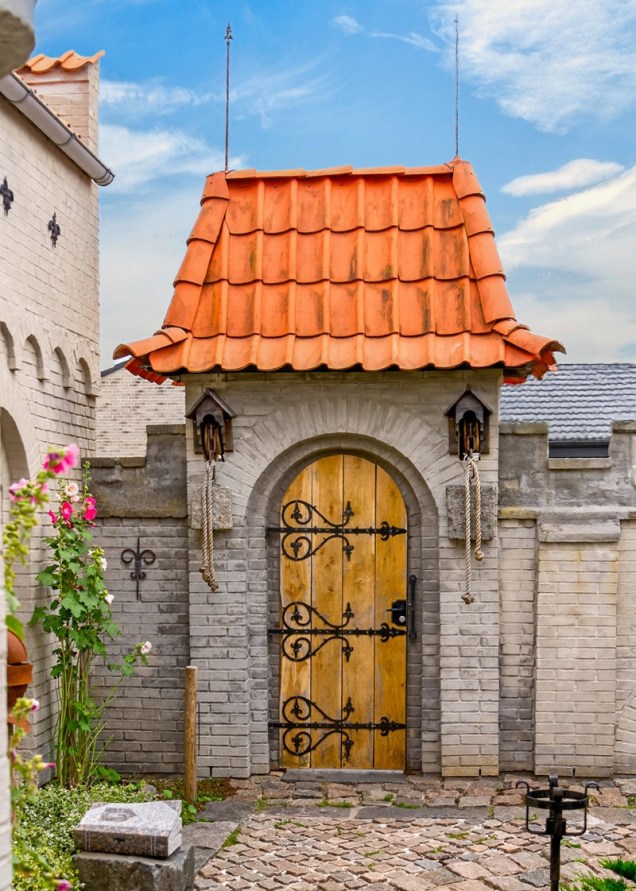
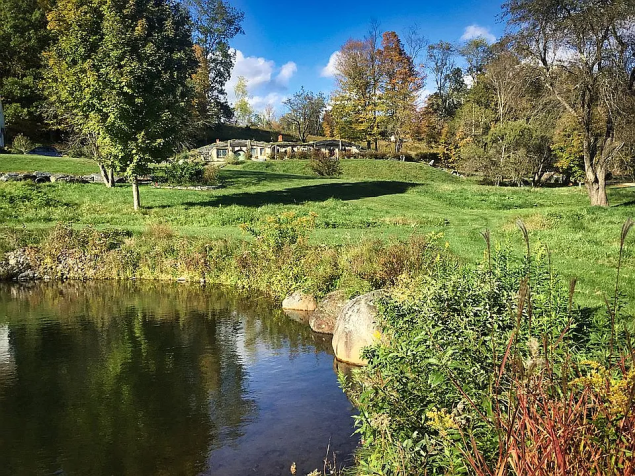
Situated in Middletown Springs, Vermont, United States, these two cabins or cottages were inspired by Hobbit houses. The owners, Cynthia and Pepper, call them The Hobbit House and The Spring House, and painstakingly turned them into a dreamy destination, a true home away from home.

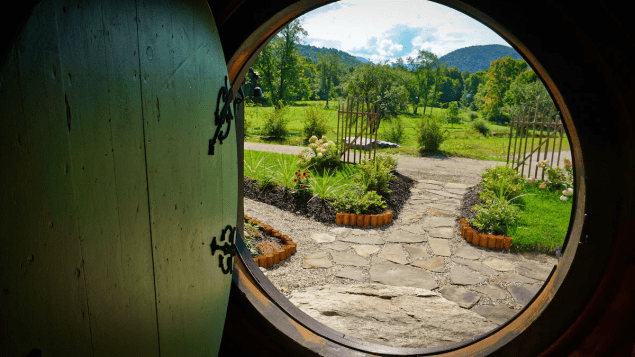
Airbnb Middletown Springs Hobbit House Door

In their own words:

“Circa 2941… of the Third Age to be exact. A time marked by the rise of Sauron and his eventual defeat during the War of The Ring.

“We wished for a space, not from a century ago but an age away… but our fantasy was not found so we decided to build it ourselves. We focused on the artistry of old world and added all the modern conveniences to weave the best of both worlds together. … We, the owners, spent over 6,000 hours on the design/build to make this beautiful dream come true. Completed in 2018 with all modern conveniences which seem to disappear among the period decor, this cottage transports you to a simpler time.”

All the details and rooms have clearly been thoroughly thought-out, including the lighting:

Airbnb Middletown Springs Hobbit House Entry

Modern bathrooms are disguised reasonably well:

Airbnb Middletown Springs Hobbit House Bath

Since Hobbits are all about food, the cottages have their own kitchens…

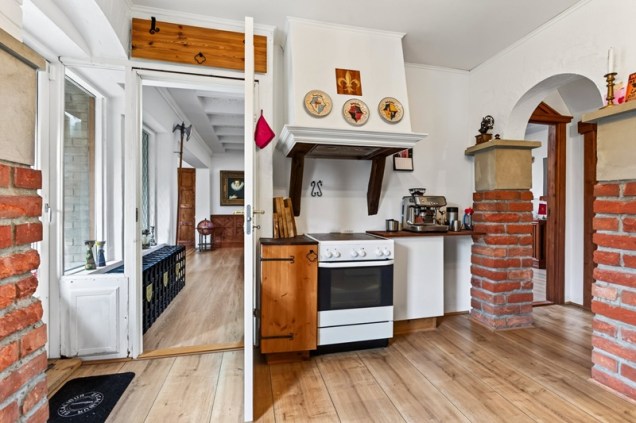
Airbnb Middletown Springs Hobbit House Kitchen

…and there is also a pub / bar (= dining room?) (for guests only, not open to just anyone):

Airbnb Middletown Springs Hobbit House Pub Bar

Sounds like all four seasons are considered in the meticulous landscaping in front of the cottages:

Airbnb Middletown Springs Hobbit House Red Door

In addition, there is a pond!

Zillow Middletown Springs Hobbit House Pond

Wow! (Please go and see more photos; I’ve merely scraped the surface here.)

While I could do the interiors, the outdoors would take so much effort for me to achieve. Not to mention the amount of care and maintenance required, after you’ve finished the build, for a holiday let. Kudos!

Found via Home Tours & Other Stuff on Tumblr.

Images by Cynthia and Pepper via Airbnb and via Zillow

On Sam Gamgee and the Value of Everyday Life

Back in 2002, Canadian journalist and Senator Paula Simons published a column on storybook romance vs. real-life expectations. Since then, her column is shared semi-regularly, particularly around Valentine’s Day.

Here’s an excerpt from the Senator’s Facebook post with the text of her original newspaper column:

“Sam isn’t a warrior by training or inclination. He isn’t looking for glory or adventure.

“He gets dragged into danger because of his love and loyalty for his gentle master, Frodo, the soulful hobbit who’s been given the great task of destroying the Dark Lord’s ring of evil.

“As Frodo’s squire, Sam travels all the way to heart of the Dark Lord’s kingdom, battling orc-goblins, giant spiders and his own fears and frailties. He fights as bravely as any of the story’s flashier knights—more bravely, because he’s no superhero with a magic sword, just an ordinary guy overtaken by extraordinary circumstances.

“But his real heroism lies in his unshakeable loyalty to his best friend, and in his unshakeable loyalty to his hobbit values, his moral code.

When all the battles and quests are over, Sam returns to his prosaic hobbit life, marrying Rose, raising kids, planting trees and nurturing the community he loves.

“The problem is, our culture doesn’t validate the heroism of the Samwise Gamgees of this world. The romantic heroes every teenage girl is taught to pine for are the Byronic brooders like Aragorn.”

I’d like to compare LotR to my favorite Jane Austen novel, Sense and Sensibility. In a way, Sam is the Elinor Dashwood of Middle-Earth: reliable and considerateand almost completely ignored and/or underappreciated by most of their respective worlds.

While Marianne Dashwood and John Willoughby are the romantic characters in Austen, the story focuses on the two oldest sisters, Elinor and Marianne. While the fellowship are the main dramatis personae in Tolkien, you could argue that in LotR the most important relationship is between Frodo and Sam (perhaps also to a lesser extent between Aragorn, Legolas, and Gimli). In S&S, the romantics (especially Marianne) wallow in the throes of Their FeelingsTM that No-One Else can EverTM Hope to FeelTM as Deeply!!!TM. In LotR, the men wrestle with Weight of Their DestinyTM (Frodo and Aragorn, even Boromir to some extent). Behind this turmoil, Elinor and Sam keep the wheels of life turning in the background, quietly and unobtrusively. On one hand, if Elinor hadn’t asked around, the Dashwood ladies might not have found a home (or might have ended up destitute after a few years) after the passing of Mr. Dashwood; if she hadn’t kept up with the demands of polite society, the cash-strapped Dashwood family would’ve been left with even less support than they had. On the other, if Sam hadn’t cooked, carried, and picked up the slack, the ring would’ve ended with Sauron’s forces after Frodo was stung by Shelob at the latest, or it might’ve been left lying on the slopes of Mount Doom (if Frodo even had made that far by himself).

Both Sam and Elinor finish with happy endings, partly because of the conceits of story-telling in the times of their respective creation, but partly because of who they are as characters: down-to-earth, pragmatic people who appreciate the good in what they do have. And they both do have strong feelings, even if we don’t see them paraded. Sam could not have gone as far as he did without some serious courage, nor necessarily carried the torch for Rosie through all the hardships if he didn’t feel strongly. Elinor bore the pragmatic and emotional burdens she did thanks to an enduring love for her family and a firm sense of principles.

You could perhaps try to argue that Elinor and Sam’s happiness stems from them merely being undemanding or indifferent, from not aiming high enough. It’s true that their wishes are more modest in the grand scale of their respective worlds. But I don’t think you can have a satisfyingly grand gesture at the end of your epic story to save the entire world (or whatever) if “the little world” doesn’t exist anymore to be saved. The latter is the foundation of everything else.

Unsplash Andres Iga Underground House Sm

The familiar and the sensational in S&S and the commonplace and the epic in LotR provide a contrast to each other like light and darkness do. It takes commitment to save the world. It also takes commitment to keep it going. The latter takes a deliberate and sustained effortthe same kind of intentionality that makes a hero a hero, really, just channeled into making a peaceful everyday life, something that both Sam and Elinor value. If creating something that endures for decades (or longer) isn’t aiming high, I don’t know what is.

At the end of her post, Senator Simons encourages “celebrating the heroism of real lovenot ‘romance,’ but the love of friends and family and community, the ‘ordinary’ garden-variety love that conquers darkness. Don’t worry about loving like an elf lord or a princess. Love like a hobbit.”

I definitely mean to. ❤

Senator Paula Simons’s post found via File 770.

Image by Andres Iga via Unsplash

This post has been edited.

Ropecon Break

The 2026 Ropecon is approaching! In previous years we’ve continued to blog through July, but this year we decided we’ll want a break. So, here is your official notification that we’re taking the rest of the month off both to prepare and to rest after the event.

Ropecon_logo_black

Ropecon is the largest non-commercial RPG convention in Europe organised entirely by volunteers. It’s held annually in Helsinki, Finland, at the end of July, and has been a staple in our lives since our transatlantic move.

I have a longer history with the event, though, having been part of the organizing team a few times in the early years before I moved to the States. For me, Ropecon continues to be special, and I will want to continue volunteering and/or attending as long as I’m able.

See you in August!

BBC Is Working on a New Poirot for TV

‘Tis an era of reboots… The latest of which is a certain moustachioed Belgian detective: it has been reported that BBC recently won the rights to adapt Agatha Christie’s Poirot stories for television.

According to Deadline, the network is planning at least three seasons. The first season is scheduled to release already in the latter half of 2027. Apparently, production takes place during summer 2026 in Liverpool and in the northwest of England. Benji Walters will screenwrite / oversee.

Alas, as yet there is no information on the cast or which stories will be adapted. But! We do have our new Poirot: Edward Bluemel. According to IMDB, the project goes by the name Hercule, and contains “[a]n exploration of the early days of Hercule Poirot’s London career as he cements himself as the world’s greatest detective.” At this writing, Bluemel is the only cast member publicly announced.

IMBD Belgravia The Next Chapter Bluemel

I haven’t seen Bluemel in anything, so I really cannot say anything about his suitability. One thing’s for sure, as many people have noted: it will be very difficult to make 1) something really new, especially something that is 2) good. Here’s hoping!

Image: Edward Bluemel in Belgravia: The Next Chapter by Colin Hutton / Carnival Film & Tel, MGMPlus Entertainment via IMBD

Two Trailers for Spider-Man: Brand New Day

If you ask me, I might tell you that one of the most remarkable things the Marvel Cinematic Universe has done is cast Tom Holland as Spider-Man. His bumbly exuberance seems so appropriate (for the character) and genuine (if at times exhausting, at least if you’re approaching old-farthood like I am).

Holland is about to star in another Spidey story now, and, as the movie is about a month away, we have two trailers for Spider-Man: Brand New Day.

SPIDER-MAN: BRAND NEW DAY – Official Trailer (HD) by Spider-Man et al. on YouTube

SPIDER-MAN: BRAND NEW DAY – New Trailer (4K) by Sony Pictures Entertainment on YouTube

Spider-Man’s abilities seem to be shifting or changing (by way of mutating-DNA-handwaving). Peter seeks help from Professor Banner, who seems to have gotten his funky Hulk abilities under control with the help of a wrist gadget.

Somehow unfolding events (and/or a danger anyone can’t control or see) will also endanger Peter’s friends Ned and MJ, who (along with the rest of the world) were magicked to forget Peter’s identity as Spider-Man at the end of Spider-Man: No Way Home. Neither trailer was clear about the hows and whys of this story point. (The last we heard was that both Ned and MJ were accepted to MIT; now they’re done and presumably moving back to the tri-state area?)

In addition we have red jail ninjas, potential hallucinations, totally black eyes, and what seems to be a final boss-fight with the Hulk, and somehow they are supposed to make a coherent story. Okay?

I snort-laughed about MJ’s quip about a friendly neighbor and Spidey’s comment on stretching being good for you since he’s not in high school anymore. (The young whippersnapper!) In addition, Ned’s totally not weird Spider-Man stalker board seems geared to generate some laughs. So, hopefully, the new story will include plenty of snarky Spidey humor among the darker stuff.

SM:BND opens July 29-31, 2026.

Some Early Plant Depictions in Prehistoric Art

Although I’m interested in early art, formal art history either as books or lectures typically bores me to tears. Thankfully the Internet and open access allow me to dip in and out where and when my interests take me. Recently an article on some of the earliest plant images in prehistoric art caught my eye.

In their article “The Earliest Vegetal Motifs in Prehistoric Art” (in the December 05, 2025, issue of Journal of World Prehistory), authors Yosef Garfinkel and Sarah Krulwich note that systematic depictions first appear on painted pottery of the Halafian culture of northern Mesopotamia (roughly around the headwaters of Tigris and Euphrates) c. 6200-5500 BCE.

(They do later modify this statement with “this is one of the world’s earliest extensive uses of vegetal motifs, and the earliest in the Near East”, so I guess the jury is still out as to what is considered the earliest find we know of.)

Garfinkel and Krulwich analyzed 29 Halafian sites and surveyed of one of the regions, for a total of several tens of thousands of painted pottery sherds with various motifs. The sherds mainly included geometric patterns, but also had depictions of animals, human figures, and plants.

Garfinkel Krulwich Map of Halafian Sites Sm
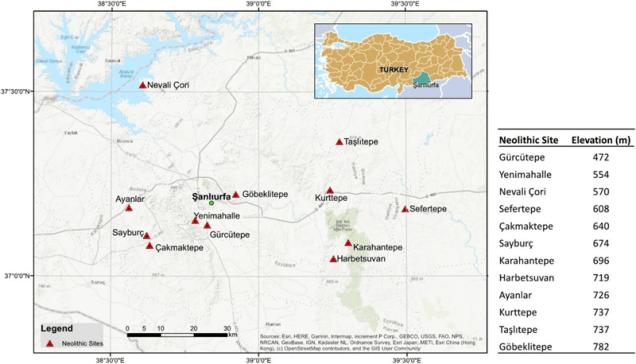
Map of the Near East showing the location of prehistoric Halafian sites, c. 6200-5500 BCE, in ancient Mesopotamia, as examined in Garfinkel and Krulwich’s survey (2025) of the earliest plant depictions in prehistoric art of the area.

Among the plant imagery, Garfinkel and Krulwich focused on the ones identifiable “without hesitation”. They were able to classify the motifs into four basic categories: flowers, shrubs, branches, and trees.

Garfinkel Krulwich Classification of Plant Imagery Orig Sm
The classification of the Halafian vegetal motifs into four basic categories according to Garfinkel and Krulwich (2025): 1–2 flowers, 3–4 shrubs, 5–6 branches, 7–8 trees.

Apparently, botanical motifs were used in almost all sites and were fairly popular.

Garfinkel Krulwich Imgs 3and5 Mashup
Collage of images 3 and 5 in Garfinkel and Krulwich (2025): examples of flowers.

Despite the fact that each site only contained a small number of sherds with botanic imagery, a meta-analysis yields interesting results. Presumably the average frequency of plant motifs on decorated sherds is around 4-6 %, and they could perhaps relate to aesthetics (instead of religious rites, for example) and to the advance of mathematical knowledge, Garfinkel and Krulwich suggest.

Garfinkel Krulwich Imgs 14and18 Mashup
Collage of images 14 and 18 in Garfinkel and Krulwich (2025): examples of shrubs and branches.

Whole trees are apparently the least common motif among this sample. (I suspect I would initially be hard-pressed to recognize some of these trees as trees, having grown up with very different flora.)

Garfinkel Krulwich Img20
Image 20 in Garfinkel and Krulwich (2025): examples of trees.

Some items came with two different types of plant designs, while others were decorated with plant and zoomorphic images (i.e., animals).

Garfinkel Krulwich Imgs22and23 Mashup
Collage of images 22 and 23 in Garfinkel and Krulwich (2025): examples of combinations of plant and animal images.

(Garfinkel and Krulwich also analyze the sherds from the point of view of mathematical knowledge and counting in the Halafian culture. I’m not interested in ethnomathematics, but if you are, I urge you to visit the article for their finds.)

It seems clear that these sherds from 8,000(!) years ago indicate not just a long history of competent pottery-making but also an established visual language. Considering how random overall the survival of pottery (and glass) remains over the millenia can be, it’s nice to see such a variety and richness in the decorated vessels, especially from an era we tend to (erroneously!) consider backward and dull.

Found via Pottery by Osa on Mastodon.

Images by Yosef Garfinkel and Sarah Krulwich (CC BY 4.0), mashups by Eppu Jensen