Temple Services Homebrew for Dungeons & Dragons

When you’re designing a settlement for your player characters to visit, one thing you might want to include is local religious establishments like temples and shrines. In a world where divine beings actively grant powers to their followers, adventurers can visit these establishments looking for magical services, just like they might head to a tavern to listen for rumors or go to the local blacksmith to get their armor repaired. Here’s a homebrewed guide to temple services, suitable for Dungeons & Dragons 5th edition (2024), that you can use or adapt for your own games.

Temples in town

The first step is to determine what kind of holy places exist in the town you’re creating. Not all gods are worshiped everywhere, and not every settlement can support a large religious sector.

Holy places come in three sizes: shrine, temple, and grand temple.

A shrine is a small, humble place where the faithful can make offerings and present prayers to the gods that matter in their daily lives. A shrine typically does not have a full-time staff performing rituals, but one or two dedicated caretakers who make sure that it stays tidy and welcoming. Local people will know who to go to if some special services are needed. A shrine and its custodians can offer only services of rank 1.

A temple is a larger structure with a dedicated full-time staff of priests and acolytes. Regular religious rituals are carried out here, and there is usually someone on hand who can see to the needs of worshipers and visitors in between their duties to the god. A temple can offer services up to rank 2.

A grand temple is a community unto itself, containing a sanctuary for the god, treasuries for storing valuable offerings, and residences for a full-time staff of priests, along with the kitchens, workshops, storage sheds, and other mundane necessities for keeping the community going. A full hierarchy attends the grand temple, from the high priest and hierophants down to the acolytes learning their first prayers and the workers supplying the priests’ daily needs. Receiving visitors and attending to their religious needs is part of the routine work of the grand temple, and some of its staff are dedicated to doling out the god’s favors to adventurers and other folk in need. A grand temple offers all services.

Each religious institution in a town also serves one particular god and belongs to that god’s divine domain. This homebrew system includes options for gods in the domains of Death, Knowledge, Life, Light, Nature, Tempest, Trickery, and War, but you can use these examples as a basis for adding other domains as your setting requires.

When you are designing a settlement, it shouldn’t be too hard to decide what sort of holy places can be found there: a small village in the woods may not have much more than shrines for Life and Nature deities, while a huge port city probably has temples for every domain and a grand temple for a Tempest god.

If you want to randomly generate your settlement’s places of worship (either to save yourself a little thinking effort, or just because math rocks going clicky-clack is fun) here’s a couple of tables you can use.

First, roll 1d6 and adjust the roll depending on the size of the settlement, from -4 for a tiny village to +4 for a huge metropolis.

Adjusted rollReligious institutions in town
-3None
-21 shrine
-11 shrine
02 shrines
13 shrines
24 shrines
34 shrines, 1 temple
43 shrines, 2 temples
52 shrines, 3 temples
61 shrine, 4 temples
75 temples
85 temples, 1 grand temple
96 temples, 1 grand temple
106 temples, 2 grand temples

For each religious institution in your settlement, roll 1d8 to determine which domain it belongs to, rerolling any rolls that give the same result as one already rolled.

1d8Domain
1Death
2Knowledge
3Life
4Light
5Nature
6Tempest
7Trickery
8War

Services available

The tables below list the services available in each domain, the rank of each service, and its cost. A description of all services is given after the tables.

The cost given in the tables below is for characters who wish to pay for services in cash, and includes the cost of any necessary material components, which the priest performing the service provides. As an alternative, some other means of payment are suggested in the next section.

Services are granted to the character requesting and paying for them, or to another creature or object that character designates. The recipient of a service knows what effect they are receiving, and a service fails if the recipient is unwilling to receive it. Only one service can be active on a given creature or object at a time, but one creature can carry multiple objects with different services active on them.

Services marked with an asterisk (*) are spells found in the Player’s Handbook or the System Reference Document 5.2.1. A brief description is given below for convenience, but see one of those sources for fuller information if needed. If a character receives one of these spells as a service, apply the following conditions:

  • The spell is cast at its lowest level.
  • The spellcaster’s ability is Wisdom, and their ability modifier is +4.
  • A spell provided as a service does not require concentration from either the priest providing it or the creature receiving it.
  • A spell cast as a service can only affect the creature who received the service or an object they carry, even if the spell normally allows its caster to choose another or multiple targets.
  • Any spell whose duration is either Instantaneous or 12 hours or longer takes effect exactly as listed in the spell description as soon as the service is provided.
  • Any spell that has a duration more than Instantaneous but less than 12 hours does not take effect immediately. The service instead creates an aura of magical potential around the receiving creature which lasts for 24 hours. At any time during that 24 hours, the creature may take a Magic action to activate the spell. The spell immediately becomes active and lasts for its full duration.

Death

The following services are available from a shrine, temple, or grand temple of a deity of Death.

RankServiceCost
1Detect Poison and Disease*50 GP
1Lesser Blessing of the Grave5 GP
2Gentle Repose*50 GP
2Grace of the Departed125 GP
3Raise Dead*700 GP
3Speak with Dead*100 GP

Knowledge

The following services are available from a shrine, temple, or grand temple of a deity of Knowledge.

RankServiceCost
1Detect Magic*50 GP
1Detect Poison and Disease*50 GP
1Identify*60 GP
1Lesser Blessing of Sagacity10 GP
2Augury*80 GP
2Grace of the Wise50 GP
3Sending*100 GP
3Speak with Dead*200 GP
3Tongues*200 GP

Life

The following services are available from a shrine, temple, or grand temple of a deity of Life.

RankServiceCost
1Bless*25 GP
1Cure Wounds*1 GP
1Lesser Blessing of Healing5 GP
2Grace of the Protector50 GP
2Lesser Restoration*75 GP
2Protection from Poison*125 GP
3Protection from Energy*200 GP
3Raise Dead*700 GP
3Remove Curse*100 GP

Light

The following services are available from a shrine, temple, or grand temple of a deity of Light.

RankServiceCost
1Bless*25 GP
1Cure Wounds*1 GP
1Lesser Blessing of Flame5 GP
1Shield of Faith*50 GP
2Augury*80 GP
2Grace of the Illuminated50 GP
2Magic Weapon*125 GP
3Dispel Magic*100 GP

Nature

The following services are available from a shrine, temple, or grand temple of a deity of Nature.

RankServiceCost
1Cure Wounds*1 GP
1Detect Poison and Disease*50 GP
1Goodberry*25 GP
1Lesser Blessing of the Serpent5 GP
1Longstrider*50 GP
2Gentle Repose*50 GP
2Grace of the Wild50 GP
2Protection from Poison*125 GP
3Water Breathing*100 GP

Tempest

The following services are available from a shrine, temple, or grand temple of a deity of Tempest.

RankServiceCost
1Cure Wounds*1 GP
1Lesser Blessing of the Storm5 GP
1Longstrider*50 GP
2Grace of the Winds25 GP
2Magic Weapon*125 GP
3Water Breathing*100 GP

Trickery

The following services are available from a shrine, temple, or grand temple of a deity of Trickery.

RankServiceCost
1Detect Poison and Disease*50 GP
1Lesser Blessing of Cunning10 GP
1Protection from Evil and Good*75 GP
2Grace of the Dissembler50 GP
2Lesser Restoration*75 GP
3Dispel Magic*100 GP
3Remove Curse*100 GP
3Tongues*200 GP

War

The following services are available from a shrine, temple, or grand temple of a deity of War.

RankServiceCost
1Bless*25 GP
1Cure Wounds*1 GP
1Lesser Blessing of Wrath5 GP
1Shield of Faith*50 GP
2Grace of the Marauder100 GP
2Magic Weapon*125 GP
3Protection from Energy*200 GP

Descriptions of Services

The ranks of services and the domains which can offer them are given in parentheses after the name for reference. Services marked with an asterisk (*) are spells found in the Player’s Handbook or the System Reference Document 5.2.1. A brief description is given below for convenience, but see one of those sources for fuller information if needed.

Augury* (2 – Knowledge, Light)

  • School: Divination
  • Duration: Instantaneous
  • Consult a divine force about a specific course of action and receive a positive or negative omen.

Bless* (1 – Life, Light, War)

  • School: Enchantment
  • Duration: 1 minute
  • Add 1d4 whenever you make an attack or save roll. (Note: when received as a service, this spell targets only the creature that received the service.)

Cure Wounds* (1 – Life, Light, Nature, Tempest, War)

  • School: Abjuration
  • Duration: Instantaneous
  • Heal 2d8+4 Hit Points.

Detect Magic* (1 – Knowledge)

  • School: Divination
  • Duration: 10 minutes
  • Become aware of magical effects within 30 feet.

Detect Poison and Disease* (1 – Death, Knowledge, Nature, Trickery)

  • School: Divination
  • Duration: 10 minutes
  • Become aware of any source of poison or disease within 30 feet.

Dispel Magic* (3 – Light, Trickery)

  • School: Abjuration
  • Duration: Instantaneous
  • Ends one magical effect of level 3 or lower.

Gentle Repose* (2 – Death, Nature)

  • School: Necromancy
  • Duration: 10 days
  • A recently deceased creature is protected from decay and becoming Undead.

Goodberry* (1 – Nature)

  • School: Conjuration
  • Duration: 24 hours
  • Create 10 berries, each of which heals 1 Hit Point and provides nourishment for one day.

Grace of the Departed (2 – Death)

  • School: Necromancy
  • Duration: 24 hours
  • Whenever a spell you cast causes a creature to make a Constitution saving throw, it does so at Disadvantage.

Grace of the Dissembler (2 – Trickery)

  • School: Enchantment
  • Duration: 24 hours
  • You have Advantage on Charisma (Deception) and Dexterity (Stealth) checks.

Grace of the Illuminated (2 – Light)

  • School: Evocation
  • Duration: 24 hours
  • You may use a Magic action to cast the spell Light, requiring no material components. You may cast this spell any number of times while this service lasts. When you cast Light using this service, Wisdom is your spellcasting attribute, and if your Wisdom modifier is less than +4, it is considered +4 for purposes of this spell.

Grace of the Marauder (2 – War)

  • School: Transmutation
  • Duration: 24 hours
  • You gain a +1 bonus to your attack rolls and AC.

Grace of the Protector (2 – Life)

  • School: Abjuration
  • Duration: 24 hours
  • Whenever you roll dice to restore Hit Points to any creature, that creature also receives Temporary Hit Points equal to the highest number on any one of the dice you rolled.

Grace of the Wild (2 – Nature)

  • School: Enchantment
  • Duration: 24 hours
  • You have Advantage on Intelligence (Nature) and Wisdom (Survival) checks.

Grace of the Winds (2 – Tempest)

  • School: Evocation
  • Duration: 24 hours
  • Once per turn, when you deal damage to another creature, you may move your target up to 10 feet away from you or move yourself up to 10 feet away from your target. (This movement does not provoke opportunity attacks.)

Grace of the Wise (2 – Knowledge)

  • School: Enchantment
  • Duration: 24 hours
  • You have advantage on Intelligence (Arcana) and Intelligence (History) checks.

Identify* (1 – Knowledge)

  • School: Divination
  • Duration: Instantaneous
  • Learn the properties of one magical object.

Lesser Blessing of Flame (1 – Light)

  • School: Transmutation
  • Duration: 24 hours
  • An enchantment is placed on one weapon of your choice. That weapon deals either Fire or Radiant damage in addition to any other types of damage it deals (you choose the type of damage when receiving the service).

Lesser Blessing of Cunning (1 – Trickery)

  • School: Enchantment
  • Duration: 24 hours
  • Choose 1 skill based on Dexterity or Charisma. An enchantment is placed on an item you carry. Any creature carrying that item gains a bonus equal to their proficiency bonus to d20 checks made with that skill.

Lesser Blessing of Healing (1 – Life)

  • School: Transmutation
  • Duration: 24 hours
  • An enchantment is placed on an item you carry. Whenever a creature carrying that item casts a spell with a spell slot that restores Hit Points to any creature, that spell restores a number of additional Hit Points equal to the caster’s proficiency bonus.

Lesser Blessing of Sagacity (1 – Knowledge)

  • School: Enchantment
  • Duration: 24 hours
  • Choose 1 skill based on Intelligence or Wisdom. An enchantment is placed on an item you carry. Any creature carrying that item gains a bonus equal to their proficiency bonus to d20 checks made with that skill.

Lesser Blessing of the Grave (1 – Death)

  • School: Transmutation
  • Duration: 24 hours
  • An enchantment is placed on one weapon of your choice. That weapon deals either Necrotic or Psychic damage in addition to any other types of damage it deals (you choose the type of damage when receiving the service).

Lesser Blessing of the Serpent (1 – Nature)

  • School: Transmutation
  • Duration: 24 hours
  • An enchantment is placed on one weapon of your choice. That weapon deals either Acid or Poison damage in addition to any other types of damage it deals (you choose the type of damage when receiving the service).

Lesser Blessing of the Storm (1 – Tempest)

  • School: Transmutation
  • Duration: 24 hours
  • An enchantment is placed on one weapon of your choice. That weapon deals either Lightning or Thunder damage in addition to any other types of damage it deals (you choose the type of damage when receiving the service).

Lesser Blessing of Wrath (1 – War)

  • School: Transmutation
  • Duration: 24 hours
  • An enchantment is placed on one weapon of your choice. That weapon deals either Force or Radiant damage in addition to any other types of damage it deals (you choose the type of damage when receiving the service).

Lesser Restoration* (2 – Life, Trickery)

  • School: Abjuration
  • Duration: Instantaneous
  • Remove Blinded, Deafened, Paralyzed, or Poisoned conditions.

Longstrider* (1 – Nature, Tempest)

  • School: Transmutation
  • Duration: 1 hour
  • Your Speed increases by 10 feet.

Magic Weapon* (2 – Light, Tempest, War)

  • School: Transmutation
  • Duration: 1 hour
  • A weapon you touch becomes a magic weapon with +1 to attack and damage rolls.

Protection from Energy* (3 – Life, War)

  • School: Abjuration
  • Duration: 1 hour
  • Gain Resistance to one damage type: Acid, Cold, Fire, Lightning, or Thunder.

Protection from Evil and Good* (1 – Trickery)

  • School: Abjuration
  • Duration: 10 minutes
  • You are protected against Aberrations, Celestials, Elementals, Fey, Fiends, and Undead. ( Note: when received as a service, this spell targets only the creature that received the service.)

Protection from Poison* (2 – Life, Nature)

  • School: Abjuration
  • Duration: 1 hour
  • Gain Resistance to Poison damage and Advantage on saving throws against the Poisoned condition. ( Note: when received as a service, this spell targets only the creature that received the service.)

Raise Dead* (3 – Death, Life)

  • School: Necromancy
  • Duration: Instantaneous
  • Revive a creature that has been dead less than 10 days.

Remove Curse* (3 – Life, Trickery)

  • School: Abjuration
  • Duration: Instantaneous
  • Remove all curses affecting an object or creature.

Sending* (3 – Knowledge)

  • School: Divination
  • Duration: Instantaneous
  • Send a message of 25 words or less to another creature.

Shield of Faith* (1 – Light, War)

  • School: Abjuration
  • Duration: 10 minutes
  • Gain +2 AC. (Note: when received as a service, this spell targets only the creature that received the service.)

Speak with Dead* (3 – Death, Knowledge)

  • School: Necromancy
  • Duration: 10 minutes
  • Ask 5 questions of a corpse.

Tongues* (3 – Knowledge, Trickery)

  • School: Divination
  • Duration: 1 hour
  • Understand any spoken or signed language. ( Note: when received as a service, this spell targets only the creature that received the service.)

Water Breathing* (3 – Nature, Tempest)

  • School: Transmutation
  • Duration: 24 hours
  • Gain the ability to breathe under water. (Note: when received as a service, this spell targets only the creature that received the service.)

Alternative payment

Instead of a donation in coin, you might offer your player characters a chance to pay for their services with services of their own. This can be a good option for a cash-strapped party, and can also provide opportunities for side quests or for downtime activities to let your players practice some of their lesser-used skills. Here are some suggestions to consider:

Rank 1 services

  • Entertain the children at the local orphanage for an afternoon (Life, Trickery)
  • Fix a leaky roof, patch gaps in the walls, replace some broken floor tiles, or perform other simple maintenance in the temple (Nature, Tempest)
  • Gather firewood for the temple from nearby woods (Light, Nature)
  • Gather wild plants to restock the temple’s store of spell reagents (Knowledge, Life, Nature, Tempest)
  • Participate in a solemn funeral procession for a recently deceased local hero (Death, Light)
  • Play a small, harmless prank on the priests of a rival temple (Trickery)
  • Recount tales of your party’s adventures to be recorded for posterity (Knowledge, Light, Trickery, War)
  • Spar with some paladin trainees (Light, War)
  • Tidy up the local graveyard (Death, Nature)

Rank 2 services

  • Clean out a local village’s irrigation channels (Life, Tempest)
  • Convince some mischievous wood sprites to move out of a sacred grove (Light, Nature, Trickery)
  • Deliver needed medicines and potions to an outlying village (Life, Nature)
  • Fight a demonstration duel against a band of chosen champions for paladin initiates to observe and learn from (Light, War)
  • Find a ghost that has been haunting a local crypt and find out what it needs to be able to move on into the afterlife (Death, Knowledge, Light)
  • Fish, hunt, and gather foods from the local wilderness for a communal feast (Life, Nature, Tempest)
  • Join in the funeral games for a fallen local hero and win at least one victory in the god’s name (Death, Life, War)
  • Spy on a local criminal syndicate to find out where their meeting spot is so the authorities can deal with them (Knowledge, Light, Trickery)

Rank 3 services

  • Compose and stage a play about the party’s adventures for the entertainment and education of local townsfolk (Knowledge, Life, War)
  • Hunt a wild beast that has been terrorizing villages the hinterlands (Light, Nature, Tempest)
  • Investigate the local noble houses to determine which of them has been skimming off the temple tithes (Knowledge, Light, Trickery)
  • Keep an overnight vigil in a local graveyard on a night when minor evil spirits are known to wander. Keep the spirits distracted to stop them from causing trouble. (Death, Trickery)
  • Recover a lost relic last known to have been in the possession of a fallen hero, who may have since become undead (Death, Light, War)
  • Seek out and defeat a minor local bandit or other troublemaker (Life, War)
  • Spend a stormy night standing watch at a dangerous headland and rescue the survivors from ships that founder in the waves (Life, Light, Tempest)
  • Track a noble beast that was gravely wounded but not killed in an upstart noble’s botched hunt and put the creature out of its pain (Death, Nature)

This work includes material from the System Reference Document 5.2.1 (“SRD 5.2.1”) by Wizards of the Coast LLC, available at https://www.dndbeyond.com/srd. The SRD 5.2.1 is licensed under the Creative Commons Attribution 4.0 International License, available at https://creativecommons.org/licenses/by/4.0/legalcode.

This work includes material taken from the System Reference Document 5.1 (“SRD 5.1”) by Wizards of the Coast LLC and available at https://dnd.wizards.com/resources/systems-reference-document. The SRD 5.1 is licensed under the Creative Commons Attribution 4.0 International License available at https://creativecommons.org/licenses/by/4.0/legalcode.

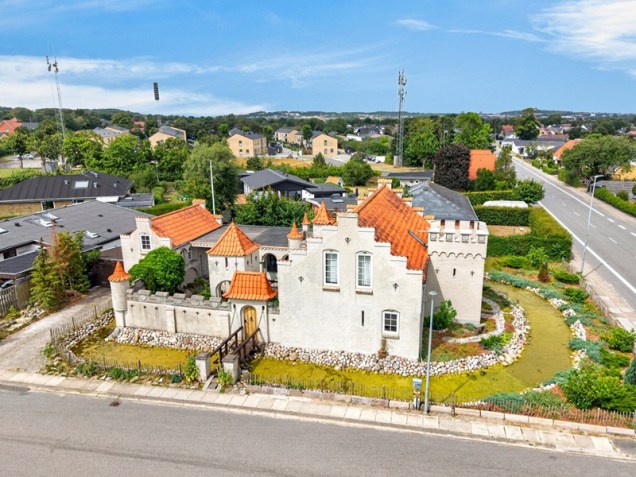
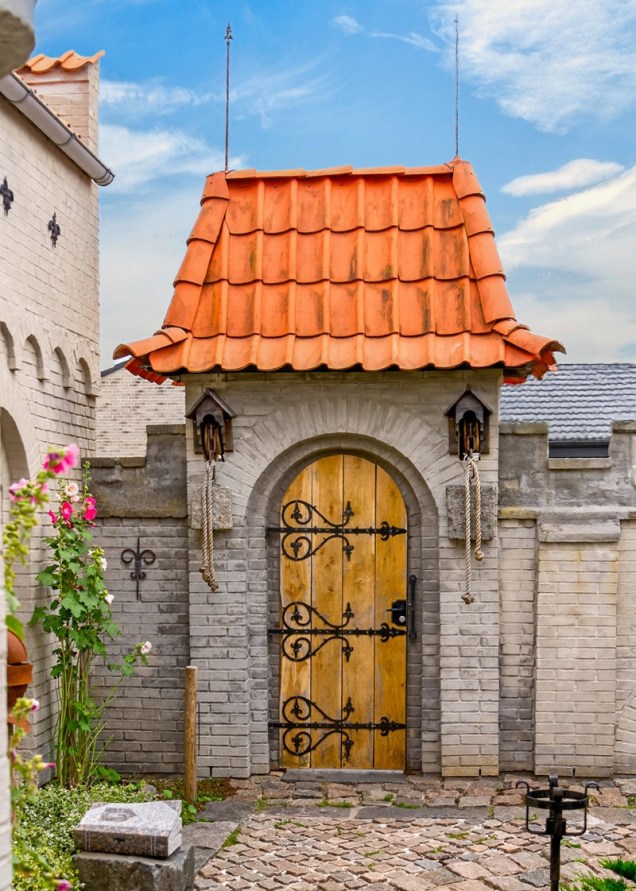
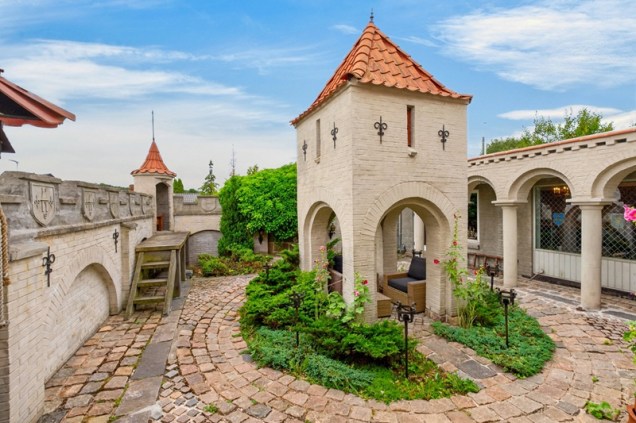
Images: Algorithmically generated images made with Night Cafe: Shrine, Temple, and Grand Temple

Teaser Trailers for Avengers: Doomsday

Someone observed that in about a month, we’ve had four teasers for Avengers: Doomsday. It is, indeed, unusual.

The ones focusing on fathers(!), Steve Rogers and Thor, were released at the end of December 2025:

Steve Rogers Will Return | Avengers: Doomsday in Theaters December 18, 2026 by Marvel Entertainment on YouTube

Thor Will Return | Avengers: Doomsday in Theaters December 18, 2026 by Marvel Entertainment on YouTube

The trailer about Professor X and Magneto came out at the beginning of this January:

Avengers: Doomsday | Only in Theaters December 18, 2026 by Marvel Entertainment on YouTube

And the Wakandans trailer a good two weeks ago:

Avengers: Doomsday | Only in Theaters December 18, 2026 by Marvel Entertainment on YouTube

My first thought was: I wonder what has changed that Marvel has disrupted their pattern of marketing? Then I saw the plot synopsis on IMDB: “Plot under wraps.”

Ah. Likely they’re after hype, probably spurred on by the less than stellar performance overall of phases four and five of the Marvel Cinematic Universe.

As the teasers are really short, we obviously don’t get much detail, however. It’s intriguing and refreshing that so much of the Steve Rogers trailer concentrates on him smiling and just holding (presumably) his baby. An interesting choice for such a short clip.

It’s also refershing that an uber-masculine franchise such as MCU is now mature enough to discuss not just fathers and sons from the perspective of being the son, but also becoming the father. We had a version already in Avengers: Endgame and a glimpse in Thor: Love and Thunder, but it seems it may now get a somewhat larger share of attention.

What does baffle me is why we see so many fewer women on screen than, say, in Avengers: Endgame. The current cast listing on IMDB is also very, very man-heavy. It’s like someone suddenly developed an overwhelming case of cooties…

We’ll have to see how many of my impressions change in the coming months as more trailers are released, as I’m sure they will be.

At this writing, the release date for Avengers: Doomsday is either December 17 or 18, 2026, depending on location.

Early Iranian Spindle Whorls

We all know that everyday tasks aren’t really made lighter by having eye-pleasing tools to work with. But there clearly is some innate yearning in humanity to not just modify but also to decorate our environment.

Earlier we’ve blogged about Minoan mugs from ca. 1,500 BCE, a Bronze Age cup with an attempt at animation, a Minoan octopus flask, a brilliantly colored ancient Greek glass perfume bottle, a monster mosaic from a 3rd c. BCE Greek city in Italy, a statuette of girls playing knucklebones from ca. 330 BCE, and a Maya vase with a rabbit scribe, and many other examples.

Here’s one more case in point: Iranian spindle whorls from the early islamic period c. 700s-900s CE. They are made from incised bone and carved with intricate designs.

Tumblr theinternetarchive Iranian Spindle Whorls

A spindle is a hand tool for making yarn, basically a long thin stick around which the freshly formed yarn can be wound. A spindle whorl is a weight attached to the bottom of a spindle. Whorls provide more torque and a longer spin time—purely functional, in other words.

Many, many spindle whorls found around the world have been carefully shaped, which is to be expected—you do want your tools not just to work, but work well for the purpose. In addition, so many of extant spindle whorls are also beautifully decorated.

You could perhaps argue that the small surface makes for a quick and easy art project. However, most whorls are round or spherical, which makes for a more challenging surface to decorate.

Spinning must have been an unending task for our predecessors. Spindles—and, by extension, spindle whorls—were the most basic, utilitarian tool you could imagine. And yet, we find innumerable people throughout history wanting to decorate their whorls. Little details like this make me love humanity all over again, despite all the awful we’re also capable of.

Images by The Cleveland Museum of Art, mashup via theinternetarchive on Tumblr

Nan Madol: A Megalithic Palace in the Pacific

On the eastern coast of the island of Pohnpei, part of the Federated States of Micronesia, are the remains of a gigantic complex of megalithic structures. These structures stand along the coast of the island and on nearly a hundred artificial islands just offshore. This site is called Nan Madol.

Platform and enclosure wall, photograph by Uhooep via Wikimedia (Nan Madol; c. 1100-1200 CE; stone)

The structures of Nan Madol were first built in the 1100s CE and served as an administrative and ceremonial center for the Saudeleur ruling dynasty that held power over Pohnpei from approximately 1100 CE to the early 1600s. They were constructed using columns of volcanic rock that formed natural geometric shapes. By carefully jointing these stones together, the people of Pohnpei created large structures stable enough that many walls still stand today.

Wall with opening, photograph by Patrick Nunn via Wikimedia (Nan Madol; c. 1100-1200 CE; stone)

Nan Madol is one of many sites around the world that remind us that cultures capable of coordinated labor, careful planning, and social complexity are not the product of only one environment or part of the world.

Trailer for The Death of Robin Hood

Oh, I had not come across this—a new Robin Hood adaptation is coming to the big screen. It involves an old, wounded Robin, and they’ve scored quite a big name for the titular role: Hugh Jackman.

Here’s a trailer:

The Death of Robin Hood | Official Trailer HD | A24 by A24 on YouTube

There are some impressive locations and cinematic beauty, like when the little girl (who sounds like one of the protagonists) and Robin meet in the woods and he promises to make her a bow. Sadly, though, I find the trailer a bit too vague; too many flashbacks to Robin’s past, perhaps? Also, some of the scenes are too dark to see. While that’s a benefit for me when really graphic violence is depicted, I can’t say I really care for either. (I wish the movie business would get out of the if-it’s-fantasy-it-must-be-explicitly-violent-because-Game-of-Thrones-was-and-that-did-great rut already!)

It seems that Jackman is the only name I know from the cast. Even the writer-director Michael Sarnoski is completely unknown to me, so I can’t even guess at the style of story this might be. I do like what I see of the adult and young female protagonists, though (played by Jodie Comer and Faith Delaney, it looks like).

While there is something to be said for a tale where a man and a girl form a meaningful connection, this doesn’t look like a movie for me. (Like I implied in my post about the 2025 Red Sonja reboot, there is no longer a need to see absolutely everything SFFnal if you want to see anything, since the selection has grown so much.) We’ll see if that changes with further trailers.

According to IMDB, The Death of Robin Hood has only two release dates at this writing: one for Mexico on May 28, 2026, and merely 2026 for United States.

A WoW Player Housing Treasure: Winter Sauna by CottageWizard

The next World of Warcraft expansion, Midnight, will be released at the beginning of March, but one of the new features—Player Housing—was made available already at the beginning of December 2025.

This early access has been hyped quite a bit in some circles—we were certainly excited about it, and followed various news items. A lovely feature I stumbled upon is the Midnight beta gallery of user-submitted builds at Wowhead.

There are so many inspiring houses and rooms at the gallery, with inventive uses of items and decorative elements—not surprising from gamers, right? 🙂 However, I want to especially highlight one: a Winter Sauna Cottage by CottageWizard.

Wowhead CottageWizard Winter Sauna Cottage Mashup Sm

In real life, little cottages like this are quite popular here in Finland, and typically contain a multipurpose room (or two) plus a sauna room with washing facilities in a corner.

CottageWizard describes the idea like this: “Winter sauna cottage built on the Midnight Beta. Tried to create the illusion of a snowy environment without snowy housing items! This was created at house level 3.”

The whole is really, really impressive. I absolutely love it! And, having messed about in the housing editor, I can see how much effort went into the build. The facade. The snow. (Snow!) The covered firewood storage. Towels on their pegs in the hallway. Creating the wood panels and benches in the sauna. The added platforms and beams in the room (e.g. as molding in the kitchen area). The kitchen backsplash.

What I don’t get is how the snow outside is achieved. I wish CottageWizard had included a little more detail; I’ll have to ponder that a bit.

But the sauna is absolutely perfect! The heater (kiuas) is protected with railings, as it should. Wood paneling throuhgout, ditto. Buckets (barrels) of water and ladles. A couple of levels of seating to adjust your bathing experience when it gets too hot or cool. A window is a bonus. (But HOW does it look snowy outside?!?! HOW?!?) There even is a sauna whisk (vihta or vasta, depending where you’re from) and a thermometer on the wall!

LOVE. IT!!! 😀

Images: screencaps from World of Warcraft: Midnight beta release by CottageWizard via Wowhead, mashup by Eppu Jensen

Swimmers of the Sahara

Thousands of years ago, the Sahara desert was not the dry, sandy place it is now. There was a time when northern Africa was wet and green. Most of what we know about climate changes in the past comes from the study of geology and paleontology, but one small indicator of a wetter ancient Sahara comes from the people of the time themselves.

There are numerous rock paintings and carvings in the Sahara, showing that people once lived in places that are now inhospitable desert. Several pieces of rock art show animals that could not survive in the Sahara in its modern desert state. One interesting painting, from a cave in southwestern Egypt, shows people floating or swimming in water.

Swimmers from the Cave of Swimmers, photograph by Ronald Unger via Wikimedia (Wadi Sura, Egypt; c. 8000-5000 BCE; rock painting)

Anthropologists have speculated that the swimmers represent souls of the dead floating in the primordial waters of the afterlife, in an early version of what would become the mythology of ancient Egypt. Whether this speculation is true or not, however, it must be the case that floating in water was something the people of the ancient Sahara could imagine, an experience that is hardly possible in the region today.

“101 Things to Do When Bored at Home”

The other day I was browsing a random blog. Seeing a post title “101 Things to Do When Bored at Home” or something to that effect, I turned to Erik and said: “I don’t understand the concept.”

I truly don’t, not for my part!

We’re both introverts who love our home. Home is where our books are. Where we can watch tv in comfort. Play games. Craft, sew, write. Go nap or lie down with a blanket to think about things. Heck, even clean or mend things—it’s something to do, and we do enjoy a well-functioning home (even if cleaning and mending aren’t favorite pastimes themselves).

I literally can’t remember the last time I’ve been bored at home.

I can—and do—give my brain rest breaks. Idling is important to creativity, which is important to all of life, if you ask me. But boredom…? Nope. It just doesn’t happen, there’s so much to do.

I’m actually looking forward to the time when I’m old enough to need less sleep—more time to enjoy being conscious! 🙂

Winter is Coming, and He’s Got a Hare to Share

Winter is upon us here in the northern hemisphere. We’re settling in for cold days and long, dark nights. Here’s how the winter season was imagined in late Roman Britain.

This figure comes from a floor mosaic at Chedworth Villa in western Britain. Each corner of the mosaic had a little allegorical figure representing one of the seasons. Winter appears bundled up in warm layers with a hooded cloak, carrying a hare in one hand (the reward of a hunt), and a symbolic leafless branch in the other.

Wishing you a warm, cozy, and cheerful winter season!

Image: Winter from Chedworth dining room floor, photograph by Pasicles via Wikimedia (Chedworth Roman Villa; 4th c. CE; mosaic)