Rothfuss Scores a Multi-Platform Deal for Kingkiller Chronicle

Author Patrick Rothfuss is known for the charity Worldbuilders and his Kingkiller Chronicle – a trilogy of The Name of the Wind (published 2007), The Wise Man’s Fear (2011), and a thus far unnamed, unpublished final installment.

Rothfuss Book Covers Fall 2015
Patrick Rothfuss / DAW.

Rothfuss just shared some great news: The Chronicle was signed by Lionsgate for a “big narratively intertwined multi-platform development deal” (in Rothfuss’s words). The plan is to produce a tv-series with a connecting movie and a video game – how awesome is that?

But it doesn’t end there. Says Rothfuss:

“You see, I never expected a studio would treat me like a human being. But through this whole process, Lionsgate has treated me with amazing respect. I’ve made what to me seem like reasonable requests, and they responded to them… reasonably. And I’m not just talking about pretty words here, they’re making contractual agreements granting me control of things. They haven’t just been reasonable, they’ve been kind, and understanding. […]

“Lionsgate is making its own press release today and there will be stories in all manner of Hollywood news outlets pretty soon. It’s not a coincidence that my blog is launching up on the very same day as their big announcement. In the same hour, even. Lionsgate coordinated with me so I could share this news on my blog at the same time they’re launching their story.

“This was important to me because if you read my blog or follow me on social media… well… you’re a part of the reason my books are a big deal. A lot of you have been a part of my team for years, and I wanted the chance to tell you about this piece of news myself rather than have you hear it on the street.

The fact that Lionsgate was willing to go to some lengths to let me launch this blog simultaneously with their press release is another good sign, in my opinion. It shows they respect me, and it shows they respect you guys, too.”

Sounds good to me! Scratch that – it sounds great. Empathy and respect make valuable capital for businesses, too. I’ll surely be keeping an eye on this project. And the best of luck to Rothfuss in the development process!

The Story of Kullervo: Tolkien Inspired by the Finnish Folk Epic

J. R. R. Tolkien’s The Story of Kullervo edited by Verlyn Flieger will be published only a few weeks from now in the U.S. The October release was preceded by a late August launch in the U.K.

HarperCollins.
HarperCollins.

According to the publisher’s statement,

“Kullervo son of Kalervo is perhaps the darkest and most tragic of all J.R.R. Tolkien’s characters. ‘Hapless Kullervo’, as Tolkien called him, is a luckless orphan boy with supernatural powers and a tragic destiny.

“Brought up in the homestead of the dark magician Untamo, who killed his father, kidnapped his mother, and who tries three times to kill him when still a boy, Kullervo is alone save for the love of his twin sister, Wanona, and guarded by the magical powers of the black dog, Musti. When Kullervo is sold into slavery he swears revenge on the magician, but he will learn that even at the point of vengeance there is no escape from the cruellest of fates.

“Tolkien wrote that The Story of Kullervo was ‘the germ of my attempt to write legends of my own’, and was ‘a major matter in the legends of the First Age’; his Kullervo was the ancestor of Túrin Turambar, tragic incestuous hero of The Silmarillion. In addition to being a powerful story in its own right, The Story of Kullervo – published here for the first time with the author’s drafts, notes and lecture-essays on its source-work, The Kalevala, is a foundation stone in the structure of Tolkien’s invented world.”

As The Kalevala is my national epic, it feels odd to see the storylines and names used with little or no change by a celebrated international author. I’m used to thinking of my country and culture as small and unimportant. Perhaps that is our strength, after all – we’ve managed to hold on to some unique features in our little corner of Europe.

If the original folk epic interests you, an English-language version of The Kalevala is available for free at Project Gutenberg.

This post has been edited for formatting.

Back to School with a Harry Potter Theme

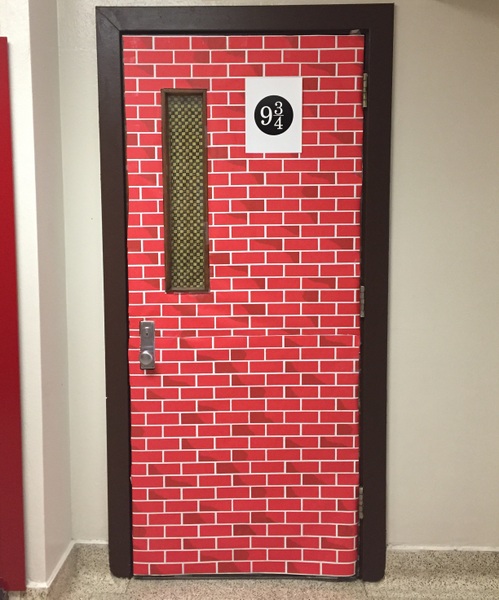
Reddit user 86thdj shared their wife’s classroom, which she decorated with a Harry Potter theme. And it’s magical!

Reddit User 86thdj Imgur Potter Classroom1
Reddit User 86thdj on Imgur
Reddit User 86thdj Imgur Potter Classroom2
Reddit User 86thdj on Imgur
Reddit User 86thdj Imgur Potter Classroom3
Reddit User 86thdj on Imgur
Reddit User 86thdj Imgur Potter Classroom4
Reddit User 86thdj on Imgur

Make sure you see the rest of the photos on Imgur.

I just love the 9 ¾ door and the flying envelopes – very low effort but big impact. And that’s not all – first of all, every student will get their Hogwarts letter, and, later in the year, the kids will be quizzed and sorted into houses. The discussion on Reddit also touches on the kind of teaching that this room is meant for, so it should be helpful for other teachers.

Looks like it will be a lot of fun both for the teacher and the kids! I can’t but echo one of the commenters – “So awesome!! Keep being amazing!!”

In Making Stuff occasional feature, we share fun arts and crafts done by us and our fellow geeks and nerds.

Hugh Jackman to Play Odysseus?

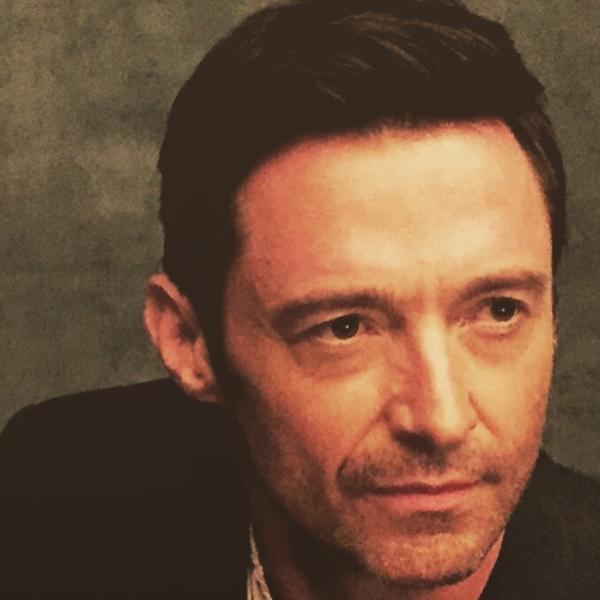
Hugh Jackman might play the eponymous protagonist in the forthcoming Odyssey movie.

Twitter Hugh Jackman

According to The Wrap,

“[…] Jackman doesn’t have a deal in place yet but has had multiple conversations with the filmmaking team about playing Odysseus, the hero of the film who embarks on a long voyage home following the conclusion of the Trojan War.”

I rather like Jackman’s work, and it also turns out he has actual Greek ancestry which is nice. (Too bad that Chris Sarandon, who also is of Greek issue, is too old now; he’d make a wonderful Dread Pirate Roberts Odysseus.)

Image: Hugh Jackman on Twitter

Hey, look! We found a thing on the internet! We thought it was cool, and wanted to share it with you.

OMG OMG OMG OMG – Worldcon 2017 in Helsinki!

The biiiig thing in the SFF fandom this year has been the Hugo kerfuffle. Erik and I have followed and talked about it, but engaged more with the 2017 Worldcon campaign. Helsinki in 2017 is one of four bids, competing with D.C., Montreal, and Nippon.

I haven’t been involved with Worldcons before, but the prospect of a major international con in Finland, during our centennial of independence to boot, was just too good to pass. As a Finn and a part of the Finnish fandom, I know Finns put together smooth, professional, kick-ass events.

hki2017-logo

Site selection for the 2017 con was decided by voting among this year’s Worldcon members. Voting closed last night. Aaaaaand we won!

Kermit flail!

Kermit Flail

At this writing, the results are still unofficial, but as they are undisputed, it’s pretty much a given that we’ll have a Finnish Worldcon.

I’m so, so happy for my compatriots and co-geeks, and thankful to everyone who voted and spread the word. We did it! Suurkiitos!

Disclaimer: I’m a supporter of the bid, and also sewed a bunch of items bearing the bid logo for the bid to give away. More at my business blog and Flickr.

Kermit flail image: Via Walker—Bait on Tumblr.

Visual Inspiration: Ostrich Riding

Last week, I shared the image of an ostrich cart. There must’ve been random serendipity rays in the air, because this week I happened on a photo of someone actually riding an ostrich:

Man riding an ostrich at the Cawston ostrich farm, South Pasadena, California. Via Elle Decor, June 2014, p. 67.

Cawston ostrich farm. Postcard by Detroit Photographic Company; South Pasadena, California, unknown date. From the collection of Marc Walter, published in An American Odyssey: Photos from the Detroit Photographic Company, 1888-1924, by Marc Walter and Sabine Arqué (Taschen, 2014). Found in Elle Decor magazine, June 2014, p. 67.

Huh. I used to think that the various tallstrider or hawkstrider type mounts in World of Warcraft were based more on fantasy than fact. I’m sure large birds come with a host of training and handling issues, but apparently it’s not as far-fetched as I thought. On the other hand, having grown up two hours south of the Arctic Circle and traveled in Lapland multiple times, seeing reindeer doesn’t make me bat an eye. Just goes to show how our experiences influence our sense of normal. 🙂

The Visual Inspiration occasional feature pulls the unusual from our world to inspire design, story-telling, and worldbuilding. If stuff like this already exists, what else could we imagine?

Visual Inspiration: Ostrich Carts

Ostrich pulling a cart at the Los Angeles Ostrich Farm. Via William H. Hannon Library, Loyola Marymount University.


Ostrich pulling a cart at the Los Angeles Ostrich Farm. Postcard by unknown; Lincoln Park, Los Angeles, California, 1919. From the Werner von Boltenstern Postcard Collection; Department of Archives and Special Collections, William H. Hannon Library, Loyola Marymount University. In public domain.

Why do fantasy stories so often employ equines as beasts of burden, when you could breed large birds for the task? In our world, humans do have a long history with the horse family, but who’s to say that in another, more SFFnal one you couldn’t find giant versions of armadillos, capybaras, or rats used for transportation? Or faster, large-scale chameleons?

The Visual Inspiration occasional feature pulls the unusual from our world to inspire design, story-telling, and worldbuilding. If stuff like this already exists, what else could we imagine?

Hugo Voting, “Good” Stories, and Politics

I just submitted my Hugo ballot for 2015. We’ll know soon enough who won what. We’ve had months of online arguing about who should win and why, and I’m sure we’ll soon have months of arguing about who won and why, and if you’re at all like me, you’re sick to death of the whole business. So, I’m not going to talk about who I voted for or why I think they should win. Instead, I want to talk about two ideas that have arisen from the conversations that have unfolded around the Hugos this year. Both have to do with how we evaluate stories and both, I think, are founded in misguided ideas about what a story is.

The ideas I’m talking about are:

1. “We should vote for stories that are good, not just the ones we like”

Most of the time, I like things because I think they are good and I think things are good because I like them.

There’s some slippage around the edges. There are some things that I can see are technically well executed, but that I don’t enjoy (The Hunger Games, the rebooted Battlestar Galactica), and there are some things I enjoy despite their technical failings (early-season Star Trek: The Next Generation, The Princess Bride). For the most part, though, the overlap between “stuff I like” and “stuff I think is good” comes pretty close to 100%.

There is no objective standard of what makes a story “good.” You can’t measure and quantify it. There are things that a lot of people agree on about what makes for a good story, but subjectivity in large amounts is not the same as objectivity. Lots of people think that Ender’s Game is a great work of science fiction, but in the end all that means is that lots of people like it.

Calling on people to vote for stories that are “good” is meaningless. If nothing else, the controversy around this year’s Hugo nominees has been an excellent demonstration of the fact that we all have different definitions of what good means. We vote for the stories we like because those are the stories we think are good. The winners will be the stories that the greatest number of people liked, and that’s all there is to it.

2. “We shouldn’t judge a story on whether we agree with its politics or not”

As one of my college writing teachers told us: “A story is an experiment in moral physics.” At the core of a story, any story, is an idea about how the world does, could, or should work. You can call that politics or a message, but all it is in the end is an idea, and an idea that shapes how the world of a story works and how its characters interact with one another is just as integral to that story as any other element.

It is just as legitimate to judge a story on its ideas as on its plot, characters, dialogue, or any other element. A vital part of what make so many of us love, say, The Lord of the Rings is the idea that doing the right thing matters, even when it seems like no one will ever notice or care. Without that guiding idea, the story would not be at all the same. When we are deciding whether we like a story or not, we cannot take the ideas of that story out of the picture and it would be a mistake to try.

And that is all I have to say about the 2015 Hugos. You pay your money and you cast your vote. We’ll see the results soon enough.

Story Time is an occasional feature all about stories and story-telling. Whether it’s on the page or on the screen, this is about how stories work and what makes us love the ones we love.

Do-It-Yourself Fantasy Place Name Generator

Writing a fantasy story or role-playing scenario? Need to come up with names for towns, rivers, mountain ranges and so on, but tired of thinking up new names all the time? Here’s a handy technique I use. It takes a little work up front, but then it makes coming up with new names really easy.

The thing about place names is: when you dig down deep into their meaning, they’re usually really obvious and descriptive. It’s only time and language change that obscures their meaning.

Look at a map of Europe and you’ll find Copenhagen (“merchant harbor”) and Dublin (“black pool”). In Asia there’s Shanghai (“above the sea”) and Samarkand (“stone fortress”). The same applies to the native names anywhere else in the world. In places that have experienced substantial colonization, the conquerors often imported old names that didn’t relate to the landscape (New York, Wellington), but in other cases the new names given by colonizers were just as descriptive (Cape Town, Salt Lake City).

The reasons for this naming pattern are fairly straightforward. If you live in a landscape where there are several rivers, but only one of them is muddy, or plenty of mountains, but there’s a big one with no trees on top, when you need to refer to that river or that mountain, you’re likely to say: “the black river” or “the bald mountain.” From there it’s only a short step to calling them “Black River” and “Bald Mountain”. As time goes on and language changes, place names tend to become fossilized and preserve older variants and meanings that the rest of the language has left behind.

So, put these facts to work for you. When you’re setting up your map, generate a list of place name elements and then you can quickly combine them to make new names for whatever you need.

Here’s how it works:

Continue reading

Fantastic Worlds Exhibit at The Smithsonian

The Smithsonian’s new exhibit Fantastic Worlds: Science and Fiction, 1780-1910 opened on July 01, 2015. In addition to the physical exhibit, the Smithsonian Libraries provide an online version.

The Smithsonian Libraries online exhibit Fantastic Worlds.

From the online exhibit description:

“Travel with us to the surface of the moon, the center of the earth, and the depths of the ocean — to the fantastic worlds of fiction inspired by 19th-century discovery and invention.

“New frontiers of science were emerging. We took to the air, charted remote corners of the earth, and harnessed the power of steam and electricity. We began unlocking the secrets of the natural world. The growing literate middle class gave science a new and avid public audience. Writers explored the farther reaches of the new scientific landscape to craft novels, hoaxes, and satires.”

The online exhibit reveals a new thematic component (or chapter) each Tuesday. So far we’ve seen “Terra Incognita” and The Age of the Aeronaut”. The chapters include images, maps, and videos, plus intriguing curator’s notes. Sounds great for early science fiction and fantasy enthusiasts, as well as people interested in the history of exploration or late 1700s to 1800s.

Found via Smithsonian Libraries on Tumblr.

Out There is an occasional feature highlighting intriguing art, spaces, places, phenomena, flora, and fauna.