At the end of last year, I wanted to make myself something fun. Since the new Star Wars release date was coming up, that something turned out to be a BB-8 bag.
I used an old pair of pants and various fabric scraps to make it, so the materials were completely free. The bag took me a few nights to make – combining all of those little pieces adds up surprisingly fast. The most time-consuming part for me, though, was deciding on the droid design.
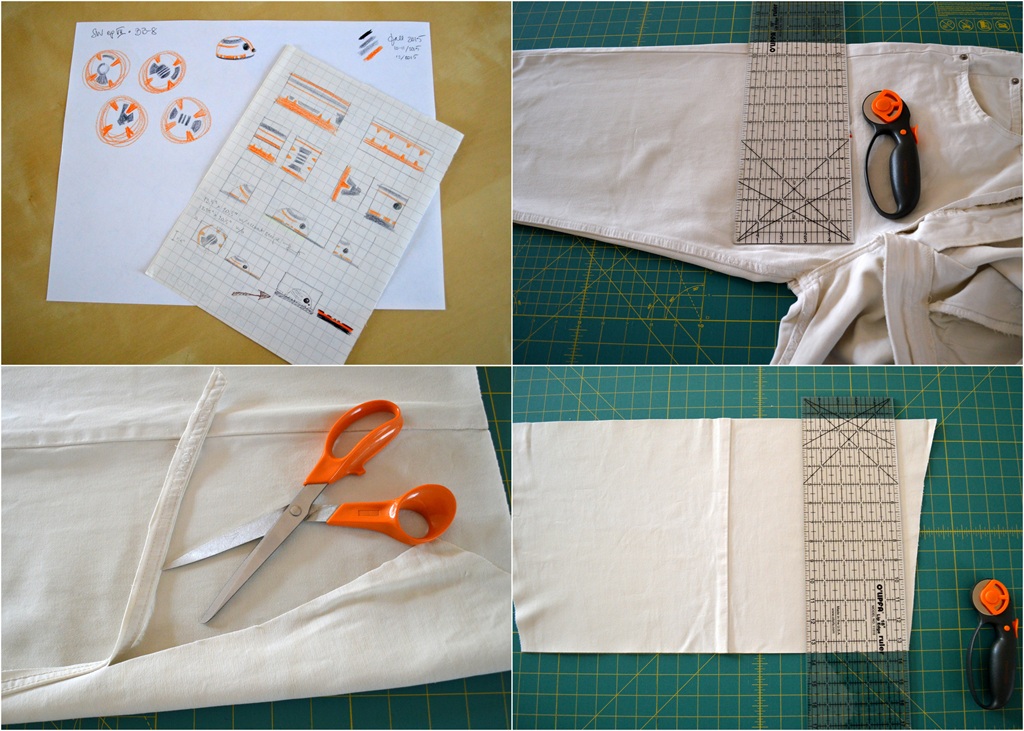
Here’s a quick how-to in pictures:
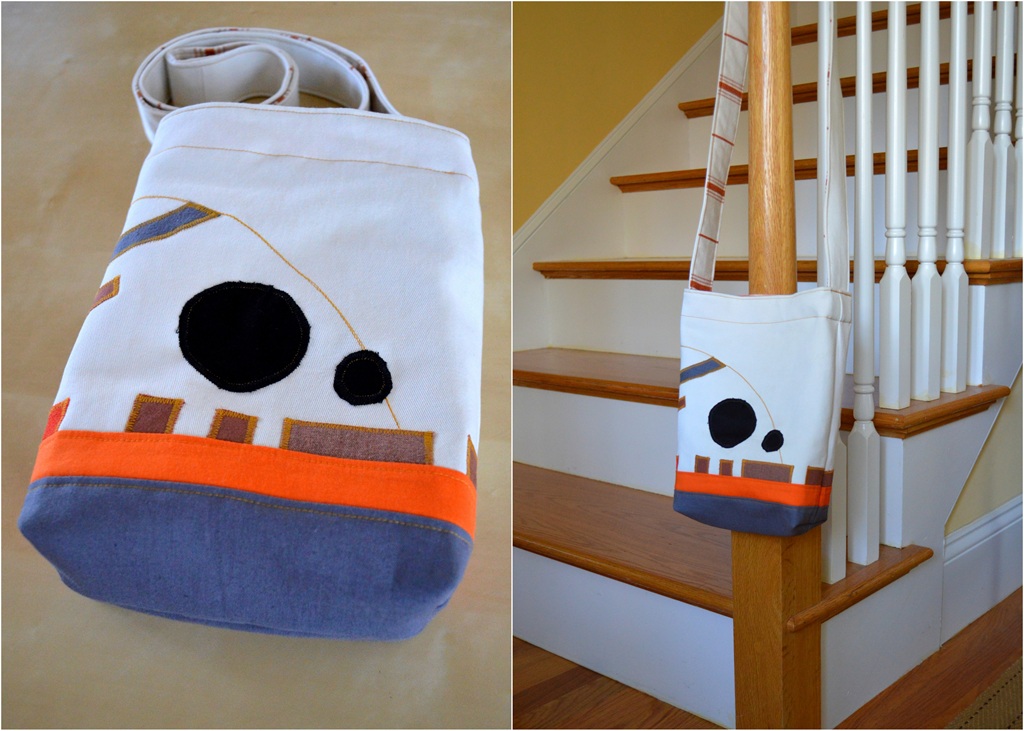
1 of 4: Deciding on the droid design and cutting as large piece as possible from one pant leg. 2 of 4: Adding stripes and pieces of fabric to the outside to suggest pieces of the droid. 3 of 4: Making box corners, adding an edge binding strip to the top, and adding an inner pocket. 4 of 4: Finished bag.
Not bad for a little fur ball zero dollars! 🙂 If I were to make another, though, I’d probably try a different droid design and fiddle with the inner pocket so that it has more compartments.
Images by Eppu Jensen
This post has been edited.
In Making Stuff occasional feature, we share fun arts and crafts done by us and our fellow geeks and nerds.
You ever leave a comment on someone’s blog, or at least try to, logged in your WordPress account already, happily press the “Post Comment” button, having already confirmed that your little Gravatar icon shows up correctly, only to have the &$%#&%* platform turn on you to ask “Are you [username]? You are being asked to login because [your email address] is used by an account you are not logged into now”?
WHY YES I AM ME, THAT’S WHY I’M FRACKING LOGGED IN ALREADY DID YOU NOT FRACKING SEE MY LOGIN!!!
Sure, there might be a solution to the problem, but it requires research that you don’t presently have the time for. As if you need another item on your to-do list, anyway, so you just put up with the stupidity. And besides, shouldn’t the point of saving your settings be that once you save ’em, they’re available for future use. RAAAAHHH!
Aerial view of part of the Great Zimbabwe complex, photograph by Janice Bell via Wikimedia
Great Zimbabwe is a ruined city in Zimbabwe (and in fact has given the modern country its name). Built over centuries beginning in the 9th century, the site was a center of power for the medieval Shona (or Kalanga) kingdom and part of the trade networks that spanned the Indian Ocean. It was abandoned in the 15th century and stands in ruins today, but even in its ruined state it is impressive.
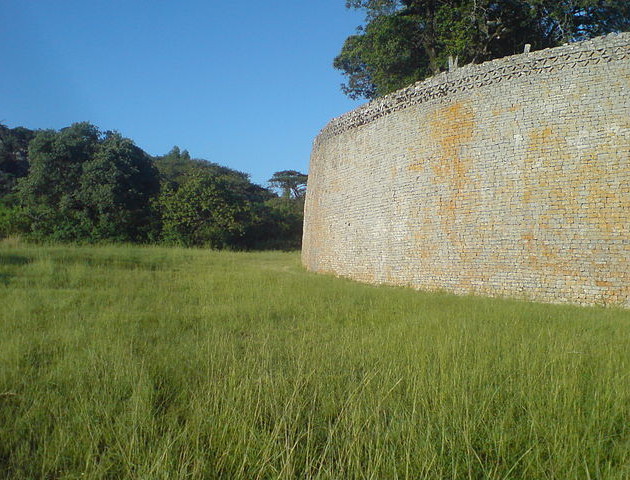
Wall of the great enclosure, photograph by Jens Klinzing via Wikimedia
The remains of numerous stone enclosures spread over hundreds of hectares. At its height, Great Zimbabwe may have housed between 15,000 and 20,000 people. The surviving walls reach heights of five meters and are built of stone blocks assembled without mortar. Several different complexes occupy different positions ranging from hills to near the river. The significance of these different complexes remains unclear, but it may indicate that the center of settlement gradually moved over time, away from the more defensible hill sites to the more accessible valley sites, perhaps to better engage with the oceanic trade networks. Ivory and gold were Great Zimbabwe’s major international exports and trade goods from the Arabian peninsula and China have been found at the site.
Interior walkway showing the quality of the stonework via Wikimedia
One noteworthy feature of the enclosures is their shape: neither rectangular nor circular but irregular curved shapes adapted to the forms of the landscape on which they sit.
In the colonial period, popular theories held that the site must have been built by ancient European or Asian colonizers. The biblical Queen of Sheba was often mentioned in connection with the site. Although archaeologists realized as early as the early twentieth century that Great Zimbabwe had been built by Africans, the colonial administration in what was then Rhodesia suppressed any such claim. The assertion that Africans were incapable of building such a complex site and needed European guidance to achieve any level of civilization was key to the justification of imperial domination. Colonial authorities could not tolerate any evidence that Africans were capable of creating sophisticated works of art and architecture on their own.
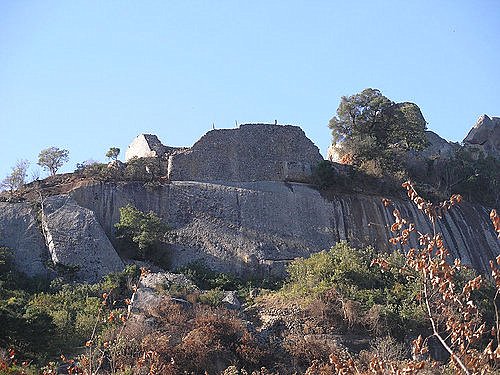
Part of the hill complex seen from the valley below, photograph by Macvivo via Wikimedia
Thoughts for writers
I have two reasons for sharing a little bit of Great Zimbabwe.
First, it is another example of architecture that does not depend on European examples. When doing our worldbuilding as writers, it is easy to fall back on the things that are familiar: European castles, Egyptian pyramids, Greek temples, and the other things we’ve seen before. Let yourself be inspired by the other amazing things people have built. I’d love to see a city inspired by Great Zimbabwe at its height turn up in a fantasy story, even one not set in an explicitly African-inspired world.
Second, this is another example of how politics can screw up good historical scholarship and so why you need to read broadly and get outside familiar frames of reference. Even today, while the Queen of Sheba is generally left out of it, claims that Great Zimbabwe was built by Arabs or Phoenicians still occasionally creep into popular histories.
History for Writers is a weekly feature which looks at how history can be a fiction writer’s most useful tool. From worldbuilding to dialogue, history helps you write. Check out the introduction to History for Writershere.
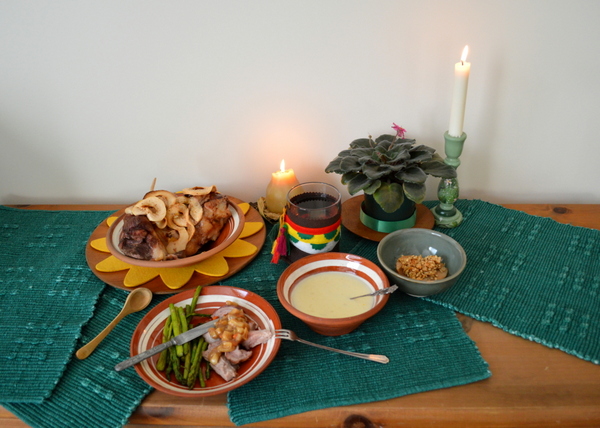
Roast pork with apples, root vegetables, and ginger gravy
Roasted asparagus
Stuffed pears
Red wine
As Elves love song and Dwarves love the gems of the earth, so Hobbits love their food. We know more about Hobbit food than about the cuisine of any other culture on Middle Earth, so it is a surprise to find that in the description of the festivities for Bilbo Baggins’s 111th birthday, we learn nothing about what was actually on the table. (Though clearly there was plenty of it, whatever it was.) That means that for our very first Middle Earth dinner, we have to use a little imagination. Fortunately, there’s a lot to go on.
Since this is a party of special magnificence (with supplies brought in all the way from Dale), I’ve tried to make a combination of typical Hobbit fare with a few special or exotic twists.
“When every guest had been welcomed and was finally inside the gate, there were songs, dances, music, games, and, of course, food and drink. There were three official meals: lunch, tea, and dinner (or supper). But lunch and tea were marked chiefly by the fact that at those times all the guests were sitting down and eating together. At other times there were merely lots of people eating and drinking – continuously from elevenses until six-thirty, when the fireworks started.”
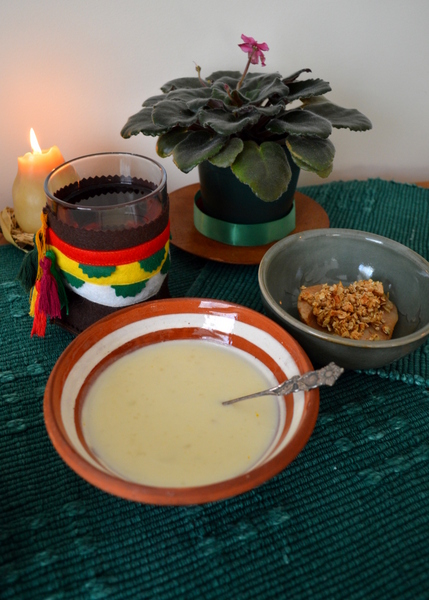
Our version of Bilbo Baggins’s party of special magnificence begins with an appetizer of potato and cream soup, followed by roast pork and root vegetables served with ginger gravy and asparagus on the side. It ends in dessert, with baked stuffed pears. (Of course, in proper Hobbit fashion, you may start and end with whatever you like.) A glass of red wine washes it all down.
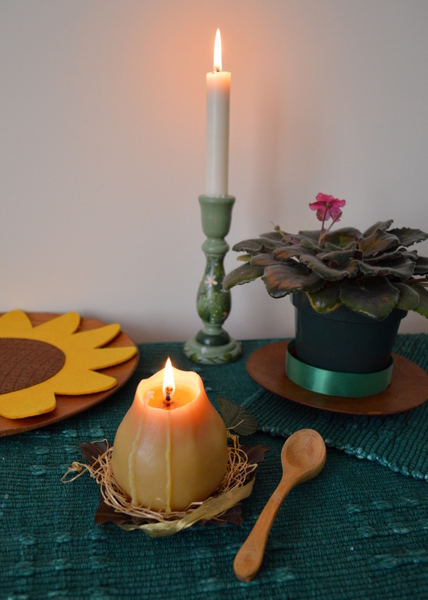
Our imagined table comes with a variety of kitchenware styles. Glass and green glazed crockery complement basic redware pottery. There are wood and metal utensils, including a fork and silver soup spoon. The colors green and yellow were pulled from the general description of Hobbits’ preferences. A potted plant and candles finish off the table setting.
Sometimes writing fiction means not just moving a few characters around the map but planning entire campaigns for massive armies. In previous entries in the travel series we looked at some basic issues and how small groups travel on foot. For large groups on foot, much of what we discussed in those entries is relevant, but large groups of people, like armies or mass migrations, bring with them their own set of problems. Today we’ll look at some basic questions in the movement of large groups: How large is “large?” What did it take to make the journey successfully? How far could they travel? And how fast?
This post is written with a particular focus on armies, since they are the best-studied large groups that traveled in the pre-industrial world, but any sufficiently large group of people traveling by foot would face the same basic problems.
Actor Alan Rickman has passed. Apart from a fantastic Professor Severus Snape, Rickman brought to life both on stage and screen numerous other characters, including my favorite Colonel Brandon in the 1995 adaptation of Jane Austen’s Sense & Sensibility.
I also have fond memories of his performance as Alexander Dane / Dr. Lazarus in Galaxy Quest and the sheriff of Nottingham in Robin Hood: Prince of Thieves (with the unforgettable delivery of “Because it is dull, you twit, it’ll hurt more!”, on the desirability of a spoon as a torture device).
ITV Studios is producing a new Beowulf adaptation. Named Beowulf: Return to the Shieldlands, the mini-series puts a modern spin on one of the oldest poems in Old English. According to Esquire Network:
“Based on the complex protagonist of a classic poem written between the eighth and tenth century, Beowulf takes place in a mythological place, The Shieldlands, and challenges the notions of good and evil, heroes and villains, and the rule of law against one’s moral code. The drama stars Kieran Bew (DA VINCI’S DEMONS), in the lead role Beowulf; multi-award- winning actor William Hurt (DAMAGES); acclaimed actress Joanne Whalley (WOLF HALL); Ed Speleers (DOWNTON ABBEY) and David Ajala (BLACK BOX).”
Beowulf: RttS started airing in U.K early January 2016, and Esquire Network is bringing it to U.S. January 23. Location work for the production was shot in the north east of England, in county Durham and Northumberland; 13 episodes have been produced so far. The show has a very perfunctory Instagram account and a more active Facebook page. There’s also a behind the scenes piece with live action clips:
Beowulf Behind The Scenes The World Revealed with Kieran Bew and Ed Speleers via Esquire Network
Beowulf: RttS definitely holds some promise. Apart from being inspired by Actual History(TM) and Anglo-Saxons / Old English to boot, it sounds like there’s some gender-bending (International Business Times reports a “new female thane”); in addition, photos include not just white men among the cast (see MedievalPOC and Farawaysite.com).
While I’m excited about the recent resurgence of genre films and tv productions in general, I’m discouraged by the apparent lack of quality control that comes with trying to ride the trend to make a quick buck. (Vikings, The Mortal Instruments: City of Bones, or 2015 Fantastic Four, anyone?)
Sadly, it sounds like Beowulf: RttS might be one of them: according to U.K news site Metro, viewers criticize the series for its “unconvincing CGI, stilted dialogue and unrealistic action sequences” and as “a blatant rip-off ” of Game of Thrones. I can add to the list some decidedly silly costuming and a peculiar combination of plausible and fanciful in the sets and props. I’m torn whether to give it a shot or not – on one hand, it’s based on Beowulf, for crying out loud; on the other, WTF is going on with the design!?
In the Seen on Screen occasional feature, we discuss movies and television shows of interest.
“As for the Hobbits of the Shire, with whom these tales are concerned, in the days of their peace and prosperity they were a merry folk… with mouths apt to laughter, and to eating and drinking. And laugh they did, and eat, and drink, often and heartily, being fond of simple jests at all times, and of six meals a day (when they could get them).”
So Tolkien introduces us to his Hobbits, lovers of good food and good company. There is plenty of eating and drinking in The Lord of the Rings, from humble Hobbit fare to Elven delicacies, from the foraged meals of rangers in the wild to the feasts of great kings.
In 2016, we’re taking up a project to eat our way through The Lord of the Rings. Every month, we’ll prepare and present a dinner inspired by foods from the novel, working our way through the story from Bilbo’s 111th birthday party to Frodo’s return to the Shire. Along the way, there are some meals that Tolkien describes in such detail that we can read the menu straight from the page. In other places, he offers only tantalizing hints that require us to engage in gastronomical-literary archaeology to fill a table.
We’re doing our best to stay true to the novel in the project, so where Tolkien gives us a clear idea of what the characters eat, we stick to it. When we have to figure something out on our own, we use clues from The Lord of the Rings and The Hobbit and ideas from historical cookery to guide us.
We’ll share the results of our work with you around the middle of the month. A post introducing the month’s meal and showing the results of our labors will come out on a Wednesday. The following day, we’ll offer a behind-the-scenes view of how we researched the food, decided on a menu, prepared the dishes, and designed the setting, complete with recipes you can try for yourselves. We’ll collect links to all the entries on this post, so you can always come back here to get caught up, or check the dining in Middle Earth tag to find them all.
A note on the behind-the-scenes posts: we’ll be referencing passages from the book and since there are many different editions of the text with different paginations, we’re using the book and chapter divisions given in Tolkien’s table of contents. For example, the first half of The Fellowship of the Ring is identified as Book 1. In that book, chapter 4 is “A Short Cut to Mushrooms,” so we reference that chapter as (1.4); we reference Hobbit chapters with (H).








 Co-Geeking


You must be logged in to post a comment.