First Captain Marvel Trailer

The first official Captain Marvel trailer just dropped today, and it’s AWESOME!

Marvel Studios’ Captain Marvel – Official Trailer by Marvel Entertainment on YouTube

The below reaction is pretty accurate:

io9 Tom Hiddlestons Loki Whee Gif

Okay, granted, it doesn’t show much yet beyond glimpses. I know nothing of the comic book version of Carol Danvers to begin with, nor do I know whether a rumor saying the movie won’t be dealing with her origin story is true or not. What impressed me, though, is how much the trailer highlighted her determination, standing up time and again after falling down.

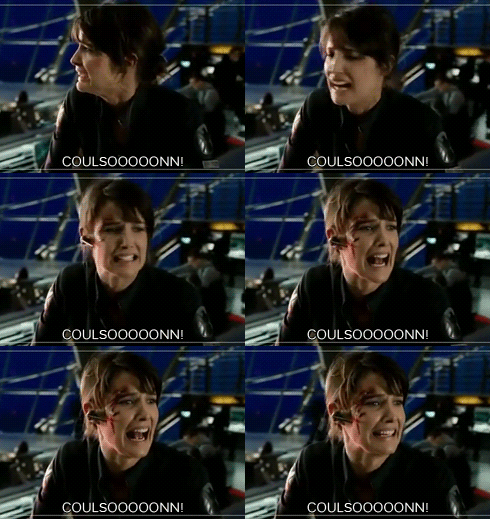
It was also great to see younger, sprightlier Nick Fury. Not to mention Coulsooooon!

Tumblr The Playlist Cobie Smulders Coulson1Tumblr The Playlist Cobie Smulders Coulson2Tumblr The Playlist Cobie Smulders Coulson3Tumblr The Playlist Cobie Smulders Coulson4

(As an aside and half-serious at that: as someone who’s going to turn into a little old lady at some point, I hope there’s a darned good reason for Danvers’s punch!)

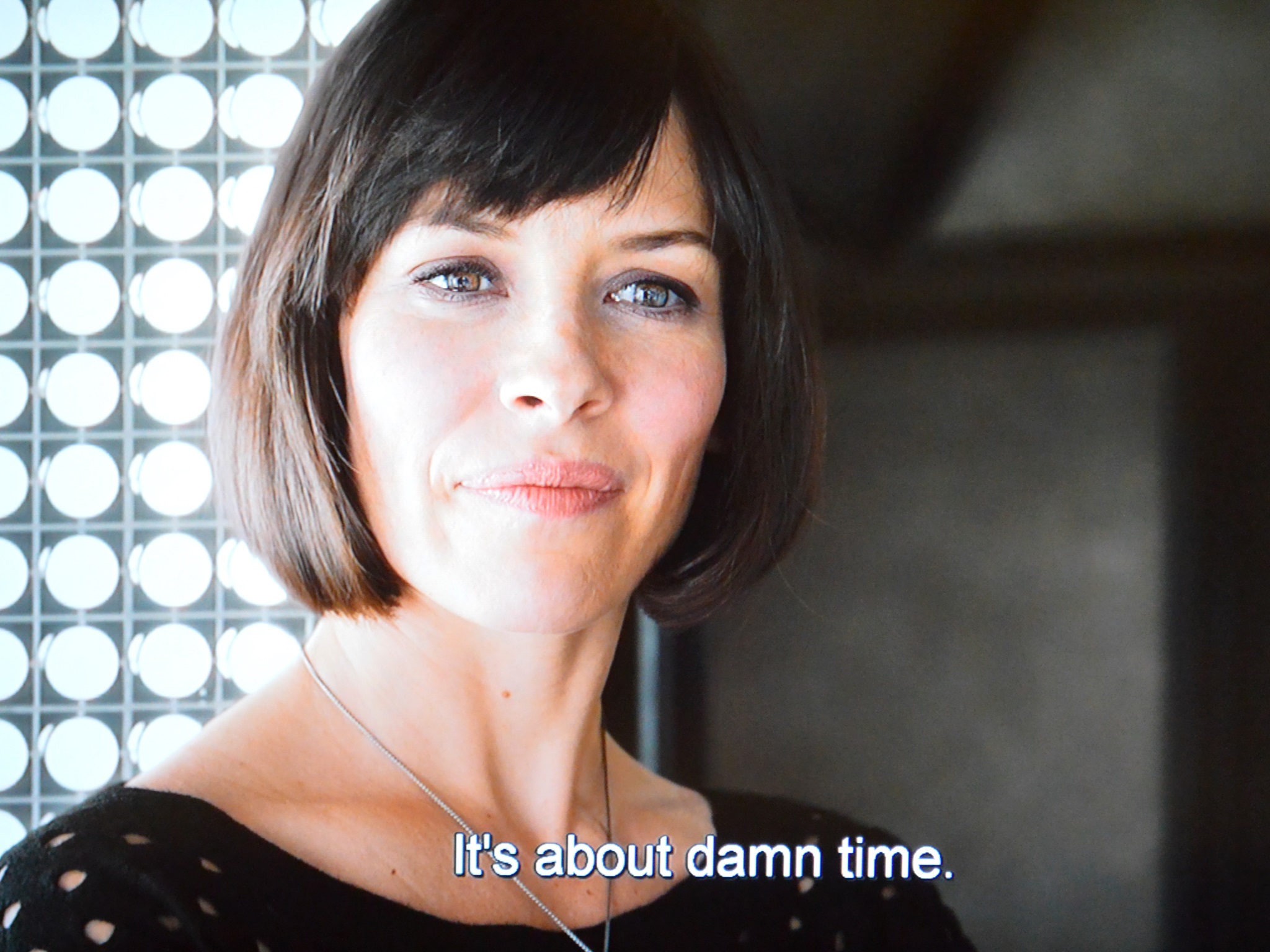
Last, a LOUD-AS-HELL YAY for no boob armor, nor sexy boob-butt-thigh poses. Frickin’ finally!

Ant-Man Its About Time

The movie opens March 8, 2019. Can’t wait!

Images: Tom Hiddleston as Loki whee gif via a comment on io9.com. Gifs of Cobie Smulders as Maria Hill from The Avengers’ blooper reel via The Playlist on Tumblr. Evangeline Lilly as Hope Van Dyne screencapped from one of the stingers at the end of Ant-Man.

Hey, look! We found a thing on the internet! We thought it was cool, and wanted to share it with you.

WoW’s Dalaran Cupola Library vs. Real Round Libraries

I was browsing my WoW screencaps for something entirely different when my eye fell on two shots from the Dalaran inscription trainer’s place. (This is in the Legion version of Dalaran.) Both are actually from inside the book-filled cupola: the first looks up towards the impossibly high ceiling, the second down towards the trainers’ room floor.

WoW Dalaran Inscription Tr Book Dome2 Sm

WoW Dalaran Inscription Tr Book Dome Sm

Neat, right? Well, I wondered whether anyone’s actually done anything similar for real and hit the Internet. And I found some!

Stockholm Public Library in Stockholm, Sweden

The functionalist stadsbibliotek was designed by Gunnar Asplund and opened in 1928.

Flickr Marcus Hansson Stockholm Public Library


Round Reading Room in the Maughan Library, King’s College London in London, UK

The Round Reading Room of Maughan Library, the main university library of King’s College London, can be found on the Strand Campus.

Wikimedia Kings College London Maughan Lib Round Reading Room Sm


Picton Reading Room in Liverpool, UK

The Picton Reading Room, completed in 1879, is now part of the Liverpool Central Library.

Flickr Terry Kearney Liverpool Central Library Picton Reading Room


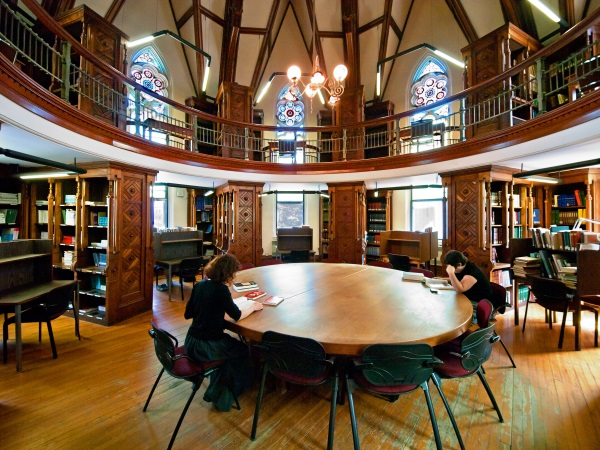
A home in Toronto, Ontario

Designed by Katherine Newman and Peter Cebulak, this two-level library is in a private residence in Toronto, Ontario, Canada.

Architectural Digest Toronto Ontario Home


The Octagon Room, Islamic Studies Library at McGill University in Montreal, Quebec, Canada

The library is situated in the neo-Gothic Morrice Hall building that previously housed the Presbyterian College of Montreal from 1871 to 1961.

McGill Islamic Studies Library Klaus Fiedler Sm


None of them are exactly the same as the game library cupola, of course: apart from the the scale of the rooms, the scale and direction of the bookcases might differ. But apparently it isn’t terribly far-fetched to make a round multi-storey library and pack it chock-full. 😀

Images: Stockholm Public Library by Marcus Hansson on Flickr (CC BY 2.0). Round Reading Room of Maughan Library by Colin via Wikimedia Commons (CC BY-SA 4.0). Picton Reading Room by Terry Kearney on Flickr (CC BY-NC 2.0). Toronto home by Tony Soluri via Architectural Digest. Islamic Studies Library at McGill by Klaus Fiedler, McGill Library.

Out There is an occasional feature highlighting intriguing art, spaces, places, phenomena, flora, and fauna.

Oldest Surviving Maya Codex Declared Authentic

According to CBC News, a thousand-year-old Maya text has been authenticated by scholars at Mexico’s National Institute of History and Anthropology (Instituto Nacional de Antropología e Historia, or INAH).

The pictographic calendar-style text was made between 1021 and 1154 CE, and is the oldest known pre-Hispanic manuscript from the Americas. It was made from three layers of amate paper (bark paper). Only 10 pages of a conjectured set of at least 20 sheets currently survive.
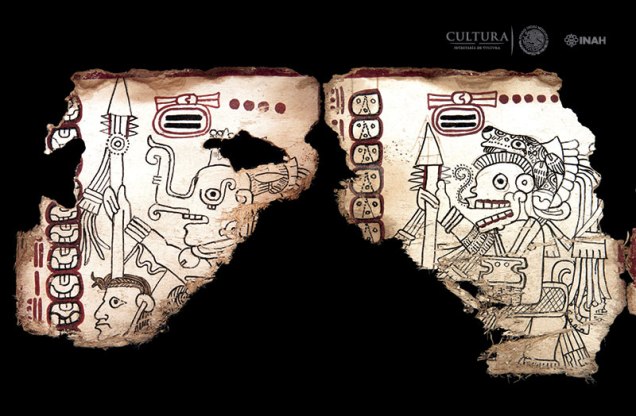
INAH Mexico Maya Codex Photo 10

The document’s authenticity was questioned on the basis of two main concerns: missing archaeological records of its original context (due to it having been looted and traded), and its differing style compared to other authenticated Mayan codices.

According to Sofia Martínez del Campo from the National Coordination of Museums and Exhibitions (Coordinación Nacional de Museos y Exposiciones del instituto, or CNME, at INAH), quoted in the INAH announcement, the current analysis included making a detailed photographic record, as well as examining the dating, materials, entomology, iconography, chemical-mineralogical characterization, morphometry, chronology, style, and symbolism, among others.
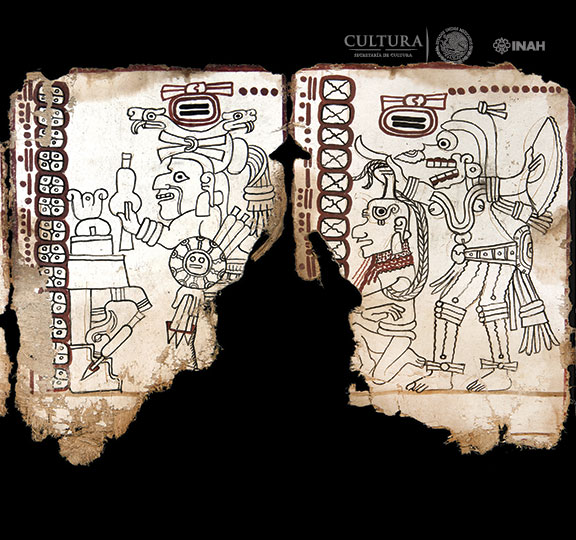
INAH Mexico Maya Codex Photo 5

The specialists found the presence of Maya blue color (azul maya) and pigments based on cochineal dye as well as leftover drops of a chapopote resin. (Britannica says: “[…] chapopote [was a] a native asphalt commonly applied to clay figurines as a decoration; occasionally, chapopote entirely covers the figures, while in other examples it is used to decorate only the face, mouth, or eyes.”)

INAH Alba Barrios-Laboratorios Analysis

In addition, INAH announced that the folding book will no longer be known by its previous name (Grolier); instead, the work will be known as Mexico Maya Codex (Códice Maya de México).
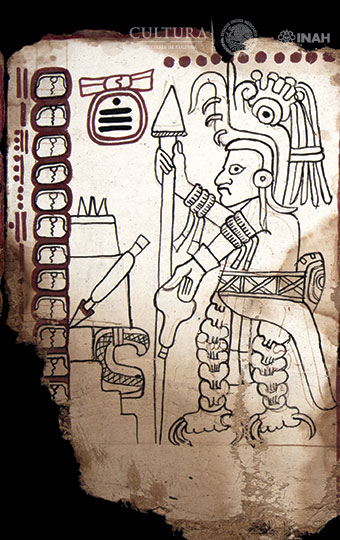
INAH Mexico Maya Codex Photo 9

The Mexico Maya Codex will be shown to the public for one month, from September 27 to the end of October, 2018, as part of the International Book Fair of Anthropology and History (Feria Internacional del Libro de Antropología e Historia, or FILAH).

Also during the FILAH book fair the book El Códice Maya de México (The Mexico Maya Codex) will be released. It will include a facsimile edition of the pre-Hispanic text in addition to academic and scientific articles.

Only three other pre-Hispanic codices are known, called Madrid, Dresden, and Paris (for the cities where they are kept).

Visit the INAH announcement in Spanish for more details and a link to the announcement video.

Found via N. K. Jemisin on Twitter.

Apparently someone somewhere deemed an earlier analysis (reported e.g. by the Smithsonian.com in September of 2016) not conclusive enough, even though that one also authenticated the Mexico Maya Codex. (My Spanish isn’t good enough to spot any specific reasoning for the 2018 study in the INAH announcement.)

In any case, getting more information on traditional Maya religion and life before Europeans destroyed it can only be a good thing in my book—if you’ll pardon the pun. 🙂

Images of individual pages by Martirene Alcántara; laboratory analysis by Alba Barrios-Laboratorios, INAH; all via INAH.

Out There is an occasional feature highlighting intriguing art, spaces, places, phenomena, flora, and fauna.

Quotes: I’m Okay with Living in a House Where a Random “Han Solo” is a Thing That Happens

I love geeks and nerds, and being a geek / nerd. Sometimes it occurs to me, though, how terribly odd it must look like seen from the outside. Exhibit 6,430: the exchange below that Erik and I had last weekend:

Me: *mumbling to myself, trying to remember a detail from Star Wars*

Me: Han Solo

Erik: … I don’t know what that’s about, but I’m okay with living in a house where a random “Han Solo” is a thing that happens.

I’m okay with my life choices. 😀

Some things are just too silly not to share!

Quotes: Hating Didn’t Change Things

“Hating didn’t change things. The world went on regardless, far beyond the feeble lives of humankind. People could change only if they changed what lay in themselves.”

– Mai in Spirit Gate by Kate Elliott

I’ve been thinking of emotions this summer, especially negative ones. Partly it stemmed from having had to enforce my personal boundaries against an insistent violator and the outcomes from that, partly from the upsurge of racist and hateful behavior in the U.S.

I know hatred can feel like a driving force, but I also know how draining it is to live with such a strong emotion long term. I suppose in the end the universal “too much” rule of thumb applies: too much of one thing at the expense of others will lead to atrophy, both on small and large scale.

Elliott, Kate. Spirit Gate. New York, NY: Tor, 2006, p. 434.

Serving exactly what it sounds like, the Quotes feature excerpts other people’s thoughts.

Visual Inspiration: An Underground Fire from 1962 Is Still Burning

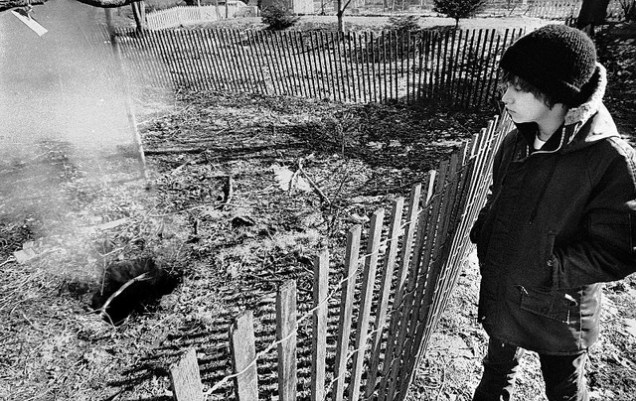
Apparently in Pennsylvania, there’s a town—Centralia—all but abandoned due to a coal mine fire that’s been burning underground since 1962.

Flickr t3hWIT Centralia PA Cracked Old Route 61

There is disagreement over the cause of the fire. It seems that one way or another a surface fire moved into the system of mining tunnels below the town.

The effects are indisputable and scary: unstable ground, sink holes, damaged roads, plumes of hot steam, vents of smoke and toxic gases (like lethal levels of carbon monoxide), and, finally, evictions plus abandoned and/or demolished buildings.

Flickr Kelly Michals Coal Fire in 2011

Flickr dfirecop AP Photo Sinkhole

Speculative fiction that takes place in a post-catastrophy world of some sort immediately comes to mind, and no wonder. Even the little that I read gave me a glimpse on the variety of reactions people can have to major environmental disruptions and their aftermath. Not to mention that photos of the abandoned parts of Centralia are stunning. They remind me of Pripyat after the Chernobyl nuclear accident, which is the closest equivalent I can think of from my childhood in Finland.

Found via Paul Cooper on Twitter. (Visit his Twitter tread for additional photos & info.)

Images: Cracked old Route 61 by t3hWIT on Flickr (CC BY-NC 2.0). Coal fire in 2011 by Kelly Michals on Flickr (CC BY-NC 2.0). Sinkhole from Feb. 14, 1981, by AP Photo via dfirecop on Flickr.

The Visual Inspiration occasional feature pulls the unusual from our world to inspire design, story-telling, and worldbuilding. If stuff like this already exists, what else could we imagine?

DIY Star Wars Marquee

Ashley DIYed a really cool Star Wars marquee. It even lights up!

Handmade with Ashley diy_marquee_star_wars

The base is a handmade wooden sign stenciled, painted, and varnished.

Handmade with Ashley diy_star_wars_marquee_sign_wall_art_knockoff_tutorial-25

Wow. I don’t think I’d have the patience! Full props for such a meticulous job!

See the full tutorial at Handmade with Ashley.

In Making Stuff occasional feature, we share fun arts and crafts done by us and our fellow geeks and nerds.


1970s Concept Art of Space Habitats Courtesy of NASA Ames Research Center

In the 1970s, NASA designed potential space habitats in three basic shapes—toroid, Bernal sphere, and cylinder. Artwork depicting some of the plans has now been published in several sizes without copyright restrictions. Here’s the NASA description of the images:

“A couple of space colony summer studies were conducted at NASA Ames in the 1970s. Colonies housing about 10,000 people were designed. A number of artistic renderings of the concepts were made.”

Below are some of my favorites.

A version of cylindrical habitats has since been seen in popular media—Babylon 5, anyone?

NASA Ames Research Ctr AC75-1086 Rick Guidice Cylindrical Interior

The residential buildings look kind of cutely 1970s. (And I say this as a non-fan of the 70s aesthetic!)

NASA Ames Research Ctr AC75-1086-1 Rick Guidice Toroidal Cutaway

Apparently all of these designs were meant for thousands of people: the toroid and spherical stations could house around 10,000 and the cylinder a million. Wow. They certainly did not dream small!

Finally, two images of a Bernal sphere habitat:

NASA Ames Research Ctr AC76-1288 Don Davis Bernal Sphere Construction

NASA Ames Research Ctr AC76-1089 Rick Guidice Bernal Sphere Cutaway

Visit the NASA’s “Space Colony Art from the 1970s” page for more images and links to high-res scans.

Found via The Public Domain Review.

All images courtesy of NASA Ames Research Center: Cylindrical habitat / interior view looking out through large windows (NASA ID number AC75-1086) and toroidal / cutaway view exposing the interior (NASA ID number AC75-1086-1) by Rick Guidice. Bernal sphere / construction crew at work (NASA ID number AC76-1288) by Don Davis. Bernal sphere / cutaway view (NASA ID number AC76-1089) by Rick Guidice.

Out There is an occasional feature highlighting intriguing art, spaces, places, phenomena, flora, and fauna.