Christie and Tolkien: When the World Ends but You Keep Going

The literary works of Agatha Christie and J. R. R. Tolkien may not seem to have much in common. One wrote murder mysteries set in genteel English country houses, the other high fantasy in a mythic secondary world. When you look at the themes and ideas of their work, though, interesting parallels appear.
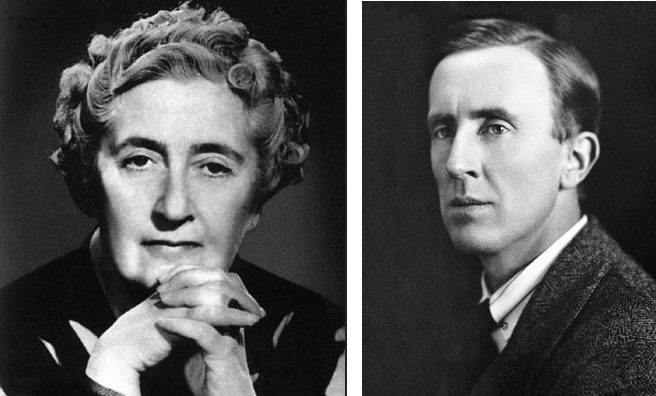
The two authors were close contemporaries; Christie was born in 1890, Tolkien in 1892. They belonged to the generation whose young adulthood was shattered by the First World War. Their experiences were different—Tolkien saw battle firsthand as an officer, Christie its terrible aftereffects as a nurse—but they both reflect the shock of the war in their writing.

One theme that occupies both writers is death. Death was, naturally, a crucial element of Christie’s murder mystery stories. In Tolkien’s legendarium, death and the things people will do out of the fear of it is a running theme. But neither writer’s work is focused on death as a fact; rather, the underlying drive in their work is a search for some way in which death makes sense.

In Christie’s case, this theme is more obvious: she writes about detectives solving crimes. By the time we reach the drawing room summation at the end of the book, we can see clearly how and why the victim or victims died. Order is restored to the world, and reason triumphs over the illogic of death, whether that reason is embodied in a fussy Belgian’s love for methodical neatness or a wise spinster’s deep observation of human nature.

In Tolkien’s work, the drive to make sense of death is subtler. Death often appears pointless in Tolkien. Boromir dies defending Merry and Pippin from Orcs, but after he falls the young Hobbits are captured nonetheless. Denethor dies in despair instead of living to see his city saved. But the larger point of Tolkien’s work is that hopelessness is an illusion. We never know the end of our own story or how profoundly the choices we make will affect the world. In the legendarium as a whole, death is the greatest mystery, but also the greatest hope. The world of Middle Earth had a beginning and will someday end, yet the spirits of mortal beings will not end with the world but transcend it through death.

It is not just the death of individuals that occupied Christie and Tolkien, but also how ways of life come to an end. They both witnessed the end of the world, in a sense. The innocence and hope of the time they grew up in perished on the battlefields of the Great War, but they did not. They kept going and witnessed as the world around them changed.

Tolkien’s The Lord of the Rings is about the ending of an age, the Third Age of Middle Earth to be precise. The story takes place during the last days before the Elves either depart into the magical west or dwindle into creatures of fairy tale and folklore, taking their beauty and wisdom with them. Yet the story also carries hope for what is to come after in the ages of Men—hope without guarantees, as Gandalf puts it. The Elf Legolas and Dwarf Gimli reflect on the promise and weaknesses of humans in the streets of Minas Tirith:

“If Gondor has such men still in these days of fading, great must have been its glory in the days of its rising.”

“And doubtless the good stone-work is the older and was wrought in the first building,” said Gimli. “It is ever so with the things that Men begin: there is a frost in Spring or a blight in Summer, and they fail of their promise.”

“Yet seldom do they fail of their seed,” said Legolas. “And that will lie in the dust and rot to spring up again in times and places unlooked-for. The deeds of Men will outlast us, Gimli.”

The Lord of the Rings. Book 5, Chapter 9, “The Last Debate”

Christie reflects the changing world in different ways, but also with hope for what the future will bring. Her early works are set in the interwar world of country estates and garden parties that we typically think of when we think of a Christie mystery, but that world was ending. She kept writing through the fifties and sixties as the life and culture of Britain changed around her.

The traces of this change are all over Christie’s writing. One of the ongoing themes in her mysteries is that it is difficult to know who people really are. Many of her plots hinge on people passing themselves off as or being mistaken for someone else. Such impersonations were possible only because the world of country villages and garden parties where everyone knew one another was ending. Miss Marple speaks of this shift in A Murder is Announced:

Fifteen years ago one knew who everybody was. The Bantrys in the big house—and the Hartnells and the Price Ridleys and the Weatherbys … They were people whose fathers and mothers and grandfathers and grandmothers, or whose aunts and uncles, had lived there before them. If somebody new came to live there, they brought letters of introduction, or they’d been in the same regiment or served in the same ship as someone there already.

But it’s not like that any more. Every village and small country place is full of people who’ve just come and settled there without any ties to bring them. The big houses have been sold, and the cottages have been converted and changed. And people just come—and all you know about them is what they say of themselves.

A Murder is Announced. Chapter 10, “Pip and Emma”

At the same time, Christie also saw that the fundamentals of human nature that underlay her stories were not changed by the passing of time. People might live differently, but they still had the same jealousies and aspirations, desires and fears as they ever had. Miss Marple, again, reflects on this fact in The Mirror Crack’d from Side to Side as she explores the new housing development at the edge of her beloved village:

She turned out of Aubrey Close and was presently in Darlington Close. She went slowly and as she went she listened avidly to the snippets of conversation between mothers wheeling prams, to the girls addressing young men, to the sinister-looking Teds (she supposed they were Teds) exchanging dark remarks with each other. Mothers came out on doorsteps calling to their children who, as usual, were busy doing all the things they had been told not to do. Children, Miss Marple reflected gratefully, never changed. And presently she began to smile, and noted down in her mind her usual series of recognitions.

That woman is just like Carry Edwards—and the dark one is just like that Hooper girl—she’ll make a mess of her marriage just like Mary Hooper did. Those boys—the dark one is just like Edward Leeke, a lot of wild talk but no harm in him—a nice boy really—the fair one is Mrs Bedwell’s Josh all over again. Nice boys, both of them. The one like Gregory Bins won’t do very well, I’m afraid. I expect he’s got the same sort of mother…

She turned a corner into Walsingham Close and her spirits rose every moment.

The new world was the same as the old. The houses were different, the streets were called Closes, the clothes were different, the voices were different, but the human beings were the same as they had always been.

The Mirror Crack’d from Side to Side. Chapter 1

Some days now it feels like we are living through the end of the world we knew, and none of us knows what will come next. In these times, there is comfort in going back to writers who lived through the end of one world and saw that there was hope in the next.

Tolkien, J. R. R. The Lord of the Rings. London: HarperCollins, 1994, p. 855.

Christie, Agatha. A Murder is Announced. London: HarperCollins, 2023, pp. 132-133.

Christie, Agatha. The Mirror Crack’d from Side to Side. London: HarperCollins, 2023, pp. 13-14.

Image: Photo collage of Agatha Christie and J. R. R. Tolkien by Erik Jensen. Photograph of Christie via Wikimedia; photograph of Tolkien via Wikimedia

Post edited to correct formatting errors

Stories in which Being Good is Smart

I’ve been thinking a bit lately about how to describe the kind of stories I want to experience, whether on the page or the screen. I’ve long known that I enjoy stories about characters solving problems. But that’s not the only thing I look for in fiction.

I enjoy reading about people who are good to one another, kind, compassionate, and generous. I don’t enjoy stories in which kindness is portrayed as weakness, or in which the most manipulative, cruel, or ruthless characters prosper at the expense of others. I want to see how being kind and treating others well is the best way to go about solving problems. I like stories in which being a good person isn’t just the right thing to do, it’s the smart thing to do.

I don’t mean stories with a moralistic bent, in which some outside force (be it divinity, fate, or just the author’s guiding hand) intervenes to reward virtue and punish vice. I don’t want to see good people win just because they are good. I want to see them win because complicated problems can’t be solved by one person acting alone, no matter how devious or ruthless they may be. Big problems only get solved by people working together, and the best way to get people working together is to treat them decently.

Here are a few my favorite stories on page and screen that fit what I’m looking for.

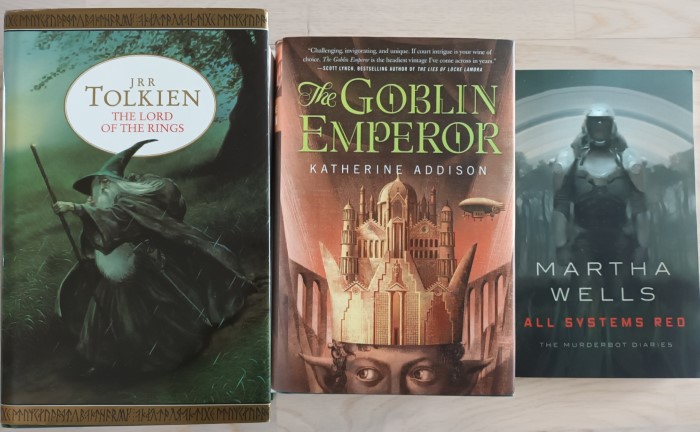
J. R. R. Tolkien’s The Lord of the Rings is a tale of cosmic good and evil, but one that plays out on the individual level. The forces of good ultimately triumph because many individual people, some of them quite small and unimportant, choose the good of others over their own safety or comfort. Katherine Addison’s The Goblin Emperor follows Maia, a neglected half-goblin prince, as he is thrust by circumstance onto the throne of an Elvish empire. Maia is surrounded by devious plotters and dangerous revolutionaries, but he keeps his throne and his head by listening to others, finding trustworthy allies, and being compassionate to the weak and vulnerable. In Martha Wells’s Murderbot Diaries series, the sarcastically self-named Murderbot is a human/machine construct designed by a ruthless ultra-capitalist corporation to fight and kill, but who would rather just be left alone to watch media. Over the course of the stories, it discovers humans who are not ruthless ultra-capitalists, whom it ends up learning to trust and value.

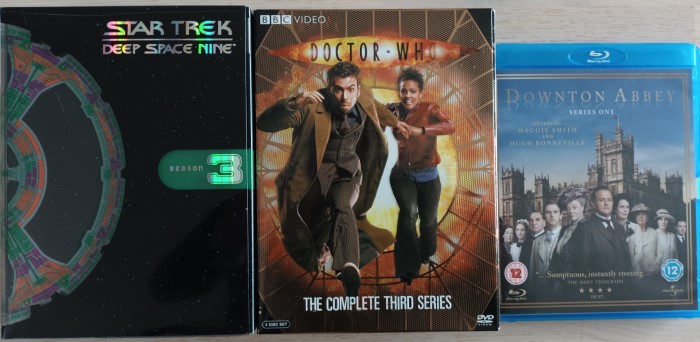
Star Trek is all about characters being good. Deep Space Nine pushes its characters to the limits of the universe’s hopeful utopianism through trauma and war, but ultimately finds them trusting one another, working together, and finding compassion even for their most implacable enemies. In Doctor Who, the wandering Time Lord stumbles into one disaster after another, but approaches them all with a spirit of hope and understanding, asking questions always and shooting never. Downton Abbey follows the inhabitants of the titular manor, both the family upstairs and the staff downstairs, through the tumultuous social changes of the early twentieth century. All the characters have their flaws, and some can be quite vicious, but the series follows how the characters come to rely on one another, and how even the most mercenary of them learn that kindness and compassion are vital for surviving in a changing world.

These are the kinds of stories I want more of: people being good or learning to be good, not just because it’s the right thing to do, but because it works.

Images by Erik Jensen

Some Cozy Fiction Favorites

Recently I’ve been very drawn to cozy fiction. I focus on SFF and mystery for the most part, but not exclusively; my consumption also tends to (but doesn’t exclusively) fall under fantasy. (I do also continue to read and watch other kinds of stories like competence porn). But regardless of genre, the works I enjoy the most share a certain element of comfort in them.

Thematically I need:

  • lower stakes—the problems must be smaller. (They can be large-ish for the characters, however.) No cataclysms or world-enders (i.e., quests that only the protagonist can complete before the looming threat will irrevocably ruin life in the whole universe), and absolutely nothing gloomily post-apocalyptic. Legends and Lattes by Travis Baldree amply fills this criterion. (Although if L&L had had any more faffing about with coffee than it already did I might have screamed.) His Bookshops and Bonedust was good, too.
  • protagonists who either already have or within the story make at least one reliable, supporting connection. The Earthsea world by Ursula K. Le Guin has quite a few characters like this. (Nostalgia does also help.) A found family counts for me, too, of which the Wayfarers series by Becky Chambers is a delightful example. (The Monk & Robot duology, however, I emphatically bounced off of.)
  • antagonists who form reasonable obstables, but aren’t too far-out or vile. I might mention The Goblin Emperor by Katherine Addison.
  • things to eventually settle into a comfortable state. If not an outright happy ending like in The Princess Bride movie, then at least a kind of a happy ending. As Erik put it, as happy an ending as possible under the circumstances. Thornhedge by T. Kingfisher comes to mind.
  • and last but not least, protagonists who know themselves and are comfortable with themselves and their place in the world, like Ellis Peters’s Brother Cadfael stories. (Sadly, you can’t binge read the series without quickly noticing what a boring copy-paste job Peters does with the featured young women—they tend to be perky and pretty and often strong-willed. That’s all fine and good, in itself, but there are already enough Smurfettes, thank you.)


As always, learning to work together is a huge bonus for me. Plus, the focus characters need to come across as rounded personalities, not paper dolls being carted around delivering plot-advancing lines. The Murderbot Diaries by Martha Wells handsomely fit these two criteria (even if some of the problems are larger), as does T. Kingfisher’s The Saint of Steel paladin series (even if there’s a little more romance than I’d generally care for).

There are also a number of works that fill some of the wishlist points but not others. Katherine Addison has added to the fascinating world of The Goblin Emperor in the excellent duology The Witness for the Dead and The Grief of Stones, which I’d count cozy otherwise (or cozy enough, like Christie’s mysteries), but the protagonist Thara remains troubled throughout, with just the tiniest glimpse of contentment at the end of TGoS.

The Keeper’s Six by Kate Elliott also follows a protagonist with a number of established allies, but the problem was too grand and some of the characters too snide to fit it into my comfort reads category. And the otherwise excellent Thorn by Intisar Khanani has a very nice but ultimately helpless human who remains far too helpless for far too long.

In the visual media, if possible I would like to pull everything concerning the village of Ta Lo in Shang-Chi and the Legend of the Ten Rings into its own story; there isn’t too much of it in the Marvel Cinematic Universe version, but what there is is lovely. Peter Jackson’s The Lord of the Rings and The Hobbit show snippets of the ultimate cozy setting, the Shire, but, alas, they don’t amount to a long sequence either.

Character-wise, the Disney+ Obi-Wan Kenobi series features a delightful growing friendship between young Leia and Obi-Wan, but I couldn’t call the series cozy otherwise. To venture into the historical, most Jane Austen adaptations and the Miss Marple series with Joan Hickson always deliver. In fact, we just finished a most satisfying Miss Marple rewatch. 🙂

Unsplash Mariah Krafft Hygge Essentials Sm


There is, however, something elusive about my sense of cozy fiction which I haven’t yet been able to quite put my finger on. Oddly, as much as like tea, taking a mystery and slapping in ample servings of tea doesn’t necessarily cut it. For instance, Malka Older’s The Mimicking of Known Successes and The Imposition of Unnecessary Obstacles were complete misfires for me.

Some commentaries on the rising popularity of cozy fiction talk about foregrounding sensory details. That might have something to do with the appeal, although I think an overload is an overload regardless of what you’re overloading. (Hello there, Legends and Lattes, faffing about coffee.) I suspect, though, that the crucial factor for me is the protagonist’s sense of comfort with their situation; a comfortable amount of self-knowledge or self-awareness. I’ll have to think about it some more.

Apart from this mystery ingredient, it seems the works I enjoy most right now are basically about recognition of the ordinary. They have ordinary people persevering, or, in case of people with extraordinary skills, characters who nevertheless know how ordinary they are in other respects. Quite ordinary motives behind even the most elaborate murder plots. Or perhaps simply the enjoyment of commonplace situations and routines—but in a SFFnal setting, because I do still want a little bit of a twist in my fiction. 🙂

With the past three years having been very trying, I don’t wonder at taking comfort in a slower pace, lower-stakes challenges, more familiar burdens, and happy endings. With tea and yummy noms, if possible.

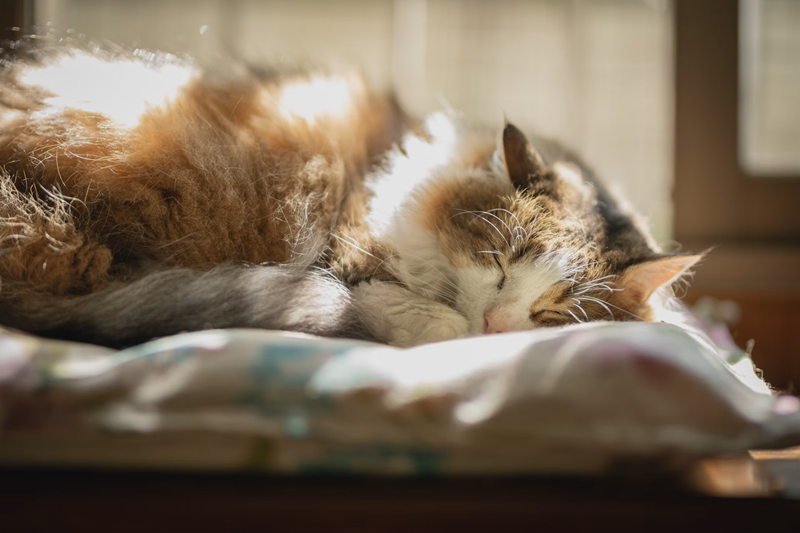
I may, in fact, be turning into an old cat, LOL! 🙂

Unsplash Sebastian Latorre Cat Sleeping Sm

Anything you could recommend along these lines? Do chime in! Also, if you have any cozy gaming experiences, I’d love to hear about them.

Images via Unsplash: Hygge essentials by Mariah Krafft. Cat sleeping by Sebastian Latorre.

Tolkien Reading for Tolkien Reading Day

Saturday of this week, March 25th, is Tolkien Reading Day, and what better way to celebrate than with Tolkien himself reading one of his favorite passages from The Lord of the Rings?

Before The Lord of the Rings had a publisher, Tolkien was visiting a friend who had a tape recorder and encouraged him to record himself reading a selection from his work. Tolkien chose to read one of the most powerful moments from the novel, the charge of the Rohirrim against the Orcs of Mordor at Minas Tirith. Here that recording plays over the same scene from Peter Jackson’s movie version of The Return of the King, for extra powerful effect.

Tolkien narrates the Ride of the Rohirrim by Sîdh Aníron on YouTube

This moment is one of my favorite pieces from both the novel and the film. What a rare treat to hear it in Tolkien’s own voice!

Story Time is all about story-telling and how stories work, and what makes us love our favorites.
Protagonists with Radical Acceptance Decide to Let Adversity Wash over Them

Fantasy and science fiction author Vida Cruz tackles an aspect in SFF that was new to me: that BIPOC protagonists are often seen by (white, Western) editors and readers as inactive, and why that’s false.

(I’ve written elsewhere a little about teaching myself to read novels in English after I started learning the language in 7th grade, how it’s so effortless to me now because I took the time and trouble then, and how reading mostly Anglo-American literature has shaped my thinking and expectations of stories.)

Cruz’s thread starts here. I’ve unraveled it below:

***

I want to talk about how western editors and readers often mistake protags written by BIPOC as “inactive protagonists.” It’s too common an issue that’s happened to every BIPOC author I know.

Often, our protags are just trying to survive overwhelming odds. Survival is an active choice, you know. Survival is a story. Choosing to be strong in the face of the world ending, even if you can’t blast a wall down to do it, is a choice.

It’s how we live these days.

Western editors, readers, and writers are too married to the three-act structure, to the type of storytelling that is driven by conflict, to that go-getter individualism. Please read more widely out of your comfort zone. A lot of great non-western stories do not hinge on these.

Sometimes I wonder if you’re all so hopped up on the conflict-driven story because that’s exactly how your colonizer ancestors dealt with people different from them. Oops, I said it, sorry not sorry. Yes, even this mindset has roots in colonialism, deal with it.

If you want examples of non-conflict-driven storytelling google the following: kishoutenketsu, johakyu, daisy chain storytelling/wheel spoke storytelling. There was another one whose name I forgot but I will tweet it when I recall it.

Anyway, I think there is a space in literature and beyond for stories about radical acceptance or that have a radical acceptance aesthetic. Accepting the things you cannot change but dealing with them in your own way. No pyrotechnics but plenty of potential for drama.

What you want in a story is drama. Conflict does not necessarily equate to drama. Conflict is driven by two or more forces colliding. If a protagonist decides to let the force wash over them instead, that does not mean the protagonist is inactive.

Once again, I repeat: SURVIVING IS A DECISION. BIPOC based in Western countries do it all the time. Us third worlders do it all the time. But of course if you grew up white in a Western country, being mired in hopeless systems will be hard for you to grasp.

And if you’re a BIPOC author, listen: you may be already as good, if not better, than most of the competition out there. You keep getting rejected not because your story sucks but because white editors do not know how to read your work. Keep trying.

Last but not least, we don’t just need diverse demographics for everything, WE NEED DIVERSE STORIES. Get your colonizer heads out of your asses and seek out other traditions. End rant.

I found the other storytelling structure! It’s called Robleto and is of Nicaraguan origin.

Thank you for coming to my TED Talk.

One last! Another type of story that everyone loves (or pretends not to love) but no one will publish in the west is FLUFF. YES THAT’S RIGHT, FANFICTION FLUFF. SUCK ON THAT.

It has been pointed out several times so I will amend the thread to say: all my points apply for disabled, neurodivergent, and chronically ill protagonists, too. Our way of showing agency is DEFINITELY different from yours so please be mindful of that.

***

For me, the main point Cruz makes is:

“What you want in a story is drama. Conflict does not necessarily equate to drama. Conflict is driven by two or more forces colliding. If a protagonist decides to let the force wash over them instead, that does not mean the protagonist is inactive.”

– Vida Cruz on Twitter

This reminds me of my frustration with the Halle Berry -led SF series Extant (which I referred to in an earlier post). I’ve asked myself whether they really wrote her merely feeling and flailing around or whether it is my misreading. Granted, it was some years ago now, but I don’t think I misinterpreted it; Extant lacked self-awareness or self-examination. (Or perhaps the writers’ room was forced to put out such claptrap by people higher up in the production.)

Possible examples of stories with radical acceptance / survival protagonists that do come to mind include the novels The Sound of Stars by Alechia Dow (Black protag) and Among Others by Jo Walton (disabled protag).

Anything you can think of? Please share! The concept is something I’m still mulling over, so more examples would help.

Also, any suggestions on a concise name for protagonists like this? I’m drawing a blank for the moment.

Story Time is an occasional feature all about stories and story-telling. Whether it’s on the page or on the screen, this is about how stories work and what makes us love the ones we love.

Quotes: Almost None […] Depict a Successful Transformation of Society

Cara Buckley’s 2019 article in New York Times talks about how environmental concerns have been depicted in some recent superhero and sci-fi movies. Climate change may have been moved to the back burner in recent news; nevertheless, in the beginning of the article there is a very important, timely nugget:

“Humans ruined everything. They bred too much and choked the life out of the land, air and sea.

“And so they must be vaporized by half, or attacked by towering monsters, or vanquished by irate dwellers from the oceans’ polluted depths. Barring that, they face hardscrabble, desperate lives on a once verdant Earth now consumed by ice or drought.

“That is how many recent superhero and sci-fi movies — among them the latest Avengers and Godzilla pictures as well as ‘Aquaman,’ ‘Snowpiercer,’ ‘Blade Runner 2049,’ ‘Interstellar’ and ‘Mad Max: Fury Road’ — have invoked the climate crisis. They imagine postapocalyptic futures or dystopias where ecological collapse is inevitable, environmentalists are criminals, and eco-mindedness is the driving force of villains.

“But these takes are defeatist, critics say, and a growing chorus of voices is urging the entertainment industry to tell more stories that show humans adapting and reforming to ward off the worst climate threats.

“’More than ever, they’re missing the mark, often in the same way,’ said Michael Svoboda, a writing professor at George Washington University and author at the multimedia site Yale Climate Connections. ‘Almost none of these films depict a successful transformation of society.’ [emphasis added]”

Even though a pandemic is a very different kind of beast compared to apocalyptic-level climate catastrophes, the current covid-19 epidemic can surely feel like a devastation. I’ve certainly seen my share of panicky social media messages.

We’ve recently started re-watching Star Trek: Deep Space Nine, and this line veritably jumped out:

ST DS9 s3 ep18 Distant Voices

“It’s just that… this year is a little different.”

Indeed—this year is different. Unlike good Doctor Bashir’s, though, our situation is a little more dire than turning thirty years of age.

Right now there’s no long-term data available, so any estimates of the long-term effects are guesses—at best cautious, at worst wild—but every opinion I’ve seen says the world will change as a consequence. And as a nerd, that interest me.

I can’t think of many speculative stories off the top of my head where the society has adjusted in a way that focuses on our shared humanity. On the contrary, most of them cannot seem to be able to find much good in human behavior during crises. Since social collapse at the beginning of a disaster is a myth, I’d like to see more stories concentrating on people working together. (That is my favorite kind of story for a reason, after all.)

There is one thing I do know, though, limited in scope as it is: I will be most seriously displeased if writers and producers of the future fail to learn from witnessing the amount of cooperation and outpouring of help people are providing not only their own communities but also strangers.

Buckley, Cara. “Why Is Hollywood So Scared of Climate Change?” New York Times, August 14, 2019.

Image: screencap from season 3 of Star Trek: Deep Space Nine, episode “Distant Voices”.

Serving exactly what it sounds like, the Quotes feature excerpts other people’s thoughts.

Quotes: She Gets to Screw It Up

After the release of Terminator: Dark Fate in November of 2019, Emmet Asher-Perrin wrote at Tor.com about the Terminator franchise. This section at the end describes perfectly why the original T (1984—oh gosh!) will always be my favorite of the series and why we need more (super)hero stories with women in the focus:

“The end of The Terminator is maybe more entrancing than any other finale in the franchise for that reason. It has more in common with a horror film than a sci-fi action flick. Sarah Connor, the final girl who has to make it through for so much more than the sake of her own life, crawling away from two glaring red eyes. Her leg is broken, she’s barely fast enough, but she pulls it all together to crush the T-800 into scrap parts. You can see the moment where the unflinching hero of Judgement Day is born, and it’s right when she says ‘You’re terminated, fucker.’ It only took a span of days to rip her normal, unremarkable life apart, but we get the chance to take the entire journey with her, to sit in her emotions and think about how it would feel. It’s just as fast as most ‘Chosen One’ narratives tend to be, but it doesn’t feel rushed because we are with her for every terrifying second of that ride.

“There are a few more heroes who get this treatment, but they are rarely women. Black Widow has a few muddled flashbacks in Avengers: Age of Ultron. Captain Marvel gets flickers of her past in formative moments. Wonder Woman gives us a brief introduction to Diana’s home and the women who raised her. Rey doesn’t get much time to wrestle with her budding Jedi abilities before heading off for training. We get brief hints of where these women came from, of how it feels to take everything onto their shoulders. But Sarah Connor gets to muddle through it. She gets to wear weird tie-dyed t-shirts and shiver when she’s cold and decide whether or not she can accept the idea of time travel and unborn sons and machines that will always find her no matter where she hides. She gets to present herself as wholly unqualified, and she gets to screw it up, and she still makes it out the other side to fight another day.” [original emphasis]

– Emmet Asher-Perrin

We’ve recently watched a few excellent crime procedurals (for example, Vera and The Fall, plus a new Finnish-Spanish production called Paratiisi) where the female protagonists were written with multiple characteristics that television’s stereotypical damaged males have (like a traumatic past, superficial sex / multiple throwaway partners, alcohol use, difficulty maintaining meaningful human relationships or, indeed, behaving professionally towards your colleagues, to mention a few).

Criticism of these kinds of women in stories is often framed in terms of likeability: you can’t like a woman who behaves in “un-feminine” ways. Well, assuming we’re not talking about comfort-watching or reading (which I’d allow some liberties to), do you have to? I’ve never met anyone who liked everyone they ever met.

I’d say it’s lazy storytelling at its core to plop in a feature of a given character or culture or setting without examining its purpose in the story. For example, while I appreciate the performances of Martin Freeman and Benedict Cumberbatch in the Sherlock series by Mark Gatiss and Steven Moffat, I detest the selfish, egotistical, arrogant, inconsiderate way Moffat and Gatiss have their Holmes behave. (There’s a reason we haven’t rewatched the series.) He if anyone is unlikeable, to put it mildly, but somehow people can only see his genius—even when the original Sherlock Holmes emphatically behaves with kindness.

And while it’s true that none of these “unlikeable” people would be easy to have as friends, it’s also true that none of them is without any redeeming qualities either. The point is, depicting one gender only in a certain light and cutting off other possibilities of being from them is overly limiting, because in the real world possibilities are nigh on infinite.

Depicting a variety of individuals is exactly what makes for instance heist stories like Ocean’s Eight or Jane Austen’s novels so enjoyable and delicious. Flipping details around, reversing patterns, defying expectations—these are exactly what make a story shine. Women are people and people come in a range of shapes, sizes, and mentalities. Just think of the range of abilities and body shapes Olympic athletes represent, for example.

Just like I do not want all men in my fiction to be cookie-cutter copies, I certainly don’t want all women in my fiction to be cast from the same mold. Expecting all or even most members of any group be an amorphous mass is really rather ill-advised, for it ruins many a good tale and taken to extremes would make stories untellable.

To re-phrase Asher-Perrin: what The Terminator really gets right is that Sarah Connor gets to feel her feels, to react, emote, and flail (like Ye Old Female Protagonist)—AND she gets to win the day.

Asher-Perrin, Emmet. “The First Terminator Movie Gave Sarah Connor One of the Most Compelling Origin Stories”. Tor.com, November 01, 2019.

Serving exactly what it sounds like, the Quotes feature excerpts other people’s thoughts.

Myths Are Fanfiction

If you’re like me and a lot of my students, you grew up with Greek mythology. The monster-filled adventures of Odysseus, the (somewhat bowdlerized) philandering of Zeus, the just-so story of Echo and Narcissus, and others were part of my childhood reading. Myths seemed like any other sort of story, with well-defined characters and plots. But there’s something different about mythology. We can’t think of it the same way we think of other kinds of literature. Mythology, in fact, has more in common with fanfiction than with literature as we usually think of it. Greek mythology is one of the best documented and most widely known mythic traditions in the West, so it makes a useful example. When you dig into the primary sources of Greek mythology you find that it is stranger, more complicated, and less cohesive than it seemed when I was a child.

Defining exactly what makes a story a myth can be surprisingly difficult, but if we take as our starting point stories about fictional characters who are larger than life and more than human, we have a good chunk of Greek literature and art to work with. The literary versions of myths that have come down to us must themselves have been based on oral traditions passed down through generations, retold and reimagined in every new performance. There is no canon of Greek mythology. There is no original text that we (or the ancient Greeks themselves) can point to and say: “This story is the correct one; anything that conflicts with it is wrong.”

The nearest thing to a canonical text in ancient Greek culture was the two epics attributed to Homer, the Iliad and the Odyssey. Neither of these epic poems was written down until the sixth century BCE, although some version of them circulated orally for hundreds of years prior. These poems were themselves just elaborated snippets of a much broader oral tradition which encompassed the whole story of the Trojan War and its heroes’ return to Greece. There was, however, some collective sense of how the epics ought to go. We know this because of the scandal caused by Peisistratus, the tyrant of Athens, who was accused of tampering with the Iliad by inserting a line to suggest that the nearby island of Salamis ought to belong to Athens. On one hand, the fact that such a minor tweak to the poem caused an uproar suggests a degree of reverence for the text. On the other hand, it is clear that the text could be tweaked. We have no idea how many changes the text of the epics may have gone through over the centuries that went by unremarked because they were less politically dicey.

If the Homeric epics were viewed with a certain reverence by the ancient Greeks, the same is not true of our other major sources of mythic stories. Our knowledge of Greek myth mostly comes from the literary productions of a few particular places and times. These works were regarded as literature, free to be debated, reinterpreted, or ignored. Apart from the oral traditions codified the Homeric poems, these include:

  • Athenian drama, mostly written in the fifth century BCE at a time when Athens was a major economic, military, and political power in Greece, the leader of an Aegean empire known as the Delian League, and wrapped up in ongoing conflicts with Sparta, Thebes, and the Persian Empire.
  • Poetry and prose composed in Hellenistic Alexandria, much of it by scholars working at the Library, which compiled and retold stories from earlier Greek traditions as part of the Ptolemaic kings’ propaganda program celebrating their links to classical Greek culture.
  • Roman poetry of the late republic and early empire, composed at a time when Roman society was in crisis and different factions within the elite were competing for power.

There are significant works of art and literature not from these times that add to our knowledge of Greek mythology, but much of what we know comes from one of these clusters. Each one represents a time of fraught cultural and political tensions, and these tensions are reflected in the literature of the period. Fifth-century Athenian drama often portrays Athens as a place of wisdom and sound democratic government while painting Athens’ major rival Thebes as a chaotic city of violence and tragic folly. Written at a different time and in a different context, Roman versions of mythic stories, such as Vergil’s Aeneid, position the Romans as worthy heirs to the glory of ancient Greece.

The works of these different periods also reflect different literary interests. Athenian comedy often took heroic figures from myth and put them into ridiculous situations for laughs. The Alexandrian authors liked to show off the breadth of their learning by tying together disparate characters and tales into grand narratives, or retelling familiar stories from the point of view of minor characters. The Roman poet Ovid played to the sexual culture of his day by composing a collection of imaginary love letters between famous mythic couples.

All of these variations on mythic tales depended on an audience who already knew the stories and characters that were being referenced. They could also end up representing wildly different interpretations of the same events or figures. Part of the fun for ancient readers and theatre-goers was recognizing familiar stories told in a new way. In this respect, mythology worked the same way fanfiction works today. Whether it’s a passionately rendered love scene between Captain Kirk and Mr. Spock, a quippy duel between Batman and Iron Man, or the adventures of Aragorn and Galadriel’s secret love child, the fun of fanfic comes in taking the stories we have in common and doing something new with them—sometimes something inspired by the social and political context around us, and sometimes just for the delight of bringing a favorite character back on the stage for an encore.

The fragmentary nature of the literary record from antiquity means that when we try to put together the narrative of a certain character or event from Greek mythology, we are often cobbling together bits and pieces of sources from many different genres, written centuries apart on different continents for widely varying audiences and purposes. The fact that we are able to make any sense out of these stories at all is a testament to how much the ancient Greeks and those who learned their stories loved their myths and enjoyed retelling them. But whenever we deal with mythology—Greek or otherwise—we have to remember that what we are dealing with is a wonderfully strange mishmash of stories, none of it canonical as we understand the term today, but all of it lovingly retold by generations of people who made the stories their own.

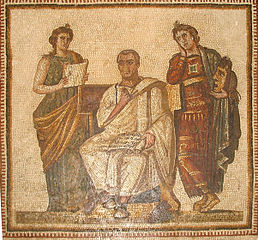
Image: Mosaic of Vergil with the muses of history and tragedy, photograph by Giorces via Wikimedia (currently Bardo Museum, Tunis; 3rd c. CE; mosaic)

Story Time is an occasional feature all about stories and story-telling. Whether it’s on the page or on the screen, this is about how stories work and what makes us love the ones we love.

Shadows of Athens

While the subgenre of mysteries set in ancient Rome already has a number of talented practitioners, ancient Greece is a largely unexplored territory, which makes J. M. Alvey’s Shadows of Athens a special treat. In this book we follow an Athenian playwright, Philocles, whose preparations for presenting a new comedy are interrupted when a dead body turns up on his doorstep. From there the action unfolds both in the theatre—for the show must go on—and in the streets of Athens as Philocles, aided by his family and patron, investigates a shadowy conspiracy that somehow seems bent on both starting a war in the Aegean and cornering the market for leather.

Shadows of Athens is a skillfully handled mystery whose various threads are deftly woven together. The stories of Philocles’ play, his family’s leather business, and the geopolitics of the Delian League all come together in a satisfying conclusion. Along the way, we get some wonderful treats including a fully-staged Greek comedy, a sloshy symposium, and Philocles’ views of both the bustle of the Athenian street and everyday family life. Alvey’s ancient Athens is alive, full of both joy and trouble, and Philocles is a companionable guide to its twisting streets, even as he pieces together the conspiracy that left a dead body in front of his house.

For myself, as a historian, Alvey’s work is a particular treat to read. The book captures the richness and complexity of Athenian life in a specific moment—a generation after the Greco-Persian Wars, as the empires of Athens and Sparta were beginning to tilt toward war—with a liveliness that no textbook or scholarly history can match but with exacting attention to historical detail. It was delightful to be able to pick out details and know which primary sources Alvey was reading (and to recognize a cameo appearance by my dear old friend Herodotus).

I thoroughly enjoyed Shadows of Athens and eagerly recommend it to anyone with a taste for historical mystery looking for something new to pick up.

Image by Erik Jensen

Story Time is an occasional feature all about stories and story-telling. Whether it’s on the page or on the screen, this is about how stories work and what makes us love the ones we love.

A Very Short Introduction to Intertextuality

Intertextuality—besides being an excellent Scrabble word—is a useful tool for thinking about literature and storytelling.

Intertextuality is when one literary work refers to or places itself in the context of another work. While different thinkers have used the term in different ways, it is often used to refer to cases in which the meaning of the later work is shaped by or depends upon knowledge of the first.

To make things a little more concrete, take the example of Arthurian legend. The early literary versions of King Arthur’s tales come from several different authors across several centuries, each of whom took certain basic ideas about a legendary king and his family and followers, and added in new characters, told new stories, or shifted the tales to new settings. Each of these literary works was engaged in intertextuality, drawing on a set of characters, stories, and ideas that their audience already knew while adding something new and different to the mix.

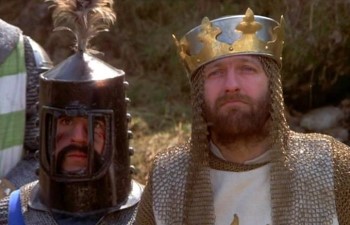
Or, to take it a step further, Monty Python and the Holy Grail is intertextual with the whole lot. The movie features such staple characters of Arthurian legend as King Arthur, Sir Lancelot, and Sir Gawain, and references to Camelot and the Holy Grail. Even though Monty Python’s take on the Arthurian legendarium goes in a very different direction than the traditional tales, it explicitly places itself in relationship to them. You don’t exactly have to know Arthurian legend in order to appreciate Holy Grail, but many of the jokes are built around subverting or parodying standard parts of the mythology.

By contrast, although Star Wars also makes use of Arthurian ideas—a farm boy who discovers his secret destiny, a magical sword, a wise mentor who disappears partway through the story—it is not intertextual with Arthurian legend in the same way that Holy Grail is. Star Wars does not have characters named Arthur or Lancelot. There is no planet Camelot. Even though Star Wars invokes some Arthurian themes, it does not use them to reproduce or comment on the Arthurian legends themselves: Luke does not become king, assemble a round table of Jedi knights, or go in search of a mystical cup.

We live in a great age of intertextuality, an age of cinematic universes, boundless fan fiction, and knowing parodies. It’s a useful idea to have at hand for thinking and talking about the stories in the world around us.

Images: Still from Monty Python and the Holy Grail via IMDb. Still from Star Wars IV: A New Hope via IMDb.

Story Time is an occasional feature all about stories and story-telling. Whether it’s on the page or on the screen, this is about how stories work and what makes us love the ones we love.