Representation Chart: Marvel Cinematic Universe, Phase 1

We all know that the representation of people of different genders and races is imbalanced in popular media, but sometimes putting it into visual form can help make the imbalance clear. Here’s a chart of the Phase 1 movies of Marvel’s Cinematic Universe (Iron Man; The Incredible Hulk; Iron Man 2; Thor; Captain America: The First Avenger; Avengers).

Characters included

  • Iron Man: Tony Stark / Iron Man, Obedaiah Stane, Agent Coulson, Happy Hogan, Abu Bakaar, Pepper Potts, Christine Everhart, Colonel Rhodes, Nick Fury, Yinsen, Raza
  • The Incredible Hulk: Bruce Banner / Hulk, General Ross, Emil Blonsky, Leonard, Stanley, Samuel Sterns, Betty Ross, Major Sparr,
  • Iron Man 2 (new characters): Ivan Vanko, Senator Stern, Justin Hammer, Natasha Romanoff / Black Widow
  • Thor (new characters): Thor, Loki, Odin, Erik Selvig, Volstag, Fandral, Agent Sitwell, Clint Barton / Haweye, Jane Foster, Darcy Lewis, Sif, Frigga, Heimdall, Hogun
  • Captain America: The First Avenger: Steve Rogers / Captain America, Bucky Barnes, Colonel Philips, Johann Schmidt / Red Skull, Howard Stark, Dr. Erskine, Dr. Zola, Dum Dum Dugan, James Falsworth, Jacques Dernier, Gilmore Hodge, Senator Brandt, Peggy Carter, Gabe Jones, Jim Morita
  • Avengers (new characters): American World Security Councilor, Russian World Security Councilor, Agent Hill, British World Security Councilor, Chinese World Security Councilor

Rules

In the interests of clarity, here’s the rules I’m following for who to include and where to place them:

  • I only count characters portrayed by an actor who appears in person on screen in more or less recognizable form (i.e. performances that are entirely CG, prosthetic, puppet, or voice do not count).
  • The judgment of which characters are significant enough to include is unavoidably subjective, but I generally include characters who have on-screen dialogue, who appear in more than one scene, and who are named on-screen (including nicknames, code names, etc.)
  • For human characters that can be reasonably clearly identified, I use the race and gender of the character.
  • For non-human characters or characters whose identity cannot be clearly determined, I use the race and gender of the actor.
  • I use four simplified categories for race and two for gender. Because human variety is much more complicated and diverse than this, there will inevitably be examples that don’t fit. I put such cases where they seem least inappropriate, or, if no existing option is adequate, give them their own separate categories.
  • “White” and “Black” are as conventionally defined in modern Western society. “Asian” means East, Central, or South Asian. “Indigenous” encompasses Native Americans, Polynesians, Indigenous Australians, and other indigenous peoples from around the world.
  • There are many ethnic and gender categories that are relevant to questions of representation that are not covered here. There are also other kinds of diversity, including sexuality, language, disability, etc. that are equally important for representation that are not covered here. A schematic view like this can never be perfect, but it is a place to start.

Corrections and suggestions welcome.

In the Seen on Screen occasional feature, we discuss movies and television shows of interest.

Quotes: Hating Didn’t Change Things

“Hating didn’t change things. The world went on regardless, far beyond the feeble lives of humankind. People could change only if they changed what lay in themselves.”

– Mai in Spirit Gate by Kate Elliott

I’ve been thinking of emotions this summer, especially negative ones. Partly it stemmed from having had to enforce my personal boundaries against an insistent violator and the outcomes from that, partly from the upsurge of racist and hateful behavior in the U.S.

I know hatred can feel like a driving force, but I also know how draining it is to live with such a strong emotion long term. I suppose in the end the universal “too much” rule of thumb applies: too much of one thing at the expense of others will lead to atrophy, both on small and large scale.

Elliott, Kate. Spirit Gate. New York, NY: Tor, 2006, p. 434.

Serving exactly what it sounds like, the Quotes feature excerpts other people’s thoughts.

Race in Antiquity: Bad Answers, Part 1

“What race were the ancient Greeks and Romans?”

It sounds like a simple question that ought to have a straightforward answer, but both the question and its answer are far more complicated than they appear. In these posts, I dig into the topic to explore what we know, what we don’t know, and what we mean by race in the ancient Mediterranean world.

Part 7: Bad Answers

Hard questions don’t have easy answers. Sometimes, the best way to get a good answer is to start with some bad answers and try to understand why they are bad. Today we look at a few bad answers that people have given about race in antiquity to see what we can learn from them.

When I call these answers “bad,” I don’t mean that there is nothing good in them or that the people who gave them were bad or foolish people. They are “bad” in the sense that they miss important facts or misunderstand the realities of the ancient world, but this is where most answers to most interesting questions start. The process of research, in almost any field, is a process of making our answers less bad through gathering more facts and thinking more carefully about them. We can’t do that effectively if we don’t have a place to start or if we don’t take a close look at our bad answers to understand how to make them better.

If you have spent any time reading about the question of race in the ancient Mediterranean, you have probably come across some version of these answers. I’m not linking to any particular sites because I don’t want anyone to feel called out or personally criticized. What’s important is that we learn from these bad answers in order to come up with better ones. Today we’ll look at some simple bad answers, ones whose problems stem from basic misunderstandings or flawed assumptions that are easy to move beyond. In another post, we’ll tackle some more complicated answers whose problems require serious wrangling with evidence and argument.

White Europe

Our first bad answer relies on the common elision of Europe and whiteness. The argument is that the Greeks and Romans were Europeans, and Europeans are white, therefore the Greeks and Romans were white.

Even leaving aside the problem that whiteness is a modern social construct that most people in history would not have understood, it is untenable to suppose that all the ancient inhabitants of what we now call Europe were a homogeneous group.

The idea of Europe as a separate land is a cultural concept, and quite a recent one, not a fact of geography. Geographically speaking, Europe is not a continent but the far western end of the Eurasian landmass. Nor is Europe isolated. The rest of Eurasia stretches away to the east, Africa is reachable by relatively easy coastal routes, and North America can be reached by a longer, but not unmanageable, series of island-hops across the north Atlantic. For that matter, the southern and northern parts of Europe are divided by a long system of mountain chains stretching from the Pyrenees in the west to the Balkans in the east. In many respects, Greece and Italy were historically more closely connected to North Africa than to the rest of Europe. There is no good reason to believe that the people of what we call “Europe” were all alike in the distant past. In fact, we have clear evidence that they were not.

But this answer also reveals another important element in how we think about the past. The written record of human history extends at its deepest only a few thousand years into the past. In some areas of the world, written evidence covers only the last few hundred years. When we think about what cultures were like before written evidence, we have a tendency to simply take the earliest documentary evidence and extend it into the past, assuming that not much changed until people started writing about the changes. This is where archaeology becomes particularly important, showing us that human cultures outside the reach of literary evidence were anything but static. Cultures changed, people moved, trade goods and ideas traveled. Merchants carried their wares, armies and raiders went looking for land and plunder, nomadic peoples sought better pastures, refugees were driven from their homes by political and economic problems to seek new opportunities elsewhere, families and individuals migrated in search of better lives. There was no primordial white Europe existing in stasis until modern times. There is no basis for supposing that the population of Europe or any other part of the world has ever been anything other than complex and multi-ethnic.

Black Socrates

From bad answers about the people of a whole continent, we turn to a bad answer about one individual. Some have argued that since the ancient Greek philosopher Socrates had a snub nose, he must have been black.

It is true that contemporary sources describe Socrates as snub-nosed (simos or simotes), the same word applied to the noses of black Africans. (Xenophanes, fragments 16; Plato, Theaetetus 143e; Xenophon, Symposium 5.6) But these words are not distinctive to people of African descent. Many people of many different backgrounds have short noses. The same word is also used to describe Scythians, peoples from the steppes north of the Black Sea in what is today Ukraine and southern Russia. (Herodotus, Histories 4.23) For that matter, the word was applied to the teeth of wild boars and the snouts of hippopotami. (Herodotus 2.71; Xenophon, On Hunting 10.13) Combined with the fact that physical features often counted for very little in ancient conceptions of ethnic identity, this is very thin evidence on which to judge Socrates’ race.

But more importantly, arguments about Socrates’ nose ignore crucial historical context. To say that Socrates was a controversial figure in Athens is an understatement. As much as he was adored by his students (whose flattering reminiscences dominate the surviving literary record), he was widely hated by the people of Athens. Not because he challenged complacent Athenians to think, as his supporters would have it, but because he associated with a circle of aristocrats who had briefly seized power in Athens, demolished democratic institutions, murdered thousands of people, and set off a bloody civil war.

Socrates’ actual relationship with this bloodthirsty cabal—called the “Thirty Tyrants” by other Athenians—is hard to know, given how skewed the surviving sources are in their perspective. He may not have endorsed their most violent impulses, but he does seem to have been fundamentally on their side and against the democracy. By the time Socrates was brought to trial, a democratic government had been restored and the Thirty Tyrants were mostly dead or in exile. When the ire of the Athenian citizens was turned on Socrates, it was not the anger of the unthinking who didn’t like being asked challenging questions but the fury of a wounded polity against a man who appeared complicit in a bloody reign of terror.

Now, Athens at this time was also going through a period of nativism when citizenship laws were tightened up to exclude many people whose ancestors were not native Athenians. Citizenship challenges were routinely used in the courts as a way of attacking political opponents and personal enemies. The suggestion that Socrates or even one of his ancestors might have come from outside of Greece—or even outside of Athens—would have exposed him to this sort of attack. No one would have bothered charging the man with impiety and corrupting the youth if they could have credibly charged him with falsely claiming citizenship. With so many people in Athens eager to get rid of Socrates, the fact that no one challenged his citizenship is strong evidence that no one who knew Socrates thought that his ancestry was anything other than Athenian, no matter what his nose looked like.

What these bad answers—about the whiteness of Europe and the blackness of Socrates—have in common is that they apply modern concepts of race in a simplistic way to the past without examining the historical context on its own terms. If we want meaningful answers about identity in the past, we have to start by understanding the past itself.

Other posts on Race in Antiquity:

Post edited for clarity and to correct typos

Image: Portrait bust of Socrates, photograph my Marie-Lan Nguyen via Wikimedia (currently Metropolitan Museum; 1st c. CE marble copy of bronze original from c. 350 BCE; original attributed to Lysippus)

The Curious Case of Cambyses and the Apis Bull

The Persian king Cambyses has a bad reputation. He has come down in Western histories as a prototypical mad emperor: arrogant, violent, and contemptuous. The centerpiece of this narrative is his treatment of the Egyptian Apis bull, but the evidence does not match up with the stories that have come down to us.

Cambyses ruled the Persian Empire from 530 to 522 BCE. Under his rule, Persia expanded westward to conquer Egypt. Egypt was a valuable prize for Persia, phenomenally rich and well organized, with strong trade connections to the larger Mediterranean and Africa. The Persian conquest of Egypt went swiftly and easily. Holding the territory was another matter.

The Persian Empire was the largest empire in the world, indeed the largest empire that had ever existed up that that point in world history. Persia owed a large part of its success to a policy of cultural accommodation. Conquered peoples were left alone to follow their own cultures, speak their own languages, and worship their own gods; Persian culture was not imposed on them. Persian kings took steps to ensure continuity of local traditions and present themselves according to local ideals and expectations.

Cambyses followed this same policy in Egypt. He officially ruled as pharaoh under the Egyptian name Mesutire and he carried on the traditional religious and military activities of Egyptian kingship. Among those activities was providing for the Apis bull.

Egyptians believed that an aspect of the god Ptah came to Earth in the shape of a black bull, known as Apis. Apis was cared for in a special temple and lived a life of luxury. When one Apis bull died, it was believed that the spirit of Ptah was born again in another calf, somewhere in Egypt. The death of an Apis bull was therefore an occasion of important ritual: the old bull became identified with the spirit of the god Osiris and had to be mummified and ceremonially interred, meanwhile the hunt was on up and down the Nile for the next calf to be born with the proper signs. Since the new Apis bull could not be born until after the previous one’s death, properly recording and commemorating the event was crucial. The finding of the new Apis was also the occasion for a major religious festival, which was joyously celebrated throughout Egypt.

An Apis bull died during Cambyses’ time in Egypt. The precise timing of its death and the ceremonies for its burial are not entirely clear, but it was given a full and proper burial under Cambyses’ authority, as attested by the inscription on its sarcophagus:

Horus, Uniter of the Two Lands, King of Upper and Lower Egypt, Mesutire, Son of Re, Cambyses—may he live forever! He has made a fine monument for his father Apis-Osiris with a great granite sarcophagus, dedicated by the King of Upper and Lower Egypt, Mesutire, Son of Re, Cambyses—may he live forever, in perpetuity and prosperity, full of health and joy, as King of Upper and Lower Egypt eternally!

Translation by Amélie Kuhrt, The Persian Empire (London: Routledge, 2007) 4.13

The cult of the Apis bull was closely connected to kingship in Egypt and this inscription shows Cambyses fully engaged in his role as Egyptian pharaoh. He associates himself with the royal falcon god Horus and shows filial deference to both the sun god Re and to the spirit of the dead Apis bull. Whatever Cambyses may have personally believed, he was making sure that his public behavior was irreproachable as a king of Egypt.

Which makes it strange to turn back to the Greek sources and find a dramatically different account of Cambyses and the Apis bull:

When Cambyses returned to Memphis [after an unsuccessful military campaign in the south], Apis (whom the Greeks call Epaphus) appeared in Egypt. When Apis appears, the Egyptians at once don their best clothes and hold a celebration. Seeing this, Cambyses was convinced that they were celebrating his misfortunes, so he summoned the rulers of Memphis. When they came before him he demanded to know why the Egyptians were behaving in this way, which they had not done before, just when he was returning having lost so much of his army. They answered that a god had appeared, one who only came to them after long stretches of time, and that it was the custom for all Egyptians to rejoice on such an occasion. Cambyses replied that they were lying and he put them to death for it.

He next summoned the priests, who told him the same thing. He replied that if a tame god had come to Egypt, he would know about it. He then ordered the priests to bring Apis before him, so they fetched him. Apis, or Epaphus, is a calf born of a cow which then cannot become pregnant again. The Egyptians say that a ray of light from heaven strikes the cow, and this is how Apis is conceived. The calf called Apis has these signs: he is black with a white triangular mark between his eyes and the shape of an eagle on his back, the hairs of his tail are double, and there is a beetle-shaped mark under his tongue.

When the priests led Apis in, Cambyses—who was a little disturbed in the head—drew his dagger and stabbed Apis, aiming for the belly but hitting the thigh. Laughing, he said to the priests: “Are these your gods, fools, of flesh and blood who can feel the bite of iron? This is a fitting god for Egyptians, but I will teach you to make a laughingstock of me!” Saying this, he ordered the priests whipped and any other Egyptians celebrating to be killed. So the festival ended and the priests were punished. Apis lay in the temple wasting away from the blow to his thigh. When he had died of the wound, the priests buried him in secret without Cambyses’ knowledge.

– Herodotus, Histories 3.27-29

My own translation

How did Cambyses go from a king properly honoring Apis to a tyrant mocking and killing him? The answer is: Egyptian resistance.

No matter how much Cambyses tried to behave like a traditional Egyptian pharaoh, he wasn’t one. Egypt had a strong sense of national culture, with a strain of isolationism. There were also internal conflicts within Egypt that the Persians did not manage with much success. Over time, as resentment against Persian rule built up, the memory of Cambyses the conqueror was adapted to suit Egyptians’ attitudes towards contemporary Persians. By the time Herodotus was traveling in Egypt asking questions about history—about a century after Cambyses—popular opinion had thoroughly rewritten the king’s reputation.

Herodotus and other Greek and Roman historians had no idea about Cambyses’ actual behavior in Egypt, and their own anti-Persian prejudices inclined them to accept any negative story about a Persian king. Thus Cambyses the arrogant bull-stabber became a fixture of Western history, even though he was only ever a figment of lurid anti-Persian rumor.

Image: Funerary stela for an Apis bull, photograph by Rama via Wikimedia (found Serapeum of Saqqara, currently Louvre; 643 BC; painted limestone

History for Writers is a weekly feature which looks at how history can be a fiction writer’s most useful tool. From worldbuilding to dialogue, history helps you write. Check out the introduction to History for Writers here.

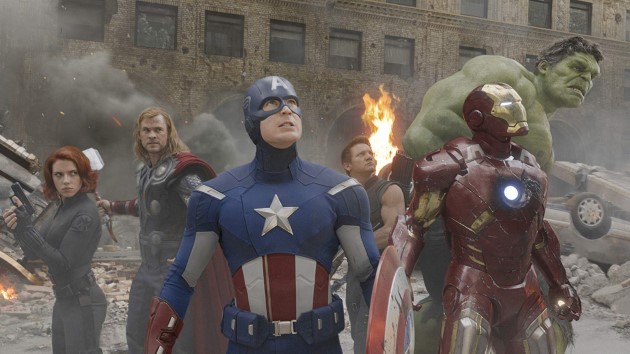
Rating: Marvel Cinematic Universe, Phase 1

We’ve taken a bit of a swerve in our rewatching and rating project. In between tv series, we’ve decided to take a run at the Marvel Cinematic Universe. Here’s our take on Phase 1:

  1. Iron Man – 7
  2. The Incredible Hulk – 2
  3. Iron Man 2 – 6
  4. Thor – 4
  5. Captain America: The First Avenger – 8
  6. The Avengers – 10

It’s a bit of a mixed bag. The overall average is 6.2, which is perfectly respectable, but the range is all over the place, from pretty bad to meh to awesome.

You can tell that Marvel was still figuring out how to make not only a new kind of superhero movie but a new kind of movie franchise. The early installations are stand-alone, fairly slow-paced, and self-contained. We can still remember how exciting it felt to have a minor character like Agent Coulson pop up in multiple movies that weren’t sequels. Nowadays we don’t even get out of bed for a Marvel movie that doesn’t have at least three tie-in characters and a place in the ongoing arc of the Phase.

The Incredible Hulk, the largely forgotten Marvel movie, is on the bottom of the heap at 2. Formulaic and uninspired, the story drags itself from one obligatory action scene to another. Having seen Mark Ruffalo’s take on Bruce Banner, Edward Norton feels flat and unsympathetic. So much backstory is assumed that this movie feels like a sequel to something we’ve never seen (it takes care not to step on Ang Lee’s previous Hulk movie without actually picking up on its story in any meaningful way). Although there are some bright spots in this movie, like the visually thrilling foot chase through a Brazilian favela, you can see why we haven’t gotten another stand-alone Hulk movie.

We’re lucky that Marvel hedged its bets on launching the MCU with two movies instead of just one. Iron Man delivers much of what The Incredible Hulk lacks. While the story is still relatively straightforward and follows a predictable Hollywood three-act structure, it is more competently handled and more subtly embellished than Hulk. We get to see Tony Stark tinker and iterate not only on his suit designs but on his ethics and sense of self, which is makes his character much more interesting to watch than Banner, who has no real character development in his own movie. Robert Downey Jr. sells the character of Tony Stark as a flawed genius grappling with the consequences of his own choices.

Iron Man 2 carries on the good work of the original without adding much to it and begins the unfortunate trend of Marvel movies whose plot is driven by Tony Stark’s emotional issues. Thor has some beautiful art design and fun character moments, but mostly ends up feeling like the product of too many compromises.

Captain America: The First Avenger delivers a solid origin story not only for its eponymous hero but for the whole Marvel universe as well. With an alternate-version World War II dominated by Hydra’s experiments with cosmic technology and an American super soldier, the ground is prepared for a modern world of superpeople. Chris Evans’s performance takes a character who could be flat and sanctimonious and makes him charming.

But it is The Avengers, at a full 10, that crowns Phase 1. Joss Whedon’s last great work before his descent into self-satisfied mediocrity, The Avengers is a superhero movie that takes not only the idea of superheroes but the idea of a superhero movie seriously. The characters have both emotional depth and clear motivations. Their conflicts arise not from plot contrivance but from conflicting world-views and emotional needs. And they smash alien monsters together real good.

Got a different take on Marvel’s first hexalogy? Let us know in the comments!

Image: Still from The Avengers via IMDb

In the Seen on Screen occasional feature, we discuss movies and television shows of interest.

Visual Inspiration: An Underground Fire from 1962 Is Still Burning

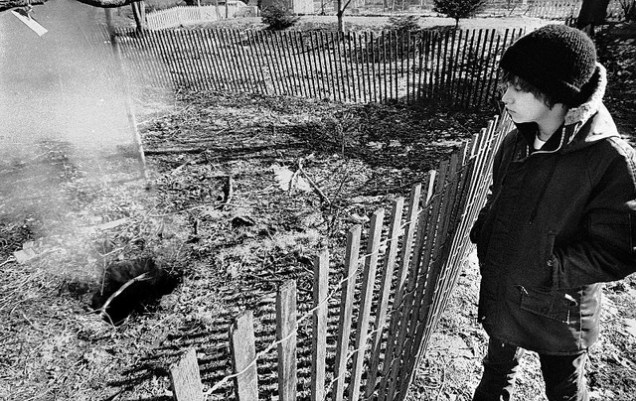
Apparently in Pennsylvania, there’s a town—Centralia—all but abandoned due to a coal mine fire that’s been burning underground since 1962.

Flickr t3hWIT Centralia PA Cracked Old Route 61

There is disagreement over the cause of the fire. It seems that one way or another a surface fire moved into the system of mining tunnels below the town.

The effects are indisputable and scary: unstable ground, sink holes, damaged roads, plumes of hot steam, vents of smoke and toxic gases (like lethal levels of carbon monoxide), and, finally, evictions plus abandoned and/or demolished buildings.

Flickr Kelly Michals Coal Fire in 2011

Flickr dfirecop AP Photo Sinkhole

Speculative fiction that takes place in a post-catastrophy world of some sort immediately comes to mind, and no wonder. Even the little that I read gave me a glimpse on the variety of reactions people can have to major environmental disruptions and their aftermath. Not to mention that photos of the abandoned parts of Centralia are stunning. They remind me of Pripyat after the Chernobyl nuclear accident, which is the closest equivalent I can think of from my childhood in Finland.

Found via Paul Cooper on Twitter. (Visit his Twitter tread for additional photos & info.)

Images: Cracked old Route 61 by t3hWIT on Flickr (CC BY-NC 2.0). Coal fire in 2011 by Kelly Michals on Flickr (CC BY-NC 2.0). Sinkhole from Feb. 14, 1981, by AP Photo via dfirecop on Flickr.

The Visual Inspiration occasional feature pulls the unusual from our world to inspire design, story-telling, and worldbuilding. If stuff like this already exists, what else could we imagine?

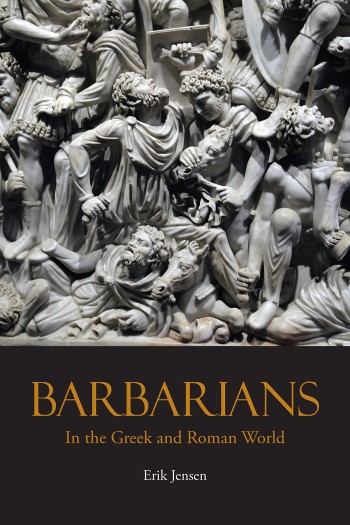
Barbarians in the Greek and Roman World Preview

What did the ancient Greeks and Romans think of the peoples they referred to as barbari? Did they share the modern Western conception—popularized in modern fantasy literature and role-playing games—of “barbarians” as brutish, unwashed enemies of civilization? Or our related notion of “the noble savage?” Was the category fixed or fluid? How did it contrast with the Greeks and Romans’ conception of their own cultural identity? Was it based on race?

These are the questions that my first book addresses. Barbarians in the Greek and Roman World will be published in the fall of 2018. The book explores both the realities of interaction among peoples of different cultures in the ancient Mediterranean and the ways in which Greek and Roman thinkers interpreted these interactions to create the idea of the “barbarian.”

Here’s a preview, discussing the experience of the Greeks in their colonial settlements around the Mediterranean Sea:

* * *

The history of Greek settlement in Egypt demonstrates the complexity of colonial interactions. In the late 600s BCE, Egypt was under Assyrian dominion. An Egyptian noble, Psammetichus, had been appointed as governor, but when the Assyrians were distracted by internal conflicts, Psammetichus raised a rebellion, bolstered by mercenaries from Greece and Caria, a region of southwestern Anatolia. When the fighting was done and Psammetichus had become king of a newly independent Egypt, he settled the remaining mercenaries in the Nile delta. These settlements also attracted other foreigners, such as Phoenician crafters who made imitation Egyptian artworks on the site for export.

The mercenaries remained in Egyptian service, and it appears their descendants did as well, since some were deployed to southern Egypt under Psammetichus II decades later. One such band carved graffiti on the temple of Abu Simbel to commemorate their adventures: “When King Psammetichus came to Elephantine, this was carved by the companions of Psammatichus, son of Theocles, who sailed beyond Kerkis as far as the river went.” The mercenary Psammatichus was evidently named after the pharaoh by his Greek father. Some families went beyond names and embraced Egyptian culture, as shown by the burial of Wahibre-em-akhet, whose name and hieroglyph-inscribed sarcophagus are conventionally Egyptian; the only clue to his foreign ancestry are the Greek names of his parents, Alexicles and Zenodote. Other soldiers left graffiti at Abu Simbel in Carian and Phoenician, another testament to the cultural and linguistic diversity of those traveling and trading around the Mediterranean at this time.

Sometime after 570, the pharaoh Amasis reorganized the Nile delta settlement. Land was granted for the construction of a Greek colony, which, unusually, was collectively founded by nine Greek cities from the coast of Anatolia. Representatives from these cities jointly governed the new community now called Naukratis. Greek ships were banned from landing anywhere else in Egypt for trade. The colony thus became the primary site of exchange between Greeks and Egyptians. Trade connections brought people of many different backgrounds to Naukratis and connected its people to a wider world. One visitor was Charaxos, the brother of the poet Sappho, who traded wine from his home city Mytilene to Naukratis. He met a slave courtesan there, a Thracian woman named Rhodopis who had been brought to Egypt by her Samian owner. Charaxos fell in love with Rhodopis, bought her, and freed her, after which she chose to remain in Naukratis to ply her trade. To celebrate the fortune she had amassed in her work, Rhodopis later made a rich dedication at Delphi in Greece. A hieroglyphic inscription on a stele erected by the pharaoh Nectanebo in the fourth century, dedicating revenues from Naukratis to the temple of Neith, shows that the pharaohs kept an active interest in the administration of the colony. Naukratis retained its importance and trading privileges after the Persian Empire conquered Egypt in 525. It continued to welcome not only traders but tourists and other travelers, like Herodotus, who visited Egypt and whose writings record the existence of a local industry of tour guides and interpreters. The Greeks who settled in Egypt did not exist in isolation but had productive relationships with traders, artisans, and the ruling class alike.

The interactions in and around Naukratis are a window into the complexity of the colonial world. There were Greeks trading with Egyptians, but also Phoenicians making knockoffs of Egyptian art, Greeks assimilating into Egyptian culture, Thracians and Carians negotiating the needs of Egyptian and Greek patrons, and Egyptians making a living off showing the wonders of their country to curious foreigners. Interactions like these were happening all around the Mediterranean. There is no simple way to describe Greek relations with non-Greek peoples in the archaic and classical periods because those relations were never simple.

* * *

If you’ve enjoyed some of my posts about ancient trade connections, the diversity of ancient armies, individuals crossing cultural boundaries, modern peoples’ attempts to claim ancient peoples’ identities for themselves, and the variety of different kinds of “barbarian” you may find something to enjoy in Barbarians in the Greek and Roman World.

Barbarians in the Greek and Roman World comes out in September from Hackett Publishing.

Hardcover: $48 / Paperback: $16

You can pre-order directly from Hackett or on Amazon.

Image: Barbarians paperback cover by Hackett Publishing

Announcements from your hosts.

DIY Star Wars Marquee

Ashley DIYed a really cool Star Wars marquee. It even lights up!

Handmade with Ashley diy_marquee_star_wars

The base is a handmade wooden sign stenciled, painted, and varnished.

Handmade with Ashley diy_star_wars_marquee_sign_wall_art_knockoff_tutorial-25

Wow. I don’t think I’d have the patience! Full props for such a meticulous job!

See the full tutorial at Handmade with Ashley.

In Making Stuff occasional feature, we share fun arts and crafts done by us and our fellow geeks and nerds.