Fantasy Religions: Faith and War

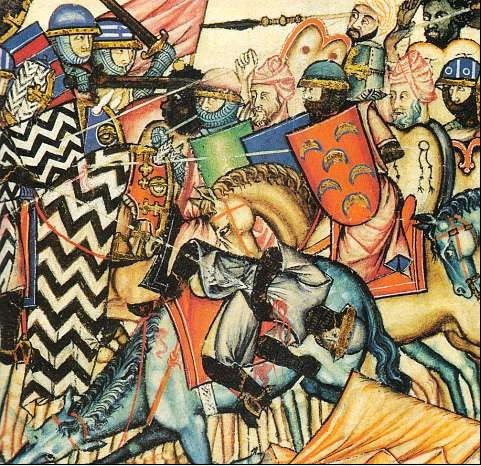
160808ReconquistaReligion often becomes involved when people are in conflict. Many religious traditions provide points of identity around which people can rally when they feel threatened or can offer reassurance and justification to those about to enter combat. Extreme circumstances, like war, have often led people to embrace their own religious traditions (or new ones) more firmly. All of this is undeniably true. Popular history, however, often makes a further claim: that religious differences cause violent conflicts. A careful look at history shows us a different picture. Religious differences have rarely, if ever, caused wars on their own, and where they have been involved in starting hostilities, they have played only a partial role alongside many other forces.

When we look at history, it is easy to find conflicts between people of different faiths, but these are unusual interruptions in a world history that is mostly about people of different faiths getting along reasonably well. Religious differences on their own don’t drive people into conflict. Protestant and Catholic Christians, for example, have been engaged in a bitter conflict in Northern Ireland for most of the past century, but during that time Northern Ireland has been pretty much the only place in the world where Protestants and Catholics have fought a sustained violent conflict. Nor is religion the only thing that separates the sides in Northern Ireland: differences in religion, language, political inclinations, popular culture, and social life are all wrapped up in the thousand-year history of English colonialism in Ireland. Catholic and Protestant denominations in Northern Ireland have provided a structure in which people can organize to pursue their causes and have been markers of identity around which people rally in difficult times, but if all the people of the territory were of the same religion, the conflict there would still have happened. Blaming religious differences for the Northern Irish Troubles is like blaming the US Civil War on a disagreement over what color Army uniforms should be.

Continue reading

This Is Not the Food

When characters in fantasy fiction sit down to a meal, we have a pretty god idea of what to expect. If the setting is Europe-ish, you can count on hearty bowls of stew, roasted meats dripping with savory juices, ripe wheels of cheese, and maybe a little bread to dab up the sauce with. If the setting is Asia-ish, expect sizzling pans of vegetables and fish, skewers of meat steaming with spices both hot and sweet, and maybe a little rice to dab up the sauce with. (And I’m sure some of you out there who have read books I haven’t can tell us what food to expect in Africa-ish, Americas-ish, or other-ish settings.) The trouble with this picture of food is, historically speaking, it’s backwards. The sizzling meats, steaming vegetables, and spicy sauces are not the food. The bread, rice, and other grains are the food.

160627banquet Continue reading

Fantasy Religions: Religious Experts

If you’re inventing a fantasy religion for a story or game, you’ll probably want more than just buildings and rituals. Who uses those buildings? Who performs those rituals? Not just the everyday believers but the people whose job it is to carry out the functions of the faith. For many of the stories we tell that involve imagined religions, knowing something about the people who have expertise in that religion is important.

There are many different kinds of religious experts, even within most religious traditions, and their roles and lives can vary enormously, from the highest priest of a central temple to the attendant who sweeps the dirt off a rural roadside shrine. Some cultures have complex hierarchies of religious people or divide them into many different roles, while in others all people who follow a religious life are the same. Some religious traditions have no special personnel at all.

To try to list all the possible variations of religious people would be overwhelming and unhelpful. Instead, I’d like to offer a way of thinking about different kinds of religious experts that is flexible and practical, especially for worldbuilding. To that end, consider this question: what is it about a person with a special religious role that makes them special? Here are a few possible answers, and bear in mind that more than one of these can apply to the same person.

Special powers

160620priestSome religious experts are believed by the adherents of their faith to be endowed with a special ability to invoke divine aid, at least under certain conditions. Historically, it is common to refer to religious experts with such special powers as priests, but different traditions have their own terms.

A familiar example in the modern west is the priests of Catholic Christianity who have the power to, among other things, invoke the miracle of transubstantiation. Many other religions practiced today also have priests who perform important rites, such as Hinduism, Zoroastrianism, Shinto, and Ifa. The priests of most historical religions with an organized structure also fall into this category, including those of ancient Greece, Rome, Egypt, Persia, the Aztecs and the Maya. Many traditions require specific circumstances, locations, and rituals in order for the invocation of divine aid to be effective, but others hold that every act of a holy individual is imbued with divine force.

Continue reading

Land Tenure

160613MarchLand tenure. The very words sound boring. Perhaps they conjure images of gray-haired men in tweed jackets with elbow patches picnicking beside a barley field. But stick with me for a minute here, because land tenure is an important thing to know about in understanding historical cultures and for building your own fictional worlds.

Land tenure is one of several terms historians use to describe the legal structures surrounding the control of land. (Technically, the term land tenure is only used in British common law. Other legal systems use different terms, but this is one you’ll see a lot of in English-language history texts.) The question of who controls a piece of land is always important, but it is especially vital in agrarian societies in which land, specifically farmland, is the basis of wealth. Land tenure is about figuring out who gets to use a piece of land and under what conditions.

In some cultures this isn’t an issue. Some legal systems allow only an either-or choice, you either own a piece of land or you don’t. Under other traditions, no one owns land at all. But in certain kinds of societies, the question of who controls a plot of land and under what conditions they hold it is at the heart of many conflicts.

It’s the same basic principle that applies today when you rent an apartment. As a tenant, you have certain rights in the use and enjoyment of the apartment, but the landlord also has rights they can enforce such as demanding rent and keeping the apartment in a usable condition. Landlords have good reason to want to keep as much control over their property as they can. They don’t want tenants messing things up and making it harder to rent the apartment profitably in the future, plus they want to be able to easily get rid of tenants who make trouble or don’t pay their rent. At the same time, renters also have good reason to want as much control as possible over their apartments. They want the security of knowing they won’t suddenly be thrown out and have to look for a new place and they want to know that no one’s going to be coming in and messing with their stuff. There is a tug-of-war between different interests and the balance of legal rights between landlords and tenants reflects the balance of power in larger society.

Continue reading

Connections: Denmark and Egypt

More than 3,500 kilometers separate the tombs of the Valley of the Kings in Egypt from the village of Ølby in Denmark, but thousands of years ago they were connected by trade.

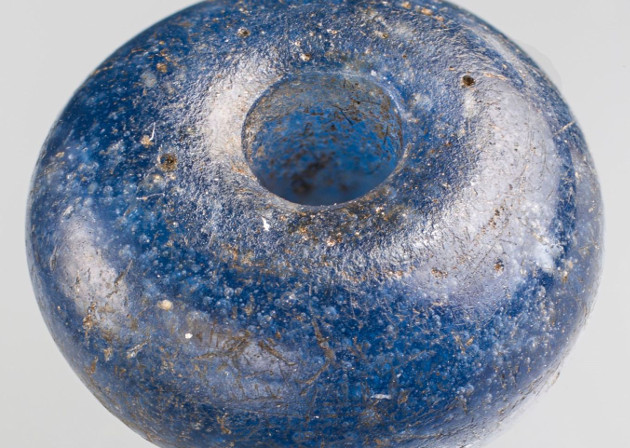
160523mapRecent archaeological work has identified a blue glass bead found in a bronze age woman’s grave in Ølby as originally Egyptian. In fact, based on the composition of the glass, researchers have suggested that the glass bead was made in the same workshop that produced the blue glass inlay on Pharaoh Tutankhamun’s gold funerary mask. Similar beads are known from several other Danish burials. In an age when glass-making as a skill known only in a few regions, colorful glass beads were as precious as gemstones.

160523glassGlass beads like these could have come to Denmark in exchange for amber from the shores of the Baltic Sea. Amber was highly prized in the ancient Mediterranean and not just as jewelry. It was sometimes fashioned into amulets for warding away evil or burned like incense. (The Roman naturalist Pliny the Elder complained about his fellow Romans’ superstitions about it; see: Pliny, Natural History 37.11.)

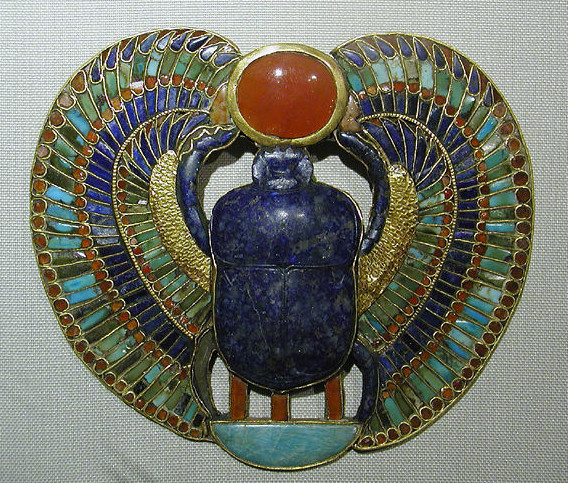
Amber has not been found in large quantities in Egypt, but it was used in some jewelry. In fact, one of the pectorals (pendants worn over the chest as amulets) wrapped up in the linen with Tutankhamun’s mummy is set with a piece of amber.

160523scarabIt’s unlikely that many Danes traveled to Egypt or Egyptians to Denmark in the bronze age. More likely both amber pieces and glass beads were carried short distances by chains of traders in between. Small, easily portable, but high-value objects like beads and gemstones are perfectly suited to this sort of down-the-line trade. A ship that was wrecked off the coast of Turkey around the same time as Tutankhamun’s burial (known as the Uluburun or Kaş Shipwreck) may have been part of that trade network. The ship, whose home port may have been in northern Syria or on Cyprus, was carrying both blue Egyptian glass and Baltic amber when it went down. Also in the ship’s cargo, interestingly, was a gold scarab inscribed with the name of Nefertiti, queen to Tutankhamun’s father Akhenaten (though she was not Tutankhamun’s mother).

Thoughts for writers

The evidence of archaeology is always a bit haphazard in nature. So much is unpredictable about what artifacts survive and what gets found. We are lucky to have the evidence from both the tombs of Tutankhamun and the woman in Ølby, as well as the Uluburun shipwreck, to help us trace out the lines of connection between Egypt and the Baltic. There is no question that connections between different peoples in the distant past were deeper and stronger than we know, but the evidence to document those connections has been lost.

Historians (at least those of the responsible sort) are limited by evidence, but fiction writers don’t have to be. When building your fictional worlds, let the fragments of evidence from our own inspire you to imagine far-flung connections and enterprising traders. Connections like these have always been important.

Images: Map by Erik Jensen based on Portable Atlas. Blue glass bead, detail of photograph by Roberto Fortuna and Kira Ursem via Haaretz (Ølby; 14th c. BCE; glass). Scarab pectoral, photograph by Jon Bodsworth via Wikimedia (tomb of Tutankhamun; 14th c. BCE; gold, glass, and precious stones)

History for Writers is a weekly feature which looks at how history can be a fiction writer’s most useful tool. From worldbuilding to dialogue, history helps you write. Check out the introduction to History for Writers here.

How We Got Here, or A Field Guide to World History

The term world history may send your mind spinning back to high school, but world history is an important genre of historical study. It means history that is not bounded by the past of one nation or people. It is the story of how we got here as a whole, enmeshed world, not just as discrete national or ethnic groups. If you’re researching historical topics that connect different peoples together, you’re looking for world history. (World history is related to but not the same as universal history, which is a history of the entire world; world history may be selective about what parts of the world it covers, as long as it isn’t limited by national/cultural boundaries. Yes, it’s confusing.)

There are many different approaches to world history, however, and which one you want to look for depends on what you need. Here’s a brief spotter’s guide to some of the main varieties of world history you’ll find in the scholarship, how to recognize them, and what you might want to go to them for as a writer. These are not the only varieties of world history out there, but knowing these types will help you sort through the sources you will come across in your research.

160418giraffe

1. Interconnected History

Or: “Whoa, This Stuff Is All Connected And Stuff, Man”

Historical events don’t happen in a vacuum. Cultures communicate and trade with each other. People travel, taking goods and ideas with them. Interconnected History is about tracing these lines of communication and commerce and discovering how events in one part of the world affected other parts.

Continue reading

Fantasy Religions: Sacrilege, Blasphemy, and Heresy

160321SibylWhen creating religions for our stories, one of the things to think about is how the people who follow that tradition respond to offenses against its rules and principles. Is your character running the risk of torture and death if they question the accuracy of the sacred texts, or are they just going to get a stern glare from their grandmother for using the wrong hand to swirl the incense at the family altar?

Just as there are lots of different religious traditions that people practice in many different ways, there are lots of different ways of disrespecting religious ideas and offending the people who hold them. I’m going to talk about three kinds of religious transgression today that are often confused with one another. The differences between them are important, though. Which of these kinds of transgression a society recognizes and how it responds to them reflect important things about its history and religious traditions. These three are: sacrilege, blasphemy, and heresy.

(Or, as we call it my house, Saturday night.)

Continue reading

Connections: Rome and the Arctic

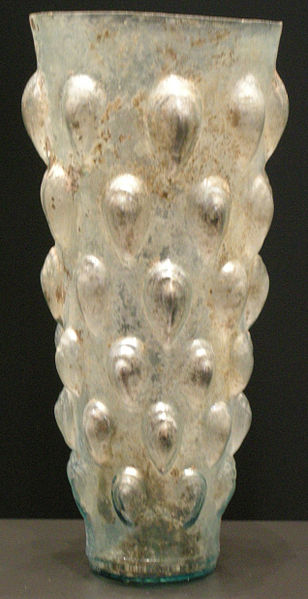
160314glassFrom the city of Rome to the Arctic circle is a distance of about 2,750 km. At its greatest extent, the northernmost tip of the Roman empire was more than 1,000 km from the Arctic. Even across such a distance, however, there were connections. A couple of little pieces of evidence show us how knowledge of Rome could reach the far north, and how knowledge of the far north could reach Rome.

In Føre, Nordland, on an island in far northern Norway, is an ancient burial site. Over several centuries in the late iron age around 10 mound burials were raised of earth and stone. (The number is uncertain because some of the mounds have been destroyed by erosion and farming.) Not all have been excavated, but those that have have yielded the evidence of extraordinary wealth by local standards, including a Roman drinking glass buried in the only female grave so far known at the site. (The glass pictured is of a similar type, but not from the same site.)

It is very unlikely that Føre had any direct connection to the Roman world. Rather it was at the northern extreme of a network of trade and alliances that spanned Scandinavia and the Baltic Sea region which used Roman imports as high-status trade goods and diplomatic gifts. The people of Føre may have had very little idea of what the Roman empire was, but they had some access to Roman goods and valued them as precious objects.

Continue reading

What If There Was White Moose Cavalry for Fantasy Winter Warfare?

What if there was a fantasy world where moose were tamed and selectively bred for cavalry? I spent some time pondering it after a couple of things found online collided in my head.

First, there’s this animated gif of a moose rushing through a deep snow-filled field:

moose rushing through a snow-filled field

Their size, speed, and ability to gallop through deep snowbanks make moose fearsome and pretty near unstoppable. Imagine a line of ginormous moose thundering at full tilt towards you across a field – that’s a truly frightening thought! Also bogs don’t slow them down by much, I believe, which might conceivably tip the scales in the right kind of a campaign.

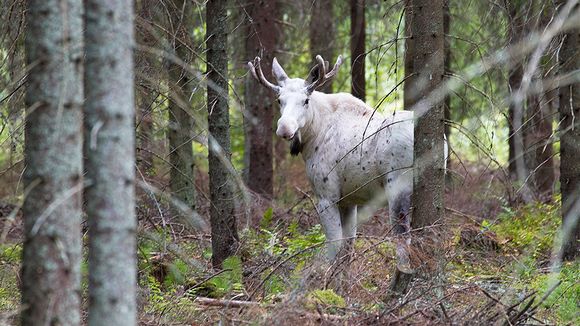
Then, I saw this photo of an albino moose:

Yle Antti Terava valkoinen hirvi

Natural snow camouflage. Hmmm.

It’s not that far-fetched an idea, apparently. The Soviet Union attempted to build a moose cavalry in the first half of the 20th century, but they were unsuccessful. In our world, the solitary habits of moose seem to be standing in the way of domestication. If we’re talking about a fantasy world, however, I don’t see why not.

Images: Rushing moose gif via Crazy Hyena. White moose by Antti Terävä via Yle

The Visual Inspiration occasional feature pulls the unusual from our world to inspire design, story-telling, and worldbuilding. If stuff like this already exists, what else could we imagine?

Inca Rope Bridges and the Importance of Landscape

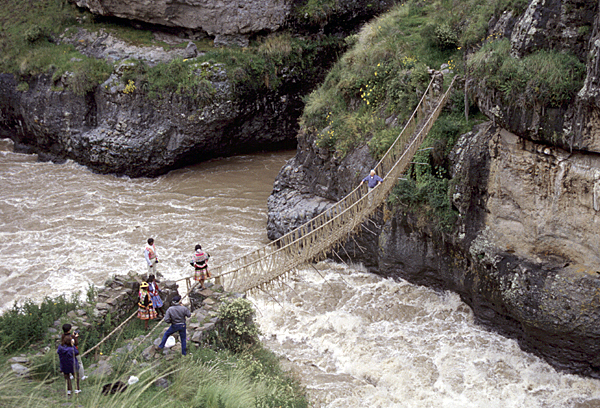
The Inca empire of South America was connected by a network of roads used by chasqui runners and pack llamas carrying messages and supplies around the empire. The Inca, creating their empire in the Andes mountains, faced challenges unlike those of flat-land and river-valley empires, among which was the problem of crossing numerous steep mountain valleys and rivers that ran dangerously swift in the flood season. Their solution to this problem was: rope bridges.

160229QiswaChaka

Suspension rope bridges spanned rivers and valleys, the longest reaching a length of 45 meters. They were made with ropes twisted out of grass and had to be rebuilt every year or two. The rebuilding was dangerous work that was assigned to local villagers as part of their obligation to the empire. Most Inca bridges have long since been replaced with modern structures, but one, the Q’iswa Chaka over the Apurimac River in Peru, is still rebuilt every year by local people as a way of preserving their heritage.

Continue reading