Some Cozy Fiction Favorites

Recently I’ve been very drawn to cozy fiction. I focus on SFF and mystery for the most part, but not exclusively; my consumption also tends to (but doesn’t exclusively) fall under fantasy. (I do also continue to read and watch other kinds of stories like competence porn). But regardless of genre, the works I enjoy the most share a certain element of comfort in them.

Thematically I need:

  • lower stakes—the problems must be smaller. (They can be large-ish for the characters, however.) No cataclysms or world-enders (i.e., quests that only the protagonist can complete before the looming threat will irrevocably ruin life in the whole universe), and absolutely nothing gloomily post-apocalyptic. Legends and Lattes by Travis Baldree amply fills this criterion. (Although if L&L had had any more faffing about with coffee than it already did I might have screamed.) His Bookshops and Bonedust was good, too.
  • protagonists who either already have or within the story make at least one reliable, supporting connection. The Earthsea world by Ursula K. Le Guin has quite a few characters like this. (Nostalgia does also help.) A found family counts for me, too, of which the Wayfarers series by Becky Chambers is a delightful example. (The Monk & Robot duology, however, I emphatically bounced off of.)
  • antagonists who form reasonable obstables, but aren’t too far-out or vile. I might mention The Goblin Emperor by Katherine Addison.
  • things to eventually settle into a comfortable state. If not an outright happy ending like in The Princess Bride movie, then at least a kind of a happy ending. As Erik put it, as happy an ending as possible under the circumstances. Thornhedge by T. Kingfisher comes to mind.
  • and last but not least, protagonists who know themselves and are comfortable with themselves and their place in the world, like Ellis Peters’s Brother Cadfael stories. (Sadly, you can’t binge read the series without quickly noticing what a boring copy-paste job Peters does with the featured young women—they tend to be perky and pretty and often strong-willed. That’s all fine and good, in itself, but there are already enough Smurfettes, thank you.)


As always, learning to work together is a huge bonus for me. Plus, the focus characters need to come across as rounded personalities, not paper dolls being carted around delivering plot-advancing lines. The Murderbot Diaries by Martha Wells handsomely fit these two criteria (even if some of the problems are larger), as does T. Kingfisher’s The Saint of Steel paladin series (even if there’s a little more romance than I’d generally care for).

There are also a number of works that fill some of the wishlist points but not others. Katherine Addison has added to the fascinating world of The Goblin Emperor in the excellent duology The Witness for the Dead and The Grief of Stones, which I’d count cozy otherwise (or cozy enough, like Christie’s mysteries), but the protagonist Thara remains troubled throughout, with just the tiniest glimpse of contentment at the end of TGoS.

The Keeper’s Six by Kate Elliott also follows a protagonist with a number of established allies, but the problem was too grand and some of the characters too snide to fit it into my comfort reads category. And the otherwise excellent Thorn by Intisar Khanani has a very nice but ultimately helpless human who remains far too helpless for far too long.

In the visual media, if possible I would like to pull everything concerning the village of Ta Lo in Shang-Chi and the Legend of the Ten Rings into its own story; there isn’t too much of it in the Marvel Cinematic Universe version, but what there is is lovely. Peter Jackson’s The Lord of the Rings and The Hobbit show snippets of the ultimate cozy setting, the Shire, but, alas, they don’t amount to a long sequence either.

Character-wise, the Disney+ Obi-Wan Kenobi series features a delightful growing friendship between young Leia and Obi-Wan, but I couldn’t call the series cozy otherwise. To venture into the historical, most Jane Austen adaptations and the Miss Marple series with Joan Hickson always deliver. In fact, we just finished a most satisfying Miss Marple rewatch. 🙂

Unsplash Mariah Krafft Hygge Essentials Sm


There is, however, something elusive about my sense of cozy fiction which I haven’t yet been able to quite put my finger on. Oddly, as much as like tea, taking a mystery and slapping in ample servings of tea doesn’t necessarily cut it. For instance, Malka Older’s The Mimicking of Known Successes and The Imposition of Unnecessary Obstacles were complete misfires for me.

Some commentaries on the rising popularity of cozy fiction talk about foregrounding sensory details. That might have something to do with the appeal, although I think an overload is an overload regardless of what you’re overloading. (Hello there, Legends and Lattes, faffing about coffee.) I suspect, though, that the crucial factor for me is the protagonist’s sense of comfort with their situation; a comfortable amount of self-knowledge or self-awareness. I’ll have to think about it some more.

Apart from this mystery ingredient, it seems the works I enjoy most right now are basically about recognition of the ordinary. They have ordinary people persevering, or, in case of people with extraordinary skills, characters who nevertheless know how ordinary they are in other respects. Quite ordinary motives behind even the most elaborate murder plots. Or perhaps simply the enjoyment of commonplace situations and routines—but in a SFFnal setting, because I do still want a little bit of a twist in my fiction. 🙂

With the past three years having been very trying, I don’t wonder at taking comfort in a slower pace, lower-stakes challenges, more familiar burdens, and happy endings. With tea and yummy noms, if possible.

I may, in fact, be turning into an old cat, LOL! 🙂

Unsplash Sebastian Latorre Cat Sleeping Sm

Anything you could recommend along these lines? Do chime in! Also, if you have any cozy gaming experiences, I’d love to hear about them.

Images via Unsplash: Hygge essentials by Mariah Krafft. Cat sleeping by Sebastian Latorre.

Quotes: And Then It Leaves You Alone

The Finnish Independence Day is tomorrow, on December 6. In honor of a day of rest, here’s a quote celebrating the most important things in life for this Finn—food, clothes, books, and tea:

Current Reading Babel

“Professor Lovell spoke with uncharacteristic warmth. ‘It’s the loveliest place on earth.’

“He spread his hands through the air, as if envisioning Oxford before him. ‘Imagine a town of scholars, all researching the most marvellous, fascinating things. Science. Mathematics. Languages. Literature. Imagine building after building filled with more books than you’ve seen in your entire life. Imagine quiet, solitude, and a serene place to think.’ He sighed. ‘London is a blathering mess. It’s impossible to get anything done here; the city’s too loud, and it demands too much of you. You can escape out to places like Hampstead, but the screaming core draws you back in whether you like it or not. But Oxford gives you all the tools you need for your work – food, clothes, books, tea – and then it leaves you alone.’”

– Professor Lovell in Babel: An Arcane History by R.F. Kuang

Well—cold-sensitive, erudite, reclusive Finn or not, I do have to add a few carefully selected people into that mix. But otherwise it sounds very good. 🙂

Kuang, R.F. Babel: An Arcane History. New York: Harper Voyager, 2022, p. 23.

Image by Eppu Jensen

Quotes: Bottles Rattling with Explosive Sneezes

I gather that Becky Chambers’s new Monk & Robot series has gotten a mixed reception. Broadly speaking people either love it or are frustrated by it. Since I love Chambers’s Wayfarers series, I thought I’d check the new series out.

Current Reading A Psalm for the Wild-Built

I’m still not yet sure what, exactly, to think except to say I see why the dichotomy has arisen. Here’s one section that I found simply mind-boggling:

“The wagon’s lower deck quickly lost any semblance of organization, evolving rapid-fire into a hodgepodge laboratory. Planters and sunlamps filled every conceivable nook, their leaves and shoots constantly pushing the limits of how far their steward would let them creep. Stacks of used mugs containing the dregs of experiments both promising and pointless teetered on the table, awaiting the moment in which Dex had the brainspace to do the washing-up. A hanging rack took up residence on the ceiling and wasted no time in becoming laden to capacity with bundles of confettied flowers and fragrant leaves drying crisp. A fine dust of ground spices coated everything from the couch to the ladder to the inside of Dex’s nostrils, which regularly set bottles rattling with explosive sneezes.”

– Becky Chambers: A Psalm for the Wild-Built

The section starts quite well, and I see why the word cozy is applied to the series. Then, sadly, it gets worse. I don’t even terribly mind the mess in a food-prep space (dirty dishes to the ceiling and a coating of dust), as it could conceivably be just eccentric. (I mean, I prefer a clean home myself since I’m allergic to dust, and plant dust doesn’t help, but to each their own.)

But. Dex is “regularly” sneezing “explosive[ly]” all over the space where they mix the teas they’re offering to people they serve as a tea-monk.

Excuse me? SNEEZING—REGULARLY—ON DRINKS THEY SERVE TO OTHERS?!?

Disgusting is an understatement! The exact opposite to cozy. Ew! Ew, ew, ew, eww!

I do get that getting a book to print takes a good long while (a highly technical term, that). I wasn’t able to find out when Chambers started to write A Psalm for the Wild-Built, but the publishing deal was announced in July 2018 and the first book published in July 2021. In the acknowledgments for the sequel, A Prayer for the Crown-Shy, she writes that she finished book 1 “just before lock-down started” and handed in book 2 “three months before I was eligible for my first [covid vaccination] jab”. It is therefore possible that it was not feasible to change the text.

Still, I should think that it’s not too much of a stretch to NOT SNEEZE ON FOODS AND DRINKS. In real life or in fiction. With or without a pandemic behind you (i.e., having been filled to the gills with information about cough etiquette and sneezing hygiene).

EWWWWWWWWW!!!

Chambers, Becky. A Psalm for the Wild-Built. New York: Tordotcom, 2021, p. 22-23.

Image by Eppu Jensen

Serving exactly what it sounds like, the Quotes feature excerpts other people’s thoughts.

Quotes: Being Awesome While Female

Sam Hawke guest posted at Fantasy Book Cafe about tomboy protagonists for the blog’s annual Women in SF&F feature in 2019:

“There is a particular kind of character in SFF. You know her. She’s smart and tough, determined, decisive, and she can kick the collective arses of any takers. She comes in a few varieties—in better stories she’s an Alanna of Trebond or a Brienne of Tarth, with depth and history and more than one dimension; in weaker ones she’s an empty Strong Female Character™ who has no real contribution to the plot other than Being Awesome While Female—but either way it’s her prowess at fighting, particularly against men, that sets her apart. […]

“Instead, I wrote a woman, Kalina, with a chronic illness who couldn’t fight to save her life. Literally. I wrote a book in which the main characters’ problems couldn’t be solved by the strategic and entertaining use of violence even if they had the skills to deploy, and I did it purposefully. I did it in part in response to my own sewing test.

“Let me explain.

“The sewing test is failed when a book deploys a lazy code to tell me how much better, more interesting, more deserving, the female character is than those silly other women by making a point of having her hate sewing or embroidery or [insert other feminine-coded activity or trait of your choice—but you wouldn’t believe how often it’s sewing]. These days, if a book does this, I’m out. It’s not just lazy, it’s not just a cliché, it’s a statement by the author that I’m expected to cheer on one woman by disparaging the rest of them. […]

“Basically, there’s a nasty underbelly to over-reliance on this very limited model of ‘strength’, and it’s rooted in the same insidious patriarchal BS that gave us the old style women-as-objects-to-be-rescued stories: here are traits which are traditionally coded as masculine, which you have been taught are more valuable than traits which are coded as feminine. See how you should cheer on this woman because she’s different and better than those other women, who are weak and shallow and worthless. Reward her for those traits, and punish those who lack them.”

author Sam Hawke at Fantasy Book Cafe blog, 2019
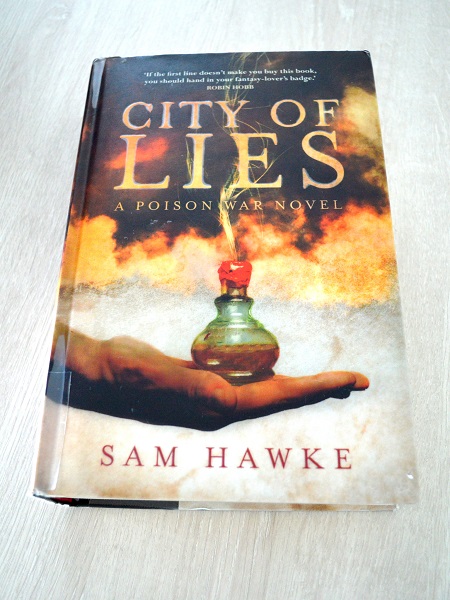
Hawke City of Lies

Hawke is perfectly right, if you ask me. As awesome as ass-kicking women are, other ways of being awesome exist and should be recognized more widely. Because the variety of life skills to be excelled in is much, much wider than merely physical prowess, fighting skill, or attitude.

Moreover, as we all know, there are situations where the application of know-how or just the right tool will create such a better outcome than anything else that at best it’s not even fair to compare them. Why should genre literature forget these skills when women stand in the protagonists’ shoes?

I’m going to be adopting the phrase “being awesome while female” for all kinds of amazing things that women do. It’s just that awesome. 🙂

P.S. I just read City of Lies, Hawke’s book with the female protagonist who has a chronic illness. I thoroughly enjoyed her strategic and entertaining use of her brain—and ditto for the male protagonists, Kalina’s brother and his best friend.

Image by Eppu Jensen

Serving exactly what it sounds like, the Quotes feature excerpts other people’s thoughts.

Quotes: No Man’s Faculties Could Be Developed without an Extensive Acquaintance with Books

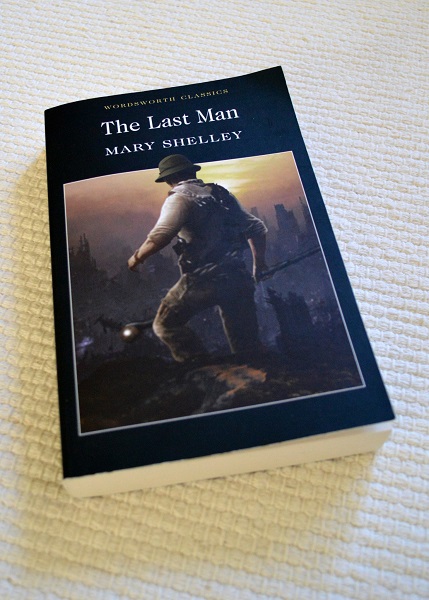
Mary Wollstonecraft Shelley’s speculative work The Last Man starts very much like a run-of-the-mill regency-era novel with its three-book structure. You even start to wonder whether much of interest is ever going to happen.

And then a plague hits. Book three, especially, where people drop off like flies, felt rather grim even before living through a pandemic myself. (I read it a few years ago.)

Shelley The Last Man

Since the plague aspect is a little too on the nose, I’m going to skip all of that for now. Instead, below is what the protagonist thought about reading:

“I felt convinced that however it might have been in former times, in the present stage of the world, no man’s faculties could be developed, no man’s moral principle be enlarged and liberal, without an extensive acquaintance with books. To me they stood in the place of an active career, of ambition, and those palpable excitements necessary to the multitude.”


– Lionel Verney in Mary Shelley’s The Last Man

Sounds astonishingly like Mr. Darcy’s line about a truly accomplished woman who must improve “her mind by extensive reading” in Jane Austen’s Pride and Prejudice, doesn’t it? It must’ve been very much in the air in the early 19th century.

If you’re interested, a free e-version of The Last Man is available on Project Gutenberg.

Shelley, Mary. The Last Man. Ware, Hertfordshire: Wordsworth, 2004 [originally published 1826], p. 124.

Image by Eppu Jensen

Serving exactly what it sounds like, the Quotes feature excerpts other people’s thoughts.

Protagonists with Radical Acceptance Decide to Let Adversity Wash over Them

Fantasy and science fiction author Vida Cruz tackles an aspect in SFF that was new to me: that BIPOC protagonists are often seen by (white, Western) editors and readers as inactive, and why that’s false.

(I’ve written elsewhere a little about teaching myself to read novels in English after I started learning the language in 7th grade, how it’s so effortless to me now because I took the time and trouble then, and how reading mostly Anglo-American literature has shaped my thinking and expectations of stories.)

Cruz’s thread starts here. I’ve unraveled it below:

***

I want to talk about how western editors and readers often mistake protags written by BIPOC as “inactive protagonists.” It’s too common an issue that’s happened to every BIPOC author I know.

Often, our protags are just trying to survive overwhelming odds. Survival is an active choice, you know. Survival is a story. Choosing to be strong in the face of the world ending, even if you can’t blast a wall down to do it, is a choice.

It’s how we live these days.

Western editors, readers, and writers are too married to the three-act structure, to the type of storytelling that is driven by conflict, to that go-getter individualism. Please read more widely out of your comfort zone. A lot of great non-western stories do not hinge on these.

Sometimes I wonder if you’re all so hopped up on the conflict-driven story because that’s exactly how your colonizer ancestors dealt with people different from them. Oops, I said it, sorry not sorry. Yes, even this mindset has roots in colonialism, deal with it.

If you want examples of non-conflict-driven storytelling google the following: kishoutenketsu, johakyu, daisy chain storytelling/wheel spoke storytelling. There was another one whose name I forgot but I will tweet it when I recall it.

Anyway, I think there is a space in literature and beyond for stories about radical acceptance or that have a radical acceptance aesthetic. Accepting the things you cannot change but dealing with them in your own way. No pyrotechnics but plenty of potential for drama.

What you want in a story is drama. Conflict does not necessarily equate to drama. Conflict is driven by two or more forces colliding. If a protagonist decides to let the force wash over them instead, that does not mean the protagonist is inactive.

Once again, I repeat: SURVIVING IS A DECISION. BIPOC based in Western countries do it all the time. Us third worlders do it all the time. But of course if you grew up white in a Western country, being mired in hopeless systems will be hard for you to grasp.

And if you’re a BIPOC author, listen: you may be already as good, if not better, than most of the competition out there. You keep getting rejected not because your story sucks but because white editors do not know how to read your work. Keep trying.

Last but not least, we don’t just need diverse demographics for everything, WE NEED DIVERSE STORIES. Get your colonizer heads out of your asses and seek out other traditions. End rant.

I found the other storytelling structure! It’s called Robleto and is of Nicaraguan origin.

Thank you for coming to my TED Talk.

One last! Another type of story that everyone loves (or pretends not to love) but no one will publish in the west is FLUFF. YES THAT’S RIGHT, FANFICTION FLUFF. SUCK ON THAT.

It has been pointed out several times so I will amend the thread to say: all my points apply for disabled, neurodivergent, and chronically ill protagonists, too. Our way of showing agency is DEFINITELY different from yours so please be mindful of that.

***

For me, the main point Cruz makes is:

“What you want in a story is drama. Conflict does not necessarily equate to drama. Conflict is driven by two or more forces colliding. If a protagonist decides to let the force wash over them instead, that does not mean the protagonist is inactive.”

– Vida Cruz on Twitter

This reminds me of my frustration with the Halle Berry -led SF series Extant (which I referred to in an earlier post). I’ve asked myself whether they really wrote her merely feeling and flailing around or whether it is my misreading. Granted, it was some years ago now, but I don’t think I misinterpreted it; Extant lacked self-awareness or self-examination. (Or perhaps the writers’ room was forced to put out such claptrap by people higher up in the production.)

Possible examples of stories with radical acceptance / survival protagonists that do come to mind include the novels The Sound of Stars by Alechia Dow (Black protag) and Among Others by Jo Walton (disabled protag).

Anything you can think of? Please share! The concept is something I’m still mulling over, so more examples would help.

Also, any suggestions on a concise name for protagonists like this? I’m drawing a blank for the moment.

Story Time is an occasional feature all about stories and story-telling. Whether it’s on the page or on the screen, this is about how stories work and what makes us love the ones we love.

Quotes: The Rigid Rules of My Life Were Stories

This is a thought that’s very easy to pass with a shrug and an “Of course”:

“It was ironic, wasn’t it, Solís? I was not even aware that the rigid rules of my life were stories, passed on from generation to generation because that’s all we knew. Tía Inez believed it, and la cuentista before her did, too. And so, we gave every cuentista of Empalme the same rules, the same restrictions, and we held them down, and we forced them into a life they couldn’t possibly have chosen.”

–Xochital in Mark Oshiro’s Each of Us a Desert [original emphasis]

But it gets very different very fast when you start thinking of everything, absolutely everything, that’s involved in your daily life. Start with how you’re brought up, kindergarten, school, and on. Or travel a bit further away from your home, or are able to talk with a stranger who trusts you with their life story.

For instance, I’m pretty sure that the sweater I’m wearing right now is “supposed” to be a boy’s. I saw it in a second-hand shop, liked the colors and print, liked the size, liked the price even more, and bought it. It’s a sweater; it kept me warm and left money in my pocket as a poor student. It still fits my “supposedly” “wrong” shape well enough after all the years I’ve had it. Who cares who is supposed to wear it?

Twitter CatCafeLiverpool Cat Fits Cat Sits

If it fits, I sits… err, wears. Me wearing this sweater isn’t hurting anything or anyone. But, of course, little things like an article of clothing can symbolically stand for larger issues, and those, as we all know, can really be thorny.

Humans really are storytelling animals.

Oshiro, Mark. Each of Us a Desert. New York: Tor, 2020, p. 374-5.

Images: Each of Us a Desert by Eppu Jensen. Cat in a box via Cat Cafe Liverpool.

Serving exactly what it sounds like, the Quotes feature excerpts other people’s thoughts.

Quotes: Almost None […] Depict a Successful Transformation of Society

Cara Buckley’s 2019 article in New York Times talks about how environmental concerns have been depicted in some recent superhero and sci-fi movies. Climate change may have been moved to the back burner in recent news; nevertheless, in the beginning of the article there is a very important, timely nugget:

“Humans ruined everything. They bred too much and choked the life out of the land, air and sea.

“And so they must be vaporized by half, or attacked by towering monsters, or vanquished by irate dwellers from the oceans’ polluted depths. Barring that, they face hardscrabble, desperate lives on a once verdant Earth now consumed by ice or drought.

“That is how many recent superhero and sci-fi movies — among them the latest Avengers and Godzilla pictures as well as ‘Aquaman,’ ‘Snowpiercer,’ ‘Blade Runner 2049,’ ‘Interstellar’ and ‘Mad Max: Fury Road’ — have invoked the climate crisis. They imagine postapocalyptic futures or dystopias where ecological collapse is inevitable, environmentalists are criminals, and eco-mindedness is the driving force of villains.

“But these takes are defeatist, critics say, and a growing chorus of voices is urging the entertainment industry to tell more stories that show humans adapting and reforming to ward off the worst climate threats.

“’More than ever, they’re missing the mark, often in the same way,’ said Michael Svoboda, a writing professor at George Washington University and author at the multimedia site Yale Climate Connections. ‘Almost none of these films depict a successful transformation of society.’ [emphasis added]”

Even though a pandemic is a very different kind of beast compared to apocalyptic-level climate catastrophes, the current covid-19 epidemic can surely feel like a devastation. I’ve certainly seen my share of panicky social media messages.

We’ve recently started re-watching Star Trek: Deep Space Nine, and this line veritably jumped out:

ST DS9 s3 ep18 Distant Voices

“It’s just that… this year is a little different.”

Indeed—this year is different. Unlike good Doctor Bashir’s, though, our situation is a little more dire than turning thirty years of age.

Right now there’s no long-term data available, so any estimates of the long-term effects are guesses—at best cautious, at worst wild—but every opinion I’ve seen says the world will change as a consequence. And as a nerd, that interest me.

I can’t think of many speculative stories off the top of my head where the society has adjusted in a way that focuses on our shared humanity. On the contrary, most of them cannot seem to be able to find much good in human behavior during crises. Since social collapse at the beginning of a disaster is a myth, I’d like to see more stories concentrating on people working together. (That is my favorite kind of story for a reason, after all.)

There is one thing I do know, though, limited in scope as it is: I will be most seriously displeased if writers and producers of the future fail to learn from witnessing the amount of cooperation and outpouring of help people are providing not only their own communities but also strangers.

Buckley, Cara. “Why Is Hollywood So Scared of Climate Change?” New York Times, August 14, 2019.

Image: screencap from season 3 of Star Trek: Deep Space Nine, episode “Distant Voices”.

Serving exactly what it sounds like, the Quotes feature excerpts other people’s thoughts.

Delightful Music: Fringe Theme

One of the most enjoyable things about Fringe is the theme song. Here is a full, 6-minute version:

Fringe Theme [FULL] via mrbrzoskwinka on YouTube

It’s composed by Michael Giacchino, who has an extensive music department background in genre tv, movies, and games (Jurassic franchise video games and movies, Alias, Zootopia, some rebooted Mission Impossible and Star Trek movies, Rogue One and both of the new Spider-Man MCU movies, for instance).

It’s rare to come across a speculative show theme that uses the piano so unapologetically, let alone a story of an FBI agent investigating weird crimes. I’m in no way an expert, but I seem to have noticed that piano has fallen out of fashion these days, so for me the Fringe theme is valuable on those grounds as well.

An occasional feature on music and sound-related notions.

Quotes: Society Works Better Than It Ever Had

Arkady Martine wrote at Tor.com on disaster stories and human behavior, noting a pattern on concentrating on the catastrophic and awful. That, however, has been proven a myth, at least initially:

“Humans do not, under the pressure of an emergency, socially collapse. Rather, they seem to display higher levels of social cohesion, despite what media or government agents might expect… or portray on TV. Humans, after the apocalypse, band together in collectives to help one another—and they do this spontaneously. […]

“Humans all over the world display this behavior after disasters. They display it consistently, no matter what kind of disaster is happening or what culture they come from.

“What really happens after an apocalypse? Society works better than it ever had, for a brief time.” [original emphases]

– Arkady Martine

Yay, us! We did evolve as and still are highly social creatures.

Now, how long this century’s phenomenal technological change takes to alter that and in which ways remains to be seen. I have high hopes of our curiosity and drive to engage with others, however. That may be a bit funny for a huge introvert to say, but there it is. 🙂

Serving exactly what it sounds like, the Quotes feature excerpts other people’s thoughts.