New Edition of Alice in Wonderland with Salvador Dalí

In 2015, commemorating the 150th anniversary of Alice’s Adventures in Wonderland, Princeton University Press reprinted a color edition with illustrations by Salvador Dalí.

William Bennet Modern Down the Rabbit Hole DALI1003

Surreal, almost psychedelic, and rarely seen before the reprint, the original gouaches were first published in 1969.

William Bennet Modern The Mock Turtle's Story DALI1011

The color use is amazing, and the surrealist style fits elements of the story. However, I can’t escape the feeling that had I seen these illustrations as a kid, they would’ve given me nightmares.

Found via Colossus and Brain Pickings.

Images: Down the Rabbit Hole and The Mock Turtle’s Story via William Bennett Gallery (1969; heliogravures of original gouaches; by Salvador Dalí)

Out There is an occasional feature highlighting intriguing art, spaces, places, phenomena, flora, and fauna.

Labyrinth Released 30 Years Ago

Jareth: “You remind me of the babe.”

Goblin 1: “What babe?”

Jareth: “The babe with the power.”

Goblin 2: “What power?”

Jareth: “Power of voodoo.”

Goblin 3: “Who do?”

Jareth: “You do.”

Goblin 4: “Do what?”

Jareth: “Remind me of the babe.”

Labyrinth

This year marked the 30th anniversary of the release of Labyrinth by director Jim Henson. This past weekend FantomEvents ran some special Labyrinth showings in theaters. We didn’t go due to schedule issues (=work, work, work) but instead watched it at home.

As a geeky kid of the 80s, I have very fond memories of the movie. It’s mostly because of its visuals, but I do like the fantastic lines—great for learning English with—and voice acting as well.

Sarah: “Did you say ‘Hello’?”

Worm: “No, I said ‘allo’, but that’s close enough.”

(The worm was one of my very first tastes of dialectal / regional English!)

If my memory serves, the puppetry effects in Labyrinth are mostly better than in The Dark Crystal, Jim Henson’s previous fantasy movie. (Note to self: Find out if I can rent / stream The Dark Crystal. Local library to the rescue!)

Some of the songs, too, have become long-time favorites, especially “As the World Falls Down” by David Bowie.

Ballroom Scene – Labyrinth – The Jim Henson Company

As a kid, I didn’t really understand how someone could like Bowie’s music, but that one song opened my eyes. (Ears?) I still love it, and the ballroom scene with its floating props.

Bonus find: Stephanie at Make and Tell shares her “the babe with the power” wall art printable.

Stephanie Make and Tell babewiththepower_printable_mockup2

What’s your favorite Labyrinth memory?

Images: Labyrinth DVD case by Eppu Jensen. The babe with the power printable by Stephanie at Make and Tell.

This post has been edited.

In the Seen on Screen occasional feature, we discuss movies and television shows of interest.

Making The Courtesy of the Golden Hall

Here’s a look at how we made yesterdays The Courtesy of the Golden Hall.

The menu

  • Rye porridge
  • Braised beef
  • Roasted vegetables
  • Saffron and cream pancake
  • Apple compote

erikchef1Tolkien gives us only a few hints about the food of Rohan, but they are enough for us to flesh out the picture.

Dinner9 Main2

There are several references to meal, in the sense of coarsely ground flour. Éomer mocks Wormtongue by questioning whether anyone would trust him with a sack of meal (3.6) and Théoden warns the herald of Minas Tirith to have supplies ready for the Rohirrim when they ride to Gondor’s aid, for to travel light and fast they can carry only meal and water enough to last until they reach the battlefield. (5.3) Coarse flour makes poor bread and, significantly, bread is never mentioned in Rohan. Every other people in Middle Earth, from Hobbits to Orcs, has some kind of bread, but not the Rohirrim, which suggests they are making something else with their grain: porridge. Porridge is a staple of many northern European cultures like those that inspired the Rohirrim. The deep, earthy flavors of rye make for a very satisfying porridge to start our dinner.

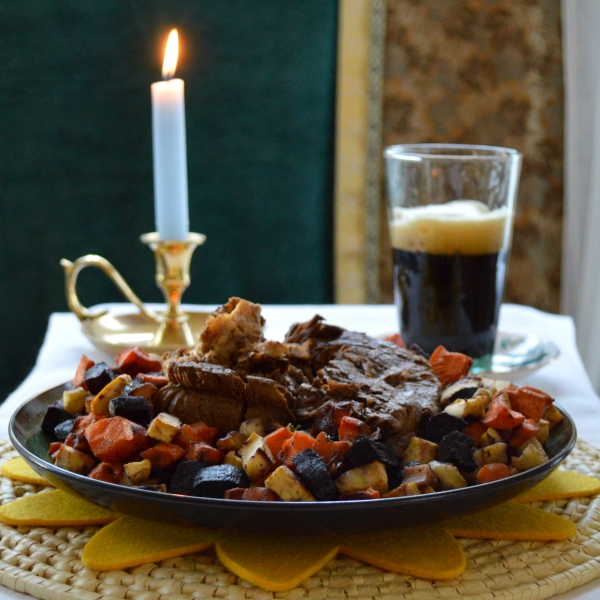
The herds of Rohan are prominently mentioned, although what exactly they are herds of is never specified. (2.9, 3.2) Since cattle were highly prized across ancient northern Europe, beef seems like the right meat to serve at the royal table. Braising is an excellent way to cook large joints of meat and could be done in a cauldron over a low fire in a mead hall. Root vegetables are also a staple of northern European cuisines and make an good accompaniment to braised beef.

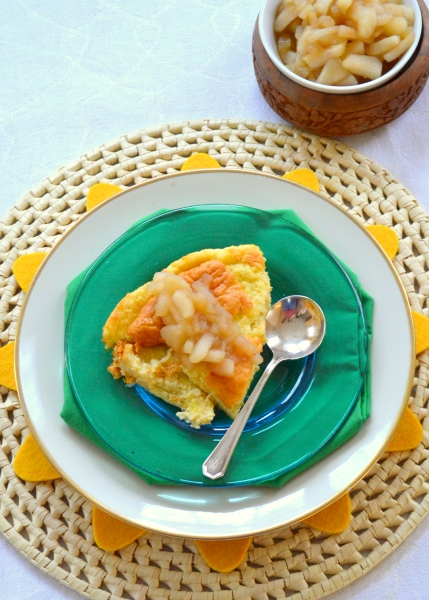
The saffron and cream pancake recipe comes from a Viking source and shows the extent of the trading networks the Vikings were engaged in, connecting them with the distant shores of the Mediterranean where saffron was harvested. It seems an appropriate way to honor the friendship between Rohan and Gondor to suggest that the Rohirrim had access to a few southern luxuries as well. The apple compote we serve with it is based on Anglo-Saxon recipes.

Continue reading

Dining in Middle Earth: The Courtesy of the Golden Hall

“At the King’s board sat Éomer and the four guests, and there also waiting upon the king was the lady Éowyn. They ate and drank swiftly.”

LotR Dinner9 Main

This month we visit the Golden Hall of Meduseld in Rohan. Our food reflects the northern roots of Tolkien’s Rohirrim, drawing on Scandinavian and Anglo-Saxon traditions.

LotR Dinner9 Starter

We start with a hearty rye porridge, followed by braised beef and roasted vegetables. For dessert, a rich saffron and cream pancake served with apple compote.

LotR Dinner9 Dessert

The table setting is built with multiple colors, layers, and lush textiles. The colors refer to the expansive grasslands of Rohan, and gold-colored or metallic-sheen details add opulence. The dishware turns showier as the meal progresses, moving from a plain white bowl to a plate with brown and green glazing, and ends with a pale teal handblown glass plate on a gold-rimmed white charger.

Dinner9 Runner and Ribbons2

Check out what’s it about in the introduction, or read the how-to!

Images by Eppu Jensen

Geeks eat, too! Second Breakfast is an occasional feature in which we talk about food with geeky connections and maybe make some of our own. Yum!

Ginormous List of Oncoming SFF Screen Adaptations

Natalie Zutter at Tor.com has made a list of SFF adaptations currently in the works either for tv or cinema.

Richard K Morgan altered-carbon_UK_Pb

Such a variety of projects! It really seems like a golden age for genre adaptations, like Zutter says. Head on to Tor.com for the full list.

I’m most interested in Arrival (based on a story by Ted Chiang and out very soon now!), Altered Carbon by Richard K. Morgan, and Lilith’s Brood by Octavia E. Butler. It would also be great to see Ann Leckie’s Ancillary series, Red Mars by Kim Stanley Robinson, and Daniel José Older’s Bone Street books on screen.

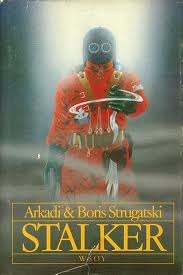
It was also intriguing to see Roadside Picnic by Arkady and Boris Strugatsky on the list, for I’m not used to seeing Eastern bloc SFF authors in the Anglo-American market. According to the all-knowing Internets, Roadside Picnic was turned into a Russian SFF art film Stalker in 1979. I never saw that, but did read the Finnish translation (Stalker: huviretki tienpientarelle) when I was too young to really understand it, so it would be nice to refresh my memory.

Goodreads Strugatski Stalker

Besides works in progress mentioned in Zutter’s list, I’m looking forward to OtherLife. It’s adapted from Kelley Eskridge’s Solitaire (2002), which I read only this year and loved. Unfortunately, OtherLife seems currently to have paused in post-production. We live in hope, though! (I’ve been following the story of its development on Eskridge’s blog; do visit for a glimpse of indie movie projects from a writer’s perspective.)

Anything on your radar that especially tickles your fancy? Do share!

Images: Altered Carbon via Richard K. Morgan. Stalker via Goodreads

Hey, look! We found a thing on the internet! We thought it was cool, and wanted to share it with you.

The Neverending Story Has an Anniversary Doodle

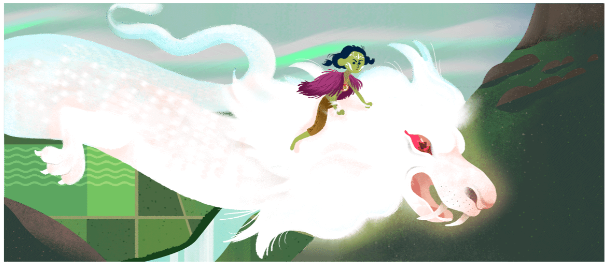
Google tells me with a lovely doodle that it’s the 37th anniversary of the first printing of The Neverending Story by Michael Ende.

Google Doodle Falkor from Neverending Story

Originally published in German on September 01, 1979, Die unendliche Geschichte was translated into Finnish in 1982 (and apparently English in 1983, with the film adaptation in 1984). I can’t quite remember if I ever read it. At the same time, I want to recall a gorgeous tome with both green and red print, so I guess I must at least have been handling the Finnish translation at one point.

Finnish translation of The Neverending Story (Tarina vailla loppua) by Katja Jalkanen at Lumiomena

(No, I did not imagine the green and red print!)

While the movie version isn’t terribly well-made nor the first I saw in a theater, it is one of the first screen adaptations that made me realize I was a geek even if I didn’t have a word for it at the time. It’s purely for nostalgia that I own and occasionally rewatch it. I’m now wondering whether I should’ve bought the book instead.

Images: Falkor from Neverending Story by Sophie Diao via Google Doodle. Finnish translation of The Neverending Story (Tarina vailla loppua) by Katja Jalkanen at Lumiomena

This post has been edited for style.

ICBIHRTB—pronounced ICK-bert-bee—is short for ‘I Can’t Believe I Haven’t Read This Before’. It’s an occasional feature for book classics that have for some reason escaped our notice thus far.

Autogenerating Fantasy World Maps with Uncharted Atlas

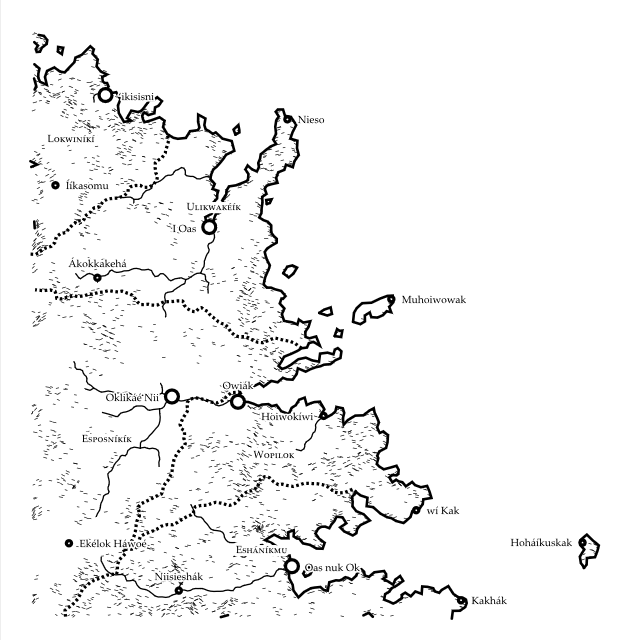
Autogenerating fantasy world maps is now possible with an incredible online tool coded by Martin O’Leary.

Uncharted Atlas Map
An autogenerated map for a fantasy world, including slopes, borders, coastlines, rivers, cities, and territories, created with Uncharted Atlas. Coding by Martin O’Leary

Currently mainly existing to feed material to the Uncharted Atlas twitterbot, the tool and its code are available for others as well.

Says O’Leary:

“I wanted to make maps that look like something you’d find at the back of one of the cheap paperback fantasy novels of my youth. I always had a fascination with these imagined worlds, which were often much more interesting than whatever luke-warm sub-Tolkien tale they were attached to.

“At the same time, I wanted to play with terrain generation with a physical basis. There are loads of articles on the internet which describe terrain generation, and they almost all use some variation on a fractal noise approach, either directly (by adding layers of noise functions), or indirectly (e.g. through midpoint displacement). These methods produce lots of fine detail, but the large-scale structure always looks a bit off. Features are attached in random ways, with no thought to the processes which form landscapes. I wanted to try something a little bit different.”

Uncharted Atlas also generates names for cities, towns, and regions with a separate bit of code, following a set of consistent rules. For an explanation of how it works and to try your own hand at it, see the terrain notes and language notes.

As a user, I’d like to see a way to connect several of these individual maps into a larger unity, but that’s getting ahead of things—just having a free tool like this is fantastic. 🙂 Kudos!

In Making Stuff occasional feature, we share fun arts and crafts done by us and our fellow geeks and nerds.

Making Rangers’ Rations

Here’s a look at how we made yesterday’s Rangers’ Rations.

The menu

  • Ham
  • Fruit sauce
  • Cucumber salad
  • Bread
  • Butter
  • Cheese
  • White wine

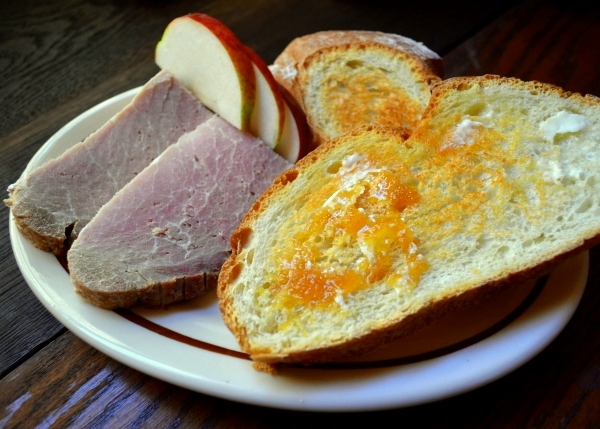
erikchef1Like the Hobbits’ dinner at the Prancing Pony in Bree, we get a pretty clear description of what the rangers of Gondor eat at their camp in Ithilien and it all makes a lot of sense for people who are stuck out in the wild away from supply lines living off rations. Ham, dried fruit, butter, and cheese are all preserved foods that keep well long-term. (4.5) Not all breads keep well, but there are many kinds that do. I’ve stuck to this description with a couple of adjustments.

First, I added a cucumber salad for the sake of some more vegetables. This particular salad uses vinegar and salt, not unlike a pickling brine. While this salad wouldn’t last as long as a proper pickle, the brine does help it keep a little longer.

Second, I made a softer bread rather than the hardtack Faramir’s troops would probably have had for their regular rations. Since Ithilien has olive trees and other characteristically Mediterranean vegetation, I’ve used a basic Mediterranean-style dough that can be baked in many different ways. (4.4)

Dinner8 Ithilien Pared Down

The thinking behind these adjustments (other than I wanted a vegetable and didn’t feel like making hardtack again) is that Faramir broke out the good stuff for his honored guests. (Remember we’re going by the novel here, not the Peter Jackson movies—which were mostly great but turned Faramir into a total jerk.) Cucumbers and soft fresh bread may not be much of a luxury to most of us, but for weary travelers they could be a welcome change from waybread and forage.

Continue reading

Dining in Middle Earth: Rangers’ Rations

“After so long journeying and camping, and days spent in the lonely wild, the evening meal seemed a feast to the hobbits; to drink pale yellow wine, cool and fragrant, and eat bread and butter, and salted meats, and dried fruits, and good red cheese, with clean hands and clean knives and plates. Neither Frodo nor Sam refused anything that was offered, nor a second, nor indeed a third helping. The wine coursed in the veins and tired limbs, and they felt glad and easy of heart as they had not done since they left the land of Lórien.”

LotR Dinner8

The rangers of Gondor in Ithilien offer a simple but satisfying dinner for two hungry Hobbits. For this month’s meal, we have a version following Tolkien’s description (with the addition of a salad, just to have a vegetable on the table). We served up ham with dried fruit sauce, a cucumber salad, bread, butter, and cheese, and a cup of wine to go with it.

LotR Dinner8 Main

A makeshift narrow trestle table holds brown glazed pottery as well as plain wooden bowls and serving plates, closely resembling the rangers’ base. Butter is served from its own little green ceramic bowl and bread is accessible from a fabric-covered basket. Hunks of cheese can be cut on the same small wooden cutting board that it’s served on.

LotR Dinner8 Alt Setup

Check out what’s it about in the introduction, or read the how-to!

Images by Eppu Jensen

Geeks eat, too! Second Breakfast is an occasional feature in which we talk about food with geeky connections and maybe make some of our own. Yum!

20 Fantasy Worlds to Visit

Bryce Wilson at Screen Rant published a list of 15 fantasy books / series to “shak[e] off some serious Westeros withdrawal” after the sixth season finale of Game of Thrones aired at the end of June.

While there were solid choices on the list, what struck me was that out of 15 named creators only 2 were women. That’s 13%. Since women make up half of the world’s population, an eighth is an unacceptably low proportion in my eyes, so I made a list of my own.

Flickr Peter Roan Monteleone Chariot
Even Achilles knows that women are an integral part of the world.

Notes on my list: 1) it’s novels only (no anthologies), 2) in a random order, 3) with no double entries (otherwise I’d include also Jemisin’s The Inheritance Trilogy), 4) and I include not only a variety of flavors within the fantasy genre but also historical fiction. Moreover, 5) I’ve included old and newer favorites as well as new-to-me authors whose works sound intriguing. Finally, 6) the common denominator is (like in the Game of Thrones) the presence of power struggles of various sorts, negotiation of identities, and survival.

1. Ursula K. Le Guin. The Earthsea cycle (A Wizard of Earthsea; The Tombs of Atuan; The Farthest Shore; Tehanu; Tales from Earthsea; The Other Wind)

Aspects of identity examined in an island-based early medievalesque world with magic and lots of sailing.

2. Kai Ashante Wilson. Sorcerer of the Wildeeps

Sword and sorcery, gods and mortals, with a band of mercenaries working as caravan guard in focus. (Linguist’s note: Fascinating mix of vernacular and more formal language.)

3. N.K. Jemisin: The Dreamblood duology (The Killing Moon; The Shadowed Sun)

Ancient-Egyptian-flavored fantasy on a moon orbiting a Jupiter-like gas giant.

4. Samuel R. Delany. Nevèrÿon series (Tales of Nevèrÿon; Neveryóna; Flight from Nevèrÿon; The Return to Nevèrÿon)

Sword and sorcery in a world before the dawn of history, with strong elements of power, economic development and breaking barriers.

5. Rosemary Kirstein. The Steerswoman

D&D-like adventures in a medievalesque world with hidden computer technology.

6. Saladin Ahmed. Throne Of The Crescent Moon

Old-fashioned sword-and-sorcery with an Arabian Nights flavor.

7. Robin Hobb. The Farseer trilogy (Assassin’s Apprentice; Royal Assassin; Assassin’s Quest)

Convoluted political intrigues and power struggles in the Six Duchies.

8. Kate Elliott. Black Wolves

Four generations of dynastic struggles in a Central-Asia-influenced world with demons and a power-hungry new religion.

9. Nicola Griffith. Hild

Political intrigue between Anglo-Saxon kingdoms in a fictionalized 7th-century Britain.

10. David Anthony Durham. The Acacia trilogy (Acacia: The War with the Mein; Acacia: The Other Lands; Acacia: The Sacred Band)

Political, economic, mythological and morally ambiguous forces battle for the control of the Acacian empire.

11. Nicole Kornher-Stace. Archivist Wasp

Yearly duels to the death to gain or retain the title Archivist in a post-collapse world with ghosts.

12. Charles R. Saunders. Imaro

Sword and sorcery, heroic warriors, grand landscapes, giants and magic in a world inspired by Africa.

13. Robert Harris. Cicero trilogy (Imperium; Lustrum [U.S. title: Conspirata]; Dictator)

Rise to and repercussions of power told through a fictional biography of Cicero.

14. Alaya Dawn Johnson. The Spirit Binders series (Racing the Dark; The Burning City)

A coming-of-age story in an island world resembling Polynesia where people have learned to bind elemental powers to their command.

15. Joe Abercrombie. The First Law trilogy (The Blade Itself; Before They Are Hanged; Last Argument of Kings)

Demons and humans in a dark, edgy world full of skirmishes.

16. Guy Gavriel Kay. The Sarantine Mosaic (Sailing to Sarantium; Lord of Emperors)

Power voids, political intrigue, assassins and travels in a world inspired by 6th-century Mediterranean.

17. Brandon Sanderson. Mistborn series (The Final Empire; The Well of Ascension; The Hero of Ages)

Magic from metals in a mist-laden world.

18. Patrick Rothfuss. The Kingkiller Chronicle (The Name of the Wind; The Wise Man’s Fear; Day Three: The Doors of Stone [working title])

Magic and music meet in a coming-of-age story.

19. Aliette de Bodard. Obsidian and Blood books (Servant of the Underworld; Harbinger of the Storm; Master of the House of Darts)

Three standalone Aztec noir fantasy-mysteries with blood magic, star-demons and war.

20. Kameron Hurley. The Worldbreaker Saga (The Mirror Empire; Empire Ascendant; The Broken Heavens [forthcoming])

Brutal power struggles in a world where plants can walk and kill, and blood magic opens portals between parallel realities.

Bonus entry by a fellow Finn:

Emmi Itäranta. The City of Woven Streets

A blend of a coming-of-age story with high-stakes intrigue and danger on an island with water-based tech.

Enjoy! I know I will get back to this list after finishing my current reading project.

Image: Monteleone chariot with Thetis and Achilles, detail of image by Peter Roan on Flickr CC BY-NC 2.0 (Etruscan, currently Greek and Roman galleries, The Metropolitan Museum of Art; 2nd quarter of the 6th century BCE; bronze inlaid with ivory)

Messing with numbers is messy.