Bread and Cheese

A sturdy adventurer in a fantasy novel pauses to take a break from their journey to the Land of Quest Completion. They open their knapsack looking for something to eat and what do they find? Bread and cheese.

Always bread and cheese.
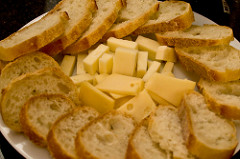
It’s a well enough known trope to make an easy, low-hanging joke. It’s the sort of thing you expect in fantasy media whose worldbuilding can be charitably described as “medieval Europe but with magic and dragons and also I’ve never actually read a book on medieval Europe.”

But bread and cheese is not a joke. It is, in fact, a very good and sensible choice for an adventurer to pack for a long and difficult journey.

The human body needs nourishment. For long term health, there are a lot of things you need: a proper balance of amino acids, vitamins, minerals, fiber, and so on. Doing without any of these essentials for prolonged periods means risking malnutrition, disease, and other serious health problems. For getting through several days or weeks of hard physical work, like traveling in rough terrain or fighting monsters, though, three things are crucial: water, calories, and protein.

An average adult human requires a minimum of about 2 liters of water, 3,000 calories, and 70 grams of protein each day in order to remain fit for physically demanding labor. More is better, but these will get you through if you don’t keep it up for too long. These are the requirements a meal must meet to be suitable for basic adventuring rations.

Water can be found in most parts of the world where people live. It may not be available in large quantities and it may not be safe or pleasant to drink straight from the source, but chances are your standard adventurer can find enough to survive on in most terrains. That leaves calories and protein.

There are lots of different ways of getting both. Your adventurer might eat meat, fish, eggs, milk, beans, vegetables, mushrooms, fruit, nuts, seeds, honey, insects, or plenty of other things. When a variety of food options is available, people like to indulge themselves (as we moderns and our waistlines know all too well). But not all these food items travel well. Fresh vegetables and fruit will wilt and rot. Meat and fish go bad and may attract dangerous animals. Eggs won’t hold up well to being jostled around in a traveler’s knapsack. Some of these products can be dried, salted, pickled, or otherwise preserved to last longer, but processing adds to cost. Depending on growing seasons and local farming practices, these foods may not be available when your adventurer needs them.

Hence the advantages of bread and cheese. In agricultural regions, staple crops like grain are almost always available. Unprocessed grain, if kept dry and safe from vermin, can be kept for a long time. Bread kept similarly dry and safe may become unappealing and tough to chew, but will preserve its nutritional value even after many days of jostling around in a hero’s handy haversack. Cheese can be made wherever there are milk-giving animals (often reared on marginal or fallow land in agrarian communities), and will last a long time without deterioration if well taken care of. In farming societies throughout large parts of the world, bread and cheese are both readily available, inexpensive, and easy to make portable.

Bread provides a good dose of calories and protein; cheese even more. Combined, they provide the complete set of amino acids that the body needs. (It turns out that combining different protein sources is nowhere near as complicated as conventional wisdom says it is. As long as you have a variety of different foods in your diet and you’re not trying to subsist on on a single non-animal source of calories, you’re pretty much covered. Still, for an adventurer braving the wilderness without a lot of variety easily available, it doesn’t hurt to make sure you’ve got everything your body needs in one meal.)

Bread and cheese. Don’t leave on an adventure without it.

Thoughts for writers

Bread and cheese make good sense for adventurers’ traveling rations in a lot of settings, but that doesn’t mean that if you’re writing an adventure you should just fall back on bread and cheese for all your heroes’ dietary needs.

Food is a fundamental part of life. As such, it is an indispensable element in worldbuilding. People eat the things they eat for good reasons, and societies are often structured, in very basic ways, around the production and distribution of foodstuffs. The availability of a single plant can have far-reaching effects on the culture that grows it. The consequences for worldbuilding don’t end with the food itself but carry on into how it is produced and consumed. Descriptions of food in fantasy literature often feature just as local color, but food can in fact inform major parts of your worldbuilding.

Bread and cheese may seem like an overused cliché, but it has been used so much for a reason. It is an entirely sensible and realistic choice of provisions for travelers in the hinterlands of any fantasy world that broadly resembles the living conditions across most of the premodern world. Don’t be afraid to fall back on bread and cheese if it is the right choice for your story, as long as you are choosing it for a reason and not just because it’s what fantasy adventurers always eat.

Image: Bread and cheese wheel, photograph by Andrew Malone via Flickr

History for Writers is a weekly feature which looks at how history can be a fiction writer’s most useful tool. From worldbuilding to dialogue, history helps you write. Check out the introduction to History for Writers here.
Quotes: Gentlemen

Miss Marple made a contribution to the conversation. “Gentlemen,” she said with her old maid’s way of referring to the opposite sex as if it were a species of wild animal, “are frequently not so levelheaded as they seem.”

– Agatha Christie, The Body in the Library

Speaking as a member of that peculiar species, I do not object in the least to Miss Marple’s observation.

Christie, Agatha. The Body in the Library. New York, NY: Black Dog & Leventhal, 1941, p. 103.

Serving exactly what it sounds like, the Quotes feature excerpts other people’s thoughts.

Quotes: Finns Know How to Listen to the Stillness in the Great Forest

After the Finnish centennial in 2017, I’ve been reading outside my usual periods of Finnish history a little, including on the Finnish Winter War (1939-1940, for 105 days against the USSR). Here’s another tidbit that caught my attention:

“Finns know how to listen to the stillness in the great forest; for them it is never absolutely silent, and they can read considerable information about their environment from the sounds of which outsiders are not even aware. Finns, in short, can adapt to their environment because they feel a part of it.”

– William Trotter, A Frozen Hell: The Russo-Finnish Winter War of 1939-1940

I know people who love water, to be on and in the water, whether a lake or an ocean. I don’t. It’s nice to look at or splash in now and then, don’t get me wrong, but I don’t adore it.

I’m in love with woods.

I need trees to feel whole and at peace, and preferably wild instead of planted and pruned trees. Whether in the cool, clear incandescence of summer nights, or wet, loamy autumn rain, or the crisp, brisk dark of winter, or, finally, the unhurried, budding, green spring, Finnish woods are dear to me.

Trotter, William R. A Frozen Hell: The Russo-Finnish Winter War of 1939-1940. Chapel Hill, NC: Algonquin Books of Chapel Hill, 1991, p. 145.

Serving exactly what it sounds like, the Quotes feature excerpts other people’s thoughts.

Race in Antiquity: Short Answers

Over the past year, I’ve been posting on the topic of race in ancient Greek and Roman society. The subject is a much more complicated one than it may at first appear and there is a lot to say about it. Today, to bring things to a conclusion, I’d like to offer some short, simple answers to some basic questions. Like most things in history, the full answers are always more complicated, but these are a start.

Did ancient Greeks and Romans have a concept of race?

Not as we understand it today. They primarily thought of human populations as defined by language, culture, family, and legal status. While they were aware of the kinds of natural variations in skin tone, face shapes, hair types, and other physical features we typically use to categorize race today, they did not generally regard these variations as markers of identity.

Did skin color matter in Greek and Roman society?

Yes, but not as an indicator of race. Across much of the ancient Mediterranean world there was a cultural ideal (at least among the elite levels of society who have left us written evidence) that men should work outdoors, preferably as farmers or soldiers, and women should work indoors, especially at textile production. As a result, dark skin was valued in men—a sign that they had spent plenty of time working in the sun—and light skin was valued in women. Light-skinned men and dark-skinned women were often looked down on for failing to meet this social standard. Judgments about skin color stemmed from prejudices relating to gender and class, not race.

Were there any black people in ancient Greece or Rome?

Yes. Blackness is a modern identity grounded not just in physical features but in historical experience and which we cannot simply apply onto people in the past; however, in simple biological terms, people whose features we would today associate with blackness have been identified in Greek and Roman contexts from as early as the thirteenth century BCE to as as late as the fourth century CE. As genetic evidence becomes more available in archaeological research, the number of known examples will surely grow, but literary and artistic evidence is already abundant.

Were there any East Asian people in ancient Greece or Rome?

Yes. Contacts of trade and diplomacy across Eurasia are well documented and people from East and Southeast Asia have been identified in Greek and Roman contexts as far north and west as Roman London.

Were there any Indigenous American, Australian, or Oceanian people in ancient Greece or Rome?

Not as far as I know, but the development of genetic research may yet surprise us on this score. As far as the present evidence will take us, we can say that Greece and Rome were connected to networks of trade, travel, and migration that spanned Eurasia and Africa, but that appears to be their limit.

Were the black and East Asian people who lived in Greece and Rome seen as different?

It’s hard to say. Ancient authors didn’t spend much time writing about the issue, which in itself may suggest that these sorts of differences didn’t matter, but arguments from silence are hard to rely on. Since Greek and Roman culture did not have a concept of race, though, it seems unlikely that these sorts of variations mattered very much. Just as we notice peoples’ hair and eye color today but don’t generally attach much meaning to it, Greeks and Romans may well have noticed if someone had a different skin tone or facial shape, but they didn’t necessarily think it mattered very much.

Were the black and East Asian people who lived in Greece and Rome also Greeks and Romans?

Most of them probably were. The definition of who could be counted as a Greek or a Roman was flexible and depended on circumstance. In some times and places, lines of identity were tightly policed and newcomers were not welcomed in; in other times and places, the definitions were expansive and new people were easily incorporated. A lot of people who came to the Mediterranean from other parts of the world settled down and had families. Even if the original immigrants were not accepted as Greeks and Romans, there is a good chance that their children and grandchildren thought of themselves and were thought of by their neighbors as being just as Greek or Roman as anyone else.

Were ancient Greece and Rome white civilizations?

No. The majority of people who identified as Greeks and Romans in any given time and place were probably, in modern terms, white, but that does not mean that Greek and Roman culture were themselves “white” or had any necessary connection with whiteness. The category of “white” did not exist in Greek or Roman culture, nor did Greeks and Romans believe that their culture was inherently linked to their ancestry. Indeed, they were generally quite happy to point out where they had taken cultural ideas and influences from other peoples. The idea of a “white civilization” would have sounded very strange to Greek and Roman ears.

For more information and further discussion, check out other entries in this series:

History for Writers is a weekly feature which looks at how history can be a fiction writer’s most useful tool. From worldbuilding to dialogue, history helps you write. Check out the introduction to History for Writers here.

Miss Sherlock Is Now Available – Thoughts?

I first heard about Miss Sherlock in the spring of 2018, but wasn’t able to track it down then. In December, I found a review by Kaisu Tervonen in Helsingin Sanomat, the largest Finnish daily. (NB. Finnish only.)

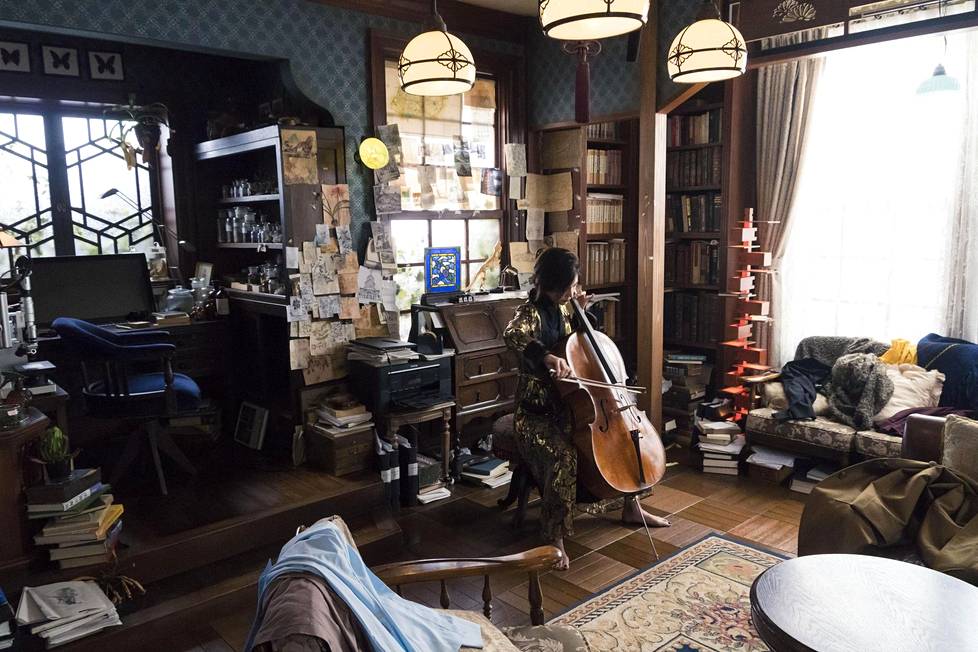
HS HBO Miss Sherlock Playing Cello

The Sherlock character is called Sara Shelly Futaba (played by Yūko Takeuchi). She’s a consultant specializing in criminal psychology. Our Sherlock / Futaba meets her Doctor Watson or Wato Tachibana (Shihori Kanjiya) at a murder scene of a good colleague of Wato’s after the doctor returned from Syria.

In a familiar manner, the two end up solving mysteries, one per episode. What the series is really about, apparently, is first building and then endangering their friendship.

Since I last wrote, also the IMDB entry for Miss Sherlock has been updated and the episode descriptions added.

With regard to U.S. viewing, I’ve found out that you can stream (for a fee) all of the season 1 (8 episodes) at Hulu with English subtitles, but I haven’t had the time to check that out.

The HS reviewer wasn’t very impressed, so I’m a little dubious. Have you seen any episodes at all? Please chime in!

Image: HBO Miss Sherlock / HBO via Helsingin Sanomat

P.S. Twitter users have uploaded some screencaps.

In the Seen on Screen occasional feature, we discuss movies and television shows of interest.

Quotes: Finns Were on Intimate Terms with Winter

After the Finnish centennial in 2017, I’ve been reading outside my usual periods of Finnish history, including on the Finnish Winter War (1939-1940, for 105 days against the USSR).

It’s easy for a modern Finn—at least this modern Finn—to get tired of reading endless takes, almost exclusively by foreigners, condemning the horribleness of the Finnish winter. Like in this excerpt from a book on the Winter War:

“One of the main factors that enabled the Finns to destroy forces much larger than their own was surely rooted in the differing psychologies of the men engaged on either side. To the Finnish soldier, the cold, the snow, the forest, the long hours of darkness were all factors that could be turned to his advantage. To say that the Finns were on intimate terms with winter is to voice an understatement. In Finland winter is the fact of life, and all else—the economy, the culture, the national psychology—is colored by, or derived from, that single overriding reality. The relationship between the Finns and winter constitutes something of a contradiction. On the one hand, winter makes life harsh and lonely and something crude. It is this aspect of living with winter, the cumulative effect of endless subarctic nights, the unearthly silences of the winter landscape, the harsh and marginal quality of rural life, that imparts to the Finnish character that dour and brooding quality that is so hard for foreigners to penetrate.”

– William Trotter, A Frozen Hell: The Russo-Finnish Winter War of 1939-1940 [original emphasis]

It is true that we stayed poor quite long and urbanised quite fast, pretty much during my parents’ generation, so it’s easy for me to lose perspective. Even as late as 1950s (I believe) it wasn’t unheard of for more remote farms not to have electricity. And our winters are undoubtedly long and dark compared to even central Europe, not to mention the Mediterranean and further south.

What bugs me, though, is that people seem to expect conditions like Siberia or Greenland. Hate to disappoint you, but our climate is greatly tempered by the Gulf stream and it isn’t that different from, say, New England. Another detail I’d like foreigners to really learn is that less than half of the country is arctic, and that means the rest is not. The southern coast is, in fact, part of the temperate broadleaf forest zone which covers most of central Europe, Britain, southern Scandinavia, and southern Russia.

I do grant that the Finnish character hasn’t caught up with the technological development, at least not yet: in general terms, we still tend towards melancholy despite now having world-class cities, transportation, and tech.

Trotter, William R. A Frozen Hell: The Russo-Finnish Winter War of 1939-1940. Chapel Hill, NC: Algonquin Books of Chapel Hill, 1991, p. 144.

Serving exactly what it sounds like, the Quotes feature excerpts other people’s thoughts.

Reconstructing an Ancient Andean Structure Block by Block

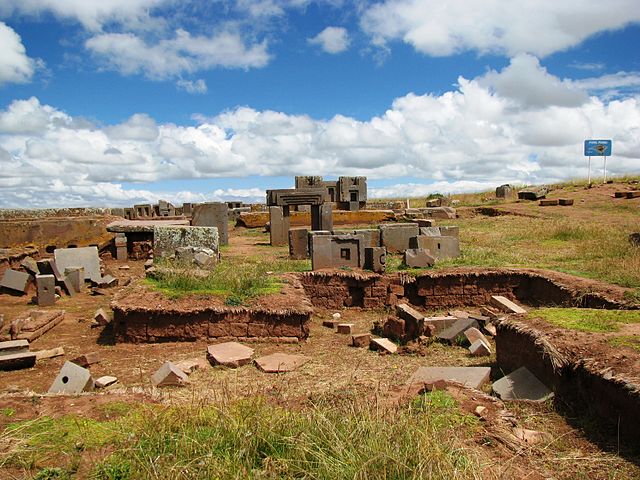
The basin of Lake Titicaca, on the border between Bolivia and Peru, is one of the few places in the world where large-scale, complex societies have developed independently, out of contact with other, earlier large-scale societies. Between about 500 and 1000 CE, the people who lived at the site of Tiwanaku, on the modern-day Bolivian shore, built a number of megalithic structures using highly accurate stonecutting to fit together enormous blocks of intricately carved stone.

Remains at Pumapunku, a site associated with Tiwanaku. Photograph by Brattarb via Wikimedia


In the past millennium and a half, these structures have been the victims of neglect, colonial looting, and reconstruction efforts driven more by the impetus to create suitably impressive national monuments than by archaeological evidence. As a result of these pressures, the various Tiwanaku structures are now in a very poor state and it is difficult to know how they were originally put together, what they looked like, or how they were used.

Now a team of archaeologists has brought a new approach to the problem. Working with the site known as Pumapunku, or the Gate of the Puma, they used data from earlier efforts to measure and reconstruct the surviving stones at the site to create small 3D printed blocks with a high degree of precision. These small blocks could be quickly and easily reassembled to test various ways of reconstructing the site and find a reconstruction that fit the original pieces together. Theories that are impossible to test on the ground, given the enormous size of the stone blocks and the fragile condition of the site, were easy to try out with the scale model blocks.

Working with printed blocks to reconstruct Pumapunku. Photograph from Alexei Vranich “Reconstructing Ancient Architecture at Tiwanaku, Bolivia: The Potential and Promise of 3D Printing,” Heritage Science 6 (2018), accessible here under Creative Commons


This experiment yielded some important new results. Where earlier archaeologists had reconstructed sections of what they believed to be a single long wall, the team discovered that those sections actually fit together better to create a rectangular enclosure, similar to some other, earlier sites in the region which can now be looked to as a basis for better understanding Pumapunku.

As a historian, I’m excited by the potential this new approach offers to archaeologists for reconstructing damaged or poorly preserved structures. As someone who used to spend hours playing with Legos, I’m thrilled to see such interesting applications for plastic bricks!

Updated for proofreading errors

How It Happens is an occasional feature looking at the inner workings of various creative efforts.

Spring 2019: Tolkien Exhibition at The Morgan in NYC

The Morgan Library and Museum is going to have a Tolkien exhibition.

Morgan Library The Hobbit Tolkien Exhibition 2019

From the exhibit description:

Tolkien: Maker of Middle-earth celebrates the man and his creation. The exhibition will be the most extensive public display of original Tolkien material for several generations. Drawn from the collections of the Tolkien Archive at the Bodleian Library (Oxford), Marquette University Libraries (Milwaukee), the Morgan, and private lenders, the exhibition will include family photographs and memorabilia, Tolkien’s original illustrations, maps, draft manuscripts, and designs related to The Hobbit, The Lord of the Rings, and The Silmarillion.”

They’ve also made an introductory video:

Tolkien: Maker of Middle-earth by The Morgan Library & Museum on YouTube

Related program includes a lecture, gallery talks, workshops, and family programming, among others. The exihibit is open January 25 through May 12, 2019. More information at The Morgan website.

Found via Locus.

Image cropped from the cover illustration for The Hobbit by J.R.R. Tolkien, via The Morgan

Rating: Murdoch Mysteries, Season 4

The adventures of Victorian Toronto’s most scientifically-minded detective continue in Murdoch Mysteries season 4, and we’re here to rate them.

  1. “Tattered and Torn” – 4
  2. “Kommando” – 5
  3. “Buffalo Shuffle” – 5.5
  4. “Downstairs, Upstairs” – 6.5
  5. “Monsieur Murdoch” – 4
  6. “Dead End Street” – 10
  7. “Confederate Treasure” – 7.5
  8. “Dial M for Murdoch” – 5
  9. “The Black Hand” – 5.5
  10. “Voices” – 6
  11. “Bloodlust” – 7
  12. “The Kissing Bandit” – 6
  13. “Murdoch in Wonderland” – 5.5

The average rating for this season is 6, down a little bit from last season’s 6.6, but still perfectly respectable. This season represents a good mix of the usual Murdoch fare: there’s a Victorian-flavored version of a contemporary-feeling story (“Kommando,” about soldiers experiencing frightening side effects of experimental drugs), Murdoch-ized takes on popular modern shows and movies (“Downstairs, Upstairs,” about a murder in a house full of servants, and “Dial M for Murdoch” about a telephone operator who thinks she overhears a murder), nineteenth-century international intrigue (“Confederate Treasure,” about the hunt for a missing fortune in gold from the time of the American Civil War), and Murdoch inventing modern technologies (sonar in “Confederate Treasure,” image scanning in “Monsieur Murdoch”). This season also brings us a tedious new turn in the will-they-or-won’t-they tease of Murdoch and Dr. Julia Ogden, as Dr. Ogden moves away from Toronto, moves back, and marries her new beau Dr. Darcy Garland, while Detective Murdoch wallows in uninteresting tongue-tied despair. Still, all in all, a solid season of Murdoch.

The lowest-rating episodes this season are a couple of 4s: “Tattered and Torn,” in which the discovery of multiple mutilated bodies encased in concrete leads Detective Murdoch to revisit an old rape and murder case, and “Monsieur Murdoch,” in which Murdoch investigates the disappearance of a young French woman who may not be who claimed to be at all. There is nothing particularly wrong with either of these episodes. Both are perfectly competent, but they are also both a little lacking. The pacing sags a bit, the casting is a little off, and the conclusions don’t entirely live up to the promise of the opening mysteries. Still, even these lesser efforts of Murdoch are fun to watch and worth coming back to now and then.

On the other hand, this season has one outstanding episode that gets a full 10 from us: “Dead End Street,” in which Murdoch discovers the clues to a murder in an intricate model of a neighborhood made by a woman who does not communicate in any other way. This case unfolds quietly but intricately as Murdoch faces the challenge of learning about the crime from a witness with an extraordinarily detailed recall of events, but whom he cannot question. Liisa Repo-Martell delivers a powerful guest performance as the model-building woman, conveying the deep intelligence and sensitivity of a person who relates to the world around her in a way very unlike her neighbors.

All in all, an excellent season of Murdcoh, with a lot worth coming back to.

Image: Murdoch Mysteries main cast via IMDb

In the Seen on Screen occasional feature, we discuss movies and television shows of interest.

Quotes: Willful and Obstinate Little Country

After the Finnish centennial in 2017, I’ve been reading outside my usual periods of Finnish history a little, including on the Finnish Winter War (1939-1940, for 105 days against the USSR).

In November 1939, just before hostilities broke out, a Finnish delegation met with the Soviets in Moscow to discuss land transfers and other concessions Russians demanded from Finland. The following tidbit is reportedly from the delegation’s last meeting with Stalin and Molotov.

“But after an hour of futile discussion it was obvious to everyone that the whole business had come to a dead end. Each side bade farewell to the other. Since the Finnish delegates were clearly just as upset by this outcome as the Russians, the final meeting ended with remarkably little display of animosity by anyone. The actual parting, in fact, was almost jovial. Molotov waived and said, ‘Au revoir!’ and Stalin shook hands all around and wished the Finns ‘all the best’. Then he went off to confer with his generals about how best to subdue this willful and obstinate little country.”

– William Trotter, A Frozen Hell: The Russo-Finnish Winter War of 1939-1940

It’s not clear whether “willful and obstinate little country” is Stalin’s phrasing or Trotter’s. I like it nevertheless—it tells you a very important thing of the Finnish character: as we say, a strong will takes you through a grey stone. 🙂 Or, in this case, it slows down a massive army significantly enough to retain the country’s independence, which none of the other small Baltic states were able to do.

Trotter, William R. A Frozen Hell: The Russo-Finnish Winter War of 1939-1940. Chapel Hill, NC: Algonquin Books of Chapel Hill, 1991, p. 18.

Serving exactly what it sounds like, the Quotes feature excerpts other people’s thoughts.