What a Long Walk Does to Your Body

A lot of speculative stories involve characters going for very long walks, whether it’s carrying the One Ring to Mordor or keeping away from other tributes in the Hunger Games. If you’re feeling cooped up inside right now, you may well be imagining a new story in which your characters travel a long way through the wilderness on foot.

I’ve written before about some of the practical details of walking long distances (here), but you may also want to think about the effect a long walk has on the human body. Here is a very interesting article by Robert Moor from a few years back about how walking the Appalachian trail affected him.

The whole article is fascinating reading, but here are few noteworthy observations from Moor about the effects of strenuous walking.

  • Your body learns to recognize good and bad foods: “you begin to acutely feel the quality of the nutrition you are putting into your body.” You come to crave those that will give sustaining energy for hours of walking, while cheap highs of sugars and fats can come with a devastating crash afterward.
  • Many walkers loose weight, shedding fat and building muscle. The result is often that as walkers go on they can walk farther and farther distances.
  • The body’s adaptation to walking, though, makes it less adapted to other demanding activities. A simple swim in a lake left Moor and another hiker “blue-lipped from the water, clutching ourselves and shivering electrically.”

Enjoy your explorations. Even if you are stuck between four walls at the moment, the imagination knows no limits!

How It Happens is an occasional feature looking at the inner workings of various creative efforts.

Representation Chart: Star Wars, Prequels

We all know that the representation of people of different genders and races is imbalanced in popular media, but sometimes putting it into visual form can help make the imbalance clear. Here’s a chart of the Star Wars prequel movies (Episode I: The Phantom Menace, Episode II: Attack of the Clones, Episode III: The Revenge of the Sith).

Characters included

(Characters are listed in the first movie in which they qualify for inclusion under the rules given below.)

  • Episode I: The Phantom Menace: Obi-Wan Kenobi, Qui-Gon Jin, Anakin Skywalker, Palpatine, Chancelor Valorum, Padme Amidala, Shmi Skywalker, Captain Panaka, Mace Windu, Kitster
  • Episode II: Attack of the Clones: Captain Typho, Jango Fett, Boba Fett, Count Dooku, Cleigg Lars, Owen Lars, Bail Organa, Beru, Captain Typho, Dorme
  • Episode III: Revenge of the Sith: Commander Cody

Rules

In the interests of clarity, here’s the rules I’m following for who to include and where to place them:

  • I only count characters portrayed by an actor who appears in person on screen in more or less recognizable form (i.e. performances that are entirely CG, prosthetic, puppet, or voice do not count).
  • The judgment of which characters are significant enough to include is unavoidably subjective, but I generally include characters who have on-screen dialogue, who appear in more than one scene, and who are named on-screen (including nicknames, code names, etc.)
  • For human characters that can be reasonably clearly identified, I use the race and gender of the character.
  • For non-human characters or characters whose identity cannot be clearly determined, I use the race and gender of the actor.
  • I use four simplified categories for race and two for gender. Because human variety is much more complicated and diverse than this, there will inevitably be examples that don’t fit. I put such cases where they seem least inappropriate. “White” and “Black” are as conventionally defined in modern Western society. “Asian” means East, Central, or South Asian. “Indigenous” encompasses Native Americans, Polynesians, Indigenous Australians, and other indigenous peoples from around the world.
  • There are many ethnic and gender categories that are relevant to questions of representation that are not covered here. There are also other kinds of diversity that are equally important for representation that are not covered here. A schematic view like this can never be perfect, but it is a place to start.

Corrections and suggestions welcome.

Chart by Erik Jensen

In the Seen on Screen occasional feature, we discuss movies and television shows of interest.

New Find: Neanderthals Worked with Fibers to Make Yarn or Cord

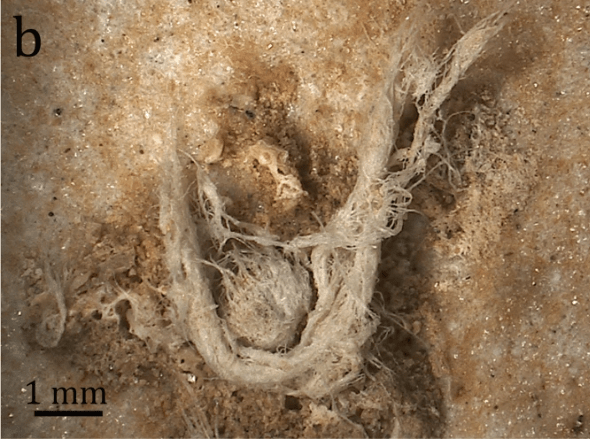
The world’s oldest yarn or cord has been found. The fragment was discovered at the prehistoric cave site Abri du Maras in the south of France.

Scientific Reports Hardy et al Neanderthal Fiber

The 3-ply cord fragment was made from fibers by twisting, likely of inner conifer bark, and found on a stone tool. A number of artefacts at the same site also have plant / wood fibers adhering to their surfaces, but the remains are not extensive enough to classify as cords.

The researchers estimate the meaning of the find thus:

“While it is clear that the cord from Abri du Maras demonstrates Neanderthals’ ability to manufacture cordage, it hints at a much larger fibre technology. Once the production of a twisted, plied cord has been accomplished it is possible to manufacture bags, mats, nets, fabric, baskets, structures, snares, and even watercraft. […]

“Ropes and baskets are central to a large number of human activities. They facilitate the transport and storage of foodstuffs, aid in the design of complex tools (hafts, fishing, navigation) or objects (art, decoration). The technological and artistic applications of twisted fibre technologies are vast. Once adopted, fibre technology would have been indispensable and would have been a part of everyday life.”


Fascinating! Like the research team says, fiber making allows for an incredibly large variety of material culture, from utilitarian objects to clothing to decorative motifs. As a bit of a fiber nerd, it’s tantalizing to think that people were making yarn already 40,000 years ago.

Found via CNN. Read more in Scientific Reports.

Image: Hardy, B.L., Moncel, M., Kerfant, C. et al. in “Direct evidence of Neanderthal fibre technology and its cognitive and behavioral implications” via Scientific Reports

Teaching in a Pandemic 5: Online Teaching Leaves Me Feeling Drained

(Read previous entries part 1, part 2, part 3, and part 4)

Things are starting to get routine. My teaching day goes like this: I check my email for any messages from students and respond to individual questions and problems. If someone raises a question that I think others may be wondering about, I send out a general email to the whole class or to all my students. I try not to send more emails than necessary, because I know my students are already getting a lot of information from the administration, but sometimes important things need to be said or reiterated. I’ve been surprised by how many of my students have missed or misunderstood basic instructions about how to participate in online discussion for my classes, but I don’t hold it against them. We’re all struggling right now, and I have to be aware that just because I understand something doesn’t mean that my students do. My job is to give them the information they need, and if that means repeating the same information in different words four or five times, then I will.

Next I grade and comment on any assignments that have been submitted. Then I move on to the online discussions. Wherever there are new comments, I record who participated in the discussion so that I can give credit. To do this I have a sheet of paper, on the same model as the sheet I always use for taking attendance at the start of class, with rows for all my students’ names and columns for the different discussion topics. When a student makes a comment on a given topic, I make check mark in the corresponding box on my sheet. At the end of the semester I will put this sheet together with the attendance sheets from the first part of the spring and combine them to give participation grades.

Depending on the day, this process can take anything from an hour to the whole afternoon. When I have time to spare, I work on my current book project, which is getting close to being finished. This schedule is exhausting, but in an entirely different way than a day of in-class teaching is. After a good day in the classroom, I feel energized and alive. Even at the best, this online teaching just leaves me feeling drained.

I miss the spontaneity and verve of the classroom. I miss the way a good class takes on a life and spirit of its own. I miss the dumb jokes and pointless but entertaining tangents that help bind students and professor together. I miss the performance-art craft of leading a discussion so gently from my students’ own questions and ideas to the points I wanted to make that they feel like they got there on their own. I miss the wonder of seeing my students strike off in new directions and arrive at ideas I never expected them to come up with.

This is an emergency situation, and we all understand that this is how things have to be for now. My fear at the moment is that we will not be able to return to the classroom in the fall. I know that there are some professors who are amazing at online teaching, but I am not one of them. For all of us, the end of this spring semester has been a rickety tub held together with duct tape and twine. With a summer to prepare, I’m sure I could make my online teaching better in the fall if I have to, but I cannot be at my best for my students from the other side of a screen.

Image by Erik Jensen

How It Happens is an occasional feature looking at the inner workings of various creative efforts.

Folk Art Blooms in Zalipie in Southern Poland

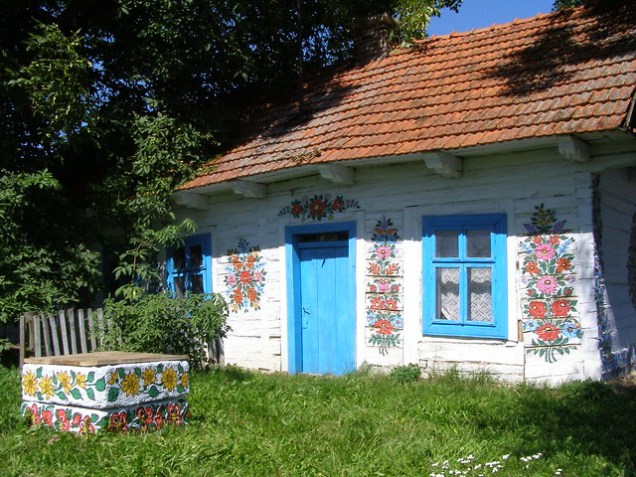
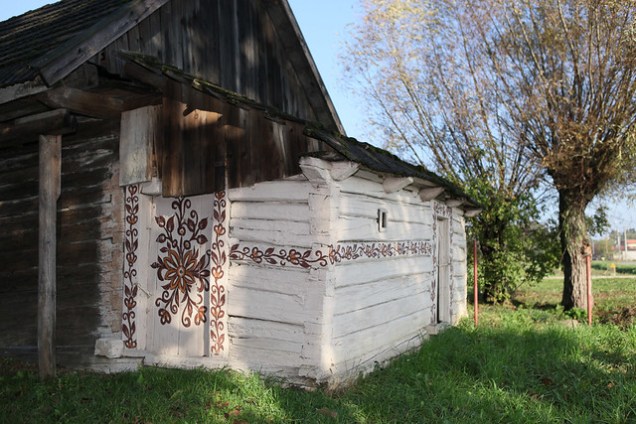
In the village of Zalipie in southern Poland, some blossoms never stop blooming: they’re painted. Not just on the walls inside or outside, but on ceilings, beams, stoves, sheds, dog houses, wells, buckets, paved ground, and bridges.

Flickr magro_kr Zalipie Cabin

Flickr mksfca Zalipie Museum Interior

No one apparently knows exactly how the flower-painting tradition came to be. Common features of the origin stories involve covering up stains, or simply perking up the homes, or uplifting people’s mood following World War II.

Flickr magro_kr Zalipie Sweep Well

Flickr Ministry of Foreign Affairs Shed

Flickr magro_kr Zalipie End of House

Regardless of the custom’s origins, it’s a fascinating feature of village life. These kinds of details would make spec fic stories even more alive, wouldn’t you say?

Found via Good Stuff Happened Today on Tumblr. More photos e.g. via My Modern Met or your favorite search engine.

Images via Flickr: Cabin by magro_kr (CC BY-NC-ND 2.0). Museum interior by mksfca (CC BY-NC-ND 2.0). Sweep well by magro_kr (CC BY-NC-ND 2.0). Shed by Mariusz Cieszewski via Polish Ministry of Foreign Affairs (CC BY-ND 2.0). End of house by magro_kr (CC BY-NC-ND 2.0).

Out There is an occasional feature highlighting intriguing art, spaces, places, phenomena, flora, and fauna.

A Downloadable ElfQuest Coloring Book

To ease some of the covid-19 cabin fever, Wendy and Richard Pini have released a pdf version of an ElfQuest coloring book that was included in a past Kickstarter project of theirs.

Wendy Richard Pini ElfQuest Coloring Book Covid-19 Version

The coloring book is free to download for private use, with one catch. In their words:

“One condition: You may not post images of the uncolored line art from the coloring book publicly online anywhere. The art is still copyright Warp Graphics. Thanks for your understanding. Bootleggers already steal ElfQuest images for unauthorized t-shirts and such; we don’t want to give them any more access than they’re already thieving.”

Thank you for sharing!

Image by Wendy Pini

Hey, look! We found a thing on the internet! We thought it was cool, and wanted to share it with you.

Teaching in a Pandemic 4: The Things that Matter Are Still Pretty Much the Same

(Read previous entries part 1, part 2, and part 3)

It’s been a couple of weeks since I’ve posted about teaching, and in the past two weeks things have started to become clearer. Students are starting to engage in the online discussions and submit online assignments, and I’m seeing how they respond to what I’ve asked them to do.

The results are mostly good. Students are thinking about the questions I’ve wanted them to think about, and coming up with some pretty good responses. Some of the work I’ve seen is even better than I would have expected out of a classroom—one student wrote up a paragraph about how different types of early Christian churches reflect the social dynamics of Christianity at different levels of Roman society that could have come from a scholarly book. (It didn’t, as far as I can tell.)

More typical responses rephrase the ideas I’ve already given them in my written introductions, but that’s good enough for these times. There is pedagogical value in paraphrasing. The act of putting an idea into your own words is a useful kind of thinking, and for my lower-level classes, it is as much as I feel I can ask of my students under these circumstances.

For my upper-level Roman Law class, I’ve posed a number of hypothetical cases for my students to try to interpret, and occasionally given them the chance to come up with hypotheticals of their own. The results can be amusing, but they are also good for seeing how clearly my students have thought through the logical implications of various legal principles. (On the other hand, because some students were making reference to it in their responses, I have had the misfortune of having to find out what Tiger King is all about. Thank goodness for Wikipedia, but also: yuck.)

Perhaps the biggest thing that has become clear in the last few weeks is that even though everything is online now, the things that matter are still pretty much the same. The students who were active and engaged in the classroom are active and engaged online. The ones who sat in the back scrolling on their phones through classtime are nowhere to be found online. Students who were confused in person are now confused by email, while the ones who always turned their assignments in on time still do.

The same principle can be applied to the university administration. The administrators who were helpful and responsive before the crisis are helpful and responsive now. The ones who were overpaid nonentities in person remain overpaid nonentities at a distance.

Like many crises in history, this pandemic has not so much caused new problems as it has revealed the problems that were already there but we had gotten used to not seeing.

Image by Erik Jensen

How It Happens is an occasional feature looking at the inner workings of various creative efforts.

Rating: Castle, Season 3

Season 3 of Castle keeps the mystery/comedy engine chugging along nicely with some fantastic episodes. Here’s how we rated them:

  1. “A Deadly Affair” – 8
  2. “He’s Dead, She’s Dead” – 8
  3. “Under the Gun” – 8
  4. “Punked” – 9.5
  5. “Anatomy of a Murder” – 7
  6. “3xk” – 2
  7. “Almost Famous” – 9
  8. “Murder Most Fowl” – 8.5
  9. “Close Encounters of the Murderous Kind” – 10
  10. “Last Call” – 10
  11. “Nikki Heat” – 6.5
  12. “Poof! You’re Dead” – 4
  13. “Knockdown” – 1
  14. “Lucky Stiff” – 7.5
  15. “The Final Nail” – 6
  16. “Setup” – 1.5
  17. “Countdown” – 1
  18. “One Life to Lose” – 6.5
  19. “Law & Murder” – 6.5
  20. “Slice of Death” – 7
  21. “The Dead Pool” – 4
  22. “To Love and Die in L. A.” – 4.5
  23. “Pretty Dead” – 4
  24. “Knockout” – 0.5

This season’s average rating is a pretty good 5.9, but that average is the product of a lot of really good episodes and a bunch of real stinkers.

The bottom of the barrel is the final episode of the season, “Knockout,” which gets a measly 0.5. This episode and the earlier “Knockdown” (1) are both part of the interminable story arc about Beckett’s mother’s murder and the shadowy conspiracy surrounding it. Another interminable story arc is introduced this season with “3xk” (2), in which Castle picks up his very own obsessed serial killer, which seems to be an accessory that every tv detective must have, no matter how boring or implausible. These plus the tedious terrorism-themed two-parter “Setup” (1.5) and “Countdown” (1) drag this season down by a lot. We come to Castle for the quirky murder-of-the-week stories and the fun interactions among the characters. Serious Drama just gets in the way of the fun.

But there is definitely fun to be had this season! There are two episodes that we rated a full 10; “Close Encounters of the Murderous Kind,” a fun X-Files pastiche that pits Castle and Beckett against space scientists, men in black, and (not quite) aliens. After that comes “Last Call,” about a murder connected to the discovery of a secret Prohibition-era stash of fine whiskey. Both of these episodes offer good mysteries for the team to solve while leaving lots of room for the usual antics. Beyond those two, there are plenty of episodes in the 8-9.5 range as well.

This season also solidifies a trend, emerging in the first two, in which the week’s case takes the team deep into some particular subculture—be it steampunk, stage magic, or pizza—before finding a familiar human story at the center of it. These episodes give Castle and the boys (Ryan and Esposito) lots of room for goofy side adventures while Beckett rolls her eyes and gets on with the business of crime solving. And what else can you ask for from Castle?

Image: Castle and Beckett consult with a man in black, from “Close Encounters of the Murderous Kind” via IMDb

In the Seen on Screen occasional feature, we discuss movies and television shows of interest.

Pimp Your Living Room with an Enormous Battle of Hoth Wallpaper

Aaaaa! It’s a battle of Hoth wallpaper!

Bauhaus Finland Star Wars Battle of Hoth

Handsome, isn’t it?

One of my pet peeves is when people—mostly merchants and, I assume following their lead, parents—assume only kids could be into superheroes or heroic scifi stories or what have you. I have exceedingly firm plans of becoming a geeky granny! This would fit right in. 🙂

Found / image via Bauhaus Finland

Out There is an occasional feature highlighting intriguing art, spaces, places, phenomena, flora, and fauna.

Quotes: Almost None […] Depict a Successful Transformation of Society

Cara Buckley’s 2019 article in New York Times talks about how environmental concerns have been depicted in some recent superhero and sci-fi movies. Climate change may have been moved to the back burner in recent news; nevertheless, in the beginning of the article there is a very important, timely nugget:

“Humans ruined everything. They bred too much and choked the life out of the land, air and sea.

“And so they must be vaporized by half, or attacked by towering monsters, or vanquished by irate dwellers from the oceans’ polluted depths. Barring that, they face hardscrabble, desperate lives on a once verdant Earth now consumed by ice or drought.

“That is how many recent superhero and sci-fi movies — among them the latest Avengers and Godzilla pictures as well as ‘Aquaman,’ ‘Snowpiercer,’ ‘Blade Runner 2049,’ ‘Interstellar’ and ‘Mad Max: Fury Road’ — have invoked the climate crisis. They imagine postapocalyptic futures or dystopias where ecological collapse is inevitable, environmentalists are criminals, and eco-mindedness is the driving force of villains.

“But these takes are defeatist, critics say, and a growing chorus of voices is urging the entertainment industry to tell more stories that show humans adapting and reforming to ward off the worst climate threats.

“’More than ever, they’re missing the mark, often in the same way,’ said Michael Svoboda, a writing professor at George Washington University and author at the multimedia site Yale Climate Connections. ‘Almost none of these films depict a successful transformation of society.’ [emphasis added]”

Even though a pandemic is a very different kind of beast compared to apocalyptic-level climate catastrophes, the current covid-19 epidemic can surely feel like a devastation. I’ve certainly seen my share of panicky social media messages.

We’ve recently started re-watching Star Trek: Deep Space Nine, and this line veritably jumped out:
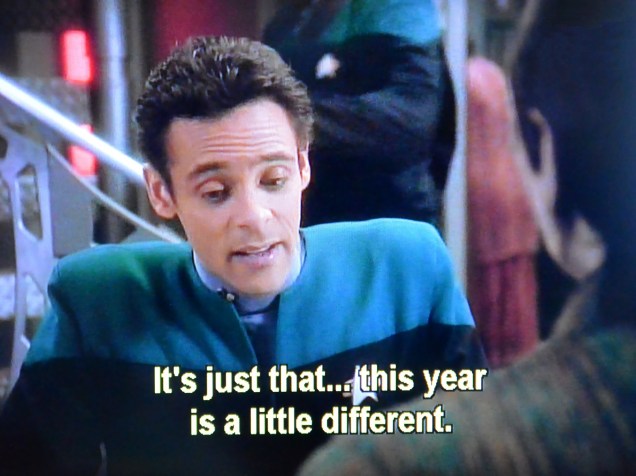
ST DS9 s3 ep18 Distant Voices

“It’s just that… this year is a little different.”

Indeed—this year is different. Unlike good Doctor Bashir’s, though, our situation is a little more dire than turning thirty years of age.

Right now there’s no long-term data available, so any estimates of the long-term effects are guesses—at best cautious, at worst wild—but every opinion I’ve seen says the world will change as a consequence. And as a nerd, that interest me.

I can’t think of many speculative stories off the top of my head where the society has adjusted in a way that focuses on our shared humanity. On the contrary, most of them cannot seem to be able to find much good in human behavior during crises. Since social collapse at the beginning of a disaster is a myth, I’d like to see more stories concentrating on people working together. (That is my favorite kind of story for a reason, after all.)

There is one thing I do know, though, limited in scope as it is: I will be most seriously displeased if writers and producers of the future fail to learn from witnessing the amount of cooperation and outpouring of help people are providing not only their own communities but also strangers.

Buckley, Cara. “Why Is Hollywood So Scared of Climate Change?” New York Times, August 14, 2019.

Image: screencap from season 3 of Star Trek: Deep Space Nine, episode “Distant Voices”.

Serving exactly what it sounds like, the Quotes feature excerpts other people’s thoughts.