The Rise of the First Cities through Genetic Research

Juan Siliezar at The Harvard Gazette writes about new genetic research into the movement and interactions of inhabitants of different areas of Western Asia and the Levant in the Bronze and Iron Ages. According to the evidence, people traveled and interacted with their neighbors before the rise of cities (and not the other way around as previously thought).

MHAAM Genetic Gradient 6500 BCE

Quoting Siliezar’s article:

“The evidence reveals that a high level of mobility led to the spread of ideas and material culture as well as intermingling of peoples in the period before the rise of cities, not the other way around, as previously thought. The findings add to our understanding of exactly how the shift to urbanism took place.

“The researchers, made up of an international team of scientists including Harvard Professor Christina Warinner, looked at DNA data from 110 skeletal remains in West Asia from the Neolithic to the Bronze Age, 3,000 to 7,500 years ago. The remains came from archaeological sites in the Anatolia (present-day Turkey); the Northern Levant, which includes countries on the Mediterranean coast such as Israel and Jordan; and countries in the Southern Caucasus, which include present-day Armenia and Azerbaijan.

“Based on their analysis, the scientists describe two events, one around 8,500 years ago and the other 4,000 years ago, that point to long-term genetic mixing and gradual population movements in the region.

“’Within this geographic scope, you have a number of distinct populations, distinct ideological groups that are interacting quite a lot, and it hasn’t really been clear to what degree people are actually moving or if this is simply just a high-contact area from trade,’ said Warinner, assistant professor of anthropology in the Faculty of Arts and Sciences and the Sally Starling Seaver Assistant Professor at the Radcliffe Institute for Advanced Study. ‘Rather than this period being characterized by dramatic migrations or conquest, what we see is the slow mixing of different populations, the slow mixing of ideas, and it’s percolating out of this melting pot that we see the rise of urbanism — the rise of cities.’ […]

“Historically, Western Asia, which includes today’s Middle East, is one of civilization’s most important geographical locations. Not only did it create some of humanity’s earliest cities, but its early trade routes laid the foundation for what would become the Silk Road, a route that commercially linked Asia, Africa, and Europe. […]

“The paper outlines how populations across Anatolia and the Southern Caucasus began mixing approximately 8,500 years ago. That resulted in a gradual change in genetic profile that over a millennium slowly spread across both areas and entered into what is now Northern Iraq. […]

“’What’s really interesting is that we see these populations are mixing genetically long before we see clear material culture evidence of this — so long before we see direct evidence in pottery or tools or any of these more conventional archaeological evidence artifacts,’ Warinner said. ‘That’s important because sometimes we’re limited in how we see the past. We see the past through artifacts, through the evidence people leave behind. But sometimes events are happening that don’t leave traces in conventional ways, so by using genetics, we were able to access this much earlier mixing of populations that wasn’t apparent before.’”

Interesting, especially the fact that genetic mixing predates evidence seen in artifacts. Sounds like there’s much to research in the future!

Read more at The Harvard Gazette or see the original article by Lily Agranat-Tamir et al. at Cell.

Found via File 770.

Image: The Max Planck-Harvard Research Center for the Archaeoscience of the Ancient Mediterranean (MHAAM) via Phys.org.

The Strange Poetry of an Index

One of the tricks of the trade in academia is: when you pick up a new book, look at the index first. Seeing what terms appear there and which ones have large numbers of references tells you a lot about what the book is about.

I’ve been working on the index to my latest book, a collection of primary sources on the Greco-Persian Wars. Most of the entries are proper names for people, places, and institutions, and their specificity tells you pretty clearly the topic of the book. If you take those out, though, the terms that are left have a strange kind of poetry about them. You could let your imagination wander and dream up some very different books that had these terms in their indices. For your enjoyment:

animals, archers

beer, bees, bread, brick, bridges, bulls

canals, cannibalism, carnelian, cattle, cavalry, chariots, childbirth, clothing, colonies, crown, cuneiform

democracy, diplomacy, disease, dreams

earth and water, earthquakes, esparto, exiles

forgery, fowl, frankincense, frontiers

gifts, goats, gold, grain, guest-friendship

hair, helots, heralds, heroes, hoplites, horses, hostages

incense, ivory

labor, language, lapis lazuli, laws, linen, lions

medicine, mercenaries, merchants, moon, mules, multiculturalism, mummification

oil, ointment, oligarchy, oracles

palaces, papyrus, phalanx, pomegranates, poultry, propaganda

racing, rain, religion, roads

sacrifice, satraps, satrapies, sheep, shields, ships, shipwrecks, sieges, silver, storms, stone

temples, tolerance, tombs, trade, translation, tribute, triremes, turquoise, tyrants

walls, water, wind, wine, wood

How It Happens is an occasional feature looking at the inner workings of various creative efforts.

Night Elf Survival Hunter Transmog

As I mentioned earlier, I’m going to spend a lot of time in the barbershop after World of Warcraft Shadowlands drops. I’m likely to change not just some details of my toons’ appearance but also some of their transmogs—I like to rotate some of my characters’ mogs since I don’t have an absolute favorite, and for others I’ve never found anything particularly fitting. So I thought I’d save a few mogs for posterity by posting them online.

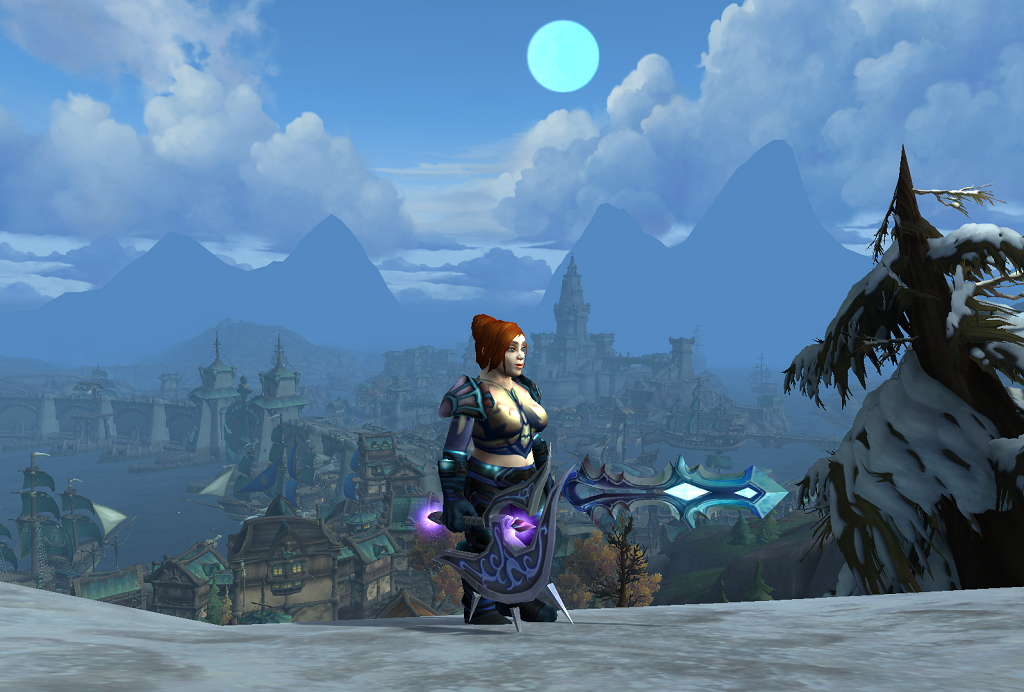
Here is my female night elf survival hunter.

BfA F NElf Survical Hunter Transmog1

I go back and forth with a headpiece I like and a hidden head slot like here; the polearm is also unmogged. Other armor slots, however, are mogged, including the the bracers, which I usually skip; this time I found a way to add a slight chevron line just above the glove edge with the bracers.

BfA F NElf Survical Hunter Transmog2

If interested, you can have a look at the set in Wowhead’s Dressing Room.

Images: World of Warcraft screencaps

Of Dice and Dragons is an occasional feature about games and gaming.

Rating: Castle, Season 6

It’s a return to form for the sixth season of Castle. Here’s our take on this season’s episodes:

  1. “Valkyire” – 7
  2. “Dreamworld” – 2
  3. “Need to Know” – 5.5
  4. “Number One Fan” – 8
  5. “Time Will Tell” – 8
  6. “Get a Clue” – 6
  7. “Like Father, Like Daughter” – 8.5
  8. “A Murder is Forever” – 6
  9. “Disciple” – 2
  10. “The Good, the Bad, and the Baby” – 9
  11. “Under Fire” – 8
  12. “Deep Cover” – 2
  13. “Limelight” – 6
  14. “Dressed to Kill” – 5.5
  15. “Smells Like Teen Spirit” – 2.5
  16. “Room 147” – 8.5
  17. “In the Belly of the Beast” – 3
  18. “The Way of the Ninja” – 7.5
  19. “The Greater Good” – 5
  20. “That 70’s Show” – 3
  21. “Law and Boarder” – 6
  22. “Veritas” – 2.5
  23. “For Better or Worse” – 3

The average rating for this season is 5.4, not the best that Castle has done, but a decent showing and better than the last couple of seasons. This season does well when it plays to its strengths: offbeat crimes and the interactions of its characters.

The three lowest episodes this season, coming in at 2, try to break the formula: “Dreamworld,” in which Beckett gets tied up in an international conspiracy; “Disciple,” in which Castle’s pet serial killer returns with a new friend; and “Deep Cover,” in which Castle gets tied up in an international conspiracy. None of these episodes works well or delivers the crime-solving comedy we expect from this series. I’m beginning to get the sense that someone in the Castle writers’ room really wanted to write spy thrillers but couldn’t hack it. Every time Castle tries to do international intrigue, it just bombs. At least this season mercifully more or less ties up the overdrawn story of Beckett’s mother’s death.

But this season more than makes up for its occasional missteps with a lot of average-to-good episodes that are enjoyable to watch. Our top pick this season, “The Good, the Bad, and the Baby,” at a 9, finds the team working backwards to uncover what led to a dying man staggering into a church holding a baby. One of the lovely things about this episode is how eagerly Castle jumps into the role of taking care of the baby, a refreshing reversal of the usual trope that men are useless with children. As runners-up at 8.5 we have “Like Father, Like Daughter,” in which Alexis enlists her father’s help for an Innocence-Project-like case, and “Room 147,” an intricate mystery in which multiple people inexplicably confess to the same crime.

Image: Beckett and Castle investigate, from “Room 147” via IMDb

In the Seen on Screen occasional feature, we discuss movies and television shows of interest.

Dwarven Windwalker Monk Transmog

As I mentioned earlier, I’m going to spend a lot of time in the barbershop after World of Warcraft Shadowlands drops. I’m likely to change not just some details of my toons’ appearance but also some of their transmogs—I like to rotate some of my characters’ mogs since I don’t have an absolute favorite, and for others I’ve never found anything particularly fitting. So I thought I’d save a few mogs for posterity by posting them online.

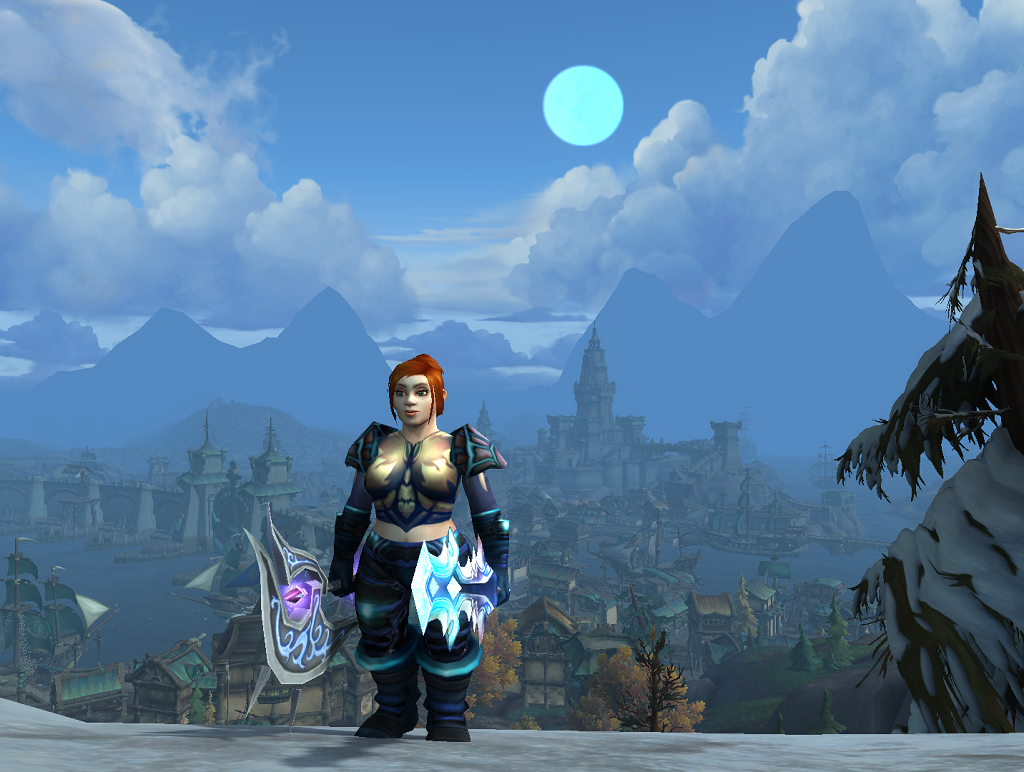
Here is my female dwarf windwalker monk.

BfA F Dwarf Windwalker Monk Transmog

The head and shirt slots are hidden and the bracers aren’t visible. Not sure how well the gloves work, but at least the gold more or less matches the other pieces. It was neat to be able to use two fist weapons in this mog.

If interested, you can have a look at the set in Wowhead’s Dressing Room.

Image: World of Warcraft screencap

Of Dice and Dragons is an occasional feature about games and gaming.

Dwarven Outlaw Rogue Transmog

As I mentioned last week, I’m going to spend a lot of time in the barbershop after World of Warcraft Shadowlands drops. I’m likely to change not just some details of my toons’ appearance but also some of their transmogs—I like to rotate some of my characters’ mogs since I don’t have an absolute favorite, and for others I’ve never found anything particularly fitting. So I thought I’d save a few mogs for posterity by posting them online.

Here is my female dwarf outlaw rogue.

BfA F Dwarf Outlaw Rogue Transmog1

BfA F Dwarf Outlaw Rogue Transmog2

I hid her headgear and cloak, and the bracers aren’t visible, but other pieces are all mogged, including the shirt.

BfA F Dwarf Outlaw Rogue Transmog Roar

The roar above looks more like an anguished cry of “Why in the world do I suffer this way!” or something, LOL!

If interested, you can have a look at the set in Wowhead’s Dressing Room.

Images: World of Warcraft screencaps

Of Dice and Dragons is an occasional feature about games and gaming.

WoW: Shadowlands Character Customization Options

Details of Shadowlands, the next World of Warcraft expansion, have continued to slowly accumulate. Blizzard Watch and Wowhead, among others, have kept track of new character customization info.

Wowhead Shadowlands F Human Screencap

Here is an incomplete list as a note to self:

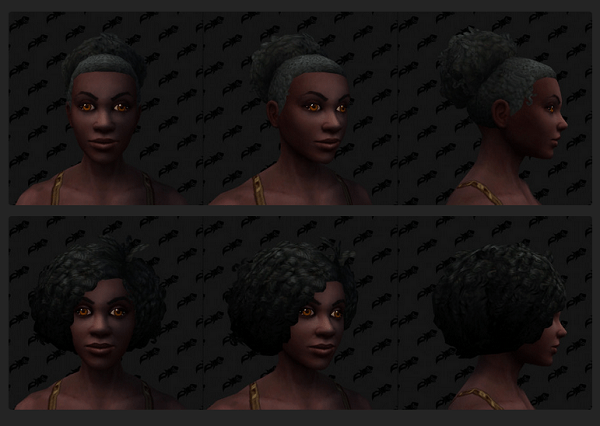
New options include new skin or fur tones (inclding black skin—finally!) and hair styles, makeup for human women, heterochromia (eyes of different colors), body tats or paint, cataracts, facial scars or markings, vines with leaves (Elven hair), some ear or tail size options, and the separation of beard and moustache sliders.

Wowhead Shadowlands F Dwarf Portrait

Not all options will be available to all races / classes, which might be annoying, but I understand the need for limiting options.

There’ll also be new special armor depending on which covenant you choose.

Shadowlands Night Fae Covenant Armor F Pandaren

We still don’t know all of the, er, detailed details, and of course these customizations may change or simply never be available in the finished game. But what we do know is already enough for me to realize I’ll be spending quite a bit of time in the barber shop after Shadowlands drops! LOL!

Images by Blizzard Entertainment: Female Human faces and hair via Wowhead (screencapped). Female Dwarf portrait via Wowhead. Night Fae covenant armor (cropped).

Of Dice and Dragons is an occasional feature about games and gaming.

Tolkien, Fantasy, and Race

Wizards of the Coast recently announced that they will be changing how the Dungeons & Dragons role-playing game system handles race. These changes include, among others, reimagining the traditionally evil Drow and Orcs as complex and nuanced cultures, revising how a player’s choice of race affects their character’s stats, and removing racially insensitive text from reissues of old content. You can read the company’s statement about these changes here.

Some of these changes are more obviously necessary than others. It’s not hard for most of us to see how having a race of dark-skinned Elves who are almost universally evil in your game is a poor design choice that needs to be rectified, but it’s less obvious to a lot of people why the game should be changed so that your Elf isn’t necessarily clever and dexterous or your Dwarf stout and tough. To understand why rules like these are problematic, it helps to look at how ideas about portraying non-human beings in fantasy have been shaped. Fantasy is as complex and varied as any other genre of literature and no single person is responsible for the development of its tropes and principles, but when we think about race in fantasy, there is one crucial place to start: Tolkien.

Tolkien’s Middle Earth legendarium profoundly shaped fantasy literature in the twentieth century and the other media drawing from it, such as role-playing games like Dungeons & Dragons. Tolkien’s versions of Elves and Dwarves, as well as his invention of Hobbits (made lawyer-friendly as “Halflings”), formed the basis for D&D’s early options for players who wanted an alternative to humans. Much of the popular fantasy archetypes for what non-human races are like (ethereal, wise, bow-wielding Elves; stubborn, pugnacious, axe-hefting Dwarves) were either created or codified by Tolkien.

Tolkien’s relationship to race is complicated. On one hand, he was vocally opposed to the antisemitism common in his time and to the Nazis’ attempts to claim his beloved Germanic mythology as a prop to their racist regime. His Middle Earth tales can be read as a counter-argument to white supremacist ideology, as the “lesser” folk of Middle Earth, like the Hobbits and the Wild Men, prove more resistant to the lies of evil than the “higher” races of Men. At the same time, there is no denying that Tolkien’s fiction is suffused with familiar racial assumptions, filled with white characters and portraying dark-skinned people only as strange or threatening others.

But it is Tolkien’s work as a scholar that is most important for understanding his effect on the depiction of race in fantasy. Tolkien’s academic training as an Oxford student in the early twentieth century was grounded in the traditions of the nineteenth century, which defined nations as coherent, natural entities existing across time and marked by inherent characteristics. This academic worldview was linked to the Romantic and nationalist movements at work in Europe in that century, as well as the ongoing imperialist projects of Britain, France, and other nations of Europe. At its core was the belief that culture and biology are equivalent, that people have fundamental national traits inherited from their ancestors which define their culture, character, even moral worth.

Every academic discipline concerned with the human past was engaged in some way with this project. Historians traced the ancestry of their own and other peoples as far back as written sources would allow, at which point archaeologists stepped in to carry the line further back. Scholars of literature and art looked to both nationally famous artists and rural folk traditions to delineate the defining characteristics of a culture. Scholars in different nations concocted their own versions of national culture and interpreted both ancient and recent history in terms of discreet nations wrangling with one another: while English writers explained their early history as the victory of the serious, diligent Anglo-Saxon over the moody, whimsical Celt, French historians conceived of the French Revolution as a primordial Gallic peasantry overthrowing the Germanic overlords who had dominated them since the fifth century CE. Even forgeries and hoaxes followed the same principle, like the collection of Gaelic poetry attributed to the bard Ossian or the fake primordial Englishman buried with a battered cricket bat at Piltdown. While the work of such historians, folklorists, artists, pranksters and others was in itself fairly benign, it was part of a larger politics that justified the exploitation and oppression of some ethnic groups for the benefit of others based on specious claims about national characters and destinies.

Tolkien’s subject, philology, was no exception. Scholars believed that language could be a key to those parts of the past that neither history nor archaeology could reach, perhaps even the most important parts, for what can be more fundamental to our identity than the words we use to describe our world? Linguistic research, starting in the eighteenth century with the realization that the ancient Indian language Sanskrit came from the same source as Greek and Latin, had demonstrated that it was possible to discover regular principles that governed shifts in sound as languages evolved and split into new languages. Applying these principles to the earliest documented fragments of existing languages made it possible to reconstruct, with a high degree of certainty, elements of vocabulary and grammar belonging to languages that had never been written down.

Tolkien, and other philologists of his generation, believed that it was possible to go a step further and apply the same principles to myths, legends, even history. Working backwards from the earliest recorded elements of a culture—its oldest literature and art, archaeological remains, and whatever fragments of ancient knowledge survived in folk tradition—they hoped to reconstruct the primordial beliefs, practices, and character of that culture. Tolkien carried this same spirit into his literary work and with his Middle Earth stories tried to reimagine a history that might have lain behind the scattered remnants of Germanic mythology that come down to us through English, Norse, German, and Icelandic sources.

The result of this labor was a fictional world that incorporates numerous traces of ancient tradition—Smaug, from The Hobbit, has shades of Fafnir from the Volsunga Saga, while the arrival of Aragorn, Gimli, Legolas, and Gandalf at Edoras in The Lord of the Rings recreates the Geatish heroes’ arrival at Heorot in Beowulf—but put together in a distinctly nineteenth-century way. The various races of Men in Tolkien’s work reflect contemporary belief in inherent national cultures to the extent that the Dunedain of the north retained their culture for many long generations cut off from Gondor in the south. Other peoples of Tolkien’s world are culturally defined by their ancestry, stretching over thousands of years.

Tolkien’s Elves and Dwarves are a similar combination of ancient Nordic lore and nineteenth-century nationalistic culture-construction. Tolkien took stories about Elves and Dwarves from different times, cultures, and genres, extracted the elements he believed were characteristic, and fused them together to create the kind of singular, coherent cultures that scholars of his day believed could be found among real peoples. The idea of Elves as archers comes from a Scottish tradition of referring to prehistoric arrow points as “Elf-shot.” The intermarriage of Elves and humans comes from Icelandic sagas. The bewildering power of an encounter with Elves derives from medieval German folklore. Tolkien believed that these various fragments were the remains of what had once been a clear, consistent belief in Elves as beings with defined characteristics, much as words in Sanskrit, Greek, and Old Norse were the remains of an older language, and that by putting them together he could reconstruct the nature of Elves in same way philologists reconstructed lost languages. The same applies to Tolkien’s Dwarves.

Tolkien’s assumptions about lost cultural knowledge only make sense in the context of the scholarship he worked in. Modern research has found that the image of Elves in northern European mythology is widely varied. Writers in different times and cultures had vastly different ideas about what Elves were, ranging from benevolent ancestor spirits to malicious swamp creatures that would steal your baby and eat it. There is no evidence that the original Elf Tolkien thought he could reconstruct was ever anything but a mirage. Indeed, it is not just that Elves did not have consistent characteristics in northern mythology, early northern writers don’t even seem to have viewed “Elf” as a stable category that could be defined. Many texts use the term fluidly for many different sorts of supernatural creature, overlapping with Dwarves, demons, angels, and others in ways that do not allow for any clear definition.

It is primarily to Tolkien that we owe the idea, not just that Elves, Dwarves, and other fantastical creatures have consistent characteristics, but that they exist as discreet groups that can be defined. This conception of fantasy folks is a product of a particular cultural and scholarly worldview, one that is increasingly out of date. Aloof archer Elves and beefy brawling Dwarves running around your game world may seem perfectly harmless, but the archetypes that define these as the standard types of Elves and Dwarves are rooted in a history of imperialism and racism.

It is time to leave behind this artifact of the nineteenth century and embrace a world in which Dwarves can be slender bookworms and Elves can be boisterous bruisers, or anything else you want them to be.

Post edited for grammar

Image: Elf and Dwarf cosplay, photograph by Tomasz Stasiuk via Flickr (CC BY-SA 2.0)

History for Writers looks at how history can be a fiction writer’s most useful tool. From worldbuilding to dialogue, history helps you write.

Mars City Test Build Outside Dubai Is in the Plans

At CNN, an article by Poppy Koronka returns to the project launched in 2017 by the United Arab Emirates to colonize Mars within the next 100 years.

To me, though, the real point of interest is that there are now architectural plans for a potential Martian city—and plans to build a test version in the desert outside Dubai.

Bjarke Ingels Group Dubai Exterior Air

Bjarke Ingels Group Dubai Rooftops

Quoting from Koronka’s article:

“Mars Science City was originally earmarked to cover 176,000 square meters of desert — the size of more than 30 football fields — and cost approximately $135 million.

“Intended as a space for Dubai’s Mohammed Bin Rashid Space Centre (MBRSC) to develop the technology needed to colonize Mars, architects Bjarke Ingels Group were asked to design a prototype of a city suitable for sustaining life on Mars — and then adapt it for use in the Emirati desert.”


Bjarke Ingels Group Mars Features

Bjarke Ingels Group Hybrid Building Method

The materials available online are surprisingly extensive; if interested, I definitely encourage you visit the Bjarke Ingels Group website to read further.

Bjarke Ingels Group Dubai Outdoors

I can’t say I routinely follow the Mars research; mostly I just read whatever happens to come my way, so plans this advanced were a surprise to me. Very impressive!

Found via File 770.

Images by Bjarke Ingels Group

Out There is an occasional feature highlighting intriguing art, spaces, places, phenomena, flora, and fauna.

How We Lost the Library of Alexandria

There are a couple of persistent myths floating around about how the Library of Alexandria was destroyed. One says that it was burned down by Julius Caesar in the first century BCE, the other that it was destroyed by Christians in the fourth century CE. Both of these stories are wrong. That’s not what happened to the Library. The actual history is instructive, especially now.

The story begins with the foundation of the Library itself. After the death of Alexander the Great, his followers fell into a fifty-year struggle for control of his empire. When the dust settled, three major successor states founded by Alexander’s generals controlled most of the eastern Mediterranean and the old Persian Empire: the descendants of Antigonus in Macedonia, the descendants of Seleucus in Syria and Mesopotamia, and the descendants of Ptolemy in Egypt. Other, smaller, states, some of them also led by former officers of Alexander’s army, filled the edges and the gaps in between the Antigonid, Seleucid, and Ptolemaic kingdoms.

Ptolemy and his dynasty ruled from Alexandria, the new city founded at the westernmost mouth of the Nile by Alexander during his campaign. The Ptolemies and their court made up a small Greco-Macedonian elite ruling over a vast and ancient land whose people had a strong sense of cultural identity and a long history of resistance to foreign rule. The Ptolemies faced two major problems in ruling their kingdom: competing against the other successor states, and asserting control over the native population of Egypt.

A large part of the challenge in both cases came down to questions of culture. The Ptolemies needed to attract skilled administrators and mercenary soldiers to staff their bureaucracy and enforce their rule, but they were competing with all the other successor kingdoms who wanted the same people for the same reasons. One way of drawing desirable recruits to Alexandria was to demonstrate the richness and refinement of the Ptolemaic court. At the same time, maintaining order in Egypt meant reaching some degree of accommodation with members of the native elite who could keep the peasants in line. To Egyptian nobles who were proud of their own history and culture, the Ptolemies had to show that they were worthy partners who could live up to the standards of culture and sophistication Egyptians expected from their kings.

The Ptolemies’ propaganda approached these challenges in many different ways, but the Library was one important part of their cultural program. Under royal patronage, the Library amassed the largest collection of literary works in Greek assembled anywhere in the Mediterranean. In doing so, it projected the Ptolemies’ cultural sophistication in the common language of the eastern Mediterranean world. It was one of the institutions that made the city of Alexandria noteworthy and demonstrated the Ptolemaic kings’ power and wealth.

The Library of Alexandria was not created as a benevolent or altruistic center of knowledge. It was as much a part of power politics as the king’s mercenary army, and it could be as ruthless in its operations. Ships arriving in Alexandria were reportedly ransacked for any texts the Library might be lacking. The Library borrowed the official texts of winning dramas from the Athenian state archives, then kept the originals and returned cheap copies. The collection was only accessible by royal permission; it was not a place for the public.

Maintaining such a large collection required a dedicated staff of both specialist curators and laborers. Adding new texts to the collection took a lot of work to prepare the papyrus scrolls on which they were recorded and house them safely, but just maintaining the collection was a major job in itself. Papyrus scrolls are not permanent; they break down over time, even in the best conditions. Every text in the Library had to be periodically recopied as the old scrolls decayed. All of this work was funded by the Ptolemaic kings, for whom the Library was an important prop to their power.

In the mid-first century BCE, Julius Caesar fought a campaign in Alexandria against the reigning king Ptolemy XIV in support of his sister Cleopatra, who would go on to rule as the last Ptolemaic monarch. During the fighting, Caesar’s troops set fire to some of the ships in the port. The fire spread to some dockside buildings, including warehouses that held papyrus intended for the Library. The exact extent of the fire is unclear. While some ancient sources report that the Library itself suffered damage, it is clear that the most of the collection was unharmed, and the loss was largely of materials, not finished texts.

Decades later, after Cleopatra was killed and Egypt was annexed to the Roman Empire, however, the Library went into decline. The later Ptolemaic kings had been less enthusiastic in their support of the Library than the earlier kings had been, and by the first century BCE the Library was already a diminished institution. With no Ptolemaic dynasty to prop up, it no longer served a purpose. Some Roman emperors showed an interest in the Library, but most had no desire to keep supporting an institution that rivaled their own propaganda works in Rome. Without money to pay for upkeep and repairs, to pay the salaries of librarians and workers, the Library of Alexandria faded away. Support from the local elite kept some of the collection intact, some part of which remained active as a much smaller, provincial version of its former self through the third century CE.

Just how long this reduced version of the Library continued on is unclear. The third century was a time of widespread violence and unrest in the Roman world, and Alexandria had always been a rowdy city prone to riots. The growing community of Christians in Alexandria sometimes participated in these upheavals, but they were far from the only ones. In one famous incident, an attack by pagans sparked a Christian counterattack which wrecked a Neoplatonist school, but there is no record that any books were kept there. Whatever was left of the collection may well have suffered in the violence of the times, but by then the Library-with-a-capital-L was a thing of the distant past.

There is a lesson for us in the end of the Library of Alexandria, but it is not one about the brutishness of Caesar or the violence of early Christians. What doomed the Library was not some act of willful destruction but the slow decay that comes on when there is not enough money to keep basic operations going. In these days when we all find our budgets stretched tight, it is important to remember how much the cultural institutions we depend on also depend on us.

As many people have noted recently, the covid-19 pandemic isn’t the apocalypse we expected. We like to imagine that great things end in cataclysm, not in the slow grinding down of underfunded institutions. We prefer the bang to the whimper. But just like the Library of Alexandria, the establishments we rely on—be they local libraries, theater companies, independent bookstores, niche comics publishers, or anything else—will not be destroyed by invaders or violent mobs. They will wear away by inertia and neglect. Now is the time to show your support, in whatever ways you can manage, to the things that make your life brighter, richer, and fuller.

Image: A modern artist’s interpretation of the Library of Alexandria via Wikimedia (19th c.; engraving; by O. Von Corven)

History for Writers looks at how history can be a fiction writer’s most useful tool. From worldbuilding to dialogue, history helps you write.