A Babylon 5 Reboot Is in Active Development

‘Tis official: a Babylon 5 reboot is in the works.

The Catholic Geeks babylon52

(Please read the thread for more of Straczynski’s thoughts on the announcement. Looks like at this writing many articles available online largely just rephrase his tweets.)

Without wading too deep into all of the speculation, I did glean this tidbit about the timing of the new B5:

Pretty exciting, wouldn’t you say? Of course, in the end the fan reaction—including mine—will depend on the technical quality of the final product, our personal preferences, which aspects were chanced and which retained, and whether the cast will be able to carry the stories. I’m certainly looking forward to more news on the project, and fervently wish that the casting will be successful (and quality-wise more even).

Image via The Catholic Geeks

Deconstructing the Star Wars Sequels: The Rise of Skywalker

The first two movies in the Star Wars sequel trilogy had their problems: The Force Awakens was driven too much by nostalgia for A New Hope, and The Last Jedi was too dependent on an intellectual conceit. The Rise of Skywalker has a different and rather unusual problem: it is two movies crammed into one.

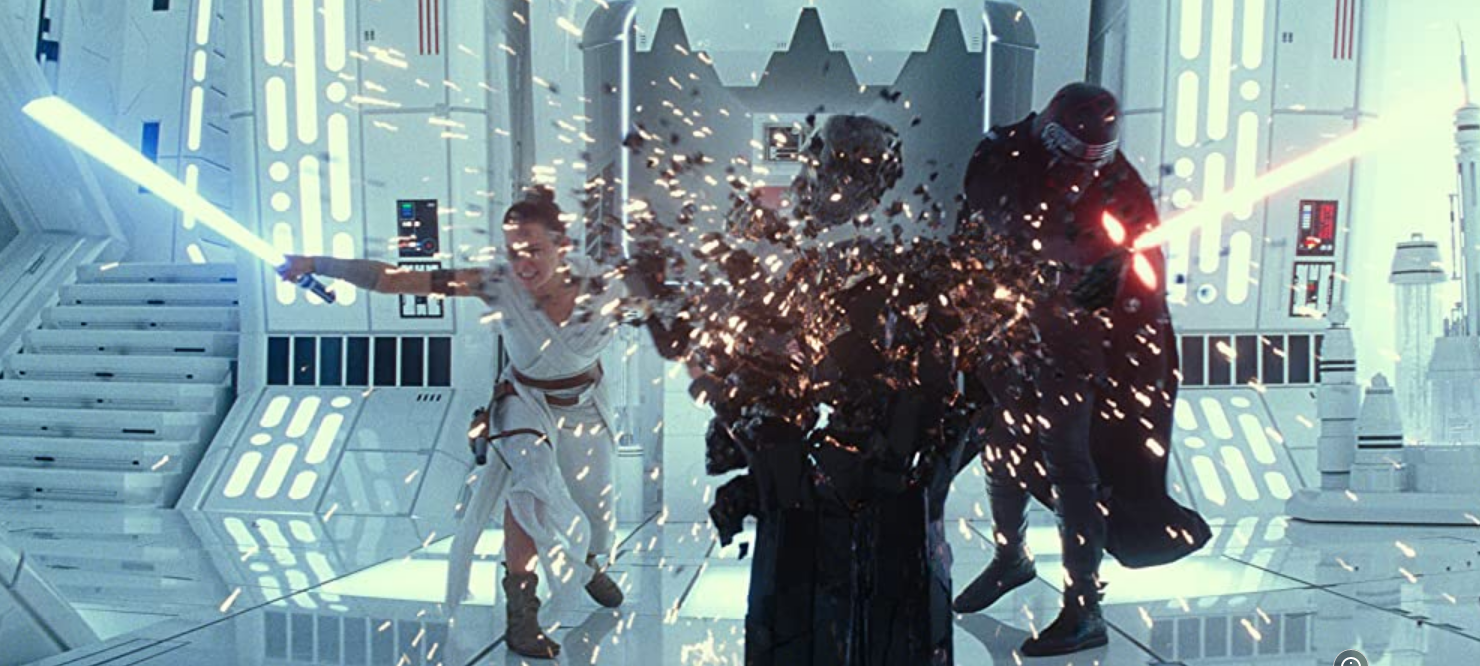
Rey and Kylo Ren smash stuff as they duel, screenshot from Star Wars 9: The Rise of Skywalker

By all public accounts, the new Star Wars trilogy was not planned with an overarching plot. The intent was that each director would put their own stamp on each movie. The effects of that choice are visible all over The Last Jedi, which moves about as far away from The Force Awakens as it can without technically breaking continuity. The reaction from fans was strong, as most of us probably remember. Some of that reaction was beyond the pale, up to and including online harassment of some stars (notably those who were not white men). For a good year and a half, it was just about impossible to have a conversation about the movie online without things devolving into a scorched-earth flame war. Disney seems to have been shaken enough by the reaction to turn back to J. J. Abrams for an encore of The Force Awakens to close out the trilogy. The Rise of Skywalker slams the door hard on everything The Last Jedi was trying to do and doesn’t look back.

This about-face is visible all over The Rise of Skywalker. New characters like Rose and D’Acy are demoted to background extras; Rey’s parents are retroactively promoted from mere junk traders to scions of Palpatine; Poe and Finn get to be heroic and do things that actually matter to the plot. The Rise of Skywalker rejects The Last Jedi so thoroughly that it attempts to fit an alternative second movie into its first half. Although we’ve been told that there was no overarching plan for the sequel trilogy, it sure seems like Abrams and company at least had ideas sketched out for two more installments after The Force Awakens. When called on to helm the third movie, Abrams tried to fit all of those ideas into one.

The first half of The Rise of Skywalker has traces of what could have been the second movie of the trilogy. While there isn’t a simple breaking point where a theoretical Episode 8 ends and Episode 9 begins, the action on Kijimi makes a suitable climax at around the halfway point. We reconnect with Lando Calrissian in the first half and with Endor in the second. Ending the movie somewhere around Kijimi would leave Chewbacca in the First Order’s hands, C-3PO out of commission, and Rey confronting the reality of her parentage, a cliffhanger ending for the middle movie of the trilogy and an echo of the ending of The Empire Strikes Back.

Seeing the movie as two films packed into one helps make sense of some of its odder features. For one thing, The Rise of Skywalker is overstuffed with plot. Compared with either of the movies that came before it there are more new locations, more new characters, and a less direct narrative line. The plot even overspills the edges of the movie, with crucial set-up squished into a rushed beginning and the suggestion of further adventures packed into the ending. There is also a curious amount of doubling in the movie that makes sense if it was originally conceived as two. Our heroes set out in search of two different devices that lead to destinations: first a Sith dagger, then a Sith wayfinder. There are two planets with women who connect to our heroes’ past and offer potential love interests for their future: Zorii on Kijimi who has a history with Poe, and Jannah on the Endor moon who is a rebel stormtrooper like Finn.

As it stands now, the movie undermines its own script. Rey and the audience alike hardly have a chance to react to Kylo Ren’s revelations about her ancestry because the movie has to rush on with the rest of the story. The discovery that Plapatine’s brand new fleet has planet-destroying capabilities is similarly underwhelming with so much else for the movie to do. C-3PO’s self-sacrifice to translate the Sith blade is played as an emotional farewell, but then almost immediately undercut when R2-D2 reloads his memories; if we had waited two years between movies to get our old droid friend back, the moment would have had the emotional weight it seemed written for.

The middle entry in the sequel trilogy, The Last Jedi, for all its flaws, introduced the most interesting and challenging new ideas Star Wars has seen in decades. Even if all The Rise of Skywalker did was reject those ideas, it would still be a disappointment of a movie. In trying to not only turn away from The Last Jedi but retroactively create its own Episode 8, the movie ends up being not only lifeless but messy and overstuffed.

It is a shame that none of the new trilogy lived up to the hopes of fans. Every film has its good points and enjoyable moments, and I am at least mildly fond of them all, despite their problems. It is interesting to observe, though, that each of the new trilogy’s movies has an entirely different problem with its structure.

Image: Rey and Kylo smashing stuff via IMDb

In the Seen on Screen occasional feature, we discuss movies and television shows of interest.

Rating: Babylon 5, Season 3

The action revs up in season 3 of Babylon 5, bringing both new characters and higher stakes. Here’s how we rated this season’s episodes:

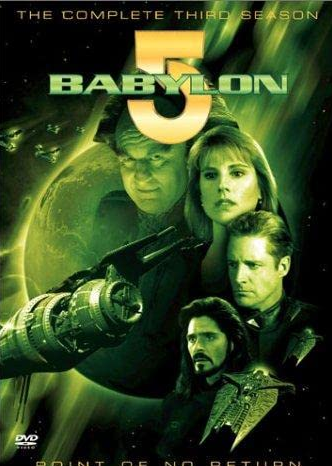
Babylon 5 season 3 cover
  1. “Matters of Honor” – 5.5
  2. “Convictions” – 2.5
  3. “A Day in the Strife” – 4
  4. “Passing through Gethsemane” – 5.5
  5. “Voices of Authority” – 4
  6. “Dust to Dust” – 5.5
  7. “Exogenesis” – 2
  8. “Messages from Earth” – 5.5
  9. “Point of No Return” – 8
  10. “Severed Dreams” – 8
  11. “Ceremonies of Light and Dark” – 4.5
  12. “Sic Transit Vir” – 6
  13. “A Late Delivery from Avalon” – 3
  14. “Ship of Tears” – 4
  15. “Interludes and Examinations” – 6
  16. “War Without End, Part 1” – 7.5
  17. “War Without End, Part 2” – 8
  18. “Walkabout” – 4.5
  19. “Grey 17 is Missing” – 4.5
  20. “And the Rock Cried Out, No Hiding Place” – 6.5
  21. “Shadow Dancing” – 5.5
  22. “Z’Ha’Dum” – 8

There’s a step up in the ratings this season, with the average hitting 5.4 after the previous season’s 4.5. Most episodes are comfortably in the 4-6 range of “okay, but not great,” with only a few lower and several standing out higher.

This season sees a couple of changes to the cast. The Minbari-trained human ranger Marcus Cole joins the station, bringing a distinctive wry quirkiness. At times the witty, roguish, smooth character veers perilously close to being a Mary Sue, but the warmth and charm of Jason Carter’s performance is usually enough to save him from tipping over the edge. In addition, the telepath Lyta Alexander returns in a shake-up of the cast (the previous seasons’ telepath, Talia Winters, was reportedly a casualty of contract negotiations with the actor). Lyta’s return is welcome, and Patricia Tallman plays the ambiguity of the character—a human serving the mysterious Vorlons—well enough.

Along with the changes to the cast we get some significant forward motion in the larger story this season. The war with the Shadows heats up at the same time that the Earth government goes full-bore fascist. Our heroes on the Babylon 5 station are caught in the middle of both developments and have to move fast in response. Meanwhile, the Centauri invasion of Narn enters a dangerous new phase.

Our lowest-rated episode of this season is a side-story without much connection to the larger arcs. In “Exogenesis,” a 2, Marcus and Dr. Franklin investigate strange goings-on among the station’s homeless. The episode does offer Marcus and Stephen a chance to bond, but beyond that there’s not much substance to the story. It feels more like a first-season episode, a self-contained story building the background of the setting but not connected to much else.

For the best episode of this season, though, we are spoiled for choice. Four episodes get an 8 from us, with a fifth one close behind at 7.5. First there’s “Point of No Return” and “Severed Dreams,” not properly speaking a two-parter, but two episodes in a row that both see the Babylon 5 crew have to deal with the consequences of Earthgov’s violent power grabs, culminating in a watershed moment when Babylon 5 declares itself independent. The next is a proper two-parter: “War Without End,” Parts 1 and 2, a clever revisiting of the first season’s time travel story “Babylon Squared” in which we see the reappearance of the Babylon 4 station from a new perspective, and Captain Sinclair gets his send-off. Finally there’s the last episode “Z’Ha’Dum,” in which Captain Sheridan sets off to the homeworld of the Shadows to discover what drives them.

Season 3 effectively builds on what seasons 1 and 2 accomplished, and it sets the stage for the dramatic events coming in season 4. Overall, quite a strong season and worth a rewatch.

Image: Babylon 5 season 3 cover via IMDb

In the Seen on Screen occasional feature, we discuss movies and television shows of interest.

Scenes from Among the Trolls

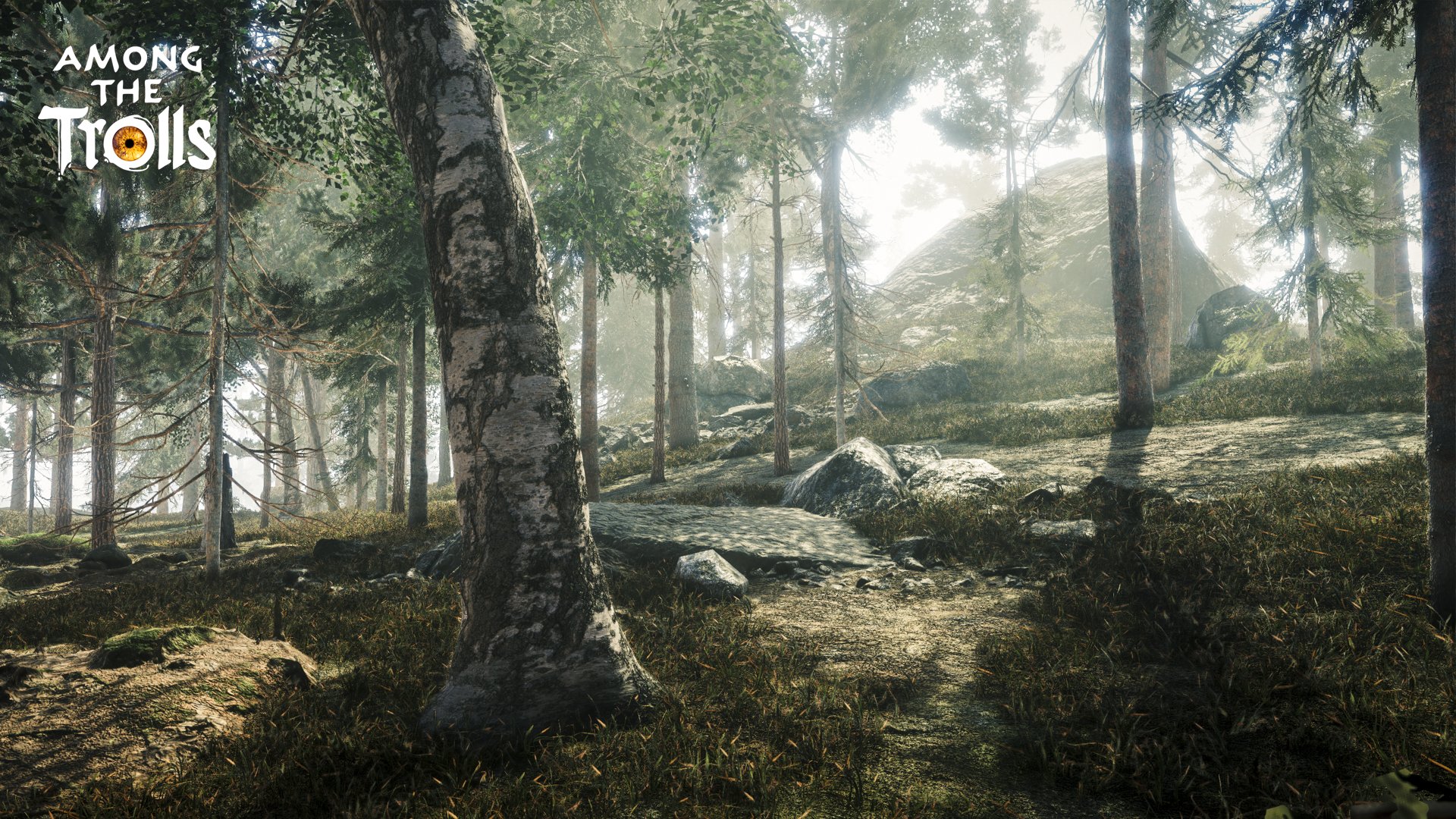
Forbidden Studios is an independent game development studio based in Turku, Finland. Their first game is in development now. Recently the studio shared a few more pictures from Among the Trolls on Twitter:

Among the Trolls Forest w Birch

All of the scenery looks absolutely lovely, very much like home, which I’m not used to seeing in a video game, and they prompted me to go look for more. Below are a few other shots that reflect a location firmly based on traditional Finland:

Among the Trolls Cabin Interior

A traditional cabin with what’s clearly a ryijy wall hanging. Nice.

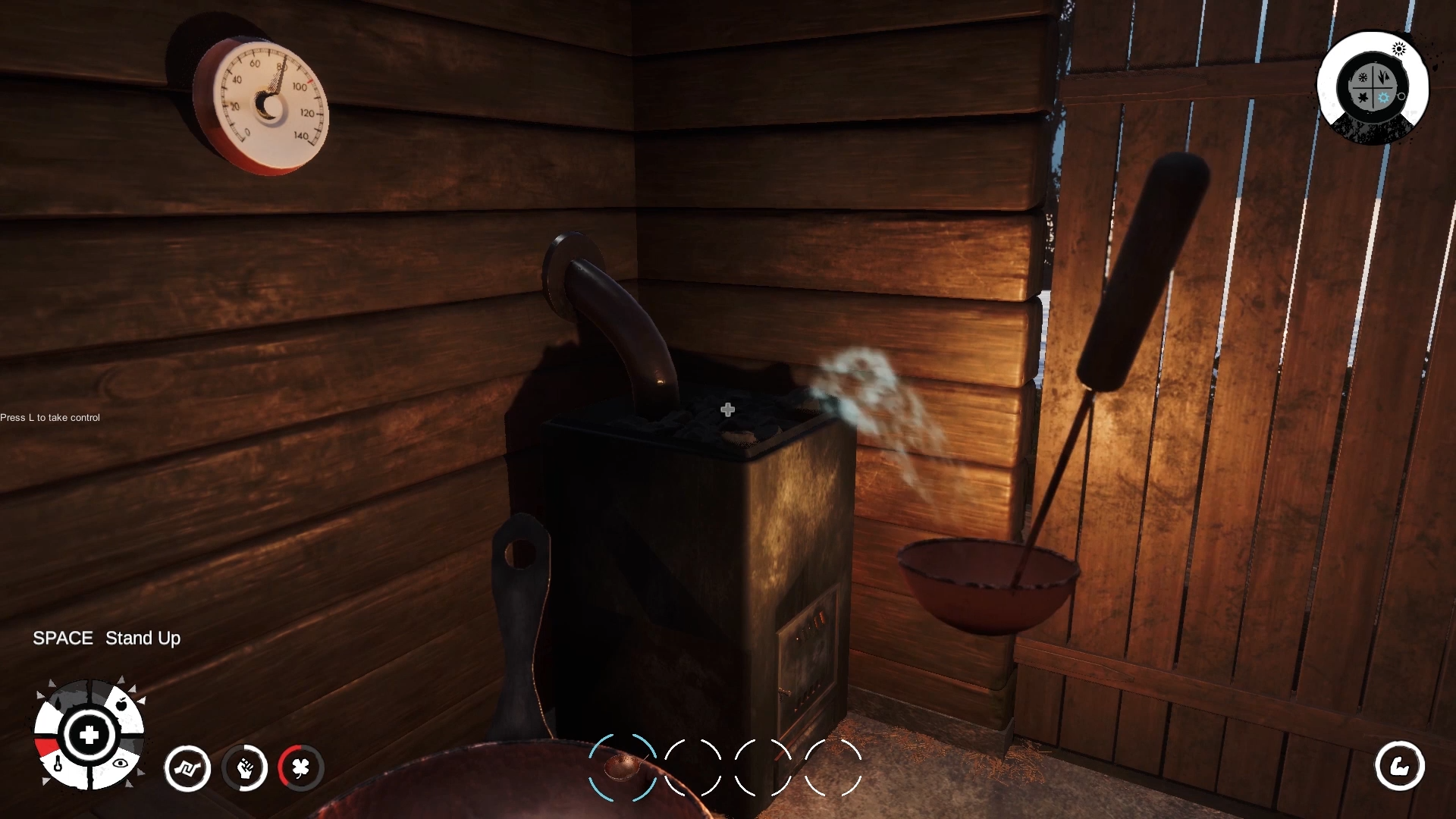
Among the Trolls Sauna

It’s a sauna! Ha! 🙂

I’m now looking forward to hearing more about the story. At this writing the description only says “Among the Trolls is a first-person survival action adventure where the strange mysteries of Nordic forests are unraveled.”

On the basis of the current demo video, among other things you can pan for gold and have a sauna bath; at least two things that are highly unusual. (In fact, a sauna bath provides more sisu in game, which can save your life when all else fails. How fabulous!) On Twitter, Forbidden Studios also shared a clip of rune singing, which is clearly a reference to the Kalevalaic poetry. More unique Finnish goodness!

There might be one potential problem, unfortunately. If the Forbidden Studios gallery and Twitter stream are anything to go by—and they might not—there is only one woman in the plot. (The protag’s grandmother Elina Kantola, who has disappeared along with her husband Aarne.) It could be a stylistic choice; it’s not at all uncommon for Finnish storytellers to focus on lone men in the woods. If true, however, that’s a problem for me.

As fantastic as it is to see the kinds of environments I grew up with reflected on screen, if there aren’t female characters beyond the obligatory Smurfette / wife / girlfriend / (grand)mother type, I’m not interested. At this point in my life the lack of multiple individual, nuanced women in a story is as hard and immediate a turn-off as horror and dystopia are.

Images by Forbidden Studios: Forest via Twitter. Cabin interior via their website. Sauna scene screencapped from the video demo.

Of Dice and Dragons is an occasional feature about games and gaming.

Deconstructing the Star Wars Sequels: The Last Jedi

A couple of weeks ago I wrote about the storytelling structure in The Force Awakens and how it mimics the narrative shape of A New Hope without the character growth to support it. Today we look at The Last Jedi, the second and most challenging of the new trilogy movies. Where The Force Awakens was too committed to reenacting a familiar story to offer any new ideas, The Last Jedi is too much in love with its ideas to build a story around them.

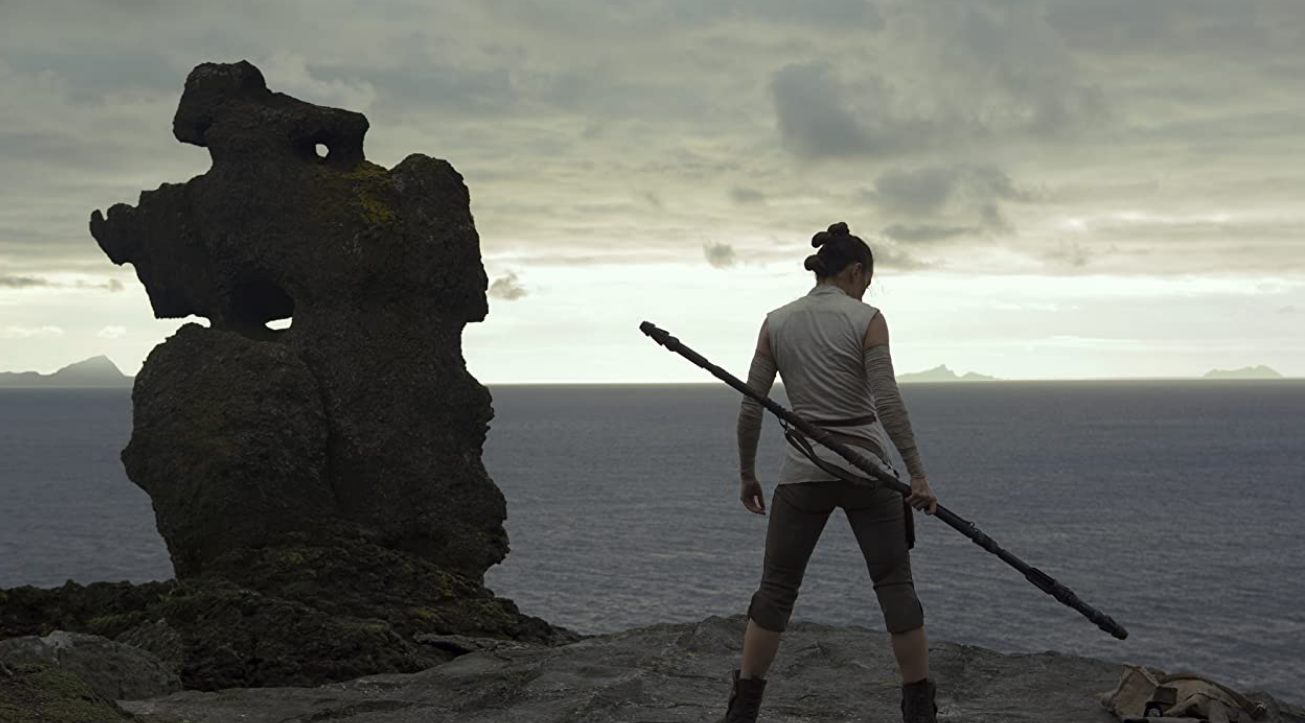
Rey on the Jedi island, from Star Wars VIII: The Last Jedi

The Last Jedi does not run on nostalgia like The Force Awakens. It toys with some echoes of The Empire Strikes Back—the rebels are on the run chased by Imperial forces while the novice Jedi goes off to train with an old master, learning something about their parents along the way—but these echoes do not drive the plot the same way A New Hope did for The Force Awakens. The story of The Last Jedi is instead driven by Rian Johnson’s desire to challenge every trope and convention of the space opera that he can.

The movie does a good job posing the questions. What if the hot-shot pilot who doesn’t play by the rules is actually making things worse with his antics? What if the old master is broken by guilt and remorse and doesn’t want to train the chosen one? What if the chosen one isn’t actually all that chosen? What if the previous movie’s shadowy overhanging villain is actually a chump who gets himself bisected mid-monologue? What if the rebels and the Empire both buy their weapons from the same scummy arms dealers? What if the heroes send out a desperate last call for help in their hour of need and no one comes? The what-ifs go on and on, each of them a worthy hook to hang plot on, but none ever taking up any weight. The movie asks plenty of questions, but never gets around to the answers.

Instead of actual development for the plot and characters, we get empty gestures at development. We are clearly meant to think that Poe has Learned a Lesson by the end of the movie when Leia tells the others to follow him, but just what that lesson was and how he learned it are a mystery. Similarly, Finn’s retort to Phasma, calling himself “Rebel scum,” is framed as if it ought to mark a turning point for the character, but the rest of the movie doesn’t do the work of showing us that his relationship to the Rebellion/Resistance matters. Rey comes the nearest to having a character arc. After spending most of the movie looking to others to guide her on what being a Jedi means, she strikes out on her own and uses the Force to move rocks and save her friends. It’s the closest the movie comes to a payoff, but it barely adds anything to her development in The Force Awakens, and it’s not much to show for having Rey stuck between grumpy uncle Luke and creepy stalker Kylo for most of the movie. The structure of a narrative arc is built into the film, but the story isn’t there to fill it.

The time and narrative energy that could have been put into building the story and challenging the characters is instead spent on gambit after gambit that doesn’t pay off. Luke’s lessons teach Rey nothing. Finn and Rose’s side quest to the casino planet is pointless and deflates much of the tension built by the First Order’s pursuit of the fleeing rebels. Poe’s mutiny gets undone with a kicked-over steam vent and a blaster. The movie invests more energy into critiquing the socio-economics of a galaxy far far away than in giving our heroes anything meaningful to do.

Perhaps the most frustrating thing about this movie is how it dangles the possibility of meaningful development in front of us only to do nothing with it. Characters like Vice Admiral Holdo and Commander D’Acy are vast untapped wells of awesomeness reduced to Teaching a Man a Lesson. The number of times that important moments in the movie correspond to women with outstretched hands—from Rey lifting rocks and Leia pulling herself back out of space to Rose patting a giant horse-puppy and Holdo jumping into hyperdrive—makes it seems as though the gesture ought to mean something, it just doesn’t. Johnson’s other movies, notably his following creation, Knives Out, show that he is quite capable of handling complex story structures (something I’m not confident I can say about J. J. Abrams). In this case, though, it feels as though the director got so focused on making his movie about failure that he ended up failing to make a movie.

None of this is to say that there aren’t good things in The Last Jedi. It has some of the sequel trilogy’s sharpest dialogue and most striking visuals, from Poe’s jabs at Hux at the beginning to the red scars of battle streaming across the stark white ground of the salt planet at the end. It introduces what may in fact be the most daring idea in the new Star Wars universe: that a Jedi can come from anywhere (at least until the next movie took a big step back.) But these things arrive within a movie that is so committed to the task of deconstructing Star Wars that it deconstructs it right down to the ground and leaves nothing behind.

Image: Rey from The Last Jedi via IMDb

In the Seen on Screen occasional feature, we discuss movies and television shows of interest.

Agatha Christie’s Hjerson: A Poirot Spinoff

Fans of Agatha Christie or Hercule Poirot probably remember Poirot’s friend, writer Ariadne Oliver. Her popular detective, Sven Hjerson, happens to be a countryman of mine.

Astoundingly—to my mind at least—Sven Hjerson is going to get his own series! Produced in Sweden, the series is called Agatha Christies Hjerson (unsurprisingly, Agatha Christie’s Hjerson in English). The series was created by Patrik Gyllström; he has also written some of the scripts along with Jakob Beckman, Martin Luuk, and Björn Paqualin, and there are two co-directors, Lisa Farzaneh and Lisa James Larsson. Hjerson is starred by Johan Rheborg and Hanna Alström, the latter of which has some international renown as the Swedish Princess in Kingsman: The Secret Service and Kingsman: The Golden Circle.

C More Agatha Christies Hjerson S1

The titular character Hjerson is a Swedish-speaking Finn who has had a long career as a criminal investigator in Sweden and now lives a retired, uneventful life in the Åland Islands. A Swedish reality tv producer Klara Sandberg is on the lookout for a new hit series and decides on Hjerson as her new star. Naturally, murders ensue.

Agatha Christie’s Hjerson is a C More original production. The series was filmed in Stockholm and Åland Islands (Ahvenanmaa) and is described as a combination of Christie and Nordic noir. Season one consists of four 90-minute episodes, which for tv have each been split into two parts.

So far the IMDB reviews are not flattering. Have you seen Hjerson? Do share!

Image via C More

1,001 Posts

This is our thousand-and-first post on Co-Geeking! Goodness, did any of us expect to get here?

We started off six years ago in the summer of 2015 with some ideas of what we wanted to write about. The blog has grown and developed since then as we sometimes dig into big projects together and other times just share whatever comes to mind.

Here are the most popular posts we’ve done in all that time:

  1. Do-It-Yourself Fantasy Place Name Generator – A technique for creating place names that feel authentic and lived-in.
  2. Testing Witches with Water – Digging into the myths about dunking people in water to see whether they’re witches or not.
  3. Sean Bean on the LotR Joke in The Martian – A bit from an interview with Sean Bean about his role in The Martian and the movie’s Lord of the Rings joke.
  4. Hogwarts Dueling Club Tablecloth Transformed into Wall Hanging – A beautiful example of geeky crafting if you want to add some wizarding-school flair to your home.
  5. Custom is King – A glimpse at multiculturalism in action over two thousand years ago.

Thanks for being with us, everyone. More to come!

Eppu and Erik

Announcements from your hosts.

Stupid Writer Tricks: Character Voices

Writing dialogue is not one of my strengths as a writer. I often struggle to give my characters their own voices. So I have a stupid trick to help me get the voice right for characters I’m going to spend a lot of time with: When thinking of their dialogue in my own head, I give them a distinctive accent, tone, or speaking style. It doesn’t always come through onto the page, but it helps me think about how a particular character would talk.

For an example, here’s how I wrote the voices for the main characters in my story “How I Saved Athens from the Stone Monsters.”

The story is about Mnestra and Lampedo, two flute girls working the streets of Athens who get caught in the chaos when the rich, ambitious aristocrat Alkbiades uses a mysterious artifact to make the city’s statues come to life and go on a rampage. To make the story work, it was important to convey the personalities of these three key characters.

Mnestra, as narrator of the story, was the most important to get right. I wanted her to come across as self-possessed, confident, and a little snarky. I also wanted her to feel accessible as a character, someone we felt like we knew. With a story set so far in the past, there was a danger that the characters would feel distant and hard to identify with. Mnestra’s world is certainly not like our own, even before the monsters appear. I wanted to close that gap and make her feel real. There’s also a long history of ancient Greek and Roman characters in modern fiction written as if they were stiff upper-class Brits (in no small part because Greek and Roman literature was for a long time a crucial part of upper-class British education). I didn’t want Mnestra to sound like that.

So when I was thinking about her lines, I thought of her as a jaded teenager. I wrote the first few sentences of the story almost before I really knew where the plot was going, just to make sure I had Mnestra’s voice down.

Okay, so that thing with the statues? The smashed penises thing? That was my idea. But let me explain. I had a good reason for it.

She’s a little overly blasé and vague like a teen trying to play it cool. She leads into the story gradually, like a high schooler with a bent fender sidling up to a freaked-out parent.

In the first draft of the story, there was a lot more of Mnestra’s attitude throughout, but in revising, I found that I didn’t need all of that, and in fact once the action picked up later, it just slowed things down. I edited out most of it, but kept a few sarcastic asides in where they felt appropriate.

Lampedo was a different problem. Her character changed a lot as I was writing. I originally wrote her as shy and delicate, but some good editorial feedback made me rethink her relationship to Mnestra. I rewrote the pair to be less “surrogate sisters” and more “buddy cops,” which gave the story more to work with. Lampedo instead ended up being tough and prickly.

I had a hard time writing the new version of Lampedo’s voice until I started thinking of her with a Russian accent. Not just a Russian accent but a Russian attitude: proud, prematurely world-weary, fatalistic. Here’s a little dialogue between Mnestra and Lampedo after they first get away from the attacking statues.

“Isis’ milk!” I hissed at her. “What did you think you were doing, trying to fight those things?”

“A warrior always attacks,” she answered, grabbing a wine jug. She pulled out the cork with her teeth and drank a big glug.

“We’re not warriors!” I snapped. “We’re flute girls. Don’t you get that? We have to be smart.”

“You say ‘smart,’” she scoffed. “You mean weak.”

“Have you ever seen an old flute girl?” I asked her. “No, there aren’t any. Most of us end up as graveyard women spreading for scraps. You only get through if you have a plan.”

“What’s yours?” she asked. “Hide in a storeroom?”

Alkibiades was a different challenge. Alkibiades is an aristocrat, and his driving motivation in my story (as in history) is that he feels he has never been shown the respect that his status entitles him to. Unlike with Mnestra, I leaned hard into the “stiff upper-class Brit” mode with him to convey that not only is he of a much higher social class than the flute girls but he’s also to an extent putting on an act of what he thinks an Athenian aristocrat should be like. If you can imagine a sinister version of Bertie Wooster, that’s what I heard in my head when writing his lines. Here’s how he intervenes when some potential clients are threatening to get violent with Mnestra and Lampedo.

But before anything could happen, a man on horseback came riding up and waved the twits back.

“I say, is that any way for an Athenian to behave?” he rebuked them. “Tussling with girls in the street? Don’t you know there’s a war on?”

Later, at his dinner party, Alkibiades tries to reassert his status after having his political position usurped by his rival Nikias. He starts a philosophical dialogue but is undermined by his own guests:

“Friends,” Alkibiades began, “let us make this a festival of the mind, not only of the body.” A couple of men near us snickered, but Alkibiades pretended not to notice. “Let me propose a subject for our discourse. What is the measure of a man’s worth?”

“The length of his cock!” a drunken voice called out.

“The quality of his wine!” another added before the laughter had faded.

“His virtue,” proposed an old white-head. A few other suggestions floated around the room. When the merriment had subsided a little, Alkibiades offered his own answer.

“I should say that the measure of a man’s worth is the greatness of the challenges he has overcome. The greatest of all men I name Leonidas of Sparta who faced the Persians at Thermopylai. When the Persian king demanded that the Spartans lay down their arms, he answered: ‘Come and take them.’”

“Then they all died and the Persians burned Athens,” someone objected. Alkibiades was undeterred.

“What more can a man ask for than to face an unbeatable foe with unwavering courage?”

“Sending Nikias out to do it!” came an answer. Alkibiades’s face went red and he sat down as the rest of the room exploded with laughter.

I have a great admiration for people who can write rich, fluid dialogue that drips with character. That’s not where my strengths lie. This is the stupid trick I use instead, and it works for me.

How It Happens is an occasional feature looking at the inner workings of various creative efforts.

Fan Project for Home Bakers: Sandworm Bread

In honor of Denis Villeneuve’s Dune release in Europe, here’s an older but still impressive project for making your own sandworm bread with—you guessed it—spice filling.

Kitchen Overlord Chris-Rachael Oseland Sandworm Bread

The recipe is by Chris-Rachael Oseland at Kitchen Overlord, and it’s an entertaining read as well as a very neat fan project. Please visit her site for more foody, nerdy goodness of all shapes!

Found via File770.

Image by Chris-Rachael Oseland at Kitchen Overlord

Geeks eat, too! Second Breakfast is an occasional feature in which we talk about food with geeky connections and maybe make some of our own. Yum!

WoW: Reminiscing about Past Feature Additions

Our home is finally starting to function and look like a home (instead of a storage area for n+1 boxes) after our transatlantic move. We’ve been even able to play World of Warcraft a little in the midst of cleaning and organizing and bureaucracy and starting work again.

That got us reminiscing about the various expansions, specifically their new features we liked or loved at the time that have since become—begging your pardon for the pun—quite vanilla.

Below are some of my favorite changes, listed in expansion order.

(FYI: I just couldn’t remember and failed to find online the exact timing for some features, so I’ve given my best guess. If you know, please let me know in the comments!)

The Burning Crusade

-Ahh, the amazing, breathtaking sky over Hellfire Peninsula!

-Multiple flight points per zone—what is this awesome magic?

-Expanding the availability of paladins (one of my favorite classes).

WoW BC Hellfire Peninsula Skies

Wrath of the Lich King

-In Northrend the environmental design definitely progressed from lumps of mashed potato. (Overall, though, they really didn’t know what to do with the icy zones, Icecrown and Storm Peaks.)

-Improved music, especially the Grizzly Hills intro music. That’s still one of my all-time favorite WoW themes.

Cataclysm

-Changes to Orgrimmar and Stormwind. It took me time to get used to, but I wouldn’t go back.

-Flying in old world zones.

-Phasing, but only when it doesn’t mess up the rest of the gameplay.

Mists of Pandaria

-Pandaria is where the environment design turns truly good. By this I mean natural-looking shapes in the landscapes, undergrowth with variety (including height), mountains that look like actual mountains, etc. To be sure, Cataclysm tried very hard as well, but graphics just got so much better by MoP that it was more feasible to do better. (Trees still look clunky, though.)

-Area-of-effect looting. The shift-click looting did help, but, man, I NEVER want to go back to picking. Each. Individual. Loot. Item. One. At. A. Time—AOE loot helps so much.

-11th character slot per realm. Obviously it’s changed again since, but at the time it was big.

WoW Pandaria Jade Forest Arboretum

Warlords of Draenor

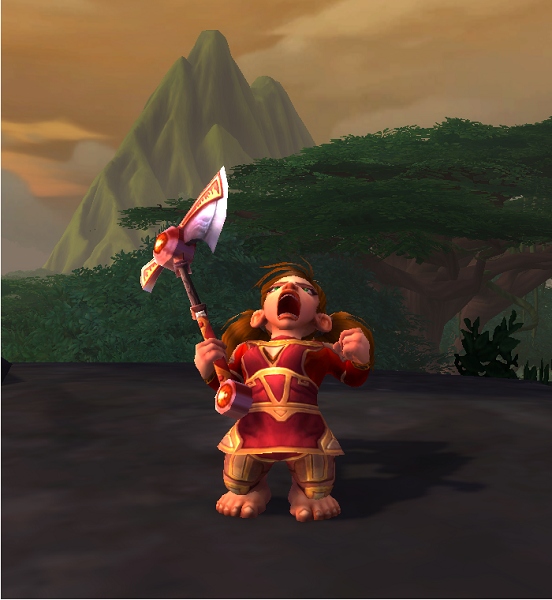
-The toons’ new and improved looks. I didn’t like losing some of my favorite female Dwarf faces, but overall the change was good.

-The little gold coin marker for vendor trash in your bags. Hated it first, grew to love it.

-No fighting over gathering nodes anymore, since more than one player can get the same one. (If it was WoD? Or was it Legion?)

WoW Arms Warrior Roar

Legion

-The new transmogging system that automatically saves all applicable reward looks into your wardrobe. Oh, and being able to hide certain gear slots in your mog.

-Trees look so. Much. Better!

-Worldquests.

Flight Master’s Whistle.

WoW Legion Druid Classhall Xmas Gear Dec 2018

Battle for Azeroth

-Allied races.

-This is slightly esoteric, and definitely not a gameplay feature, but I love the penguin sledding world quests!

-Overall my favorite expansion, by the way.

Shadowlands

New customizations for the core races (skin, hair, jewellery).

-After opening Shadowlands with your first character, being able to choose whether you do the storyline or not on subsequent toons.

Torghast, of course.

I’m pretty sure I’m forgetting a lot. Love to share your favorite tweaks to the game? Comments are open!

Images: screencaps from World of Warcraft.

Of Dice and Dragons is an occasional feature about games and gaming.