Visual Inspiration: Traditional Textile Patterns and Colors on Outdoor Stairs

In Lima, Peru, artist Xomatoc and local residents painted a number of stairs with colors and combinations more typically associated with traditional South American blankets and other textiles.

Colossal Jeremy Flores Xomatoc Striped Staircase

This project was a part of the Pinta Lima Bicentenario. Xomatoc’s project was only one of public art installations painted around the municipality to celebrate each participating neighborhood’s history and cultural memory.

Municipalidad de Lima Bicentenario Painting
Colossal Jeremy Flores Xomatoc Diamond-Pattern Staircase

The length of the stairs, the vibrant colors, and the large enough scale of these patterns make them really eyecatching. And, good grief, the degree of the slopes! (I grew up essentially on a flood plain, which is why mountains look so drastic to me.) The stairs definitely will be visible a long way.

Found via Colossal.

Images: Striped and diamond-patterned stairs by Jeremy Flores via Colossal. Painting in progress via Municipalidad de Lima.

Out There is an occasional feature highlighting intriguing art, spaces, places, phenomena, flora, and fauna.

Earliest Singular They According to the OED

I’ve long been seeing mentions that the use of the plural pronoun they to refer to a singular antecedent is older than the present attempt to introduce it as a gender-neutral option. Here’s a little history I ran across.

Dennis Baron, Professor of English and linguistics at the University of Illinois at Urbana-Champaign, blogs about singular they for The Oxford English Dictionary. According to him, the oldest recorded use within the OED is from 1375, in the medieval romance William and the Werewolf.

BrLib Digital Catalogue Illuminated MSS Royal 10 E IV f12 Detail

Continues Baron:

“Here’s the Middle English version: ‘Hastely hiȝed eche . . . þei neyȝþed so neiȝh . . . þere william & his worþi lef were liand i-fere.’ In modern English, that’s: ‘Each man hurried . . . till they drew near . . . where William and his darling were lying together.’ [original emphasis]

“Since forms may exist in speech long before they’re written down, it’s likely that singular they was common even before the late fourteenth century. That makes an old form even older.”

Since I’m a Finn and we don’t have grammatical gender in our language, singular they seems natural to me. In fact, I fail to see a reason to choose to kick up a major kerfuffle over it; after all, (normative) English already mixes up the numbers with singular and plural you.

I’m pretty sure that within the past decade or so I have spotted multiple examples from non-woke modern English sources, both television series and novels, that do use singular they seemingly unconsciously, very naturally, and entirely unambiguously. I wish I had realized to write them down for my own interest.

Image: Group of men, detail of illuminated manuscript Royal 10 E IV, f. 12, via The British Library Digital Catalogue of Illuminated Manuscripts (France, S. [Toulouse?]; last quarter of the 13th century or 1st quarter of the 14th century; illuminated manuscript)

On, of, and about languages.

Fantasy Religions: Divinity and the World

It’s been a while since I last wrote about ways of making religious elements of a secondary world feel more authentic, but here’s another thought worth considering when you’re writing: how people feel about the gods tends to reflect how they feel about the world.

Traditional religions tend to see the world differently and posit that divinity exists within the world, that the physical world around us and the social world we inhabit as humans is also inhabited by sacred forces. Interacting with the world means necessarily interacting with divine entities. Some modern religions preserve this view of the divine, notably Hinduism and Shinto. In traditions like these, divine forces are located within the world, whether they are gods associated with natural features such as mountaintops or rivers, or divinities connected to human relationships, such as blessed ancestors or household spirits.

For many of the major modern religions, by contrast, such as Buddhism, Christianity, Islam, and some versions of Judaism, the divine exists outside the world. The physical world we live in and the social world we inhabit as human beings is a barrier between ourselves and divinity, and the function of religion is to help us transcend that barrier. Attachments to worldly goods or to social relationships are seen as impediments that must be resisted or shed in order to achieve harmony with the divine.

This distinction is not an absolute one. Traditional religions can also understand divine forces as abstractions or seek ways of achieving a closer communion with the divine through asceticism, and modern religions can see sacredness connected to specific places and people. Still, one of the defining characteristics of any religious tradition is whether it encourages people to seek harmony with the divine by inhabiting the ordinary world in meaningful ways or by escaping from its distractions and temptations.

The point for writers is not that one or the other of these religious approaches is right or wrong for an imagined world, but that each one responds to the needs of societies under different circumstances. People are inclined to see the divine in the world around them when they feel at home in that world. Well-established cultures with a strong sense of identity and long history moored in place are likely to see the world itself as sacred. Shinto in Japan and Hinduism in India both arise out of this kind of long history. Religions that see the world as a barrier to be overcome tend to arise in times when people are unsettled and feel powerless within the world they live in. Buddhism, Christianity, and Islam all arose among peoples who lived with chaos, violence, and a lack of control over their own destinies, while Judaism has been deeply shaped by a history of diaspora and oppression.

What kind of religions exist in your invented worlds depend on what the people in them have experienced. If your characters feel connected to and safe within the world they inhabit, they are likely to perceive divine forces all around them; if their world feels dangerous and alien, they are likely to feel equally alienated from the divine.

Other entries in Fantasy Religions:

History for Writers looks at how history can be a fiction writer’s most useful tool. From worldbuilding to dialogue, history helps you write.

Rating: Babylon 5, Season 4

It’s an action-packed, emotional roller coaster of a season for Babylon 5. The previous three seasons of development and growth come to a head in some unexpected ways. Here’s how we rated this season’s episodes:

Babylon 5 season 4 DVD cover
  1. “The Hour of the Wolf” – 6
  2. “Whatever Happened to Mr. Garibaldi” – 3.5
  3. “The Summoning” – 6.5
  4. “Falling Towards Apotheosis” – 5
  5. “The Long Night” – 7
  6. “Into the Fire” – 9.5
  7. “Epiphanies” – 4
  8. “The Illusion of Truth” – 2.5
  9. “Atonement” – 3
  10. “Racing Mars” – 3.5
  11. “Lines of Communication” – 4
  12. “Conflicts of Interest” – 2.5
  13. “Rumors, Bargains, and Lies” – 5.5
  14. “Moments of Transition” – 3.5
  15. “No Surrender, No Retreat” – 6
  16. “The Exercise of Vital Powers” – 1.5
  17. “The Face of the Enemy” – 1.5
  18. “Intersections in Real Time” – 0
  19. “Between the Darkness and the Light” – 7.5
  20. “Endgame” – 6.5
  21. “Rising Star” – 6
  22. “The Deconstruction of Falling Stars” – 4

Various shenanigans with the networks broadcasting Babylon 5 led to the originally planned seasons 4 and 5 being squished down into a single season, and the results are visible. In some ways, the results were good, as the pace of the action noticeably picks up and gives an urgency to important episodes dealing with the Vorlon-Shadow war and the Earth civil war. In other ways, the effects were less positive, though, as the story often feels cramped and rushed. In the end, we have an average rating for this season of 4.5, down from season 3 but on par with season 2.

Given how much story had to be condensed into this season, it is particularly jarring when the season pauses for a number of self-contained (and sometimes self-indulgent) episodes such as “The Illusion of Truth,” a demonstration of how propaganda works, “Intersections in Real Time,” in which Sheridan is tortured, and “The Deconstruction of Falling Stars,” a meditation on how history is transformed into legend. None of these episodes scored very well with us. “Intersections in Real Time” is our lowest rated episode of the season, at a complete 0, for being both unpleasant to watch and unnecessary to the larger story. The season also spends an inordinate amount of time watching Garibaldi make bad life choices, which we could also do without.

But when this season works it really works. At the top of the ratings we have “Into the Fire,” at 9.5, which pays off years of development as the younger races of the galaxy stand up to the ancient Vorlons and Shadows and tell them to get the hell out. This episode fully delivers on the promise of the series, being both exciting and thoughtful, and deftly transforming our entire perspective on the two mysterious races at the heart of the series’ central story. The last few episodes of the season proper, “Between the Darkness and the Light” (7.5), “Endgame” (6.5), and “Rising Star” (6), are less spectacular, but they bring the long-simmering Earth storyline to a satisfying close.

A lot of what makes Babylon 5 great is on screen in season 4. It may not be exactly what was planned at the outset, but it lives up to the promise of the earlier seasons.

Season 1

Season 2

Season 3

Image: Babylon 5 Season 4 DVD cover via IMDb

In the Seen on Screen occasional feature, we discuss movies and television shows of interest.

Mashup of Themes from Avengers and The Lord of the Rings

Perfection can be improved on occasion. Bearing witness is this inventive mashup of various themes from The Lord of the Rings by Howard Shore and the Marvel Cinematic Universe’s Avengers by Alan Silvestri:

The Lord of The Rings X Avengers EPIC ORCHESTRAL MASHUP by Samuel Kim Music on YouTube

The mashup was arranged and orchestrated by Samuel Kim. I don’t have enough formal musical education to tell you why it works—both movie scores certainly are epic enough—I just know it does. 🙂 Kudos!

An occasional feature on music and sound-related notions.

A Drink with Star Trek Characters

Red Headed Trekkie posed a question on Twitter:

I thought of a quick, throw-away answer and moved on. For some reason, however, the question didn’t leave me alone, so we’re bringing it back to discuss here.

Eppu: It would depend a lot on my mood and energy levels. Hm. In the end, I think for me it may be easier to weed out some of the more difficult choices first.

Even though she seems fun, not Dax; I don’t have the stamina to keep up with her. As much as I admire Kira’s frankness and relentlessness, a drink with her might be too strained if we don’t hit it off. Janeway seems too active and tireless for me to sit back with.

Erik: Agreed. There are some iconic Star Trek characters and drinks that come to mind right away: Janeway and coffee, Picard and tea (Early Gray, hot), anybody from Deep Space Nine and raktajino. I don’t think any of those would work for me, though. I hate coffee and don’t care for Earl Gray, and whatever is in a raktajino would probably not be good for me.

Eppu: It would be nice to have a cup of tea with Captain Picard, but I’m not sure of how informal the conversation would be. He seems such a consummate commander and politician, and I’d like a tea break to be more personal, relaxing, and homey than I imagine possible with him. Ditto for Worf and prune juice.

Erik: For good company, I might enjoy sharing a glass of whiskey with Dr. McCoy. That man probably has some interesting stories to tell. He could probably also drink me under the table, though, so maybe not. I could have a root beer with Rom, since I love root beer and Rom is a sweetheart, he’d probably be too nervous to enjoy it, and that wouldn’t be a nice thing to do to him.

Eppu: Garak would be an in-te-res-ting drinks partner—never mind your beverage choice!—but I suspect I’d feel too dumb half the time and would question the whole conversation the other half.

Erik: I suppose it isn’t really a fair answer to say a glass of wine with Kai Winn, with iocaine powder in it!

Eppu: In the end, I think it’s a tie between Chakotay and Guinan. Both are curious and considerate, have excellent listening skills but are not withdrawn, and show a combination of both humor and tact, so they seem excellent partners for unwinding with. And since it’s fall, I’d pick a sweet, alcoholic, toffee-flavored cider, preferably a low-alcohol version. (Note to Europeans: In North America, cider refers to freshly-pressed apple juice, which I only learnt after living there.)

Erik: I like both those options, but I guess I would settle on cocoa with Kira. One of the things I love about the character is that, as tough as she is and as much awful stuff as she’s seen in her life, she still has warmth and an appreciation for simple pleasures. I think she’d enjoy cocoa, and I’d enjoy getting to talk with her about everything and nothing.

Memory Alpha Guinan Chakotay Mashup

What about you? Any clear favorites one way or another? (Bonus points for type of drink!)

Images: Guinan via Memory Alpha. Chakotay via Memory Alpha. Kira via Memory Alpha

Q&A is an occasional feature in which we share our responses to quizzes, questions, and quirky ideas for your entertainment.


Bringing Color Back to Ancient Statues with Light

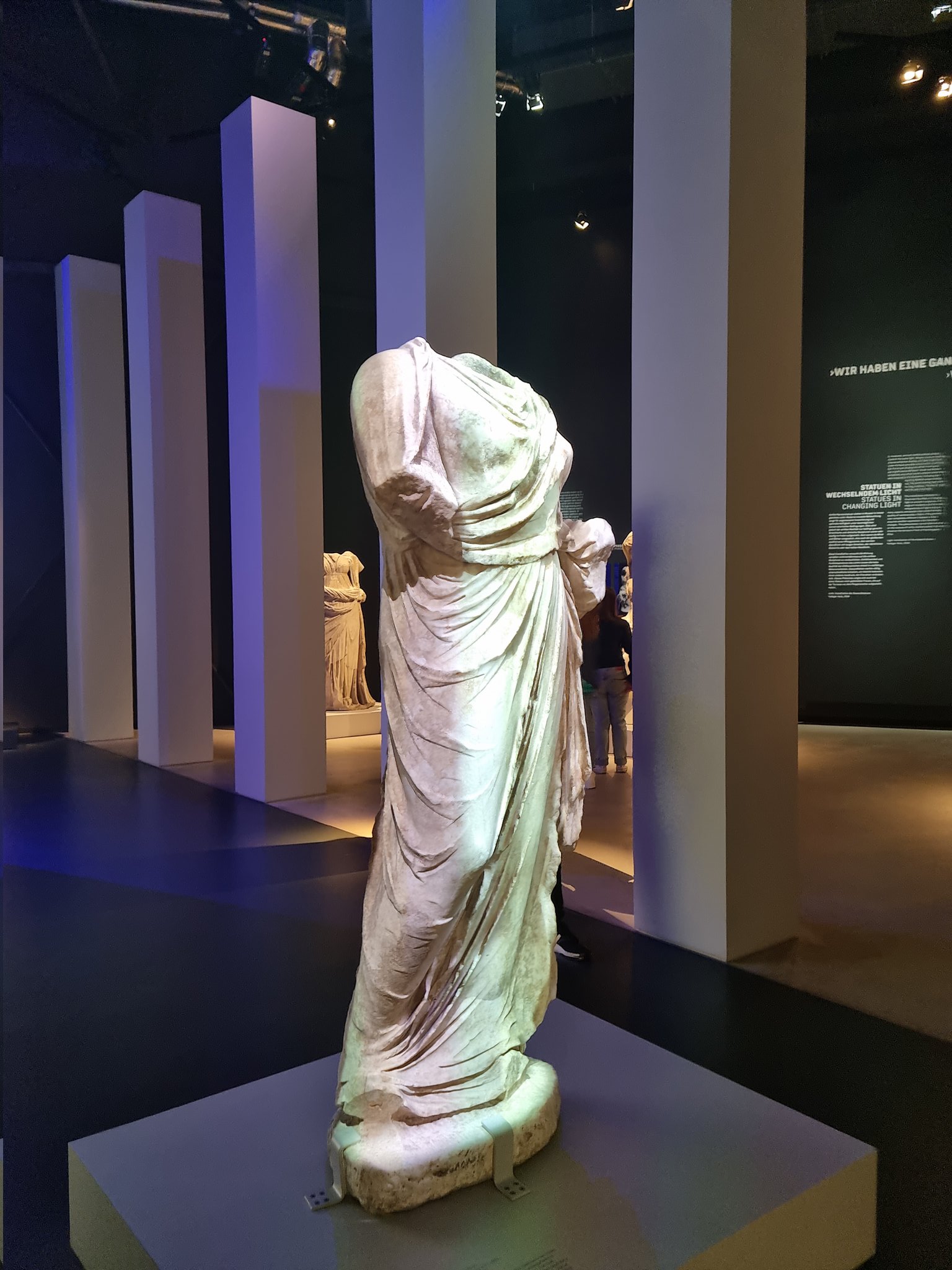
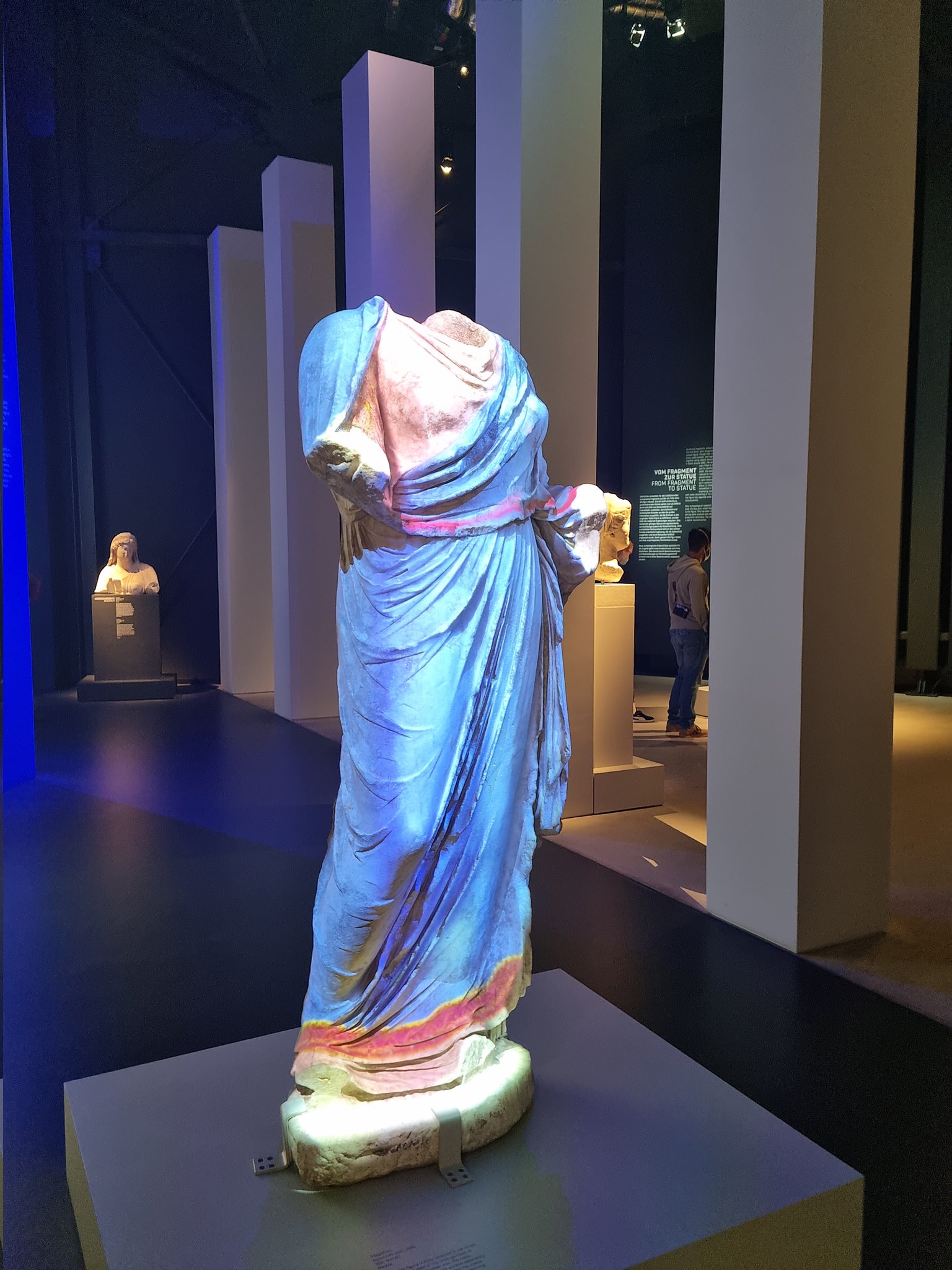
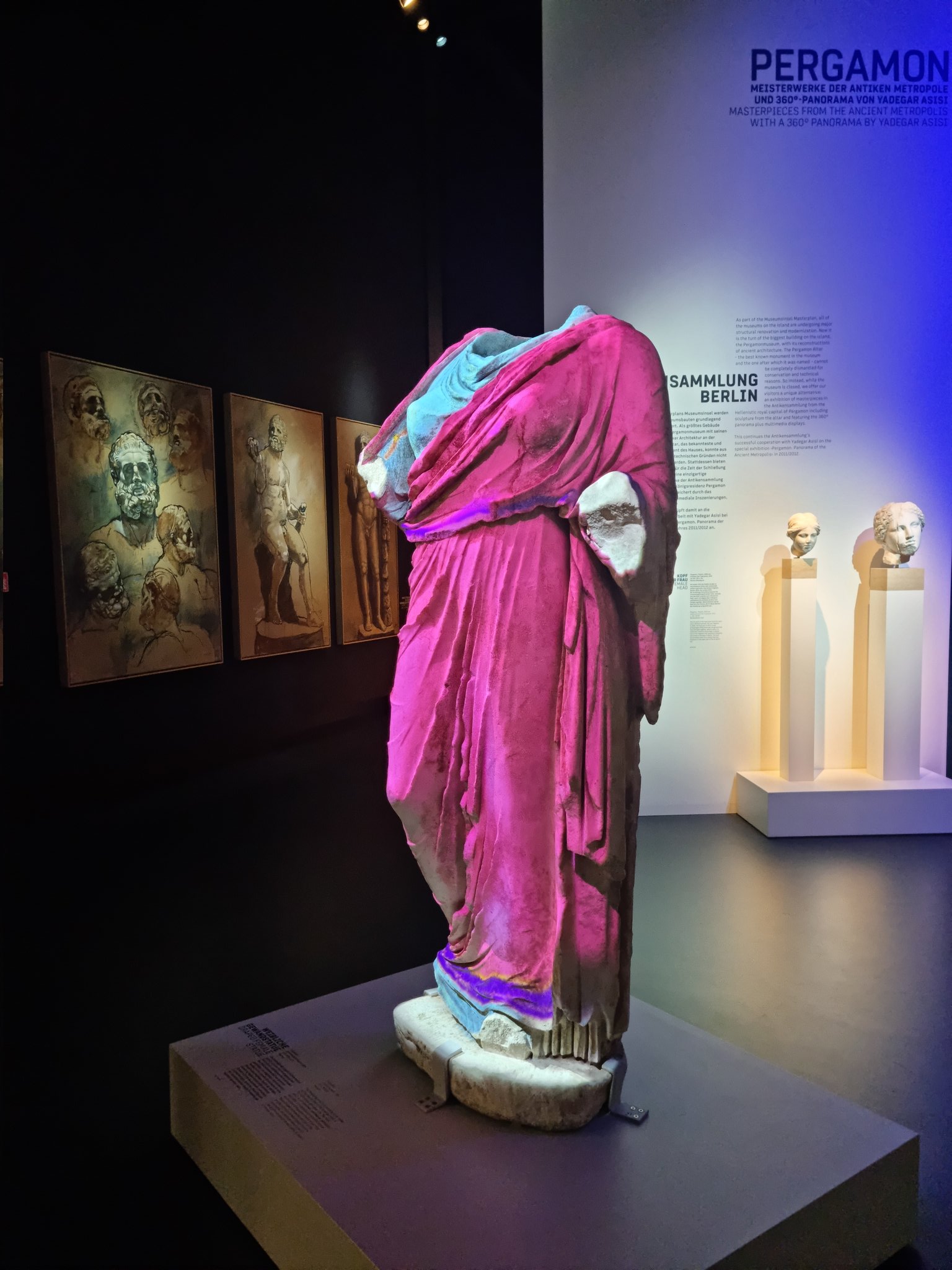
Here are a few interesting pictures from the Pergamon Panorama in Berlin where colored lights are used to show a few different variations on what marble ancient statues might have looked like in their original colors. A very neat idea and some great photography from Twitterer @BelovedOfOizys!

An ancient Greek marble statue of a draped woman
An ancient Greek marble statue of a draped woman with blue light showing on the clothing
An ancient Greek marble statue of a draped woman with magenta light showing on the clothing

Images: Statuary from Pergamon with colored lights, photographs by @BelovedOfOizys via Twitter

Out There is an occasional feature highlighting intriguing art, spaces, places, phenomena, flora, and fauna.

Worldbuilding in a Sentence

This fall I am finally teaching a course I have long dreamt of: History for Fantasy Writers. The course is built around the same ideas that I often blog about here, that studying history is a good way of exploring the possibilities of human societies and is our best resource when we want to imagine a world that is not like the one we live in.

As an early exercise to examine this idea, I asked my students to consider the following sentence: “The knight in shining armor rode his trusty steed toward the queen’s castle.” What can we tell about the world of this story just from this one sentence? They came up with some good answers:

  • The existence of knights and queens implies a stratified social structure. If we’re hearing about the people at the top, there must also be a lot of people at the bottom.
  • For instance, the knight must have dozens of people supporting them: someone to take care of the horse, someone to polish the shining armor, lots of people working the farms so they all have something to eat. The same and much more goes for the queen. Someone had to build that castle and keep it running. The lifestyle of a queen involves both politics and pageantry, for which she needs advisers and staff. All those people have to be clothed and fed.
  • Castles and knights in armor only make sense with certain kinds of warfare. In particular, this world must not have effective gunpowder weapons, which made both castles and mounted knights obsolete in our history.
  • If the queen lives in a castle, that means there must be a lot of fighting in this world. A castle is designed for defense, and it’s not a particularly convenient kind of place to live in peacetime. A queen wouldn’t be likely to live in one if she didn’t need to defend herself on a regular basis.
  • The fact that it’s the queen’s castle means that at least in some cases women in this world can wield power.
  • Castles and armor tell us something about the level of their technology. Building a castle takes a lot of quarrying, cutting, transport, and fitting of stones; armor requires mining and smelting ore to create metal, then working that metal into some complex shapes to make effective armor.

Of course, any of these observations could be undone in fiction. Maybe in this world horses magically take care of themselves. Maybe everyone is a knight or a queen and they’re all equal. Maybe the castle is carved out of a mountain of crystal, and the armor is made of enchanted tree bark. You can do that sort of thing in fantasy if you want to, but that’s where history helps you understand the “rules” so that you can break them in a way that is thoughtful and interesting.

I’m impressed by my students’ work so far and looking forward to more conversations like this one.

History for Writers looks at how history can be a fiction writer’s most useful tool. From worldbuilding to dialogue, history helps you write.

Quotes: Even Just One New Language Infects You with a Radically Different Way of Thinking

The embodiment of the Enemy in The City We Became by N.K. Jemisin, the Woman in White, says of the catalytic effect of human cities:

“You eat each other’s cuisines and learn new techniques, new spice combinations, trade for new ingredients; you grow stronger. You wear each other’s fashions and learn new patterns to apply to your lives, and because of it you grow stronger. Even just one new language infects you with a radically different way of thinking! Why, in just a few thousand years you’ve gone from being unable to count to understanding the quantum universe—and you’d have made it there faster if you didn’t keep destroying each other’s cultures and having to start over from scratch.” [original emphasis]

To me, one of the most fascinating features of my native Finnish is that the negator ei (‘no’) can be conjugated in personal forms, as if it were a verb: en, et, ei, emme, ette, eivät. For example, a one-word answer “En” to a question (e.g. “Would you like some tea?”) translates as ‘[I do] No[t]’, while “Emme” means ‘[We do] No[t]’, etc. And this is just one little, tiny detail of the amazing linguistic variety that exists on Earth. There are times I wish I had studided linguistics even further.

Anyway.

Obviously for the Enemy us petty humans had better stay petty and not learn anything new ever. She’s not wrong, though: we’ve come a long way, and human ingenuity can be astounding. Unfortunately, so can the human cruelty. If only we could stop the needless hate and reach for more amazing heights…

Jemisin, N.K. The City We Became. New York: Orbit, 2020, p. 342.

Serving exactly what it sounds like, the Quotes feature excerpts other people’s thoughts.

Hand- and Footprints in Tibet Potentially the Earliest Prehistoric Art Found

Potentially the earliest stone age art consists of hand- and footprints on stone, and was found in investigations between 2018 and 2020.

From the September 2021 Science Bulletin abstract covering the find:

“At Quesang on the Tibetan Plateau we report a series of hand and foot impressions that appear to have been intentionally placed on the surface of a unit of soft travertine. The travertine was deposited by water from a hot spring which is now inactive and as the travertine lithified it preserved the traces. On the basis of the sizes of the hand and foot traces we suggest that two track-makers were involved and were likely children. We interpret this event as a deliberate artistic act that created a work of parietal art. The travertine unit on which the traces were imprinted dates to between ∼169 and 226 ka BP.”

Below is a contour map from the article, showing the prints on the rock surface:

Science Bulletin Sept 2021 Zhang et al Earliest Parietal Art Contour

Fascinating. I’m sure there are still many open questions, like intentionality (if such a thing is even possible for prints left hundreds of thousands of years ago) and the identity of the creator(s). (The discovery team posits they may have been children, potentially at play.)

It’s just… Do these prints remind anyone else of of how Gollum moves?

Found via Colossal.

Image via Zhang, David D., et al. “Earliest parietal art: Hominin hand and foot traces from the middle Pleistocene of Tibet.” Science Bulletin September 10, 2021