Deconstructing the Star Wars Sequels: The Force Awakens

We’ve all had a few years to mull over the Star Wars sequel trilogy, and opinions are mixed. Some people love them and some hate them, but most of us seem to be in the middle, enjoying some things about the movies while feeling an overall dissatisfaction. It is, of course, true that any franchise so deeply loved as Star Wars was going to have a hard time living up to fans’ hopes with its long-awaited return. Not to mention Star Wars fans can be a particularly unpleasable lot. Still, I think a significant part of what made Episodes 7-9 feel lackluster comes from how they handle the structure of their storytelling. In this and a couple future posts, I want to dig into what that means.

Finn and Rey on the Millennium Falcon from Star Wars: The Force Awakens

The most obvious thing about the narrative structure of The Force Awakens is that it hews very close to the story of A New Hope. We start with a lost droid carrying vital information running into a potential Jedi on a backwater desert planet and end with x-wing fighters blow a giant planet-killing ship out of the sky. In between we get everything from a cantina with its own funky jazz band to rebels sneaking around the corridors of an imperial supership to rescue a captured young woman. Your cruisers can’t repel nostalgia of that magnitude.

There’s a good reason why this story doesn’t work as well as A New Hope. When he first sat down to plan out the Star Wars story, George Lucas played to his strengths, and storytelling is not one of them. For all that we think of Lucas now as the creator of one of the great stories of our time, he has always been a filmmaker first. The story of A New Hope is not particularly original, nor is it trying to be. It knowingly walks the steps of Joseph Campbell’s hero’s journey. The hero’s journey concept is a controversial one, its substance disputed by folklorists and its application embraced by some writers but rejected by others. But rather than delve into Campbell, I want to look at something related but simpler: the three act structure.

The three act structure is a fundamental storytelling tool that can be found in everything from fairy tales to Hollywood blockbusters. There are lots of different ways of explaining it and, just like the hero’s journey, different people have different interpretations of it, from the very basic to the immensely complex, but here’s a simple version of how it goes.

Act 1: We meet the main character and learn enough about the world they live in to care about them. The main character is faced with a problem that they must solve or there will be consequences.

Act 2: The character attempts to solve the problem but fails. Their attempt fails because they did it in a way that did not require them to change. There may be consequences for their failure, or the potential consequences of failing to solve the larger problem may grow greater.

Act 3: The character accepts that they must change, and with that change they are now able to solve the problem.

Not every story follows this pattern, to be sure, but it underlies a lot of familiar narratives. To take a well-known example, Homer’s Odyssey works along these lines. Act 1: We meet Odysseus and learn about his struggle to get home. We learn about the greedy suitors feasting all day on his meat and wine and see them scheme to kill Telemachus, force Penelope to marry one of them, and finally get their hands on Odysseus’ wealth if he does not get home. Act 2: Odysseus tries to get home, but he runs into obstacles. The worst of his problems comes from the fact that he cannot bear to slip away from the cyclops by calling himself “No one.” Instead, his pride drives him to turn around and shout out his real name, which allows the cyclops to call down Poseidon’s curse on him. It costs Odysseus his crew and ten years of wandering. Act 3: Odysseus finally gets home to Ithaca and accepts that he must disguise himself as a beggar and not give away his identity until he is ready to kill all the suitors and reclaim his home and family.

A New Hope is a textbook example of the three act structure. In Act 1 we meet Luke Skywalker and learn of the importance of bringing R2-D2 and the Death Star technical readouts to the rebels before the Empire can destroy more planets with their new weapon. In At 2, Luke attempts to solve the problem by rescuing Leia and getting the droid back to her, but without letting go of the idea that he’s just a farm boy from the sticks. It costs him his mentor and his last connection to Tatooine as Obi-Wan Kenobi sacrifices himself to let the Millennium Falcon escape the Death Star. In Act 3, the Death Star threatens the rebel base on Yavin, and Luke finally accepts that he must become more than he was and trust the Force in order to defeat the Empire.

The three act structure works best with a single character at its center so we can watch how they grow and change when faced with a challenge. (It can work with an ensemble, too, though. Take Avengers: In Act 1, we see the problem—Loki steals the cube—and meet the heroes: Iron Man, Captain America, etc. In Act 2, the heroes try to deal with Loki by each doing what they do best; it doesn’t work, Loki gets away, and Coulson dies. In Act 3, the heroes get past their differences, come together as a team, and stop Loki’s fiendish plan.) A New Hope is centered on Luke. Other characters have important moments and experience some growth—especially Han, who chooses to come back and help fight the Death Star rather than fly away with his money—but Luke’s growth into a Jedi is the core of the story.

For all that The Force Awakens does its best to follow along with A New Hope‘s story, it doesn’t have the same focus. Knowing that the Luke-Han-Leia trio was such an important part of the original trilogy, The Force Awakens spends a lot of time setting up Rey, Finn, and Poe as their new counterparts. To the extent that any character’s story provides the narrative line running through The Force Awakens, it is Finn, the mutinous stormtrooper. Finn works well as an audience surrogate character to introduce new and old fans alike to the world of the new trilogy—everything is as new to us as it is to him—but his story does not follow the three act structure. He makes his big choice at the beginning of the film, putting down his blaster and breaking Poe out of the First Order’s lock-up. In the end he chooses to go back to the world he escaped from to rescue Rey, but that is by far the least momentous change his character undergoes. Poe, for his part, is a hot-shot pilot at the start of the movie and still a hot-shot pilot at the end; he has plenty of good moments as a character, but this movie is not about what happens to him.

Rey’s story is the one that tracks most closely with Luke’s (orphan kid from a desert planet meets runaway rebel droid and discovers their Jedi powers), but the movie is not structured around Rey’s journey the same way A New Hope was structured around Luke’s. Rey starts out by running away and looking to others to solve her problem with BB-8, and in the end she comes into her own as a budding Jedi. She has a beautiful moment overcoming her fear and trusting the Force to let her mind-trick her way out of First Order holding, but the story of the movie is not her story. Rey’s growth and her confrontation with Kylo Ren are things that happen in parallel with the larger plot; they are not key to it the way Luke’s story was.

There are plenty of weaknesses in The Force Awakens, from an over-reliance on nostalgia to underbaked worldbuilding, but one of its fundamental problems is that it is so focused on rewriting A New Hope it loses sight of what A New Hope was itself rewriting. What we get in The Force Awakens is a copy of a copy, with all the flaws that come with it.

In the Seen on Screen occasional feature, we discuss movies and television shows of interest.

Murderbot Mayhem Music: Fan Playlist for Network Effect

For the pure joy of having our sea container finally arrive with our moving goods, I’ve been re-reading all of Martha Wells’ Murderbot books in the past few weeks. That reminded me of a playlist Meghan Ball made to accompany the Murderbot novel Network Effect. I gave it a listen, and found it conveyed a very different idea of Murderbot than my impression.

So, I made my own playlist. It starts with a concert version of Darude’s “Sandstorm”, which I thought appropriate due to the reference of Murderbot visiting the Preservation planet for a cultural festival with concerts and operas in the beginning of the book.

  • Darude: “Sandstorm”, performed by Synthony and the Auckland Symphony Orchestra
  • Armin van Buuren: “Blah Blah Blah”
  • Paul Ruskay featuring Kokia: “Strike Suit Zero Main Theme”
  • Linkin Park: “Numb”
  • Darude’s “Sandstorm” and Rammstein’s “Du Hast” mashup by Monsterovich
  • Clint Mansell: “Lux Aeterna” (soundtrack from Requiem for a Dream, directed by Darren Aronofsky)

The “Blah Blah Blah” and “Numb” lyrics remind me of the doubts some humans (especially Thiago in this story) have about Murderbot, and Murderbot’s attitude towards those kinds of humans. The mashup of “Sandstorm” and “Du Hast” nicely marries action-paced music with the weirdness that comes with Murderbot finally finding targetControlSystem and the thread of targetContact contamination and the crystalline growth / alien hivemind taking over Murderbot. Ending the list with a piano piece brings some calm again.

Below are videos for your listening convenience.

Darude’s Sandstorm performed by Synthony and the Auckland Symphony Orchestra by Auckland Symphony Orchestra on YouTube

Armin van Buuren – Blah Blah Blah (Official Lyric Video) by Armin van Buuren on YouTube

Strike Suit Zero Main Theme via Paul Ruskay – Topic on YouTube

Linkin Park – Numb [Lyrics on screen] HD via LinkinParkLyrics100 on YouTube

Durude [sic] Haststorm (Du hast remix) by Monsterovich’s Music on YouTube

Requiem for a Dream – Lux Aeterna (Piano Version) by Patrik Pietschmann on YouTube

What would you add or subtract? Do you have your own playlist?

An occasional feature on music and sound-related notions.

Rating: Babylon 5, Season 2

The second season of Babylon 5 brings in a new captain and a new look for the Minbari ambassador, and sees the larger story begin to take shape. Here’s how we rated this season’s episodes:

Babylon 5 season 2 DVD box cover
  1. “Points of Departure” – 4
  2. “Revelations” – 5.5
  3. “The Geometry of Shadows” – 2.5
  4. “A Distant Star” – 1.5
  5. “The Long Dark” – 4
  6. “A Spider in the Web” – 4
  7. “Soul Mates” – 7
  8. “A Race Through Dark Places” – 4
  9. “The Coming of Shadows” – 5.5
  10. “GROPOS” – 4
  11. “All Alone in the Night” – 4
  12. “Acts of Sacrifice” – 4.5
  13. “Hunter, Prey” – 4.5
  14. “There All the Honor Lies” – 5.5
  15. “And Now for a Word” – 4.5
  16. “In the Shadows of Z’Ha’Dum” – 8
  17. “Knives” – 4.5
  18. “Confessions and Lamentations” – 4
  19. “Divided Loyalties” – 6
  20. “The Long, Twilight Struggle” – 5.5
  21. “Comes the Inquisitor” – 0
  22. “The Fall of Night” – 6

Season 2 comes in slightly ahead of season 1, with an average rating of 4.5, up just a little from the first season’s 4.4. Most of this season’s episodes fall between 4 and 5.5, a competent if not inspiring range. Only a few stand out above this range, but not many fall under it, either. Most episodes have their weaknesses, but they also offer something worth seeing in terms of developing the story or giving the characters room to grow.

This season has two pieces of narrative heavy lifting to accomplish. The first is to establish Bruce Boxleitner’s John Sheridan as the replacement for Michael O’Hare’s Jeffery Sinclair. O’Hare bowed out of the series after the first season, as we know now, because of his increasingly difficult mental health problems, even though important elements of the ongoing story had already been tied to the character. The transition to the new station commander is a little clunky at times, but O’Hare’s decision to leave is completely understandable, and it is a credit both to Boxleitner and to the production team that they found ways to position the new captain where they needed him for the long-term story without just making him a copy of Sinclair.

The other major piece of business this season accomplishes is establishing the growing menace of the Shadows. The slow build is expertly handled, with little pieces of information filtering in, episode by episode, letting us know that something is out there, something powerful and terrifying, without giving the game away too soon. If for nothing else, the gradual build-up of the Shadows makes it worth rewatching most if not all of the season.

Our lowest-rated episode of the season is “Comes the Inquisitor,” which we gave a complete 0. In this episode, the Vorlons subject Ambassador Delenn to a cruel test of her worthiness as a tool against the rise of the Shadows. The writing is loose, the characterization weak, and the story driven too much by larger narrative needs and a giggling serial killer fanboyism, not enough by the characters within it.

At the other end of the scale, “In the Shadows of Z’Ha’Dum” gets an 8. This episode does a lot to establish important elements for the future of the series, but it remains deeply grounded in the lives and emotions of the characters themselves. Sheridan confronts the Shadows’ agent Morden about his connection to the expedition that killed Sheridan’s wife. Meanwhile, elsewhere on the station, the pseudo-fascist government of Earth extends its tendrils into Babylon 5 through the innocuous-sounding but insidious Night Watch. The tensions are high in this episode, and the actors carry it well.

Babylon 5 remains a product of a different time, not just in television but in our history. The age shows, but time has been kinder to some of its elements than to others. Some parts of season 2 feel awkwardly dated now, other parts chillingly apt. But still, it is (for the most part) worth a rewatch.

Image: Babylon 5 season 2 DVD cover via IMDb

In the Seen on Screen occasional feature, we discuss movies and television shows of interest.

The Final Teaser Trailer for Shang-Chi and the Legend of the Ten Rings

The final teaser trailer for Shang-Chi and the Legend of the Ten Rings dropped only ten days or so before the release day. Desperation during disease-ridden times? Who knows, but I’m glad it’s here; this trailer give us more insight into Shang-Chi the person, not just his past. Here it is:

“Run It” | Marvel Studios’ Shang-Chi and the Legend of the Ten Rings by Marvel Entertainment on YouTube

Still handsome with flashy fight scenes. Unfortunately, my original complaint—that the trailers fail to situate Shang-Chi into the Marvel Cinematic Universe—still stands. WHY is this a Marvel movie? Having read any specific comics should be an aid to enjoying the MCU, not a requirement, if you ask me.

Hey, look! We found a thing on the internet! We thought it was cool, and wanted to share it with you.

Second and Final Trailer for Eternals

The second trailer for Eternals came out last week. Check it out:

Marvel Studios’ Eternals | Final Trailer by Marvel Entertainment on YouTube

This is more like it: at least I found out who the Eternals are and a teeny bit of why they are on Earth. The connections to the Marvel Cinematic Universe that we already know are still weak, though. I do love how varied the characters are compared to the previous MCU movies. And, of course, it does look even more gorgeous than the first trailer, if you ask me. 🙂

Looks like the Eternals is still set to release on November 05, 2021. Ultimately, I suspect, whether we’ll go see it in the theater will depend on the local covid-19 situation, since late summer and early fall have been worse than I’d like.

Hey, look! We found a thing on the internet! We thought it was cool, and wanted to share it with you.

Living Vicariously Through Social Media: Herons in Amsterdam

Would you ever have thought large birds could live in cities? I would’ve found it a stretch on the basis of my experience, but apparently in Amsterdam in the Netherlands there is a large urban population of herons. Photographer Julie Hrudová has been documenting them, and the photos are very arresting.

Julie Hrudova Herons Amsterdam on Roofs

Some of the birds seem to be getting quite bold:

Julie Hrudova Herons Amsterdam Indoors Sm

Fascinating, isn’t it? Also, the pictures gives me all sorts of ideas for secondary worldbuilding. I could easily imagine semi-domesticated herons in a story, rather like the reindeer in Lapland.

Found via Colossal.

Images: On roofs by Julie Hrudová. Indoors by Julie Hrudová via Colossal.

The Visual Inspiration occasional feature pulls the unusual from our world to inspire design, story-telling, and worldbuilding. If stuff like this already exists, what else could we imagine?

Lion-Slaying Women in the Roman Arena

Performing in the Roman arena, whether as a gladiator, a beast-hunter, or some other kind of violent entertainer was mostly a man’s job, but that doesn’t mean women never took part. The poet Martial celebrated a woman (or women, Martial is vague on the details) who slew a lion as part of the games put on the emperor Domitian.

Warlike Mars, unconquered in arms, serves you, Caesar,
but this is not enough: Venus herself serves you, too.

Martial, On the Spectacles 7

Fame used to sing the tale of how great Hercules
laid low the lion in Nemea’s wide valley.
Enough of that old legend: now after your games, Caesar,
we have seen such things done by women’s hands.

Martial, On the Spectacles 8

(My own translations)

Some scholars think these are two separate poems, others that they were originally one poem and the first two lines got accidentally split off at some point when manuscripts were being copied out. In any case, it seems pretty clear that women also took up arms to perform for the crowds in Rome.

Serving exactly what it sounds like, the Quotes feature excerpts other people’s thoughts.

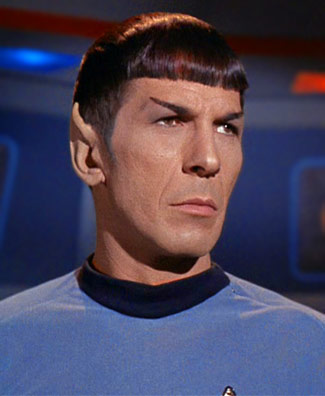
The Importance of Being Spock

When I was young, there wasn’t a lot to choose from in children’s media. This was before the internet and back when there were only a few tv channels. What there was was mostly written for the “average kid.” Those of us who weren’t “average kids” (whatever that even means) didn’t have much chance to see ourselves reflected in the things we watched and read.

As a young person who enjoyed reading books, learning things, and thinking, I didn’t have many role models in my media. “Smart” characters tended to be portrayed as weirdos and outsiders. At best they could be inventive but eccentric cranks like Professor Calculus from Tintin. More often they were comically bumbling know-it-alls like Dr. Bunsen Honeydew from the Muppets or Owl from Winnie-the-Pooh. They were often insufferably arrogant about their intelligence, like Brainy Smurf. This was the image of smartness I saw as a young child: smug, generally useless, and barely tolerated by the people around them. (It’s also true that these characters were invariably male, but that’s a separate issue for another time.)

Then I discovered Star Trek. I can’t remember how old I was, but I was still pretty young when my sister and I stumbled across afternoon reruns of original series episodes on one of the local channels. I was hooked. It was my first exposure to adult speculative fiction, and it opened up a whole new world of storytelling to me, but there’s no question that there was one thing about Star Trek I loved above all else: Spock.

Spock from Star Trek

In some ways, Spock was like the other “smart” characters I had seen before. He was an outsider, an alien on a ship full of humans. He had quirks. He was sometimes razzed on by other characters (especially Dr. McCoy). But despite these things that set him apart, he was emphatically part of the crew, embraced and appreciated by them. His knowledge and intelligence were respected by his fellow spacefarers and often contributed to solving the problem of the episode. Spock was the first time I saw a smart character who was valued for being smart.

Anyone who knew me as a child knows how deeply I identified with Spock. I was Spock for Halloween at least once (and probably more often, though I can’t remember). When teased by my classmates (I wouldn’t say I was bullied, but kids are kids—sometimes people were mean to me, sometimes I was mean to them) I imitated his arch emotionlessness in self-defense. I devoured any kind of Star Trek trivia, but it was always Spock I loved the most.

As I grew older I gathered more role models for people who loved knowing things and whose knowledge was appreciated by those around them, from Sherlock Holmes and Brother Cadfael to Professor McGonagall and Jadzia Dax. But you never forget your first. Spock will always have a special place in my heart because in him I saw the first glimmer of what I wanted to become: someone whose love of books and ideas could become something valuable I could contribute to the world around me. I know I’m not alone in these feelings. I think a lot of the quiet, bookish kids of my generation first saw ourselves in Spock.

We’ve come a long way since then. There’s lots more to choose from for kids’ tv, movies, and books these days. I wonder if that makes a difference, or if there are other touchstone characters for younger generations of thoughtful, curious kids.

What about the rest of you? Who was the fictional character you first looked at and thought: “That’s me?”

In Character is an occasional feature looking at some of our favorite characters from written works and media to see what drives them, what makes them work, and what makes us love them so much.

MCU’s One Hour Dancing Zemo Loop

One unexpected thing to come out of Marvel’s The Falcon and the Winter Soldier—have you seen it, by the way?—is definitely this video clip:

ONE HOUR DANCING ZEMO | Marvel Studios’ The Falcon and The Winter Soldier | Disney+ by Marvel Entertainment on YouTube

Not only is Daniel Brühl’s performance great—he looks bored and baffled, and yet simultaneously slightly entertained, until he seems really to enjoy himself.

But. Baron Zemo. Dancing in a disco! Looped for an hour? Made and uploaded by Marvel itself, not a fan?!?

I think it’s absolutely hilarious, which makes me think either I’m completely out of the cool loop, or Marvel actually did manage to hit the zeitgeist on the nose, or it’s all haphazard. Or all at once, LOL!

Some things are just too silly not to share!

Rules-Lawyering Monarchy

How do you get rid of a monarchy? Getting rid of kings isn’t the hard part (at least in theory, if not always in practice)—get the peasants angry enough, pass out the torches and the pitchforks, then roll out the guillotine when the time comes. No, the hard part is getting rid of the idea of kings. Monarchs cling to power through force, but also through instilling in people the idea that there is something special about kingship, something an ordinary person would never be able to replace. As long as that idea exists, someone can hitch their own ambitions to it.

I’ve written before about how the myths and legends that make up the part of the DNA of modern fantasy literature often have a pro-monarchical bias and about ways of building your fantasy worlds for something other than monarchy. It’s worth noting that we are not the first people to face this problem. The ancient Greeks and Romans also had to grapple with the monarchic parts of their past as they created new ways of life and they found interesting ways of disarming the idea that kings were necessary.

In the early iron age and archaic periods (roughly 900-490 BCE), societies in ancient Greece were small, and power structures were not particularly stable. We get a glimpse of this life in the Homeric epics. The contentious relationships among the assembled Greek kings at Troy and the competition for wealth and power among Helen’s suitors back on Ithaca reflect a world in which power was held by rich warlords competing with each other for preeminence. The Greek word for these warlords was basileus (plural basileis). The word does not exactly match up with what we typically think of as kings: there was more than one basileus in any community, and their power was more personal than institutional, but a basileus was the closest thing early Greece had to a king. Basileus was also the word Greeks used for the kings of other peoples, such as the Lydians and the Persians.

We don’t know much about how the ideologies by which basileis justified their power, but many basileis in mythology were the children of gods or had other kinds special relationships with the divine. Literary and archaeological evidence shows that basileus families maintained the worship of heroic ancestors. These facts point to a religious element: basileis held onto power in part by claiming a vital role in maintaining their communities’ relationships with the gods.

This ideology presented a problem for those agitating for a wider sharing of power, but it was a problem that had a solution. The earliest organized government we know of in Athens (not one we would call democratic, but one that was clearly designed to keep any one person from holding too much power) had an official position dedicated to overseeing religious affairs. That position was called the basileus. We can imagine some frustrated Athenians at some point saying: “So, the gods will only favor us if we have a king? Fine, we’ll call this guy over here ‘king’ and just not give him any real power. Good enough!”

Something similar happened in Rome. In its early history, the city was ruled by a king (in Latin: rex). Later, the kings were replaced with a republican government that, much like the one in early Athens, was specifically designed to keep power from falling into one person’s hands. We know little about the ideology of Rome’s early kings, but later Roman legends gave them religious associations, and it seems that they also asserted a special role in the city’s relationship with the gods. The Roman republic similarly got around this problem by just calling someone else “king.” Specifically, republican Rome had a priestly official whose title was rex sacrorum, meaning “king of the sacred things,” to carry on the religious duties of the old king. This office came with particular limitations intended to make sure that its holder could never make himself into a real king, including a ban on handling weapons and on being present while the Roman army was assembled for war.

Athenians and Romans found was of disarming monarchic ideology by subverting its claims in ways worthy of the weaseliest of rules lawyers.

History for Writers looks at how history can be a fiction writer’s most useful tool. From worldbuilding to dialogue, history helps you write.