Ant-Man’s Unanswered Question

We finally got around to seeing Ant-Man a couple of days ago. I know that movie is so last month and everybody’s moved on to other things, but I have a few thoughts to share. There will be spoilers, just in case you’re even later than me in getting around to this movie.

150820Ant-manI liked Ant-Man. I put it in the middling range of the Marvel moves along with the first and third Iron Man films. It kept me entertained on a hot summer day, it held together a lot better than the noble failure that was Avengers 2, and it didn’t insult me like last summer’s Guardians of the Galaxy. The jokes landed, the characters were interesting, and the story was fun. My strongest impression of the movie, though, is that it kept asking and conspicuously failing to answer one question: Why is Hope not putting on the suit?

The central plot of the movie is the heist to steal and destroy the Yellowjacket weapon prototype before evil corporate genius Darren Cross can unleash it on the world. Inventor Hank Pym recruits good-hearted cat burglar Scott Lang to don the Ant-Man super-shrinking-and-insect-mind-control tech to get the job done, even though Hank’s daughter Hope van Dyne is obviously a better choice. She already knows about the technology and how to use it. She has access to the facility that is the target of the heist. She is smart, cool-headed, and tough. Why do they need Scott?

The movie half-heartedly offers a few possible answers, but it seems to be aware that none of them really holds up.

Because Scott is such an awesomely inventive cat burglar

Eh. The script does the bare minimum job of showing us Scott thinking on his feet. It’s okay, but it’s hardly persuasive. In any case, the Yellowjacket heist is already planned out; not much on-feet thinking required. At best, Scott could be useful on the coms Leverage-style to advise Hope in case of surprises. We really don’t see any of that vaunted inventiveness at play in the heist.

Because Hope needs to stick with Cross during the heist

Apparently not, because she really doesn’t do anything important during the heist besides help a wounded Hank get out of the building. Her presence with Cross doesn’t seem to make any contribution to pulling the heist off.

Because her father is afraid for her safety if she uses the Ant-suit

That’s fine. He can worry. We all worry about the people we care about. Pepper Potts worries about Tony Stark. Laura Barton worries about Clint. That’s not a reason for them not to suit up and get the job done when it matters.

Because she gets to be Wasp in the next movie

Great! Why couldn’t she be Wasp in this movie? “It’s about damn time,” she says as she eyes the Wasp suit at the end of the film. It was about damn time at the start of the film, too.

I give Ant-Man credit for at least tacitly acknowledging that none of these reasons stands up. We need more good female superheroes (and villains, for that matter) on our screens and there’s no good reason why we don’t have them already. I take Ant-Man as an admission from Marvel that they recognize the problem, and that’s a step towards fixing it. Whether they are willing to take the next step of actually giving us the female characters we’ve been waiting for is another unanswered question.

Image: Comic-Con Ant-Man Poster via Wikimedia

In the Seen on Screen occasional feature, we discuss movies and television shows of interest.

Visual Inspiration: Ostrich Riding

Last week, I shared the image of an ostrich cart. There must’ve been random serendipity rays in the air, because this week I happened on a photo of someone actually riding an ostrich:

Man riding an ostrich at the Cawston ostrich farm, South Pasadena, California. Via Elle Decor, June 2014, p. 67.

Cawston ostrich farm. Postcard by Detroit Photographic Company; South Pasadena, California, unknown date. From the collection of Marc Walter, published in An American Odyssey: Photos from the Detroit Photographic Company, 1888-1924, by Marc Walter and Sabine Arqué (Taschen, 2014). Found in Elle Decor magazine, June 2014, p. 67.

Huh. I used to think that the various tallstrider or hawkstrider type mounts in World of Warcraft were based more on fantasy than fact. I’m sure large birds come with a host of training and handling issues, but apparently it’s not as far-fetched as I thought. On the other hand, having grown up two hours south of the Arctic Circle and traveled in Lapland multiple times, seeing reindeer doesn’t make me bat an eye. Just goes to show how our experiences influence our sense of normal. 🙂

The Visual Inspiration occasional feature pulls the unusual from our world to inspire design, story-telling, and worldbuilding. If stuff like this already exists, what else could we imagine?

Hypothetical Rock-ing Doctor Who and Companion

Upon seeing Hayley Atwell declare her desire to be Doctor Who in this tweet

https://twitter.com/HayleyAtwell/status/632269411424927744

Carolyn Cox at The Mary Sue suggested that Atwell’s Doctor be paired with a companion played by The Rock (who apparently is hankering to work with Atwell).

Oh, yes! Where can I throw my money at to make this happen?!

Hey, look! We found a thing on the internet! We thought it was cool, and wanted to share it with you.

The Billion-Dollar Pyramid

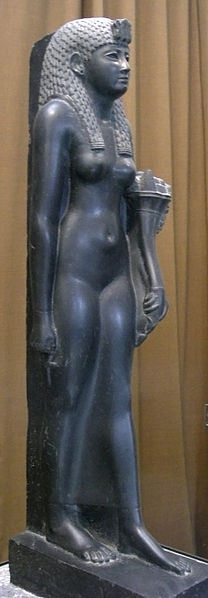
150817PyramidWe all know that the pyramids of Egypt were tombs for the pharaohs. (Yes, yes, and landing pads for Goa’uld spaceships; you can put your hands down now.) Thinking about what it took to build them, though, gives us an idea of what else they were.

The construction of the pyramids is a perpetual favorite subject of cranks and crackpots (Lost technologies of Atlantis! Sound waves!). Even among the more reality-bound, there is no end of theories ranging from the mundane (ramps and sledges) to the reasonably plausible (pulleys and levers) to the unlikely but not impossible (poured concrete). No matter what technique we imagine, however, one thing was definitely required: massive amounts of labor.

What most armchair pyramidologists miss about the problem of megalithic construction is that the physics of moving large stones are very simple. Apply enough force to a mass and it will move. Some things can make the application of force easier: ramps, pulleys, rollers, whatever you’ve got, but in the end it’s just a matter of force versus inertia. No matter how you go about building a pyramid, what you need in the end is the same: muscle power and time. With enough muscle power and time you can build pretty much anything, but labor is expensive. The real problem that would-be pyramid builders have to solve isn’t technological, it’s economic. The real question isn’t “How did they build the pyramids?” but “How did they afford the pyramids?”

Continue reading

Crowdfunding Campaign to Build Minas Tirith for Real

Turns out a group of people in Great Britain is hankering after a real Minas Tirith so much that they started an Indiegogo campaign to fund the building effort:

“We are a team of Tolkien fans who are passionate about creating a beautiful, inspirational and fully-functioning replica of Peter Jackson’s depiction of Minas Tirith, as seen in his Lord of the Rings films.

“We all share a love of Tolkien’s work, and a desire to challenge the common perception of community and architecture. We believe that, in realising Minas Tirith, we could create not only the most remarkable tourist attraction on the planet, but also a wonderfully unique place to live and work.”

Realise Minas Tirith on Indiegogo.

If the project sounds far-fetched to you, rest assured: the team knows it’s a long shot:

“Please only donate within your means, and in the knowledge that this project is a light-hearted venture with virtually no chance of succeeding. […] We make no claim on the image or name of Minas Tirith, and will happily cancel this project should any dispute arise over such.”

Two things come to mind: it’s a fascinating example of 1) how throwing money at something has become an established way to show public support for a project or person, and 2) how the Internet allows people to engage in collective daydreaming across the globe.

Hey, look! We found a thing on the internet! We thought it was cool, and wanted to share it with you.

Gatesmashing

We’re all familiar with gatekeeping: when members of a fandom (or geekishness in general) try to exclude others for not being true fans or real geeks because they haven’t seen/read/played every obscure iteration of the franchise or don’t know every minute detail of the lore. “Oh, you haven’t seen the Holiday Special?” they sniff. “Well, you’re not really a Star Wars fan, then.” “You don’t know how many buttons were on the second Doctor’s costume? Begone, fake Whovian!”

If you’re fortunate enough to have never witnessed or experienced gatekeeping, here’s a few discussions (picked more or less at random) to give you an idea of what it is and why it sucks:

No One Can Deny You Entry to Geekdom, But Some Can Make It Really Hard to Get Through the Door First by Michi Trota on Geek Melange

The Psychology of the Fake Geek Girl: Why We’re Threatened by Falsified Fandom by Dr. Andrea Letamendi on The Mary Sue

A Creator’s Note to “Gatekeepers” by John Scalzi on Whatever

You see what I mean? Gatekeeping is wrong, hurtful, and no fun. And while it’s true that it can be done by anybody to anybody (I’m a straight man and I’ve had my fandom cred challenged by queer women half my age), it is a weapon frequently deployed by the privileged against the un-privileged, in whatever terms those categories may be defined.

Gatekeeping needs to stop. It’s time we all acknowledge that none of us has seen everything and none of us knows everything, even about the things we love the most. No one is any less of a geek or a fan because of the things they don’t know. All it means is there are still things for us to watch and read and play and find out about, and that’s awesome. Seriously, I feel so sorry for anyone who has nothing new left to learn or experience.

And so, I propose a new pastime: gatesmashing! Instead of obsessing over the things we have seen and read and played, let’s proclaim the things we haven’t. Tell us what you’ve never experienced, and tell us proudly. Not a comprehensive list, of course, but the first few things that come to mind.

I’ll go first.

I have never seen:

  • Rocky Horror Picture Show
  • Starship Troopers
  • The Dark Crystal
  • Any Doctor Who starring the first or fifth-through-eighth Doctors

I have never read anything by:

  • Neil Gaiman
  • Terry Pratchett
  • Ursula K. Le Guin

I have never played:

  • Skyrim
  • Minecraft
  • Dragon Age

And the fact that I haven’t doesn’t make me any less of a geek than anyone who has.

Here there be opinions!

May the Force Be with You to the Max

Krishna Shenoi mashed up Mad Max: Fury Road and the Star Wars universe with a surprisingly believable end result:

Road Wars: The Imperator Strikes Back (Mad Max / Star Wars Mashup) by Krishna Shenoi

The 2-minute clip combines material from the existing SW trilogies, Episode VII trailer(s), and Mad Max. Seamless work!

Hey, look! We found a thing on the internet! We thought it was cool, and wanted to share it with you.

Visual Inspiration: Ostrich Carts

Ostrich pulling a cart at the Los Angeles Ostrich Farm. Via William H. Hannon Library, Loyola Marymount University.


Ostrich pulling a cart at the Los Angeles Ostrich Farm. Postcard by unknown; Lincoln Park, Los Angeles, California, 1919. From the Werner von Boltenstern Postcard Collection; Department of Archives and Special Collections, William H. Hannon Library, Loyola Marymount University. In public domain.

Why do fantasy stories so often employ equines as beasts of burden, when you could breed large birds for the task? In our world, humans do have a long history with the horse family, but who’s to say that in another, more SFFnal one you couldn’t find giant versions of armadillos, capybaras, or rats used for transportation? Or faster, large-scale chameleons?

The Visual Inspiration occasional feature pulls the unusual from our world to inspire design, story-telling, and worldbuilding. If stuff like this already exists, what else could we imagine?

Labor

150810oxcartThe majority of the stuff that needs to get done in an agrarian society is basic manual labor: primarily farm work, but also things like construction, building and road maintenance, mining, carrying, housework, etc. Any functioning pre-industrial society needs lots of workers to do all that work, but there are many different kinds of workers, some of which are not so familiar to us today. Some of these kinds of workers had it much better than others.

Here’s a list of possibilities, by no means exhaustive, arranged roughly in order from worst to best conditions.

Continue reading