On First Contact Communication in Arrival

The movie summer and early fall have been rather dry, as has the actual weather here. I’m eagerly awaiting November when Doctor Strange (six weeks to go!) and Arrival (seven weeks!) open a hopefully more thirst-quenching end of the year. And the more I hear about Arrival, the more intriguing it sounds.

Mark Liberman at Language Log was asked to provide a linguist’s perspective on first-encounter communication strategies. His post is both lengthy and enlightening.

RA Olea Flickr Sign Language Friend

Specifically, he answers the question “An alien is standing in front of you, apparently peaceably. What is the first thing you try, in an attempt to communicate with it?”

The meatiest bit is this:

“There’s no guarantee that their senses and their modes of action are going to be a good fit to ours. They might communicate via skin color changes like cuttlefish, except maybe theirs are only visible in the ultraviolet. Or maybe they can modulate and sense electric fields, like electric eels. They might use gestural and postural changes in a body that’s very different from ours, or rapid morse-code-like modulations of sound at a dozen different frequencies independently and simultaneously. Maybe pheremone-like chemical signals are a crucial part of the process.

“Whatever the modalities of communication, it’s quite likely that we won’t be able to imitate them without building some specialized apparatus. And it’s quite possible that it would be hard even to recognize the fact that they’re communicating with one another, before we even get to the point of trying to understand and imitate.

“More likely, the process would be:

(1) Persuade them not to kill us, and vice versa;
(2) Persuade (or coerce) them to let us observe their within-species interactions, or vice versa;
(3) Design and build systems for recording, analyzing, and synthesizing their communicative signals (or wait for them to do the same thing for ours);
(4) Use those systems to engage in a sort of “monolingual demonstration”, and hope that we can come to understand them and communicate with them to some extent.”

According to Liberman, Ted Chiang’s short story “Stories of Your Life” (that the movie is based on) also mentions “in a mild way” a few of these issues:

“[Protagonist, linguist Dr. Louise Banks] needs to use a ‘sound spectrograph’ to analyze the aliens’ utterances, which sound to her ears ‘vaguely like […] a wet dog shaking the water out of its fur’, and she needs recording and playback to communicate in the other direction, since they don’t recognize her attempts to imitate their speech.”

Visit Language Log for more.

On the basis of the Arrival trailers released so far it’s hard to say whether the movie will be focusing on linguistics specifically, or whether the intellectual mystery will be rounded up into a more generic academic exercise. It does look like the script at least attempts to stay with Chiang’s story. Like Liberman, I’m very interested to see how much of the linguistics makes it on screen.

Image: sign language : friend via Flickr (2008; colored pencil on charcoal paper; by R.A. Olea) CC BY 2.0

On, of, and about languages.

New Edition of Alice in Wonderland with Salvador Dalí

In 2015, commemorating the 150th anniversary of Alice’s Adventures in Wonderland, Princeton University Press reprinted a color edition with illustrations by Salvador Dalí.

William Bennet Modern Down the Rabbit Hole DALI1003

Surreal, almost psychedelic, and rarely seen before the reprint, the original gouaches were first published in 1969.

William Bennet Modern The Mock Turtle's Story DALI1011

The color use is amazing, and the surrealist style fits elements of the story. However, I can’t escape the feeling that had I seen these illustrations as a kid, they would’ve given me nightmares.

Found via Colossus and Brain Pickings.

Images: Down the Rabbit Hole and The Mock Turtle’s Story via William Bennett Gallery (1969; heliogravures of original gouaches; by Salvador Dalí)

Out There is an occasional feature highlighting intriguing art, spaces, places, phenomena, flora, and fauna.

Putting Trigger Warnings on my Syllabi

160303booksThe question of whether we, as professors, should include trigger warnings on our course syllabi has been bubbling in academia for a few years now. I’ve been uncertain what to do and my university’s administration has not taken a public position. After wide reading and long thought, I’ve decided to add a content note to my syllabi. Here is how it goes:

This course involves topics that may evoke strong reactions. These topics include war, violence, slave-holding societies, non-consensual sexual activity, and various forms of social inequality, but other topics may come up in the course of class discussion. I will do my best to inform you about what upcoming readings will cover, but it will not always be possible to predict what topics will arise in discussion or what associations may arise for you as you read.

It is your responsibility as a student to complete all assigned coursework and readings and to participate in class discussions. It is my responsibility as your professor to help you overcome any obstacles to doing so.

If you anticipate that some topic may be difficult for you, or if you discover that an assignment provokes a reaction that prevents you from continuing your work as a student, please come see me to discuss it. If a topic arises in class discussion that makes you too uncomfortable to remain in class, you are welcome to leave the room until you feel ready to return. If you need to leave the room during class discussion, please come and see me afterwards when you feel ready to do so. In either case, we will work together to find alternative ways for you to do the coursework.

You are also welcome to seek support and guidance outside of class. Student Counseling Services is at your disposal, as is Campus Spiritual Life. You do not have to discuss difficult emotional subjects with me if you do not wish to, but if I don’t know that something is creating an obstacle to your coursework, I can’t help you find a way around it.

Continue reading

Labyrinth Released 30 Years Ago

Jareth: “You remind me of the babe.”

Goblin 1: “What babe?”

Jareth: “The babe with the power.”

Goblin 2: “What power?”

Jareth: “Power of voodoo.”

Goblin 3: “Who do?”

Jareth: “You do.”

Goblin 4: “Do what?”

Jareth: “Remind me of the babe.”

Labyrinth

This year marked the 30th anniversary of the release of Labyrinth by director Jim Henson. This past weekend FantomEvents ran some special Labyrinth showings in theaters. We didn’t go due to schedule issues (=work, work, work) but instead watched it at home.

As a geeky kid of the 80s, I have very fond memories of the movie. It’s mostly because of its visuals, but I do like the fantastic lines—great for learning English with—and voice acting as well.

Sarah: “Did you say ‘Hello’?”

Worm: “No, I said ‘allo’, but that’s close enough.”

(The worm was one of my very first tastes of dialectal / regional English!)

If my memory serves, the puppetry effects in Labyrinth are mostly better than in The Dark Crystal, Jim Henson’s previous fantasy movie. (Note to self: Find out if I can rent / stream The Dark Crystal. Local library to the rescue!)

Some of the songs, too, have become long-time favorites, especially “As the World Falls Down” by David Bowie.

Ballroom Scene – Labyrinth – The Jim Henson Company

As a kid, I didn’t really understand how someone could like Bowie’s music, but that one song opened my eyes. (Ears?) I still love it, and the ballroom scene with its floating props.

Bonus find: Stephanie at Make and Tell shares her “the babe with the power” wall art printable.

Stephanie Make and Tell babewiththepower_printable_mockup2

What’s your favorite Labyrinth memory?

Images: Labyrinth DVD case by Eppu Jensen. The babe with the power printable by Stephanie at Make and Tell.

This post has been edited.

In the Seen on Screen occasional feature, we discuss movies and television shows of interest.

Making The Courtesy of the Golden Hall

Here’s a look at how we made yesterdays The Courtesy of the Golden Hall.

The menu

  • Rye porridge
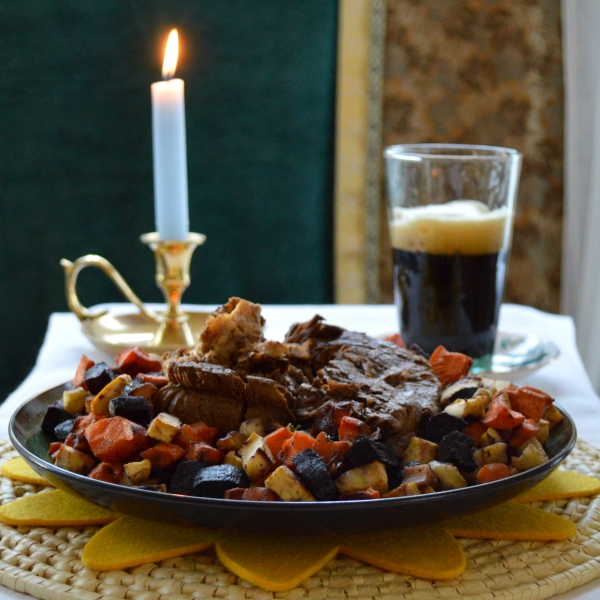
  • Braised beef
  • Roasted vegetables
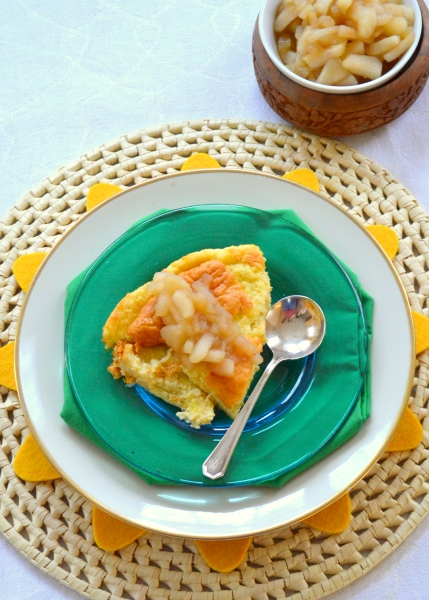
  • Saffron and cream pancake
  • Apple compote

erikchef1Tolkien gives us only a few hints about the food of Rohan, but they are enough for us to flesh out the picture.

Dinner9 Main2

There are several references to meal, in the sense of coarsely ground flour. Éomer mocks Wormtongue by questioning whether anyone would trust him with a sack of meal (3.6) and Théoden warns the herald of Minas Tirith to have supplies ready for the Rohirrim when they ride to Gondor’s aid, for to travel light and fast they can carry only meal and water enough to last until they reach the battlefield. (5.3) Coarse flour makes poor bread and, significantly, bread is never mentioned in Rohan. Every other people in Middle Earth, from Hobbits to Orcs, has some kind of bread, but not the Rohirrim, which suggests they are making something else with their grain: porridge. Porridge is a staple of many northern European cultures like those that inspired the Rohirrim. The deep, earthy flavors of rye make for a very satisfying porridge to start our dinner.

The herds of Rohan are prominently mentioned, although what exactly they are herds of is never specified. (2.9, 3.2) Since cattle were highly prized across ancient northern Europe, beef seems like the right meat to serve at the royal table. Braising is an excellent way to cook large joints of meat and could be done in a cauldron over a low fire in a mead hall. Root vegetables are also a staple of northern European cuisines and make an good accompaniment to braised beef.

The saffron and cream pancake recipe comes from a Viking source and shows the extent of the trading networks the Vikings were engaged in, connecting them with the distant shores of the Mediterranean where saffron was harvested. It seems an appropriate way to honor the friendship between Rohan and Gondor to suggest that the Rohirrim had access to a few southern luxuries as well. The apple compote we serve with it is based on Anglo-Saxon recipes.

Continue reading

Dining in Middle Earth: The Courtesy of the Golden Hall

“At the King’s board sat Éomer and the four guests, and there also waiting upon the king was the lady Éowyn. They ate and drank swiftly.”

LotR Dinner9 Main

This month we visit the Golden Hall of Meduseld in Rohan. Our food reflects the northern roots of Tolkien’s Rohirrim, drawing on Scandinavian and Anglo-Saxon traditions.

LotR Dinner9 Starter

We start with a hearty rye porridge, followed by braised beef and roasted vegetables. For dessert, a rich saffron and cream pancake served with apple compote.

LotR Dinner9 Dessert

The table setting is built with multiple colors, layers, and lush textiles. The colors refer to the expansive grasslands of Rohan, and gold-colored or metallic-sheen details add opulence. The dishware turns showier as the meal progresses, moving from a plain white bowl to a plate with brown and green glazing, and ends with a pale teal handblown glass plate on a gold-rimmed white charger.

Dinner9 Runner and Ribbons2

Check out what’s it about in the introduction, or read the how-to!

Images by Eppu Jensen

Geeks eat, too! Second Breakfast is an occasional feature in which we talk about food with geeky connections and maybe make some of our own. Yum!

Glimpse of Behind the Scenes Driving in Fury Road

A short video compilation of raw footage from director George Miller’s Mad Max: Fury Road has surfaced:

Fury Road – Crash & Smash via ESPORTS TV

Included are shots of practice runs of some of the vehicle stunts. The skill of those production designers, explosion experts, cinematographers, stunt people, and drivers is staggering.

Found via io9 / Gizmodo.

Elsewhere in the Fury Road related Internet, there’s this music video by violinist, dancer, and artist Lindsey Stirling:

The Arena – Lindsey Stirling

It comes from her third full-length album, Brave Enough. I know Stirling from her Star Wars mashup video with Peter Hollens.

Awesome, awesome, awesome.

Hey, look! We found a thing on the internet! We thought it was cool, and wanted to share it with you.

Shadows of Star Wars

A puppetry troupe in Malaysia has been working to revive interest in the local traditional shadow puppet theatre, called wayang kulit, by performing a version of Star Wars using classical techniques of puppet-building, storytelling, and presentation. The performance, called Perperangan Bintang, retells the beginning of A New Hope, fusing elements from the movie with elements from the wayang kulit repertoire, which also revolves around tales of a young hero who must free a princess from an evil warlord. Here Sangkala Vedah confronts Puteri Leia.

Sangkala Vedah and Puteri Leia, via The Star

And here are two more characters you might know.

Si P-long and Ah Tuh, via Pinterest
Si P-long and Ah Tuh via Pinterest

Here’s a video about the performance. Skip to 3:45 to see a familiar character make an entrance in style.

PBWK (Peperangan Bintang Wayang Kulit) preview- 18th Oct 2013 via ActionTintoy-Tintoy Chuo

It’s great to see how a modern story can be interpreted through traditional arts.

Hey, look! We found a thing on the internet! We thought it was cool, and wanted to share it with you.

Ginormous List of Oncoming SFF Screen Adaptations

Natalie Zutter at Tor.com has made a list of SFF adaptations currently in the works either for tv or cinema.

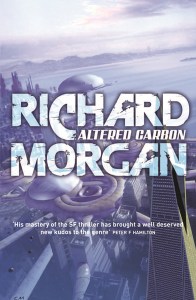
Richard K Morgan altered-carbon_UK_Pb

Such a variety of projects! It really seems like a golden age for genre adaptations, like Zutter says. Head on to Tor.com for the full list.

I’m most interested in Arrival (based on a story by Ted Chiang and out very soon now!), Altered Carbon by Richard K. Morgan, and Lilith’s Brood by Octavia E. Butler. It would also be great to see Ann Leckie’s Ancillary series, Red Mars by Kim Stanley Robinson, and Daniel José Older’s Bone Street books on screen.

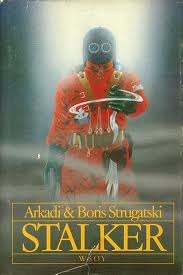
It was also intriguing to see Roadside Picnic by Arkady and Boris Strugatsky on the list, for I’m not used to seeing Eastern bloc SFF authors in the Anglo-American market. According to the all-knowing Internets, Roadside Picnic was turned into a Russian SFF art film Stalker in 1979. I never saw that, but did read the Finnish translation (Stalker: huviretki tienpientarelle) when I was too young to really understand it, so it would be nice to refresh my memory.

Goodreads Strugatski Stalker

Besides works in progress mentioned in Zutter’s list, I’m looking forward to OtherLife. It’s adapted from Kelley Eskridge’s Solitaire (2002), which I read only this year and loved. Unfortunately, OtherLife seems currently to have paused in post-production. We live in hope, though! (I’ve been following the story of its development on Eskridge’s blog; do visit for a glimpse of indie movie projects from a writer’s perspective.)

Anything on your radar that especially tickles your fancy? Do share!

Images: Altered Carbon via Richard K. Morgan. Stalker via Goodreads

Hey, look! We found a thing on the internet! We thought it was cool, and wanted to share it with you.

The Neverending Story Has an Anniversary Doodle

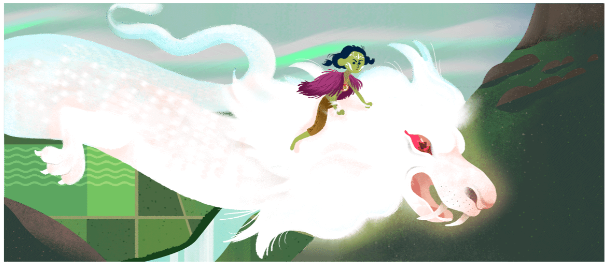
Google tells me with a lovely doodle that it’s the 37th anniversary of the first printing of The Neverending Story by Michael Ende.

Google Doodle Falkor from Neverending Story

Originally published in German on September 01, 1979, Die unendliche Geschichte was translated into Finnish in 1982 (and apparently English in 1983, with the film adaptation in 1984). I can’t quite remember if I ever read it. At the same time, I want to recall a gorgeous tome with both green and red print, so I guess I must at least have been handling the Finnish translation at one point.

Finnish translation of The Neverending Story (Tarina vailla loppua) by Katja Jalkanen at Lumiomena

(No, I did not imagine the green and red print!)

While the movie version isn’t terribly well-made nor the first I saw in a theater, it is one of the first screen adaptations that made me realize I was a geek even if I didn’t have a word for it at the time. It’s purely for nostalgia that I own and occasionally rewatch it. I’m now wondering whether I should’ve bought the book instead.

Images: Falkor from Neverending Story by Sophie Diao via Google Doodle. Finnish translation of The Neverending Story (Tarina vailla loppua) by Katja Jalkanen at Lumiomena

This post has been edited for style.

ICBIHRTB—pronounced ICK-bert-bee—is short for ‘I Can’t Believe I Haven’t Read This Before’. It’s an occasional feature for book classics that have for some reason escaped our notice thus far.