Myths Are Fanfiction

If you’re like me and a lot of my students, you grew up with Greek mythology. The monster-filled adventures of Odysseus, the (somewhat bowdlerized) philandering of Zeus, the just-so story of Echo and Narcissus, and others were part of my childhood reading. Myths seemed like any other sort of story, with well-defined characters and plots. But there’s something different about mythology. We can’t think of it the same way we think of other kinds of literature. Mythology, in fact, has more in common with fanfiction than with literature as we usually think of it. Greek mythology is one of the best documented and most widely known mythic traditions in the West, so it makes a useful example. When you dig into the primary sources of Greek mythology you find that it is stranger, more complicated, and less cohesive than it seemed when I was a child.

Defining exactly what makes a story a myth can be surprisingly difficult, but if we take as our starting point stories about fictional characters who are larger than life and more than human, we have a good chunk of Greek literature and art to work with. The literary versions of myths that have come down to us must themselves have been based on oral traditions passed down through generations, retold and reimagined in every new performance. There is no canon of Greek mythology. There is no original text that we (or the ancient Greeks themselves) can point to and say: “This story is the correct one; anything that conflicts with it is wrong.”

The nearest thing to a canonical text in ancient Greek culture was the two epics attributed to Homer, the Iliad and the Odyssey. Neither of these epic poems was written down until the sixth century BCE, although some version of them circulated orally for hundreds of years prior. These poems were themselves just elaborated snippets of a much broader oral tradition which encompassed the whole story of the Trojan War and its heroes’ return to Greece. There was, however, some collective sense of how the epics ought to go. We know this because of the scandal caused by Peisistratus, the tyrant of Athens, who was accused of tampering with the Iliad by inserting a line to suggest that the nearby island of Salamis ought to belong to Athens. On one hand, the fact that such a minor tweak to the poem caused an uproar suggests a degree of reverence for the text. On the other hand, it is clear that the text could be tweaked. We have no idea how many changes the text of the epics may have gone through over the centuries that went by unremarked because they were less politically dicey.

If the Homeric epics were viewed with a certain reverence by the ancient Greeks, the same is not true of our other major sources of mythic stories. Our knowledge of Greek myth mostly comes from the literary productions of a few particular places and times. These works were regarded as literature, free to be debated, reinterpreted, or ignored. Apart from the oral traditions codified the Homeric poems, these include:

  • Athenian drama, mostly written in the fifth century BCE at a time when Athens was a major economic, military, and political power in Greece, the leader of an Aegean empire known as the Delian League, and wrapped up in ongoing conflicts with Sparta, Thebes, and the Persian Empire.
  • Poetry and prose composed in Hellenistic Alexandria, much of it by scholars working at the Library, which compiled and retold stories from earlier Greek traditions as part of the Ptolemaic kings’ propaganda program celebrating their links to classical Greek culture.
  • Roman poetry of the late republic and early empire, composed at a time when Roman society was in crisis and different factions within the elite were competing for power.

There are significant works of art and literature not from these times that add to our knowledge of Greek mythology, but much of what we know comes from one of these clusters. Each one represents a time of fraught cultural and political tensions, and these tensions are reflected in the literature of the period. Fifth-century Athenian drama often portrays Athens as a place of wisdom and sound democratic government while painting Athens’ major rival Thebes as a chaotic city of violence and tragic folly. Written at a different time and in a different context, Roman versions of mythic stories, such as Vergil’s Aeneid, position the Romans as worthy heirs to the glory of ancient Greece.

The works of these different periods also reflect different literary interests. Athenian comedy often took heroic figures from myth and put them into ridiculous situations for laughs. The Alexandrian authors liked to show off the breadth of their learning by tying together disparate characters and tales into grand narratives, or retelling familiar stories from the point of view of minor characters. The Roman poet Ovid played to the sexual culture of his day by composing a collection of imaginary love letters between famous mythic couples.

All of these variations on mythic tales depended on an audience who already knew the stories and characters that were being referenced. They could also end up representing wildly different interpretations of the same events or figures. Part of the fun for ancient readers and theatre-goers was recognizing familiar stories told in a new way. In this respect, mythology worked the same way fanfiction works today. Whether it’s a passionately rendered love scene between Captain Kirk and Mr. Spock, a quippy duel between Batman and Iron Man, or the adventures of Aragorn and Galadriel’s secret love child, the fun of fanfic comes in taking the stories we have in common and doing something new with them—sometimes something inspired by the social and political context around us, and sometimes just for the delight of bringing a favorite character back on the stage for an encore.

The fragmentary nature of the literary record from antiquity means that when we try to put together the narrative of a certain character or event from Greek mythology, we are often cobbling together bits and pieces of sources from many different genres, written centuries apart on different continents for widely varying audiences and purposes. The fact that we are able to make any sense out of these stories at all is a testament to how much the ancient Greeks and those who learned their stories loved their myths and enjoyed retelling them. But whenever we deal with mythology—Greek or otherwise—we have to remember that what we are dealing with is a wonderfully strange mishmash of stories, none of it canonical as we understand the term today, but all of it lovingly retold by generations of people who made the stories their own.

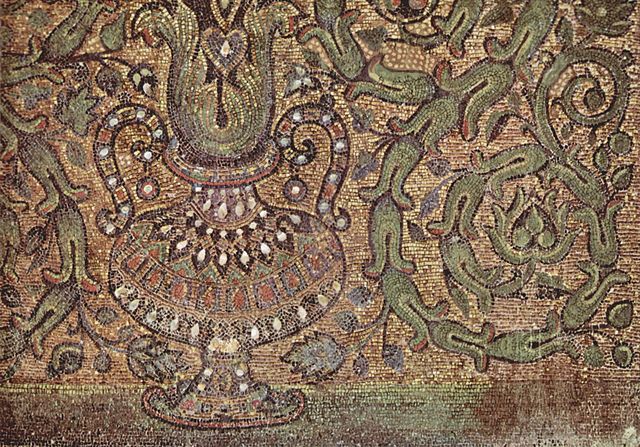
Image: Mosaic of Vergil with the muses of history and tragedy, photograph by Giorces via Wikimedia (currently Bardo Museum, Tunis; 3rd c. CE; mosaic)

Story Time is an occasional feature all about stories and story-telling. Whether it’s on the page or on the screen, this is about how stories work and what makes us love the ones we love.

Rating: Elementary, Season 6

Season 6 was originally intended as the final season of Elementary, and it would have been a strong season to end on if the show had not been unexpectedly renewed for a short seventh season. Here’s our take on season 6.

  1. “An Infinite Capacity for Taking Pains” – 6
  2. “Once You’ve Ruled out God” – 8.5
  3. “Pushing Buttons” – 5.5
  4. “Our Time Is Up” – 7
  5. “Bits and Pieces” – 8
  6. “Give Me the Finger” – 7
  7. “Sober Companions” – 2.5
  8. “Sand Trap” – 5.5
  9. “Nobody Lives Forever” – 4
  10. “The Adventure of the Ersatz Sobekneferu” –4
  11. “You’ve Come a Long Way, Baby” – 5
  12. “Meet Your Maker” – 7
  13. “Breathe” – 8
  14. “Through the Fog” – 8
  15. “How to Get a Head” – 6.5
  16. “Uncanny Valley of the Dolls” – 6
  17. “The Worms Crawl in, the Worms Crawl out” – 6
  18. “The Visions of Norman P. Horowitz” – 7
  19. “The Geek Interpreter” – 7.5
  20. “Fit to Be Tied” – 2
  21. “Whatever Remains, However Improbable” – 3

The average rating for this season is 5.9, which is pretty strong, but also a little misleading, as averages can be. A few bad episodes drag down what is otherwise mostly a good to very good season.

The problem with this season is, as it has been in previous seasons, the ongoing arc story. This time it’s Michael, a fellow addict who befriends Sherlock, then turns out to be a serial killer who is using the cat-and-mouse game with Sherlock as a substitute high to stay off drugs. Desmond Harrington gives an excellent performance as Michael, and the interplay between him and Sherlock is better handled than in most mystery series where the heroic detective faces off against a serial killer, but we are tired of serial killer stories altogether, especially stories about serial killers who have unhealthy emotional attachments to the detectives hunting them. The shadow of Professor Moriarty looms so large over the legacy of Sherlock Holmes that many writers forget that the professor was no more than a convenient plot device to kill off a character that Conan Doyle had gotten tired of writing. Holmes has never been at his best when chasing an enemy but rather when untangling a mystery, and that fact is as true today as it was a century ago.

On the other hand, the non-arc stories this season are some of the best ever written for the series. It looks like the writers pulled out all the stops for what they believed to be their last season. Many episodes are richly complicated mysteries that unfold through surprising twists and turns. Our highest rated episode this season, “Once You’ve Ruled out God,” at 8.5, begins with a murder by lightning gun, ends with a daylight diamond heist, and goes through stolen plutonium, neo-Nazi prison gangs, and terrorist threats to midtown Manhattan along the way. Your average television mystery series would be content to take any one of those ideas and make a whole episode out of it, but Elementary barely slows down to take a breath as this exhilarating episode rockets form one big thing to the next.

Other highly-rated episodes are similarly daring in the inventive problems they offer up for Sherlock and Joan. “Bits and Pieces” opens with Sherlock carrying a severed head with no memory of where he got it, “Breathe” finds Sherlock and Joan investigating the death of a professional assassin, and “Through the Fog” has a suspected biological attack on the police station as cover for a more daring crime. All these episodes come out at an excellent 8.

This season ends with Sherlock banished from the US, but carrying on his partnership with Joan in London, what would have been a fitting end for our characters. We hardly regret getting a little bit more of such an excellent series as Elementary, but if season 6 really had been the end, it would have been a final season to be proud of.

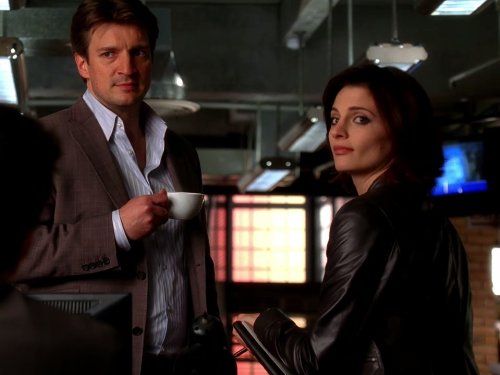
Image: Sherlock, Joan, and Detective Bell from “Sand Trap” via IMDb

In the Seen on Screen occasional feature, we discuss movies and television shows of interest.

Top Five Posts for 2019

That’s 2019 done and dusted. Here are this year’s posts that got the most views:

  1. Behind the Name: Erebor Erik’s post about the possible linguistic roots behind Erebor, the Lonely Mountain of the Dwarves in Tolkien’s Middle Earth.
  2. Spring 2019: Tolkien Exhibition at The Morgan in NYC Eppu’s post on the exhibit in early 2019 including letters, photographs, and other documents related to Tolkien’s life and work.
  3. Disney Princess Cosplayers Wearing Mandalorian Armor Eppu’s post sharing some creative cosplay blending Disney princesses with Star Wars bounty hunters.
  4. An Example of the Infinite Possibilities of Writing Systems: Mandombe Eppu’s post on a writing system inspired by the look of bricks in a wall.
  5. The Graceful Curves of the Vogelherd Horse Eppu’s post sharing an image of a beautiful prehistoric carving of a horse.

Some of our old posts remain perennial favorites, too. Here are the overall top five Co-Geeking posts that people viewed in 2019:

  1. Do-It-Yourself Fantasy Place Name Generator Erik’s name-generating technique from back in 2015 still gets a lot of attention. Apparently a lot of you out there are still making up names for things!
  2. Custom is King Erik’s translation of a favorite passage from Herodotus’ Histories, posted in 2017.
  3. Hogwarts Dueling Club Tablecloth Transformed into Wall Hanging Eppu’s post about a home-made version of the moon-phase dueling cloth from Harry Potter, posted in 2016.
  4. Sean Bean on the LotR Joke in The Martian Eppu’s 2015 post on Finland’s Yle News interview with the delightful Sean Bean on the Lord of the Rings joke in The Martian. Such a treat, and still well worth watching today.
  5. Greek Myth, Etruscan Tomb Erik’s post from 2017 about the multicultural connections of a wall painting from ancient Etruria.

Thanks, all, for coming by this year. We hope you’ll drop in again in 2020.

Messing with numbers is messy.

Yoik at Eurovision

As winter takes hold around here, we turn our thoughts to the far north, to lands of snow, reindeer, and northern lights. We’ll leave you with a couple of examples of yoik, a distinctive Sámi musical tradition. Songs featuring yoik have twice made it to the finals of the Eurovision Song Contest. The first was the Norwegian song “Sámiid ædnan” from 1980, performed by Sverre Kjelsberg and Mattis Hætta.

Sámiid ædnan – Norway 1980 – Eurovision songs with live orchestra via escLIVEmusic1

The next one was “Spirit in the Sky,” also from Norway, performed by KEiiNO in 2019.

KEiiNO – Spirit In The Sky – Norway – National Final Performance – Eurovision 2019 via Eurovision Song Contest

We’re vacationing for the rest of the year. See you in 2020. Happy New Year!

An occasional feature on music and sound-related notions.

History for Writers Compendium: 2019

History for Writers explores world history to offer ideas and observations of interest to those of us who are in the business of inventing new worlds, cultures, and histories of our own. Here’s where we’ve been in 2019:

Ethnicity and identity

Food

Warfare

Social structures

Spooky things

Fun with history

Join us in 2020 for more history from a SFF writer’s perspective.

History for Writers is a weekly feature which looks at how history can be a fiction writer’s most useful tool. From worldbuilding to dialogue, history helps you write.

Making a Mark

Some things never change. For instance, there will always be people who feel the need to leave their mark wherever they go. The graffiti in this image comes from the temple of Isis, originally located on the island of Philae in the Nile River in southern Egypt (since moved to the nearby island of Agilkia because of the damming of the Nile). The temple to Isis and other buildings were constructed at Philae by pharaohs in Egypt’s Late Period, between the eighth and fourth centuries BCE, and the Macedonian Ptolemaic kings who ruled Egypt between 323 and 30 BCE continued to build there. During this period, Philae marked the southern boundary of Egypt. Garrisons of soldiers were stationed there, and it was also a site of pilgrimage not just for Egyptians but for people from the larger Mediterranean world as well as from farther up the Nile in Africa. Under Roman rule, Philae continued to be an important religious site, and soldiers were stationed at a frontier post nearby.

Many people came to Philae for many reasons, and the temple is filled with inscriptions left by visitors. This one, for example, was carved in honor of the Nubian sun god Mandulis. A companion inscription dates the graffiti to 394 CE, which makes this the last known hieroglyphic inscription carved in ancient Egypt.

Inscription of Esmet-Akhom, photograph by A. Parrot via Wikimedia (Philae; 394 CE; inscription in stone; by Nesmeterakhem)

Later tourists got in on the action, too, like Bauerhorst and Brehm, two European visitors who left their marks in 1851.

Insciptions by Bauerhorst and Brehm, photograph by Michael Brehm2 via Wikimedia (Philae; 1851 CE; inscription in stone)

This one may look like it comes from the Roman period, but B. Mure is not a Roman name. It may have been left by Benoit Mure, a French homeopath who traveled in Egypt in the mid-1800s promoting homeopathy.

Inscription of B. Mure with addition, photograph by Ad Meskens via Wikimedia (Philae; c. 1850 CE; inscription in stone)

Another thing you can always count on is smartasses. After Mure left his mark at Philae, whenever that was, someone else came along and added a Latin inscription stultus est, “is an idiot” below his name.

History for Writers looks at how history can be a fiction writer’s most useful tool. From worldbuilding to dialogue, history helps you write.

Rating: Elementary, Season 5

Season 5 marks a return to form for the excellent mystery series Elementary. Here’s what we thought of this season’s episodes:

  1. “Folie a deux” – 5
  2. “Worth Several Cities” – 6
  3. “Render, and then Seize Her” – 6.5
  4. “Henny Penny the Sky is Falling” – 7
  5. “To Catch a Predator Predator” – 6.5
  6. “Ill Tidings” – 6.5
  7. “Bang Bang Shoot Chute” – 5
  8. “How the Sausage Is Made” – 6
  9. “It Serves You Right to Suffer” – 3
  10. “Pick Your Poison” – 6
  11. “Be My Guest” – 8
  12. “Crowned Clown, Downtown Brown” – 6
  13. “Over a Barrel” – 7.5
  14. “Rekt in Real Life” – 8
  15. “Wrong Side of the Road” – 6
  16. “Fidelity” – 9.5
  17. “The Ballad of Lady Frances” – 5.5
  18. “Dead Man’s Tale” – 7.5
  19. “High Heat” – 6
  20. “The Art of Sleights and Deception” – 5.5
  21. “Fly into a Rage, Make a Bad Landing” – 6
  22. “Moving Targets” – 6
  23. “Scrambled” – 4.5
  24. “Hurt Me, Hurt You” – 4.5

Season 5 builds on the series’ strengths: the unraveling of complicated mysteries and the growth of the friendship between Sherlock and Joan as complicated people. The average rating for this season is 6.2, the best since season 1, and the continuing overall quality of the series shows in our individual ratings. Only one episode falls below 4, our unofficial cutoff point for being worth rewatching, and a lot are in the 6-8 range of not extraordinary but well done.

The only real drag on this season is the arc story about Shinwell, an ex-gang member former patient of Joan’s who may or may not be trying to go straight. This arc never lives up to its potential and ends up being an unsatisfying shaggy dog story.

The one real disappointment of an episode this season is “It Serves You Right to Suffer,” at 3, mostly because it is primarily concerned with Shinwell’s story. The episode revolves around a shady FBI agent and it never grows into anything interesting.

By contrast, our favorite episode of the season, “Fidelity,” coming in at 9.5, does a much better job of playing into the series’ longer story arcs. “Fidelity” is the second half of a two-part episode, after “Wrong Side of the Road,” in which Sherlock and Joan, along with Sherlock’s former protege Kitty, investigate a series of deaths that seem to be linked to a traffic accident in Britain years earlier.

Another touch we appreciate this season is that a number of episodes end with living victims being rescued, which is a nice change in a series mostly focused on solving murders. Episodes like “Be My Guest” and “Rekt in Real Life” have happy endings in which people in danger are found safe. Marcus’ girlfriend Chantal, after being assaulted at the end of “The Art of Sleights and Deception,” makes a full recovery, which is a better fate than often happens to detectives’ loved ones and people of color on television.

All around, it’s another satisfying outing with Holmes and Watson.

Image: Sherlock and Joan at work on a case, from “Folie a Deux” via IMDb

In the Seen on Screen occasional feature, we discuss movies and television shows of interest.

Green and Orange Iridescent Turkeys

A lot of us in the U.S. and with U.S. connections are going to sitting down to a turkey dinner this week. A lot of us who live in the woodsier parts of North America also know that the farm-raised domesticated turkeys we put on the table are not the only kind of turkey out there. We have local flocks of wild turkeys around us who periodically come through our yard and entertain us with their antics. (We’re less entertained by the, shall we say, “fertilizer” they leave behind, but that has its uses, too.)

But did you know that there is a variety of wild turkeys found in the Yucatan Peninsula that has blue heads and irididescent turquoise-green and bronze-orange plumage? I didn’t until I stumbled across a reference to them this week. Look at these beauties!

Ocellated turkey, photograph by George Harrison via Wikimedia
Ocellated turkey, photograph by TonyCastro via Wikimedia

Ocellated turkeys, as they are called, are an important part of the local cuisine in addition to being extraordinary to look at.

The next time you’re writing a fantasy world and looking to spice up the local fauna, why not add some big shimmery-winged birds–that could end up roasted or stewed on the dinner table, too?

Out There is an occasional feature highlighting intriguing art, spaces, places, phenomena, flora, and fauna.

A Gift of Water

Sometimes the smallest gestures can mean the most, even to people who already have a lot. Here’s a story told about the Persian King Artaxerxes II and how he graciously received a humble gift.

Once when people were presenting him with various gifts along the road, a poor farmer who could come up with nothing else at the moment ran to the river, scooped up water in his hands, and offered it to the king. Artaxerxes was so delighted that he sent the man a golden cup and a thousand darics.

– Plutarch, Life of Artaxerxes 5.1

(My own translation.)

A daric was a golden coin worth about a month’s pay for a soldier or skilled artisan. A thousand darics was an unimaginable fortune to a poor farmer.

Like most such anecdotes, this story may or may not be true. Plutrach tells it as an illustration of Artaxerxes’ good-natured personality. Still, it makes a good illustration of the point that what matters isn’t always how much you can do for other people but your willingness to do what you can.

Serving exactly what it sounds like, the Quotes feature excerpts other people’s thoughts.

The Sanity of Crowds

The Roman satirist Juvenal complained that all the common people of Rome cared about was “bread and circuses,” and as long as they were fed and entertained they didn’t care about politics. Some modern scholars have taken Juvenal at his word (always a risky thing to do with a satirist) and seen the people of Rome as an easily placated rabble. There is another way of thinking about bread and circuses (which, in Rome, meant chariot races), though: they were not a sop to keep the people complacent but rather what the people expected and demanded of their government.

The Roman emperors originally rose to power by presenting themselves as champions of the poor and downtrodden of the city of Rome. In time, as imperial rule became institutionalized, emperors tended to focus more of their energy on the army, which became a vital political constituency, but ignoring the needs of the ordinary people of Rome was a risky move for any emperor. Ensuring that the Roman poor didn’t go hungry, whether by distributing free grain or guaranteeing a low price, was a priority for most emperors. Providing public entertainments, such as chariot races, gladiatorial shows, or theatrical performances, was also generally expected.

These entertainments were not just for the amusement of the people. They also furnished one of the rare opportunities for the people to interact with the emperor, who was generally expected not just to finance the shows but to attend them if he was in the city. Far from keeping the people of Rome quiet and happy, these spectacles could give the poor a chance to voice grievances and make demands of the emperor.

Aristocratic Roman authors tended to describe the people in the stands at such events as unruly, even unthinking. Bouts of heckling or booing could arise seemingly spontaneously. A shouted request could start in one part of the audience and quickly become a chant echoing through the whole stadium. The Roman elite saw these outbursts as a sign that the common people were fickle and emotional, easily swayed by simple chants and slogans. Some modern historians have taken on these same attitudes and described the crowds in the arena or racetrack as irrational dupes caught up in the frenzy of the moment.

The aristocratic view does not tell the whole story, though. However much the emperors portrayed themselves as champions of the ordinary people, poor Romans had very little opportunity to voice their feelings, wishes, or concerns. In the days of the republic, the annual election of magistrates had forced the political elite to go out, interact with the citizen body, and listen to voters’ concerns. The structure of the Roman political system was skewed heavily in favor of the rich, but the opinions of the poor could not be ignored. One anecdote says that a Roman candidate was once making the rounds shaking hands with potential supporters. When he met a poor laborer whose hands were rough from work, he quipped: “You’re not in the habit of walking on your hands, are you?” This joke smacked of elite condescension and played badly among the working folk of Rome. That candidate lost his race.

Unelected emperors had no such encounters with the people. They also had the military might to arbitrarily punish or abuse anyone they saw as causing trouble. The emperors did not go out on the street shaking hands with ordinary citizens, and even if they had, few among the poor and powerless would have been brave enough to make complaints or demands in person. In the arena, racetrack or theatre, though, the balance of power was changed. When a whole crowd booed an emperor or chanted out some grievance, it was hard for an emperor to ignore or for his guards to single out someone to punish. It is likely that the mass chanting of demands and slogans, which seemed spontaneous and irrational to the Roman elite, was actually to some extent planned and coordinated.

Given the risk of hostile crowds, why would an emperor continue to show up at such public events? Because the consequences of not showing up could be worse. The people of Rome were no strangers to mass mobilization, even violence. Once again, the fact that our written sources come almost exclusively from an elite point of view clouds the picture. Aristocratic authors describe the people of the city as prone to rioting and street violence; we are left to wonder how many of those “riots” were actually organized protests (or began as such before taking a turn for the worse). Wise emperors knew that it was better to listen to the people booing or chanting in the stands than to face them in the streets.

Thoughts for writers

When writing about the behavior of people in large groups, it can be hard to remember that they are still people. The notion of the “madness of crowds,” that people in large groups can lose their sense of reason and behave as one irrational mob, has often been used by the powerful few to dismiss and ignore the will of the powerless many. It’s as important to be careful with this idea in our imagined worlds as in the real one. Crowds may sometimes create a peer pressure effect and lead individuals to say or do thing they wouldn’t have otherwise, but the anonymity and mass of a crowd can also make it safe for individuals to say and do what they really mean. On staged occasions like sporting events, people can even use the crowd to their advantage to amplify the message they want to get across. The feelings expressed by crowds are not to be taken lightly or written as if they represent irrational whims of the moment.

Image: “Geta and Caracalla” via Wikimedia (1907; oil on canvas; by Lawrence Alma-Tadema)

History for Writers looks at how history can be a fiction writer’s most useful tool. From worldbuilding to dialogue, history helps you write.