Travel: Animals

160222reindeerFrom the grand howdah-backed elephant to the plodding pack pony, from the solitary stallion to the caravan of a thousand camels, animals are often a part of how our characters get around. In previous entries to the travel series we’ve considered small and large groups traveling on foot. This time we bring animals into the mix.

Animals can be useful for travel, but they also bring their own challenges with them. The first thing we need to consider is what kinds of animals are useful for long-distance travel. Then we’ll look at the three main ways of using animals for travel: riding, pack, and draft. Finally, a word on the care and feeding of transport animals. As usual in this series, we are looking at real-world history: no griffins or dragon-drawn chariots. Take the information here and adjust as necessary for whatever setting you happen to be writing.

Continue reading

Fantasy Religions: Religious Sites

So, you’re creating a fantasy religion for a story or game. When your characters need to interact with their gods, where do they go—if anywhere at all? Down the street to the local temple? To the top of a windswept mountain? To a corner of their kitchen? Today we look at religious sites in historical cultures to inspire our imaginations.

We can start by looking at religion in today’s world. Look at the religious life of a modern western community and you will find some people attending their local church, synagogue, or mosque, some people praying quietly in their own homes, some feeling inspired by solitary walks in the woods, some debating points of theology over the internet, some participating in celebrations of religious holidays, and some not involved at all. Many people will do more than one of the above. No culture or religious tradition is monolithic, and this is just as true in the past as the present. The history of religious expression is one of incredible variety both across and within cultures.

In this variety, though, there are some patterns that recur in varying forms. People use different kinds of religious sites for different  needs. Many different traditions have used similar kinds of religious sites, and within any given tradition different sites are used for different purposes. Today we will look at four common types of religious site out of the wide variety of possibilities: assemblies, temples, household shrines, and natural spaces.

Assembly

The “assembly” type of religious space will be recognizable to anyone familiar with major variants of the modern monotheistic religions. It is a space where a community of believers gathers to perform collective rituals such as praying, singing hymns, hearing sermons, feasting, and witnessing or participating in ritual enactments.

Grand Mosque, Djenne, photograph by BluesyPete via Wikimedia

Continue reading

The Misuses of Myth

160208sphinxMyths, legends, fairy tales, and other stories passed down through the generations are at the root of our storytelling tradition. They are the earliest stories in our literature and some of the first stories we learn as children. It is no wonder that we keep going back to mythology looking for deeper meanings. The drive to find hidden meaning in myth leads to some misguided interpretations. Two common mistakes are Freudian theory and the “forgotten history” theory.

Freudian slips

Freudian theory holds that myths are expressions of universal human drives which we have suppressed in the name of civilization. As the things that we cannot talk about openly come out in our stories, we can hold up mythology as a mirror to our own subconscious in order to see our hidden impulses better. Sigmund Freud’s attempts to explain the human psyche by reference to dreams, myths, and other supposed insights into the unconscious are at the root of this approach, but there are other classic exemplars, such as Bruno Bettelheim’s The Uses of Enchantment, which applies the theory to the Grimms’ fairy tales. (Note that I am speaking of Freudian theory as a way of interpreting myth; I am not in any position to judge Freudianism as a psychological theory.)

Continue reading

Great Zimbabwe

Aerial view of part of the Great Zimbabwe complex. Photograph by Janice Bell
Aerial view of part of the Great Zimbabwe complex, photograph by Janice Bell via Wikimedia

Great Zimbabwe is a ruined city in Zimbabwe (and in fact has given the modern country its name). Built over centuries beginning in the 9th century, the site was a center of power for the medieval Shona (or Kalanga) kingdom and part of the trade networks that spanned the Indian Ocean. It was abandoned in the 15th century and stands in ruins today, but even in its ruined state it is impressive.

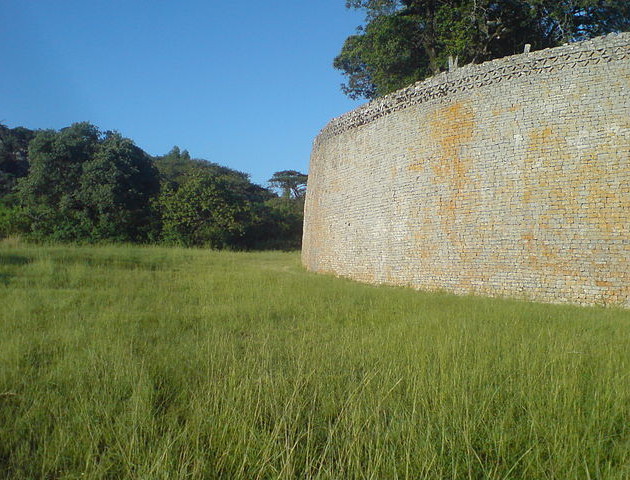
Wall of the great enclosure. Photograph by Jens Klinzing.
Wall of the great enclosure, photograph by Jens Klinzing via Wikimedia

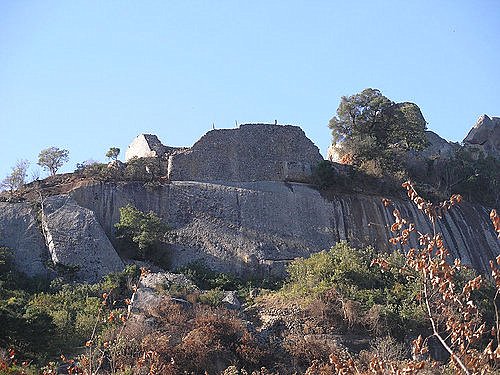
The remains of numerous stone enclosures spread over hundreds of hectares. At its height, Great Zimbabwe may have housed between 15,000 and 20,000 people. The surviving walls reach heights of five meters and are built of stone blocks assembled without mortar. Several different complexes occupy different positions ranging from hills to near the river. The significance of these different complexes remains unclear, but it may indicate that the center of settlement gradually moved over time, away from the more defensible hill sites to the more accessible valley sites, perhaps to better engage with the oceanic trade networks. Ivory and gold were Great Zimbabwe’s major international exports and trade goods from the Arabian peninsula and China have been found at the site.

Interior walkway showing the quality of the stonework. Uploaded by Vinz.
Interior walkway showing the quality of the stonework via Wikimedia

One noteworthy feature of the enclosures is their shape: neither rectangular nor circular but irregular curved shapes adapted to the forms of the landscape on which they sit.

In the colonial period, popular theories held that the site must have been built by ancient European or Asian colonizers. The biblical Queen of Sheba was often mentioned in connection with the site. Although archaeologists realized as early as the early twentieth century that Great Zimbabwe had been built by Africans, the colonial administration in what was then Rhodesia suppressed any such claim. The assertion that Africans were incapable of building such a complex site and needed European guidance to achieve any level of civilization was key to the justification of imperial domination. Colonial authorities could not tolerate any evidence that Africans were capable of creating sophisticated works of art and architecture on their own.

Part of the hill complex seen from the valley below. Photograph by Macvivo.
Part of the hill complex seen from the valley below, photograph by Macvivo via Wikimedia

Thoughts for writers

I have two reasons for sharing a little bit of Great Zimbabwe.

First, it is another example of architecture that does not depend on European examples. When doing our worldbuilding as writers, it is easy to fall back on the things that are familiar: European castles, Egyptian pyramids, Greek temples, and the other things we’ve seen before. Let yourself be inspired by the other amazing things people have built. I’d love to see a city inspired by Great Zimbabwe at its height turn up in a fantasy story, even one not set in an explicitly African-inspired world.

Second, this is another example of how politics can screw up good historical scholarship and so why you need to read broadly and get outside familiar frames of reference. Even today, while the Queen of Sheba is generally left out of it, claims that Great Zimbabwe was built by Arabs or Phoenicians still occasionally creep into popular histories.

History for Writers is a weekly feature which looks at how history can be a fiction writer’s most useful tool. From worldbuilding to dialogue, history helps you write. Check out the introduction to History for Writers here.

Travel: Large Groups on Foot

160118legionSometimes writing fiction means not just moving a few characters around the map but planning entire campaigns for massive armies. In previous entries in the travel series we looked at some basic issues and how small groups travel on foot. For large groups on foot, much of what we discussed in those entries is relevant, but large groups of people, like armies or mass migrations, bring with them their own set of problems. Today we’ll look at some basic questions in the movement of large groups: How large is “large?” What did it take to make the journey successfully? How far could they travel? And how fast?

This post is written with a particular focus on armies, since they are the best-studied large groups that traveled in the pre-industrial world, but any sufficiently large group of people traveling by foot would face the same basic problems.

Continue reading

Gift Exchange

160111elephantGift exchange is part of festive celebrations for many people in the modern world, including many traditions whose gift-giving season has just passed. In the pre-modern world, though, gift exchange was often a vital part of social, political, and economic life.

The essential principle of gift exchange is reciprocity. Giving someone a gift obliges them to return a gift of equal value. In the modern market economy in which every item can be assigned a monetary value, this is cause for anxiety (and comedy) over gift-giving, but in earlier societies value was measured in other ways. The value of a gift often depended on the prestige of the person giving it. Since gifts were reciprocal, they created a relationship, of which the gift acted as tangible proof. The modern taboo against asking the price of a gift (“Don’t look a gift horse in the mouth”) attempts to reinforce this kind of value in a monetized world.

Continue reading

Things I Can Do Without

We all have our storytelling pet peeves: the things that make us yell in frustration at the screen or put down a book in disgust. Some things have been done to death already and we want to see something new. Some things play on outdated assumptions and problematic tropes. Some are just lazy writing.

Misery loves company, so let’s share. Here’s a few of mine.
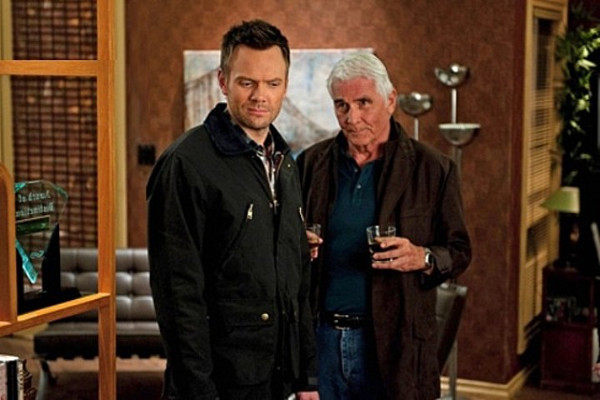
1. Fathers and sons who have a bad relationship.

A father who was never emotionally available to his son and is now disappointed in his son’s failure to live up to his expectations? A son who resents the pressure put on him to be like his father and craves the love and approval his father never gave him?

It’s been done. Really, it has. Everyone from Homer to Shakespeare to George Lucas has done it. That dead horse has been pounded into subatomic particles by now. There is nothing new to be said on the subject. Time to move on.


160107Kirk2. Heroes who have no plan

Or if they do have a plan, it depends on factors that the hero can’t control or predict.

This doesn’t mean that plans have to be perfect or go off without a hitch. You can’t control for everything. Plans have to change in response to unforeseen events. There can be plenty of good drama in the uncertainties of chance, and I’ll even take the occasional deus ex machina if it’s clever enough. But a hero who’s counting on the deus ex machina for victory? That’s right out.


160107Moriarty3. Villains who have no goal

A good villain has a goal they are trying to accomplish and a plan for achieving that goal. No matter how fiendishly complicated the plan, if the goal is just to indulge a vaguely sexual obsession with the hero, something has gone wrong in the writing.

“Annoy the hero and force them to play with me” isn’t a goal, it’s a toddler tantrum.
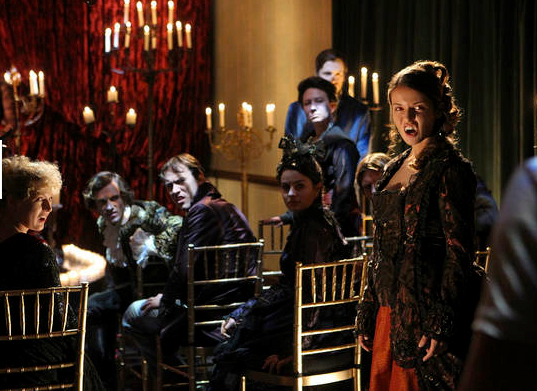
160107CSI4. Weirdos who can’t tell fantasy from reality

A terrible murder has happened at an SFF convention. When the police show up to question witnesses, the bystanders refuse to speak English and answer all their questions in Klingon. It turns out a vampire cosplayer killed a werewolf LARPer. Why? Because vampires hate werewolves! No other motive required!

This one isn’t just lazy writing, it’s insulting. The usual targets are fandom or kink communities, but anyone who isn’t in the mainstream can be a victim. I’m a history professor. According to popular media, that means I must show up in class wearing a toga and insist that my students address me as “emperor.”

Writers of the world: the inability to distinguish reality and fantasy is a sign of a serious mental illness. It is not how those of us who belong to non-mainstream interest groups go through life.


160107Se7en5. “Gimmick” serial killers

This one is really just the intersection of 3 and 4, but it shows up often enough to merit special mention. These are the characters who kill people as part of some elaborate symbolic game. “My God, the killer is targeting people whose names are anagrams of Alice in Wonderland characters and staging their bodies to look like scenes from Rogers and Hammerstein musicals, and they’re doing them in reverse alphabetical order when translated into Albanian!”

That sound you hear is my suspension of disbelief repeatedly slamming its head into a wall in hopes of inducing a coma.


I could go on, but that’s enough from me for now. Your turn. Got something on your mind that you could do without ever reading or watching again? Share in the comments!

Images: Community via ScreenCrush. Kirk via Memory Beta. Moriarty via Baker Street. CSI Blood Moon via dkompare. Se7en via Crash/Burn

Story Time is an occasional feature all about stories and story-telling. Whether it’s on the page or on the screen, this is about how stories work and what makes us love the ones we love.

Top Five Co-Geeking Posts for 2015

Our first half-year of blogging exclusively on our geeky interests is done. We’ve even geeked over our blog stats already. 🙂 The five posts to get most eyeballs are as follows:

  1. Hugo Voting, “Good” Stories, and Politics Erik’s thoughts on the volatile Hugo Awards discussion and voting
  2. 2016 Tolkien calendar Illustrated by Tove Jansson Eppu relays news that the late Tove Jansson’s Tolkien illustrations will be published in the Official Tolkien Calendar for 2016
  3. Sean Bean on the LotR Joke in The Martian Eppu shares a short transcript from an interview with Sean Bean by Yle, the Finnish national broadcast company
  4. Two Finnish Authors on the A.V. Club’s Best of 2015 Eppu shares yet another Finland-related piece of news: Pasi Ilmari Jääskeläinen and Leena Krohn made it onto a U.S. Best of fiction list
  5. a tie with two of Erik’s History for Writers posts: Recommended Reading: Herodotus, “The Tale of the Clever Thief” and 35 Isn’t Old and Everyone’s a Royal

It was nice to note that the top posts were divided up evenly between me and Erik, and that they were posts where we used our expertise. As if we had, like, a plan or something. 😉

Messing with numbers is messy.

History for Writers Compendium: 2015

History for Writers explores world history to offer ideas and observations of interest to those of us who are in the business of inventing new worlds, cultures, and histories of our own. Here’s where we’ve been in 2015:

Thinking about history and writing

Worldbuilding basics

Economics and wealth

Military history

Race and gender in history

Architecture

Recommended reading


Special series:

Travel

Ostrich riding and the perils of research

Creating fantasy religions

Join us in 2016 for more history.

History for Writers is a weekly feature which looks at how history can be a fiction writer’s most useful tool. From worldbuilding to dialogue, history helps you write. Check out the introduction to History for Writers here.

Travel: Small Groups on Foot

151214BoromirDespite what you may have heard from certain Gondorian captains, one does sometimes have to simply walk into Mordor.

In the first installment of the travel series we looked at some basic issues involved in travel in a pre-industrial world. Today we tackle the kind of travel that most people did most of the time in the pre-modern world: overland journeys by foot in small groups (or alone). We have a few basic questions to ask: How far could they go? How fast could they get there? How much stuff could they take with them? And what did it take to make the journey successfully?

Continue reading