I Want an Iwan

Well, no I don’t actually want one. I don’t have room for one to begin with, and I don’t live in the right climate anyway. That doesn’t change the fact that iwans are cool. Literally.

An iwan is a large room with a vaulted ceiling that has walls on three sides and the fourth side open to the air. They were built in the heat of Mesopotamia to create large shady spaces that were still open to light and air. The earliest iwans are thought to have been constructed under the Parthian empire in the first or second centuries CE. One of the earliest examples to survive into modern times was at Ctesiphon on the Tigris River, built by the Sasanian empire in the sixth century CE. Unfortunately, the building fell into poor repair over time and was destroyed by wars in the twentieth century, but in these old photographs you can still see enormous vaulted space.


Photograph of a Sasanian iwan at Ctesiphon, photograph 1864, Wonders of the Past vol. 2
Sasanian iwan, from Wonders of the Past vol. 2 via Wikimedia (photograph 1864). Note the people standing on top of the roof vault for a sense of scale.
Photograph of the same iwan from half a century later showing ongoing decay, currently San Diego Air and Space Museum
Photograph of the same iwan from half a century later showing ongoing decay via Wikimedia (photograph currently San Diego Air and Space Museum)

Continue reading

The Case of the Missing Roman Railroads

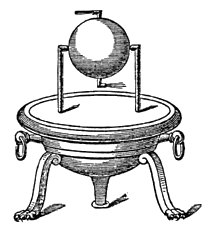
150824AeliopileThe Roman empire had a problem. It was just too big. When a crisis developed on one frontier, it could take weeks for the emperor to hear about it, then months or even years to move troops and supplies into position to deal with it. The large frontier army consumed supplies which had to be delivered at great expense from the agricultural heartlands. The roads built by the Roman army helped make all this travel faster and easier, but if the Romans had built railroads they could have made it much easier still. A Roman empire with railroads might not have fallen apart in the fifth century CE. So why didn’t the Romans build them?

The obvious answer is that they didn’t have the technology of steam power, nor the resources of coal and iron needed to build a functioning railroad. It’s a good answer, but like many such obvious answers it’s missing something.

Continue reading

Visual Inspiration: Ostrich Riding

Last week, I shared the image of an ostrich cart. There must’ve been random serendipity rays in the air, because this week I happened on a photo of someone actually riding an ostrich:

Man riding an ostrich at the Cawston ostrich farm, South Pasadena, California. Via Elle Decor, June 2014, p. 67.

Cawston ostrich farm. Postcard by Detroit Photographic Company; South Pasadena, California, unknown date. From the collection of Marc Walter, published in An American Odyssey: Photos from the Detroit Photographic Company, 1888-1924, by Marc Walter and Sabine Arqué (Taschen, 2014). Found in Elle Decor magazine, June 2014, p. 67.

Huh. I used to think that the various tallstrider or hawkstrider type mounts in World of Warcraft were based more on fantasy than fact. I’m sure large birds come with a host of training and handling issues, but apparently it’s not as far-fetched as I thought. On the other hand, having grown up two hours south of the Arctic Circle and traveled in Lapland multiple times, seeing reindeer doesn’t make me bat an eye. Just goes to show how our experiences influence our sense of normal. 🙂

The Visual Inspiration occasional feature pulls the unusual from our world to inspire design, story-telling, and worldbuilding. If stuff like this already exists, what else could we imagine?

Visual Inspiration: Ostrich Carts

Ostrich pulling a cart at the Los Angeles Ostrich Farm. Via William H. Hannon Library, Loyola Marymount University.


Ostrich pulling a cart at the Los Angeles Ostrich Farm. Postcard by unknown; Lincoln Park, Los Angeles, California, 1919. From the Werner von Boltenstern Postcard Collection; Department of Archives and Special Collections, William H. Hannon Library, Loyola Marymount University. In public domain.

Why do fantasy stories so often employ equines as beasts of burden, when you could breed large birds for the task? In our world, humans do have a long history with the horse family, but who’s to say that in another, more SFFnal one you couldn’t find giant versions of armadillos, capybaras, or rats used for transportation? Or faster, large-scale chameleons?

The Visual Inspiration occasional feature pulls the unusual from our world to inspire design, story-telling, and worldbuilding. If stuff like this already exists, what else could we imagine?

Do-It-Yourself Fantasy Place Name Generator

Writing a fantasy story or role-playing scenario? Need to come up with names for towns, rivers, mountain ranges and so on, but tired of thinking up new names all the time? Here’s a handy technique I use. It takes a little work up front, but then it makes coming up with new names really easy.

The thing about place names is: when you dig down deep into their meaning, they’re usually really obvious and descriptive. It’s only time and language change that obscures their meaning.

Look at a map of Europe and you’ll find Copenhagen (“merchant harbor”) and Dublin (“black pool”). In Asia there’s Shanghai (“above the sea”) and Samarkand (“stone fortress”). The same applies to the native names anywhere else in the world. In places that have experienced substantial colonization, the conquerors often imported old names that didn’t relate to the landscape (New York, Wellington), but in other cases the new names given by colonizers were just as descriptive (Cape Town, Salt Lake City).

The reasons for this naming pattern are fairly straightforward. If you live in a landscape where there are several rivers, but only one of them is muddy, or plenty of mountains, but there’s a big one with no trees on top, when you need to refer to that river or that mountain, you’re likely to say: “the black river” or “the bald mountain.” From there it’s only a short step to calling them “Black River” and “Bald Mountain”. As time goes on and language changes, place names tend to become fossilized and preserve older variants and meanings that the rest of the language has left behind.

So, put these facts to work for you. When you’re setting up your map, generate a list of place name elements and then you can quickly combine them to make new names for whatever you need.

Here’s how it works:

Continue reading

Size Matters

150621NewfaneWe got married in my small home town in New England, population about 3,000. In preparing to go get our license at the town office, we had gathered all the necessary documents to prove that we were who we said we were, that we were old enough, that we weren’t already married, and so on. We were all prepared to fill out paperwork and turn the slow gears of bureaucracy. When we walked into the office, though, the town clerk looked at us and said: “Oh, Erik, I saw your mother the other day and she said you’d be coming in for a marriage license. I’ve got it right here for you.” That’s life in a small town for you.

Small societies and large societies work in different ways. Historians and anthropologists have terms for categorizing different sizes of societies: bands, tribes, chiefdoms, and states. Like all such divisions, it’s a simplification, but it’s a useful one for getting a handle on how cultures of different scales work.

Continue reading

Food Production: The Original 99%

150615FarmingWe have some berry bushes and a few fruit trees in our back yard. Every spring I plant a few vegetables in a couple of small patches (some years they produce; other years they just wither under the care of my brown thumb). It’s nice to be able to go out back and pick a cucumber or a handful of raspberries, but it doesn’t sustain us. If we had to feed ourselves on what we can produce, we’d be dead in a matter of weeks.

The same is true for most of us in the industrialized world. In the modern west, only about 3% of the population is engaged in primary food production, which is to say: actually producing edible things from nature. Farmers, ranchers, and fishermen (along with some more niche specialists like bee-keepers and salt miners) are in a very small minority today. That 3% manages to feed all the rest of us, but only because of a host of modern technologies: mechanized farming, chemical fertilizers and pesticides, antibiotics, refrigeration and canning, cheap long-distance transport, and so on. Pre-modern societies had to feed themselves with none of these advantages, which means that food production required a huge amount of labor.

Continue reading

Living on the Land

A lone river winding through the desert. A pair of wide plains. A fragmented land of islands and mountain valleys. When you’re building a world, the land matters. The land we live in shapes the way our societies work. To see what this means, let’s look at a few examples: ancient Egypt, ancient China, and classical Greece. We’ll be zooming way out and looking at these cultures on a very large scale.

150608Egypt Continue reading