Recommended Reading: Herodotus, “The Tale of the Clever Thief”

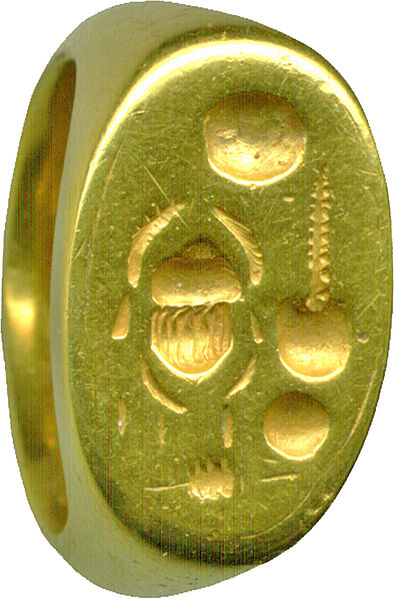
150727ringWe learn to write by reading, and so I’d like to share with you some of the works of classical literature that have inspired me as a writer. There’s no better place to start than with the Greek historian Herodotus. Herodotus’ Histories is my favorite book of all time. I re-read Herodotus like some people re-read Tolkien. “The Tale of the Clever Thief” (that’s my own name for it; Herodotus didn’t give that particular story a name of its own) is one of the most delightful parts of the work.

Herodotus is popularly known as the Father of History. He is also known as the Father of Lies. Both titles are appropriate. Herodotus was the first (surviving) author in the western tradition to write about the past in terms of human actions and motivations, not the deeds of gods and heroes. He was also a storyteller who enjoyed spinning a good tale, even if he didn’t think it was true (and some of the things he did think were true are pretty outrageous).

Continue reading

Solid Centers and Fuzzy Edges

150730SapphoThis is not the post I had intended for today. When I started working on this one, it was about some of the different ways of organizing basic labor that have existed in history, from slave gangs to independent peasant farmers. As I kept working on it, I found that I had more to say about slavery, especially in light of the public dialogue that has been happening in the United States lately surrounding symbols of the Confederacy. So I started working on a post specifically about slavery in historical context, but as I tried to write that post, it became clear to me that there is an even more fundamental issue in historical interpretation I needed to talk about, something that applies not just to slavery but to almost every historical phenomenon. It is so universal that we don’t really have a standard vocabulary for talking about it. You could call it variability, or you could call it norms and exceptions, but I prefer to think of it as solid centers and fuzzy edges.

Continue reading

Some Notes on Gender and Power (Part 2)

Picking up from where we left off last week, here are some more notes on gender and power. First, a refresher on where we started:

1. There is a lot of bad theorizing out there about gender and power relations

Primordial matriarchies, evo-psych patriarchies — all bunk.

2. Patriarchy is not inherent in human societies.

Patriarchy is a historical development, not a biological imperative.

Carrying on now:

3. There are many different kinds of patriarchy

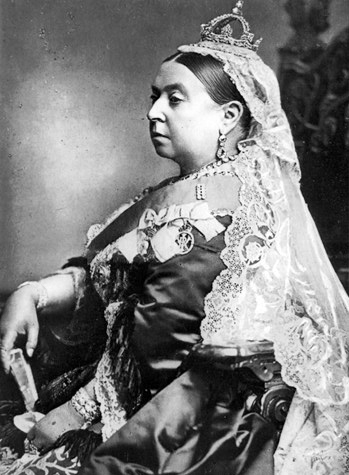
150713VictoriaAs I explained last week, patriarchy is not a universal of human societies but rather a product of specific historical circumstances. As a result, there are as many different varieties of patriarchy as there are cultures that practice it. There is no “the patriarchy” any more than there is “the democracy” or “the music.” Some democracies have parliaments, some have electoral colleges, and some just have town meetings. Some music has violins, some has taiko drums, and some has beatboxing. Patriarchies are just as variable.

Consider, if you will, Victorian Britain and the Roman empire. Both were unquestionably patriarchal, but that doesn’t mean they worked the same way.

Continue reading

Some Notes on Gender and Power (Part 1)

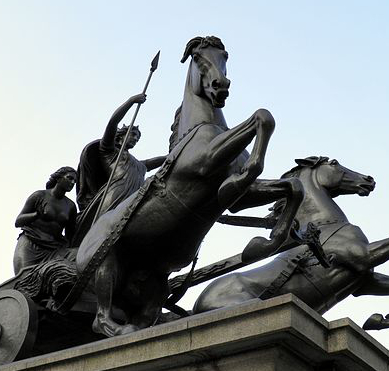
150629BoudiccaGender and power are two very big and complicated topics. Put them together and you get something even bigger and complicateder. (Yes, I said “complicateder.” Deal with it.) They are also two topics that have become very important in a lot of contemporary speculative fiction. I’m not going to try to take on the whole subject here, but I would like to offer a few points that can be useful for thinking about gender, power, and how they fit both into the world we live in and into the worlds we write about.

Continue reading

The Pre-Gunpowder Rock-Paper-Scissors

150629BayeuxGunpowder changed the world. It took a while — the earliest gunpowder arms were too unwieldy and unpredictable to have much of an effect on the ways people fought, but in time the weapons got better and armies adapted their tactics and organization in response. Before firearms, though, the battlefield operated on a basic rock-paper-scissors relationship among three different types of troops: infantry, cavalry, and missile troops.

Before getting into the types of troops, we need to lay out a few things about pre-modern warfare.

Continue reading

Size Matters

150621NewfaneWe got married in my small home town in New England, population about 3,000. In preparing to go get our license at the town office, we had gathered all the necessary documents to prove that we were who we said we were, that we were old enough, that we weren’t already married, and so on. We were all prepared to fill out paperwork and turn the slow gears of bureaucracy. When we walked into the office, though, the town clerk looked at us and said: “Oh, Erik, I saw your mother the other day and she said you’d be coming in for a marriage license. I’ve got it right here for you.” That’s life in a small town for you.

Small societies and large societies work in different ways. Historians and anthropologists have terms for categorizing different sizes of societies: bands, tribes, chiefdoms, and states. Like all such divisions, it’s a simplification, but it’s a useful one for getting a handle on how cultures of different scales work.

Continue reading

Food Production: The Original 99%

150615FarmingWe have some berry bushes and a few fruit trees in our back yard. Every spring I plant a few vegetables in a couple of small patches (some years they produce; other years they just wither under the care of my brown thumb). It’s nice to be able to go out back and pick a cucumber or a handful of raspberries, but it doesn’t sustain us. If we had to feed ourselves on what we can produce, we’d be dead in a matter of weeks.

The same is true for most of us in the industrialized world. In the modern west, only about 3% of the population is engaged in primary food production, which is to say: actually producing edible things from nature. Farmers, ranchers, and fishermen (along with some more niche specialists like bee-keepers and salt miners) are in a very small minority today. That 3% manages to feed all the rest of us, but only because of a host of modern technologies: mechanized farming, chemical fertilizers and pesticides, antibiotics, refrigeration and canning, cheap long-distance transport, and so on. Pre-modern societies had to feed themselves with none of these advantages, which means that food production required a huge amount of labor.

Continue reading

On Viking Warrior Women

Kathleen O’Neal Gear and Michael Gear have an excellent post on Tor.com today discussing the evidence for warrior women in the Viking world.* It’s a really great summary of the evidence as we know it and I encourage you to read it.

As a historian, I wanted to note that this is an excellent illustration of an important but tricky historiographical principle: many weak but different arguments can sometimes add up to a strong argument. As Gear and Gear note, every individual piece of evidence for Viking warrior women is problematic:

  • Sagas are works of fiction, or at least fictionalized history. Many of the warrior women who appear in saga literature are clearly mythical.
  • Ethnographic commentary by outsiders, especially by outsiders with an explicit cultural agenda, is highly suspect.
  • Artistic representations of women bearing arms might represent the fictional Valkyries rather than actual warrior women.
  • Bioarchaeological evidence may not be able to distinguish the bones of a woman who routinely wielded a sword from those of a woman who routinely chopped firewood or cut grain.
  • Weapon burials do not necessarily indicate warriors, because weapons were status markers that might be put in the graves of people who had never used them in life.

The important thing is that all of these pieces of evidence are from different sources that were unlikely to have influenced each other. While each one on its own is equivocal, put together they add up to a convincing argument that at least some individual women in the Viking world armed and fought as warriors.

The tricky thing with this kind of argument is to make sure that the individual pieces are actually separate. If, for example, we could show that artwork, burial customs, and outsiders’ perceptions were all influenced by fictional saga stories of warrior women, then the argument would be much weaker. The wide separation of the various pieces of evidence in time and space, however, makes them more convincing. When 10th-century Swedish burials, 11-century German ethnography, and 14th-century Icelandic sagas all point in the same direction, we can be fairly confident that they’re showing us something meaningful.

* Note: There is an ongoing debate as to whether the word “Viking” should be capitalized or not. I have no dog in that fight. I have capitalized it here because it makes sense to me to do so, but I have no interest in arguing the point.

Hey, look! We found a thing on the internet! We thought it was cool, and wanted to share it with you.
Living on the Land

A lone river winding through the desert. A pair of wide plains. A fragmented land of islands and mountain valleys. When you’re building a world, the land matters. The land we live in shapes the way our societies work. To see what this means, let’s look at a few examples: ancient Egypt, ancient China, and classical Greece. We’ll be zooming way out and looking at these cultures on a very large scale.

150608Egypt Continue reading

History for Writers: Introduction

640px-Herodotus_plate_in_Volissos_entranceWriters of fiction and writers of history have long had a kinship with each other.

It is a telling fact that Herodotus, founding father of western historiography, saw himself as carrying on the work of Homer, the great epic poet. Herodotus himself has often been accused of being better at spinning a yarn than at getting his facts right, and Homer tells us quite a lot about the real warlords and merchants of his day through his stories of epic battles and heroic wanderings. Fiction and history have always sat at the same table. As a professional historian and an amateur writer, I’ve spent plenty of time thinking about how the two go together.

Writing fiction means imagining people and worlds that do not exist. That, in its essence, is also what the study of history is about. Now, historians must keep our imaginations grounded in testable evidence and rational argument, but all those facts add up to nothing without imagination. We will never shadow the emperor’s agents as they crept the back streets of Rome sniffing out agitators, or break bread with a gang of workers in the shadow of a half-built pyramid and listen in to their work-camp gossip, or watch over Confucius’ shoulder as one petty, corrupt, minor official after another slowly drove him to consider whether there could be a better way to live. Those people and the times they lived in are gone, and if we are to make any sense of the evidence they left behind we must try to imagine the worlds in which they lived.

Continue reading