Doctor Strange Trailers

It’s now just over a week until Doctor Strange opens. (Gosh, November is so close!) There are a bunch of trailers on the InterTubes, for instance the official ones by Marvel:

Marvel’s Doctor Strange Teaser Trailer by Marvel Entertainment

Doctor Strange Official Trailer 2 by Marvel Entertainment

The tv spot from the end of September, however, is my favorite:

Doctor Strange TV Spot by Marvel Entertainment

Kaecilius: “Mister…?”

Strange: “Doctor.”

Kaecilius: “Mister Doctor.”

Strange: “It’s Strange.”

Kaecilius: “Maybe. Who am I to judge?”

Harf! 🙂

I have to say I know next to nothing about Doctor Strange. The character was referred to from time to time in the translated X-Men I read in my youth in Finland, but “odd name” and “magic user of some sort” was pretty much what I got out of them.

The cast is something to look forward to. I loved Chiwetel Ejiofor in Serenity and The Martian, and Benedict Cumberbatch should be marvelous (I’d listen to him pretty much just reading a phone book). Mads Mikkelsen looks like the quintessential bad guy. Perhaps too much so; I fear I might find his character too corny, but we’ll see.

Tilda Swinton I’m conflicted over. I’ve enjoyed her past performances. Her character in this movie, The Ancient One, has been gender-swapped, which is really cool. However, apparently the role is whitewashed. I guess we’ll see.

I also know nothing of the director Scott Derrickson; again, we’ll see. It’s been such a slow latter half of the year, movie-wise, that I’m looking forward to Doctor Strange even if I’m not sure whether it’s exactly my cup of tea.

Hey, look! We found a thing on the internet! We thought it was cool, and wanted to share it with you.

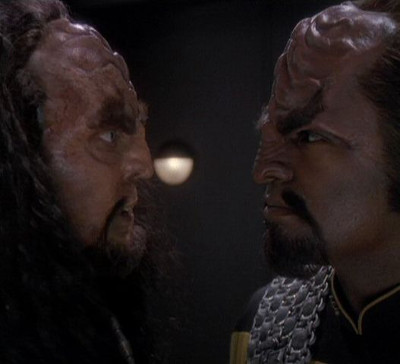
Klingons, Homer, Falstaff, and the Dread Pirate Roberts: Understanding Honor

161024klingonsIf you grew up on Star Trek: The Next Generation like me, you’re probably most used to hearing the word “honor” come out of the mouths of Klingons, especially our beloved Lt. Worf. Star Trek offers one of the most brilliant portrayals of honor in fiction. As you watch Worf’s story unfold over the seasons of TNG and Deep Space Nine, it seems like, for all that Klingons like to talk about honor, Worf is the only one who actually cares about it. Worf always makes the honorable choice, even when it’s not the smart one. Other Klingons are cynical and self-serving. They pay lip service to the idea of honor, but they don’t follow it.

But what is honor? It seems like such a simple word, but what does it really mean? When we say that a person, either someone in the real world or a fictional character, is driven by a sense of honor, what actually motivates them? I often put this question to my students when we read the the quarrel of Achilles and Agamemnon in the Iliad. They usually answer something like: “Pride,” or “Following a code.” Those are ideas related to honor. They are honor-adjacent. But at its core, honor is something else: honor is reputation.

Agamemnon and Achilles are warrior kings in a world where there is no one to enforce rules. There are no police, no courts, barely anything we would recognize as law. What is it that stops people from being constantly at war with one another? How can Achilles or Agamemnon have a single moment’s rest from every other warrior in the world trying to take away their homes, families, and treasures? Because of their reputation. Because everyone knows that if you hurt them, they will come after you and they will not stop until they have destroyed you. That’s what honor is. It’s the first line of defense.

161024achillesHonor is not an emotion, a code, or an abstract concept. It is a practical tool that Homer’s warrior kings and people in similarly lawless societies use to keep control of their homes and property. When Agamemnon and Achilles break into a fight at the beginning of the Iliad, it’s not because they’re being petty or overly sensitive about wounded feelings. It’s because neither one of them can afford to look weak. A warrior who gets a reputation for giving up easily or not standing up to defend his property is a warrior who will soon be dead.

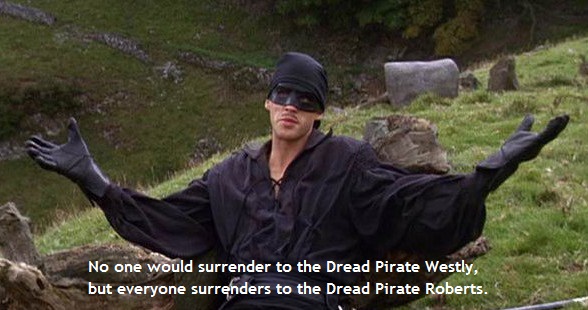
Honor is what people believe about you. Honor is why, when the Trojans had almost routed the Greeks, Achilles was able to turn the tide of battle just by showing up—unarmed—on the battlefield and yelling his warcry. In other words, honor is like the dread pirate Roberts.

161024robertsWhich also means that there is something artificial about honor. It’s sort of a bluff. The greater a warrior’s reputation as an unbeatable fighter, the less actual fighting they have to do. At the same time, anyone who lets slip that they may not live up to their reputation is just inviting attack, which is why, like in the Iliad, warriors often fight hardest not for the things they want but for the reputation itself.

Honor only matters if it is seen, and it is only what is seen that matters. What makes honor is not what kind of person you are but what kind of person people think you are. What happens in the darkness does not matter to honor. It’s easy to get cynical about honor and call it out as a kind of bullshit. Falstaff, in Shakespeare’s Henry IV, Part 1, does just that:

Can honor set to a leg? no. Or an arm? no. Or take away the grief of a wound? No. Honor hath no skill in surgery, then? No. What is honor? A word. What is in that word “honor”? What is that “honor”? Air. A trim reckoning. Who hath it? He that died o’ Wednesday. Doth he feel it? No. Doth he hear it? No. ‘Tis insensible, then? Yea, to the dead. But will it not live with the living? No. Why? Detraction will not suffer it. Therefore, I’ll none of it. Honor is a mere scutcheon.

– Shakespeare, Henry VI, Part 1, act 5, scene 1

Falstaff isn’t wrong. Neither are Achilles and Agamemnon. Honor is a kind of game that everyone plays along with. The wise understand that it’s a game and what seems like cynicism is really just practicality. Only the naive think that honor is real.

This is what makes Star Trek‘s take on honor so brilliant. It seems at first that Worf is the only Klingon who understands honor, but really it’s the other way around: Worf is the only Klingon who doesn’t understand honor. Worf thinks that honor is real. Other Klingons know it’s a game—a game with the highest of stakes that they play for all they’re worth, but a game nonetheless.

Images: Worf and Martok via Memory Alpha. Achilles battling Memnon, photograph by Bibi Saint-Pol via Wikimedia (Vulci, currently Staatliche Antiknesammlungen, Munich; c. 510 BCE; black-figure pottery). Dread Pirate Roberts via History Mine.

Quotes: Discover Not Just the Abstract Thought

“As he watched the TV, he remembered a lecture in his second year of college by a professor of environmental science. The gist had been that institutions, even individual departments in governments, were the concrete embodiments of not just ideas or opinions but also of attitudes and emotions. Like hate or empathy, statements such as ‘immigrants need to learn English or they’re not really citizens’ or ‘all mental patients deserve our respect.’ That in the workings of, for example, an agency, you could, with effort, discover not just the abstract thought behind it but the concrete emotions.”

– Control (John Rodriguez)

That… sounds like sociology or anthropology. Clearly environmental science has more connections with humanities / social sciences than I’ve previously thought!

VanderMeer, Jeff. Authority (Southern Reach Trilogy 2). New York, NY: Farrar, Straus and Giroux, 2014, p. 147.

Recommended Reading: Apuleius, The Golden Ass

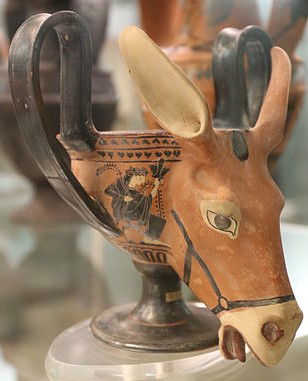
161017kantharosModern fantasy literature has taken a lot of inspiration from ancient Greek and Roman mythology. Many people have noted how comic book superheroes play much the same role in modern culture that heroes like Hercules and Odysseus did for ancient readers. The important difference is that Greeks and Romans regarded their heroes as real, semi-divine figures of history. Modern fantasy knows it’s all made up. That’s one of the fundamental differences between myth and fiction: the poet who retells a myth wants you believe that the story is true; the fiction author knows they’re spinning a tale.

But modern people aren’t the first to tell stories just as stories. Ancient literature, in addition to myths that made claims to historical and religious truth, offered tales of adventure, romance, and comedy, just like modern fiction. It even had some works that we would class as speculative fiction. Metamorphoses—more commonly known as The Golden Ass—by Apuleius is one of them.

There are lots of translations available. Here’s one you can read online, but I particularly recommend the translation by Sarah Ruden (Yale, 2012), which expertly captures the wit and cheek of Apuleius’ original text.

The story is told by Lucius, a young man about town who gets in over his head with magic and accidentally turns himself into a donkey. He then has madcap misadventures—getting stolen by bandits, requisitioned by a soldier, displayed in the arena, and mutely witnessing all kinds of domestic comedy and tragedy as he tries to stay alive long enough to find the antidote to cure his transformation.

In this passage, Lucius the donkey has been bought by a local magnate and is being trained to perform tricks, which causes a bit of a tricky situation for the human mind in the donkey body:

He gave me to a favored freedman of his, a well-off man, having instructed him to take good care of me. This man treated me kindly and fed me well and, to please his patron, eagerly encouraged my tricks. First he taught me to recline at the dining table, then to wrestle and even dance with my forelegs in the air. Then—even more remarkable—to respond to words by tossing my head, signing “no” by throwing it back and “yes” by nodding. When I was thirsty, I could request a drink by alternately winking my eyes at an attendant. Of course, this was all perfectly simple for me to follow and I hardly needed a trainer, but I was afraid to behave in too human a way at the table uninstructed, or they might take me for an ill omen, set on me as a monster, and serve up my fat body to the vultures.

– Apuleius, The Golden Ass 10.17

(My own translation)

Lucius’ adventures range from the lewdly ludicrous, as when a rich lady takes him for a lover, to the tragic, as when he witnesses the death of a happy newlywed couple. On the way, just about every level of society, from poor farmers to rich landowners comes in for a bit of satirical skewering. There’s also a surprise ending, which I won’t give away here.

In transforming Lucius into a donkey, Apuleius also addresses the anxieties of his time, in a society where slavery was routine and barriers of language and culture often impeded communication. Romans of his time looked on some other peoples in their world as little better than animals, and must have worried about being seen the same way themselves by others. Sudden loss of status, whether by being taken captive in war or stripped of citizen rights in the court, was nothing strange. While no one had to worry about not behaving donkeyishly enough, as Lucius does, many Roman slaves probably faced the predicament of ingratiating themselves with their masters without seeming too clever or ambitious. The story of Lucius’ adventures, like much fantasy and science fiction of recent decades, provides a way to observe and comment on these anxieties and even, in the end, to offer some hope.

The Golden Ass is a good read and a nice example of how there’s nothing new in the human urge to make up fantastical stories, or to use that fantasy to contemplate contemporary problems.

Image: Donkey head kantharos, photograph by Pymouss via Wikimedia (Athenian, currently British Museum; late 6th c. BCE; black-figure pottery)

History for Writers looks at how history can be a fiction writer’s most useful tool. From worldbuilding to dialogue, history helps you write. Check out the introduction to History for Writers here.

Making Flotsam and Jetsam

Here’s a look at how we made yesterday’s Flotsam and Jetsam.

The menu

  • Roasted ham
  • Sliced apples
  • Toast
  • Honey
  • Wine

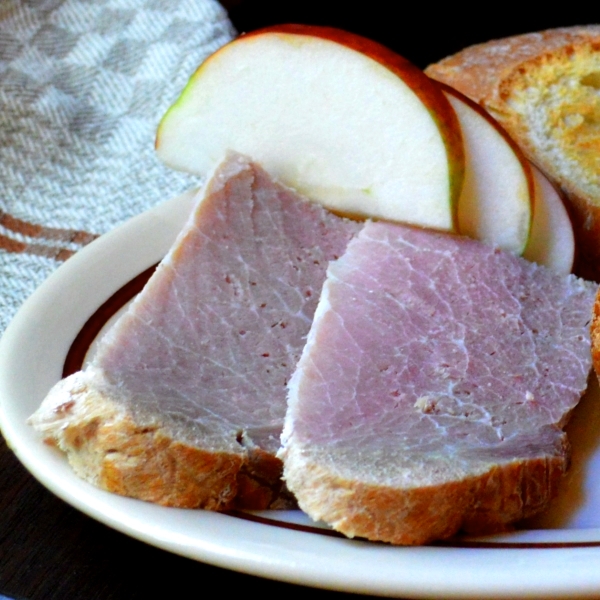
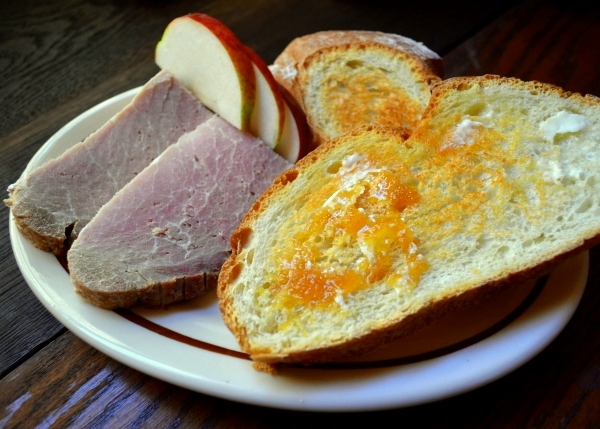
erikchef1Merry describes the available food pretty clearly and we have stayed close to it. (3.9) The only substitution we have made is ham for salted pork. The two meats are similar, but salt pork is fattier and closer to (what Americans call) bacon. Ham is meatier and more satisfying for a meal. We added fresh sliced apples to go with the ham, reasoning that if Minas Tirith has apples in storage, Isengard’s storerooms probably had the same. (5.1) Our toast was made with bakery bread a few days old, like the Isengard bread that was “three or four days old.” (3.9)

Dinner10 w Props2

Recipes

Roasted ham with apple slices

Our ham was a small portion from a local farm and was not pre-cooked. Roasting times will depend on the size of your ham, so use a thermometer to make sure that the meat reaches a temperature of 160 F / 70 C.

Ingredients

  • Small, uncooked ham
  • 2 firm apples

Directions

  1. Preheat oven to 325 F / 160 C.
  2. Wash and trim the ham.
  3. Lay the ham in a roasting pan with a meat thermometer stuck into the thickest portion.
  4. Roast until the temperature reaches 160 F / 70 C. Small hams may take only an hour; larger hams may require up to three hours.
  5. Core and slice the apples thin. Serve as garnish to thick slices of ham.

Dinner10 Ham Apple


Setting

eppucamera1 Unlike Peter Jackson’s movie, Tolkien’s version of the Isengard sequence actually includes a meal shared between the two Hobbits and Aragorn et al. It takes place indoors in a guard-house hewn out of stone. Other than the presence of “a hearth and chimney,” “a long table,” and “dishes, bowls, cups, knives and food of various sorts,” we hear few details. (3.9)

Dinner10 Toast

Finding a location for our photoshoot was a bit of a problem. You may have noticed that after the first four dinners, we’ve moved away from our initial spot; the desk we used was too narrow and too close to the wall for a good variety of setups. Since then I’ve tried several different areas of the house and even outdoors, but haven’t landed on a single place that has everything I want. Anyway. 🙂

We don’t have access to a stone structure that sounds suitably like Saruman’s guardroom. We do, however, have a room with wooden walls and a built-in bench that could stand in for a table: our sauna. We decided it was non-typical enough of an indoor space for our purposes. In the end, I decided to add two old table leaves on top of the built-in bench because I quite liked their worn surface for this purpose.

The setting in the ruins of Isengard sounds quite bare, but not ascetic. I chose therefore not to have a tablecloth, but added a simple unbleached linen napkin. In addition, I selected simple ceramic and wood dishes like the oval plate and the turned wooden tumbler. There’s a plain wooden knife for spreading butter and honey on toast, and an iron eating stick for spearing the ham and apple. On the side, one of our sushi sauce bowls masquerades as a honey dish.

LotR Dinner10

Finally, purely for mood purposes, there is a stack of extra plates in one corner and two candlesticks in the other. I used candle stubs, for Saruman doesn’t strike me as the kind of leader who makes sure their underlings have sufficient supplies handy at all times.

If I were to do this dinner setup again, I don’t think I’d have large changes to make. (Unless I could find a fancy stone room like Tolkien’s text describes.) Perhaps I’d consider adding a butter dish, but that’s about it.

Check out the introduction for more!

Images by Eppu and Erik Jensen

Geeks eat, too! Second Breakfast is an occasional feature in which we talk about food with geeky connections and maybe make some of our own. Yum!

Dining in Middle Earth: Flotsam and Jetsam

“’I will make you some toast. The bread is three or four days old, I am afraid.’

“Aragorn and his companions sat themselves down at one end of a long table, and the hobbits disappeared through one of the inner doors. […]

“’And you need not turn up your nose at the provender, Master Gimli,’ said Merry. ‘This is not orc-stuff, but man-food, as Treebeard calls it. Will you have wine or beer? There’s a barrel inside there – very passable. And this is first-rate salted pork. Or I can cut you some rashers of bacon and broil them, if you like. I am sorry there is no green stuff: the deliveries have been rather interrupted in the last few days! I cannot offer you anything to follow but butter and honey for your bread. Are you content?’”


LotR Dinner10

The Hobbits and their friends make a decent meal out of the remains of Saruman’s stocks after the destruction of Isengard. This month, we dine along with them on roasted ham with sliced apples, bread with honey, and a cup of wine.

LotR Dinner10 Plate

A simple oval plate and a turned wooden tumbler are set on a worn wood surface (old table leaves). There’s a plain wooden knife for spreading butter and honey on toast, and an iron eating stick for spearing the ham and apple. On the side, one of our sushi sauce bowls masquerades as a honey dish. A stack of extra plates in one corner and two candlesticks with candle stubs in the other help with the mood.

LotR Dinner10 w Props

Check out what’s it about in the introduction, or read the how-to!

Images by Eppu Jensen
Geeks eat, too! Second Breakfast is an occasional feature in which we talk about food with geeky connections and maybe make some of our own. Yum!

The Shannara Chronicles: The Delight of Bad Television

We’ve been watching The Shannara Chronicles. (We only watch series on DVD, so we’re still working our way through season 1). It’s some of the worst television I’ve seen in a while, and I can’t wait to see more.

161010shannara
One trailer park elf, one spoiled princess, and one edgy ex-bandit, coming right up. Image via IMDb.

Make no mistake, The Shannara Chronicles is terrible. The plot is a meandering soap opera mashed together from two parts Tolkien (a band of hobbits teenagers, occasionally aided by a grumpy wizard druid, must carry the magical ring seed to a distant place through a strange wilderness in order to save the world from a dark lord warlock who mostly just chills out in his tower henge being all evil and stuff) and one part Hunger Games (a tedious teenage love triangle between one girl half-elf boy and two boys girls—one rugged, the other sophisticated—in a vaguely-defined post-apocalyptic North America). Episode scripts are written Mad-Lib style: Dire warning about [peril] goes unheeded, recurring bandit guy threatens to [do something awful], someone explains [plot point] to the confused half-elf dude, princess has to be saved from [unheeded peril].

Yet despite its flaws, Shannara Chronicles manages the trick that most bad television doesn’t: to be both bad and enjoyable. More remarkably, it has managed this feat while remaining convinced of its own seriousness, instead of embracing its camp absurdity like most other beloved bad SFF shows, from Batman to Xena.

The scenery, the design, there are beautiful things under the layers of bad storytelling. Image via IMDb.
There are beautiful things under the layers of bad storytelling. Image via IMDb.

It’s hard to explain why I enjoy Shannara. Taste, of course, is subjective: one viewer’s guilty pleasure is another’s eye-roll marathon. I think there are three things about it that work for me:

  1. The diamonds among the dross. Shannara is a kiwi production and I watch it in much the same spirit that I watch Peter Jackson’s Hobbit movies: for the moments of beauty buried in the failings of concept and writing. The visual design is inventive and sometimes startling. Among the actors there are some shining stars like John Rhys Davies, Jed Brophy, and Manu Bennett improving the lackluster scripts with their performances. Plus New Zealand scenery is always worth seeing.
  2. We’re starved for good fantasy. I like classic fantasy. I like it better when it’s done well, but in the absence of that (or when showrunners think that doing fantasy well means adding as much torture, rape, and pointless death as possible), I’ll take it done badly. Plus, it’s refreshing to see a post-apocalyptic story in which the post-apocalypse is a quaint side note to the plot rather than a weight around its neck.
  3. The straight line is funnier than the joke. Comedy is well and good, but sometimes the best laughs come from people who don’t know they’re funny, and if the creators of Shannara know how funny they’re being, they aren’t letting on. I enjoy groaning at the teenage drama, the princess who has to be saved from something once an episode, the elite Elven soldiers who get themselves clobbered by bandits in under ten seconds, and the rest of the show even more when there isn’t a wisecracking sidekick poking me in the ribs and saying Hey, didja see what we did there? Huh? Huh?
Because this is totally how you dress to save the world. Image via IMDb.

In 2016, this terrible year in which some disasters hit with the shock of a thunderbolt and others drag on like a cold you can’t shake, the small-scale disaster of a wonderfully bad tv show is just what I need to take my mind off the rest of the world for a few hours.

In the Seen on Screen occasional feature, we discuss movies and television shows of interest.

Quotes: Undercover Work as a Librarian

“Sometimes undercover work as a Librarian involved posing as a rich socialite, and the Librarian in question got to stay at expensive hotels and country houses. All while wearing appropriately high fashion and dining off haute cuisine, probably on gold-edged plates. At other times, it involved spending months building an identity as a hard-working menial, sleeping in attics, wearing plain woollen dress, and eating the same food as the [boarding school] boys.”

– Genevieve Cogman: The Invisible Library

That’s a different kind of library gig all right!

Cogman, Genevieve. The Invisible Library. New York, NY: Roc, 2016, p 2.

Serving exactly what it sounds like, the Quotes feature excerpts other people’s thoughts.

Hidden Youth Illustrations Roundup

The anthology Hidden Youth, with Erik’s story “How I Saved Athens from the Stone Monsters”, is expeced in November. We don’t know exactly when yet, but we know that the file has been sent to the printer. It’s very exciting—almost there!

I rounded up some of the artwork commissioned for the collection, but first here’s my headcanon picture for “Stone Monsters.”

In the beginning of “Stone Monsters,” there’s a scene where Mnestra, one of the protagonists who works as a flute girl, uses her veil to try and attract customers. I don’t think it was Erik’s intention, but the scene immediately brought to my mind this amazing, dynamic Greek statue we’d seen years ago at The Met:

The Met Bronze Veiled Masked Dancer

Bronze statuette of a veiled and masked female dancer, c. 3rd-2nd century BCE.

When thinking about “Stone Monsters,” this is the image that I connect with the story. Unfortunately the dancer’s veil is drawn so close that we can’t see her face. That’s where the Hidden Youth artists come to the rescue. I just happened to see this sneak peek by Paula Arwen Owen of her papercut illustration for “Stone Monsters” on Twitter:

Twitter Arwen Designs Stone Monsters Papercutting Sneak Peek

That’s eggplant and egg, all right, with a herma in the background. 🙂 Love it!

Then I was curious and went looking for Hidden Youth art. Others have also posted glimpses of their work in progress. For example, Ellen Million:

Instagram Ellen Million Hidden Youth

(She’s shared a slightly bigger photo as well.)

Two girls by Veleries / Thio Wina Oktavia:

Twitter Veleries Hidden Youth

Kat Weaver’s dormitory(?) sketch:

Twitter Kat Weaver Hidden Youth

A sneak peek by A. D’Amico:

Twitter A DAmico Hidden Youth

A glimpse of Jay Bendt’s piece:

Tumblr Jay Bendt Hidden Youth

And, finally, Charis Loke’s almost finished illustration:

Twitter Charis Loke Hidden Youth

They all look so great—can’t wait to have the book in my hands!

Images: Bronze statuette by Eppu Jensen (Greece; c. 3rd-2nd century BCE; bronze). Papercutting by Paula Arwen Owens via Twitter. Attic room by Ellen Million via Instagram. Two girls by Thio Wina Oktavia via Twitter. Dormitory by Kat Weaver via Twitter. Street seller by A. D’Amico via Twitter. Leaning girl by Jay Bendt via Tumblr. Under clouds by Charis Loke via Twitter.

In Making Stuff occasional feature, we share fun arts and crafts done by us and our fellow geeks and nerds.