I’ve been meaning to share this for a while now, but something or other was always supposedly more important or interesting. No more! 🙂
The Viking Age Sigtuna, Sweden, was formally founded around 980 AD, and it was a much more cosmopolitan city than thought before. According to new DNA analysis, approximately half of city’s population were immigrants.
The study looked at the remnants of 38 individuals who lived and died in Sigtuna between the 900s and 1100s CE, and included other scientific approaches as well (like analysing the strontium isotope contents of the residents’ teeth).
Roughly half of the population grew up in the near-by region Mälardalen (the Mälaren Valley, or Stockholm-Mälaren Region). The other half arrived either from southern Scandinavia (including Norway and Denmark) or further away. The long-distance immigrants came from the British Isles, Ukraine, Lithuania, northern Germany, and other parts of central Europe, and were more likely to be women than men (approx. 70 percent of women vs. 44 percent of the men).
Read more on the Stockholm University research news page: article in Swedish / article in English.
I guess I’m by far not the first woman to fall in love with a Viking and to move far away with him. 🙂
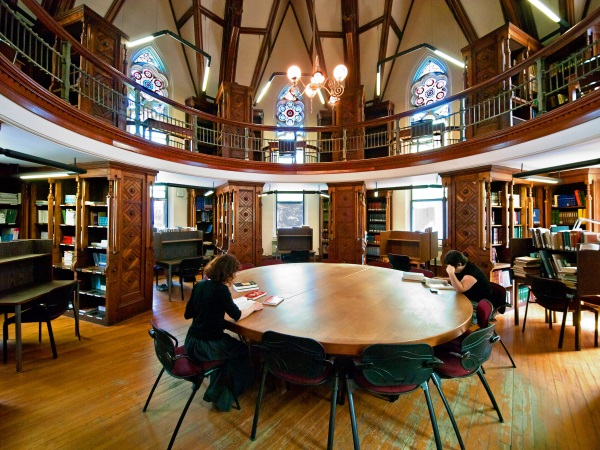
I was browsing my WoW screencaps for something entirely different when my eye fell on two shots from the Dalaran inscription trainer’s place. (This is in the Legion version of Dalaran.) Both are actually from inside the book-filled cupola: the first looks up towards the impossibly high ceiling, the second down towards the trainers’ room floor.
Neat, right? Well, I wondered whether anyone’s actually done anything similar for real and hit the Internet. And I found some!
The library is situated in the neo-Gothic Morrice Hall building that previously housed the Presbyterian College of Montreal from 1871 to 1961.
None of them are exactly the same as the game library cupola, of course: apart from the the scale of the rooms, the scale and direction of the bookcases might differ. But apparently it isn’t terribly far-fetched to make a round multi-storey library and pack it chock-full. 😀
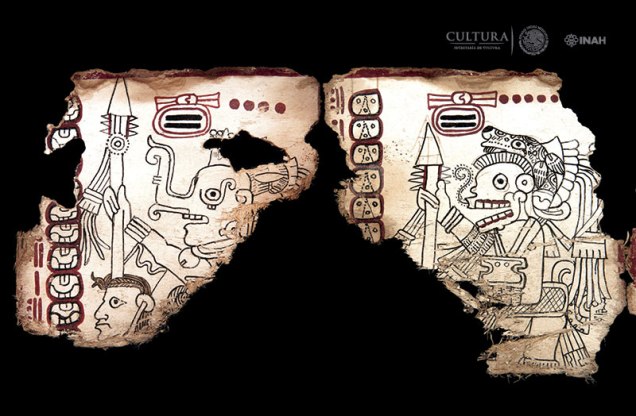
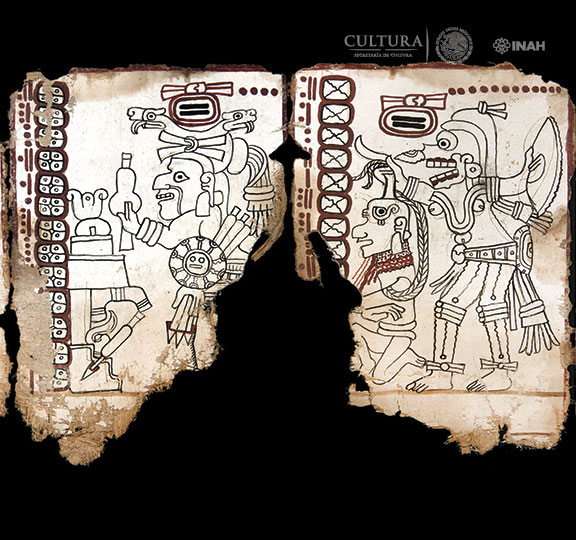
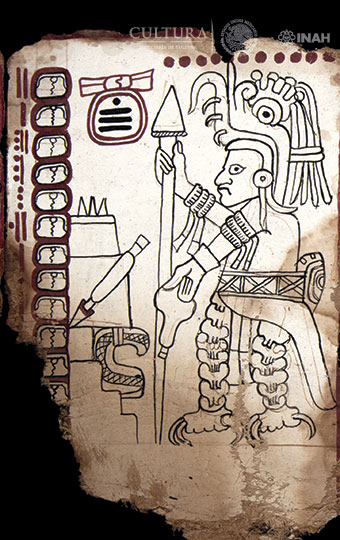
The pictographic calendar-style text was made between 1021 and 1154 CE, and is the oldest known pre-Hispanic manuscript from the Americas. It was made from three layers of amate paper (bark paper). Only 10 pages of a conjectured set of at least 20 sheets currently survive.
The document’s authenticity was questioned on the basis of two main concerns: missing archaeological records of its original context (due to it having been looted and traded), and its differing style compared to other authenticated Mayan codices.
According to Sofia Martínez del Campo from the National Coordination of Museums and Exhibitions (Coordinación Nacional de Museos y Exposiciones del instituto, or CNME, at INAH), quoted in the INAH announcement, the current analysis included making a detailed photographic record, as well as examining the dating, materials, entomology, iconography, chemical-mineralogical characterization, morphometry, chronology, style, and symbolism, among others.
The specialists found the presence of Maya blue color (azul maya) and pigments based on cochineal dye as well as leftover drops of a chapopote resin. (Britannica says: “[…] chapopote [was a] a native asphalt commonly applied to clay figurines as a decoration; occasionally, chapopote entirely covers the figures, while in other examples it is used to decorate only the face, mouth, or eyes.”)
In addition, INAH announced that the folding book will no longer be known by its previous name (Grolier); instead, the work will be known as Mexico Maya Codex (Códice Maya de México).
The Mexico Maya Codex will be shown to the public for one month, from September 27 to the end of October, 2018, as part of the International Book Fair of Anthropology and History (Feria Internacional del Libro de Antropología e Historia, or FILAH).
Also during the FILAH book fair the book El Códice Maya de México (The Mexico Maya Codex) will be released. It will include a facsimile edition of the pre-Hispanic text in addition to academic and scientific articles.
Only three other pre-Hispanic codices are known, called Madrid, Dresden, and Paris (for the cities where they are kept).
Apparently someone somewhere deemed an earlier analysis (reported e.g. by the Smithsonian.com in September of 2016) not conclusive enough, even though that one also authenticated the Mexico Maya Codex. (My Spanish isn’t good enough to spot any specific reasoning for the 2018 study in the INAH announcement.)
In any case, getting more information on traditional Maya religion and life before Europeans destroyed it can only be a good thing in my book—if you’ll pardon the pun. 🙂
Images of individual pages by Martirene Alcántara; laboratory analysis by Alba Barrios-Laboratorios, INAH; all via INAH.
Out There is an occasional feature highlighting intriguing art, spaces, places, phenomena, flora, and fauna.

In the 1970s, NASA designed potential space habitats in three basic shapes—toroid, Bernal sphere, and cylinder. Artwork depicting some of the plans has now been published in several sizes without copyright restrictions. Here’s the NASA description of the images:
“A couple of space colony summer studies were conducted at NASA Ames in the 1970s. Colonies housing about 10,000 people were designed. A number of artistic renderings of the concepts were made.”
Below are some of my favorites.
A version of cylindrical habitats has since been seen in popular media—Babylon 5, anyone?
The residential buildings look kind of cutely 1970s. (And I say this as a non-fan of the 70s aesthetic!)
Apparently all of these designs were meant for thousands of people: the toroid and spherical stations could house around 10,000 and the cylinder a million. Wow. They certainly did not dream small!
All images courtesy of NASA Ames Research Center: Cylindrical habitat / interior view looking out through large windows (NASA ID number AC75-1086) and toroidal / cutaway view exposing the interior (NASA ID number AC75-1086-1) by Rick Guidice. Bernal sphere / construction crew at work (NASA ID number AC76-1288) by Don Davis. Bernal sphere / cutaway view (NASA ID number AC76-1089) by Rick Guidice.
Out There is an occasional feature highlighting intriguing art, spaces, places, phenomena, flora, and fauna.
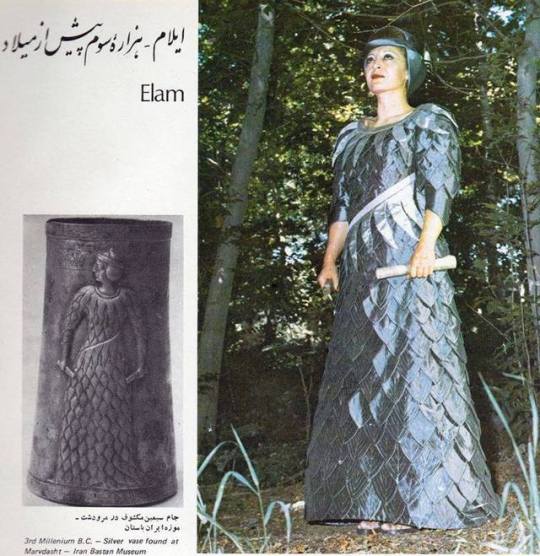
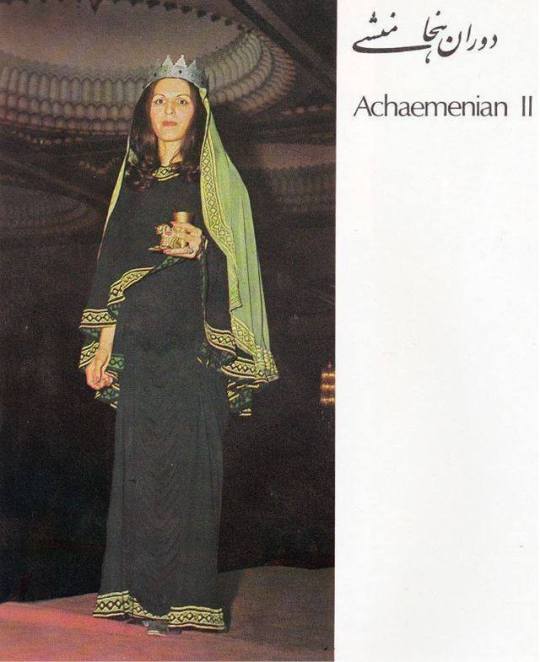
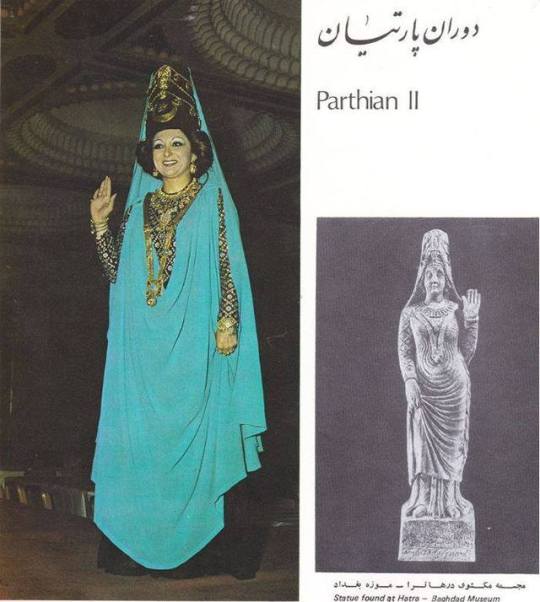
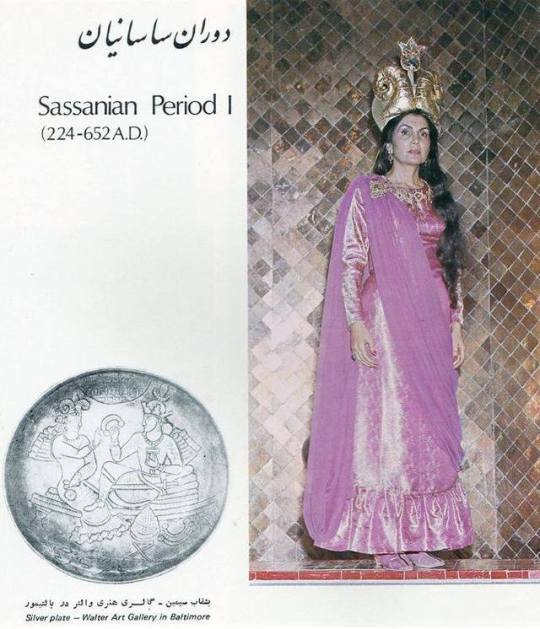
I randomly ran into a collection of recreations of Persian or Iranic women’s clothing from different eras, from ancient times to a few hundred years ago. Below are the five oldest outfits.
“Second Millennium B.C. From the collection of Ph. Ackerman”“Elam. 3rd millennium B.C. – Silver vase found at Marvdasht – Iran Bastan Museum”
They seem to be images of modern interpretations based on artwork of various kinds: statuettes, carvings, reliefs, paintings, and drawings.
“Achaemenian II”“Parthian II. Statue found at Harta – Baghdad Museum”“Sassanian period I (224-652 A.D.). Silver plate – Walter Art Gallery in Baltimore”
Aren’t they fascinating? The images clearly come from a print publication, but apart from that I unfortunately don’t have any source information.
I don’t know much about these eras and areas, but I can’t escape the impression that these recreations may be relatively old and, perhaps, not entirely reliable. For instance, the Sassanian dress seems very polyester-like (too shiny). On the other hand, a lot of the draping looks very plausible. It would be so interesting to read an analysis on each outfit by the researchers / creators.
I’ve long been into early history, specifically of textiles and clothing, usually the older the better. Sadly, it’s an area that we tend to have very spotty evidence. I’m so glad digitization and the Internet help get more information out to interested audiences. There are so many more sources and preserved fragments than many may realize, and now we get to see them!
Due to a post-winterstorm blackout a week more than two weeks ago, I’m still catching up on my Internet reading, so I only saw these awesome, nerdy motivational postersnow after the International Women’s Day. It was worth the wait, though:
Risa Rodil on Tumblr.
“Just because something works doesn’t mean it can’t be improved.”
Referring of course to Shuri from the movie Black Panther. As another tinkerer, I wholeheartedly agree! 😀
Risa Rodil on Tumblr.
“Behind every successful woman is herself.”
The posters are by letterer, illustrator and designerd Risa Rodil. She posted them on Tumblr in honor of the International Women’s Day (March 08).
I’m not a fan of the Victorian age per se, but watching Murdoch Mysteries has piqued my interest somewhat. Here are some intriguing photographs from the later 1800s to early 1900s.
From a set of unscripted photos taken in the streets of 1890s Norway by Carl Størmer, a young woman with books:
Young woman with books, photograph by Carl Størmer via Imgur (Oslo, Norway, 1890s)
All of the subjects in this set are remarkably relaxed. Love the contrast to the stiff studio portraits of the era!
(I’ve had trouble finding a more detailed source, unfortunately. Possibly Størmer’s photos are gleaned from the 2008 book 80 millioner bilder: Norsk kulturhistorisk fotografi 1855-2005 [’80 Million Pictures: Norwegian Culture-Historical Photography 1855-2005′], edited by Jonas Ekeberg and Harald Østgaard Lund.)
Finnish ladies and gentlemen on a ski trip in the 1890s:
Hiihtoretkeläiset ryhmäkuvassa (‘ski trip participants in a portrait’), photograph via Helsinki City Museum (Helsinki, Finland, 1890s, image number N252030, CC BY 4.0)
Judging by their attire, they are indeed ladies and gentlemen. What struck me is that, apparently, it wasn’t at all odd for the upper class to go skiing in their regular daywear.
Speaking of sports and Victorians, from 1891, here is high school dressage equestrian Selika Lazevski by Félix Nadar:
Selika Lazevski, photograph by Félix Nadar courtesy of Ministère de la Culture, France, via Black Female Equestrians (Paris, France, 1891)
What an arresting portait!
A Victorian couple from Leeds trying not to laugh while getting their portraits done in the 1890s:
Victorians certainly loved their wheels! I wonder exactly how one would’ve operated this chair—there’s clearly a handle bar connected to the front wheel, but if grabbing it with both hands, where does the propelling force come from?
A Sami woman from Finland photographed at Ellis Island in the U.S., so presumably immigrating, around 1905-1914:
Laplander / Sami woman from Finland, photograph by Augustus F. Sherman via New York Public Library digital collections (Ellis Island, New York, NY, c. 1905-1914, image ID 418041, public domain)
I wish the portrait hadn’t cut off at the waist; I would’ve liked to see the rest of the details of her dress (the belt looks especially interesting). I know that nowadays Sami outfits (gákti) are unique. Each is made for its wearer to reflect the personal / family history and area (and possibly the people as a whole?). I don’t know, however, how far back in time that practice goes.
Anyway. These old photos give fascinating glimpses of western life only about 100 years ago. So similar and yet so, so different.
Out There is an occasional feature highlighting intriguing art, spaces, places, phenomena, flora, and fauna.
Yareta or llareta (Azorella compacta) is a low evergreen that grows in the Andes mountains in Peru, Bolivia, northern Chile, and Argentina.
Looking at the landscape where it’s found, it seems that the yareta latches onto ground or rock and grows up and out into the rounded shape over the years.
The rounded, cotton-ball-like shape reminds me of how some mosses grow. Unlike them, though, the yareta can grow in dry conditions and nutrient-poor soil, if slowly. (According to Wikipedia, their growth rate is approximately 1.5 cm / 0.6 inches per year; however, an article in Pharmacognosy Magazine cites 1 cm in 20 years.)
Apparently the Andean people used yareta since Pre-Columbian times for the treatment of colds, pains, diabetes, asthma, bronchitis, womb complaints, gastric disorders, backache, wounds, and altitude sickness (Pharmacognosy Magazine Aug 2014).
Yareta looks like a great option for speculative writers and artists looking to break out of the Eurocentric worldbuilding mold.
Images: Yareta at Ollague Volcano lookout by Miguel Vieira via Flickr (CC BY 2.0). Yareta – Bolivian Altiplano by Knut-Erik Helle via Flickr (CC BY-NC-ND 2.0)
Out There is an occasional feature highlighting intriguing art, spaces, places, phenomena, flora, and fauna.
Apart from various aspects of the story and the movie series, the exhibition covers for example illustrations, the history of real-world magic, and early sketches and notes by J.K. Rowling. In addition, on display are a number of items from the Museum of Witchcraft and Magic.
My favorite feature is perhaps the section covering the real-world history of various Hogwarts classes, closely followed by the animals and fantastical beasts section.
Alku (‘Beginning’), a piece by the Finnish vocal folk hop ensemble Tuuletar, appears in a Game of Thrones commercial. The band’s website says,
“’Alku’, the opening track from Tuuletar’s debut album “tules maas vedes taivaal” has been sold for the use of one of the most popular tv-series in the whole world, HBO’s Game of Thrones. The song will be heard in the season 7 DVD and Blue-Ray [sic] commercial, which will be broadcasted worldwide. The deal was made together with Finnish record label Bafe’s Factory and ThinkSync Music from London.”
The ThinkSync news page on the sale links to a German-language DVD / Blu-Ray trailer for GoT season 7 on YouTube with Alku in the background:
GAME OF THRONES Staffel 7 – Trailer #2 Deutsch HD German (2017) by Warner Bros. DE
Tuuletar mashes up a cappella, beatboxing and Finnish folk music and poetry into a unique combination. Their debut album, Tules maas vedes taivaal (‘On Fire and Earth, in Water and Sky‘), won the prestigious Emma Award (the Finnish version of a Grammy) for the best ethno album of the year in 2016.
Vocalists Venla Ilona Blom, Sini Koskelainen, Johanna Kyykoski and Piia Säilynoja make up Tuuletar. More videos at YouTube or Tuuletar website.
Congrats, Tuuletar! I first found the band two years ago just before they released their debut record, and am absolutely delighted to see them doing so well. And Alku is so amazing it gives me chills—always a sign of greatness!