Global Medieval Sourcebook Brings More Manuscripts Online

Stanford University’s Global Medieval Sourcebook (GMS) now brings English versions of previously untranslated Middle Ages literature to everyone’s fingertips for free.

Global Medieval Sourcebook The Gosling

The open access, open source teaching and research tool offers manipulable scans of the manuscripts alongside transcribed texts in their original language and in new English translations. Also a brief introduction for each text is included, providing a commentary on the text’s cultural context and transmission history, its content, and the scholarly conversation around it.

The texts come from Europe, North Africa, the Middle East, and Asia between the years 600 and 1600. The current selection of languages is impressive: Old and Middle High German, Middle Low German, Medieval Dutch, Old and Middle French, Old and Middle English, Medieval Italian, Medieval Latin, Old Spanish (including Aljamiado), Medieval Hungarian, Chinese, Arabic, and Persian.

Texts are searchable by genre, author, period, language, and keyword. The GMS also includes a few audio files of specialists reading the texts in their original language.

Sounds like a fascinating resource! I’m especially intrigued by the audio files, since that’s not a typical resource in medieval text databases. Stanford seems just to be getting started, however, since at this writing only some dozen or so texts are included in the sourcebook. I also encountered some glitches, hopefully to be fixed shortly.

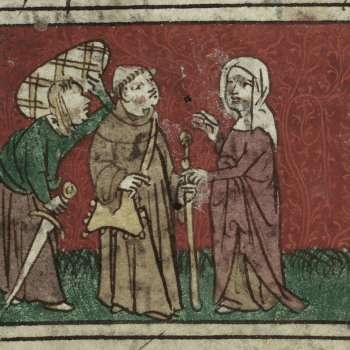
Image: The Gosling / daz genselin from British Library MS Harley 4399 f.37 via Global Medieval Sourcebook / Stanford University (Middle High German, c. 13th, illuminated manuscript)

Out There is an occasional feature highlighting intriguing art, spaces, places, phenomena, flora, and fauna

What Makes a Fantasy World Feel European?

One of the workshops I attended at Worldcon 75 was about non-European-based fantasy worldbuilding. It was a lively and enjoyable workshop, but—no doubt for logistical reasons—the discussion of what exactly makes a setting seem European was cut rather short. It’s not a question that is easy to answer, even though—from Tolkien to Game of Thrones—it is obvious that a lot of fantasy literature and media draws heavily on European, and specifically medieval European, influences. What is it about a fantasy world that makes it feel European, and what kinds of things should we consider changing if we want to create something that doesn’t?
Our popular collective sense of medieval European history is a fairy-tale world of knights on horseback, castles, kings and queens, pageantry and chivalry. For people growing up in the West, fairy tales in this tradition shape some of our earliest exposure to storytelling and it is no surprise that their forms and characters continue to inform how we approach fantasy. If you want to make your fantasy world feel less European, one approach is simply to look around the world for different terms to slot into the formula. Instead of telling a story about a dashing knight riding his trusty steed to rescue the princess from the castle of the wicked queen, you can tell a story about a dashing jaguar warrior riding his trusty ostrich to rescue the geisha from the stone fortress of the wicked maharani. This kind of “palette-swapping” (as Jeannette Ng calls it in an excellent recent Twitter thread) can work, up to a point, but the more depth and detail you have in your story, the more shallow this kind of worldbuilding will feel.

Let’s take a closer look at the details of “fairy tale” Europe. Knights, castles, kings and queens all have some basis in reality, but they are complicated. Mounted knights played only a small part in medieval European warfare and only in certain regions and periods. The crenellated stone fortresses we think of as “castles” had a similarly limited scope. Kingship was a precarious position across most of medieval Europe (where it existed at all). The most powerful actors were often local warlords. Chivalry meant the rules of war, which were followed as haphazardly as rules of war generally are. Their more romantic aspects were an embellishment of popular literature. Indeed, modern fantasy literature that imagines a world of chivalrous knights and fair damsels wandering from castle to castle draws far more on medieval fantasy literature (not to mention the self-serving propaganda of a small warrior elite) than on any of the realities of European history.

Furthermore, many of the things we commonly associate with medieval Europe were not originally European. Heavily-armed cavalry had been pioneered by the Parthians and depended on technologies—most crucially stirrups and large, strong horse breeds—developed in Central Asia. Stone fortifications had a long history of development in the Levant, and European castle designs drew heavily on Islamic examples encountered by Crusaders. Speaking of the Crusades, the Christian texts and ideologies that guided medieval intellectual culture were rooted in Jewish traditions and the cultural turmoil of the Roman empire’s eastern provinces.

So, what, after all, is so European about Europe? When we say that the fantasy we’re reading feels European, or that we want to write something that doesn’t, what are the things that add up to that?

My basic advice for worldbuilding is: start with the land, so let’s look at the land of Europe.

Europe, geographically speaking, is not really a continent but rather the long, vaguely triangular western end of Eurasia. Compared with most other major land areas, Europe is relatively compact. Most of the landmass falls between the 40th and 60th parallels. Many bays and small seas penetrate the land and break it up into numerous peninsulas and islands. A long mountain system sprawls across the southern half, a smaller and more fragmented one across the northwestern diagonal. Wedged between them is a broad plain threaded with numerous rivers, with forests in the west giving way to grasslands in the east. The North Atlantic current brings warm water and wet winds to the western coast while the many bays and small seas bring the climate-moderating effects of water to much of the land.

This geography has several significant effects for human cultures in Europe. One is that the climate is relatively stable and uniform across most of Europe. The southern half tends more warm and dry while the northern half is more cool and wet, but broadly speaking, the temperatures, rainfall, seasonal weather patterns, and growing conditions are similar enough across most of the land that the same crops can be grown and animals raised in most regions. (No, I’m not saying the climates of Spain and Finland are identical; I’m saying they have enough in common that a farmer from one place would not have to learn a whole new way of farming and acquire entirely new crops and animals to get by in the other.) The major staple crops are grains, primarily wheat and barley, with hardier alternatives like rye and oats appearing farther north. The principal farm animals are pigs, cattle, sheep, goats, and poultry, with goats being more common in the mountainous south and cattle more common in the northern plains.

The geography also makes travel and transport relatively easy. Most places in Europe are within a few hundred kilometers of the sea and much of the area is crossed by navigable rivers. Since waterborne transport is more efficient than overland, large cargoes can be carried around Europe more easily than in many other regions.

Put together the similarity of climate and the ease of transport and the result is a land where many basic elements of economic and social life—the organization of agricultural labor, the rhythms of the farming year, the structure of local trade—are similar in many different places. The relative ease of connecting local economies into long-distance trade means that goods, people, and ideas flow readily from one region to another.

Despite the ecological cohesiveness of Europe, this landscape has different effects on political life. The profusion of islands, peninsulas, and bays breaks up the landmass into many smaller regions. So do the mountains of the south and the forested areas of the north. While these smaller regions are connected by trade and travel, they are difficult to assemble into large coherent states. There are many places in Europe where one leader with a small following of warriors could easily control a handful of villages or a stretch of river valley, but these small territories are much harder to unite under one leader’s power.

These two tendencies have underlain much of European history and are still visible today: cultural and economic interconnectedness at odds with political fragmentation.

When people are united by culture but divided by politics, their warfare tends to focus on establishing dominance over the enemy rather than destroying them. The respect for shared institutions and values facilitates the development of common diplomatic customs which can limit the destructiveness of warfare and channel competition into symbolic contests. On the other hand, diplomacy can draw conflicts out by delaying a decisive clash. People are likely to find themselves at war repeatedly over the same issues, a feature we can also see in European history.

These factors tend to draw European societies into internal connections and conflicts, but Europe is also well connected to the outside world. The Mediterranean Sea is easy to cross to North Africa or the Levant and the there is an extensive land connection to the rest of Eurasia. A short overland trip from the southeastern Mediterranean leads on to the Red Sea and the Indian Ocean. North America can be reached either by riding the circular North Atlantic trade winds or by island-hopping by way of Britain, the Faroes, Iceland, and Greenland. People have always been moving into and out of Europe both individually and in larger migrations, bringing the influence of outside ideas and cultures into the region and taking European ideas abroad.

All of these factors are part of what makes Europe European. We can see their influence even in the fairy tale version. Many kings and queens (and other kinds of rulers) have competed for power across stretches of Europe, relying on knights (and warriors of other descriptions) who supported themselves on the agricultural produce of small local regions. In parts of this fragmented landscape, local magnates built castles (and other kinds of fortified dwellings) to secure their control of territory and resources. The cultural and economic connections between many of these warring parties fostered the development of a common set of norms for the conduct of warfare, which literature elaborated into a fanciful code of chivalry. Contact with the outside world and immigration of foreign peoples brought new ideas and technologies—like stirrups and stone castles—which then spread widely through networks of trade.

These forces are not always visible in storytelling, but they underlie many of the basic assumptions, social structures, and cultural habits that make so many fantasy worlds feel European. Even some of the most basic staples of fantasy literature have their roots in the European landscape—of course everyone eats bread and cheese when wheat is the dominant crop across most of Europe and cattle are the primary herd animal on half the continent.

If we want to build fantasy worlds that don’t follow the same familiar patterns, we need to understand where those patterns come from.

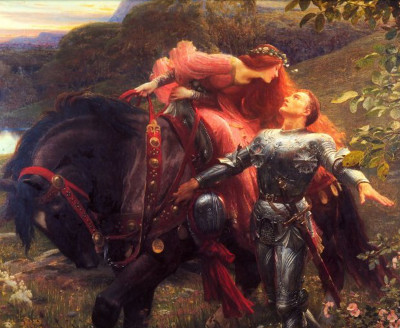
Images: La Belle Dame sans Merci via Wikimedia (Bristol City Museum and Art Gallery; 1901; oil on canvas; Frank Dicksee). Satellite map of Euopre via Wikimedia. A View of Tallanton Castle via Wikimedia (Scottish National Gallery; 1816; oil on canvas; Alexander Naysmith).

Post edited for clarity and to correct historical inaccuracies.

History for Writers is a weekly feature which looks at how history can be a fiction writer’s most useful tool. From worldbuilding to dialogue, history helps you write. Check out the introduction to History for Writers here.
Octavia Butler to Be Adapted for TV

I missed this when it was first announced, but here it is nevertheless: Octavia Butler’s novel Dawn is to be adapted for tv!

https://twitter.com/ava/status/895354839567171586

Dawn (originally published in 1987) opens the Xenogenesis trilogy (also known as Lilith’s Brood), where the Earth is mostly uninhabitable and humanity almost extinct until the alien Oankali intervene. Writer / producer / director Ava DuVernay and Charles D. King (Macro Ventures) are slated for executive producer posts, and writer / director Victoria Mahoney for the adaptation itself.

I first read the trilogy in the early 1990s in Finnish translation. The books have stayed with me, although over the years it became clear I’d forgotten quite a bit. Some 20 years later, I got my own omnibus in English to (re)read, and the trilogy was just as excellent as I remembered.

Looking forward to seeing what the team makes of Dawn! (Also, note to self: read more Butler!)

Worldcon 75: What Went Wrong

Most of our Worldcon 75 experience was good, but there were, unfortunately, some failures that need to be discussed, so I’m going to get those out of the way first before moving on to the things that went right. I want to stress this at the outset: lots of things went right, and lots of things that started out going wrong were getting better by later in the con. We’re going to talk about those things, too, and soon. Right now, though, here are some problems that need to be talked about so that other people involved in planning and running conventions and similar events can learn from them.

Our first day at the con offers an illustration of a lot of the problems.

My day began with a bright spot at registration, which was swift, efficient, and easy—the best con registration I have ever seen. But things went downhill from there.

My first stop was the information table to sign up for a workshop later in the day, and it was a mess. Staff at the table kept moving sign-up sheets from one part of the table to another. I was about to sign up for my workshop when one staffer told me I had to wait, then walked away; another staffer came over and snippily told me that if I wasn’t signing up for something, I had to leave. I did finally manage to get signed up, but the experience left me so frustrated that I had to leave Messukeskus (the convention center) for the rest of the morning and distract myself with work just so I could go back for the afternoon sessions without a dark angry cloud over my head.

Unfortunately, the afternoon did not go smoothly, either. Only a few panels had been scheduled for the first afternoon, many of them in the smallest panel rooms available. I only got to see one presentation that afternoon, and only by going to the room and getting my seat an hour before the session started. I enjoyed that session, but most of my afternoon was spent in boredom and frustration.

When Eppu and I got together for dinner in the evening, we discovered that most of the restaurants in the convention center had already closed for the day or were running out of food. We got the last two slices of pizza from one of the few places still open. Since one slice of pizza is not enough of a dinner for me, I then went out looking for somewhere, anywhere, I could find something more in time to get back for the next panel I hoped to see. Although the con had provided a helpful restaurant guide, nothing close enough for me to get to was open. I ended up going to the nearest railway station, finding a kiosk, and getting a couple packets of nuts. Thus fortified, I went looking for evening panels, but everything I wanted to see was full. After another couple of hours, I gave up and left.

There were other problems that didn’t affect me directly but I was aware of happening around me. Signage was lacking. There were no maps or directions to help people find their way to off-site event locations. There were no designated gender-neutral bathrooms (a surprising oversight in a convention which featured several panels on gender identity). There were serious traffic flow issues between different parts of the convention center.

Some of the things that went wrong with my first day are just the usual snags and stumbles you can expect when trying to coordinate any large group of people, but some were signs of systemic problems and failures of planning. Here are some lessons I think we can take from the experience:

Know your space and watch your numbers. A lot of the gear-grinding on the first day of the con was caused by the fact that the con was planned for 3,000-4,000 people and almost 5,000 showed up. That kind of mismatch will throw the best planning into chaos, but it is not an unforeseeable problem. The con coordinators knew how many attending memberships they had sold, even the surge that came in the last few weeks before the con. It was not unreasonable to predict that a lot of those members were going to turn up and want to attend the scheduled programming. As some have remarked, getting more people than you expected to show up to your con is a nice problem to have. Maybe for the con-runners, but as an attendee, standing around bored and frustrated all day because you can’t get into any of the programming you came for is decidedly not a nice problem to have.

Plan all parts of the attendee experience. Just like it is reasonable to expect that your con attendees will want to attend something, it is also reasonable to expect that people will want to sign up for things that require sign-ups. How and where people should do this is something that should be figured out before the con begins, not when dozens of people are already waiting in line. Worldcon 75’s registration was a model of good planning. The same attention needs to be given to other aspects of the con experience as well.

Control the things you can control; communicate about the things you can’t. No one can blame the con organizers for the lack of food options in and around Messukeskus. They don’t determine the local restaurants’ opening hours or food stocks. But they knew the con schedule and the opening hours of local eateries. If your con events run until 10 but all the local food joints close at 6, that is something you need to communicate to your attendees clearly, emphatically, and repeatedly.

Take feedback early and often, and act on it. This is one thing Worldcon 75 got absolutely right. There were feedback sessions every day from the second day of the con on, and changes in response to feedback were visible day by day, sometimes hour by hour. This is what saved the con from the disaster that the first day had me fearing it would become.

More Worldcon thoughts to come, and happily a lot more good things to talk about, but anyone in the con-planning scene, please take note of what Worldcon 75 got wrong and got right.

Quotes: How There’s Still Any Hesitancy to Front Women Characters in [Movie] Franchises

Among John Scalzi’s thoughts on the Wonder Woman movie are these observations:

“[…] it’s worth noting that only one other film has outgrossed Wonder Woman domestically so far this year, and that’s Beauty and the Beast, another woman-focused film, and the one film remaining on the theatrical schedule this year that will outgross it will be The Last Jedi, which also has a woman as the protagonist […]

”The real issue here, to my mind, is how there’s still any hesitancy to front women characters in franchises, superhero or otherwise. There’s pretty clearly no significant financial penalty for doing so if your franchise is already up and running and your marketing is focused; honestly, at this point there’s only upside, if you manage to make the film better than its male-focused franchise siblings. That upside is perceptual in the short run, as it largely was here with Wonder Woman. But in the long run it’s likely going to add to your franchise financial bottom line. [original emphasis]”

– John Scalzi

Hear, hear. Although, I find I’m absent-mindedly wondering whether Scalzi’s conclusion would hold over the past few years’ worth of movies as well as for 2017. In the end, though, I’m much more interested in the movies themselves.

Scalzi, John. “Wonder Woman: A Smash, Possibly in Different Ways Than You Think.” Whatever, August 03, 2017.

Serving exactly what it sounds like, the Quotes feature excerpts other people’s thoughts.

Worldcon 75: Looking Back

We’re back! From Wednesday, August 9th to Sunday, August 13th we were in Helsinki attending the 75th Worldcon, the first Worldcon ever held in Finland and the northernmost Worldcon to date. Now we’re home again and starting to look back at our experiences.

We have a lot to talk about. As we post, we’ll gather those links on this page. In the meantime, here’s some appreciation from Eppu to some of the people who helped make our con a good one.

How It Happens is an occasional feature looking at the inner workings of various creative efforts.

Sun, Moon, and Stars

Today, as many of us eagerly await the coming solar eclipse, is a good time to think about how peoples of the past experienced the sky. While eclipses were rare and sometimes frightening events for ancient cultures, living day to day with the rhythms of the sun, moon, and stars shaped how different peoples measured and thought about time.

Peoples whose way of life depended on mobility, such as hunter-gatherers and pastoralists, had good reason to care about the cycles of the moon. A bright full moon could provide enough light to travel long into the night while at the same time bringing out both prey animals that hunters depended on and

nocturnal predators that could be a danger to pastoralists and their flocks. Timing movement, hunting, and watchful nights around the cycles of the full moon was advantageous to peoples whose lives and livelihoods were shaped by forces like these. The lunar cycle—the period of just over 29.5 days between one full moon and the next—formed the basis for dating systems organized around months alternating between 29 and 30 days.

Agriculturalists, on the other hand, depended more on the sun, whose light and warmth they needed for their crops. Timing planting and harvest to the cycle of the seasons was crucial—plant too early and the crops could die from cold or drought; plant too late and the harvest would not mature before the growing season ended. Since the lunar cycle does not match up with conveniently with the solar year of just under 365.25 days, early farmers had to either adjust their calendars by fudging with the number of months in each year (a process called “intercalation”) or else track the time by counting the days in the year.

But the solar year doesn’t come out to an even number of days, so solar calendars require adjusting as well. We do this today by adding an extra day to February in leap years, but ancient peoples often depended on the observation of astronomical phenomena, such as the solstices and equinoxes or the yearly cycle of observable stars in the night sky. Different cultures approached this problem in different ways. In some places, people built megalithic monuments, like Stonehenge or the aboriginal Australian stone arrangement at Wurdi Youang, to mark critical astronomical alignments. Other peoples, such as the Maya, Babylonians, and ancient Chinese, developed sophisticated mathematical methods of observing and predicting astronomical events. Hindu sages in the fourth through tenth centuries CE calculated the length of the year to an accuracy within a few minutes of modern observations. Pre-modern people pictured familiar images in the constellations of the stars not just out of an impulse to explain the visible world around them but as a memory aid for tracking the movements of important markers of the cycle of the year.

The various lunar, solar, and astronomical ways of calculating time have all left their mark on the cultures who used them. Some important modern holidays, like Christmas and the midsummer holidays celebrated in many parts of the world, fall on or near important days in the solar calendar. Others, like Ramadan, are determined by a lunar calendar and move through the seasons year by year. Still others, like Passover and Diwali, represent a compromise between lunar and solar systems—tied to a season, but falling each year on a day determined by lunar cycles. The tracking of the year through the movement of constellations across the sky, once vital to the survival of agrarian societies, remains with us in the popular pseudoscience of astrology.

Thoughts for writers

In worldbuilding, calendars are useful not just for coordinating the events of your plot but as a reflection of the societies your stories take place in. If the celestial mechanics of your world is anything like ours, people will look to the sky to help them keep track of the conditions that matter in their way of life, but different societies will care about different things. Cultures that place a premium on mobility or who care about the movements of animals—whether predators or prey—will particularly pay attention to the cycles of the moon (or whatever else lights up the night). Sedentary, agricultural societies will need to mark the turning of the seasons by the movements of the sun and stars. A lot of societies will have reasons to combine solar and lunar calendars: herders and hunters need to manage the migration of animals from one season to the next, and lunar cycles are useful for farmers to coordinate market days, social events, and political gatherings. Cultures that have incorporated both pastoral and agricultural traditions are likely to reflect the history of that negotiation in how they mark the passage of the year. The sun, moon, and stars are not just beautiful parts of the natural world; they were vital tools in the lives of people all around the world in history, as they continue to be for many people today.

Image: Two diagrams with the sun and the moon via Wikimedia (currently Getty Center; late 13th c.; ink, paint, and gold leaf on parchment)

History for Writers is a weekly feature which looks at how history can be a fiction writer’s most useful tool. From worldbuilding to dialogue, history helps you write. Check out the introduction to History for Writers here.

You Belong Here

Co-Geeking is about the things we love: history, art, science fiction, fantasy, language, and so on. It is not about contemporary politics. We would rather just tend our geeky garden than get involved in the affairs of the big world outside.

But sometimes contemporary politics comes blundering through your garden gate and plomps itself down right on top of your petunia bed. And sometimes it proceeds to crap all over your tomatoes and puke on your antique roses. Then you gotta say something, so we’re saying it.

If you’re feeling threatened, worried, angry, or sad about the upsurge of hatred we’re seeing in current events, we’re with you. If you’re someone who loves the things we love but your history classes, SFF conventions, or geeky blogs made you feel like you didn’t belong, you belong here. If you’ve ever felt left out because of your race, religion, gender, orientation, or any other part of your identity, or if you’ve seen that kind of exclusion happen to someone you care about, we’re with you. If you don’t see yourself in the books, movies, tv shows you love, know that we want to see you there, too. If anyone has ever told you are wrong, bad, or dangerous just because of who you are, where you come from, or how you live your life, we stand with you.

Screw the fascists, racists, xenophobes, anti-Semites, Islamophobes, homophobes, sexists, transphobes, and all other flavors of bigot. Screw the people who believe that they are better than other people because of arbitrary details like race, religion, ancestry, sexuality, or gender. Screw the people are afraid of others just because of who they are. And double screw the ones who think that history supports their brand of hatred, or that they can drag it into the kind of stories we love, with a side of get stuffed.

We are in this together. Those who want to divide us will fail. Hatred and fear will fail. As we co-geeks carry on with our usual business of posting about interesting facets of history and squeeing over the latest movie trailers, know that we are here for you.

Babylon 5 s1 ep5 The Parliament of Dreams Selected Screencaps.
Selected screencaps from the Babylon 5 season 1 episode 5, “The Parliament of Dreams”, showcasing Earth’s dominant belief system: pluralism. (Delenn: What sort of demonstration does he have planned? Ivanova: He just said it’d showcase Earth’s dominant belief system. Sinclair: This is Mr. Harris. He’s an atheist. Mr Rosenthal, an Orthodox Jew. Sawa of the Jivaro tribe. Ms. Yamamoto, a Shinto. Ms. Naljo, a Maori…)

If want to get away from the problems of the big world for a little while, our garden is open. If you want to talk about what’s going on these days and how that relates to the art, stories, and history we love, we’re here for that, too. You belong here.

Image: Selected screencaps from the Babylon 5 season 1 episode 5, “The Parliament of Dreams”.

Announcements from your hosts.

Star Trek: Discovery Poster & Trailers

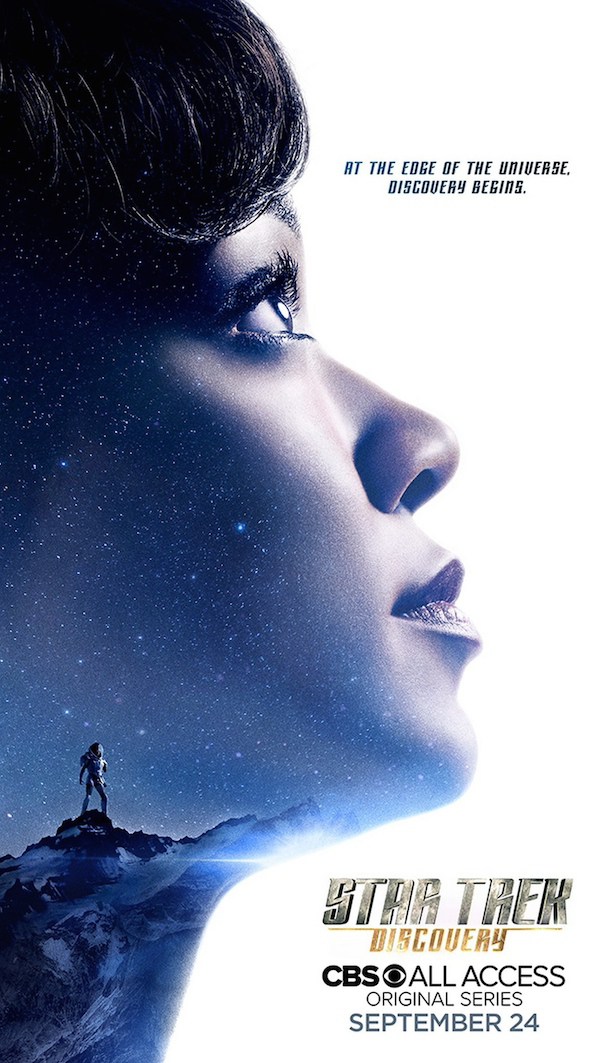
A whole slew of tidbits and sneak peeks for the upcoming series Star Trek: Discovery were unveiled at San Diego Comic-Con, including this GORGEOUS poster:

Tor com SDCC star-trek-discovery-poster

The official trailer was also released at the con:

Star Trek: Discovery – Official Trailer by Star Trek

It adds nicely to the first teaser trailer:

Star Trek: Discovery – First Look Trailer by Star Trek

I am getting chills every time I see either—definitely looking forward to Discovery! Who knows, it may even replace Deep Space Nine as my favorite Star Trek franchise.

Image: CBS via Tor.com

Hey, look! We found a thing on the internet! We thought it was cool, and wanted to share it with you.

Rating: Miss Fisher’s Murder Mysteries, Season 1

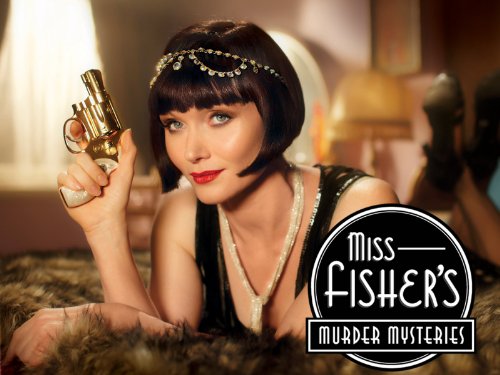
Our rewatching-and-rating project has moved on to Miss Fisher’s Murder Mysteries, a delightful Australian series about a flamboyant flapper detective from the roaring 1920s, based on the novels by Kerry Greenwood. We don’t get a lot of Australian tv on this side of the world, but Miss Fisher is a treat from beginning to end. The first season is the best-rating season of anything we’ve watched so far. (For an explanation of our rating system, see here.)

Here’s our ratings for the first season’s episodes:

  1. “Cocaine Blues” – 9
  2. “Murder on the Ballarat Train” – 8
  3. “The Green Mill Murder” – 8
  4. “Death at Victoria Dock” – 8
  5. “Raisins and Almonds” – 8.5
  6. “Ruddy Gor” – 7.5
  7. “Murder in Montparnasse” – 6
  8. “Away with the Fairies” – 7.5
  9. “Queen of the Flowers” – 7
  10. “Death by Miss Adventure” – 9
  11. “Blood and Circuses” – 5.5
  12. “Murder in the Dark” – 7
  13. “King Memses’ Curse” – 5

There are so many things to love about this series, from the wonderful characters to complicated mysteries. It explores both the Jazz-Age high life of the post-WWI bright young things and the workaday world of early-twentieth-century Melbournites. The main character, sparklingly played by Essie Davis, is always entertaining and she’s surrounded by an excellent supporting cast.

The average rating for this season is 7.4, which is a fantastic way to start. Most of this season’s episodes are good to excellent, with only a couple that come in a little underwhelming. The lowest of the season is the final episode, “King Memses’ Curse,” which is just a rather uninspired serial killer story. The entertainment industry loves its serial killers—especially, like this one, those that have an irrational obsession with the hero—but we’re just tired of the trope.

Fortunately, we have a couple of 9s tied for best episode to balance out the lackluster ones. The first episode, “Cocaine Blues,” starts things off with a bang, sending Miss Fisher into a murder investigation that leads to cocaine smuggling and a back-alley abortionist. Many of our favorite characters get introduced here: Miss Fisher’s timid but trusty companion Dot, the acerbic Doctor Mac, the sweet-natured Constable Collins, and Inspector Jack Robinson, who, though often aggravated by Miss Fisher’s insistence on thrusting herself into his investigations, also learns to value her input. The other 9 is “Death by Miss Adventure,” about a mysterious death in a factory which reveals many layers of intrigue and skullduggery. This episode gives Dot a chance to go undercover and also delves in Doctor Mac’s life in more detail.

You could hardly ask for a better first season!

Any Miss Fisher fans out there want to weigh in? Got a different pick for the best or worst episodes of the season? Let us know in the comments!

Image: Miss Fisher’s Murder Mysteries via IMDb

In the Seen on Screen occasional feature, we discuss movies and television shows of interest.