Happy New Year 2017!

Happy New Year, everyone!

New Year 2017

May 2017 both delight and challenge you.

Ours definitely holds promise: Apart from some significant personal events, 2017 is also the 100th anniversary of Finnish independence. Hooray! I’m so thrilled to be alive when a big anniversary like this rolls around. And, coincidentally, Worldcon 75 will be in Helsinki August 9-13, 2017. Not yet sure what kind of a trip we could manage, but it sure would be fantastic to go. Might we see you there?

Image by Eppu Jensen

Top Five Posts for 2016

Go-Geeking is a year and a half old! Like last year, we looked at the posts that got the most eyeballs. For 2016 they are as follows:

  1. Race and Culture in Hannibal’s Army Erik responds with an ancient historian’s perspective to a Tor.com post about Hannibal’s army from the point of view of historical wargaming
  2. Hogwarts Dueling Club Tablecloth Transformed into Wall Hanging Eppu shares an eye-catching Harry Potter craft project found online
  3. Putting Trigger Warnings on my Syllabi Erik lays out An Opinion
  4. Arrival Recap Eppu’s first thoughts on the movie Arrival
  5. Fantasy Religions: Sacrilege, Blasphemy, and Heresy In a History for Writers piece, Erik discusses religion from the point of view of early history and what to consider while worldbuilding

Overall—taking the whole year-and-a-half block—we get a slightly different list:

  1. Do-It-Yourself Fantasy Place Name Generator Erik’s basic system for creating fictitious place names wins the top slot by a wide margin
  2. Race and Culture in Hannibal’s Army Erik responds with an ancient historian’s perspective to a Tor.com post about Hannibal’s army from the point of view of historical wargaming
  3. Sean Bean on the LotR Joke in The Martian Eppu shares a short transcript from an interview with Sean Bean by Yle, the Finnish national broadcast company
  4. Hogwarts Dueling Club Tablecloth Transformed into Wall Hanging Eppu shares an eye-catching Harry Potter craft project found online
  5. Putting Trigger Warnings on my Syllabi Erik lays out An Opinion

It’s fascinating to compare our favorite posts with what other people find interesting. Cool cool cool. 🙂

Messing with numbers is messy.

R.I.P. Carrie Fisher

Carrie Fisher, actor, author, advocate, script doctor, and Resistance General extraordinaire, has passed at the age of 60.

Carrie Fisher Homepage

Rest in peace, dear Ms. Fisher. Your honesty, fearlessness, and spirit will be missed.

In the words of Tough Love Leia on Twitter:


Image via carriefisher.com

Post edited for formatting.

Seasonal and Geeky Trees

Here’s a few of our favorite brilliant and inventive Christmas trees from around the web.

A hilarious Cookie Monster Christmas tree by imgur user enhydralutris45:

imgur enhydralutris45 Cookie Monster Christmas Tree

An ingenious Star Wars tree by Amy at DIY Candy (with how-to instructions):

161221starwars

Kathryn Burnett’s fantastic Harry Potter tree (from North News via Bored Panda):

161221hp

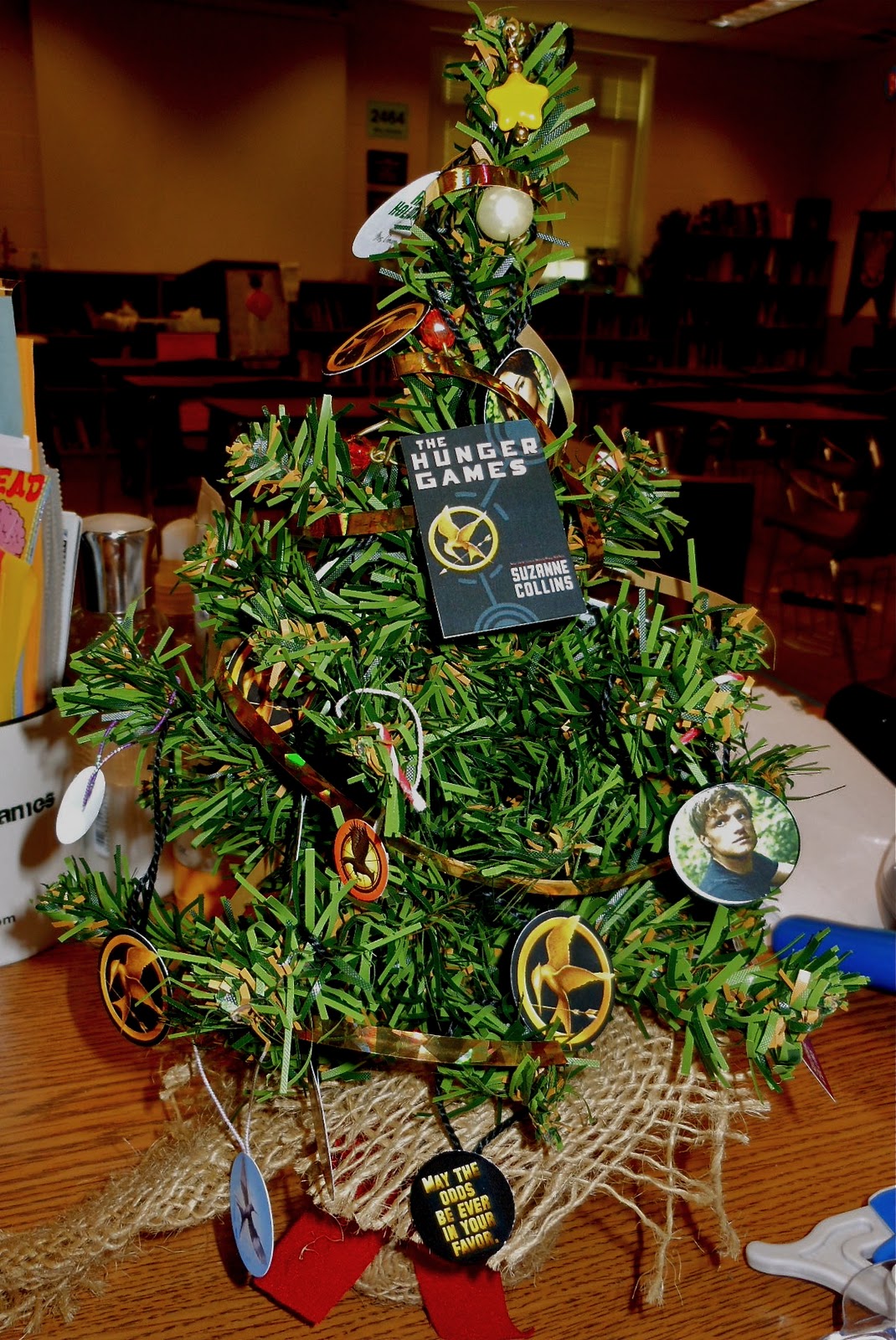
And finally, a little less extravagant but no less charming, a small Hunger Games tree from Hunger Games Lessons, with a helpful how-to:

161221hg

We’re vacationing for a week or so. Until then, Happy Merry!

Hey, look! We found a thing on the internet! We thought it was cool, and wanted to share it with you.

History for Writers Compendium: 2016

History for Writers explores world history to offer ideas and observations of interest to those of us who are in the business of inventing new worlds, cultures, and histories of our own. Here’s where we’ve been in 2016:

Living historically

Thinking historically

Race and identity

Language

Special Series:

Recommended Reading

Fantasy religions

Connections

Travel

Architecture

Join us in 2017 for more history from a SFF writer’s perspective.

History for Writers is a weekly feature which looks at how history can be a fiction writer’s most useful tool. From worldbuilding to dialogue, history helps you write. Check out the introduction to History for Writers here.


Making A Proper 1420

Here’s a look at how we made yesterday’s A Proper 1420.

The menu

  • Boiled chicken dinner
  • Poppy seed-cakes

erikchef1There’s few ways of cooking more traditional than boiling. You can put vegetables and meat all in one big pot and boil until cooked through. Everything comes out piping hot and full of flavor. It’s simple and satisfying.

Dinner12

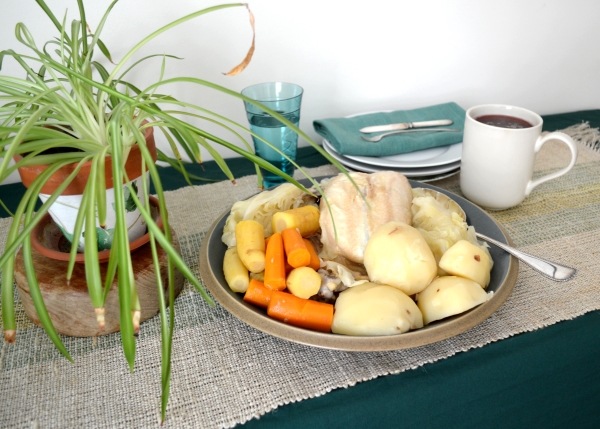
Our dinner this month is based on an old staple of New England cookery, the boiled dinner of corned beef or ham and root vegetables. I’ve substituted chicken for the meat and used what seemed like suitably Hobbitish vegetables: onions, potatoes, carrots, and cabbage.

We can be certain that Hobbits have chickens, since there’s no end of eggs in Bilbo’s kitchen. (H1) Pippin also complains about Gandalf guarding the palantir “like a hen on an egg.” (3.11) Potatoes, carrots, and onions are all on Sam’s wish list for a good stew (4.4) and the Gaffer scolds his son for dreaming of elves and dragons instead of cabbages and potatoes. (1.1) These ingredients all seem pretty solidly attested.

“Seed-cake” can mean any of a variety of cakes flavored with seeds, but I picked an old poppy seed-cake recipe that sounded like something Bilbo would enjoy. (H1) Poppies have long been cultivated in western Europe and elsewhere for their seeds and oil; they seem like they would be at home in the Shire.

Continue reading

Dining in Middle Earth: A Proper 1420

“Altogether 1420 in the Shire was a marvellous year. […] In the Southfarthing the vines were laden, and the yield of ‘leaf’ was astonishing; and everywhere there was so much corn that at Harvest every barn was stuffed. The Northfarthing barley was so fine that the beer of 1420 malt was long remembered and became a byword. Indeed a generation later one might hear an old gaffer at an inn, after a good pint of well-earned ale, put down his mug with a sigh: ‘Ah! That was a proper fourteen-twenty, that was!’”

LotR Dinner12

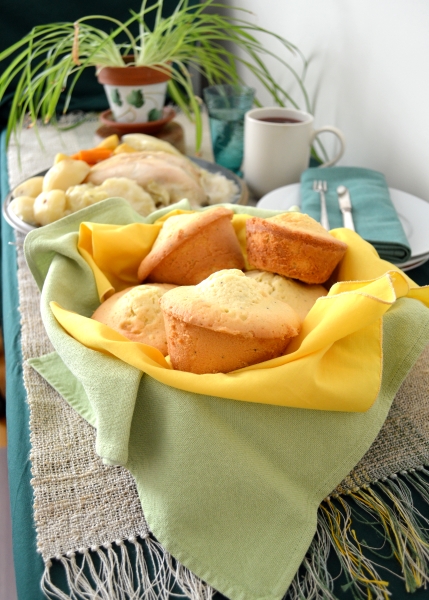
We come back, at last, to the Shire, to end our year of dining in Middle Earth with a humble Hobbit dinner such as Frodo and his friends might have enjoyed after returning home from their adventures. A boiled chicken dinner makes a warm, homey meal for cold winter nights, and of course there’s beer to go with it. For dessert we have seed-cakes, an old favorite of Bilbo’s.

LotR Dinner12 Main

The table setting is sunny and cheerful, decorated with the Hobbits’ favorite colors. An unbleached linen table runner with green and yellow stripes sits over a dark green tablecloth. Green also comes on the napkins and plant pot with an ivy motif. The dinner is served on one large, hefty platter. A cloth-lined bread basket holds the small dessert seed-cakes. Fancy water glasses add another pop of greenish hues to the table.

LotR Dinner12 Dessert

Check out what’s it about in the introduction, or read the how-to!

Images by Eppu Jensen

Geeks eat, too! Second Breakfast is an occasional feature in which we talk about food with geeky connections and maybe make some of our own. Yum!

Scandi-Style Stormtrooper Sweaters

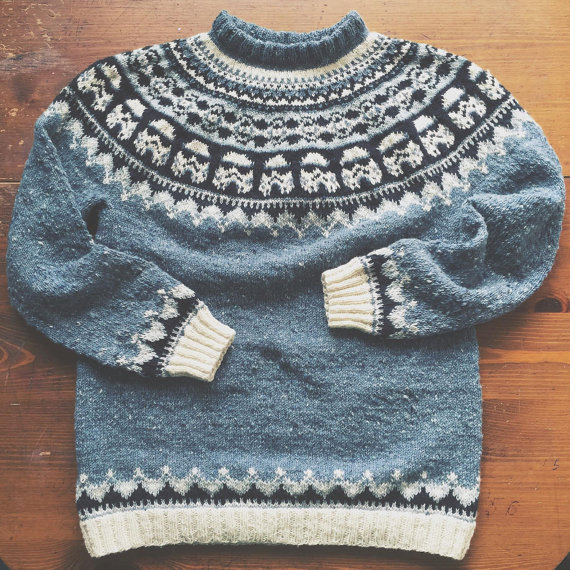
A speed-knitter and a Star Wars fan? There might still be time to make one of these awesome stormtrooper sweaters for Rogue One opening!

Etsy NatelaDaturaDesign Stormtrooper Sweater
NatelaDaturaDesign on Etsy

Both the instant download patterns and finished knits are by Natela Astakhova at NatelaDaturaDesign on Etsy. Just glancing at it, my eye read the pattern as your generic Scandinavian circular yoke sweater, then I did a double take. As I already said, awesome!

In Making Stuff occasional feature, we share fun arts and crafts done by us and our fellow geeks and nerds.

In Which Our Heroes Go Clothes Shopping

161212dyingOur Heroes wake up naked and cold with the chickens in the alley out back of the inn after being on the losing side of a tavern brawl. Clearly this is part of the Call to Adventure that must not be denied, but first things first: they need clothes. What do they do?

We today live in an industrialized world in which consumer goods like clothes are readily available. If you need something to wear, it’s easy enough to go into a store and buy something. Unless you’re shopping for high fashion, it probably won’t cost you too much, either. All of this is possible because of factories, global transportation networks, and a modern economy, but none of these things existed before the last couple of centuries. Any time before then, buying clothes was a very different experience.

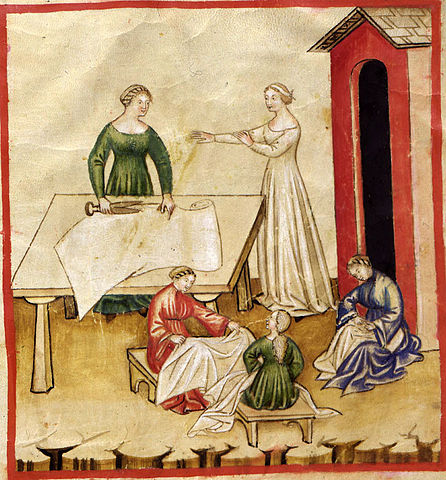
To begin with, a lot of clothing wasn’t bought at all. In many pre-industrial societies around the world, producing and maintaining the family’s clothing and other textile goods was one of the main occupations of the household. Although textile production was in many cultures traditionally counted as women’s work, men were involved in it, too, at every stage from shearing sheep or gathering flax to delicate finish stitching.

Only specialty items requiring expert work, like gloves, boots, hats, etc., were routinely made by professionals. As market economies developed, specialty processes, like dying and fulling, were also increasingly outsourced to professionals, but everyday wear was still largely made at home. (As a useful point of reference for the development of specialty production, notice how family names like “Glover” or “Dyer” are much more common than, say, “Shirter” or “Socker.”)

Of course, there were always people who didn’t have a household around them to help make clothes. Soldiers and travelers far from home might need to replace damaged clothing or buy new gear suitable to the local climate. In any reasonably well-developed settlement, those who needed to purchase clothes probably could. They might get lucky and find someone willing to sell off an older set of clothes, or, for the right price, they might be able to get someone to sew them up a new set to order, but the chances of finding a clothing shop with new garments ready to wear were very slim.

So, supposing Our Heroes do find someone with clothes to sell, what are they going to cost? It’s hard to estimate prices in pre-modern economies, but here are a few points for reference:

The Roman emperor Diocletian, during a period of economic crisis, tried to stabilize the Roman economy by issuing an edict dictating wages for many different kinds of workers and prices for a variety of commodities and services. Diocletian’s edict wasn’t very effective in practice, but it’s a useful snapshot of what someone in antiquity thought were reasonable wages and prices. So, for example, the edict prescribes a price of 2,000 denarii for a common shirt. Compare that with the daily wages of 25 denarii for a farm laborer, 50 for a carpenter, or 75 for a skilled terra cotta artist. Even a well-paid artisan would have to spend most of their wages for a month just to buy a shirt. Depending on how rich Our Heroes are, new clothes could set them back a lot of money.

Now, Diocletian’s edict was only one politician’s idea of what things should cost, not a record of what they actually did cost. For a glimpse of actual prices we can look to some of the letters from Vindolanda, a Roman fort in northern Britain, where some everyday letters and paperwork from the fort were preserved by chance in the local soil. Some of these documents mention tunics priced at 3 denarii, boots for 3.5 denarii, and cloaks for 11.5. These goods sound a lot cheaper, but, in this period before the economic crisis that Diocletian was trying to deal with, wages were a lot lower, too. Soldiers at the time were paid 300 denarii a year, less than a denarius a day, a portion of which was held back to cover expenses. At those levels, a soldier would still have to spend most of his pay for a week to buy a tunic, or half a month to buy a cloak.

What was true in Rome was true in most other parts of the pre-modern world. There was no just nipping into a shop to buy a new set of clothes. Even where you could find clothes for sale, they were not a small expense. Outfitting one of Our Heroes in a full new set of clothes could well cost them most of their income for a year.

Image: Linen working via Wikimedia (14th c.; paint on parchment)

History for Writers is a weekly feature which looks at how history can be a fiction writer’s most useful tool. From worldbuilding to dialogue, history helps you write. Check out the introduction to History for Writers here.