Recommended Reading: Homer, The Quarrel of Achilles and Agamemnon

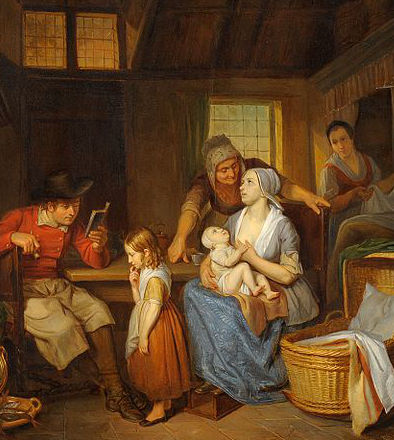
150928IliadOne of my weaknesses as a writer is dialogue, particularly dialogue that needs to carry subtext. I’m not good at writing the kinds of things that people say when they’re not actually saying what they’re saying. When I need inspiration for how to write a scene in which people say one thing while really conveying something else, the place I look is the argument between Achilles and Agamemnon in book 1 of the Iliad (lines 101-244).

There are a lot of good translations of the Iliad available if you want to check it out. I’m especially fond of the Robert Fagels translation for the strength of its poetry. Richmond Lattimore’s version is good if you really want to get close to the rhythms and patterns of the original Greek. The translation on Perseus is older and less readable, but you can pick up the scene I’m talking about around the middle of this page (start after [100]). There are plenty of other choices.

To set the scene: As the Iliad opens, the Trojan war has been going on for ten years and has come to a stalemate. The Greeks are not able to breach the high walls of Troy while the Trojans cannot dislodge the Greeks from their camp on the shore. To break the impasse, the Greeks have begun trying to put pressure on the Trojans by raiding the smaller towns nearby that are allied with Troy. One of these raids carried off a young woman, Chryseis, who was awarded to Agamemnon as his prize. Chryseis’ father Chryses, a priest of Apollo, comes to the Greek camp to ask for his daughter’s return, but Agamemnon refuses and sends him away. Chryses prays to Apollo for aid and Apollo obliges by spreading plague through the Greek camp. After ten days of suffering, the Greek kings gather together to discuss the situation. The seer Chalcas reveals the cause of Apollo’s wrath.
Continue reading

The Case of the Missing Roman Railroads

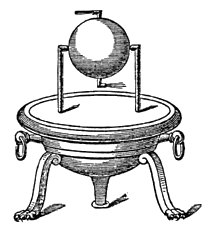
150824AeliopileThe Roman empire had a problem. It was just too big. When a crisis developed on one frontier, it could take weeks for the emperor to hear about it, then months or even years to move troops and supplies into position to deal with it. The large frontier army consumed supplies which had to be delivered at great expense from the agricultural heartlands. The roads built by the Roman army helped make all this travel faster and easier, but if the Romans had built railroads they could have made it much easier still. A Roman empire with railroads might not have fallen apart in the fifth century CE. So why didn’t the Romans build them?

The obvious answer is that they didn’t have the technology of steam power, nor the resources of coal and iron needed to build a functioning railroad. It’s a good answer, but like many such obvious answers it’s missing something.

Continue reading

The Billion-Dollar Pyramid

150817PyramidWe all know that the pyramids of Egypt were tombs for the pharaohs. (Yes, yes, and landing pads for Goa’uld spaceships; you can put your hands down now.) Thinking about what it took to build them, though, gives us an idea of what else they were.

The construction of the pyramids is a perpetual favorite subject of cranks and crackpots (Lost technologies of Atlantis! Sound waves!). Even among the more reality-bound, there is no end of theories ranging from the mundane (ramps and sledges) to the reasonably plausible (pulleys and levers) to the unlikely but not impossible (poured concrete). No matter what technique we imagine, however, one thing was definitely required: massive amounts of labor.

What most armchair pyramidologists miss about the problem of megalithic construction is that the physics of moving large stones are very simple. Apply enough force to a mass and it will move. Some things can make the application of force easier: ramps, pulleys, rollers, whatever you’ve got, but in the end it’s just a matter of force versus inertia. No matter how you go about building a pyramid, what you need in the end is the same: muscle power and time. With enough muscle power and time you can build pretty much anything, but labor is expensive. The real problem that would-be pyramid builders have to solve isn’t technological, it’s economic. The real question isn’t “How did they build the pyramids?” but “How did they afford the pyramids?”

Continue reading

Labor

150810oxcartThe majority of the stuff that needs to get done in an agrarian society is basic manual labor: primarily farm work, but also things like construction, building and road maintenance, mining, carrying, housework, etc. Any functioning pre-industrial society needs lots of workers to do all that work, but there are many different kinds of workers, some of which are not so familiar to us today. Some of these kinds of workers had it much better than others.

Here’s a list of possibilities, by no means exhaustive, arranged roughly in order from worst to best conditions.

Continue reading

35 Isn’t Old and Everyone’s a Royal

150703FamilyI suppose that title’s a little more interesting than “Pre-modern Demography.”

You’ve probably heard the statistic that the average lifespan in the European middle ages was 35. I remember learning that when I was young. Most of my students have heard it, too, and just like I used to, they imagine that it means that when medieval people got to thirty-two or thirty-three it was time to start looking around for a cemetery plot and a good gravedigger, and that anyone who made it to forty must have been a revered elder, if not a terrifying freak on nature. The truth is much more interesting.

Data about births and deaths is hard to come by for periods before the rise of modern bureaucracies. In a few localities there are church records going back into the late middle ages. Legal documents like wills, deeds, and contracts occasionally offer information about peoples’ births, ages, and deaths, but such documents come from only a very restricted class of people and they may be unreliable because people misrepresented the truth when it suited their political and economic purposes. Archaeological studies of burials can be very useful, although determining age from skeletal remains is imprecise, and we are at the mercy of biases in burial customs and survival of remains. All of these sources of information are partial and biased, but pulling them together gives us a rough sense of how people lived and died in earlier ages.

There are broad patterns that can be discerned from the evidence, but as with most such broad patterns we should always be alert to local variations. Another caution: I’m working from the evidence that I happen to be familiar with, which is mostly European and Mediterranean. Many of the same forces that were at work in that region of the world are relevant to others as well, but we must be alert to regional differences.

Continue reading

Hugo Voting, “Good” Stories, and Politics

I just submitted my Hugo ballot for 2015. We’ll know soon enough who won what. We’ve had months of online arguing about who should win and why, and I’m sure we’ll soon have months of arguing about who won and why, and if you’re at all like me, you’re sick to death of the whole business. So, I’m not going to talk about who I voted for or why I think they should win. Instead, I want to talk about two ideas that have arisen from the conversations that have unfolded around the Hugos this year. Both have to do with how we evaluate stories and both, I think, are founded in misguided ideas about what a story is.

The ideas I’m talking about are:

1. “We should vote for stories that are good, not just the ones we like”

Most of the time, I like things because I think they are good and I think things are good because I like them.

There’s some slippage around the edges. There are some things that I can see are technically well executed, but that I don’t enjoy (The Hunger Games, the rebooted Battlestar Galactica), and there are some things I enjoy despite their technical failings (early-season Star Trek: The Next Generation, The Princess Bride). For the most part, though, the overlap between “stuff I like” and “stuff I think is good” comes pretty close to 100%.

There is no objective standard of what makes a story “good.” You can’t measure and quantify it. There are things that a lot of people agree on about what makes for a good story, but subjectivity in large amounts is not the same as objectivity. Lots of people think that Ender’s Game is a great work of science fiction, but in the end all that means is that lots of people like it.

Calling on people to vote for stories that are “good” is meaningless. If nothing else, the controversy around this year’s Hugo nominees has been an excellent demonstration of the fact that we all have different definitions of what good means. We vote for the stories we like because those are the stories we think are good. The winners will be the stories that the greatest number of people liked, and that’s all there is to it.

2. “We shouldn’t judge a story on whether we agree with its politics or not”

As one of my college writing teachers told us: “A story is an experiment in moral physics.” At the core of a story, any story, is an idea about how the world does, could, or should work. You can call that politics or a message, but all it is in the end is an idea, and an idea that shapes how the world of a story works and how its characters interact with one another is just as integral to that story as any other element.

It is just as legitimate to judge a story on its ideas as on its plot, characters, dialogue, or any other element. A vital part of what make so many of us love, say, The Lord of the Rings is the idea that doing the right thing matters, even when it seems like no one will ever notice or care. Without that guiding idea, the story would not be at all the same. When we are deciding whether we like a story or not, we cannot take the ideas of that story out of the picture and it would be a mistake to try.

And that is all I have to say about the 2015 Hugos. You pay your money and you cast your vote. We’ll see the results soon enough.

Story Time is an occasional feature all about stories and story-telling. Whether it’s on the page or on the screen, this is about how stories work and what makes us love the ones we love.

Recommended Reading: Herodotus, “The Tale of the Clever Thief”

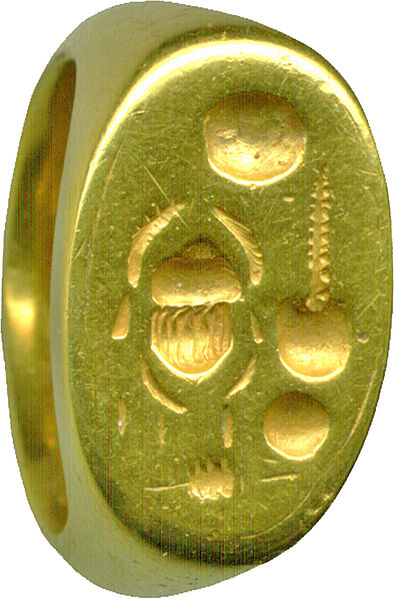
150727ringWe learn to write by reading, and so I’d like to share with you some of the works of classical literature that have inspired me as a writer. There’s no better place to start than with the Greek historian Herodotus. Herodotus’ Histories is my favorite book of all time. I re-read Herodotus like some people re-read Tolkien. “The Tale of the Clever Thief” (that’s my own name for it; Herodotus didn’t give that particular story a name of its own) is one of the most delightful parts of the work.

Herodotus is popularly known as the Father of History. He is also known as the Father of Lies. Both titles are appropriate. Herodotus was the first (surviving) author in the western tradition to write about the past in terms of human actions and motivations, not the deeds of gods and heroes. He was also a storyteller who enjoyed spinning a good tale, even if he didn’t think it was true (and some of the things he did think were true are pretty outrageous).

Continue reading

Do-It-Yourself Fantasy Place Name Generator

Writing a fantasy story or role-playing scenario? Need to come up with names for towns, rivers, mountain ranges and so on, but tired of thinking up new names all the time? Here’s a handy technique I use. It takes a little work up front, but then it makes coming up with new names really easy.

The thing about place names is: when you dig down deep into their meaning, they’re usually really obvious and descriptive. It’s only time and language change that obscures their meaning.

Look at a map of Europe and you’ll find Copenhagen (“merchant harbor”) and Dublin (“black pool”). In Asia there’s Shanghai (“above the sea”) and Samarkand (“stone fortress”). The same applies to the native names anywhere else in the world. In places that have experienced substantial colonization, the conquerors often imported old names that didn’t relate to the landscape (New York, Wellington), but in other cases the new names given by colonizers were just as descriptive (Cape Town, Salt Lake City).

The reasons for this naming pattern are fairly straightforward. If you live in a landscape where there are several rivers, but only one of them is muddy, or plenty of mountains, but there’s a big one with no trees on top, when you need to refer to that river or that mountain, you’re likely to say: “the black river” or “the bald mountain.” From there it’s only a short step to calling them “Black River” and “Bald Mountain”. As time goes on and language changes, place names tend to become fossilized and preserve older variants and meanings that the rest of the language has left behind.

So, put these facts to work for you. When you’re setting up your map, generate a list of place name elements and then you can quickly combine them to make new names for whatever you need.

Here’s how it works:

Continue reading

Some Notes on Gender and Power (Part 2)

Picking up from where we left off last week, here are some more notes on gender and power. First, a refresher on where we started:

1. There is a lot of bad theorizing out there about gender and power relations

Primordial matriarchies, evo-psych patriarchies — all bunk.

2. Patriarchy is not inherent in human societies.

Patriarchy is a historical development, not a biological imperative.

Carrying on now:

3. There are many different kinds of patriarchy

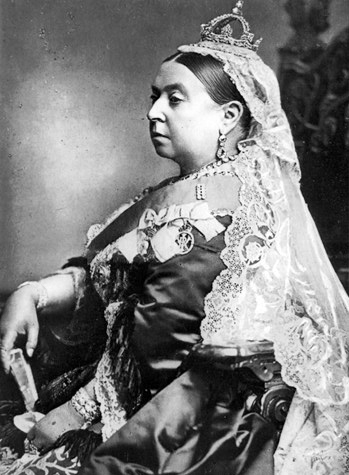
150713VictoriaAs I explained last week, patriarchy is not a universal of human societies but rather a product of specific historical circumstances. As a result, there are as many different varieties of patriarchy as there are cultures that practice it. There is no “the patriarchy” any more than there is “the democracy” or “the music.” Some democracies have parliaments, some have electoral colleges, and some just have town meetings. Some music has violins, some has taiko drums, and some has beatboxing. Patriarchies are just as variable.

Consider, if you will, Victorian Britain and the Roman empire. Both were unquestionably patriarchal, but that doesn’t mean they worked the same way.

Continue reading

Some Notes on Gender and Power (Part 1)

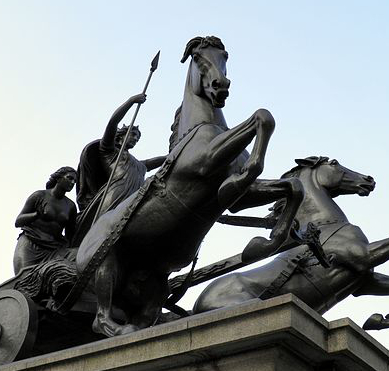
150629BoudiccaGender and power are two very big and complicated topics. Put them together and you get something even bigger and complicateder. (Yes, I said “complicateder.” Deal with it.) They are also two topics that have become very important in a lot of contemporary speculative fiction. I’m not going to try to take on the whole subject here, but I would like to offer a few points that can be useful for thinking about gender, power, and how they fit both into the world we live in and into the worlds we write about.

Continue reading