Hadrian’s Wall… In Legos!

Brick to the Past is a British Lego-building group that bases their creations on historical landscapes and architecture. One of their builds from last year was inspired by Hadrian’s Wall. The layout combines a stretch of wall, a Roman fortress and town, a milecastle (one of the fortified gateways placed at one-mile intervals), and a native village.

Hadrian's Wall by Brick to the Past
Hadrian’s Wall by Brick to the Past

The buildings are full of delightful details and clever Legosmithing, like the use of a cogwheel over the main door of the bathhouse to represent the wild-haired head that was often associated with springs and baths in Roman Britain, like this fine example from Aquae Sulis (present-day Bath).

The bathhouse by Brick to the Past
Pediment from Aquae Sulis
Pediment from Aquae Sulis, detail of photograph by Velvet via Wikimedia (Bath; 1st c. CE; stone)

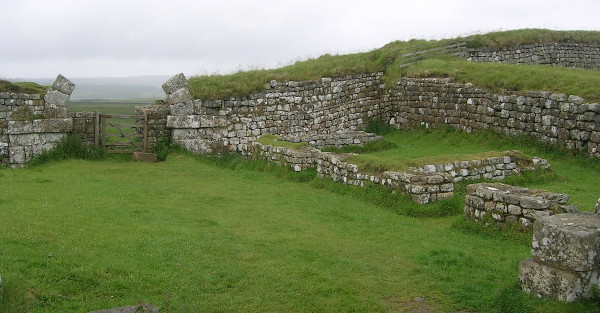
Hadrian would be proud. Here’s a picture of the original, from Milecastle 37. They do kind of look like Legos, don’t they?

Milecastle 37, photograph by Erik Jensen

Hey, look! We found a thing on the internet! We thought it was cool, and wanted to share it with you.

Connections: Rome and the Arctic

160314glassFrom the city of Rome to the Arctic circle is a distance of about 2,750 km. At its greatest extent, the northernmost tip of the Roman empire was more than 1,000 km from the Arctic. Even across such a distance, however, there were connections. A couple of little pieces of evidence show us how knowledge of Rome could reach the far north, and how knowledge of the far north could reach Rome.

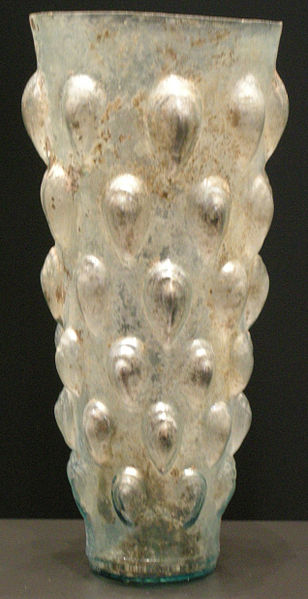
In Føre, Nordland, on an island in far northern Norway, is an ancient burial site. Over several centuries in the late iron age around 10 mound burials were raised of earth and stone. (The number is uncertain because some of the mounds have been destroyed by erosion and farming.) Not all have been excavated, but those that have have yielded the evidence of extraordinary wealth by local standards, including a Roman drinking glass buried in the only female grave so far known at the site. (The glass pictured is of a similar type, but not from the same site.)

It is very unlikely that Føre had any direct connection to the Roman world. Rather it was at the northern extreme of a network of trade and alliances that spanned Scandinavia and the Baltic Sea region which used Roman imports as high-status trade goods and diplomatic gifts. The people of Føre may have had very little idea of what the Roman empire was, but they had some access to Roman goods and valued them as precious objects.

Continue reading

Museum Materials: Volcano Day in Pompeii

Speaking of the excellence of museum and library collections: below are resources on the destruction of Pompeii I found by visiting only two museum sites.

“A Day in Pompeii” is an 8-minute high-definition video on how a series of eruptions wiped out Pompeii over 48 hours, produced by Museum Victoria (Melbourne Museum) and Zero One Animation for an exhibition at Melbourne Museum in 2009.

A Day in Pompeii – Full-length animation via Zero One Animation

It would’ve been more stunning with changes in the POV rather than a static camera, but it was still interesting.

To accompany the exhibit, Melbourne Museum produced a wealth of additional online material.

Melbourne Museum Day in Pompeii Box

Unfortunately there’s currently no index page, but articles are still available on the Museum website (do a search for Pompeii). For example, House of the Vine is a nifty virtual recreation of a beautiful Pompeian house. And did you know that Pompeii had running water and lavatories? There is even a replica of a loaf of bread from Pompeii:

Melbourne Museum Day in Pompeii Loaf of Bread

After Melbourne, the exhibition traveled to other places. The Western Australian Museum also built a helpful site, still fully available, to go with their 2010 version in Perth.

Complementary views can be found from photos of the current state of the city at Pompeii in Pictures, website by Jackie and Bob Dunn. (Getting to the photos themselves takes a bit of clicking through the menus, but they’re there.)

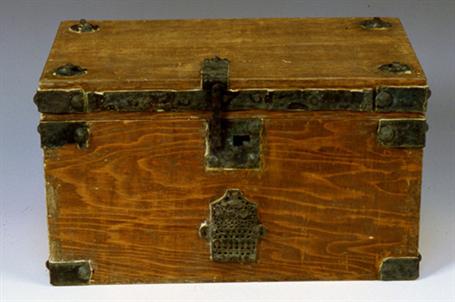
Images: Box, (c) Soprintendenza Speciale per i Beni Archeologici di Napoli e Pompei via Melbourne Museum (House of Julius Polybius, Pompeii; original iron and bronze fittings and wood reconstruction). Loaf of bread via Melbourne Museum (bakery in Pompeii; plaster copy of an original, carbonized loaf)

The Visual Inspiration occasional feature pulls the unusual from our world to inspire design, story-telling, and worldbuilding. If stuff like this already exists, what else could we imagine?

Third Person

I have to write a biographical paragraph for a conference. Ugh. I hate writing about myself in the third person.

I’m trying to be all

160205Caesarbut feeling more like

160205jonesOh well. It goes with the territory, I guess. I like to think that being awkward about your own accomplishments is one of the tests of being a decent person. (But, then, does congratulating myself on being a decent person mean I’m actually not..? Argh! Why is it so hard?!)

Oh well. That’s my dose of self-pity for the day.

Images: Bust of Caesar, photograph by Andrea Wahra via Wikimedia (Naples; 1st c. BCE; marble) and text from Caesar, Gallic War 1.54, collage by Erik Jensen. Harriet Jones via brittaperry

When the suckage just sucks too much.

Star Wars and the Classics, Part I: The Prequels

151215stormStar Wars takes many of its cues from mythology and classical history. Here’s some recommended reading if you want to see how themes from the classics found their way to a galaxy long ago and far, far away.

Episode I: The Phantom Menace – Homer, the Iliad, Book 1

I can still remember my feeling of anticipation when I first sat in the theatre to watch The Phantom Menace. We’d waited years to get the story of Anakin Skywalker’s fall from grace. We were going back in time to a more civilized age, a golden age of Jedi knights and the sophistication of the galactic republic.

The screen went dark. John Williams’s fanfare blasted from the speakers. The opening text began to scroll up from the bottom. This was everything we had been waiting for!

So what’s this crap about taxation of outlying trade routes? Huh? What is this, Accounting Wars?

The story began. We saw Jedi sitting in a conference room waiting for some cowardly bureaucrats to come and talk turkey. My heart sank in disappointment. (And we hadn’t even gotten to Jar-Jar Binks yet.)

It took many more years and several viewings of Episode I for me to appreciate what George Lucas was doing in this movie. There is a point here and it’s an important one: momentous events don’t start out looking momentous. Terrible things happen because no one is paying close enough attention to stop them when they’re small enough to be managed; only when they roll out of control do people realize what’s happening. Of course the fall of the galactic empire started because of a minor trade dispute and a lonely boy from a desert planet in the middle of nowhere. It could have started in any number of ways, but they all would have seemed just as trivial.

(Mind you, this doesn’t actually make Phantom Menace any better as a movie. It’s still plagued by terrible dialogue, wooden acting, and disturbing racial caricatures. But as a storytelling choice, it’s interesting.)

The classic mythic example of small causes leading to momentous and terrible events is the Trojan War. While pieces of the story are told in many different sources, there’s no single work that covers the entire war. Book 1 of the Iliad, however, puts us in the middle of the action to watch the last act of the war unfold. I’ve written about Book 1 of the Iliad here before, but it’s one of those texts that rewards going back to again and again.

As the Iliad opens, the Trojan war has already been going on for ten years. What we witness here is the conflict between two of the Greek captains, Achilles and Agamemnon. It begins when Agamemnon refuses to ransom a captive woman back to her father. By the end of the book, Achilles has withdrawn his forces from the fighting, which will swing the war in the Trojans’ favor, leading to the near defeat of the Greek forces, the death of Achilles’ friend Patroclus, and Achilles slaying the Trojan prince Hector in madness and grief. The death of Hector robbed the Trojans of their best warrior and sealed the fate of Troy. And it all flows from a dispute over the ransoming of a prisoner from an outlying village.

Continue reading

Fantasy Religions: Interacting With the Divine

151130sacrificeIn the previous installment in the fantasy religions series, we looked at how people following traditional religious customs often perceive the divine around them in physical, tangible forms. Today we turn to the question: how do you interact with such divine forces?

There’s an old joke that says a young man went to his priest one day and declared: “I’m an atheist! I don’t believe in god!” And the priest replied: “Do you think He cares?”

It’s a good joke, but in the doctrines of Christianity, as in the other modern monotheisms, Judaism and Islam, belief matters a great deal. Believing in a god and a certain set of ideas about that god and humanity’s relationship to him/her/it is what defines membership in the religions we are most familiar with in the modern west. Not that everyone is in lockstep about their beliefs: modern religions can have enormous debates about what to believe, but belief is still at the center.

In most traditional religions, belief is a non-issue. As we saw before, peoples following traditional religions see the divine presence in the physical world in a literal, not metaphysical way. To an ancient Gaul, Belenus was not just the god of the sun, the sun itself was Belenus. To say to an ancient Gaul: “I don’t believe in Belenus” would be like saying: “I don’t believe in the sun.” Their response would probably not be: “Do you think he cares?” but: “Well, what do you think is shining on you, idiot?” There were no professions of belief in traditional religions, no creeds or catechisms, no inquisitions or doctrinal schisms.

Continue reading

In a World Without Alfalfa…

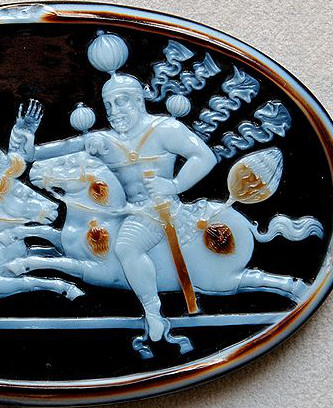
151019Shapur… Marcus Licinius Crassus would have been the first emperor of Rome instead of Julius Caesar.

Stick with me here.

Alfalfa is a plant in the pea family that resembles clover. It originally comes from south central Asia and was cultivated in the northern parts of the Iranian plateau as animal fodder. Compared with other fodder plants, alfalfa is very high in protein, so it is mostly fed to cattle. It can be given in small amounts to most horse breeds, but in large amounts it causes bloating as horses cannot use the excess protein.

The exception is Nisaean horses, a breed of horse that was developed in northern Persia and bred to feed on alfalfa. These horses were able to absorb the extra protein of alfalfa into their bones, giving them denser, stronger bones than other horses. These dense bones enabled the Nisaean horses to make sudden turns while galloping at high speed that would have broken other horses’ legs and to carry heavier weights than other horses of the ancient world could manage.

Continue reading

The Case of the Missing Roman Railroads

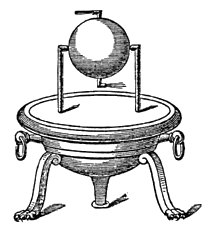
150824AeliopileThe Roman empire had a problem. It was just too big. When a crisis developed on one frontier, it could take weeks for the emperor to hear about it, then months or even years to move troops and supplies into position to deal with it. The large frontier army consumed supplies which had to be delivered at great expense from the agricultural heartlands. The roads built by the Roman army helped make all this travel faster and easier, but if the Romans had built railroads they could have made it much easier still. A Roman empire with railroads might not have fallen apart in the fifth century CE. So why didn’t the Romans build them?

The obvious answer is that they didn’t have the technology of steam power, nor the resources of coal and iron needed to build a functioning railroad. It’s a good answer, but like many such obvious answers it’s missing something.

Continue reading