Mapping Middle-Earth

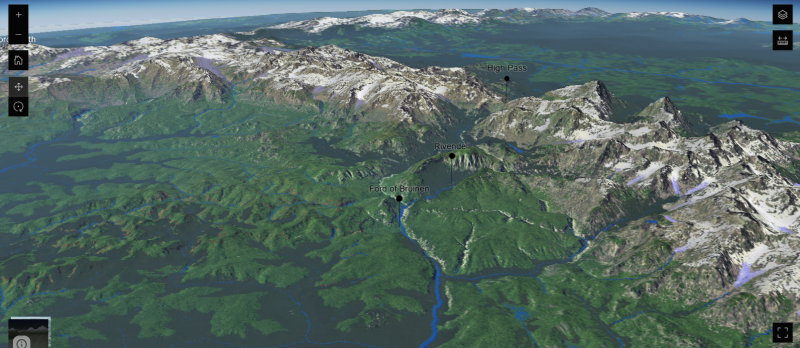
Want to see something amazing? Check out this project to create a detailed map of Tolkien’s Middle-Earth using modern geographical software.

The level of detail is incredible. There are both 2D and 3D versions of the map that you can zoom in on and fly around like a modern digital map. Here’s a view of Rivendell and the nearby Misty Mountains from the 3D version.

The Middle-Earth Map is a project Micah Vander Lugt, a geographic information sciences analyst. It’s great to see people put their professional skills to work on hobbies that they’re passionate about!

Grammatically Female Dwarves in Tolkien

Jimtheviking on Tumblr wrote about how the Dwarven names in J.R.R. Tolkien’s The Hobbit connect with Old Norse, especially Dwarf names listed in the poem Völuspá.

According to Jimtheviking, Tolkien chose a number of names from Old Norse and tweaked those names in an interesting way. Namely, Tolkien grasped Old Norse grammar well enough to know that the omission of one n from a name ending in –inn changed it from masculine to feminine. To quote Jimtheviking:

“Well, I give you the names of the Dwarves from the Hobbit, as they appear in Dvergatal (stanzas 14-16) and in the order they appear:

“Dvalins, Dáinn, Bívurr, Bávurr, Bömburr, Nóri, Óinn, Þorinn, Þráinn, Fíli, Kíli, Glóinn, Dóri, Óri

“Now, in the Hobbit, they’re named as follows:

“Dwalin, Dáin, Bifur, Bofur, Bombur, Nori, Óin, Thorin, Thráin, Fíli, Kíli, Glóin, Dori, Ori.

“Now, you notice something with the way those names got changed? That’s right, he changed the masculine -inn definite suffix to -in, which is feminine.

“That means that, at least grammatically, Dwalin, Dáin, Thorin, Thráin, and Glóin are female Dwarves.”


Then, moving on from purely linguistic, Jimtheviking continues with an intriguing argument:

“Since we know Tolkien was meticulous about his grammar, this was done most likely as an in-joke […] [emphasis original]

“But there’s a not-inconceivable chance that the Dwarves were using the masculine pronouns in Westron because that’s what the Men who met them used, despite the fact that a third of the company was female, and hey, it’s kinda neat to think he wrote a bunch of Dwarf-ladies going on an adventure.”

It is really interesting, isn’t it, to posit male and female Dwarves in Tolkien’s adventures?!

500px Alexander Turchanin Thorin Cosplay


Poking around, I found versions of Völuspá that differ from the Dwarf list as given by Jimtheviking*. Not just the list itself, but also spellings differ depending on the edition you’re using (which isn’t rare at all in philology). Nevertheless, the main point stands: Tolkien changed names that had –inn in the original to just –in in English.

Of all Tolkien’s Dwarf names, he seems to have adopted Durin, Dwalin, Náin, Dáin, Bifur, Bofur, Bombur, Nori, Óin, Thorin, Thrór, Thráin, Fíli, Kíli, Fundin, Náli, Oakenshield (Eikinskjaldi, cf. Icelandic ‘oak shield’), Glóin, Dori, and Ori from the Völuspá.

Of them, Durinn, Dvalinn, Náinn, Dáinn, Óinn, Þorinn, Þráinn, Fundinn, and Glóinn are all originally spelled with a double n. (In addition, there’s a change from a double r to a single one in Bívurr / Bívǫrr, Bávurr / Bávǫrr, and Bömburr / Bǫmburr, which Jimtheviking does also comment on.)

Anyway, the whole thing kinda reminds me of the first time I read The Lord of the Rings, decades ago now. I was young enough that it was in translation, which means the young me ploughing through LotR was quite confused over the gender of some characters. The Finnish language doesn’t have grammatical gender, you see. Instead of he or she, we just have one third-person singular pronoun, hän, which is used of all people regardless of sex, gender, age, kinship, marital status, whatever, just like the English third-person plural they is. Normatively, in Finnish everyone is a hän.

Even at that young age, I knew that (apart from Astrid Lindgren) most of the publications, including those for the younger audience, centered boys and male characters. Contextually, I could tell that Frodo and Sam were male. Same for Legolas and Gimli, Aragorn and Boromir, and Gandalf and Elrond. Arwen, Galadriel, and Eowyn were female.

But Glorfindel? Maybe male, I thought, but there is nothing explicit at all in the Finnish translation. And Merri and Pippin? Somehow at that time I couldn’t make them out at all; indeed, they’re the two characters whose gender confused the young me the most.

Having grown up reading the Moomins, Pippi Longstocking, Ronia the Robber’s Daughter, The Famous Five series, and The Dark Is Rising sequence, I saw nothing odd in girls and women also going on adventures. So I thought it was quite plausible that Merri and Pippin could be female, and was too young to read all of the textual cues that imply they aren’t. (Remember that in Finnish the gender-neutral pronoun hän gives absolutely no clue whatsoever about anyone’s gender.)

The possibility of a linguistic in-joke regarding these Dwarven names really tickles the imagination and would be completely plausible of Tolkien. Interestingly, the name Gandalf also originally comes from the Dvergatal (see e.g. stanza 12 in Pettit’s 2023 edition, which lists the name as Gandálfr). A Dwarven Gandalf would, indeed, give quite a different vibe to LotR.

And now I kinda want new movies of The Hobbit, with the amazing attention to detail that Weta lavished on the effects and props in Peter Jackson’s versions, but with more heedful writing and with half the Dwarves in the party female. That would be a truly intriguing take!

Images: Thorin cosplay by Alexander Turchanin on 500px.

*) Dwarves are named in stanzas 10-16, starting with Mótsognir and Durinn. The undated Völuspá version linked to by Jimtheviking, edited by Guðni Jónsson, includes more rows than the newest edition I found. The extra lines must come from (an)other extant version(s) of the text.

Names in the undated Völuspá version linked to by Jimtheviking (ed. Guðni Jónsson):

Durin (stanza 10: Durinn)

Dwalin (11: Dvalinn)

Náin (11: Náinn)

Dáin (11: Dáinn)

Bifur (11: Bívurr)

Bofur (11: Bávurr)

Bombur (11: Bömburr)

Nori (11: Nóri)

Óin (11: Óinn)

Thorin (12: Þorinn)

Thrór (12: Þrár)

Thráin (12: Þráinn)

Fíli (13)

Kíli (13)

Fundin (13: Fundinn)

Náli (13)

Oakenshield (13, 16: Eikinskjaldi)

Glóin (15: Glóinn)

Dori (15: Dóri)

Ori (15: Óri)

Names in Edward Pettit’s 2023 edition of the Völuspá:

Durin (stanza 10: Durinn)

Dwalin (11: Dvalinn)

Bifur (11: Bívǫrr)

Bofur (11: Bávǫrr)

Bombur (11: Bǫmburr)

Nori (11: Nóri)

Thrain (12: Þráinn)

Thorin (12: Þorinn)

Thrór (12: Þrór)

Fíli (13)

Kíli (13)

Fundin (13: Fundinn)

Náli (13)

Oakenshield (13, 16: Eikinskjaldi)

Gloin (15: Glói)

Note that Pettit’s version doesn’t include Náin, Dáin, Óin, Dori, or Ori.

Quotes: You Cannot Always Be Torn in Two

Do not be too sad, Sam. You cannot always be torn in two. You will have to be one and whole, for many years. You have so much to enjoy and to be, and to do.

– Frodo, in The Return of the King

I recently reread The Lord of the Rings for the first time in over a decade. It is also the first time I’ve read the book since we moved from the US to Finland. This line, from Frodo to Sam before his departure from the Grey Havens at the end of the novel, was always a beautiful line, but it hit me harder now.

Eppu and I have always lived a life torn in two. Coming from two different countries on different continents, we always knew that to be together, one of us would have to be far away from the people, places, and things we have grown up with and loved. For many years, she was the one who was far from home, as we lived in the US for my studies and work. Since we moved to Finland a few years ago, now I am the one whose familiar places and people are far away.

You might think that the romance between the human Aragorn and the Elf Arwen would speak to me the most, but their love story plays out on the scope of high mythology, beautiful but too remote to relate to. The simple words of a Hobbit, wishing healing and hope to a beloved friend, struck my heart.

We cannot always be torn in two. Love makes us one and whole.

Tolkien, J. R. R. The Lord of the Rings. Harper Collins edition, 1994, p. 1006.

Lord of the Duckies

Does your bathtime need some extra cute fantasy accessories? Check out these Lord of the Rings rubber duckies!

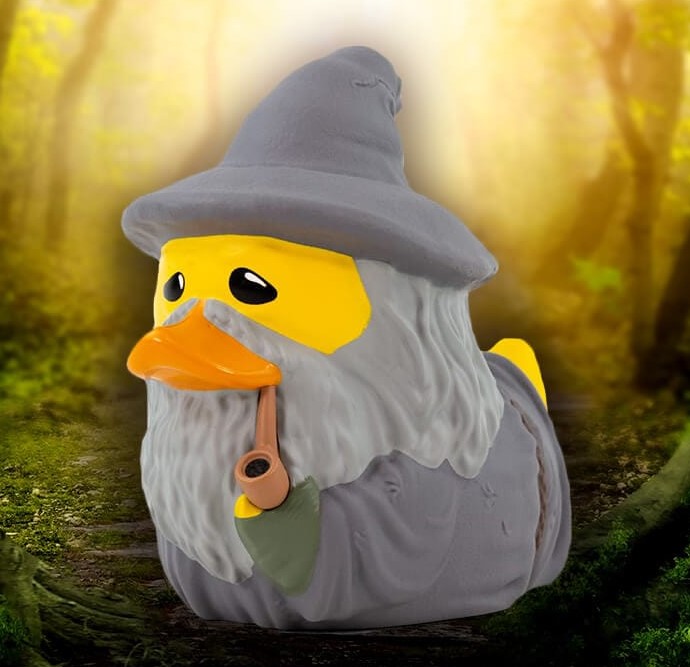
Here’s Gandalf the Grey. “A wizard is never late, nor is he early. He bathes precisely when he means to.”

Gandalf the Grey Tubbz via Just Geek

Or here’s Eowyn, ready to defend your bathtime from any pesky interfering Nazgul.

Eowyn Tubbz via Just Geek

You can see the whole selection in the Tubbz section of Just Geek.

We don’t have a bathtub, so I’m not in the market for bath toys myself, but I still think they’re neat.

(Note: We have no relationship with this product or company.)

Everyday Outfits Inspired by Middle Earth

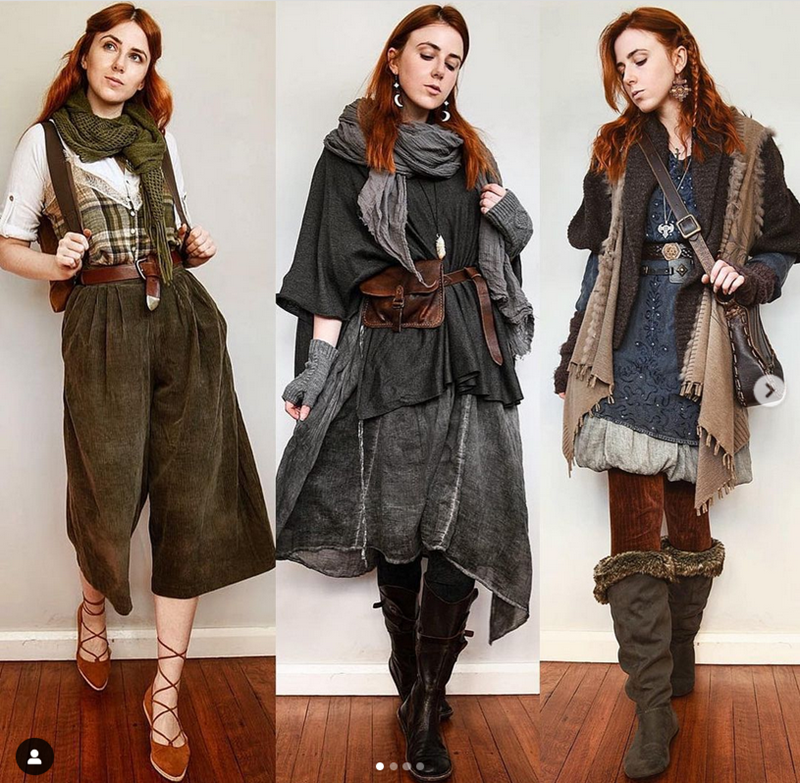
On Instagram, Alice as catinawitchhat styled a series of everyday outfits inspired by Middle-Earth. (She also pulled all the outfits together for a slideshow for those who prefer moving image.)

My favorite of Alice’s four collages is the first. It shows her versions of the Shire, Gandalf, and Erebor:

Instagram catinawitchhat Tolkien-Inspired1

The Lonely Mountain Dwarf ensemble is fantastic: the little touches of fur in her boots and the edges of the vest, the embroidery on the tunic, the warm-looking leggings, the knit armwarmers and chunky cardigan, they all contribute. Add to those the puffy shorts (or skirt?) plus the fairly simple leather accessories with brass-colored metal accents and visible, chunky topstitching. Very nice!

The third mashup is also very neat, with the three principal human cultures of the Lord of the Rings—the rangers, Rohan, and Gondor:

Instagram catinawitchhat Tolkien-Inspired3

Gondor is perfect, so austere and bleak. Her version of the rangers I find too dark for my liking—not a fan of black, even if it has its uses—but the profile I agree with.

Alice reminds the readers that her outfits aren’t cosplays, but her styling the contents of her wardrobe. And why not, if you can do it this well! While at times I don’t have exactly the same readings of the various Middle Earth cultures as she does, I do appreciate the combinations of elements from our mundane world and the suggestions she’s able to create through the careful selection of details. Makes me want to look at my closet with a new eye. 🙂

For more detail, visit the individual outfits in their own posts: The Shire. Gandalf. Erebor. Rivendell. Mirkwood. Lothlorien. The Dúnedain. Rohan. Gondor. Rhûn (Easterlings). Harad (Southrons). Mordor.

Images by Alice on Instagram

Christie and Tolkien: When the World Ends but You Keep Going

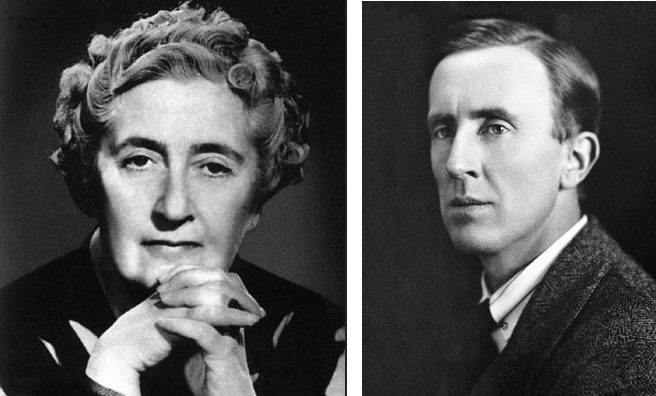
The literary works of Agatha Christie and J. R. R. Tolkien may not seem to have much in common. One wrote murder mysteries set in genteel English country houses, the other high fantasy in a mythic secondary world. When you look at the themes and ideas of their work, though, interesting parallels appear.

The two authors were close contemporaries; Christie was born in 1890, Tolkien in 1892. They belonged to the generation whose young adulthood was shattered by the First World War. Their experiences were different—Tolkien saw battle firsthand as an officer, Christie its terrible aftereffects as a nurse—but they both reflect the shock of the war in their writing.

One theme that occupies both writers is death. Death was, naturally, a crucial element of Christie’s murder mystery stories. In Tolkien’s legendarium, death and the things people will do out of the fear of it is a running theme. But neither writer’s work is focused on death as a fact; rather, the underlying drive in their work is a search for some way in which death makes sense.

In Christie’s case, this theme is more obvious: she writes about detectives solving crimes. By the time we reach the drawing room summation at the end of the book, we can see clearly how and why the victim or victims died. Order is restored to the world, and reason triumphs over the illogic of death, whether that reason is embodied in a fussy Belgian’s love for methodical neatness or a wise spinster’s deep observation of human nature.

In Tolkien’s work, the drive to make sense of death is subtler. Death often appears pointless in Tolkien. Boromir dies defending Merry and Pippin from Orcs, but after he falls the young Hobbits are captured nonetheless. Denethor dies in despair instead of living to see his city saved. But the larger point of Tolkien’s work is that hopelessness is an illusion. We never know the end of our own story or how profoundly the choices we make will affect the world. In the legendarium as a whole, death is the greatest mystery, but also the greatest hope. The world of Middle Earth had a beginning and will someday end, yet the spirits of mortal beings will not end with the world but transcend it through death.

It is not just the death of individuals that occupied Christie and Tolkien, but also how ways of life come to an end. They both witnessed the end of the world, in a sense. The innocence and hope of the time they grew up in perished on the battlefields of the Great War, but they did not. They kept going and witnessed as the world around them changed.

Tolkien’s The Lord of the Rings is about the ending of an age, the Third Age of Middle Earth to be precise. The story takes place during the last days before the Elves either depart into the magical west or dwindle into creatures of fairy tale and folklore, taking their beauty and wisdom with them. Yet the story also carries hope for what is to come after in the ages of Men—hope without guarantees, as Gandalf puts it. The Elf Legolas and Dwarf Gimli reflect on the promise and weaknesses of humans in the streets of Minas Tirith:

“If Gondor has such men still in these days of fading, great must have been its glory in the days of its rising.”

“And doubtless the good stone-work is the older and was wrought in the first building,” said Gimli. “It is ever so with the things that Men begin: there is a frost in Spring or a blight in Summer, and they fail of their promise.”

“Yet seldom do they fail of their seed,” said Legolas. “And that will lie in the dust and rot to spring up again in times and places unlooked-for. The deeds of Men will outlast us, Gimli.”

The Lord of the Rings. Book 5, Chapter 9, “The Last Debate”

Christie reflects the changing world in different ways, but also with hope for what the future will bring. Her early works are set in the interwar world of country estates and garden parties that we typically think of when we think of a Christie mystery, but that world was ending. She kept writing through the fifties and sixties as the life and culture of Britain changed around her.

The traces of this change are all over Christie’s writing. One of the ongoing themes in her mysteries is that it is difficult to know who people really are. Many of her plots hinge on people passing themselves off as or being mistaken for someone else. Such impersonations were possible only because the world of country villages and garden parties where everyone knew one another was ending. Miss Marple speaks of this shift in A Murder is Announced:

Fifteen years ago one knew who everybody was. The Bantrys in the big house—and the Hartnells and the Price Ridleys and the Weatherbys … They were people whose fathers and mothers and grandfathers and grandmothers, or whose aunts and uncles, had lived there before them. If somebody new came to live there, they brought letters of introduction, or they’d been in the same regiment or served in the same ship as someone there already.

But it’s not like that any more. Every village and small country place is full of people who’ve just come and settled there without any ties to bring them. The big houses have been sold, and the cottages have been converted and changed. And people just come—and all you know about them is what they say of themselves.

A Murder is Announced. Chapter 10, “Pip and Emma”

At the same time, Christie also saw that the fundamentals of human nature that underlay her stories were not changed by the passing of time. People might live differently, but they still had the same jealousies and aspirations, desires and fears as they ever had. Miss Marple, again, reflects on this fact in The Mirror Crack’d from Side to Side as she explores the new housing development at the edge of her beloved village:

She turned out of Aubrey Close and was presently in Darlington Close. She went slowly and as she went she listened avidly to the snippets of conversation between mothers wheeling prams, to the girls addressing young men, to the sinister-looking Teds (she supposed they were Teds) exchanging dark remarks with each other. Mothers came out on doorsteps calling to their children who, as usual, were busy doing all the things they had been told not to do. Children, Miss Marple reflected gratefully, never changed. And presently she began to smile, and noted down in her mind her usual series of recognitions.

That woman is just like Carry Edwards—and the dark one is just like that Hooper girl—she’ll make a mess of her marriage just like Mary Hooper did. Those boys—the dark one is just like Edward Leeke, a lot of wild talk but no harm in him—a nice boy really—the fair one is Mrs Bedwell’s Josh all over again. Nice boys, both of them. The one like Gregory Bins won’t do very well, I’m afraid. I expect he’s got the same sort of mother…

She turned a corner into Walsingham Close and her spirits rose every moment.

The new world was the same as the old. The houses were different, the streets were called Closes, the clothes were different, the voices were different, but the human beings were the same as they had always been.

The Mirror Crack’d from Side to Side. Chapter 1

Some days now it feels like we are living through the end of the world we knew, and none of us knows what will come next. In these times, there is comfort in going back to writers who lived through the end of one world and saw that there was hope in the next.

Tolkien, J. R. R. The Lord of the Rings. London: HarperCollins, 1994, p. 855.

Christie, Agatha. A Murder is Announced. London: HarperCollins, 2023, pp. 132-133.

Christie, Agatha. The Mirror Crack’d from Side to Side. London: HarperCollins, 2023, pp. 13-14.

Image: Photo collage of Agatha Christie and J. R. R. Tolkien by Erik Jensen. Photograph of Christie via Wikimedia; photograph of Tolkien via Wikimedia

Post edited to correct formatting errors

Stories in which Being Good is Smart

I’ve been thinking a bit lately about how to describe the kind of stories I want to experience, whether on the page or the screen. I’ve long known that I enjoy stories about characters solving problems. But that’s not the only thing I look for in fiction.

I enjoy reading about people who are good to one another, kind, compassionate, and generous. I don’t enjoy stories in which kindness is portrayed as weakness, or in which the most manipulative, cruel, or ruthless characters prosper at the expense of others. I want to see how being kind and treating others well is the best way to go about solving problems. I like stories in which being a good person isn’t just the right thing to do, it’s the smart thing to do.

I don’t mean stories with a moralistic bent, in which some outside force (be it divinity, fate, or just the author’s guiding hand) intervenes to reward virtue and punish vice. I don’t want to see good people win just because they are good. I want to see them win because complicated problems can’t be solved by one person acting alone, no matter how devious or ruthless they may be. Big problems only get solved by people working together, and the best way to get people working together is to treat them decently.

Here are a few my favorite stories on page and screen that fit what I’m looking for.

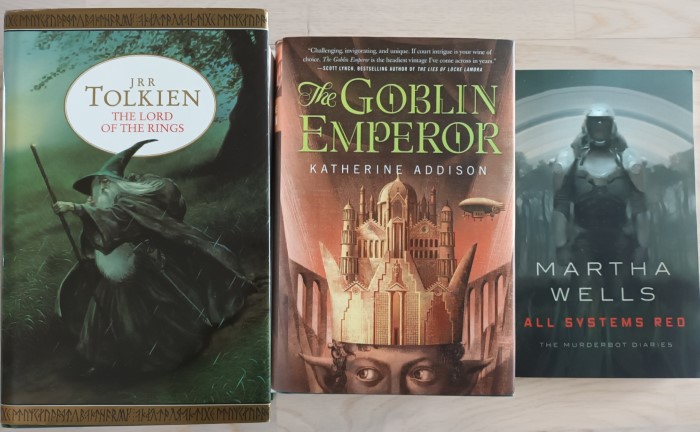
J. R. R. Tolkien’s The Lord of the Rings is a tale of cosmic good and evil, but one that plays out on the individual level. The forces of good ultimately triumph because many individual people, some of them quite small and unimportant, choose the good of others over their own safety or comfort. Katherine Addison’s The Goblin Emperor follows Maia, a neglected half-goblin prince, as he is thrust by circumstance onto the throne of an Elvish empire. Maia is surrounded by devious plotters and dangerous revolutionaries, but he keeps his throne and his head by listening to others, finding trustworthy allies, and being compassionate to the weak and vulnerable. In Martha Wells’s Murderbot Diaries series, the sarcastically self-named Murderbot is a human/machine construct designed by a ruthless ultra-capitalist corporation to fight and kill, but who would rather just be left alone to watch media. Over the course of the stories, it discovers humans who are not ruthless ultra-capitalists, whom it ends up learning to trust and value.

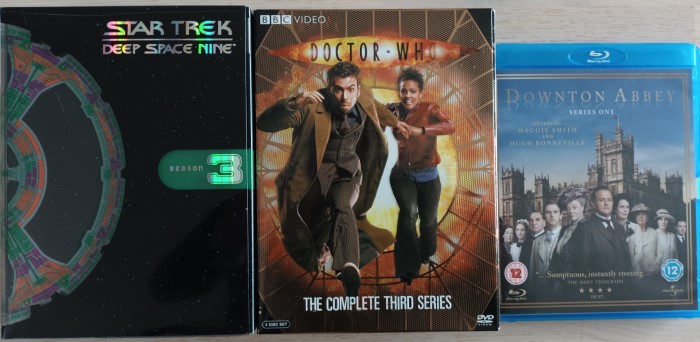
Star Trek is all about characters being good. Deep Space Nine pushes its characters to the limits of the universe’s hopeful utopianism through trauma and war, but ultimately finds them trusting one another, working together, and finding compassion even for their most implacable enemies. In Doctor Who, the wandering Time Lord stumbles into one disaster after another, but approaches them all with a spirit of hope and understanding, asking questions always and shooting never. Downton Abbey follows the inhabitants of the titular manor, both the family upstairs and the staff downstairs, through the tumultuous social changes of the early twentieth century. All the characters have their flaws, and some can be quite vicious, but the series follows how the characters come to rely on one another, and how even the most mercenary of them learn that kindness and compassion are vital for surviving in a changing world.

These are the kinds of stories I want more of: people being good or learning to be good, not just because it’s the right thing to do, but because it works.

Images by Erik Jensen

Some Thoughts on The Hunt for Gollum Adaptation

The news has been out for a good long while now: a new live-action Middle-Earth movie is in the works, set to be released in 2026 and produced by Peter Jackson, Fran Walsh, and Philippa Boyens. It’s provisionally called The Lord of the Rings: Hunt for Gollum, and Andy Serkis will both direct and play Gollum. Apparently it’ll be the first of multiple films by Warner Bros. based on Tolkien’s books, and told from Gollum’s perspective.

Since this fall has been surprisingly full of Tolkien for us (we both re-read LotR in addition to our two trips to Tampere, first to see the John Howe exhibit and then the theatrical adaptation), we ended up talking about the upcoming Gollum movie and our misgivings with it. Below are some of those thoughts.

Erik

I’m not excited for The Hunt for Gollum. Nothing about the character of Gollum or the long and mostly fruitless search for him, as described in the book, sounds like promising material for further on-screen exploration. I fear that this film will turn into more overstuffed action/fantasy/comedy like the Hobbit trilogy. At best I hope to enjoy the settings, costumes, props, and other details that were made with such love and dedication by the production team on the earlier Middle-Earth films. Still, I’m always ready to be pleasantly surprised.

For films that fill in more of the story we haven’t yet seen on screen, I’d be more excited about an exploration of Sauron’s attacks to the north. The appendices to The Lord of the Rings mention that Sauron’s forces at Dol Guldur assaulted Lothlorien and ravaged the lands of the Mirkwood Elves while an army of his allies from the east came against the Men of Dale and the Dwarves of Erebor. In the end, Sauron’s forces were defeated. Galadriel, Celeborn, and Thranduil cleansed Mirkwood and overthrew Dol Guldur while Bard II of Dale and Thorin III of Erebor pushed Sauron’s allies back to the east. There is plenty of scope here for big action set pieces, drama between the folk of Middle-Earth, and the return of some favorite characters. At the same time, there is enough blank canvas that for new characters to join the cast without feeling like they were squeezing out Tolkien’s story. It would be nice to see what was happening to places and people we know from The Hobbit and The Lord of the Rings while Sauron’s main offensive against Gondor was going on.

I could also enjoy a movie set in the Shire in the years after The Hobbit. A light-hearted comedy of Hobbit manners about the Sackville-Bagginses and their designs on Bag End could intertwine with the growing up of Frodo, Merry, Pippin, and Sam and the forging of the friendships that would be tested in the crucible of war far from home. A movie like this could give appropriate scope to Jackson’s taste for slapstick comedy while also allowing hints of the slowly creeping darkness of the ring and its effects on Bilbo to show through.

Eppu

My very first thought was: why would we want to see this particular story? Andy Serkis’s performance as Gollum will always be stellar, and I’m always up for seeing more of Weta’s work, but otherwise I’m quite unsure why this story was picked and why it should excite us.

Firstly, there isn’t that much to go on in LotR. According to Appendix B, Aragorn and Gandalf searched for Gollum together a few separate times, and the whole process takes them some 16 years.* In the second chapter of book two, The Council of Elrond, we get the most detail. There’s first a reference to a long and hopeless search. (Gandalf says that they went to the Mountains of Shadow and “the fences of Mordor”, where they guessed that “he dwelt there long in the dark hills; but we never found him, and at last I despaired”.)

Aragorn is the one to actually catch him: apparently he by chance found Gollum’s footprints leading away from Mordor and caught him somewhere in the Dead Marshes. Then followed an unpleasant walk to Mirkwood, and, finally, Gandalf questioning Gollum there.

What I see so far is a long, tedious, and possibly uneventful beginning followed by sleeplessness, stink, and cruelty (Aragorn himself says that Gollum “bit me, and I was not gentle […] making him walk before me with a halter on his neck, gagged, until he was tamed by lack of drink and food”).

A very skilled writing team is required to make something exciting out of that.

You know what I would rather see? For instance:

  • anything do do with the Hobbits arriving into Eriador (1050, c. 1150 of Third Age) and settling first Bree-land (c. 1300) and then the Shire; also the Stoors leaving the Angle and some returning to Wilderland (1356)
  • the heyday of Osgiliath (before the city was burned and its palantir lost in 1437)
  • Gondor and Arnor renew communcations and form an alliance (1940)
  • the fall of Arnor and the northern kingdom; how the heirlooms of Arnor are given to Elrond’s safekeeping (1976)
  • Dwarves live and mine in Moria and eventually are driven out
  • Thorin I leaves Erebor and goes north to the Grey Mountains (2210)
  • excavations of Great Smials (begun 2683), Bandobras Took defeats Orcs in the Northfarthing (2747), Gandalf comes to aid Hobbits (2758)
  • life in Dale, the coming of Smaug (2770)
  • Thráin II and Thorin wander westwards (from Moria?) and settle in southern Ered Luin beyond the Shire (2799-2802)
  • how and where Aragorn’s mother Gilraen (born 2907) lived in the north, her wedding to Arathorn, son of Arador (2929); death of Arador (2930) and birth of Aragorn (2931), Gilraen’s travels to Imladris with Aragorn after the death of her husband (2933)
  • The Fell Winter when many northern rivers are frozen, incl. the Baranduin (Brandywine) (2911)
  • Gandalf and Balin visit Bilbo in the Shire (2949)
  • Aragorn meets Gandalf and their friendship begins (2956), Aragorn’s journeys in the Wild begin in earnest, including time in Rohan and in Gondor in disguise (2957-2980)
  • Balin leaves Erebor and enters Moria (2989), the end of Balin and the Moria Dwarf colony (2994)
  • The Scouring of the Shire and the Battle of Bywater after the destruction of the Ring
  • King Elessar rides north, lives by Lake Evendim for a while, including meeting his Hobbit friends on the Brandywine Bridge, Elanor, daughter of Samwise, becomes a maid of honor to Queen Arwen (1436 Shire Reckoning)
  • Samwise, Rose, and Elanor ride to Gondor, stay there a year (1442 S.R.); Elanor marries Fastred of Greenholm (1451 S.R.), they have a child, Elfstan Fairbairn (1454 S.R.), and later move to Undertowers on the Tower Hills (1455 S.R.); Rose dies and Sam rides to Tower Hills and gives the Red Book to the Fairbairn’s keeping before leaving for the Grey Havens (1482 S.R.)

(All pulled from Appendix B of The Lord of the Rings.)

So much could be told about the the Shire’s early history. The tidbits on fighting with Orcs, a company of Hobbit archers sent to assist the King in the north, and the Fell Winter are tantalizing. Or the later history, too, especially focusing on Sam, Merri, and Pippin and their families.

There also has got to be a lot of unmentioned history behind details like “Gondor and Arnor renew communcations and form an alliance”, but I can see the (probably economic or marketing) reasons for focusing on characters we’ve already seen on the screen.

So, you could go with “Thráin II and his son Thorin wander westwards. They settle in the South of Ered Luin beyond the Shire”, or “Gandalf and Balin visit Bilbo in the Shire”, and keep a reasonable connection to events in the movie adaptations. The latter took place some eight years after the events of The Hobbit and 40 years before Balin sets out for Moria—surely a lot of leeway for embellishment there.

I also would really love to see the scouring of the Shire. Understandably the sequence would take a lot of reworking, since Jackson et al. chose to kill off Saruman and Wormtongue already at Isengard, but that kind of major revamping is hardly new to the team.

In any case, we’ll reserve final judgment until we know more. Here’s hoping it’ll be good.

*) Appendix B lists three years to do with the hunt for Gollum. First, in the year 3001, “Gandalf seeks for news of Gollum and calls on the help of Aragorn.” Second, in 3009, “Gandalf and Aragorn renew their hunt for Gollum at intervals during the next eight years, searching in the vales of Anduin, Mirkwood, and Rhovanion to the confines of Morder. At some time during these years Gollum himself ventured into Mordor, and was captured by Sauron.” Third, in 3017, “Gollum is released from Mordor. He is taken by Aragorn in the Dead Marshes, and brought to Thranduil in Mirkwood.”

Theatrical Adaptation of LotR in Tampere

Our fall is forming up to include a bit more J.R.R. Tolkien than usual: besides seeing The Art of John Howe in Tampere, we have tickets to see a theatrical adaptation of Taru sormusten herrasta (The Lord of the Rings)—also in Tampere.

There is a short but handsome trailer:

Taru Sormusten herrasta – Tampereen Teatteri & Tampere-talo by TampereenTeatteriTT on YouTube

(Note: There’s no captioning, and it’s only in Finnish, but mostly the trailer is non-verbal. In the beginning, the text reads Experience the world’s best-known adventure. At the end, while raising his staff Gandal says You cannot pass!)

Tampere Theatre, Tampere Hall, and Tampere Philharmonic Orchestra, among others, have worked for four years to create the adaptation. I haven’t heard the reason why the play runs only about two months (Aug 22 to Sept 21, 2024 and Dec 18, 2024 to Jan 11, 2025); you’d think a slightly longer run might be warranted for such a large production. I do know it’s staged at Tampere Hall instead of Tampere Theatre’s own, beautiful historical building because the latter is under renovations. I also know that the production team had to make their own Finnish translation from scratch and that no songs were allowed due to limitations posed by The Tolkien Estate.

The sets and props look fantastic, as does the lighting and video projections. I’m not sure I agree with the Elven costuming, though; their profiles look a little too much like the female Hobbit / villager Hobbit profiles. Otherwise the wardrobe looks fabulous. You can’t tell about the soundscape on the basis of the trailer alone, but I have high hopes. I hope the Hall also works for the adaptation as a performance space.

We can’t wait to see it!

The Art of John Howe in Tampere

Last month we saw an exhibit of fantasy art by John Howe in Tampere-talo, Tampere, Finland. Titled The Art of John Howe: Journeys through the worlds of J.R.R. Tolkien, the exhibit is the first time that Howe’s work has been comprehensively displayed in Finland.

2024 08 13 Howe Exhibit1

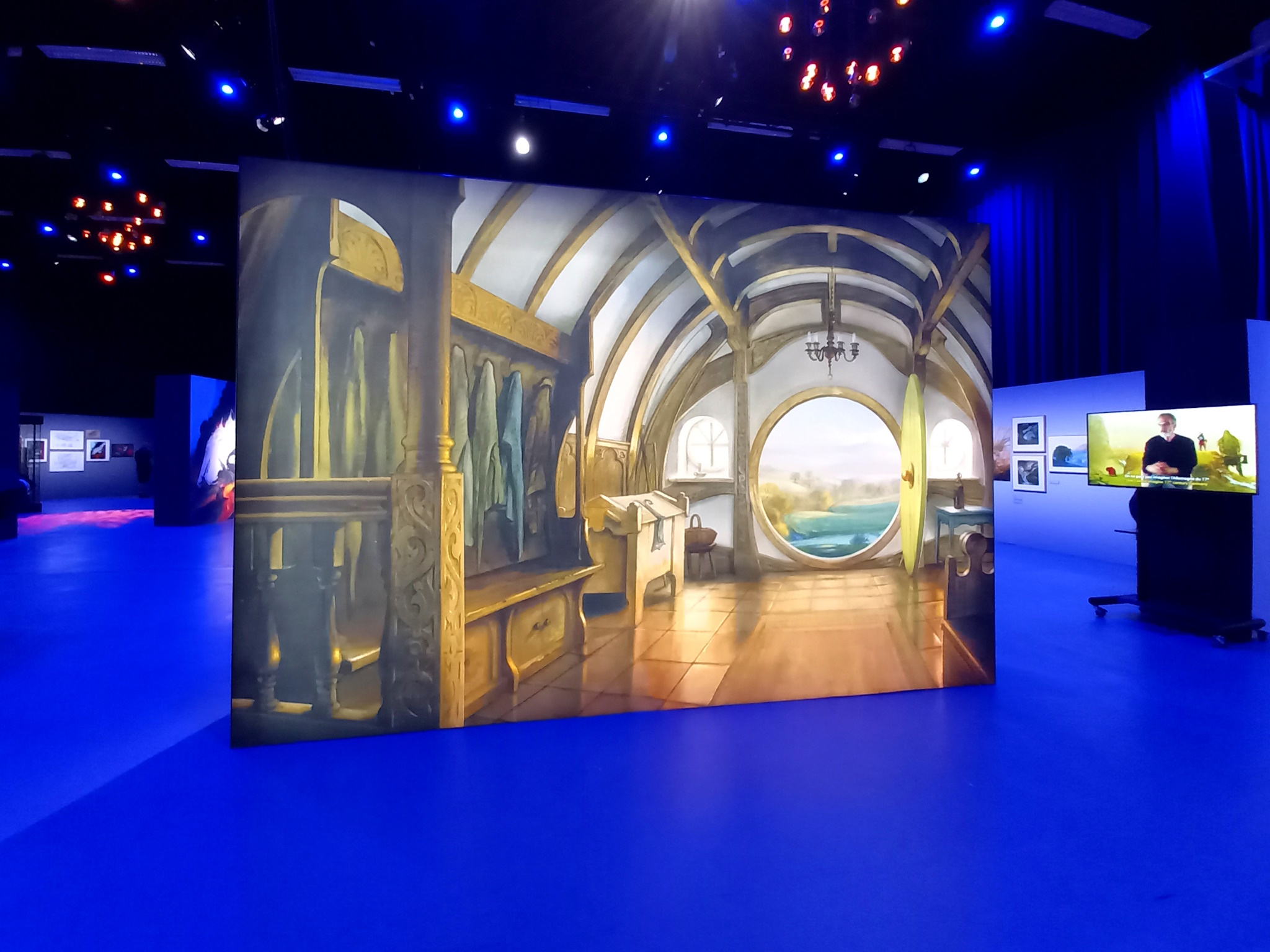
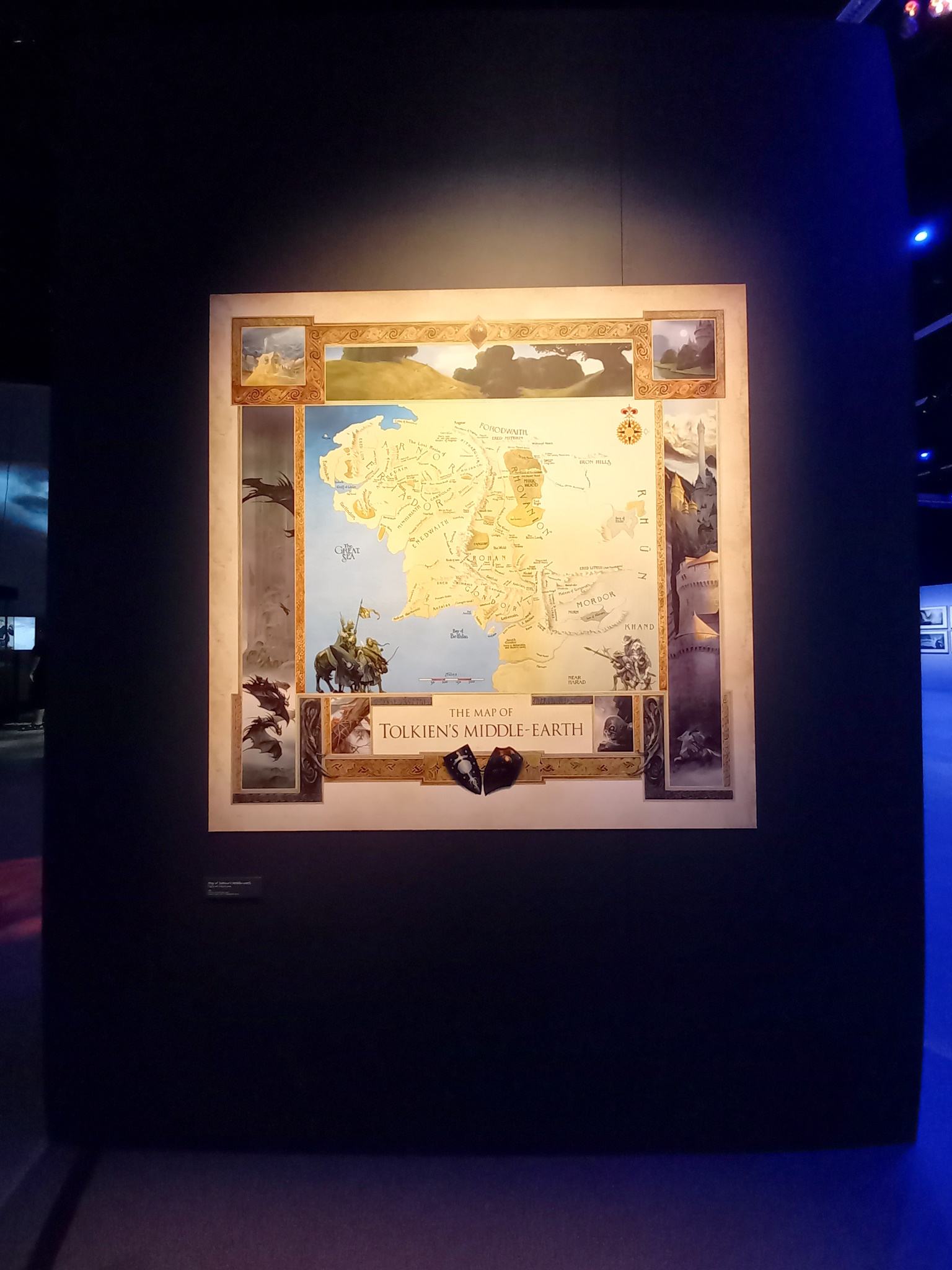
Over 250 original works were presented, from pencil drafts to finished color paintings and sculpture, along with sketchbooks and even some metal armor belonging to Howe. Some images were also enlarged into murals or banners, and a number of video screens scattered around the exhibit looped captioned interviews.

2024 08 13 Howe Exhibit2
2024 08 13 Howe Exhibit3

Apart from various illustrations of The Lord of the Rings and The Hobbit, on display were for example works on mythical topics or sagas, like Beowulf and Arthurian legends. Also various architectural or creature studies were included.

2024 08 13 Howe Exhibit4

The exhibit space was partitioned into irregular areas. Walls framed your route in interesting ways, and the murals created striking views. In one corner there was even a video with flying dragons projected up on the wall high above the framed artworks so that the dragons were visible from a distance. The art pieces had enough room, and no area was too small—clearly accessibility was planned in.

2024 08 13 Howe Exhibit5

There was no predetermined loop, merely a path suggested by the layout, which made it easy to pick your preferred viewing order and to avoid the occasional crowd. It was also easy to double back without first having to finish the whole route.

Color and lighting were used in a fascinating way. Most spot lights were warm orangey-brown or in the blue-purple range. Otherwise the hall was surprisingly dark, but not unsafely so. It was very interesting from a mood point of view.

2024 08 13 Howe Exhibit6
2024 08 13 Howe Exhibit7

Visitors were encouraged to take photos. Unfortunately, the ceiling lights reflected on the glass, which made photographing individual framed artworks difficult.

2024 08 13 Howe Exhibit8

It was great seeing the complexity, detail, and vividness of Howe’s art in person, not to mention the variety of his work. We were absolutely delighted to be able to visit!

Images by Eppu Jensen