Artifacts and Transmogrification: Guardian Druid and Holy Priest

Legion, the latest World of Warcraft expansion, has a new feature: artifacts. Instead of replacing your weapons with more powerful weapons as you level up, you get an artifact weapon that increases in power as you play. Artifacts put a new wrinkle in the transmogrification game.

(Quick primer for those of you not playing World of Warcraft: as you play the game, your character acquires new gear—weapons and armor—which make your character more effective. They also appear on your character’s model in the game. Transmogrification is a system that lets you change the appearance of your character’s gear so you can make your character look how you want.)

The artifacts all have brand-new, unique models and its clear that a lot of time and design effort went into them. In some cases, the results are beautiful. In other cases, not so much. Some are real works of art, but they may not fit your character’s aesthetic. I find I react very differently to artifacts on different characters.

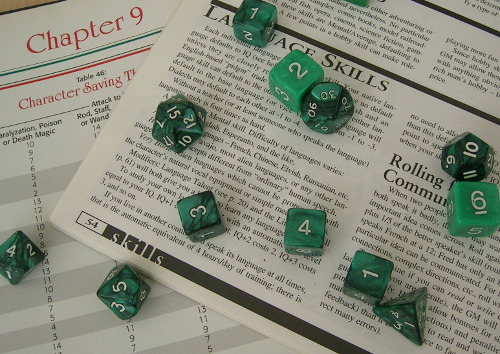
My guardian druid, for example, doesn’t like her new fist weapons, not one little bit. On the left below is what her gear looks like in its natural state. Her artifacts are now transmogrified to a pair of colorful, jewel-like weapons and I’ve built the rest of her set around their colors.

160929druigua

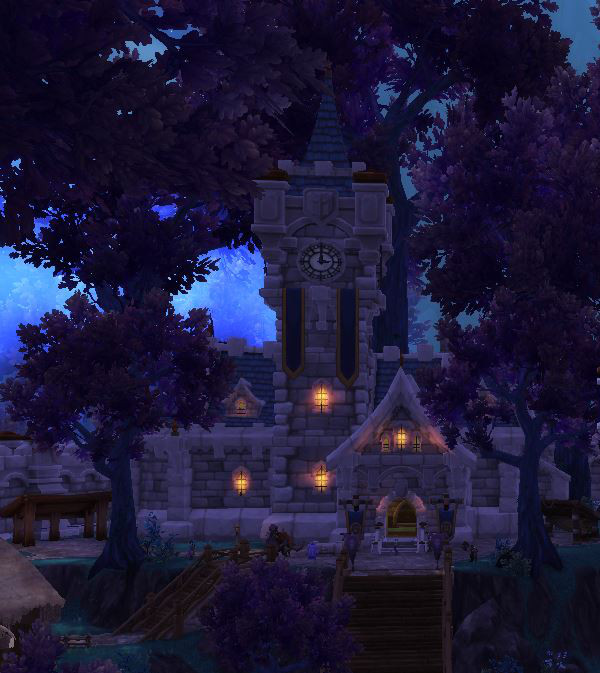
My holy priest, on the other hand, loves his new staff. His previous set, on the left, was based on dusty reds and bronzes. With his new artifact staff on the right, he’s totally getting his blue on.

160929prihol

I’ve got lots more characters in different specs with different styles still to level up and get transmogged. I’ll drop some more pictures when I get there. Are you using the artifacts? Transmogging over them? Transmogging in response to them? Share your thoughts.

Of Dice and Dragons is an occasional feature about games and gaming.

Unreal Elwynn Forest

Elwynn Forest is the starting zone for humans in World of Warcraft, a sun-dappled wood with little villages and outposts. Like a lot of other players, I have fond memories of leveling up some of my first characters through Elwynn. Here are a couple of screenshots from in game of what the area looks like.

160502inn160502farmNow, feast your eyes on Daniel L’s gorgeous and detailed reconstruction of the zone using the Unreal Engine 4:

Elwynn Forest in Unreal 4: Update 2 by Daniel L

Post edited for formatting

Hey, look! We found a thing on the internet! We thought it was cool, and wanted to share it with you.

Why Wouldn’t Playing Games Get You a Job?

This wall ad by the Finnish game house Remedy deserves wider circulation:

NYT Jussi Pullinen Remedy Wall Ad

“Mom always said that playing games won’t get you a job. From Espoo with love since 1995. Thank you Remedy crew, friends, families, Finnish dev community, fans and gamers around the world. This one is for you.”

Remedy (of the Max Payne and Alan Wake fame) designed this ad to celebrate their April 05, 2016, launch of a new game, Quantum Break, reportedly the most expensive entertainment production ever made in Finland.

The ad’s irony at one’s own expense sounds very Finnish to me. In Finland, it’s a little embarrassing to be successful or rich, and Finns don’t tend to draw attention to their achievements. At the same time, as a Finn, it’s very satisfying to see Finnish game companies grow up into mature businesses with large, world-wide audiences.

It’s also high time for people to recognize that storytelling is an integral part of human nature and that games are just as viable a medium for telling stories as are myths, songs, novels, image-based art, and the like.

Image by Jussi Pullinen via Nyt.

Disclosure: A friend of mine works at Remedy, but this post is in no way compensated or even requested by them.

Of Dice and Dragons is an occasional feature about games and gaming.

Race and Culture in Hannibal’s Army

160322elephantTor.com published an article online today about diversity in Hannibal’s army written from the point of view of historical wargaming. It is a interesting article and well worth a read, but unfortunately it misses the opportunity to really address questions of racial and cultural diversity in ancient warfare. Here is a quick attempt to address some of the things that were lacking.

Race and culture

Race is a term with a lot of baggage, as we are all painfully aware, but it means different things in different contexts. In modern parlance, it describes a socially-constructed division of human beings into more or less arbitrary categories, largely on the basis of skin color and other physical features. In a fantasy context, it refers to distinct species of intelligent creatures like Elves, Orcs, Dwarves, and so on.

The unaddressed problem in the Tor.com article is the conflation of race and culture. In the nineteenth and early twentieth century, overtly racist theories of history posited that people of different genetic backgrounds naturally had different qualities. Many of these stereotypes still linger in our popular culture: the stoic Indian, the mischievous Irishman, the passionate Italian, etc. This belief in racial character was encoded in early classic works of fantasy like Tolkien’s Lord of the Rings, which gave us the stubborn Dwarf, the ethereal Elf, the vicious Orc, etc.

Even as we struggle to root out this conflation of race and culture from our modern life, it lingers on in works of fantasy and science fiction: the logical Vulcan, the boisterous Klingon, the decadent Centauri, the proud Dothraki. As we look back at history, we have to think of the people of the past not in terms of racial qualities but in terms of cultural contexts. People of different origins often do behave differently, but those differences are explained by the cultures they lived in, not the races they represent.

Continue reading

Gamer Girls ca. 330 BCE

Image: via Esther MacCallum Stewart
Two girls playing knuckleones via Esther MacCallum Stewart

Not that this should come as any surprise to anyone, but girls have been gamers for over 2,000 years.

Here’s a statuette of two girls playing knucklebones from ca. 330 BCE. In the ancient Mediterranean, the heel bones of sheep (commonly, though inaccurately, called “knucklebones” in English) were used for playing a variety of games, as they still are in many parts of the world today. They could be rolled like dice or gathered up in games similar to jacks, which is what these two appear to be doing.

Knucklebones crossed the whole spectrum of ancient society. Men and women, girls and boys all played. The Greek comic playwright Aristophanes mentions them as the toys of poor children (The Wasps 295) while Suetonius quotes a letter by the Roman emperor Augustus enthusiastically recounting his gaming exploits (The Deified Augustus 71). It is hard to think of a pastime that is so widely shared today.

Of Dice and Dragons is an occasional feature about games and gaming.
The “Sheer Dumb Luck” Table

150910rpg

Sometimes the tools you use the most are the simplest ones. This is one of the simplest things in my arsenal when I run a role-playing game, but I use it all the time.

Your players will often ask you questions that you didn’t think of ahead of time. Is the guard wearing gloves? Are there any pine cones lying around? Does this planet have any beryllium deposits near the surface?

Of course, if it matters to the adventure whether or not the guard is wearing gloves, then you have your answer and you go with it, but often either yes or no will do, you just have to pick one. It can be exhausting to always be having to decide, so you can just flip a coin, but not everything in the world is a fifty-fifty chance. If you’ve already established that it’s a cold night, the chances that the guard is wearing gloves are pretty high.

That’s where the table comes in, which, in honor of my favorite Harry Potter character, I have dubbed: The “Sheer Dumb Luck” table.

150922luck

Simply pick the descriptor on the list that sounds right for whatever your players asked and roll 3d6. Is the guard wearing gloves? Very likely. Are there any pine cones? Somewhat likely. Any beryllium? Virtually impossible. If you roll equal to or under the number given, the answer is yes. If higher, no.

  • 4–Virtually impossible
  • 6–Very unlikely
  • 8–Unlikely
  • 10–Fifty/fifty
  • 11–Somewhat likely
  • 12–Likely
  • 14–Very likely
  • 15–Virtually certain

And the best thing about this table: sometimes, once you’ve rolled, you realize that the opposite answer is actually better. One way or another, you’ve answered the question and the adventure can keep rolling.

Like everything, it’s a tool, not a rule. Not everyone likes to leave as much up to chance in an adventure as I do. Use it if it helps, ignore it if it doesn’t.

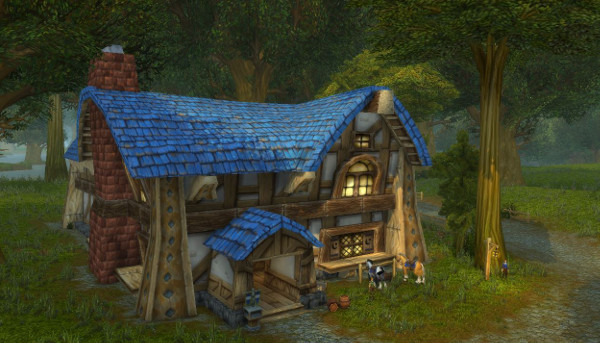
Images: Books and dice by Erik Jensen; “Five points…” via rosereturns.tumblr.com

Of Dice and Dragons is an occasional feature about games and gaming.

Garrisons: Solving the Wrong Problem

Sometimes you put a lot of time and effort into solving a problem, only to realize that you were coming at the problem from the wrong angle and your solution doesn’t actually fix anything, or even just makes things worse. (Or at least I do. I do this all the time.) It’s what I think of as “solving the wrong problem.” Blizzard Entertainment, creators of World of Warcraft, has been solving the wrong problem in the latest expansion, and garrisons are the manifestation of that mistake.

151105agarrison
The Aliance garrison, where I’ve spent entirely too much of my gaming time.

It’s not that there aren’t problems to be solved. WoW‘s player base is getting older and a lot of us have less time to play, can’t sit down and play in long sessions like we used to, and aren’t as interested in investing lots of time and effort into chasing big goals, but we still want to play and enjoy the game. Garrisons were, in my opinion, a good-faith effort at solving this problem, but they came at it from the wrong direction.

This weekend is Blizzcon, Blizzard’s big event when they talk about what’s coming for their games and we’re going to hear all about the next expansion for WoW. I hope we hear something that addresses what garrisons got wrong.

Continue reading

Two Fan-Made Star Wars: Episode VII Videos

This music-only version of the official The Force Awakens trailer edited by Tim Gonzales is awesome:

The Force Awakens Trailer #3 – Music Only Edit

The soundtrack is very effective – I can actually feel the goosebumps moving along my arms and scalp! Apparently the trailer music is a combination of new composition and previous music; see the write-up by Peter Sciretta at /Film.

And this Han’s flashback video by Nick Skywalk does a fantastic(!!) job cutting in scenes from the original trilogy with the Episode VII trailer:

Han Solo’s Flashback

Eight weeks to go!

Bonus link: There used to be a Playstation video game called Star Wars: Masters of Teräs Käsi, published by LucasArts 1997. Teräskäsi is Finnish and literally means ‘steel hand’. This was news to me, but apparently it’s part – albeit a mostly forgotten part – of the official canon. Yay, Finland! 😉

Hey, look! We found a thing on the internet! We thought it was cool, and wanted to share it with you.

World of Thrones

What happens when the World of Warcraft meets Game of Thrones? Wonderful, wonderful things. Check out Marc Ottensmann’s beautiful intro to Azeroth, GoT-style.

Game of Thrones Intro: World of Warcraft (World of Thrones) via Marc Ottensmann

Thunder Bluff is my favorite (but then Thunder Bluff has always been my favorite city in WoW).

Hey, look! We found a thing on the internet! We thought it was cool, and wanted to share it with you.


The Rumor Table

150910rpgSo, you’re game-mastering a tabletop role-playing game and your player characters decide to spread out around town and see if they can pick up any useful information about their current quest. How do you handle it?

There are lots of things you can do. If there’s some info you need to dump on them, now’s the time to hand it over. Or if you want them to just head out into the wilderness and figure it out as they go, you tell them that no one knows anything. You can always just make stuff up off the top of your head. Like with most GMing tasks, as long as your players have a good time, there’s no wrong way to do it. Here’s a tool that might make your job a little easier, though: the rumor table.

When I’m planning an adventure and I know that my players are going to have a chance to snoop around and ask questions, I like to prepare a rumor table for what they might find out. The table is a mix of true and false information that is more or less helpful. I plan it for a roll of 2d6 (you can make it bigger or smaller depending on your needs, but I find a 2d6 table covers most cases). For the numbers 2-12, come up with the following tidbits of information:

  • 2 – False, and potentially disastrous if the player characters believe it
  • 3 & 4 – False
  • 5 & 6 – False but with a grain of truth, such as true information that has been garbled or misinterpreted
  • 7 – Equal parts true and false
  • 8 & 9 – True
  • 10 & 11 – True and probably helpful to the characters at the moment
  • 12 – True and very important

Suppose your campaign is The Lord of the Rings and your characters are meeting for the first time at the Council of Elrond in Rivendell. (I mean, imagine a world in which The Lord of the Rings isn’t a famous novel and movie trilogy that your players already know but is your campaign that you wrote and they are playing through for the first time.)

Here’s what your table might look like:

  • 2 – Saruman is secretly on the side of good
  • 3 – Elves from Lothlorien have been attacking outlying villages on the borders of Rohan
  • 4 – Moria is abandoned and free of orcs
  • 5 – Smeagol has been sighted in Mirkwood heading east towards Dale
  • 6 – Rohan pays a tribute of horses to Sauron for the ringwraiths to ride
  • 7 – Denethor of Gondor has a palantir but he refuses to look into it
  • 8 – The Dunedain rangers were searching for Smeagol not long ago
  • 9 – Saruman has ordered the destruction of Fangorn forest
  • 10 – Wargs have been spotted in great numbers in the wildlands south of Rivendell
  • 11 – Theoden king of Rohan has become weak and listless and lets his advisers make most decisions
  • 12 – A balrog lurks in the depths of Moria

There are some advantages to using a rumor table. For one thing, it takes some of the pressure off you to come up with the perfect responses in the moment. Like mapping a dungeon ahead of time, it lets you prepare in advance. It’s also a convenient way of rewarding your players for good role-playing or taking the characters’ advantages into account. If the PC has a charisma bonus and the player does a good job role-playing the asking around, you don’t have to puzzle out just how much better information they should get; it’s easy to just give them a +2 on the rumor roll.

Another good thing about using the rumor table, if your players know that you have one, is it short-circuits the “it must be important or the GM wouldn’t have told us” metagaming. Your players have to think carefully and evaluate the information they get, just like their characters would have to do.

Now, of course, it’s a tool, not a rule. Use it with discretion. If the character your PCs happen to be talking to wouldn’t know (or wouldn’t say) the answer you roll, don’t use it. Either go up or down the table or make up something different. If there are things that your characters really need to know at a given point in the adventure, then that’s what you give them. (You can always roll the dice anyway, so they don’t know when they’re getting plot-critical stuff.)

Happy rumor-mongering!

Image by Erik Jensen

Of Dice and Dragons is an occasional feature about games and gaming.