Speculative Stories Online: Finnish Weird

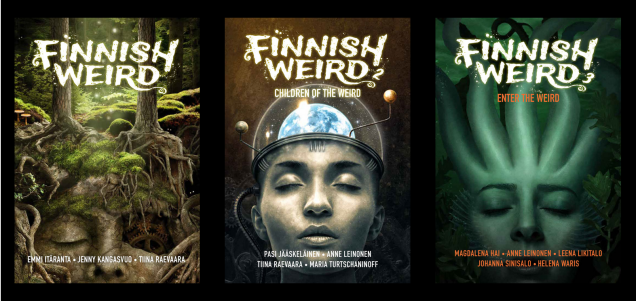
Finnish Weird is a recent project to publish new Finnish speculative fiction in English. Published yearly by the Helsinki Science Fiction Society and edited by Toni Jerrman, the issues are available online for free to read or download as either epub or pdf.

Finnish Weird 3 Issue Covers

Each volume contains feature articles well as short stories by big-name authors such as Anne Leinonen, Leena Likitalo, Johanna Sinisalo, Pasi Ilmari Jääskeläinen, Maria Turtschaninoff, and others. At this writing, the fourth issue (2017) has just been released.

fw4_logo

Author Johanna Sinisalo introduces the project and the style suomikumma (“Finnish weird”) in the inaugural 2014 issue:

“After barely a couple of hundred years of written literary tradition and decades of gatekeepers who have shunned works including elements of fantasy as cheap escapism, Finnish writers now create fiction that is a phenomenal mixture of sf, fantasy, horror, surrealism, magic realism – you name it. It’s highly original, fresh and surprising, sometimes it celebrates elements of our rich folklore and mythos, sometimes it soars sky-high in sf worlds, sometimes the stories are almost realistic, but have that little weirdness or twist that makes them something other than mimetic writing.

[…]

“I’m not trying to say that we Finns reinvented the wheel – new weird – and are trying to claim it as our own, not at all. What I am saying is that Scandinavian countries did not invent crime stories either, but in the wake of the international success of detective and crime fiction from Sweden, Norway, etc., ‘Nordic Noir’ has become a label for a certain quality of story. In my opinion, the label ‘Finnish Weird’ is also a brand – a brand that promises a roller-coaster ride of highly original prose from very diverse writers with truly personal styles. We are weird and very proud of it.”

Images via Finnish Weird

How to Helsinki: Finnish Summer

“Kesätie” = Summer Road

Worldcon is in Helsinki this year. As a Finnish-American couple, we are very excited about this! In the coming months, we’d like to offer some practical advice about visiting Finland to our fellow fans who are considering going to the event but haven’t had experience with Finland and Finns before.

Erik here. There is something special about the summertime in Finland and if you haven’t experienced it before, you have a lot to look forward to. If you’re not used to the summer at high latitudes, though, you should know what to expect. Here are some things to keep in mind:

  • The Finnish summer is a time of light. In northern parts of the country near midsummer, the sun is in the sky all night long and there’s no visible difference between midnight and noon. In Helsinki in August, although the sun does set for a few hours, it doesn’t get darker than twilight. Expect to see a lot of sun.
  • Unless it rains, which can happen a lot. There’s an old joke: “The Finnish summer may be short, but at least it doesn’t snow much.” Summer weather can be changeable, from cold, raw, and rainy to clear and hot. Be prepared for all possibilities.
  • If you’re not accustomed to the light summer nights, they can mess with your body clock (especially when piled on top of jet lag). You may find it easy to lose track of time without the changing light to cue your body to feel hungry or tired. Keep an eye on the time and make sure you’re eating and sleeping regularly.
  • If you’re like me, the light nights may also make it hard for you to sleep. Most hotels in Finland will have light-blocking curtains, but you may also want to consider a sleep mask. (I find melatonin very helpful for regulating my sleep as well.)
  • With the light nights, it cal also be easy to lose track of time if you have an appointment to make or shopping to do. Many Finnish shops and restaurants are not open as long as Americans may be used to, and they may have different hours in the summer (including some that have very limited weekend hours). It’s always a good idea to check store hours ahead of time.
  • Summer is also mosquito and tick season. If you’re going to the woods (which you definitely should, if you have the chance), make sure you protect yourself well with long, loose, light clothing and bug spray.
Finnish summer night
  • Despite these warnings, the Finnish summer is magical. There is really nothing to compare with the light, quiet summer nights. If you have the opportunity, go for a late-night walk. You’ll be glad you did.
  • Speaking of magical, don’t miss out on Finnish ice cream. Ice cream kiosks pop up all around in the summertime where you can get a cone or ice cream bar. Finns make good ice cream, and a lot of it is low-lactose or lactose-free (look for “VL” / “vähälaktoosinen” or “laktoositon”), and/or gluten-free (“GL” or “gluteeniton”).

I hope you enjoy seeing Finland in the summer. It is one of the best times to visit the country. It is also one of the best times for meeting Finns. The summer is a relief from the cold, dark winter and, at least for some people, it can have an effect on temperament. Characteristically dour, taciturn Finns can become more relaxed and open in the summer sun, even a little goofy. Summer is when this sort of thing happens:

Thunderstruck by Steve’n’Seagulls (LIVE) by Steve Seagulls

Enjoy it!

Images by Erik and Eppu Jensen

In Live and Active Cultures we talk about cultures and cultural differences.

A Hannu Rajaniemi Standalone to Come in August 2017

Mathematician and author Hannu Rajaniemi, known for his Jean le Flambeur series, will publish a new novel later this year.

Gollancz Summerland_revised

Called Summerland, the novel is a standalone and sounds like a mix of ghost and spy stories:

“Loss is a thing of the past. Murder is obsolete. Death is just the beginning.

“In 1938, death is no longer feared but exploited. Since the discovery of the afterlife, the British Empire has extended its reach into Summerland, a metropolis for the recently deceased.

Yet Britain isn’t the only contender for power in this life and the next. The Soviets have spies in Summerland, and the technology to build their own god.

“When SIS agent Rachel White gets a lead on one of the Soviet moles, blowing the whistle puts her hard-earned career at risk. The spy has friends in high places, and she will have to go rogue to bring him in.

“But how do you catch a man who’s already dead?”

Summerland will be published at the end of August.

Having read the Jean le Flambeur trilogy, though, “ghost and spy story” is a woefully flat and utterly inadequate description. I’ve no doubt Rajaniemi will again produce something extraordinary. I’m looking forward to reading this particular fellow Finn again.

Image: Summerland cover by Jeffrey Alan Love via Gollancz

Johanna Sinisalo on the 2016 James Tiptree Jr. Award Honor List

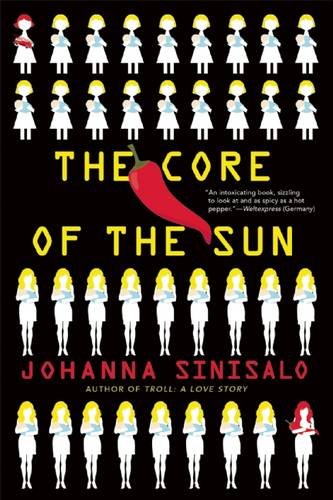
Finnish author Johanna Sinisalo’s novel The Core of the Sun (Auringon ydin, translated by Lola Rogers) made it onto the 2016 James Tiptree Jr. Award Honor List.

Amazon Sinisalo The Core of the Sun

The James Tiptree Jr. Award is a juried award presented annually to works of science fiction or fantasy that explore and expand the understanding of gender and gender roles. In addition to selecting the winners, the jury chooses a Tiptree Award Honor List. The Honor List is a strong part of the award’s identity and is used by many readers as a recommended reading list.

Onnea! That’s fantastic news. Earlier, The Core of the Sun was also voted onto the BSFA Awards 2016 longlist for best novel. Sounds like a very good year for the book.

The Award announcement has several books that I’ve already read or that are on my TBR pile. I might also have to check out some of the others; several sound interesting.

Image via Amazon

How to Helsinki: Kalevala

The Defense of Sampo (Turku Art Museum; 1896; tempera on canvas; Akseli Gallen-Kallela)
The Defense of Sampo via Wikimedia (Turku Art Museum; 1896; tempera on canvas; Akseli Gallen-Kallela)

Worldcon is in Helsinki this year. As a Finnish-American couple, we are very excited about this! In the coming months, we’d like to offer some practical advice about visiting Finland to our fellow fans who are considering going to the event but haven’t had experience with Finland and Finns before.

Erik here. You may have heard of Kalevala before. It has inspired English-speaking authors from Henry Wadsworth Longfellow to J. R. R. Tolkien. If Kalevala is new to you, it’s well worth knowing something about before heading to Helsinki for Worldcon. Kalevala has an important place in Finnish culture and fandom alike.

Origins of Kalevala

In the mid-1800s, with the rise of national romantic movements across Europe, there was a passion for rediscovering and recording oral literature and folk traditions before they were wiped away by modernity. The Grimm brothers in Germany may be the most famous collectors, but similar efforts were happening in many pats of Europe, including Finland. Elias Lönnrot, a rural doctor in eastern Finland, began collecting old songs and stories from the people in the villages he served. Numerous characters and themes were woven through these tales: wizards and warriors, love and longing, mayhem and magic. Many of the characters seemed to be versions of pre-Christian gods and spirits who had survived the the coming of Christianity by being turned into heroes or fitted into Christian stories. Lönnrot also learned the techniques that master singers used to weave one tale into another, building up a larger story out of a common store of incidents and refrains. After many years in the field, he put these techniques to use himself, stripping away Christian elements and assembling a wide variety of the stories he had collected into one grand epic. He called this tale Suuri Kalevala, or “The Great Land of Kaleva.”

Brothers Poavila and Triihvo Jamanen reciting traditional Finnish folk poetry in the village of Uhtua, 1894, photograph by I. K. Inha via Wikimedia

At the time, Finland was part of the Russian Empire (having been under Swedish rule since the twelfth century and conquered by Russia in 1809), but an independence movement was stirring and many people were beginning to pay attention to the elements of a unique Finnish identity. Kalevala became one of the focal points of this movement. By reaching back to pre-Christian history, almost a thousand years before, it promised a validation of Finnish identity grounded in primordial origins free of Russian or Swedish interference. Finland gained its independence in 1917 (happy centennary!) and Kalevala has remained a vital part of Finnish culture ever since.

Kalevala has an earthy immediacy. The poetic language of Kalevala is colloquial and its heroes, despite being magical warriors, live rustic lives as farmers and fishers not much different from the village folk Lönnrot collected the tales from. There are occasional mentions of wars and great battles and one daring Viking-like raid, but more often the tales revolve around such tasks as chopping down trees, mending horse-drawn sledges, and pulling in fishing nets. The power of nature is ever-present, from the summer sun and the winter frost to the trees of the forests and the water of Finland’s ten-thousand lakes.

Continue reading

How to Helsinki: Resources by Worldcon 75 Staff

Worldcon is in Helsinki this year. As a Finnish-American couple, we are very excited about this! In the coming months, we’d like to offer some practical advice about visiting Finland to our fellow fans who are considering going to the event but haven’t had experience with Finland and Finns before.

Eppu here. Erik already started with his take on Finns through American eyes. I want to briefly highlight some resources Worldcon 75 has already published through their progress reports and elsewhere:

Confession: I had to check what kind of food vorschmack is, and I’m pretty sure I’ve never eaten it! 🙂

Post edited for style, and again to add resources.

In Live and Active Cultures we talk about cultures and cultural differences.

How to Helsinki: Concerning Finns

170119lippuWorldcon is in Helsinki this year. As a Finnish-American couple, we are very excited about this! In the coming months, we’d like to offer some practical advice about visiting Finland to our fellow fans who are considering going to the event but haven’t had experience with Finland and Finns before. Maybe we’ll see you there!

Today, we’d like to introduce you to your hosts: the Finns.

Erik here. As an American who’s been married to a Finn for over a decade, I’ve had a lot of time to learn, observe, and make mistakes, so let me offer you the benefit of my personal experience being a foreigner in Finland. Finnish culture can be hard to get a handle on for Americans like me. While some things will feel familiar, especially if you come from small-town New England like me, some of your basic social instincts can also lead to awkward situations. Like any group of people, of course, Finns are all different. There’s nothing I can say that will be true of every Finn you meet, but there are some things worth knowing so that you can be a good guest.

After many years of living between Finland and the US, here’s the best way I can describe Finnish culture: Finland is a small rural village of 5 million people.

Finland used to be a relatively poor, rural country dependent on timber, farming, and fishing. In the past couple of generations, it has become a wealthy, urban, high-tech country, but many Finns have held onto the values and social conventions of their rural ancestors. This is the root of many features of Finnish culture: the village mentality that we are all in this together and we all depend on one another. The rules of Finnish life are grounded in the expectation that you will take into account how your actions affect other people, their time, their personal space, and their responsibilities.

With that in mind, here are some specific dos and don’ts of being a good visitor in Finland:

DO be on time – being late is disrespectful of other people’s time and obligations. Even if it’s just for a casual social event, showing up late in Finland is as rude as not showing up at all in the US.

DO make room for others – when walking on the sidewalk, waiting in line, riding the bus, or anywhere else. Make sure your bag or purse isn’t in anyone’s way, either.

DO line up – and keep the line orderly if you’re waiting for something. Finns in general have a larger bubble of personal space than Americans, so be careful to make sure you’ve found the end of the line.

DO give people space – Finns expect a lot of it and they will give you a lot of it in return. If you’re talking to a Finn and they back away, don’t chase them. They’re probably not trying to get away from you, they’re just resetting comfortable boundaries. (See previous points.)

DO take your shoes off if you visit a private residence – so you don’t track in dirt that your host then has to clean up. Most Finnish homes have places for taking off and putting on shoes right by the front door.

DON’T interrupt – Finnish conversation tends to be slow paced, but people will usually make room for you to speak. Don’t jump in when someone else is talking.

DON’T suggest getting together unless you want to make concrete plans – “We should do lunch some time” is just a casual pleasantry in the US. It’s an expression of general good will with no commitment attached. In Finland it is a commitment to future plans and Finns will expect you to follow through.

DON’T make small talk – if you’re in conversation with a Finn and feel like there’s an awkward silence, don’t try to fill it. For most Finns, silence is not awkward at all, but comfortable. The conversation will start again when someone has something to say.

Another caveat: Finns are also aware of being a small culture in a larger world, especially younger Finns and Finns in the fandom community. In the company of foreigners, they may well make an effort to accommodate a different set of cultural expectations. They will still appreciate you making the same effort for them.

Hopefully this will help those of you heading to Helsinki for the first time. Finland is a wonderful country to visit, especially in the summertime. Being a good guest while you’re there will help you enjoy it to its fullest.

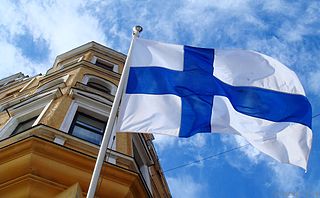
Image: Finnish flag, photograph by Yangtsefly via Wikimedia

In Live and Active Cultures we talk about cultures and cultural differences.
Johanna Sinisalo on the BSFA Awards 2016 Longlist

Finnish author Johanna Sinisalo’s novel The Core of the Sun (Auringon ydin, translated by Lola Rogers) was voted onto the BSFA Awards 2016 longlist for best novel.

Amazon Sinisalo The Core of the Sun

The BSFA Awards are awarded each year to the best Novel, Short Fiction, Artwork and work of Non-Fiction as voted for by the members of the British Science Fiction Association. BSFA members can vote on the longlist to draw up a shortlist between January 01 and January 31. The shortlists for these four awards will normally comprise the five works in each category that receive the most individual nominations by the deadline.

Congratulations! I’m looking forward to hearing whether Sinisalo makes it onto the shortlist.

Incidentally, Sinisalo is one of the guests of honor at Worldcon 75 in Helsinki this coming August.

Found via File 770.

Image via Amazon.

Maria Turtschaninoff’s Novel Maresi Optioned

Swedish-speaking Finnish author Maria Turtschaninoff announced last week that her fantasy novel Maresi has been optioned for a movie by the U.K.-based company Film4.

Congrats—grattis! Awesome news!

The historically inspired fantasy was originally published in Finland in 2014 and awarded the prestigious Finlandia Junior Prize in the same year. It’s the first in the Red Abbey Chronicles series.

Turtschaninoff Maresi US 2017 Cover

Film4 has developed and co-financed many of the most successful films from the U.K. in recent years, including Academy Award winners 12 Years a Slave and Slumdog Millionaire. Earlier Film4 productions include K-Pax, Trainspotting, and Four Weddings and a Funeral.

The U.S. edition of Maresi will be released January 03, 2017.

A freestanding sequel called Naondel has just been published in Swedish and Finnish, but at this writing there’s no information about translations. Turtschaninoff is currently working on book three for the series.

Maresi comes highly recommended by a friend of mine, but I haven’t yet been able to get it. I’m eagerly looking forward to January!

Image via Maria Turtschaninoff

The Neverending Story Has an Anniversary Doodle

Google tells me with a lovely doodle that it’s the 37th anniversary of the first printing of The Neverending Story by Michael Ende.

Google Doodle Falkor from Neverending Story

Originally published in German on September 01, 1979, Die unendliche Geschichte was translated into Finnish in 1982 (and apparently English in 1983, with the film adaptation in 1984). I can’t quite remember if I ever read it. At the same time, I want to recall a gorgeous tome with both green and red print, so I guess I must at least have been handling the Finnish translation at one point.

Finnish translation of The Neverending Story (Tarina vailla loppua) by Katja Jalkanen at Lumiomena

(No, I did not imagine the green and red print!)

While the movie version isn’t terribly well-made nor the first I saw in a theater, it is one of the first screen adaptations that made me realize I was a geek even if I didn’t have a word for it at the time. It’s purely for nostalgia that I own and occasionally rewatch it. I’m now wondering whether I should’ve bought the book instead.

Images: Falkor from Neverending Story by Sophie Diao via Google Doodle. Finnish translation of The Neverending Story (Tarina vailla loppua) by Katja Jalkanen at Lumiomena

This post has been edited for style.

ICBIHRTB—pronounced ICK-bert-bee—is short for ‘I Can’t Believe I Haven’t Read This Before’. It’s an occasional feature for book classics that have for some reason escaped our notice thus far.