Stories in which Being Good is Smart

I’ve been thinking a bit lately about how to describe the kind of stories I want to experience, whether on the page or the screen. I’ve long known that I enjoy stories about characters solving problems. But that’s not the only thing I look for in fiction.

I enjoy reading about people who are good to one another, kind, compassionate, and generous. I don’t enjoy stories in which kindness is portrayed as weakness, or in which the most manipulative, cruel, or ruthless characters prosper at the expense of others. I want to see how being kind and treating others well is the best way to go about solving problems. I like stories in which being a good person isn’t just the right thing to do, it’s the smart thing to do.

I don’t mean stories with a moralistic bent, in which some outside force (be it divinity, fate, or just the author’s guiding hand) intervenes to reward virtue and punish vice. I don’t want to see good people win just because they are good. I want to see them win because complicated problems can’t be solved by one person acting alone, no matter how devious or ruthless they may be. Big problems only get solved by people working together, and the best way to get people working together is to treat them decently.

Here are a few my favorite stories on page and screen that fit what I’m looking for.
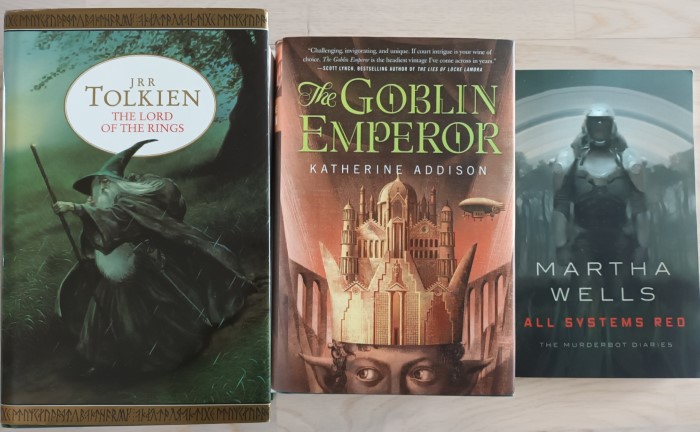
J. R. R. Tolkien’s The Lord of the Rings is a tale of cosmic good and evil, but one that plays out on the individual level. The forces of good ultimately triumph because many individual people, some of them quite small and unimportant, choose the good of others over their own safety or comfort. Katherine Addison’s The Goblin Emperor follows Maia, a neglected half-goblin prince, as he is thrust by circumstance onto the throne of an Elvish empire. Maia is surrounded by devious plotters and dangerous revolutionaries, but he keeps his throne and his head by listening to others, finding trustworthy allies, and being compassionate to the weak and vulnerable. In Martha Wells’s Murderbot Diaries series, the sarcastically self-named Murderbot is a human/machine construct designed by a ruthless ultra-capitalist corporation to fight and kill, but who would rather just be left alone to watch media. Over the course of the stories, it discovers humans who are not ruthless ultra-capitalists, whom it ends up learning to trust and value.
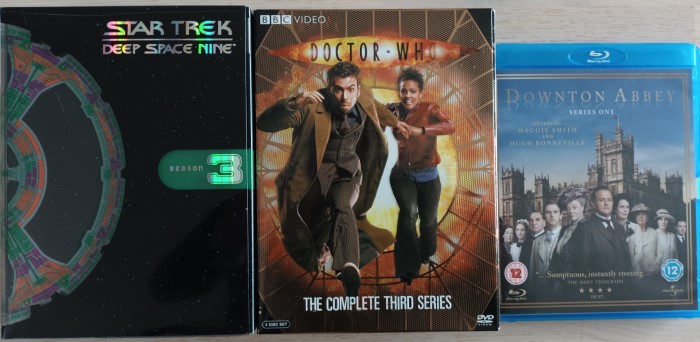
Star Trek is all about characters being good. Deep Space Nine pushes its characters to the limits of the universe’s hopeful utopianism through trauma and war, but ultimately finds them trusting one another, working together, and finding compassion even for their most implacable enemies. In Doctor Who, the wandering Time Lord stumbles into one disaster after another, but approaches them all with a spirit of hope and understanding, asking questions always and shooting never. Downton Abbey follows the inhabitants of the titular manor, both the family upstairs and the staff downstairs, through the tumultuous social changes of the early twentieth century. All the characters have their flaws, and some can be quite vicious, but the series follows how the characters come to rely on one another, and how even the most mercenary of them learn that kindness and compassion are vital for surviving in a changing world.

These are the kinds of stories I want more of: people being good or learning to be good, not just because it’s the right thing to do, but because it works.

Images by Erik Jensen

Mandip Gill and Jodie Whittaker Pushed for Doctor Who Romance

This fall we’ve worked on catching up on Doctor Who, including some reading. Apparently, the romantic signals between Yaz and the Doctor essentially came from the actors, Mandip Gill and Jodie Whittaker, after they saw some fan speculation in social media.

Bleeding Cool Thirteenth Doctor and Yaz

Intriguing! I have often wondered how much say actors typically have over their characters, but I guess there isn’t a typical situation. At least on the basis of movie and series documentaries, it really seems to be up to each individual showrunner / writer / director how much creative control they’re willing to hand over to anyone else.

As I don’t read fan fic of any kind, this development was surprising to me. It was played nicely, though—subtle, not a hammer to the head (like some other stories I could point to).

Anyway; delighted to finally have a female Doctor! I’m looking forward to what writer Russel T. Davies and actor Ncuti Gatwa have in store for the fifteenth Doctor.

Image by BBC via Bleeding Cool

In Seen on Screen, we discuss movies and television shows of interest.

TARDIS Console Room Concepts by Paul Hanley

Artist Paul Hanley tweeted a series of TARDIS console room concepts in a range of styles. My favorite may be the rococo-inspired one:

Although the Cloister Room is also great:

And the Da Vinci -esque one could almost be a World of Warcraft Gnome’s workshop:

Or maybe a Blood Elven alchemy lab?

Which one is your favorite?

Found via File 770.

In Making Stuff occasional feature, we share fun arts and crafts done by us and our fellow geeks and nerds.

Doctor Who Has a Villain Problem

Doctor Who‘s go-to villains are boring. Daleks are boring. Cybermen are boring. The Master is extra super boring with a side of tedious.

The problem with these staples of Doctor Who is not that they are bad villains in themselves. Omnicidal mechanized life forms like the Daleks and Cybermen are a staple of science fiction. Star Trek has done a lot of good work with its Borg, who are just Cybermen with the serial numbers filed off. (For anyone wondering, Cybermen first appeared in the original Doctor Who in 1966, the Borg on Star Trek: The Next Generation in 1989.) As for the Master, you can hardly throw a sonic screwdriver in sci-fi without hitting a gloating egomaniac who acts as a foil to the hero. The problem with these villains is that they are a bad fit for Doctor Who.

A large part of Doctor Who‘s charm is the pacifism of its hero. As a hero who refuses to pick up a weapon and is always looking for a peaceful solution, the Doctor is, if not entirely unique, a refreshing rarity in science fiction, a genre often bristling with laser blasters and photon torpedoes. Through all the character’s many regenerations, this has been one of their defining characteristics: they approach the unknown with wits and words, not guns and bombs. An explorer, a tinkerer, a scientist, a detective, a negotiator—the Doctor is anything but a warrior. They are at their best not fighting an enemy but solving a problem.

Some of the great episodes of Doctor Who‘s new incarnation have been about precisely that: solving a problem. Even when the Doctor is up against some opposing force, they approach it not as an enemy to be beaten but as a riddle to unravel. Antagonists like the nanogenes that turned blitz-era Londoners into gas-masked zombies in “The Empty Child” / “The Doctor Dances” (season 1) or the clockwork robots haunting Madame de Pompadour in “The Girl in the Fireplace” (season 2) were not evil, just malfunctioning technology that the Doctor could fix or disable. Some of the Doctor’s great opponents have indeed been evil, or at least menacing, like the Weeping Angels in “Blink” (season 3) or the mysterious word-copying entity of “Midnight” (season 4), but the Doctor finds ways to defeat them that don’t involve fighting. These kinds of episodes are what we come to Doctor Who for.

Daleks and Cybermen are different. They cannot be negotiated with or peacefully fixed. They are, as written, super-powered beings whose only goal is to wipe out all other life in the universe. The only sensible response to them is simply to blast them to bits with whatever guns or bombs you have on hand until there is nothing left of them to blow up. If the Doctor did that, though, they wouldn’t be the Doctor any more, and we would lose what we love most about the character. Which means that whenever Daleks or Cybermen show up, you can count on one of two things happening: the Doctor will magically jigger together some handwavy way of getting rid of them without killing them (which is unsatisfying), or some other character will blast them to bits with whatever guns or bombs they have on hand (which rather feels like cheating). Daleks and Cybermen just don’t make for good Doctor Who.

(Also, Doctor Who has really stretched the limits of how much I can tolerate villains with annoying voices who narrate everything they do out loud, but that’s a separate issue.)

The Master is even worse. Daleks and Cybermen at least have coherent goals, however generic. The Master seems to exist simply to annoy the Doctor. Every atrocity they commit, every murder and overly-complicated scheme, serves only one purpose: to make the Doctor feel bad. The Master’s entire motivation stems, as far as I can tell, from one time when they and the Doctor were both Time Kids and the Doctor missed a play date, or something—that is all the depth the character ever gets (at least in the new series). There is no problem here for the Doctor to solve. Nothing to fix or negotiate, just an obsessed stalker whose go-to move is genocide. The best response to the Master would be to shoot them as soon as they turn up and keep shooting them until they run out of regenerations, but that’s not Doctor Who and I wouldn’t want Doctor Who to become a show where that would happen.

Doctor Who is all about saving the day without resorting to violence. Pitting its hero against enemies who allow for no non-violent solution defeats the purpose of Doctor Who. Give us more mysteries, more problems, more foes who can be diverted or negotiated with, not more implacable monstrosities.

Image: Cybermen confront a Dalek, from “Doomsday” (Doctor Who, season 2) via IMDB

Here there be opinions!

A New Doctor with New Best Friends

The new Doctor Who season started this past weekend, on Sunday October 07, 2018. The big thing, of course, is that Jodie Whittaker makes her doctorial debut in season 11! I have some thoughts on it. But first, the official trailers:

Doctor Who: Series 11 Trailer by Doctor Who on YouTube

Doctor Who: Series 11 Trailer #2 by Doctor Who on YouTube

I get chills from both! 😀 Although the music choices for trailer 2 seem a little odd—I suspect I might be missing some cultural references here.

I haven’t seen the first episode yet, so I only have previously shared glimpses, various reports, and other people’s reactions to go by. Reading to the rescue, then! Below are quotes from some of the most interesting writeups I found.

Spoiler warning is in effect! (Also, because some quotes are quite long, I’ll pop the rest behind a cut.)

Read the whole post.

Is the New Doctor Who a WoW Gnome?

I was browsing some Doctor Who reading on the latest iteration of the Doctor herself when I saw this photo of Jodie Whittaker in costume:

TV Guide BBC Studios Sophie Mutevelian 13th Doctor Who 2018

The new Doctor Who is– a WoW gnome?!?

LiveJournal Cindy Love Is in the Air FGnome Cropped

😀

Images: Jodie Whittaker as the Doctor by Sophie Mutevelian / BBC Studios 2018 via TV Guide. World of Warcraft screencap cropped from one by Cindy on LiveJournal.

Some things are just too silly not to share!

Rating: Doctor Who, Season 9

We’re back at it again, rewatching and rating another season of new series Doctor Who. Here’s our take on season 9.

  1. “The Magician’s Apprentice” – 4
  2. “The Witch’s Familiar” – 3
  3. “Under the Lake” – 6.5
  4. “Before the Flood” – 6.5
  5. “The Girl Who Died” – 4
  6. “The Woman Who Lived” – 4.5
  7. “The Zygon Invasion” – 2
  8. “The Zygon Inversion” – 2
  9. “Sleep No More” – 1
  10. “Face the Raven” – 1.5
  11. “Heaven Sent” – 5
  12. “ Hell Bent” – 2

This season is a real come down, with an average rating of just 3.5, the lowest yet. There are some reasons why many of this season’s episodes don’t rate very well. The showrunners made the interesting choice of making almost every episode in the season a two-parter. (Only “Sleep No More” stands alone.) This has the potential of allowing for more expansive and complex storytelling, which pays off in “Under the Lake” / “Before the Flood,” but in other cases, like “The Magician’s Apprentice” / “The Witch’s Familiar” and “The Zygon Invasion” / “The Zygon Inversion,” what we get is an episode-and-a-half worth of story with the Doctor filibustering to fill out the time.

The lowest-rated episode of the season is “Sleep No More,” which is trying to be a claustrophobic monsters-in-space horror story with a twist, but which can’t escape the absurdity of its premise. Doctor Who has managed to make a lot of mundane things scary, from children in gas masks to angel statues to repeated words, but this was a stretch too far. It doesn’t matter how much first-person shaky-cam footage you use or how much running through darkened hallways your characters do, there is just no way to make the crud that builds up at the corner of your eye when you sleep scary.

Special mention goes to the “Zygon Invasion / Inversion” two-parter, for being not only badly written and poorly paced but also having some troubling undertones. This pair of episodes picks up on the 50th anniversary special which ended with a colony of Zygons—shape-changing aliens that can mimic other life forms—settled on Earth in human form. Here, a splinter group of Zygons refuses to maintain the charade and begins waging a violent campaign against humans and conforming Zygons. The episode ends with the rebel Zygons agreeing to remain in human form. On one hand, the reversion to the status quo is necessary if the series is not prepared to deal with the ongoing consequences of a world full of humans finding themselves living next to starfish-like aliens. On the other hand, the implications of telling a group of immigrants that they can’t live openly and must hide their identity by conforming entirely to the culture of their new home is unsettling in these days of rising nativism and anti-immigrant hate. This is not the open-hearted, compassionate Doctor Who that we are used to.

The best episodes of the season are the two-parter “Under the Lake” and “Before the Flood,” both at 6.5. In this episode, the Doctor and Clara find themselves in an underwater station where a crashed alien ship is killing the crew and turning their ghosts into transmitters. It’s an intriguing mystery that develops slowly as the Doctor pieces together the clues. This episode is reminiscent of the season 2 two-parter “The Impossible Planet” / “The Satan Pit,” with the Doctor facing off against an ancient evil that uses written language to infect the crew of the station.

This is as far as we’ve gotten in our Doctor Who rewatching project. We’ll update with season 10 when we get around to it, and we’re looking forward to the upcoming season 11 and checking out Jodie Whittaker’s take on the wandering Gallifreyan.

This just wasn’t the season for us. How did it work for you? Feel differently about the season as a whole or an episode in particular? Let us know!

Image: Doctor Who season 9 cover via IMDb

In the Seen on Screen occasional feature, we discuss movies and television shows of interest.


Rating: Doctor Who, Season 8

We have carried on our rewatching and rating to season 8 of the modern Doctor Who. Here’s our take:

  1. “Deep Breath” – 5.5
  2. “Into the Dalek” – 5
  3. “Robot of Sherwood” – 2
  4. “Listen” – 1.5
  5. “Time Heist” – 5
  6. “The Caretaker” – 3
  7. “Kill the Moon” – 6
  8. “Mummy on the Orient Express” – 6.5
  9. “Flatline” – 5.5
  10. “In the Forest of the Night” – 5
  11. “Dark Water” – 1.5
  12. “Death in Heaven” – 1.5

The average rating this season comes out to exactly 4, which is weak but not terrible. This comes in as the second-lowest-rated season after season 5, at 3.7. This season’s episodes are all over the place, which for Doctor Who is not a bad thing. Not all of the episodes work, but we appreciate the willingness to try out strange ideas, unexpected settings, and dramatically different moods.

This season also introduces Peter Capaldi as the Doctor, and it’s a bit of a shaky start. Capaldi’s intensity is a nice change from Matt Smith’s quirky detachment, but too often it manifests as anger. As that anger often gets focused on Clara, we have the uncomfortable dynamic of a young woman saddled with the emotional labor of managing a cranky older man’s moods, and one begins to wonder if someone in the production team is having a bit of a temper tantrum about changing gender dynamics in the workplace. Still, straight out of the gate, Capaldi is more convincing as the Doctor than Smith ever was.

Three episodes are tied for our lowest rating of the season, at 1.5. The first is “Listen,” an ambitiously strange episode that tries to recapture the atmospheric spookiness of the classic “Blink,” but falls flat. The Doctor is looking for a creature so good at hiding that no one has ever seen it. This intriguing setup leads to a disjointed series of maybe / maybe-not monster hunts that for some reason revolve around Clara’s fellow teacher and potential boyfriend Danny Pink. Despite some well-written and tensely-directed individual scenes, the episode remains too unfocused and too committed to the is-it-or-isn’t-it schtick to develop any meaningful narrative drive or reach any satisfying conclusion. The pieces of the puzzle lie scattered on the floor, refusing to come together and make a picture.

The other two 1.5s are the obligatory concluding two-parter “Dark Water” and “Death in Heaven,” in which the latest regeneration of the Doctor’s old nemesis, the Master—now female and going by Missy—reveals that she has been hijacking dead people to make liquid cybermen out of their bodies so that she can make the Doctor uncomfortable by… you know, nothing about the plot of these episodes makes any sense, or, really, matters. Michelle Gomez has a blast chewing the scenery as Missy (and provides a valuable canonical precedent for Time Folks gender-flipping during regeneration), but as usual in this series, the Master’s overly contrived plans just come off as a juvenile play for attention. As tends to happen on Doctor Who, putting the whole world in peril actually serves to lower the stakes, rather than raise them, and this season’s ender comes off as more petty than anything else.

At the other end of the scale, “Mummy on the Orient Express” is the best episode of the season, at 6.5. In this episode, a version of the Orient Express train flying through space is plagued by the appearance of a legendary monster only visible to its victims. On one hand, this episode would have benefited from some more development. Unlike on the replica Titanic of “The Voyage of the Damned,” we never get any kind of explanation as to why a space train in the future is a replica of the Orient Express with all the guests wearing period clothing. The guest cast, though excellent, is underused, and the ending leaves a huge plot thread conspicuously dangling. On the other hand, there are a lot of strong elements. The mystery is intriguing and its resolution neatly ties up the clues. The pacing runs along smoothly, and the device of an on-screen timer counting down the mummy’s attack is cleverly used to build tension. For mystery fans, there is also a subtle nod to Agatha Christie’s Murder on the Orient Express, as what seems like a train full of strangers turns out to have been assembled for a very particular purpose.

What’s your take on this season? Does Capaldi do it for you? Is “Listen” just your cup of tea? Not enthused by the mummy on the space train? Let us know!

Image: Doctor Who season 8 cover via IMDb

In the Seen on Screen occasional feature, we discuss movies and television shows of interest.

Rating: Doctor Who, Season 7

We’re back at it, rewatching and rating season 7 of new-series Doctor Who. Here’s our take on this season’s episodes:

  1. “The Doctor, the Widow, and the Wardrobe” – 1.5
  2. “Asylum of the Daleks” – 6
  3. “Dinosaurs on a Spaceship” – 5
  4. “A Town Called Mercy” – 5
  5. “The Power of Three” – 2
  6. “The Angels Take Manhattan” – 3
  7. “The Snowmen” – 6.5
  8. “The Bells of Saint John” – 6.5
  9. “The Rings of Akhaten” – 3
  10. “Cold War” – 5
  11. “Hide” – 6.5
  12. “Journey to the Center of the Tardis” – 2
  13. “The Crimson Horror” – 4
  14. “Nightmare in Silver” – 4
  15. “The Name of the Doctor” – 3

The average rating for this season is an unimpressive 4.2, a slight comedown from season 6’s 4.4, though better than season 5’s 3.7. On the whole, this season just feels half-baked. There are some great ideas here that are just wasted on meandering, unfocused, episodes. An evil living sun! A Martian warrior on a Soviet submarine at the height of the cold war! Dinosaurs on a freakin’ spaceship! All of these ideas must have sounded great when first pitched, but the episodes developed from them just feel like underdeveloped first drafts. There are also some episodes that start out with great potential and then just flop. Mysterious black cubes appear all over the world and no one knows what they do! A pulp crime novel predicts the future! Despite their promising starts, these episodes just fizzle out in the end. Many of these episodes feel like they could have been standouts if more attention had been paid to developing the script.

At the bottom of the heap this time around is the Christmas episode “The Doctor, the Widow, and the Wardrobe,” at 1.5, about the Doctor trying to inject some delight into the lives of a grieving family by giving the children a magical trip to a winter wonderplanet. This episode’s problems are many, including misplaced comedy, uninteresting characters, and mediocre child acting. The biggest problems, though, run deeper. The whimsy is forced, and the story never quite decides how close it wants to hew to the C. S. Lewis original. Unlike some of this season’s other disappointing episodes, it’s hard to see this one’s problems being solved with another draft or two.

For best episodes of the season, it’s a three-way tie among “The Snowmen,” “The Bells of Saint John,” and “Hide,” all at a decent-if-not-outstanding 6.5. “The Snowmen” finds the Doctor grieving the loss of his companions Amy and Rory by hiding out in Victorian London, while sentient snow threatens a family whose governess is one version of Clara Oswald. “The Bells of Saint John” brings the Doctor and Clara together properly with a story of a nefarious company stealing people’s minds through wi-fi. “Hide” is a ghost-hunting story with a time-travel twist.

All of these episodes have their strengths. “The Snowmen” does a better job playing with it’s Mary Poppins inspiration than “The Doctor, the Widow, and the Wardrobe” does with Narnia. It also allows Clara’s character plenty of room to breathe and brings back the ever-delightful Madame Vastra, Jenny, and Strax. “The Bells of Saint John” is a tightly-paced paranoia thriller with lots of good action (even though the wi-fi mind-stealing plot never makes the least bit of sense). “Hide” begins as an atmospheric haunted house story that slowly unfolds to reveal surprising layers of complexity. While they all could have done with a bit more development, there are satisfying moments in each.

There are also some good long-term developments this season. Curious, resourceful Clara is a much more enjoyable companion to watch than Amy the bully. There is also much less hero-worshiping of the Doctor than in previous seasons.

That’s our take on Doctor Who‘s seventh season. What’s yours? Do you have favorites (or unfavorites) this season? Let us know!

Image: Doctor Who Season 7 cover via IMDb

In the Seen on Screen occasional feature, we discuss movies and television shows of interest.

Rating: Doctor Who, Season 6

Our rewatching and rating project carries on with season 6 of new-series Doctor Who. Here’s our ratings for this season’s episodes:

  1. “A Christmas Carol” – 7
  2. “The Impossible Astronaut” – 6
  3. “The Day of the Moon” – 7
  4. “The Curse of the Black Spot” – 4
  5. “The Doctor’s Wife” – 4.5
  6. “The Rebel Flesh” – 4
  7. “The Almost People” – 1.5
  8. “A Good Man Goes to War” – 6.5
  9. “Let’s Kill Hitler” – 6
  10. “Night Terrors” – 2
  11. “The Girl Who Waited” – 2
  12. “The God Complex” – 3.5
  13. “Closing Time” – 4
  14. “The Wedding of River Song” – 3.5

The average episode rating for this season is 4.4, which is a rebound from last season’s 3.7, but still well below the first four seasons.

This season has its good moments. The production team seems to have gotten a better handle on things and most of the episodes feel polished. The actors seem more comfortable in their roles and more willing to stretch their interpretations of the characters. A few episodes deliver new and creative stories. At the same time, a lot of this season feels underwhelming or poorly thought-out.

Our lowest-rated episode for the season, at 1.5, is “The Almost People,” the second part of a grimy industrial-punk story about goop-doppelgangers (goopelgangers?) gone rogue in a future acid-mining operation that for some reason happens in the remains of a medieval monastery. (Someone on the Who team clearly has a thing for goopelgangers: see season 4’s “The Sontaran Strategem” and “The Posion Sky.”) The first part was a bit nonsensical and left a lot of unanswered questions hanging (Why is acid-mining such a big deal in the future? Why use goopelgangers for it? Why are they in a medieval monastery? How did any of this get past health and safety, let alone the heritage council?), but at least it promised the possibility of a good old classic sci-fi “Who’s real?” and “What is the measure of a human?” story. The second part, though, just kind of falls apart and doesn’t pay off. Like last season’s “Flesh and Stone,” and “Cold Blood,” the second half of the story gets sidetracked into serving the season-long arc.

There are brights spots this season, though. Things start off at a strong 7 with an ingenious Christmas episode in which the Doctor finds himself traveling back in time to play Ghosts of Christmases Past, Present, and Future and save the soul of a heartless old plutocrat just in time to save a crashing spaceship with his friends Amy and Rory on board. A two-parter follows, “The Impossible Astronaut,” rated 6, and “The Day of the Moon,” another 7, about the Doctor’s friends trying to save the Doctor from being killed by a mysterious figure in a spacesuit and in the process discovering the sinister Silence, who erase themselves from the memory of anyone who sees them. These episodes are a good mix of horror, action, and comedy, and the Silence make interesting counterparts to the Weeping Angels: while the Angels disappear when you look at them, the Silence disappear when you look away.

Although this season has its ups and downs, it also has some larger problems. One is the ongoing obsession with an arc story, which gets significantly more convoluted in this season, sometimes to the detriment of what could have been decent stand-alone stories. New-series Doctor Who has a pretty bad track record when it comes to season-long arcs. Most of them feel obligatory and ratings-driven rather than organic and meaningful. Arc-dependent episodes have consistently been some of the worst, while the best episodes have been those that have nothing to do with the arc. I’d be happy to see Doctor Who stop trying to be Lost and focus on being Doctor Who.

Another problem, which appeared in earlier seasons but gets significantly worse over seasons 5 and 6, is the amount of time and narrative attention given to other characters talking about how great the Doctor is. It was used as a cheap get-out-of-plot-free card at the end of season 3’s “The Last of the Time Lords,” in which a world full of people thinking good thoughts about the Doctor powers the deus ex machina ending, but in season 6 it becomes a recurring theme as ubiquitous as the whooshing of the Tardis. Even River Song, who started off as a fascinating character in her own right, gets reduced to a chorus girl singing the “Oh, Doctor, you’re so amazing” refrain this season. This character shilling goes along with the continuing attitude that special people get a pass on basic human decency to make some scenes really uncomfortable to watch.

How do the rest of you feel about this season? Got any favorites (or anti-favorites) you want to share? We know that not everyone shares our tastes or out perspective on Doctor Who, so let us know in the comments what you loved or didn’t about this season.

Image: Doctor Who season 6 via IMDb

In the Seen on Screen occasional feature, we discuss movies and television shows of interest.