Rating: Murdoch Mysteries, Season 8

Our favorite soft-spoken Toronto detective / inventor returns for another season of mysteries. Here’s what we thought of season 8.

  1. “On the Waterfront, Part 1” – 4.5
  2. “On the Waterfront, Part 2” – 6
  3. “Glory Days” – 2.5
  4. “Holy Matrimony, Murdoch!” – 8
  5. “Murdoch Takes Manhattan” – 7
  6. “The Murdoch Appreciation Society” – 9
  7. “What Lies Buried” – 8
  8. “High Voltage” – 4
  9. “The Keystone Constables” – 4
  10. “Murdoch and the Temple of Death” – 7
  11. “All that Glitters” – 6
  12. “The Devil Wears Whalebone” – 8
  13. “The Incurables” – 5.5
  14. “Toronto’s Girl Problem” – 4
  15. “Shipwreck” – 2
  16. “Crabtreemania” – 6
  17. “Election Day” – 7
  18. “Artful Detective” – 5.5

This season’s average rating is a 5.8, which is not the best Murdoch Mysteries has done, but is a very strong showing for a series in its eighth year and with no signs of faltering.

This season has the distinction of seeing Detective Murdoch and Dr. Ogden finally tie the knot. Of course, neither their wedding nor their honeymoon can go off without a murder to brilliantly solve together, giving us a delightful pair of episodes in “Holy Matrimony, Murdoch!” and “Murdoch Takes Manhattan.” The latter episode also features a spirited B-story back in Toronto which allows Dr. Grace to take the wheel for a high(-ish)-speed car chase.

The lowest episode of this season is “Shipwreck,” at 2, in which Murdoch finds his beloved childhood priest fallen from his pedestal. There are good parts to the episode, but it is dragged down by slow pacing and uninspired acting. “Glory Days,” a 2.5 in which a legendary lawman of the US old west thinks he’s hunting Butch Cassidy and the Sundance Kid in Toronto is not much better, as it wallows in the unappealing tropes of male resentment.

But these low points are more than outweighed by a number of fine episodes. The best of the season is “The Murdoch Appreciation Society,” at 9, in which Murdoch’s in-universe fans stage a fake mystery for the chance to watch him work, which becomes tangled up with a real murder plot. Also notable are “The Devil Wears Whalebone,” an 8, which features one of the series’ more inventive murder weapons, and “What Lies Buried,” also an 8, a tense and claustrophobic drama in which Murdoch seeks a killer within the police force itself. Along the way, we get the usual Murdoch hijinks with vaudeville theatre, staged wrestling matches, the early days of the women’s suffrage movement, and an Indiana Jones pastiche.

All told, it’s another fun go around with Detective Murdoch and company.

Image: Dr. Grace at the wheel, from Murdoch Mysteries via IMDb

Post edited to correct grammatical errors

In the Seen on Screen occasional feature, we discuss movies and television shows of interest.

Disney Princess Cosplayers Wearing Mandalorian Armor

Ooh—I knew cosplayers were an ingenious group, but this is awesome: cosplayers portray Disney princesses in Boba Fett -like armor:

Tumblr Queens-of-Cosplay Boba Fett Pocahontas

Oh my goodness, the leaf detailing on the Pocahontas / Fett helmet! And the detailing in general—love it!

Tumblr Queens-of-Cosplay Boba Fett Elsa Tinkerbell

The photography is credited to Jonathan York who posts his photos as York In A Box. I haven’t been to confirm it, since Facebook has been glitching for me for some reason. It would’ve been great to read more about the setup and the individual cosplayers’ thoughts.

(I did some searching elsewhere, too, but my google fu fails me for the moment. If you can find a different link, please share!)

Found via Queens-of-Cosplay on Tumblr.

Images by Jonathan York / York In A Box via Tumblr.

Out There is an occasional feature highlighting intriguing art, spaces, places, phenomena, flora, and fauna.

Living Vicariously Through Social Media: The Occultation of Saturn

One of the best things about social media—like the Internet, too—is how many different phenomena you can witness if not first hand then at least in a secondary capacity; way more than would be possible in a regular human lifetime.

Case in point: the occultation of Saturn (i.e., hiding behind another object, in this case the moon) a few days ago.

Twitter Ian Griffin Saturn behind Moon
Ian Griffin on Twitter

This view and others on Griffin’s Twitter account were taken from Portobello in New Zealand.

Holy moly! The space nerd in me is impressed.

Hey, look! We found a thing on the internet! We thought it was cool, and wanted to share it with you.

Quotes: Cribbage Boards Are as Common as Wooden Spoons

Cribbage boards are as common as wooden spoons in the kitchens of this island. Children raised in this part of Maine often learn to play cribbage before the can tie their own shoes.

Linda Greenlaw writes about Isle Au Haut, Maine, not far from where one part of my family has its roots in the rocky coastal soil. This was one of many parts of the book that had me nodding in recognition. I can’t honestly say whether I learned to play cribbage (a curious card game for which you keep score on a wooden board) or tie my shoes first, but I can say that I don’t clearly remember a time in my life when I couldn’t do both.

Greenlaw, Linda. The Lobster Chronicles: Life on a Very Small Island. New York: Hyperion, 2002, p. 111.

Serving exactly what it sounds like, the Quotes feature excerpts other people’s thoughts.

First Trailer for Star Wars: The Rise of Skywalker

The name and the first trailer for Star Wars: Episode IX were released last week, and both are tantalizing! Star Wars: The Rise of Skywalker again seems to revolve around Rey:

Star Wars: The Rise of Skywalker – Teaser by Star Wars on YouTube

Oh my goodness, her leap over the speeding fighter looks incredible! (Even if I can’t quite understand the decision to run with an extended lightsaber in your hand… Is anyone else reminded of running with scissors?) I’m also looking forward to seeing Poe and Finn questing, er, fighting the Empire together—I always appreciated the ease with which they became and remain buddies.

J.J. Abrams’s work has been bit of a hit or miss for me in the past, so at the moment I’m cautiously optimistic about Rise. It will, however, be remarkable to see the end of the nine-movie Skywalker story arc begun when I was a toddler.

A nostalgic tidbit: A New Hope was one of the first stories I remember reacting to and realizing that I really, really liked the stuff with space and robots and dragons and elves and whatnot. Ever since then, around the age of 11 or 12 or so, I’ve considered myself a science fiction and fantasy geek.

And now I kinda want to make myself a sleeveless, hooded tunic like what Rey is wearing underneath her wrap. It’s a really neat design. 🙂

December 20, 2019, seems so far, far away.

Hey, look! We found a thing on the internet! We thought it was cool, and wanted to share it with you.

Some “Deleted Scenes” from Barbarians in the Greek and Roman World

They say good writing is good rewriting. They also say to kill your darlings. Both are good pieces of advice. The process of writing involves a lot of false starts, changes, and reworkings. Sometimes it means having to let go of something you worked hard on, that you like, but that just doesn’t serve the needs of your project.

In writing my book Barbarians in the Greek and Roman World, I had to kill a lot of darlings. A lot of text just got deleted and rewritten, but sometimes I had to cut out things I liked and was happy with, but that just didn’t belong in the book as written or that I had found better ways to express. In those cases, rather than delete the the text entirely, I cut and pasted it into a separate file to save just in case I decided to put it back in future revisions, or maybe to some day develop into its own project. That file ended up being longer than any of the actual chapters in the book.

In the spirit of DVDs with deleted scenes from movies, I present to you a few choice bits that didn’t make it into Barbarians, but that I still think are worthwhile on their own.

On the significance of the Greco-Persian Wars in later Greek culture:

The Athenian playwright Aeschylus was a giant of classical literature. He was the first author to put multiple characters on the stage at once, thus introducing conflict and inventing Greek drama as we know it. He won the Athenian dramatic competition thirteen times and was praised for his compositions by both contemporaries and later generations. But when he died his epitaph celebrated only one achievement: he fought at Marathon. Such was the importance of the wars against Persia in the later history of Greece.

On the connections between Persia and Macedonia:

Alexander trod the path that had been laid down by Cyrus the Younger generations before. He had grown up in a Macedonian court that hosted Greek intellectuals and Persian exiles. The similarities between Cyrus and Alexander’s campaigns are hardly accidental. Both were efforts from the edge of the Persian world to capture the center. Alexander may have started his campaign farther away from that center than Cyrus did, but the ties of politics, diplomacy, and personal relationships that connected Macedonia to Persia were just as strong as those to ran through Anatolia and Greece.

On the shifting definitions of Greekness:

In other words, although both ideas always had some currency, in earlier times it was more common to argue that Greeks were Greeks because they were descended from Greeks, while by the later fourth century it was more common to argue that Greeks were Greeks because they acted like Greeks.

On the political ramifications of culture in the Hellenistic world:

Behind all of these complicated relationships was a fundamental political fact: Macedonian kings now ruled most of the territory of the old Persian empire. These kings and their supporters in the ruling class had chosen to identify themselves with Greek culture. In the past, some Greeks had exercised power over non-Greek populations—particularly in major colonial cities like Syracuse and Massilia—but never on this scale. Now vast new populations had to come to terms with the linking of political power and Greek culture. Their responses ranged from resistance to collaboration to indifference. The Greeks in these kingdoms also had to come to terms with new ways of being Greek.

None of these cultural innovations could erase the boundaries of status and privilege that the Greco-Macedonian ruling class had erected between itself and the peoples over whom it ruled. As in many more recent colonial contexts, the rigid enforcement of cultural lines may itself have given impetus to the reinvention of the cultures of both the rulers and the ruled. When being “Greek” was the key to social and political advancement, it is no surprise that some people looked for novel ways of being Greek while others strove to reassert the value of not being Greek.

All of these selections got cut for good reasons, but it’s a pleasure to be able to share them with you now.

How It Happens is an occasional feature looking at the inner workings of various creative efforts.

Trailers for the Tolkien Biopic

It’s three weeks to the release of Tolkien, the new biopic directed by my fellow Finn, Dome Karukoski.

IMDB Tolkien Biopic

Two trailers are out at this point:

TOLKIEN | Official Trailer | FOX Searchlight on YouTube

TOLKIEN | Trailer 2 | FOX Searchlight on YouTube

Looking very shiny! At just under 2 hours and chock-full of great actors—Nicholas Hoult, Lily Collins, Genevieve O’Reilly (Mon Mothma in Star Wars!), Colm Meaney, Pam Ferris and Derek Jacobi, among others—it sounds promising.

Image: Lily Collins as Edith Bratt and Nicholas Hoult as J.R.R. Tolkien, via IMDB.

Hey, look! We found a thing on the internet! We thought it was cool, and wanted to share it with you.

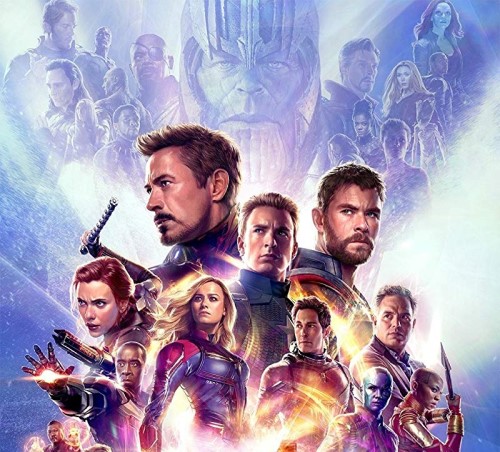
What We Want to See in Avengers: Endgame

It’s now just over a week until Avengers: Endgame comes out. The trailers have given us a few hints about what we’ll see in the conclusion to last year’s Infinity War, but there’s still so much we don’t know about how this is all going to end. So, as we await the final countdown, here’s our thoughts on what we would like to see when the lights go down in the theatre:


Erik:

I was disappointed in a lot of Infinity War‘s choices, so it’s easier to say what I hope we don’t see, but in the interest of staying positive, here’s what I actually want:

  • A resolution to the Steve/Tony conflict from Captain America: Civil War. I have complained in the past about the Marvel movies being too focused on Tony Stark’s emotional life, but this one is too big a deal to leave hanging. I want to see them come together, not just because they need each other in a moment of crisis but with a proper resolution.
  • The consequences of the Great Snap. I want us to spend some time understanding the real effects on the world of half its population disappearing at once. Not just that so many of our favorite characters are gone, but that the death of half of all the people on a planet necessarily has profound effects on the culture and society of those who are left behind, effects that stretch beyond the immediate grief and trauma of loss.
  • Someone to tell Thanos that he’s a complete idiot. Thanos’s history and motivation make him an interesting villain, but we spent so much time listening to him monologue about his very, very stupid plan for the universe in Infinity War that I really want someone to let him have it and tell him just how very, very stupid his plan is.
  • At least one more Stan Lee cameo. I really hope they got one in the can for this movie.
  • Heroes with a plan. Most of what we saw the heroes do in Infinity War was scrambling, improvising, punching first and asking questions never. I want to see our heroes take the time to regroup, think about the challenge ahead, and make a proper plan.
  • Shuri. I know she seems to be among the dusted, but dang it, I want more Shuri! More Shuri in everything!


Eppu:

Unlike Erik, I’ll throw in some negative stuff, but I’ll front the good:

  • If the movie’s going to be 3 hours long, good pacing is a must. Marvel Cinematic Universe has generally been pretty good with that, but I found AIW less successful on that score. Here’s hoping for a great editing team!
  • An intelligent plot twist and some semblance of balance between action and planning. I get that the world is reeling after the snap, but especially since AIW failed so spectacularily in trying to counter Thanos in an intelligent manner, they’re gonna need some brain in the game. Like Doctor Strange to have done something epic, planted some seed somewhere, that along with the remainder of the Avengers’ actions will turn the tide.
  • Shuri! Anywhere, doing anything. Likewise for Okoye and Janet Van Dyne, and it had better be more than a flashback!
  • A solution for Banner’s Hulk problems would be nice but optional.
  • I already mentioned Thor using his new axe-mace. (Stormbringer, I think?) We barely saw it in AIW. Some more awesome lightning blast fights like in Ragnarok, too, please!
  • In the same vein, clever fighting tactics and using individual characters’ strengths to the fullest in cooperation with others. (Like Bucky grabbing Rocket by the scruff and spinning around, both of them firing off at Thanos’ monster troops in Wakanda in AIW. That was a thoughtful bit I liked.) That’s why we watch superhero movies: for the smarts and the smashes.
  • Fewer Thanos manologues. So. TIRESOME.
  • For Peter Quill to grow up and stop being such a whiny, self-centered, insecure git. It’s not fun to watch but painful, since he’s not given any growth to speak of. (Whatever there was at the end of Guardians of the Galaxy was essentially negated in AIW when he started measuring himself against Tony Stark. And this applies to any feature he might appear on.) Oddly, though, last I checked I couldn’t find his name on the IMDB full cast and crew for Endgame. I wonder what’s up with that?


That’s what we’ll be looking out for when we head to the movies next week. What about the rest of you? What are you hoping for in Endgame?

Image: Avengers: Endgame poster via IMDb

Creative Differences is an occasional feature in which we discuss a topic or question that we both find interesting. Hear from both of us about whatever’s on our minds.

The Graceful Curves of the Vogelherd Horse

Like the Stone Age twig horse I blogged about a few years ago, this ivory horse is rather magnificent:

https://de.wikipedia.org/wiki/Datei:4_Pferd_Vogelherd_Kopie.jpg

Found in the Vogelherd cave in south-western Germany, it’s carved from woolly mammoth ivory with flint tools in the Aurignacian period, from 40,000 to 28,000 BCE.

Like other animal figurines found in the same layers, the horse appears astonighingly lively and graceful. I’ve done a little bit of wood carving in my life, and—like all sculpting—it definitely takes not just skill but also pre-planning. I can’t imagine what carving ivory with flint would be like, but I’ve no doubt there are quite a few tricks that go into it.

Whatever the use of the Vogelherd horse was, it’s clear that the maker(s) invested time and significant effort into making their art—a good indication that the creativity, dedication, and determination of the modern human do have deep roots.

Found via The Ice Age (@Jamie_Woodward_) on Twitter.

Image: horse figurine from the Vogelherd cave via Wikipedia (Baden-Württemberg, Germany; c. 32,000-35,000 BCE; ivory)

The Visual Inspiration occasional feature pulls the unusual from our world to inspire design, story-telling, and worldbuilding. If stuff like this already exists, what else could we imagine?

Fantasy Religions: Novel Religions

The religions that exist in our world can be broadly divided into two categories: traditional religions, which developed gradually in their own native societies and have no clear beginning point, and novel religions, which began at a fixed point in time. Many of the great world religions of the modern day, like Christianity, Islam, and Buddhism, are novel religions, while some traditional religions, like Shinto, still thrive. Some religions, like Hinduism and Judaism, have features of both. In earlier posts, we’ve discussed what sort of things you may want to keep in mind in your worldbuilding for stories or games to make your imaginary religions feel more authentically traditional. Today we’ll take a look at what makes a novel religion feel alive.

There have been many novel religions in world history. A few have gathered large followings and become major forces in the world. Many have faded away after a few generations. Some have done well for a long time, even for centuries, before finally disappearing. There is no single thing that every novel religion has in common, but looking at history, we can see definite patterns as to what makes a new religious movement thrive, even if only for a time. It takes more than a charismatic leader with a new idea, although that is where most of them start.

Connection to the past

New ways of life can be hard to adopt, but they are easier if they connect to things people already know. Christianity and Islam both drew on Jewish traditions, as Buddhism did with the same ancient Indian traditions that informed Hinduism. The ancient Mediterranean cult of Isis based itself on ancient Egyptian religion. Similarly, Zoroastrianism drew on ancient Iranian religious ideas. New movements within existing religions that do not split off on their own also often share the features of novel religions, like the Protestant denominations within Christianity or the Shia branch of Islam. The degree to which new religious movements identify themselves as new or as reforms to or revivals of older traditions can vary widely.

Texts and beliefs

Not every religion, novel or traditional, has sacred texts, but many novel religions do. Such texts help to define how the new movement differs from what has come before and what its followers are expected to do or believe in order to be counted as part of the group. Depending on the religion, these texts may be openly available to anyone who wants to read them, or access to them may be limited only to those who have joined the movement. Novel religions are also more likely to focus on belief, unlike traditional religions which tend to focus on practices and rituals.

Hope in times of trouble

The success of any new religion depends largely on its ability to attract new followers in sufficient numbers to keep the movement going. Most people most of the time aren’t really “in the market” for a new religion, but there are certain times in history when large numbers of people are ready to embrace something new. It tends to happen in times of suffering and uncertainty, among people who have been displaced from their homes and familiar ways of life. The Bacchanal cult of the second century BCE appealed to Italian peasants who had been driven from the countryside into the cities by economic desperation. Haitian Vodou and related religions came out of the traumas of enslaved West Africans in the Caribbean and the Americas. Christianity and Islam both, in different periods and different ways, emerged among the victims of Roman imperialism. Novel religions often offer purpose, identity, and community to people who have lost the things that gave them those comforts before.

Difficult (but not too difficult)

A novel religion often thrives when it demands practices of its followers that are difficult, but not excessively difficult, to carry out. Muslims are expected to pray five times a day. Buddhists engage in meditation of many different kinds. Followers of Isis were expected to furnish a feast for their fellow worshipers upon joining. These kinds of practices, which require time, focus, and effort, but are not overly demanding, help foster a sense of community by creating shared experiences. At the same time, religions which demand overly difficult practices tend to see their followings dwindle. Converts to Mithraism went through initiations involving withstanding heat, cold, and pain (although probably not bathing in bull’s blood, as sometimes alleged). The rigors of these initiations, as well as the fact that it seems to have been open only to men, may have limited the cult’s appeal and kept it from gaining a critical mass of followers.

Outward from the middle

Novel religions tend to begin neither at the top nor at the bottom of the social scale but somewhere in the middle. Simply put, the rich and powerful have little to gain from upending the order of things, while the poor and powerless don’t have the time to ponder on the mysteries of the universe. New religious movements tend to begin among people who, if not always “middle class” by a modern definition, are somewhere on the middling ranks of the social and economic hierarchy. How they spread from there differs. Some religions grow by promising the hope of a better life to the poor, as Christianity did, while others, such as Confucianism, grow by appealing to a discontented elite.

Food

Food, for many of us, is a vital part of our sense of identity and community—think of your favorite family recipes or the special holiday dishes that remind you of heritage and home. Many novel religions present new ways of eating as part of the creation of a new communal identity. One of the central rituals of Christianity involves consuming (literally or metaphorically, depending on one’s theology) the body and blood of the founding figure. Muslims are enjoined to fast during daylight hours during Ramadan and to avoid certain food and drink, including pork and alcohol, altogether. Manichaeism taught that adherents had a duty to spread light in the world and combat darkness by eating certain foods and avoiding others. Eating together, or eating in similar ways to other followers elsewhere, helps to maintain the bonds that hold the adherents of a new religion together.

Thoughts for writers

As an example of how these features of novel religions can inform worldbuilding, here is a short description of an imaginary movement in an imaginary world.

The borderlands of Jash have been ravaged by decades of war between the Jashite cities and the invading armies of the Akluni Empire. As refugees from the rugged hills and scrublands of northern Jash stream into the cities of the lush Jash River valley, they find misery, poverty, and violence. Many of the refugees, looking for the solace of the familiar, have filled the neglected temples of Uzuli, the moon goddess favored by borderland shepherds but little regarded by the city folk.

Among the merchants and farmers of the Jash cities, tensions have been growing as no city seems capable of leading a coordinated response to the Akluni threat. Factions have formed within the cities, some arguing for peace with Aklun, others for resistance to the death; some for throwing the refugees out to fend for themselves, others for redistributing farmland to provide for the hungry. Encounters between members of these factions in the streets and market often lead to harangues, arguments, even fistfights.

Lately, a woman calling herself the Moon Daughter has been gathering crowds in the side streets of the city of Busa, giving stirring speeches promising a return of peace and prosperity. She comes from one of the lesser merchant families of Busa, but no longer speaks to them after beginning her work in the streets. She reports visions from Uzuli that call for all the people of Jash to be as one, to return to the simpler ways of the country, and to withstand the assault of Aklun not by arms but with the patience of Uzuli, who does not fear the waning because she knows that the full moon will come again.

The Moon Daughter’s early followers came from among other merchants families, whose fortunes have fallen under the pressure of war, but she increasingly draws crowds of hinterland refugees. Some of her followers have begun writing down her speeches and publishing them as pamphlets. “Eat of the bitter terebinth and the prickly pear” she says, “in memory of our home that is lost. Then drink of the honeyed wine that promises peace and harmony forever in the turning of the moon.” Her followers gather for common meals, eating and drinking as she commands, but also sharing what food they have with those who have none.

Building in some of the common features of novel religions helps the Moon Daughter’s movement feel fuller and more grounded in the world. It also offers interesting storytelling hooks. What happens if Busa is conquered by Aklun and the Moon Daughter and her followers have to flee elsewhere? What if the priestesses of Uzuli challenge the Moon Daughter for false prophecy? What if the Moon Daughter’s movement becomes so popular its followers take control of Busa, and then have to negotiate with the other Jashite cities who haven’t joined the movement? What if the Akluni Empire collapses and the refugees return home bringing the Moon Daughter’s words and ideas with them, but leaving the life of the city far behind? There are lots of directions you could take a story or a game from this beginning.

Other entries in Fantasy Religions:

Image: Manichaean diagram of the universe via Wikimedia (China; 1279-1368 CE; paint and gold on silk)

History for Writers is a weekly feature which looks at how history can be a fiction writer’s most useful tool. From worldbuilding to dialogue, history helps you write. Check out the introduction to History for Writers here.