Among the world’s oldest buildings are the circular and rectangular structures at Neolithic sites known as the Taş Tepeler culture in Upper Mesopotamia or south-eastern Anatolia (modern-day Turkey).
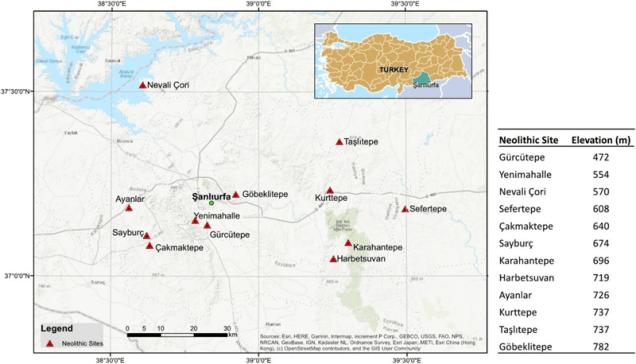
The earliest Taş Tepeler sites were established by hunter-gatherers some 11,000 years ago (10th-9th millennium BCE)—about 6,000 years before Newgrange and Stonehenge. The two best known are Göbekli Tepe and Karahan Tepe. Apart from similar buildings, both these sites also contain the same kind of carvings and statuary of varying sizes depicting both animals and humans, and distinctive T-shaped pillars with shared symbolism.
The Göbekli Tepe site consists of a Neolithic mound (or a tell) with domestic structures and other small buildings, quarries, and stone-cut cisterns.
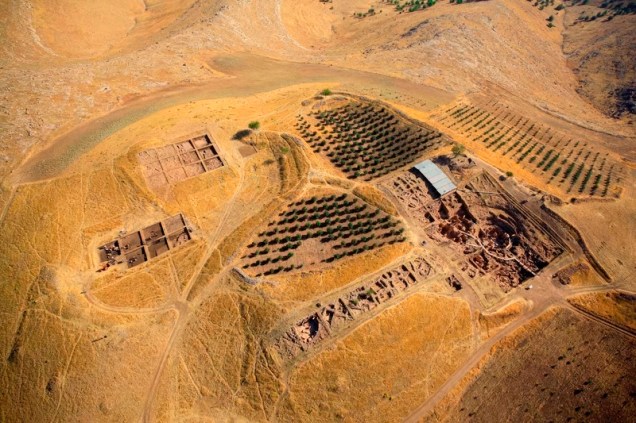
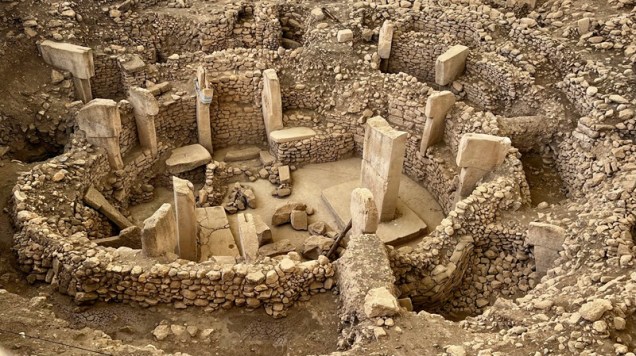
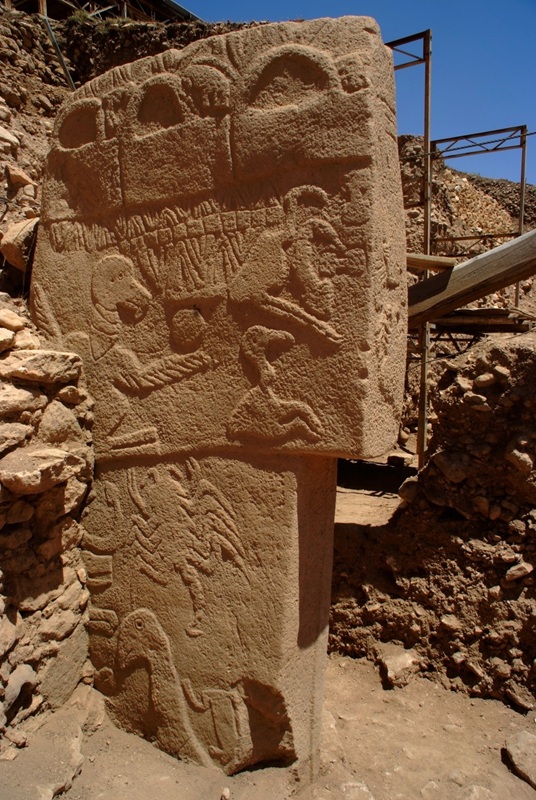
The distinctive feature of the circular buildings at Göbekli Tepe are T-shaped pillars in limestone, some of which are up to 5.5 meters tall. Many are decorated with carved depictions or reliefs of humans, items of clothing (e.g. belts and loincloths), as well as wild animals. Four circular buildings have been unearthed so far, but we know from geophysical surveys (with various ground-based physical sensing techniques) that more structures still lie buried all over the tell.
It was thought that the site was probably used only in connection with special social events and rituals, but the discovery of domestic buildings and rainwater harvesting systems has caused a revision of the hypothesis. It has now become increasingly clear that people were actually living at Göbekli Tepe and the other Taş Tepeler sites.
The second widely known site, Karahan Tepe, lies roughly 50 km east of Göbekli Tepe; the two are often considered “sister sites”, although some aspects of Göbekli date to slightly earlier. In addition, unlike the on-ground builds at Göbekli Tepe, at Karahan Tepe chambers were carved into the bedrock.
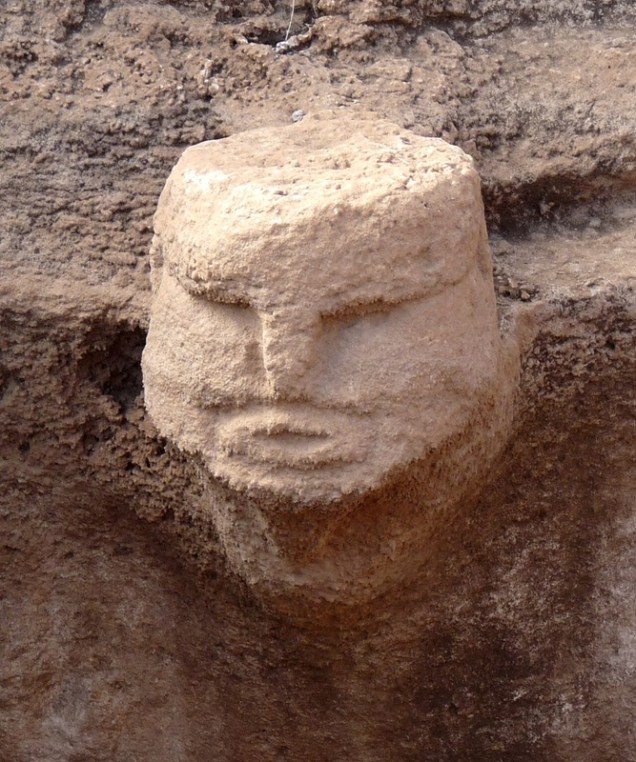
Evidence of domestic (and not just ritual) life at Karahan includes stone troughs, groundstones, mortars, pestles, and handstones. But one of the most striking elements at Karahan is the repetition of human faces, including a face carved from the rock wall of the so-called Pillar Room.
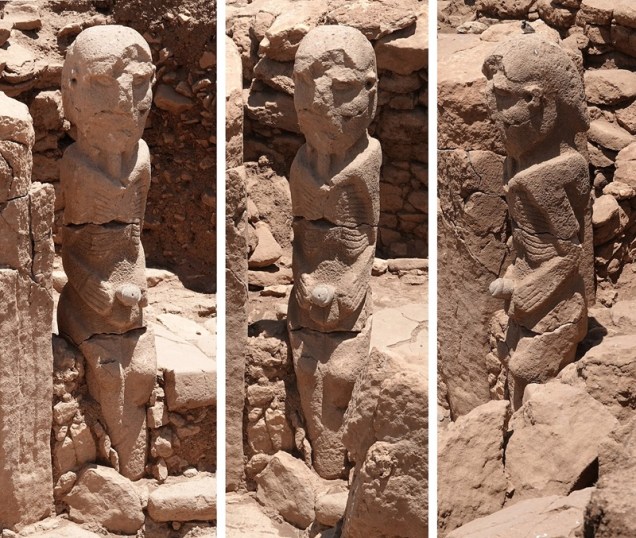
Another famous find at Karahan Tepe is the 2.3-meter-tall statue of a seated man also known as the Ribbed Man. It was carved around 9400 BCE with a defined eyes and nose, a bald head, carefully incised ribs and spine, and hands brought to the front to hold his phallus.
A website developed by the Karahan Tepe Research & Archive Project collects visuals and facts of the site, with information also on Göbekli. A timeline at tastepeler.net shows the development of the various sites in relation to other early sites and cultural phenomena.
Both Karahan Tepe and Göbekli Tepe indicate the existence of origanized societies capable of carrying out complex, material- and labor-intensive projects, with their own symbolic worlds and beliefs, before the adoption of farming or pottery. Very deservedly, Göbekli Tepe became a UNESCO World Heritage Site in 2018.
Unfathomably ancient, aren’t they!
Images: map of Taş Tepeler sites via Türkiye Today. Via UNESCO: aerial view of the Göbekli Tepe site and closeup of pillar 43 in Building D by DAI, Göbekli Tepe Project. Building by Frank Samol via Unsplash. Karahan Tepe human face by Frantisek Trampota via Wikimedia (CC SA 4.0). Karahan Tepe man by Marco Restano via Wikimedia (CC BY-SA 4.0).
Out There highlights intriguing art, places, phenomena, flora, and fauna.


.jpg)

These sites are incredibly fascinating! Even as a historian who is accustomed to thinking of timescales of centuries and longer, I struggle to really grasp just how old these finds are. Unfathomably ancient indeed!
LikeLiked by 1 person
Oh, yes! And the more we find out about our stone-age ancestors and their capabilities, the more I struggle with the rock-banging grunting stereotype. High time to update it, isn’t it?
LikeLiked by 1 person