Teaching in a Pandemic 4: The Things that Matter Are Still Pretty Much the Same

(Read previous entries part 1, part 2, and part 3)

It’s been a couple of weeks since I’ve posted about teaching, and in the past two weeks things have started to become clearer. Students are starting to engage in the online discussions and submit online assignments, and I’m seeing how they respond to what I’ve asked them to do.

The results are mostly good. Students are thinking about the questions I’ve wanted them to think about, and coming up with some pretty good responses. Some of the work I’ve seen is even better than I would have expected out of a classroom—one student wrote up a paragraph about how different types of early Christian churches reflect the social dynamics of Christianity at different levels of Roman society that could have come from a scholarly book. (It didn’t, as far as I can tell.)

More typical responses rephrase the ideas I’ve already given them in my written introductions, but that’s good enough for these times. There is pedagogical value in paraphrasing. The act of putting an idea into your own words is a useful kind of thinking, and for my lower-level classes, it is as much as I feel I can ask of my students under these circumstances.

For my upper-level Roman Law class, I’ve posed a number of hypothetical cases for my students to try to interpret, and occasionally given them the chance to come up with hypotheticals of their own. The results can be amusing, but they are also good for seeing how clearly my students have thought through the logical implications of various legal principles. (On the other hand, because some students were making reference to it in their responses, I have had the misfortune of having to find out what Tiger King is all about. Thank goodness for Wikipedia, but also: yuck.)

Perhaps the biggest thing that has become clear in the last few weeks is that even though everything is online now, the things that matter are still pretty much the same. The students who were active and engaged in the classroom are active and engaged online. The ones who sat in the back scrolling on their phones through classtime are nowhere to be found online. Students who were confused in person are now confused by email, while the ones who always turned their assignments in on time still do.

The same principle can be applied to the university administration. The administrators who were helpful and responsive before the crisis are helpful and responsive now. The ones who were overpaid nonentities in person remain overpaid nonentities at a distance.

Like many crises in history, this pandemic has not so much caused new problems as it has revealed the problems that were already there but we had gotten used to not seeing.

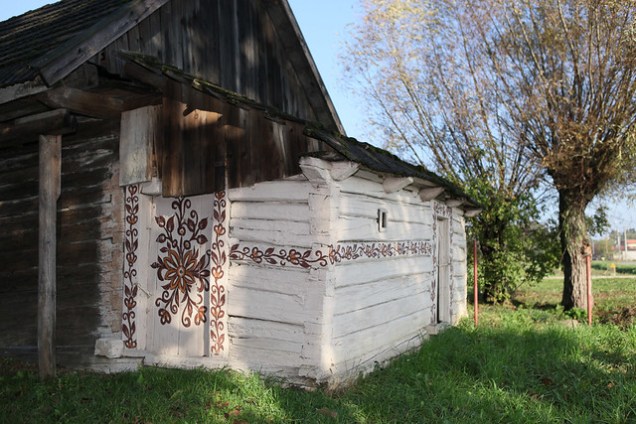
Image by Erik Jensen

How It Happens is an occasional feature looking at the inner workings of various creative efforts.

Rating: Castle, Season 3

Season 3 of Castle keeps the mystery/comedy engine chugging along nicely with some fantastic episodes. Here’s how we rated them:

  1. “A Deadly Affair” – 8
  2. “He’s Dead, She’s Dead” – 8
  3. “Under the Gun” – 8
  4. “Punked” – 9.5
  5. “Anatomy of a Murder” – 7
  6. “3xk” – 2
  7. “Almost Famous” – 9
  8. “Murder Most Fowl” – 8.5
  9. “Close Encounters of the Murderous Kind” – 10
  10. “Last Call” – 10
  11. “Nikki Heat” – 6.5
  12. “Poof! You’re Dead” – 4
  13. “Knockdown” – 1
  14. “Lucky Stiff” – 7.5
  15. “The Final Nail” – 6
  16. “Setup” – 1.5
  17. “Countdown” – 1
  18. “One Life to Lose” – 6.5
  19. “Law & Murder” – 6.5
  20. “Slice of Death” – 7
  21. “The Dead Pool” – 4
  22. “To Love and Die in L. A.” – 4.5
  23. “Pretty Dead” – 4
  24. “Knockout” – 0.5

This season’s average rating is a pretty good 5.9, but that average is the product of a lot of really good episodes and a bunch of real stinkers.

The bottom of the barrel is the final episode of the season, “Knockout,” which gets a measly 0.5. This episode and the earlier “Knockdown” (1) are both part of the interminable story arc about Beckett’s mother’s murder and the shadowy conspiracy surrounding it. Another interminable story arc is introduced this season with “3xk” (2), in which Castle picks up his very own obsessed serial killer, which seems to be an accessory that every tv detective must have, no matter how boring or implausible. These plus the tedious terrorism-themed two-parter “Setup” (1.5) and “Countdown” (1) drag this season down by a lot. We come to Castle for the quirky murder-of-the-week stories and the fun interactions among the characters. Serious Drama just gets in the way of the fun.

But there is definitely fun to be had this season! There are two episodes that we rated a full 10; “Close Encounters of the Murderous Kind,” a fun X-Files pastiche that pits Castle and Beckett against space scientists, men in black, and (not quite) aliens. After that comes “Last Call,” about a murder connected to the discovery of a secret Prohibition-era stash of fine whiskey. Both of these episodes offer good mysteries for the team to solve while leaving lots of room for the usual antics. Beyond those two, there are plenty of episodes in the 8-9.5 range as well.

This season also solidifies a trend, emerging in the first two, in which the week’s case takes the team deep into some particular subculture—be it steampunk, stage magic, or pizza—before finding a familiar human story at the center of it. These episodes give Castle and the boys (Ryan and Esposito) lots of room for goofy side adventures while Beckett rolls her eyes and gets on with the business of crime solving. And what else can you ask for from Castle?

Image: Castle and Beckett consult with a man in black, from “Close Encounters of the Murderous Kind” via IMDb

In the Seen on Screen occasional feature, we discuss movies and television shows of interest.

Pimp Your Living Room with an Enormous Battle of Hoth Wallpaper

Aaaaa! It’s a battle of Hoth wallpaper!

Bauhaus Finland Star Wars Battle of Hoth

Handsome, isn’t it?

One of my pet peeves is when people—mostly merchants and, I assume following their lead, parents—assume only kids could be into superheroes or heroic scifi stories or what have you. I have exceedingly firm plans of becoming a geeky granny! This would fit right in. 🙂

Found / image via Bauhaus Finland

Out There is an occasional feature highlighting intriguing art, spaces, places, phenomena, flora, and fauna.

Quotes: Almost None […] Depict a Successful Transformation of Society

Cara Buckley’s 2019 article in New York Times talks about how environmental concerns have been depicted in some recent superhero and sci-fi movies. Climate change may have been moved to the back burner in recent news; nevertheless, in the beginning of the article there is a very important, timely nugget:

“Humans ruined everything. They bred too much and choked the life out of the land, air and sea.

“And so they must be vaporized by half, or attacked by towering monsters, or vanquished by irate dwellers from the oceans’ polluted depths. Barring that, they face hardscrabble, desperate lives on a once verdant Earth now consumed by ice or drought.

“That is how many recent superhero and sci-fi movies — among them the latest Avengers and Godzilla pictures as well as ‘Aquaman,’ ‘Snowpiercer,’ ‘Blade Runner 2049,’ ‘Interstellar’ and ‘Mad Max: Fury Road’ — have invoked the climate crisis. They imagine postapocalyptic futures or dystopias where ecological collapse is inevitable, environmentalists are criminals, and eco-mindedness is the driving force of villains.

“But these takes are defeatist, critics say, and a growing chorus of voices is urging the entertainment industry to tell more stories that show humans adapting and reforming to ward off the worst climate threats.

“’More than ever, they’re missing the mark, often in the same way,’ said Michael Svoboda, a writing professor at George Washington University and author at the multimedia site Yale Climate Connections. ‘Almost none of these films depict a successful transformation of society.’ [emphasis added]”

Even though a pandemic is a very different kind of beast compared to apocalyptic-level climate catastrophes, the current covid-19 epidemic can surely feel like a devastation. I’ve certainly seen my share of panicky social media messages.

We’ve recently started re-watching Star Trek: Deep Space Nine, and this line veritably jumped out:

ST DS9 s3 ep18 Distant Voices

“It’s just that… this year is a little different.”

Indeed—this year is different. Unlike good Doctor Bashir’s, though, our situation is a little more dire than turning thirty years of age.

Right now there’s no long-term data available, so any estimates of the long-term effects are guesses—at best cautious, at worst wild—but every opinion I’ve seen says the world will change as a consequence. And as a nerd, that interest me.

I can’t think of many speculative stories off the top of my head where the society has adjusted in a way that focuses on our shared humanity. On the contrary, most of them cannot seem to be able to find much good in human behavior during crises. Since social collapse at the beginning of a disaster is a myth, I’d like to see more stories concentrating on people working together. (That is my favorite kind of story for a reason, after all.)

There is one thing I do know, though, limited in scope as it is: I will be most seriously displeased if writers and producers of the future fail to learn from witnessing the amount of cooperation and outpouring of help people are providing not only their own communities but also strangers.

Buckley, Cara. “Why Is Hollywood So Scared of Climate Change?” New York Times, August 14, 2019.

Image: screencap from season 3 of Star Trek: Deep Space Nine, episode “Distant Voices”.

Serving exactly what it sounds like, the Quotes feature excerpts other people’s thoughts.

Living Vicariously Through Social Media: Exact Opposites Cats

Seriously, this is amazing: a pair of cats. One black, the other white. One has a blue left eye and a green right eye, the other a green left eye and a blue right eye.

Twitter Land of Cuteness Exact Opposites Cats

Granted, this is the Internet, and Photoshop is a thing. (And please note I didn’t intend to post this as an April Fool’s joke. As far as I know it isn’t, but as I said, this is from the Internet and who really knows.)

However, even if it were edited, it’s still a damn awesome photo. I immediately thought of a magic-user’s familiar or some such special pet. Wouldn’t cats like these be just astounding?

Found via Land of Cuteness on Twitter.

Out There is an occasional feature highlighting intriguing art, spaces, places, phenomena, flora, and fauna.

Teaching in a Pandemic 3: Grades Mean Nothing

(Read previous entries here and here.)

So far, it’s going okay. I have started posting introductions and discussion questions for the blocks of content that my students will be covering for the rest of the spring. Across all my classes, there will be a total of twelve blocks for students to read and respond to. Prepping one block takes me about two solid days of work. I have posted five so far, with seven left to go. Allowing time for housework, fresh air, cooking, and other essential things, I’m probably looking at between two and three weeks more of work to get everything online. Then I’ll be spending the rest of April grading assignments as they come in and keeping an eye of the discussion forums.

Students have started engaging in discussion already. Only a few so far, but that’s understandable. I know everyone is busy right now and it’s going to take people time to get used to new ways of doing things. Responses have been productive. Students are engaging with the ideas I want them to engage with and showing that they have done the new readings and can relate them to ideas we discussed earlier in the semester. That’s as much as I feel I can ask of them right now.

I’m holding virtual meetings with my classes this week via Zoom (videoconferencing service). Not to teach anything new, just to check in with them, go over the procedure for the rest of the semester, and answer their questions. I’ve let everyone know that these meetings are entirely optional, and there will be no negative consequences if they don’t join in. I hope a lot of them will show anyway. I miss seeing them, and I’d like to know that they’re okay.

The big question hanging over all of this is: what will happen to this semester’s grades? As I mentioned last time, the university administration is considering the possibility of shifting to a pass/fail system for this semester, or of giving students the option to individually take courses as pass/fail. Nothing is certain yet, but clarity will hopefully come soon. I’m divided on whether I think it’s a good idea or not. On one hand, there is no way to treat this semester like an ordinary spring or to imagine that the grades students get at the end of it are really comparable to their grades form other semesters. A lot of my students are in difficult situations right now, and going pass/fail might take a burden off their shoulders. On the other hand, implementing such a big change on the fly is going to be a mess, and I worry about people falling through the cracks in a system that none of us have had time to think through and shake the bugs out of.

You see, the secret truth about teaching is: grades mean nothing. Or at least nothing much. A grade is never anything more than your professor’s best attempt to convey to you how well they think you have understood what they were trying to get you to see, and there is no objective way of measuring that. Even in disciplines that have clear right and wrong answers, the decision about what questions to ask is still fraught with human subjectivity. Good and conscientious professors will try to use their grades as a way of communicating honestly with you about what you have accomplished during your time in their class, but the whole thing is an eggshell balanced on top of a rickety shack built on quicksand. You don’t have to stir the sand much before everything breaks.

Let’s hope we don’t break things too badly and we can find a way of doing right by our students.

Image by Erik Jensen

How It Happens is an occasional feature looking at the inner workings of various creative efforts.

Quotes: I Don’t Like You

Before there was the tweet, there was the epigram. The Roman poet Martial was an expert at this art form of highly-condensed snark. Here are a few of his best bits (my own translations):

I don’t like you, Sabidius, and I don’t know why.

All I know is: I don’t like you.

– Martial, Epigrams 1.32


You ask what I get from my farm in Nomentum, Linus?

This is what I get: not seeing you.

– Martial, Epigrams 2.38


Zoilus, why are you soiling the bathtub by washing your ass in it?

If you really want to make it filthy, go soak your head!

– Martial, Epigrams 2.42


Serving exactly what it sounds like, the Quotes feature excerpts other people’s thoughts.

Quotes: People Will Fight for the Idea of Decency

This quote from Kameron Hurley’s The Light Brigade seems pretty apt for the covid-19 pandemic in the west:

“[Companies] started losing when they forgot how to be decent. People will fight for the idea of decency. They will fight for someone who treats them like people. They fight for beliefs far longer and harder than out of fear.”

– Dietz in Kameron Hurley’s The Light Brigade

So let’s treat each other as people. Because we’re in this together; health care experts don’t talk about herd immunity without reason.

Because we’re only in the beginning of it; even the most optimistic models don’t predict the peak to occur very soon.

And because we’re social critters, descendants of people who liked other people despite their origin or color or dance moves or whatnot. We’re here because we like doing things together. (And I realize how funny that may sound coming from a huge introvert such as myself, but there it is.) At each individual’s preferred amount of togetherness, but together nevertheless.

Hurley, Kameron. The Light Brigade. New York: Saga Press, 2019, p. 141-142.

Serving exactly what it sounds like, the Quotes feature excerpts other people’s thoughts.

Teaching in a Pandemic 2: Students Are Stressed Enough Already

(Read my last entry here.)

Just a day after my last post, the university administration announced that all classes are going online for the rest of the semester, so I have spent much of the past week figuring out how that’s going to work. I started with a few basic principles and worked my way on from there. Here’s what I started from:

  1. Everything sucks right now, and it probably sucks worse for my students than it does for me. I want them to have a meaningful educational experience, but I don’t want to add to the burden of what they’re already dealing with.
  2. Different students are dealing with very different situations right now. Some of them are relatively safe and calm; their lives have not changed much. Others are back in the midst of bad or stressful home lives from which college was an escape. Some of them have plenty of time and technology on their hands; others are lucky to get a few hours to themselves and have a dodgy cellphone connection to the outside world at best. My course needs to work for all of these students.
  3. My students are good students. They want to put in the work that I am asking of them and do well. If they are struggling right now, it is a reflection of their circumstances and the failures of the larger governmental, social, and educational infrastructure they live within, not of their willingness or ability to learn.

Putting these basics together, I have made the following decisions about my courses:

  1. I will not require anyone to be available at any particular time. I will miss our face-to-face interactions in the classroom, but trying to recreate that experience online is doomed to fail and will only put unnecessary stress on my already stressed students.
  2. I will not require any work that depends on having a stable internet connection and plenty of bandwidth. As long as people can get online occasionally, that should be enough.
  3. I will not hold anyone to more stringent due dates than are absolutely necessary for me to be able to fully and thoughtfully review their work before giving grades.

From these fundamentals, I have decided how my online courses will work.

Instead of the rest of the semester being divided into class days with their own readings and assignments, I have divided the remaining content into large blocks organized around a common theme. Each block represents a week or so of what we would have done in class. Students can now do the readings on their own time, and I am writing short introductions (covering the ideas I would have been introducing in class discussion) with broad, open-ended discussion questions attached. These discussion questions are posted online as discussion threads on Canvas (our course management website). Between now and the end of the semester, I am asking every student to make at least two comments in the discussions for each block. Participating in the discussion threads is counted as part of the attendance and participation grade for the course.

In addition to the discussions in the blocks, students have most of the same writing assignments that were scheduled before we moved online, but I am shifting their due dates to the end of the semester, so that everyone can get their work done at their own pace. I have dropped a few assignments that seemed overly burdensome: those that involved library research (because, even though there’s a lot you can do online these days, it seemed like too much pressure), or visiting museums (because, I mean, duh).

These changes have meant rearranging the grading standards for some courses, which is tricky, but I’ve tried to make sure everyone still has plenty of opportunities of getting good grades. The university administration has made some vague noises about shifting courses to pass/fail grading for this semester, but no decision has been made yet. On the one hand, going to pass/fail would make my job a lot easier—I could give most of my students their course grades right now. On the other hand, some of my students have been putting in a lot of time and effort, and it would be sad not to be able to reward them with the grades they’ve earned. Well, we’ll see what comes of it.

I can’t say with any honesty that I know how the rest of this spring is going to go. We’re all making it up as we go along. I have confidence in my students. They are strong, smart, and hard-working, and I want to see every one of them come out of this experience okay.

Image by Erik Jensen

How It Happens is an occasional feature looking at the inner workings of various creative efforts.

A Rich Anglo-Saxon Burial Chamber Found in Essex

A new-ish Anglo-Saxon burial chamber found at Prittlewell in Southend-on-Sea, Essex, in southern England has all of the markings of a valuable find, both in terms of quality and quantity of the grave goods and of historical significance.

The male body was placed within a wooden coffin in a timber room. The burial most likely dates to the late 6th century (575-605 CE). It was first discovered in 2003 in remarkably good condition.

MOLA Prittlewell Burial Chamber Drawing

Artefacts from the burial were studied at Museum of London Archaeology (MOLA), and the most impressive items are now on permanent display at Southend Central Museum in Southend-on-Sea. MOLA has also created an interactive website for the find.

Just some of the items discovered include a gold belt buckle, two Frankish gold coins, a beautiful sword, iron-bound buckets, a huge metal cauldron, latticed glass beakers, a tall iron candelabrum, a folding iron stool, a basin and a flagon made from copper alloy, a silver spoon, a painted wooden box, and an Anglo-Saxon lyre.

MOLA Prittlewell Blue Glass Decorated Beaker

Incidentally, the wooden box is so far the only surviving example of painted Anglo-Saxon woodwork!

MOLA Prittlewell Painted Wooden Box

MOLA The Guardian Prittlewell Gold Copper Item Collage

There are two interesting implications for the burial. Firstly, two gold foil crosses were likely placed on the body’s eyes. If the burial can indeed be placed at its earliest possible date, it makes the connection to Christianity remarkable because it would predate Augustine’s mission to convert the British in 597. A royal connection has been surmised (Seaxa, a younger brother of king Sæbert of Essex, whose mother Ricula was Æthelbert of Kent’s sister) but not confirmed.

(King Æthelbert of Kent married a Merovingian Christian princess called Bertha in 580, so Roman Christianity was known to Anglo-Saxons to some degree by the end of the 6th century, but to my knowledge we had previously not known of other converts outside their court prior to 600.)

Secondly, although Essex has earlier been seen as an Anglo-Saxon backwater of sorts, this rich burial chamber suggests otherwise. Indeed, some of the luxury items come from the near-by continental Europe (the Frankish gold coins), but others have much more far-reaching origins (the Byzantine or Syrian copper alloy flagon, for example).

Having studied Anglo-Saxons myself and witnessed Erik’s research on the side, I keep being amazed at how much paraphernalia is extant from the Roman period and early middle ages onwards. Not only that, but how much of it is still being discovered! If you tour any of the major museums of Roman history in Germany, for example, you will see massive (massive!) amounts of metalwork, gold, silver, glass, and pottery. And what’s on display doesn’t even account for the remnants in storage.

People from old cultures had as large incentives as we do today to dress up and surround themselves with ornate household goods—after all, we are humans who like their stuff, right? Their ability to do so naturally depended on the resources available in the area and era, and—despite what most of us seem to have been taught—early history is full of times when our predecessors were able to produce items on a massive scale and the richest in those societies did have the wherewithal to go all out.

Like the Staffordshire helmet, the Prittlewell burial will be of immense importance to our understanding of Anglo-Saxon history and culture. I’m so delighted it was found!

Images by MOLA; collage of the gold and copper alloy items by MOLA via The Guardian.

Out There is an occasional feature highlighting intriguing art, spaces, places, phenomena, flora, and fauna.