Scenes from Among the Trolls

Forbidden Studios is an independent game development studio based in Turku, Finland. Their first game is in development now. Recently the studio shared a few more pictures from Among the Trolls on Twitter:

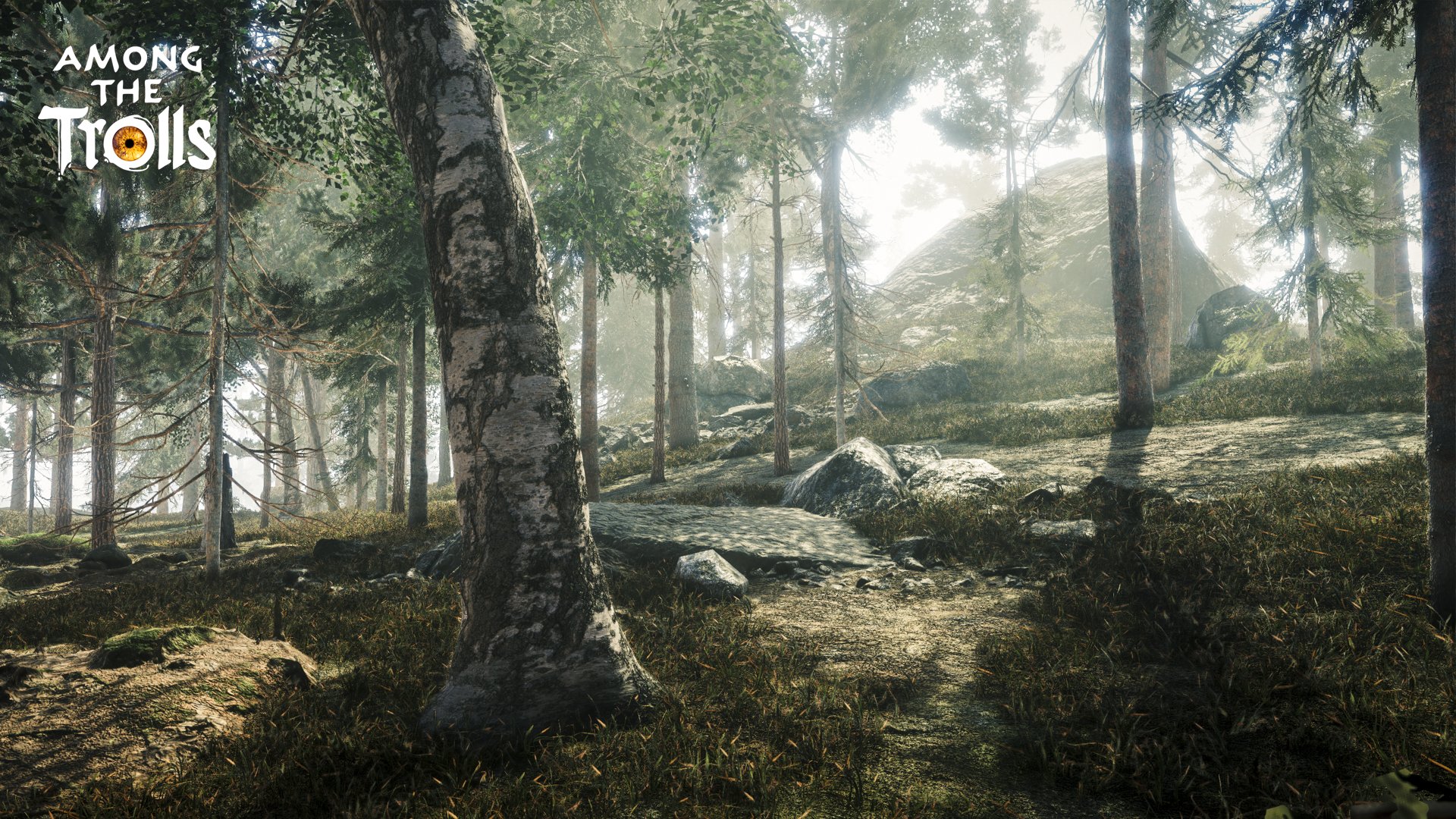
Among the Trolls Forest w Birch

All of the scenery looks absolutely lovely, very much like home, which I’m not used to seeing in a video game, and they prompted me to go look for more. Below are a few other shots that reflect a location firmly based on traditional Finland:

Among the Trolls Cabin Interior

A traditional cabin with what’s clearly a ryijy wall hanging. Nice.

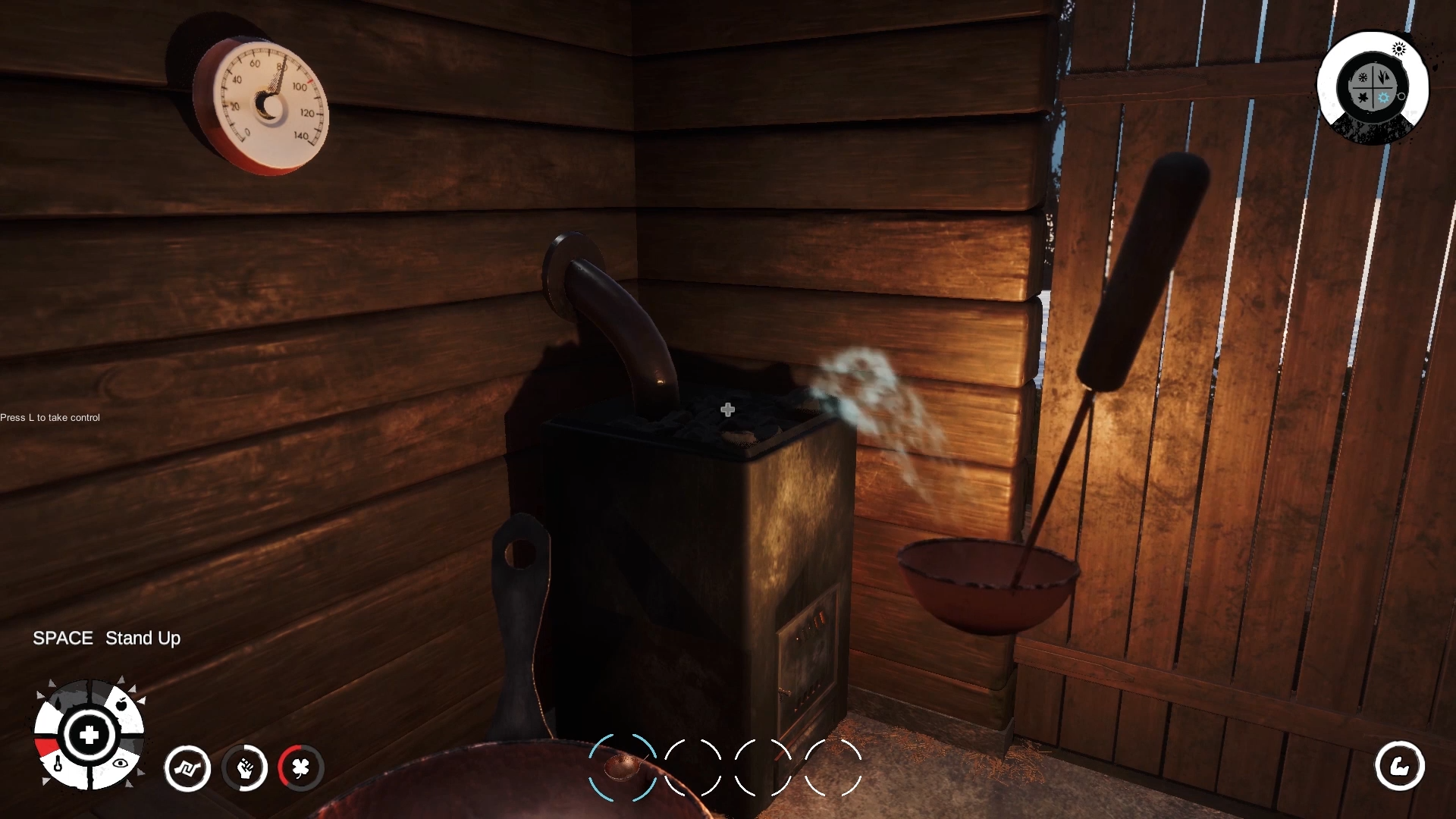
Among the Trolls Sauna

It’s a sauna! Ha! 🙂

I’m now looking forward to hearing more about the story. At this writing the description only says “Among the Trolls is a first-person survival action adventure where the strange mysteries of Nordic forests are unraveled.”

On the basis of the current demo video, among other things you can pan for gold and have a sauna bath; at least two things that are highly unusual. (In fact, a sauna bath provides more sisu in game, which can save your life when all else fails. How fabulous!) On Twitter, Forbidden Studios also shared a clip of rune singing, which is clearly a reference to the Kalevalaic poetry. More unique Finnish goodness!

There might be one potential problem, unfortunately. If the Forbidden Studios gallery and Twitter stream are anything to go by—and they might not—there is only one woman in the plot. (The protag’s grandmother Elina Kantola, who has disappeared along with her husband Aarne.) It could be a stylistic choice; it’s not at all uncommon for Finnish storytellers to focus on lone men in the woods. If true, however, that’s a problem for me.

As fantastic as it is to see the kinds of environments I grew up with reflected on screen, if there aren’t female characters beyond the obligatory Smurfette / wife / girlfriend / (grand)mother type, I’m not interested. At this point in my life the lack of multiple individual, nuanced women in a story is as hard and immediate a turn-off as horror and dystopia are.

Images by Forbidden Studios: Forest via Twitter. Cabin interior via their website. Sauna scene screencapped from the video demo.

Of Dice and Dragons is an occasional feature about games and gaming.

Deconstructing the Star Wars Sequels: The Last Jedi

A couple of weeks ago I wrote about the storytelling structure in The Force Awakens and how it mimics the narrative shape of A New Hope without the character growth to support it. Today we look at The Last Jedi, the second and most challenging of the new trilogy movies. Where The Force Awakens was too committed to reenacting a familiar story to offer any new ideas, The Last Jedi is too much in love with its ideas to build a story around them.

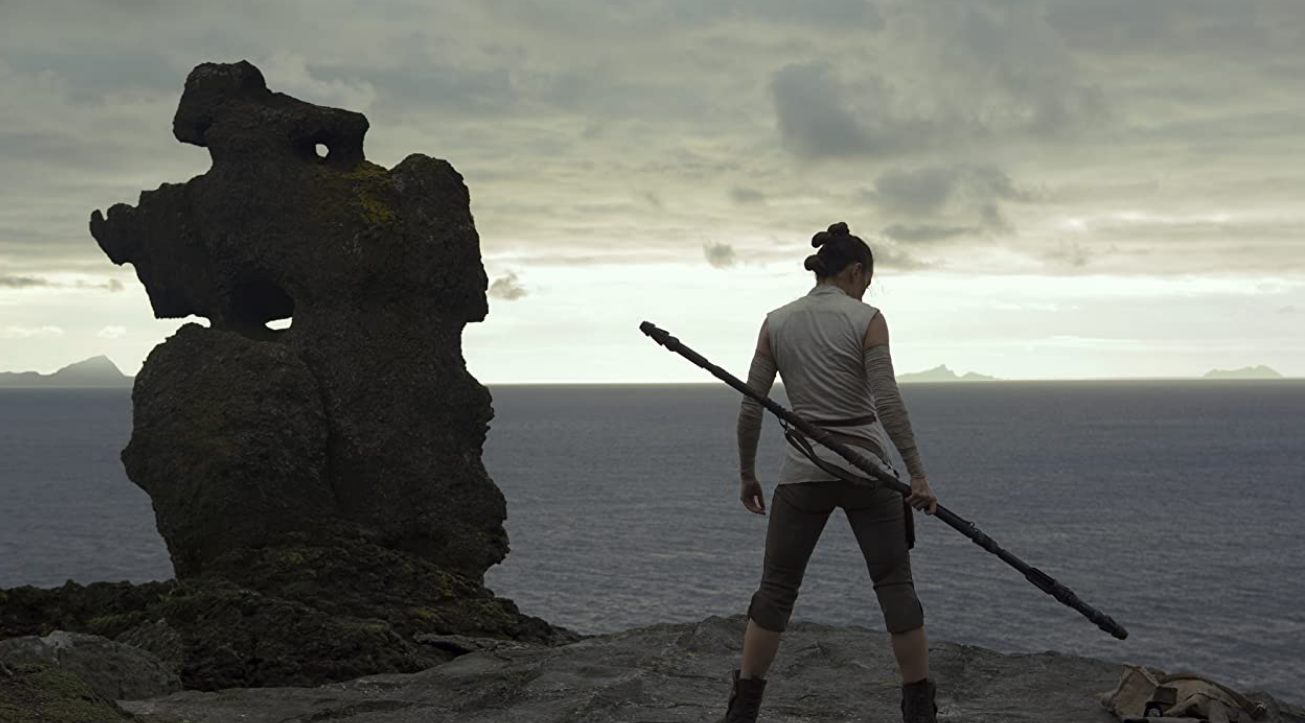
Rey on the Jedi island, from Star Wars VIII: The Last Jedi

The Last Jedi does not run on nostalgia like The Force Awakens. It toys with some echoes of The Empire Strikes Back—the rebels are on the run chased by Imperial forces while the novice Jedi goes off to train with an old master, learning something about their parents along the way—but these echoes do not drive the plot the same way A New Hope did for The Force Awakens. The story of The Last Jedi is instead driven by Rian Johnson’s desire to challenge every trope and convention of the space opera that he can.

The movie does a good job posing the questions. What if the hot-shot pilot who doesn’t play by the rules is actually making things worse with his antics? What if the old master is broken by guilt and remorse and doesn’t want to train the chosen one? What if the chosen one isn’t actually all that chosen? What if the previous movie’s shadowy overhanging villain is actually a chump who gets himself bisected mid-monologue? What if the rebels and the Empire both buy their weapons from the same scummy arms dealers? What if the heroes send out a desperate last call for help in their hour of need and no one comes? The what-ifs go on and on, each of them a worthy hook to hang plot on, but none ever taking up any weight. The movie asks plenty of questions, but never gets around to the answers.

Instead of actual development for the plot and characters, we get empty gestures at development. We are clearly meant to think that Poe has Learned a Lesson by the end of the movie when Leia tells the others to follow him, but just what that lesson was and how he learned it are a mystery. Similarly, Finn’s retort to Phasma, calling himself “Rebel scum,” is framed as if it ought to mark a turning point for the character, but the rest of the movie doesn’t do the work of showing us that his relationship to the Rebellion/Resistance matters. Rey comes the nearest to having a character arc. After spending most of the movie looking to others to guide her on what being a Jedi means, she strikes out on her own and uses the Force to move rocks and save her friends. It’s the closest the movie comes to a payoff, but it barely adds anything to her development in The Force Awakens, and it’s not much to show for having Rey stuck between grumpy uncle Luke and creepy stalker Kylo for most of the movie. The structure of a narrative arc is built into the film, but the story isn’t there to fill it.

The time and narrative energy that could have been put into building the story and challenging the characters is instead spent on gambit after gambit that doesn’t pay off. Luke’s lessons teach Rey nothing. Finn and Rose’s side quest to the casino planet is pointless and deflates much of the tension built by the First Order’s pursuit of the fleeing rebels. Poe’s mutiny gets undone with a kicked-over steam vent and a blaster. The movie invests more energy into critiquing the socio-economics of a galaxy far far away than in giving our heroes anything meaningful to do.

Perhaps the most frustrating thing about this movie is how it dangles the possibility of meaningful development in front of us only to do nothing with it. Characters like Vice Admiral Holdo and Commander D’Acy are vast untapped wells of awesomeness reduced to Teaching a Man a Lesson. The number of times that important moments in the movie correspond to women with outstretched hands—from Rey lifting rocks and Leia pulling herself back out of space to Rose patting a giant horse-puppy and Holdo jumping into hyperdrive—makes it seems as though the gesture ought to mean something, it just doesn’t. Johnson’s other movies, notably his following creation, Knives Out, show that he is quite capable of handling complex story structures (something I’m not confident I can say about J. J. Abrams). In this case, though, it feels as though the director got so focused on making his movie about failure that he ended up failing to make a movie.

None of this is to say that there aren’t good things in The Last Jedi. It has some of the sequel trilogy’s sharpest dialogue and most striking visuals, from Poe’s jabs at Hux at the beginning to the red scars of battle streaming across the stark white ground of the salt planet at the end. It introduces what may in fact be the most daring idea in the new Star Wars universe: that a Jedi can come from anywhere (at least until the next movie took a big step back.) But these things arrive within a movie that is so committed to the task of deconstructing Star Wars that it deconstructs it right down to the ground and leaves nothing behind.

Image: Rey from The Last Jedi via IMDb

In the Seen on Screen occasional feature, we discuss movies and television shows of interest.

Agatha Christie’s Hjerson: A Poirot Spinoff

Fans of Agatha Christie or Hercule Poirot probably remember Poirot’s friend, writer Ariadne Oliver. Her popular detective, Sven Hjerson, happens to be a countryman of mine.

Astoundingly—to my mind at least—Sven Hjerson is going to get his own series! Produced in Sweden, the series is called Agatha Christies Hjerson (unsurprisingly, Agatha Christie’s Hjerson in English). The series was created by Patrik Gyllström; he has also written some of the scripts along with Jakob Beckman, Martin Luuk, and Björn Paqualin, and there are two co-directors, Lisa Farzaneh and Lisa James Larsson. Hjerson is starred by Johan Rheborg and Hanna Alström, the latter of which has some international renown as the Swedish Princess in Kingsman: The Secret Service and Kingsman: The Golden Circle.

C More Agatha Christies Hjerson S1

The titular character Hjerson is a Swedish-speaking Finn who has had a long career as a criminal investigator in Sweden and now lives a retired, uneventful life in the Åland Islands. A Swedish reality tv producer Klara Sandberg is on the lookout for a new hit series and decides on Hjerson as her new star. Naturally, murders ensue.

Agatha Christie’s Hjerson is a C More original production. The series was filmed in Stockholm and Åland Islands (Ahvenanmaa) and is described as a combination of Christie and Nordic noir. Season one consists of four 90-minute episodes, which for tv have each been split into two parts.

So far the IMDB reviews are not flattering. Have you seen Hjerson? Do share!

Image via C More

1,001 Posts

This is our thousand-and-first post on Co-Geeking! Goodness, did any of us expect to get here?

We started off six years ago in the summer of 2015 with some ideas of what we wanted to write about. The blog has grown and developed since then as we sometimes dig into big projects together and other times just share whatever comes to mind.

Here are the most popular posts we’ve done in all that time:

  1. Do-It-Yourself Fantasy Place Name Generator – A technique for creating place names that feel authentic and lived-in.
  2. Testing Witches with Water – Digging into the myths about dunking people in water to see whether they’re witches or not.
  3. Sean Bean on the LotR Joke in The Martian – A bit from an interview with Sean Bean about his role in The Martian and the movie’s Lord of the Rings joke.
  4. Hogwarts Dueling Club Tablecloth Transformed into Wall Hanging – A beautiful example of geeky crafting if you want to add some wizarding-school flair to your home.
  5. Custom is King – A glimpse at multiculturalism in action over two thousand years ago.

Thanks for being with us, everyone. More to come!

Eppu and Erik

Announcements from your hosts.

Stupid Writer Tricks: Character Voices

Writing dialogue is not one of my strengths as a writer. I often struggle to give my characters their own voices. So I have a stupid trick to help me get the voice right for characters I’m going to spend a lot of time with: When thinking of their dialogue in my own head, I give them a distinctive accent, tone, or speaking style. It doesn’t always come through onto the page, but it helps me think about how a particular character would talk.

For an example, here’s how I wrote the voices for the main characters in my story “How I Saved Athens from the Stone Monsters.”

The story is about Mnestra and Lampedo, two flute girls working the streets of Athens who get caught in the chaos when the rich, ambitious aristocrat Alkbiades uses a mysterious artifact to make the city’s statues come to life and go on a rampage. To make the story work, it was important to convey the personalities of these three key characters.

Mnestra, as narrator of the story, was the most important to get right. I wanted her to come across as self-possessed, confident, and a little snarky. I also wanted her to feel accessible as a character, someone we felt like we knew. With a story set so far in the past, there was a danger that the characters would feel distant and hard to identify with. Mnestra’s world is certainly not like our own, even before the monsters appear. I wanted to close that gap and make her feel real. There’s also a long history of ancient Greek and Roman characters in modern fiction written as if they were stiff upper-class Brits (in no small part because Greek and Roman literature was for a long time a crucial part of upper-class British education). I didn’t want Mnestra to sound like that.

So when I was thinking about her lines, I thought of her as a jaded teenager. I wrote the first few sentences of the story almost before I really knew where the plot was going, just to make sure I had Mnestra’s voice down.

Okay, so that thing with the statues? The smashed penises thing? That was my idea. But let me explain. I had a good reason for it.

She’s a little overly blasé and vague like a teen trying to play it cool. She leads into the story gradually, like a high schooler with a bent fender sidling up to a freaked-out parent.

In the first draft of the story, there was a lot more of Mnestra’s attitude throughout, but in revising, I found that I didn’t need all of that, and in fact once the action picked up later, it just slowed things down. I edited out most of it, but kept a few sarcastic asides in where they felt appropriate.

Lampedo was a different problem. Her character changed a lot as I was writing. I originally wrote her as shy and delicate, but some good editorial feedback made me rethink her relationship to Mnestra. I rewrote the pair to be less “surrogate sisters” and more “buddy cops,” which gave the story more to work with. Lampedo instead ended up being tough and prickly.

I had a hard time writing the new version of Lampedo’s voice until I started thinking of her with a Russian accent. Not just a Russian accent but a Russian attitude: proud, prematurely world-weary, fatalistic. Here’s a little dialogue between Mnestra and Lampedo after they first get away from the attacking statues.

“Isis’ milk!” I hissed at her. “What did you think you were doing, trying to fight those things?”

“A warrior always attacks,” she answered, grabbing a wine jug. She pulled out the cork with her teeth and drank a big glug.

“We’re not warriors!” I snapped. “We’re flute girls. Don’t you get that? We have to be smart.”

“You say ‘smart,’” she scoffed. “You mean weak.”

“Have you ever seen an old flute girl?” I asked her. “No, there aren’t any. Most of us end up as graveyard women spreading for scraps. You only get through if you have a plan.”

“What’s yours?” she asked. “Hide in a storeroom?”

Alkibiades was a different challenge. Alkibiades is an aristocrat, and his driving motivation in my story (as in history) is that he feels he has never been shown the respect that his status entitles him to. Unlike with Mnestra, I leaned hard into the “stiff upper-class Brit” mode with him to convey that not only is he of a much higher social class than the flute girls but he’s also to an extent putting on an act of what he thinks an Athenian aristocrat should be like. If you can imagine a sinister version of Bertie Wooster, that’s what I heard in my head when writing his lines. Here’s how he intervenes when some potential clients are threatening to get violent with Mnestra and Lampedo.

But before anything could happen, a man on horseback came riding up and waved the twits back.

“I say, is that any way for an Athenian to behave?” he rebuked them. “Tussling with girls in the street? Don’t you know there’s a war on?”

Later, at his dinner party, Alkibiades tries to reassert his status after having his political position usurped by his rival Nikias. He starts a philosophical dialogue but is undermined by his own guests:

“Friends,” Alkibiades began, “let us make this a festival of the mind, not only of the body.” A couple of men near us snickered, but Alkibiades pretended not to notice. “Let me propose a subject for our discourse. What is the measure of a man’s worth?”

“The length of his cock!” a drunken voice called out.

“The quality of his wine!” another added before the laughter had faded.

“His virtue,” proposed an old white-head. A few other suggestions floated around the room. When the merriment had subsided a little, Alkibiades offered his own answer.

“I should say that the measure of a man’s worth is the greatness of the challenges he has overcome. The greatest of all men I name Leonidas of Sparta who faced the Persians at Thermopylai. When the Persian king demanded that the Spartans lay down their arms, he answered: ‘Come and take them.’”

“Then they all died and the Persians burned Athens,” someone objected. Alkibiades was undeterred.

“What more can a man ask for than to face an unbeatable foe with unwavering courage?”

“Sending Nikias out to do it!” came an answer. Alkibiades’s face went red and he sat down as the rest of the room exploded with laughter.

I have a great admiration for people who can write rich, fluid dialogue that drips with character. That’s not where my strengths lie. This is the stupid trick I use instead, and it works for me.

How It Happens is an occasional feature looking at the inner workings of various creative efforts.
Fan Project for Home Bakers: Sandworm Bread

In honor of Denis Villeneuve’s Dune release in Europe, here’s an older but still impressive project for making your own sandworm bread with—you guessed it—spice filling.

Kitchen Overlord Chris-Rachael Oseland Sandworm Bread

The recipe is by Chris-Rachael Oseland at Kitchen Overlord, and it’s an entertaining read as well as a very neat fan project. Please visit her site for more foody, nerdy goodness of all shapes!

Found via File770.

Image by Chris-Rachael Oseland at Kitchen Overlord

Geeks eat, too! Second Breakfast is an occasional feature in which we talk about food with geeky connections and maybe make some of our own. Yum!

WoW: Reminiscing about Past Feature Additions

Our home is finally starting to function and look like a home (instead of a storage area for n+1 boxes) after our transatlantic move. We’ve been even able to play World of Warcraft a little in the midst of cleaning and organizing and bureaucracy and starting work again.

That got us reminiscing about the various expansions, specifically their new features we liked or loved at the time that have since become—begging your pardon for the pun—quite vanilla.

Below are some of my favorite changes, listed in expansion order.

(FYI: I just couldn’t remember and failed to find online the exact timing for some features, so I’ve given my best guess. If you know, please let me know in the comments!)

The Burning Crusade

-Ahh, the amazing, breathtaking sky over Hellfire Peninsula!

-Multiple flight points per zone—what is this awesome magic?

-Expanding the availability of paladins (one of my favorite classes).

WoW BC Hellfire Peninsula Skies

Wrath of the Lich King

-In Northrend the environmental design definitely progressed from lumps of mashed potato. (Overall, though, they really didn’t know what to do with the icy zones, Icecrown and Storm Peaks.)

-Improved music, especially the Grizzly Hills intro music. That’s still one of my all-time favorite WoW themes.

Cataclysm

-Changes to Orgrimmar and Stormwind. It took me time to get used to, but I wouldn’t go back.

-Flying in old world zones.

-Phasing, but only when it doesn’t mess up the rest of the gameplay.

Mists of Pandaria

-Pandaria is where the environment design turns truly good. By this I mean natural-looking shapes in the landscapes, undergrowth with variety (including height), mountains that look like actual mountains, etc. To be sure, Cataclysm tried very hard as well, but graphics just got so much better by MoP that it was more feasible to do better. (Trees still look clunky, though.)

-Area-of-effect looting. The shift-click looting did help, but, man, I NEVER want to go back to picking. Each. Individual. Loot. Item. One. At. A. Time—AOE loot helps so much.

-11th character slot per realm. Obviously it’s changed again since, but at the time it was big.

WoW Pandaria Jade Forest Arboretum

Warlords of Draenor

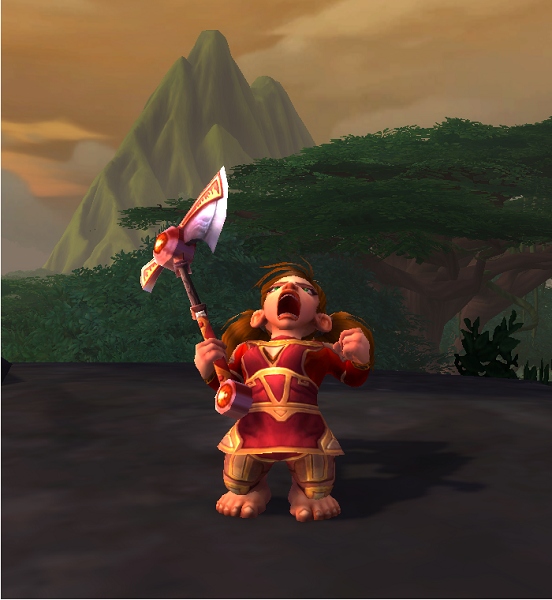
-The toons’ new and improved looks. I didn’t like losing some of my favorite female Dwarf faces, but overall the change was good.

-The little gold coin marker for vendor trash in your bags. Hated it first, grew to love it.

-No fighting over gathering nodes anymore, since more than one player can get the same one. (If it was WoD? Or was it Legion?)

WoW Arms Warrior Roar

Legion

-The new transmogging system that automatically saves all applicable reward looks into your wardrobe. Oh, and being able to hide certain gear slots in your mog.

-Trees look so. Much. Better!

-Worldquests.

Flight Master’s Whistle.

WoW Legion Druid Classhall Xmas Gear Dec 2018

Battle for Azeroth

-Allied races.

-This is slightly esoteric, and definitely not a gameplay feature, but I love the penguin sledding world quests!

-Overall my favorite expansion, by the way.

Shadowlands

New customizations for the core races (skin, hair, jewellery).

-After opening Shadowlands with your first character, being able to choose whether you do the storyline or not on subsequent toons.

Torghast, of course.

I’m pretty sure I’m forgetting a lot. Love to share your favorite tweaks to the game? Comments are open!

Images: screencaps from World of Warcraft.

Of Dice and Dragons is an occasional feature about games and gaming.

Deconstructing the Star Wars Sequels: The Force Awakens

We’ve all had a few years to mull over the Star Wars sequel trilogy, and opinions are mixed. Some people love them and some hate them, but most of us seem to be in the middle, enjoying some things about the movies while feeling an overall dissatisfaction. It is, of course, true that any franchise so deeply loved as Star Wars was going to have a hard time living up to fans’ hopes with its long-awaited return. Not to mention Star Wars fans can be a particularly unpleasable lot. Still, I think a significant part of what made Episodes 7-9 feel lackluster comes from how they handle the structure of their storytelling. In this and a couple future posts, I want to dig into what that means.

Finn and Rey on the Millennium Falcon from Star Wars: The Force Awakens

The most obvious thing about the narrative structure of The Force Awakens is that it hews very close to the story of A New Hope. We start with a lost droid carrying vital information running into a potential Jedi on a backwater desert planet and end with x-wing fighters blow a giant planet-killing ship out of the sky. In between we get everything from a cantina with its own funky jazz band to rebels sneaking around the corridors of an imperial supership to rescue a captured young woman. Your cruisers can’t repel nostalgia of that magnitude.

There’s a good reason why this story doesn’t work as well as A New Hope. When he first sat down to plan out the Star Wars story, George Lucas played to his strengths, and storytelling is not one of them. For all that we think of Lucas now as the creator of one of the great stories of our time, he has always been a filmmaker first. The story of A New Hope is not particularly original, nor is it trying to be. It knowingly walks the steps of Joseph Campbell’s hero’s journey. The hero’s journey concept is a controversial one, its substance disputed by folklorists and its application embraced by some writers but rejected by others. But rather than delve into Campbell, I want to look at something related but simpler: the three act structure.

The three act structure is a fundamental storytelling tool that can be found in everything from fairy tales to Hollywood blockbusters. There are lots of different ways of explaining it and, just like the hero’s journey, different people have different interpretations of it, from the very basic to the immensely complex, but here’s a simple version of how it goes.

Act 1: We meet the main character and learn enough about the world they live in to care about them. The main character is faced with a problem that they must solve or there will be consequences.

Act 2: The character attempts to solve the problem but fails. Their attempt fails because they did it in a way that did not require them to change. There may be consequences for their failure, or the potential consequences of failing to solve the larger problem may grow greater.

Act 3: The character accepts that they must change, and with that change they are now able to solve the problem.

Not every story follows this pattern, to be sure, but it underlies a lot of familiar narratives. To take a well-known example, Homer’s Odyssey works along these lines. Act 1: We meet Odysseus and learn about his struggle to get home. We learn about the greedy suitors feasting all day on his meat and wine and see them scheme to kill Telemachus, force Penelope to marry one of them, and finally get their hands on Odysseus’ wealth if he does not get home. Act 2: Odysseus tries to get home, but he runs into obstacles. The worst of his problems comes from the fact that he cannot bear to slip away from the cyclops by calling himself “No one.” Instead, his pride drives him to turn around and shout out his real name, which allows the cyclops to call down Poseidon’s curse on him. It costs Odysseus his crew and ten years of wandering. Act 3: Odysseus finally gets home to Ithaca and accepts that he must disguise himself as a beggar and not give away his identity until he is ready to kill all the suitors and reclaim his home and family.

A New Hope is a textbook example of the three act structure. In Act 1 we meet Luke Skywalker and learn of the importance of bringing R2-D2 and the Death Star technical readouts to the rebels before the Empire can destroy more planets with their new weapon. In At 2, Luke attempts to solve the problem by rescuing Leia and getting the droid back to her, but without letting go of the idea that he’s just a farm boy from the sticks. It costs him his mentor and his last connection to Tatooine as Obi-Wan Kenobi sacrifices himself to let the Millennium Falcon escape the Death Star. In Act 3, the Death Star threatens the rebel base on Yavin, and Luke finally accepts that he must become more than he was and trust the Force in order to defeat the Empire.

The three act structure works best with a single character at its center so we can watch how they grow and change when faced with a challenge. (It can work with an ensemble, too, though. Take Avengers: In Act 1, we see the problem—Loki steals the cube—and meet the heroes: Iron Man, Captain America, etc. In Act 2, the heroes try to deal with Loki by each doing what they do best; it doesn’t work, Loki gets away, and Coulson dies. In Act 3, the heroes get past their differences, come together as a team, and stop Loki’s fiendish plan.) A New Hope is centered on Luke. Other characters have important moments and experience some growth—especially Han, who chooses to come back and help fight the Death Star rather than fly away with his money—but Luke’s growth into a Jedi is the core of the story.

For all that The Force Awakens does its best to follow along with A New Hope‘s story, it doesn’t have the same focus. Knowing that the Luke-Han-Leia trio was such an important part of the original trilogy, The Force Awakens spends a lot of time setting up Rey, Finn, and Poe as their new counterparts. To the extent that any character’s story provides the narrative line running through The Force Awakens, it is Finn, the mutinous stormtrooper. Finn works well as an audience surrogate character to introduce new and old fans alike to the world of the new trilogy—everything is as new to us as it is to him—but his story does not follow the three act structure. He makes his big choice at the beginning of the film, putting down his blaster and breaking Poe out of the First Order’s lock-up. In the end he chooses to go back to the world he escaped from to rescue Rey, but that is by far the least momentous change his character undergoes. Poe, for his part, is a hot-shot pilot at the start of the movie and still a hot-shot pilot at the end; he has plenty of good moments as a character, but this movie is not about what happens to him.

Rey’s story is the one that tracks most closely with Luke’s (orphan kid from a desert planet meets runaway rebel droid and discovers their Jedi powers), but the movie is not structured around Rey’s journey the same way A New Hope was structured around Luke’s. Rey starts out by running away and looking to others to solve her problem with BB-8, and in the end she comes into her own as a budding Jedi. She has a beautiful moment overcoming her fear and trusting the Force to let her mind-trick her way out of First Order holding, but the story of the movie is not her story. Rey’s growth and her confrontation with Kylo Ren are things that happen in parallel with the larger plot; they are not key to it the way Luke’s story was.

There are plenty of weaknesses in The Force Awakens, from an over-reliance on nostalgia to underbaked worldbuilding, but one of its fundamental problems is that it is so focused on rewriting A New Hope it loses sight of what A New Hope was itself rewriting. What we get in The Force Awakens is a copy of a copy, with all the flaws that come with it.

In the Seen on Screen occasional feature, we discuss movies and television shows of interest.

Murderbot Mayhem Music: Fan Playlist for Network Effect

For the pure joy of having our sea container finally arrive with our moving goods, I’ve been re-reading all of Martha Wells’ Murderbot books in the past few weeks. That reminded me of a playlist Meghan Ball made to accompany the Murderbot novel Network Effect. I gave it a listen, and found it conveyed a very different idea of Murderbot than my impression.

So, I made my own playlist. It starts with a concert version of Darude’s “Sandstorm”, which I thought appropriate due to the reference of Murderbot visiting the Preservation planet for a cultural festival with concerts and operas in the beginning of the book.

  • Darude: “Sandstorm”, performed by Synthony and the Auckland Symphony Orchestra
  • Armin van Buuren: “Blah Blah Blah”
  • Paul Ruskay featuring Kokia: “Strike Suit Zero Main Theme”
  • Linkin Park: “Numb”
  • Darude’s “Sandstorm” and Rammstein’s “Du Hast” mashup by Monsterovich
  • Clint Mansell: “Lux Aeterna” (soundtrack from Requiem for a Dream, directed by Darren Aronofsky)

The “Blah Blah Blah” and “Numb” lyrics remind me of the doubts some humans (especially Thiago in this story) have about Murderbot, and Murderbot’s attitude towards those kinds of humans. The mashup of “Sandstorm” and “Du Hast” nicely marries action-paced music with the weirdness that comes with Murderbot finally finding targetControlSystem and the thread of targetContact contamination and the crystalline growth / alien hivemind taking over Murderbot. Ending the list with a piano piece brings some calm again.

Below are videos for your listening convenience.

Darude’s Sandstorm performed by Synthony and the Auckland Symphony Orchestra by Auckland Symphony Orchestra on YouTube

Armin van Buuren – Blah Blah Blah (Official Lyric Video) by Armin van Buuren on YouTube

Strike Suit Zero Main Theme via Paul Ruskay – Topic on YouTube

Linkin Park – Numb [Lyrics on screen] HD via LinkinParkLyrics100 on YouTube

Durude [sic] Haststorm (Du hast remix) by Monsterovich’s Music on YouTube

Requiem for a Dream – Lux Aeterna (Piano Version) by Patrik Pietschmann on YouTube

What would you add or subtract? Do you have your own playlist?

An occasional feature on music and sound-related notions.

Rating: Babylon 5, Season 2

The second season of Babylon 5 brings in a new captain and a new look for the Minbari ambassador, and sees the larger story begin to take shape. Here’s how we rated this season’s episodes:

Babylon 5 season 2 DVD box cover
  1. “Points of Departure” – 4
  2. “Revelations” – 5.5
  3. “The Geometry of Shadows” – 2.5
  4. “A Distant Star” – 1.5
  5. “The Long Dark” – 4
  6. “A Spider in the Web” – 4
  7. “Soul Mates” – 7
  8. “A Race Through Dark Places” – 4
  9. “The Coming of Shadows” – 5.5
  10. “GROPOS” – 4
  11. “All Alone in the Night” – 4
  12. “Acts of Sacrifice” – 4.5
  13. “Hunter, Prey” – 4.5
  14. “There All the Honor Lies” – 5.5
  15. “And Now for a Word” – 4.5
  16. “In the Shadows of Z’Ha’Dum” – 8
  17. “Knives” – 4.5
  18. “Confessions and Lamentations” – 4
  19. “Divided Loyalties” – 6
  20. “The Long, Twilight Struggle” – 5.5
  21. “Comes the Inquisitor” – 0
  22. “The Fall of Night” – 6

Season 2 comes in slightly ahead of season 1, with an average rating of 4.5, up just a little from the first season’s 4.4. Most of this season’s episodes fall between 4 and 5.5, a competent if not inspiring range. Only a few stand out above this range, but not many fall under it, either. Most episodes have their weaknesses, but they also offer something worth seeing in terms of developing the story or giving the characters room to grow.

This season has two pieces of narrative heavy lifting to accomplish. The first is to establish Bruce Boxleitner’s John Sheridan as the replacement for Michael O’Hare’s Jeffery Sinclair. O’Hare bowed out of the series after the first season, as we know now, because of his increasingly difficult mental health problems, even though important elements of the ongoing story had already been tied to the character. The transition to the new station commander is a little clunky at times, but O’Hare’s decision to leave is completely understandable, and it is a credit both to Boxleitner and to the production team that they found ways to position the new captain where they needed him for the long-term story without just making him a copy of Sinclair.

The other major piece of business this season accomplishes is establishing the growing menace of the Shadows. The slow build is expertly handled, with little pieces of information filtering in, episode by episode, letting us know that something is out there, something powerful and terrifying, without giving the game away too soon. If for nothing else, the gradual build-up of the Shadows makes it worth rewatching most if not all of the season.

Our lowest-rated episode of the season is “Comes the Inquisitor,” which we gave a complete 0. In this episode, the Vorlons subject Ambassador Delenn to a cruel test of her worthiness as a tool against the rise of the Shadows. The writing is loose, the characterization weak, and the story driven too much by larger narrative needs and a giggling serial killer fanboyism, not enough by the characters within it.

At the other end of the scale, “In the Shadows of Z’Ha’Dum” gets an 8. This episode does a lot to establish important elements for the future of the series, but it remains deeply grounded in the lives and emotions of the characters themselves. Sheridan confronts the Shadows’ agent Morden about his connection to the expedition that killed Sheridan’s wife. Meanwhile, elsewhere on the station, the pseudo-fascist government of Earth extends its tendrils into Babylon 5 through the innocuous-sounding but insidious Night Watch. The tensions are high in this episode, and the actors carry it well.

Babylon 5 remains a product of a different time, not just in television but in our history. The age shows, but time has been kinder to some of its elements than to others. Some parts of season 2 feel awkwardly dated now, other parts chillingly apt. But still, it is (for the most part) worth a rewatch.

Image: Babylon 5 season 2 DVD cover via IMDb

In the Seen on Screen occasional feature, we discuss movies and television shows of interest.