Joy to the World (of Warcraft) 1

Alunaria, over at Alunaria’s Avenue, has proposed a holiday challenge: stay away from the griping, grousing, and general grinchiness about World of Warcraft that’s all to easy to find these days and post something positive instead. We’re always up for some kindness and fun, so here’s a contribution from us: some holiday-themed transmogs to light up the winter darkness.

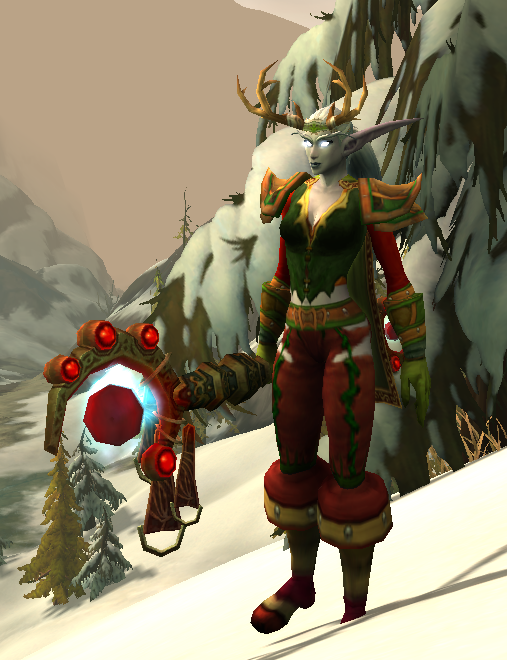
When you can already turn into a stag, a little Christmas spirit isn’t hard to find. Here’s my guardian druid in her Jolly Holly set.

Of Dice and Dragons is an occasional feature about games and gaming.

Tali for Saturnalia

The ancient Romans celebrated the holiday of Saturnalia on this day, the 17th of December. (At least in early Roman history it was a one-day holiday; later, it was extended so that it started on the 17th and lasted through the 23rd.) Saturnalia was a festival of good cheer and relaxed social strictures, thought of as recreating a lost golden age ruled over by the god Saturn. Typical practices included feasting, gift-giving, and a holiday from the usual social rules: children got to order their parents around while adults played children’s games; the masters of the household served a feast to their slaves; and gambling, which was a popular passtime but not usually allowed in public, was freely tolerated.

Romans played many different gambling games, but some of the most popular involved dice. One common game, known as tali, was played either with the knucklebones of sheep or goats (called astragals) or with cubical six-sided dice marked with the numbers 1 through 6, like modern dice. Astragals had four sides. For gaming purposes, it seems they were assigned values of 1, 3, 4, and 6. When playing with six-sided dice, only those numbers were used; 2 and 5 were ignored.

The rules of tali are not entirely understood today. Probably there were many different variations with different rules, and all of them were so common that no one bothered to write down instructions for how to play. Here is a playable modern interpretation based on what we can gather from literary references and artistic depictions.

All you need for any version of the game is four six-sided dice and something to bet with (coins, poker chips, chocolates—whatever you like), although a pencil and piece of paper for each player to record their throws can also be useful.

Simple Tali

Each player pays an ante into the pot.

Each player then rolls four dice, either their own set or taking turns with a common set.

Each player’s roll is then scored, and the winner takes the pot. If no one wins a round, everyone rolls again. If two or more players tie, only those players roll again until someone wins.

Dice rolls are scored according to the following system in which “hands” of dice are ranked, much like hands of cards in the modern game of poker.

  • 6,4,3,1 – called Venus, the best roll, always wins.
  • Rolls that include at least one 6 (apart from 6,6,6,6, which is a Vultures—see below) are called Senio and are scored by totaling the numbers shown (excluding the numbers 2 and 5, which are not counted). Any Senio always beats a Vultures or a roll that includes no 6.
  • Rolls that show four of the same number, called Vultures, score at the bottom of the heap, but will win over other 6-less rolls.
    • 6,6,6,6 – called Vultures, beats only a lower Vultures, The Dog, or a roll without a 6.
    • 4,4,4,4 – called Vultures, beats only a lower Vultures, The Dog, or a roll without a 6.
    • 3,3,3,3 – called Vultures, beats only The Dog, or a roll without a 6.
    • 1,1,1,1 – called Vultures or The Dog, beats only a roll without a 6.
  • Any roll that has no 6 (except a Vultures) always loses.

Here’s how a sample round might play:

  • A rolls 6,1,1,1 – a Senio worth 9
  • B rolls 6,5,3,1 – a Senio worth 10 (because the 5 is not counted)
  • C rolls 3,3,3,3 – a Vultures
  • D rolls 4,4,4,3 – a losing roll

B wins this game with a Senio of 10. Even though D’s roll totals higher, it has no 6, and therefore automatically loses.

Tali variations

The version of tali described above is perfectly playable, but it’s a simple game of chance with no real strategy. Here are a few ways you can make it more interesting. (All these variations use the same scoring system described above.)

Liars’ tali

Each player rolls their dice in secret and hides the total (or, if using a common set of dice, records their roll in secret). After an initial bet, players raise, call, or fold in turn, as in poker, until everyone calls or folds. The players still in the game then reveal their rolls and the winner takes the pot.

Draw tali

Each player rolls their own dice (this variation is difficult to manage with common dice). Any player may then ante into the pot again for the chance to reroll a die. Repeat either for a limited number of rerolls or until everyone passes. The player with the best roll on the table wins the pot.

Stud tali

Each player rolls one die and either keeps it (if using individual dice) or records it (if using common dice). After all players have rolled once, each one either antes into the pot or folds. Repeat three more times until all players have rolled a full four dice. The player with the highest roll among those still in the game takes the pot.

Happy Saturnalia!

Image: Roman dice, photograph by Wendy Scott via Portable Antiquities Scheme (Leicestershire; 1-410 CE; lead)

History for Writers is a weekly feature which looks at how history can be a fiction writer’s most useful tool. From worldbuilding to dialogue, history helps you write. Check out the introduction to History for Writers here.
A WoW Mole Machine in Murdoch Mysteries?

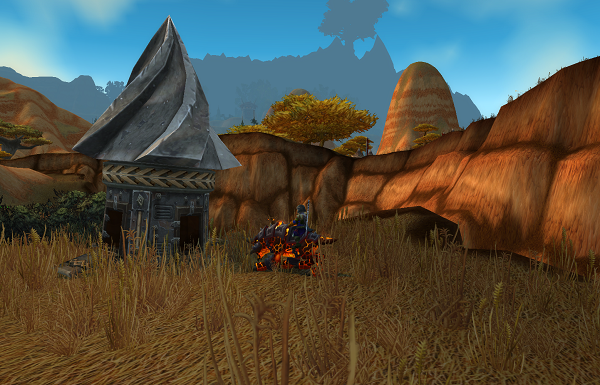
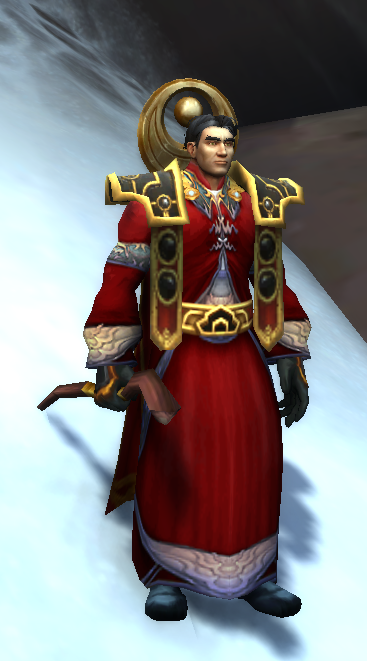
After months of working on it, we opened up Dark Iron Dwarves last week. Yay! I’ve been leveling my new DI paladin a bit, getting a sense of the new-to-me racial abilities. They include Mole Machine, a way to quickly change locations by tunneling through the earth.

We’ve been rewatcing and rating Murdoch Mysteries for our project for a while now. A seventh-season episode, “Journey to the Centre of Toronto”, has a burrowing or boring machine that should look very familiar to World of Warcraft players.

Murdoch Mysteries s7 e11 Burrowing Machine

It’s a mole machine, right? Right!?!

WoW Westfall Sentinel Hill w Dark Iron Dwarf Mole Machine

The episode doesn’t actually ever call the device mole machine, but some of the characters do talk about hypothetical mole people who live underground. I wonder whether there are any WoWers in the writers’ room? 😀

In any case, even though the series seems to otherwise strive towards reasonable accuracy, now and then they definitely veer into SSFnal or steampunk-ish. I love the tongue-firmly-in-cheek attitude!

Images: screenshot from the tv series Murdoch Mysteries, season 7, episode 11, “Journey to the Centre of Toronto”. World of Warcraft screencap with Dark Iron Dwarf mole machine in Westfall.

In the Seen on Screen occasional feature, we discuss movies and television shows of interest.

Battle for Azeroth: Our Thoughts So Far

The Battle for Azeroth expansion to World of Warcarft has been out for a couple of months now, long enough to play around with it, get used to its quirks, and discover some of its surprises. We have leveled up a few of our Alliance characters and just started playing through the Horde experience, so there are plenty of things we just haven’t seen yet, but here’s our take on what’s working, what isn’t, and what’s going on so far.

The Good

  • It’s beautiful. All of it. The landscapes, the buildings, the gear, the skies, everything is visually incredible. Since Mists of Pandaria, really, the visual design teams have been improving with every expansion, but in BfA the terrains really shine. We still spend so much of our playing time just pausing to look at the artwork.
  • The questline stories in the zones are great. We don’t usually read quest text too carefully, but this time it’s worth taking the time to see what the characters have to say. There are a lot of compelling and entertaining individual stories out in the world.
  • The Tortollans are the best new NPCs in a long time—crotchety old turtle people who want to play games and tell you stories! They add some wonderful comic relief to the more serious events going on in the world.
  • Boralus and Dazar’alor feel like real, living cities, full of people, with their own neighborhoods and back alleys and stories going on at the periphery of your adventure. Boralus is the quasi-British age-of-sail/smuggler/pirate town of your fantasy dreams, and Dazar’alor is a gorgeous Mesoamerican-inspired city of living gods and golden pyramids. They are both amazing places to spend time in and hands-down the most successful built environments we’ve seen in WoW so far.
  • The music is fabulous all-round. From epic and rousing to serene and unobtrusive, they all come with interesting real-world comparisons or sources of inspiration.
  • The number of female characters in the storytelling has increased noticeably, and women are depicted as active decision-makers. Because even though this is a fantasy world, a lot of it is based on our real one and you wouldn’t want to be historically inaccurate.
  • On the Alliance side, the combination of ferry stations and flight points is a great demonstration of world-internal logic at work, and it works really well from the UX (user experience) point of view. Do the Horde have anything similar?

WoW BfA Nazmir Azeroth World Q Nov 2018

The Meh

  • The mission table is back, stripped down and streamlined to just about the most efficient version you can imagine, but also feeling pretty pointless. There aren’t many followers to collect, the rewards are uninspiring, and getting War Resources to run the mission table is doable but tiresome. It doesn’t feel like compelling content, but it’s not a great drag, either.
  • The Heart of Azeroth is a similarly stripped down and streamlined version of the Artifact weapons from Legion. It works just fine, but it’s not very interesting. Leveling up the Heart of Azeroth with azerite is relatively painless, but there’s also nothing exciting about it.
  • The azerite gear tied to the Heart of Azeroth is a mixed bag. On one hand, it’s fun to pick bonus traits and some of the perks can really make a difference to how your character plays. On the other hand, the gear is hard to get and clunky to use. Having to wait an indeterminate amount of time to level up your Heart of Azeroth before your upgraded gear actually becomes an upgrade doesn’t feel good.
  • The two of us play together and we play strictly PvE. We’re not interested in doing larger group content or anything that even feels like PvP. This means that a lot of the new content this expansion—islands, warfronts, war mode—just isn’t for us. That’s fine, and we don’t mind there being content in the expansion that isn’t for us, but it does leave max-level content feeling a little threadbare.

The Bad

  • The faction conflict story is back. Again. There’s never been anything interesting about faction conflict and there’s still nothing interesting about it. Despite what Blizzard seems to think, “Horde vs. Alliance” is not the core of WoW. The core of WoW is beating up monsters and taking their stuff. We don’t need faction conflict to motivate us to go to Kul Tiras and Zandalar to beat up monsters and take their stuff. Just the fact there are monsters there who have stuff we can take is more than enough. If Blizzard really felt like they needed a story reason for us to go to these new places, having Jaina/the spirit of Vol’jin show up and say “Hey/Hey mon, there’s something strange in Kul Tiras/Zandalar and it don’t look good!” would be plenty.
  • Not only is Blizzard pushing hard on the faction conflict this time, they’ve chosen to do so in a heavy-handed, aggravating way. On both the Alliance and Horde sides, players have been made to play through content that is needlessly cruel but unskippable.
  • Fortunately, the actual content of Battle for Azeroth has very little to do with faction conflict, but that in itself is a problem. There are three narrative threads running through this expansion: the internal problems of Kul Tiras and the Zandalari, the Alliance vs. Horde faction conflict, and Magni’s attempts to heal the wounded Azeroth. None of these three threads is well integrated with the other two. While the Kul Tiras and Zandalari stores are compelling on their own, the faction conflict is annoying, and Magni’s planetary first aid is tedious and repetitive. It feels like Blizzard had three different ideas for this expansion, only had time to develop one, but tried to do all three anyway.
  • You can’t seem to be able to go beyond two advancements without doing at least some PvP group content (islands). Not a great design choice. (Corrected)
  • Did they have to destroy Teldrassil?

On balance, there’s a lot to like about Battle for Azeroth, and we’re certainly going to keep playing. At the same time, there are some annoying problems that are hard to ignore. Some people have speculated that Blizzard has an A team and a B team putting out expansions alternately. That may not be true, but there certainly are some aspects to BfA that remind of us of what went wrong back in Warlords of Draenor, when we got a beautiful new world to explore, but an overarching story best ignored and some poorly designed mechanics that dragged the experience down.

Of Dice and Dragons is an occasional feature about games and gaming.

Allied Races, Here We Come!

We got our first toons leveled to 120 about two months ago. Typically we level our Night Elf druid pair first because you just can’t beat a druid duo of a tank plus dps with an occasional heal for versatility! This time, though, we chose two humans for strategic reasons.

We haven’t played these two together before. A paladin tank and a mistweaver monk work together fine, though. We just won’t do anything terribly fast—our damage output isn’t high, but we do tend to stay alive through everything except the nastiest dps-heavy fights.

Because of real life, we’ve been going slowly but steadily, working on accumulating the required reputation to unlock allied races. We’re not yet there on the Horde side, but we just made it to exalted with the 7th Legion on our humans!

WoW 2 Humans Exalted with 7th Legion Nov 2018

Allied races, here we come! 😀

Of Dice and Dragons is an occasional feature about games and gaming.

A Round of Awesome Female WoW Gnome Fanart

My very first WoW character, created towards the end of vanilla, was a female gnome mage. I still have her—specced the same, too—although I don’t play her as my primary anymore.

Anyway, I was looking for something else on the Internet when I fell into a hole on Tumblr and found all of this AWESOME female gnome fanart. I’ll share just five of my favorites below. And this is just the tip of the iceberg!

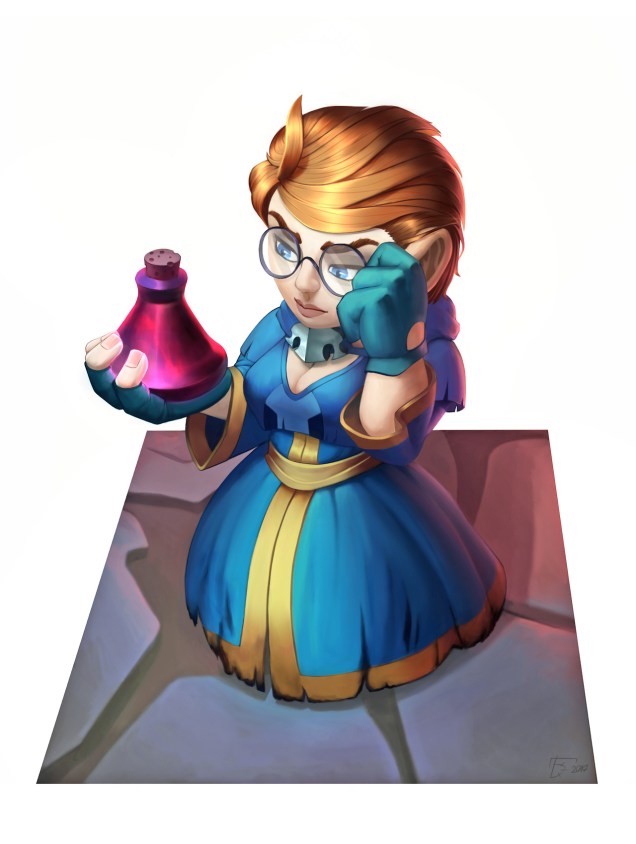
An alchemist by Boz:

Tumblr Boz Female Gnome Alchemist

Love the thoughtful expression!

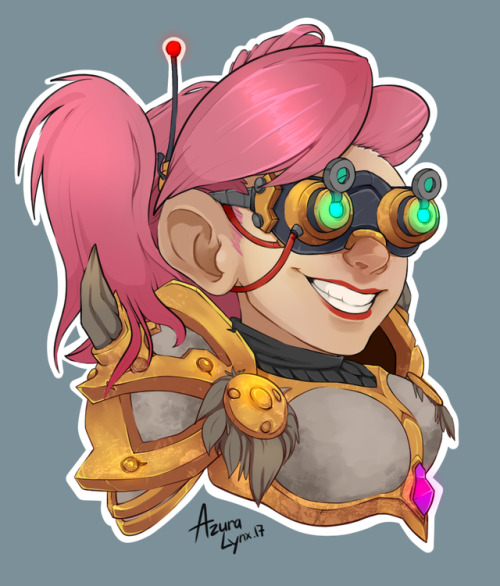
A custom portrait of a gnome with goggles by Azuralynx (aka Niniel-Gnoll):

Tumblr Azuralynx Female Gnome Portrait with Goggles

The grin! 😀

Sketch of a mage by Bryss (aka Alynissia):

Tumblr Bryss Female Gnome Sketch

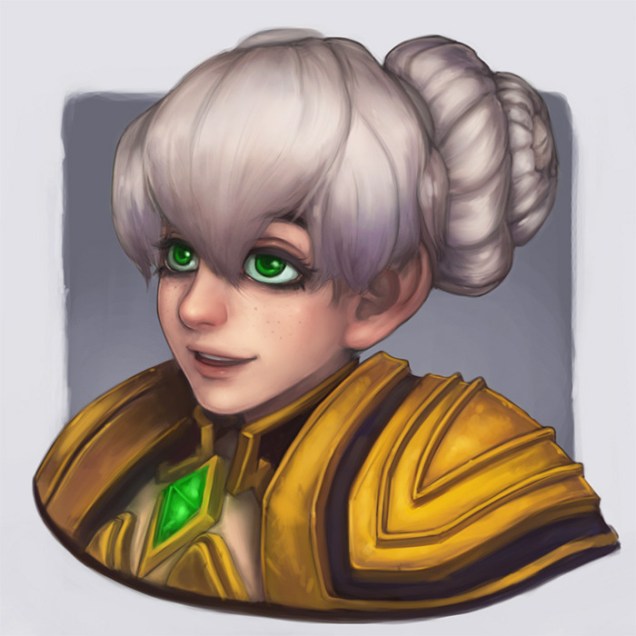
Chromie, the dragon who prefers a gnome humanoid form, by mhazaru:

Tumblr Mhazaru Female Gnome Chromie

A death knight by Flyingterra—she clearly means business!

Tumblr Flyingterra Female Gnome Death Knight

The range of illustration techniques is impressive, but even more so is how all of these artists capture the range of possibilities for gnome characters.

Much ❤ ❤ ❤ to artistic nerds!

Images: Alchemist by Boz on Tumblr. Portrait with goggles by Azuralynx aka Niniel-Gnoll on Tumblr. Sketch by Bryss aka Alynissia on Tumblr. Chromie by mhazaru on Tumblr. Death knight by Flyingterra on Tumblr.

Of Dice and Dragons is an occasional feature about games and gaming.

A Round of Dwarf-ish Music

We haven’t talked about music lately. Time to fix it!

One of the new allied races in Battle for Azeroth, the latest World of Warcraft expansion, is Dark Iron Dwarves. (Note: I don’t think there’s much actual info as of yet, but people have been gathering mentions at a Wowhead thread.)

As I’ve mentioned before, female Dwarves are my absolute favorite race / gender combo to play in WoW, so I’m going to want at least one. 🙂 Consequently, my WoW thoughts have revolved heavily enough around Dwarves to push into the real life in the form of music befitting these mountain-dwellers.

Below are some of my current most favorite Dwarf-ish pieces, whether originally something quite different or composed specifically with Dwarves in mind.

An instrumental Nordic folk-based melody:

Dufwa via Hedningarna – Topic on YouTube

A Dwarven melody from a computer game I know nothing about:

https://youtu.be/42E2lefpxeg

The Dwarven Nobles – Dragon Age: Origins Soundtrack via allaboutVGmusic on YouTube

An Icelandic folk song with something to do with a (or more than one?) bigger bird (maybe crows, jackdaws, ravens, rooks, or the like):

Krummavísur – Voces Thules via hahaigotanidea on YouTube

Performed by the group Voces Thules. Wow! Also this next song is by the same group:

Voces Thules – Varizk ér Ok Varizk ér via Vikingskog on YouTube

Commenter EkErilaz added the Icelandic lyrics and an English translation:

“Beware! Beware! For the wind blows high. Blood will rain down on men’s bared bodies. Point and edge will share all men’s inheritance, now that the sword-age cuts sharply upon us.”

To my mind, the lyrics are very reminiscent of Vikings or Anglo-Saxons, but I could also see them applying to a fantasy race in WoW. (After all, the game is called World of Warcraft.)

Another, a very different type of instrumental:

Dwarf Mining Music – Dwarf Mining Town by Brandon Fiechter on YouTube

You can definitely get the mining vibe!

This version of the old Christmas carol “Masters in This Hall” from the album A Feast of Songs by Barry and Beth Hall also reminds me of Dwarves because of the steady rhythm and low key.

A Feast of Songs – Masters in This Hall via supermusic141 on YouTube

The next is a bit special. A music-heavy version of The Lord of the Rings was produced by the Finnish theater company Ryhmäteatteri in 1988 and 1989. Bilbo’s song “I Sit Beside the Fire and Think” from The Fellowship of the Ring, book 2, chapter III (“The Ring Goes South”) was turned into a song for the play, and it’s wonderfully meditative and solemn.

Tulen ääressä istun via Crypticevangelist on YouTube

The lyrics were originally translated into the Finnish version (Taru sormusten herrasta) by Panu Pekkanen; for the play they were slightly modified. The melody was composed by Toni Edelmann and sung by Timo Torikka.

This next piece was made by Simon Swerwer for the 2012 computer game Dwarf Fortress:

Simon Swerwer – The Tankard Basher by Simon Swerwer on YouTube

Awesome!

Lastly, Neil Finn’s “Song of the Lonely Mountain” (the end credits song for Hobbit: An Unexpected Journey) because of the bittersweetness, melancholy, and—just perhaps—glimmer of hope that comes through.

Song of the Lonely Mountain by Neil Finn on YouTube

Anything you’d like to add? Please do!

This post has been edited to correct a typo.

Of Dice and Dragons is an occasional feature about games and gaming.

WoW’s Dalaran Cupola Library vs. Real Round Libraries

I was browsing my WoW screencaps for something entirely different when my eye fell on two shots from the Dalaran inscription trainer’s place. (This is in the Legion version of Dalaran.) Both are actually from inside the book-filled cupola: the first looks up towards the impossibly high ceiling, the second down towards the trainers’ room floor.

WoW Dalaran Inscription Tr Book Dome2 Sm

WoW Dalaran Inscription Tr Book Dome Sm

Neat, right? Well, I wondered whether anyone’s actually done anything similar for real and hit the Internet. And I found some!

Stockholm Public Library in Stockholm, Sweden

The functionalist stadsbibliotek was designed by Gunnar Asplund and opened in 1928.

Flickr Marcus Hansson Stockholm Public Library


Round Reading Room in the Maughan Library, King’s College London in London, UK

The Round Reading Room of Maughan Library, the main university library of King’s College London, can be found on the Strand Campus.

Wikimedia Kings College London Maughan Lib Round Reading Room Sm


Picton Reading Room in Liverpool, UK

The Picton Reading Room, completed in 1879, is now part of the Liverpool Central Library.

Flickr Terry Kearney Liverpool Central Library Picton Reading Room


A home in Toronto, Ontario

Designed by Katherine Newman and Peter Cebulak, this two-level library is in a private residence in Toronto, Ontario, Canada.

Architectural Digest Toronto Ontario Home


The Octagon Room, Islamic Studies Library at McGill University in Montreal, Quebec, Canada

The library is situated in the neo-Gothic Morrice Hall building that previously housed the Presbyterian College of Montreal from 1871 to 1961.

McGill Islamic Studies Library Klaus Fiedler Sm


None of them are exactly the same as the game library cupola, of course: apart from the the scale of the rooms, the scale and direction of the bookcases might differ. But apparently it isn’t terribly far-fetched to make a round multi-storey library and pack it chock-full. 😀

Images: Stockholm Public Library by Marcus Hansson on Flickr (CC BY 2.0). Round Reading Room of Maughan Library by Colin via Wikimedia Commons (CC BY-SA 4.0). Picton Reading Room by Terry Kearney on Flickr (CC BY-NC 2.0). Toronto home by Tony Soluri via Architectural Digest. Islamic Studies Library at McGill by Klaus Fiedler, McGill Library.

Out There is an occasional feature highlighting intriguing art, spaces, places, phenomena, flora, and fauna.

Midsummer Fire Festival Transmogs

Alunaria of Alunaria’s Avenue has proposed a new transmogging challenge: transmogs for the Midsummer Fire Festival that also fit with your class. We’re always up for transmogging fun, so here’s our ideas.

Erik here.

For my Tauren shaman, the Midsummer celebration is very important. It is a time to honor the spirits of the fire, which she does by dancing in her Flamedancer Regalia.

My Gnomish warlock is a different case. You see, when it comes to fire, warlocks are professionals, so the Fire Festival is a bit of a bus-driver’s holiday for her. It’s the one time of the year when people who don’t know what they’re doing try to set things on fire, so if she hung around the festivities she would just find herself screaming at everyone:

You’ve built that bonfire all wrong! There’s nowhere near enough kindling, the wood isn’t properly seasoned, it’s too close to the tent, and you put it upwind of the dance pole! Does no one here know what they’re doing but me!?”

So, for her, Midsummer is a time to get away from it all and go have her own private little fire way up in the snowy mountains where no one will bother her. She dresses appropriately for the climate in her Aurora-Seeker’s Garb.

Eppu here.

My fire mage’s hidden artifact appearance mog is already so gorgeous there isn’t really improving it, but I did change a few things to make it more Fire Festival-y.

WoW Fire Festival Fire Mage Braziers 2018

I was able to find a decently matching shirt, so it looks like the dress has sleeves (Elegant Robes plus Golden Filigreed Shirt). Otherwise, I pushed the accent colors (headpiece, boots, gloves, shoulders, cloak) more towards red and orange. Finally, I borrowed a red wand and a red flower (Flash Wand, Penelope’s Rose) from my arcane mage’s Love Is in the Air mog.

Now she’s ready to light up the town! 🙂

Of Dice and Dragons is an occasional feature about games and gaming.