The Long and Pointless War

One of the common tropes in stories about war is that war is pointless and goes on far too long. This trope goes back at least as far as the Trojan War cycle in Greek mythology but a particularly strong version of it became prominent in twentieth-century American science fiction with works like Heinlein’s Starship Troopers and Haldeman’s The Forever War. These works portrayed wars that have gone on for as long as anyone can remember and which show no signs of ever ending. The original causes for the war are long forgotten and both sides just continue to fight for no reason other than to avenge the ravages of previous battles. In more optimistic stories, all it takes to stop the carnage is for an outsider to point out to the combatants how meaningless their war is. In more pessimistic versions, the war just keeps going as the populations on both sides are blinded by warmongering propaganda and either unable or unwilling to ask what they’re fighting for in the first place. While stories of this kind may have a lot to say about what it feels like to be at war, however, they don’t match with what history shows us about the real causes of war.

Almost every society large enough to organize a substantial number of fighters, from ancient hunter-gatherer tribes to modern nations, has engaged in war. Some societies go to war readily, other reluctantly, and the immediate causes of individual conflicts vary, but certain patterns recur throughout history. Most wars ultimately come down to the need to control the resources that are essential to survival and prevent outsiders from threatening those resources. Most crucially, this means food, but other kinds of resources, such as access to trade routes, metals, and labor also contribute. People go to war because they are afraid of starving to death, not because they hate their neighbors.

The threat to survival may not always be immediate. Some wars are fought not for a direct tangible gain but to preserve reputation or prevent hostile forces from acquiring a competitive advantage. The danger that people fear when they go to war is also sometimes illusory or misjudged. Just because wars happen for a reason doesn’t mean that we all will (or should) agree that those reasons are good ones. Still, when you look behind the rhetoric and propaganda of a nation at war, you will almost always find a real fear about fundamental survival.

Ideologies, religions, political ideals, and other kinds of identities do play a role in shaping conflicts. They help to draw the lines between “us” and “them” and to justify why, in a time of crisis, “we” should live and “they” should die. Differences of identity alone, however, are not enough to cause wars. The history of the world is full of people of different faiths, ethnicities, and political persuasions living together in peace—not always harmony, but at least peace. War is the rare exception. To put it another way: war is a practical problem, not a moral problem.

Wars that arise from pragmatic fears will tend to last as long as those fears remain, or until the cost of continuing to fight outweighs the cost of accepting a settlement. History offers us plenty of examples of long wars. There were conflicts that lasted decades of more or less continual hostilities such as the Peloponnesian War between Athens and Sparta or the Thirty Years’ War in early modern Europe. There were also conflicts that recurred between the same forces on more or less the same terms over generations or centuries, such as between the Roman and Parthian Empires or China and the peoples of the Central Asian steppes. From the point of view of ordinary soldiers and civilians living through them, any of these wars may well have seemed interminable and pointless, but behind all of them were real and practical fears of the threat that rival powers posed to control of essential resources. They continued for so long because these fears remained unresolved, not because of ingrained hostility. When they ended, it was because circumstances had changed—one power decisively defeated another, all powers were too exhausted to continue, or an outside force changed the dynamics of the conflict—not because people suddenly came to their senses and stopped hating one another.

Thoughts for writers

I’m not going to tell you that you shouldn’t write stories about long and pointless wars. This trope exists for a reason and it has an important place in our literature. It’s no surprise that the trope became popular among writers who lived through the Cold War and, in the United States, the war in Vietnam. Both of those conflicts seemed especially pointless to many, soldiers and civilians alike. Almost any war can seem meaningless from the point of view of the common soldier following orders and just trying to stay alive. Stories of this kind express something important about the dehumanizing effects of war and the common yearning for peace.

It’s not our job as fiction writers to try to perfectly replicate history. We have the freedom to be unrealistic, but we should know when we’re doing it. If you want to have noisy explosions in space because they make your story more exciting, go ahead and have them. If you want to write a story about vampires in Victorian London, don’t let the fact that vampires aren’t real stop you. Likewise, if you have a story to tell about war, tell it the way you want to tell it. Just be aware that actual wars begin and end because of practical need and fears, not because people just can’t get along.

Image: Modern soldiers visit the ancient city of Hatra in northern Iraq, photograph by George Gieske via Wikimedia

Post edited for clarity.

History for Writers is a weekly feature which looks at how history can be a fiction writer’s most useful tool. From worldbuilding to dialogue, history helps you write. Check out the introduction to History for Writers here.

Herodotus on Resisting Tyranny

170220dancerThe ancient Greek historian Herodotus was deeply concerned with the question of how democratic societies can defend themselves from tyranny. In the seventh and sixth centuries BCE, cities all across Greece saw outbreaks of tyranny: wealthy aristocrats seized power by force and ruled without regard to law or tradition. A few of these regimes lasted for a few generations, but most were overthrown in a matter of years. In the fifth century, Greece faced the larger threat of conquest by the Persian empire, whose Great King the Greeks perceived as kind of tyrant writ large.

Herodotus wrote about this history in his account of the wars between Greece and Persia. He told the stories of how the Athenians ousted their tyrants and how the Greeks organized to repel the Persian invasions. Some of his lessons in resisting tyranny, however, come in less obvious ways. Consider, for example, the story of Hippocleides (Herodotus, Histories 6.129).

The tale is set in the Greek city of Sicyon, generations before the Greco-Persian wars. A rich man named Cleisthenes had made himself tyrant and was looking to marry off his daughter, Agariste, to some rich young man from another city who could be a useful ally. Young men of fortune from all around Greece came to Sicyon to compete for Agariste’s hand. Cleisthenes hosted them for a year in his house, testing them on their credentials and talents. After a year, an Athenian, Hippocleides, son of Teisandrus, emerged as the favorite and preparations were made for a wedding. The story picks up on the day of the wedding:

After dinner, the suitors held a competition in music and speaking before the assembled audience. As the drinking began, Hippocleides, holding the attention of the room, called for some pleasant music, and having gotten the flute player to play, began to dance. And while I suppose Hippocleides pleased himself with his dancing, Cleisthenes looked on the whole thing with distaste. After a while, Hippocleides called for a table to be brought in. Getting onto the table he first danced some Laconian figures on it, next some Attic ones, but for his third act he planted his head on the table and waved his legs in the air.

Now Cleisthenes, at the first and second performances, was horrified at the thought that he might still end up tied by marriage to such a shameless dancer, but he kept silent; yet when he saw the man’s legs waving about he could no longer contain himself and declared: “Son of Teisandrus, you have danced yourself out of a marriage!”

The young man replied: “Hippocleides doesn’t care.”

– Herodotus, Histories 6.129

Continue reading

Boudica

ENG151196034 01The story of Boudica, the British queen who led a rebellion against the Romans in Britain, is well known, one of the most celebrated acts of resistance against the Roman empire. It is also a useful case study in how imperial states and conquered peoples interact with one another.

Boudica was the wife of King Prasutagus of the Iceni, a tribe in eastern Britain. Prasutagus was an ally of the Romans. Like many other local leaders, he had supported the Romans in their conquest of southern Britain in return for Roman support for his own position as king. Prasutagus wanted to secure the same relationship for his daughters when they inherited his position, but when he died the Romans did not follow his wishes and moved to take direct control of Icenian territory.

Starting in 60 or 61 Boudica led a revolt on behalf of her daughters that quickly gathered support from all around Britain. The main force of the Roman army in Britain was then campaigning in Wales. The rebels first targeted the city of Camulodunum (modern Colchester, in eastern Britain north of London) which had become a focus of British resentment because of the number of Roman army veterans settled there and the temple to the emperor Claudius which had been built with British tax money. The city was systematically destroyed and the small number of forces which had been dispatched for its defense were wiped out.

The rebels moved on to sack London and nearby Verulamium (modern St. Albans), two more important Roman centers. By this time, the Roman governor with his army was moving to oppose Boudica’s forces. Nevertheless, she persisted.

The two armies met somewhere along the main Roman road that connected London and the ports in Kent with the frontier in northern Wales. The precise location of the battlefield has not been identified. Despite heavy fighting, the British forces were defeated and the rebellion came to an end.

The conflict between Boudica and the Romans represents the kind of fundamental misunderstandings that happen between imperial powers and the peoples over whom they rule. Prasutagus expected the Romans to respect his wishes, accept his daughters as his heirs, and continue the client state relationship that the Iceni had enjoyed under his rule. He thought that he could deal with Rome in the same terms as he would deal with a rival British king and that the Romans would respect the same customs and practices that were common in Britain. The Romans, for their part, misunderstood the British. They did not conceive that Prasutagus’ daughters could be worthy partners in political matters or that Boudica could present a serious military threat. Further, they badly misjudged the level of discontent among the people of Britain. If they had grasped the speed with which Boudica would be able to assemble an army hundreds of thousands strong, they would not have risked leaving the core of the province so poorly defended.

Since no British account of the uprising survives, we are dependent on Roman sources for information about it and these Roman accounts show another layer of misunderstanding. The two principal recountings of the revolt offer two different reasons for its beginning. The historian Tacitus claims that the local Roman officials charged with taking control of Icenian territory beat Boudica and raped her daughters. The historian Cassius Dio instead asserts that Britain was driven into revolt when large loans that had been made to the local people were all called in at once. Both of these accounts are suspect. For Tacitus’ version, it was an old Roman custom to explain difficult political events with stories of mistreated women, from Aeneas’ callousness to Dido (which explained the enmity between Rome and Carthage) to Antonius’ infatuation with Cleopatra and abandonment of his marriage to Octavia (which explained the last Roman civil war). As for Dio’s story, money-lenders had a bad reputation in Rome and their underhanded practices were often blamed for fomenting unrest. In both cases, shifting blame away from the Roman administration itself—onto moneylenders or minor local officials—preserved the honor of the Roman state as a whole. The Britons weren’t really rebelling against the imperial system, these sources say, just venting understandable anger at individual acts of abuse.

The scope and swiftness of the revolt, however, suggest that there was much deeper and broader resentment in Britain than Tacitus or Dio was willing to recognize. Boudica’s uprising was the final push on a boulder that was ready to roll. While not all Britons had royal inheritances to contest, many people in the province must have faced problems not unlike Boudica’s. In the early 60s, Britain had been under Roman rule for a generation and, as in Prasutagus’ family, around this time the generation that had lived through the conquest was giving way to one that had grown up under the stresses of Roman rule. Generational experiences make a difference and the forces that one generation was willing to live with on negotiated terms, the next may find intolerable. Britain is not the only place where the Roman empire faced revolt in the post-conquest generation.

Image: “Boadicea Haranguing the Britons” via Wikimedia (National Portrait Gallery, London; 1793; oil on canvas; by John Opie)

History for Writers is a weekly feature which looks at how history can be a fiction writer’s most useful tool. From worldbuilding to dialogue, history helps you write. Check out the introduction to History for Writers here.
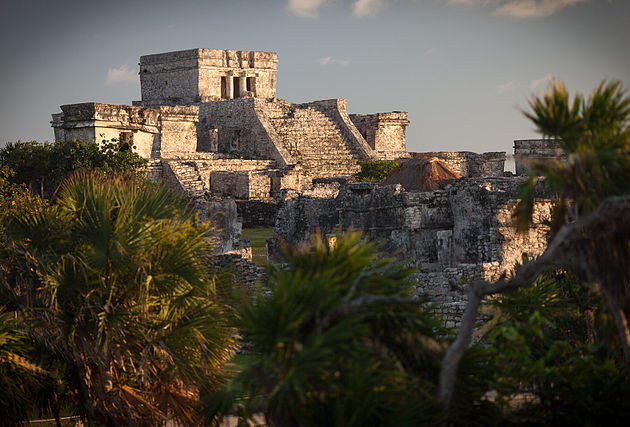
Tulum, City of Adventure

What does a City of Adventure look like? The kind of place where your main characters could stage intrigues in the airy halls of the palace or get down and dirty in the wretched hives of scum and villainy on the outskirts? Where your merry band of player characters could plot their next caper or set up their base while they clear the hinterlands of monsters? Maybe it could look like this.

170130castilloThe city of Tulum is one of the best-preserved ancient Maya cities on the coast of Central America. It served as the principal seaport for nearby inland cities on the Yucatán Peninsula, connecting overland trade routes with seaborne trade in the Carbibbean. The walled city sits right on a cliff overlooking the sea from which beacons may have served as a lighthouse to help guide incoming ships through a gap in the barrier reef. A small sheltered beach between cliffs provided a safe landing. Imagine piloting a trade canoe laden with salt and textiles through a stormy night, trying to keep the beacon fire in sight as the waves crash on the reef all around.

Continue reading

Being a Spartan

170123spartiateSpartans are renowned as some of the greatest warriors of the ancient Mediterranean world, and with good reason. Sparta had a 3-century streak undefeated on the battlefield (minus the battle of Thermopylae, where they lost only to encirclement by Persia’s overwhelming numbers). They won many of their wars without even a fight because when their opponents saw a wall of Spartan shields coming towards them, they just gave up and ran.

How did they do it? What’s so special about the Spartans?

The exceptional experience of being a Spartan began at birth when a state official judged the newborn baby’s physical health. Only healthy babies were allowed to be raised. Those that were sickly, weak, or had visible birth defects were exposed in the wilderness to die. (Only the children of the kings were exempt from this rule.) At the age of seven, all male Spartans were taken from their parents and put into a state-run education called the agōgē. The agōgē experience was brutal. The boys were trained in hoplite combat while living on meager rations. They slept outside, all year long, with only one cloak. Violence between boys of different age groups was encouraged as a way of toughening them up.

Continue reading

Cold

Keira Knightley performing “how not to dress in the snow,” from King Arthur via IMDb
Keira Knightley as “how not to dress in the snow,” from King Arthur via IMDb

It’s cold outside, at least hereabouts where we are, which always sends my thoughts to the depiction of cold weather and the people who have to cope with it in the media I enjoy. The experience of serious cold weather is one that’s hard to convey to someone who hasn’t lived with it, so perhaps it’s no surprise that while some books, movies, and tv shows get it right, others really don’t.

If you want to get it right in your stories, here are a few things to know about the effects of cold and how to deal with them in pre-modern settings:

Exposed skin is bad. Very bad. Especially skin with lots of blood vessels close to the surface like heads, necks, ears, noses, cheeks, hands, and feet. That’s how you lose heat, and if you lose too much heat, you can start losing body parts, too. If you find yourself out in the cold unexpectedly, the first thing you should do is cover up as much skin as you can.

John Snow realizing he knows nothing about dressing for the cold, from Game of Thrones via IMDb

Layers are good. Layering clothing creates air pockets, which is what keeps heat in. Metal provides poor insulation. Leather and cloth are better. Any cloth will do, but wool is particularly good. Fur is excellent, but if you’re wearing fur for warmth (rather than as a fashion statement), you want the fur on the inside where it can trap air more effectively, not the outside catching snow. For body parts that you can’t cover with clothing, such as your face, a layer of hair or grease will help, but not nearly as much as proper clothing.

Frostbite is VERY bad. Frostbite is not “Ah, it’s a little chilly, I think I’ll stick my hands in my pockets to warm them up.” Frostbite is when ice crystals form inside your body and kill your cells. It is treatable if caught in time, but it’s serious. This is how people lose fingers, toes, even limbs to the cold. Less serious than frostbite is frostnip, when the body pulls blood away from exposed skin. Frostnip is treatable just by warming up, but do not rub! Rubbing frostnipped or frostbitten skin can cause damage to tissues made fragile by the cold.

Dangerous cold doesn’t always feel cold. The experience of frostbite and frostnip doesn’t necessarily feel cold. The affected area may actually feel hot or just numb. This is the result of nerve cells shutting down or dying. In extreme cases, some people suffering hypothermia will start taking off their clothes because they feel overheated, even though they are literally dying of cold. Alcohol increases blood flow to the skin and extremities which makes you feel warmer (and can be useful when you’ve come in out of the cold into warmer surroundings), but can be dangerous when you’re still exposed to cold temperatures.

People are mammals. That means, in addition to some other fun features, we make our own heat. That heat comes from the same place the rest of our energy comes from: food. Cold makes you hungry. Eating keeps you warm.

Cold makes you go. Your body responds to cold by pulling blood away from the extremities into the core. Your kidneys respond to all that blood rushing around by going into overdrive trying to purge excess fluid from your system, leading to a full bladder.

These are all things to remember as you write about characters braving the harsh winter weather. I’ll leave the last word, though, to Magnar of Finn:

Post edited for clarity.

History for Writers is a weekly feature which looks at how history can be a fiction writer’s most useful tool. From worldbuilding to dialogue, history helps you write. Check out the introduction to History for Writers here.

Fake News in Ancient Athens

170109athenaThere’s been a lot of talk lately about fake news and its effect on politics, but the phenomenon is not a new one. Consider this story about how the tyrant Peisistratus seized power in Athens in 556 BCE.

There had been long-simmering unrest between three broad groups in Attica: the wealthy farmers of the plains, the fishing and trading people of the coast, and the poor villagers of the hills. Peisistratus organized the hill people as his base of support, promising to represent their interests if they helped him take power. After a first attempt that fell apart when the plains and coast factions organized against him, Peisistratos made a second bid for power a few years later when the coastal faction switched sides and backed him. Here’s how Herodotus tells the story of how Peisistratus managed to take power the second time:

In Paeania [a hilly region of Attica] there was a woman named Phye who was very tall and beautiful. They dressed her in full armor and put her in a chariot, decking her out to make her the most impressive spectacle, and drove her to the city. Heralds ran on ahead and when they reached the city they proclaimed: “Athenians! Welcome Peisistratus, whom Athena has honored above all! She herself is driving him to the acropolis!” They went all around saying these things and the rumor spread at once throughout Attica that Athena was returning Peististratus to the acropolis. The people of the city believed the woman to be the goddess herself, so they worshiped her and received Peisistratus as their tyrant.

– Herodotus, Histories 1.60

My own translation

Were the people of ancient Athens really that gullible? We shouldn’t doubt that most of them believed that the goddess Athena existed and could intervene in human affairs, but it’s still a bit of a leap from there to believe that she would show up in person to deliver a controversial politician back into power. The idea of dressing up a woman like Athena and having her ride into town in a chariot was nothing strange, either. The Panathenaic Festival, one of the major holidays in the Athenian year, featured exactly that. In fact, many historians believe that Peisistratus was actually using the festival as the occasion for his comeback. In that case, everyone knew that Phye was not really Athena, just playing a role in the procession. It may actually be Herodotus who is the gullible one and the “fake news” is the story that anyone was fooled by Phye at all, as opposed to participating in a well-orchestrated bit of political theatre.

We know from modern research that people tend to change their beliefs to suit their politics, not their politics to suit their belief. If anyone in Athens really did believe that Athena was bringing Peisistratus to town, it’s more likely that they were already a backer of his faction and so were willing to accept the story than that believing the story made them back Peisistratus. Similarly, Herodotus was a firm anti-monarchist, so he was disposed to believe that the Athenians must have been tricked into welcoming Peisistratus rather than willingly choosing him to be tyrant.

Either way you cut it, there’s nothing new about people believing false reports that happen to suit their political outlook.

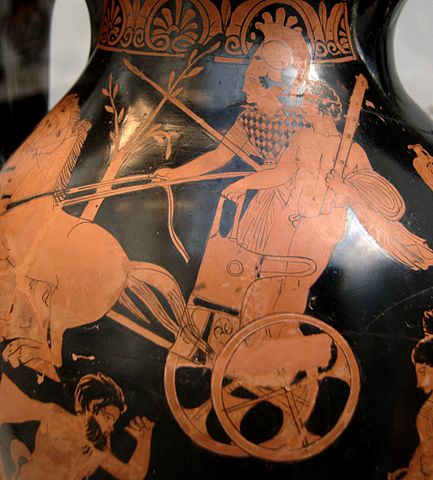
Image: Athena carrying Heracles in her chariot, photograph by Bibi Saint-Pol via Wikimedia (Staatliche Antikensammlungen, Berlin; 420-400 BCE; red-figure pottery; by the Cadmus Painter)

Edited for consistency in spelling

History for Writers is a weekly feature which looks at how history can be a fiction writer’s most useful tool. From worldbuilding to dialogue, history helps you write. Check out the introduction to History for Writers here.

History for Writers Compendium: 2016

History for Writers explores world history to offer ideas and observations of interest to those of us who are in the business of inventing new worlds, cultures, and histories of our own. Here’s where we’ve been in 2016:

Living historically

Thinking historically

Race and identity

Language

Special Series:

Recommended Reading

Fantasy religions

Connections

Travel

Architecture

Join us in 2017 for more history from a SFF writer’s perspective.

History for Writers is a weekly feature which looks at how history can be a fiction writer’s most useful tool. From worldbuilding to dialogue, history helps you write. Check out the introduction to History for Writers here.

In Which Our Heroes Go Clothes Shopping

161212dyingOur Heroes wake up naked and cold with the chickens in the alley out back of the inn after being on the losing side of a tavern brawl. Clearly this is part of the Call to Adventure that must not be denied, but first things first: they need clothes. What do they do?

We today live in an industrialized world in which consumer goods like clothes are readily available. If you need something to wear, it’s easy enough to go into a store and buy something. Unless you’re shopping for high fashion, it probably won’t cost you too much, either. All of this is possible because of factories, global transportation networks, and a modern economy, but none of these things existed before the last couple of centuries. Any time before then, buying clothes was a very different experience.

To begin with, a lot of clothing wasn’t bought at all. In many pre-industrial societies around the world, producing and maintaining the family’s clothing and other textile goods was one of the main occupations of the household. Although textile production was in many cultures traditionally counted as women’s work, men were involved in it, too, at every stage from shearing sheep or gathering flax to delicate finish stitching.

Only specialty items requiring expert work, like gloves, boots, hats, etc., were routinely made by professionals. As market economies developed, specialty processes, like dying and fulling, were also increasingly outsourced to professionals, but everyday wear was still largely made at home. (As a useful point of reference for the development of specialty production, notice how family names like “Glover” or “Dyer” are much more common than, say, “Shirter” or “Socker.”)

Of course, there were always people who didn’t have a household around them to help make clothes. Soldiers and travelers far from home might need to replace damaged clothing or buy new gear suitable to the local climate. In any reasonably well-developed settlement, those who needed to purchase clothes probably could. They might get lucky and find someone willing to sell off an older set of clothes, or, for the right price, they might be able to get someone to sew them up a new set to order, but the chances of finding a clothing shop with new garments ready to wear were very slim.

So, supposing Our Heroes do find someone with clothes to sell, what are they going to cost? It’s hard to estimate prices in pre-modern economies, but here are a few points for reference:

The Roman emperor Diocletian, during a period of economic crisis, tried to stabilize the Roman economy by issuing an edict dictating wages for many different kinds of workers and prices for a variety of commodities and services. Diocletian’s edict wasn’t very effective in practice, but it’s a useful snapshot of what someone in antiquity thought were reasonable wages and prices. So, for example, the edict prescribes a price of 2,000 denarii for a common shirt. Compare that with the daily wages of 25 denarii for a farm laborer, 50 for a carpenter, or 75 for a skilled terra cotta artist. Even a well-paid artisan would have to spend most of their wages for a month just to buy a shirt. Depending on how rich Our Heroes are, new clothes could set them back a lot of money.

Now, Diocletian’s edict was only one politician’s idea of what things should cost, not a record of what they actually did cost. For a glimpse of actual prices we can look to some of the letters from Vindolanda, a Roman fort in northern Britain, where some everyday letters and paperwork from the fort were preserved by chance in the local soil. Some of these documents mention tunics priced at 3 denarii, boots for 3.5 denarii, and cloaks for 11.5. These goods sound a lot cheaper, but, in this period before the economic crisis that Diocletian was trying to deal with, wages were a lot lower, too. Soldiers at the time were paid 300 denarii a year, less than a denarius a day, a portion of which was held back to cover expenses. At those levels, a soldier would still have to spend most of his pay for a week to buy a tunic, or half a month to buy a cloak.

What was true in Rome was true in most other parts of the pre-modern world. There was no just nipping into a shop to buy a new set of clothes. Even where you could find clothes for sale, they were not a small expense. Outfitting one of Our Heroes in a full new set of clothes could well cost them most of their income for a year.

Image: Linen working via Wikimedia (14th c.; paint on parchment)

History for Writers is a weekly feature which looks at how history can be a fiction writer’s most useful tool. From worldbuilding to dialogue, history helps you write. Check out the introduction to History for Writers here.
The Attack on the Hermas

161114hermaA strange thing happened one night in ancient Athens. This incident, the attack on the hermas, provides the background for my short story “How I Saved Athens from the Stone Monsters,” in the collection Hidden Youth. While there are no stone monsters in the actual history, it’s a fascinating story in its own right.

It was the spring of 415 BCE. All around the city—at crossroads, in marketplaces, in front of houses and temples—stood square stone posts carved with human heads on top and crude penises in front. These were the hermas, stones sacred to the god Hermes that the Athenians believed protected their homes and city against bad fortune. The people of the city woke up one morning to discover that the hermas had been smashed up in the night.

Now, in any city, you would expect people to be upset to wake up to widespread vandalism, but Athens was no ordinary city and these were no ordinary times. Athens had been at war with Sparta for more than a decade. A war that both sides had expected to be quick and decisive had turned into a long, unwinnable slog. The Spartans had repeatedly ravaged the Athenian countryside. Farms had been burned and vineyards wrecked. Behind the walls of Athens, plague had slaughtered the refugees who sought shelter from the Spartans. Athens had not seen such suffering since the Persian army of Xerxes captured and burned the city more than half a century before.

In the midst of the destruction, democracy and social cohesion suffered. The poor farmers from the countryside whose homes and fields got burned lost everything while the rich merchants and landowners in the city were mostly unaffected. The leading general Pericles’ strategy of pulling back behind the walls and sending out the fleet to raid the Spartan coast felt slow and cowardly to people used to the swift clash of the hoplite phalanx. Indeed, it was the solidarity of standing shoulder-to-shoulder, row upon row in the phalanx, regardless of family or property, that grounded the Athenian democracy, but those who served as hoplites were now helpless behind the walls. When the plague struck, already weakened social bonds were snapped as everyone looked out for themselves and people who felt sure they were going to die anyway indulged in every impulse and vice.

In times like this, when social solidarity was strained by factional and regional conflicts, many Greek cities had turned to tyrants: aristocrats who held themselves out as champions of the people and leveraged popular anger as a way to propel themselves into power. Athens itself had had tyrants, in the decades before the wars with Persia. Wherever tyrants had risen, they crushed their rivals and abused their power until finally they were driven out and replaced with new, more balanced forms of democracy. The same had happened in Athens, but the time seemed ripe for a new tyrant to rise and sweep away the democratic system with the anger of a frustrated and fed-up populace.

A new leader had already arisen to promise the people of Athens a better future. Alcibiades, a rich and flamboyant aristocrat with time on his hands, had pushed for a major expedition to sail to Sicily and attack Syracuse. Syracuse had largely stayed out of the war between Athens and Sparta, but they had cultural ties to Sparta and were a major exporter of grain, so there was a fear that Syracuse might decide to step in and shore up Sparta against Athenian raids. The people of Athens were enthusiastic about the prospect of getting out of the city for a fight they could win. They looked forward to looting the treasuries of Syracuse and coming home victorious and rich.

Then the hermas got smashed.

Suspicion fell immediately on Alcibiades. It seemed like the sort of thing he would do. He was well known for holding raucous drinking parties with other rich young men and had a reputation for flippancy and arrogance. He was a student of Socrates, that annoying old man who refused to participate in the democratic assembly but liked to ask people tricky questions and make them look stupid. If anyone in Athens wouldn’t respect the hermas and would think that running around town at night doing some property damage would be a good joke, it would be Alcibiades.

There was some legal wrangling about whether to bring charges against Alcibiades at once or let the expedition go ahead as planned, but the upshot was that the expedition went out and Alcibiades fled Athens to find refuge among his friends in Sparta.

This all may seem like an overreaction to what amounts to little more than the ancient Athenian equivalent of some frat boys going on a bender and playing a little mailbox baseball, but context is everything. It wasn’t just that the people of Athens valued their good luck statues. This sort of flippant disregard for tradition was exactly what one expected from a tyrant. The hermas may have been old-fashioned relics of simpler times, but so, in its way, was the democracy. In the Athenian assembly, the will of the people was the law, and if it was the will of the people to have crude statues in front of their houses, to disrespect that choice was to disrespect democracy itself.

Alcibiades was exactly the sort of person who aimed at tyranny: rich, idle, and dismissive of tradition. The smashing of the hermas made those qualities obvious in a way that no one could ignore.

Thoughts for writers

It’s easy to look at the past and be perplexed by the weight people attached to symbols and minor events, but it is context that gives importance to those things that seem trivial to us. In other times, the attack on the hermas would have been a case of petty vandalism, a scandal to be argued over in the marketplace for a few days and in time forgotten. Because of the times in which it happened, it became the tangible symbol of something far more perilous: a threat to Athenian democracy itself.

This is one of the challenges of worldbuilding. Making a world that works differently from our own means creating contexts in which things that seem trivial to us carry profound weight. The power of such small things depends on the context in which they occur. The smashing up of the hermas might not seem important to us, just like no one from a hundred years ago would grasp the significance of yellow stars and shattered shop windows, or a woman refusing to give up her seat on a bus. Creating such moments—and giving our readers the context to understand them—is part of how we make our worlds feel real.

Image: herma, photograph by André Frantz via Wikimedia (Siphnos; c 520 BCE; marble)

History for Writers looks at how history can be a fiction writer’s most useful tool. From worldbuilding to dialogue, history helps you write. Check out the introduction to History for Writers here.