I have these white cotton home trousers that Eppu made for me years ago. They are very comfortable, and I wear them all the time when just hanging out at home. I wear them so much, in fact, that they are starting to get worn through in places and need repair. I got a rip at the corner of one pocket opening, and here’s how she fixed it.
Eppu is good at making invisible repairs to our clothes, but she decided to try something different this time. Instead of hiding the patching, she made it a feature. There’s a recent trend for visible mending, including use of the Japanese stitching technique called sashiko, and this was one of Eppu’s test pieces to try out the approach. Just a little experiment to see how it would come out and how it would wear on a piece of clothing that gets used so much.
I think the results are great. Now I’ve got the sun in my pocket, all day long!
Image by Eppu Jensen
How It Happens looks at the inner workings of various creative efforts.
This coming weekend is Ropecon, the major role-playing convention in Finland and one of the highlights of our year. Eppu and I always attend, whether it’s to play games, run games, catch up with friends, attend talks and workshops, or disco the night away.
As part of our Ropecon routine, once the weekend is over and we’ve recovered a bit, we compare notes and write down things we’ve learned from the experience to make the next year’s con easier, more manageable, or more fun. Here’s a few of the things I’ve learned over the years that have made my con experience better.
Since we live close enough to the convention site to go there and back again each day, here are some handy ways to manage home life for the weekend:
Make one big pot of soup or some other warm dish (chili, borscht, beef stew, etc.) and one big bowl of salad to leave in the fridge over the weekend. We can dip into one or both whenever we’re at home and need a low-effort meal.
Run and empty the dishwasher the morning of the first day of the con. Then just pile in dishes as you use them over the weekend and run it when it gets full and you have time.
Have a big piece of paper that says CLEAN on one side and DIRTY on the other; leave it on top of the dishwasher with the appropriate side up. When you’re half asleep in the morning and in a rush to get to your first panel, it saves time and brain power to not have to stop and think about when the dishwasher was last run or emptied.
Have a good store of salty snack foods on hand (chips, pretzels, peanuts, etc.), because you will be sweaty and dehydrated and need a quick electrolyte restorer.
Wash and chop a big pile of vegetables like cucumbers, carrots, cherry tomatoes, peppers, etc. on the day before the con for easy-to-grab healthy snacking, too.
Some advance prep also makes the at-con experience easier:
Make a daily schedule for the con with an hour-by-hour breakdown of what you want to do, including room numbers. If you’re not sure what you’ll be doing at any given time, write down all the possibilities you’re considering. Share this schedule with anyone you want to meet up with at the con, so they have an idea of where to look for you and when you’ll be free.
Write out your contact information (and your partner’s) and make that your phone lock screen for the weekend.
Leave a comfortable change of clothes in the bathroom at home every morning before you leave for the con, since you might want an immediate shower and change as soon as you get home.
Leave an empty drying rack in the bathroom, too, so you have an easy place to hang sweaty gear to dry before putting it in the laundry.
And some notes for making the con experience as fun and comfortable as possible:
If you have one warm, full meal a day, you can get through the rest of the day by snacking when you have free time. Make sure to drink plenty of water as well.
Pack a change of clothes in a bag with a zipper closure and leave that at the coat check in case you need to change during the con. Include a dry wash cloth in a plastic bag, so you can wipe yourself down if necessary.
There will always be someone at a game who needs to borrow dice, so bring an extra set for lending out.
For games that I run, print up a sign with the game name in big, visible letters that can stand on the table so players can easily find me.
If you’re on your way to Ropecon or have another con in your future, I hope you have an easy and wonderful time!
How It Happens looks at the inner workings of various creative efforts.
The Greek historian Herodotus tells us a story about the death of the Persian king Cyrus that centers a fascinating female character, Queen Tomyris of the Massagetae.
Cyrus, king of Persia, wanted to expand his empire eastward into the lands of the Massagetae, a nomadic people ruled by their widowed queen Tomyris. Cyrus at first proposed marriage to Tomyris as a ruse for conquest, but she refused him. He then mustered his army and prepared to invade.
Cyrus’ adviser Croesus cautioned Cyrus against trying to fight the wild Massagetae, but since Cyrus was determined to proceed, Croesus proposed a stratagem to overcome them. Following Croesus’ advice, Cyrus led his army into Massagetae territory, then had them make camp and prepare a sumptuous feast with plenty of wine, but they did not eat it. He then withdrew with most of his army, leaving behind his weakest soldiers.
When a part of the Massagetae army led by Tomyris’ son Spargapises came upon the Persian camp, they easily defeated the Persian troops there. Then they saw the feast. Being used to living rough, they had never seen such an amazing spread of food before, so they immediately sat down and filled their bellies. When the feast had made them all drunk and sleepy, Cyrus led the rest of his army back to attack them, easily defeating the Massagetae warriors and capturing Spargapises.
When Tomyris learned of her people’s defeat and her son’s capture, she sent a message to Cyrus proposing a peaceful end to the conflict: if Cyrus returned Spargapises safe, Tomyris would allow the rest of Cyrus’ army to retreat from her lands unharmed. If he refused, Tomyris promised to satisfy his desire for blood. Cyrus refused, and when Spargapises came to his senses and found himself a prisoner, he killed himself.
Tomyris then marshaled the rest of her people and fell upon the Persians. The fighting was intense, but at the end of the day the Persians were routed and Cyrus himself was killed. Tomyris found the body of Cyrus and thrust his head into a wineskin full of blood, fulfilling her promise to slake his thirst for blood.
It’s a good story, as many of Herodotus’ are, but what are we to do with this as historical evidence? Did any of these events happen? Did Tomyris even exist?
We have reasons to be skeptical. No other historian mentions Tomyris, not even other historians who wrote about the life of Cyrus. The story Herodotus tells is full of dramatic moments that sound like they come from a Greek tragedy rather than from history. Cyrus figures as the tragic hero, a noble leader driven by ambition to attempt something that wiser men warn against and meeting an ironically fitting end. Tomyris’ line about sating his thirst for blood is a bit too on-the-nose to be real. Does anything in this story hold up?
The Massagetae at least were a real people, known from plenty of other sources, one of many nomadic cultures of the Central Asia steppes. Ancient sources are uncertain about their location, placing them anywhere between the Caspian Sea and the Altai Mountains, although whether this variation reflects the migrations of a mobile people, smaller sub-groups joining and leaving a tribal coalition, or just the ignorance of Mediterranean writers about the geography of Central Asia is hard to say. Among many ancient steppe cultures, women could wield both weapons and power. The idea that Cyrus died while leading an unsuccessful campaign against steppe nomads is likely to be true, and it is plausible that those people might have been ruled by a woman.
The rest of Herodotus’ narrative has more to do with Greek literature and oral tradition than with historical events, but that narrative also serves a larger point for Herodotus. Many powerful and wise women feature in Herodotus’ account of history. Tomyris is the first whose story he tells in detail, but she is followed by many others in both large roles and small, with Artemisia of Halicarnassus, who commanded her own ships in Xerxes’ invasion of mainland Greece, among the most prominent. Tomyris in some ways prefigures Artemisia: a wise warrior queen who gives the Persian king a chance to save himself from defeat and embarrassment, though he fails to heed her.
Tomyris appears near the beginning of Herodotus’ history, playing a role in the life of the first Persian king; Artemisia comes in at the end, taking her place next to the last Persian king to feature in Herodotus’ text. The repetition of the theme of the wise warrior woman at both the beginning of Herodotus’ history and at the end gives it a particular weight and prompts us to consider what point the historian was making. Herodotus’ text is layered with subtle messages, and many of the stories he tells have some applicability to the audience he was writing for. Herodotus lived and worked in Classical Athens, a society in which the status of women was low.
Women’s participation in Athenian social and political life was a casualty of democracy: since Athenian democracy was based on solidarity between citizen men across class lines, as manifested in all-male institutions like the voting assembly and the hoplite militia, the stronger the democracy was, the more women were pushed aside. Herodotus was a fan of democracy. His text points out how democracy, and especially the Athenian version of it, gave the Greek allies the strength and resilience to resist invasion by the monarchic Persian Empire. At the same time, he also seems to have been warning his Athenian audience that by leaving women out of public life, they were squandering one of their most valuable resources.
While contemporary Greek philosophers and playwrights were denigrating women’s capacity for rational thought and scoffing at the idea of them playing a role in politics, Herodotus had a different message. In his narrative, women can both lead military forces to victory and give sound advice on political matters, two areas of life that Athenian women were barred from. Herodotus’ women keep their heads in a crisis, and powerful men would be better off if they listened to what women told them.
Tomyris may be a fictional or heavily fictionalized character, but she helps us understand a critique of Athenian democracy as framed by someone who both lived with and admired it.
Image: “Head of Cyrus Brought to Queen Tomyris” via Wikimedia (Museum of Fine Arts, Boston; c. 1622-1623; oil on canvas, by Peter Paul Rubens)
History for Writers looks at how history can be a fiction writer’s most useful tool, from worldbuilding to dialogue.
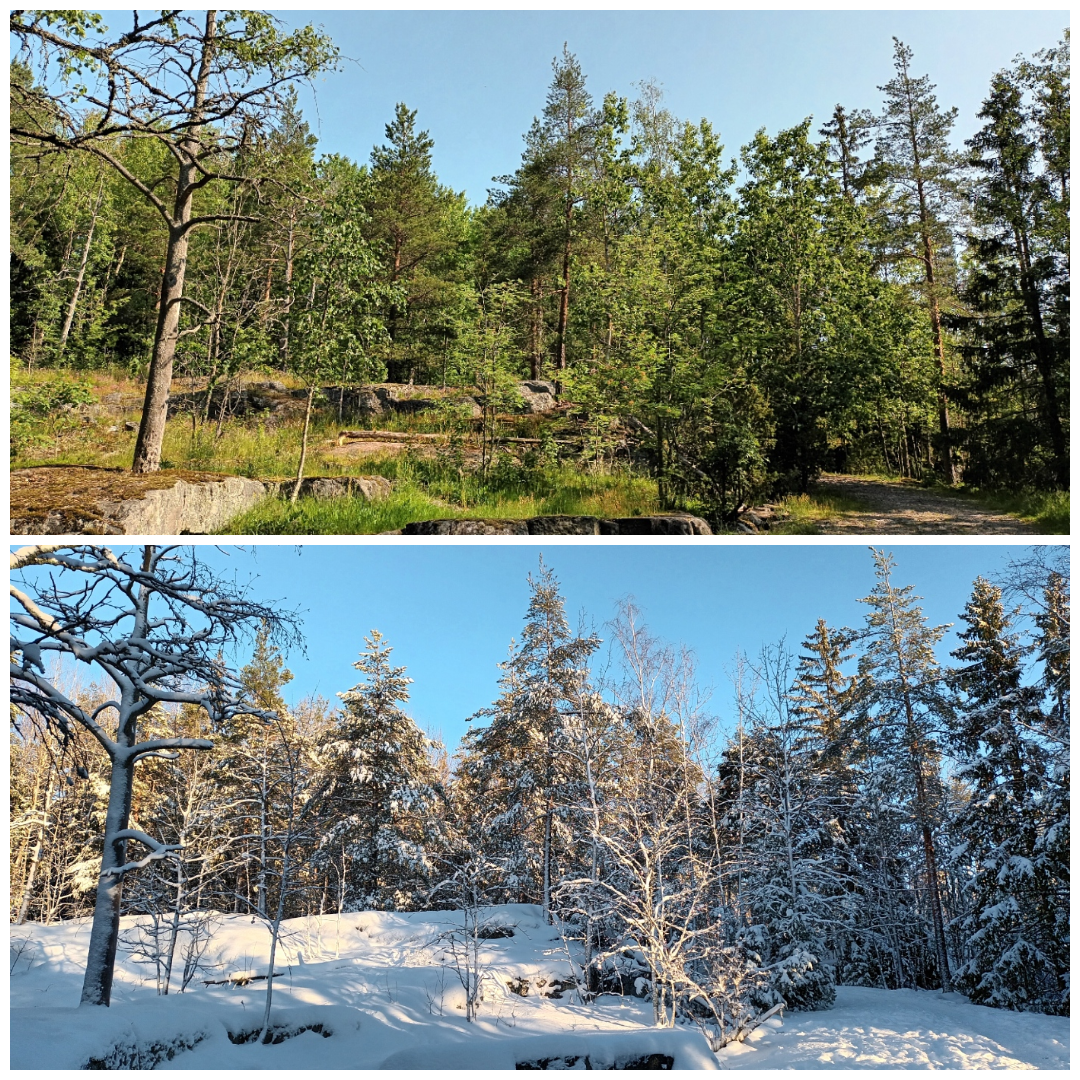
One of the things I love so much about living in Finland is the light. In every time of the year, the sunlight is beautiful, but the winter light and the summer light are so different from one another that it can be striking to see.
One day last winter we had a particularly beautiful day of clear skies and sunlight after a big snowstorm. I tramped out in our local woods and took a few pictures of the winter light on the snowy trees. Now that midsummer is here, I went back and took pictures of the same scenes to compare the summer and winter light.
Every season has its own special beauty.
Images by Erik Jensen
Out There highlights intriguing art, places, phenomena, flora, and fauna.
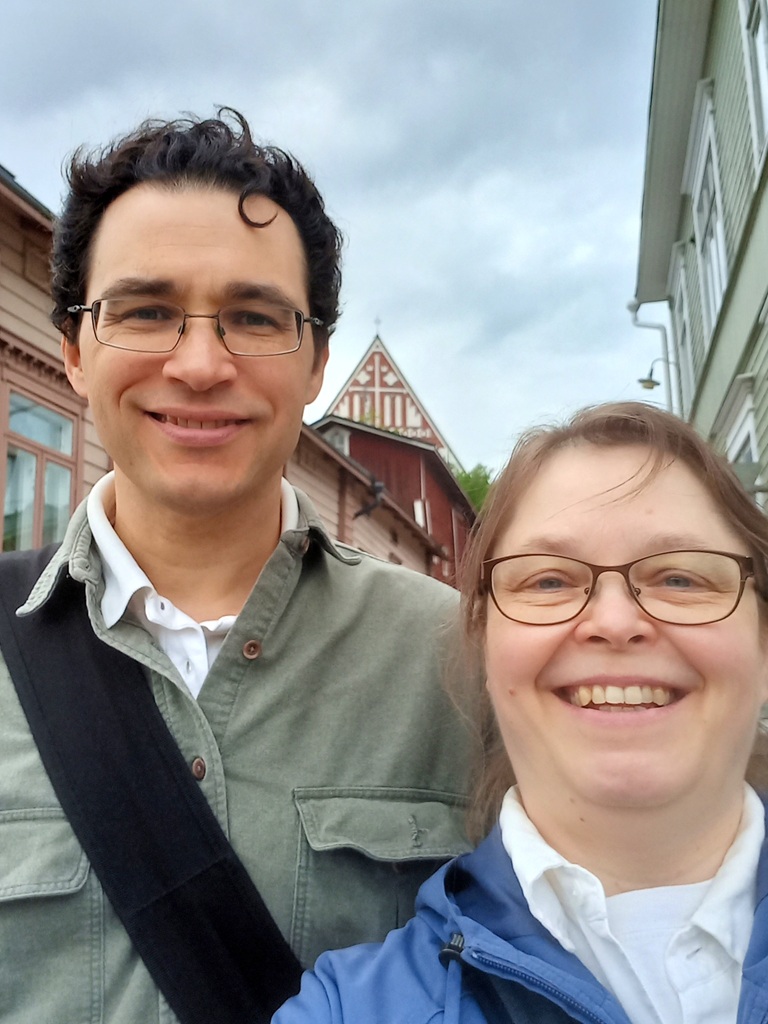
We started this blog together back in June 2015 with no grand ideas or plans, just wanting a place where each of us could post about the things we geek about and where we could post jointly about the things we geek about together. We had no idea what the next decade would bring us, but it’s been a fun ten years, and we’re still at it!
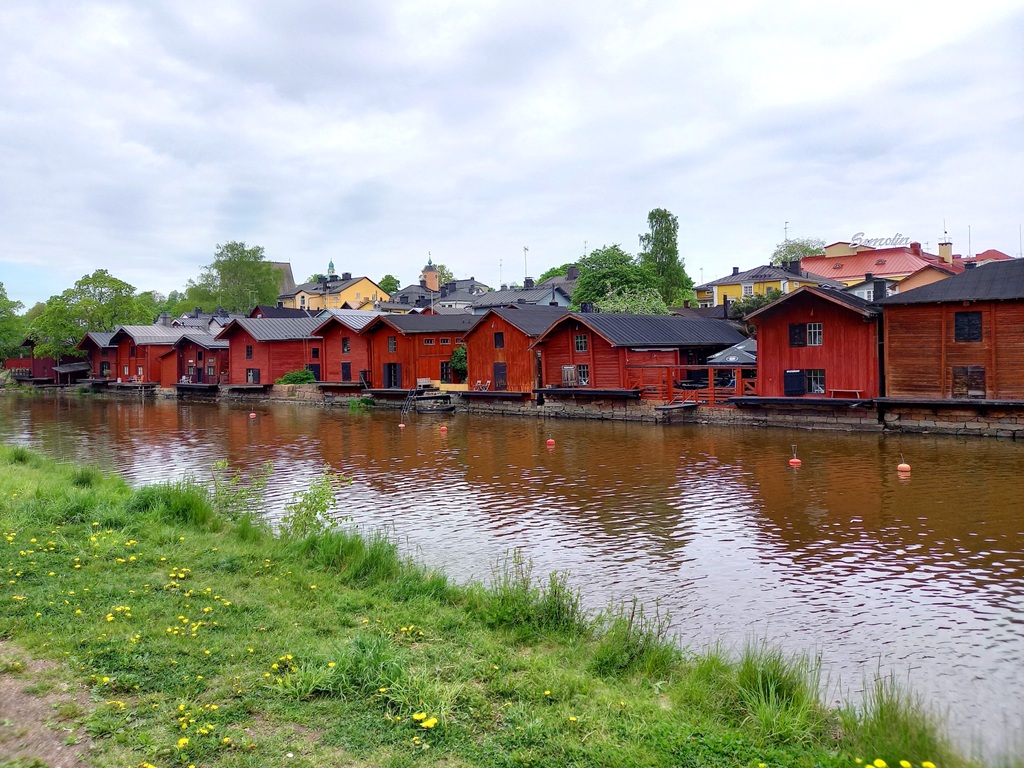
For a little celebration, we decided to take a short trip to a place we’ve both been interested in visiting for a while: the old town of Porvoo. Porvoo is a small city on the Finnish southern coast a little to the east of Helsinki. It’s like most Finnish cities except for its remarkable old town.
A large portion of the northern half of the city is made up of well-preserved colorful old wooden houses along cobblestone streets, all surrounding a medieval church.
While many of the house exteriors are legally protected, it’s not a museum or living history exhibit, just a part of town where ordinary folks and families live. Walking around there, though, is a little bit like stepping back in time.
Whatever brought you to Co-Geeking, we hope you’ve enjoyed our work. We look forward to another ten years, and who knows how many more!
The sculpture of the death Laocoon and his sons is one of the mot famous works of ancient art. Carved from several pieces of marble that were fitted together with metal pins, it represents a dramatic moment from the legends of the Trojan War. When the Greeks carried out their ruse, pretending to withdraw from Troy but leaving behind a giant wooden horse, the Trojans were skeptical. While some Trojans wanted to bring the horse within their walls, the priest Laocoon warned the Trojans not to trust the Greeks. The god Poseidon, who favored the Greeks, sent a serpent from the sea to kill Laocoon and his sons, which convinced the Trojans to reject Laocoon’s advice and bring the horse behind their walls, unwittingly sealing their city’s doom.
This marble statue, depicting that dramatic mythological moment, has a dramatic history of its own. It was found in pieces in the soil of an Italian vineyard in 1506 and quickly gained attention. One of the first people to see it was the artist Michelangelo. Classical scholars noted that the Roman author Pliny had described with admiration a similar statue of Laocoon, and believed that this work was the very one that had impressed Pliny. The fragments were acquired by Pope Julius II for display in the Vatican palace. Several of the major artistic names of the Italian Renaissance worked on restoring the fragments and carving replacements for parts that were missing, among them not only Michelangelo but Raphael and Bramante.
In some ways, the Laocoon was the perfect sculpture for time in which it was discovered. Interest in relics of Greco-Roman art was growing, and the rich and powerful were starting to regard the acquisition and display of antiquities as a useful mark of status. Among those antiquities, large-scale marble sculpture was the most highly prized. The belief that the Laocoon statue was the very same one that Pliny had praised conferred upon it a special aura of authenticity. It was not just any ancient statue, but an ancient statue with a known origin and history, whose quality was vouched for by one of the great names of Roman literature.
At the same time, while the authentic antiquity of the sculpture was crucial to its value as a collector’s prize, it was also particularly suited to contemporary tastes. The fine delineation of the figures’ musculature in a pose of high emotional drama was perfectly adapted to the interests of artists of the Italian Renaissance. Even though it was a product of pagan Rome, the subject and its execution had resonances for a Christian audience. The agony of Laocoon’s body in a moment of divine intervention made a parallel to the agony of Jesus on the cross. The slithering serpent attending on a moment of fateful choice echoed the tale of Adam and Eve. For a Christian pontiff who was also a powerful political figure and a connoisseur of Classical art, it is hard to imagine a more perfect sculpture.
(The sculpture was so perfect for Julius, in fact, that one scholar has suggested that it was not an actual ancient sculpture but a forgery by Michelangelo himself. The evidence for this idea is weak, however, and it has not found wide acceptance among scholars.)
Yet, as perfectly adapted as the Laocoon sculpture was to the time in which it was discovered, times change, and the sculpture has changed with them. Since the Pope’s artists first reassembled the sculpture pieces and created their own replacements for the missing parts, the Laocoon has not remained the same. Over the past five centuries, artists and restorers have repeatedly gone back to the sculpture and changed it, readjusting the positions and postures of the figures, creating new replacements, and treating the surface. The position and postures of the two smaller figures has been changed. The angle of the main figure’s arm has been revised. Traces of paint were cleaned away to make the marble gleaming white. The Laocoon that we can see today in the Vatican Museums is, in important ways, not the same sculpture that came out of the vineyard soil in 1506.
Whenever we look at an artifact from the past, we must bear in mind that what we are seeing is usually not what the object originally looked like. The Laocoon statue is perhaps an extreme case, given how much attention it has garnered since it was first excavated, but we always remake relics of history to better fit what we in the present think the past should look like. Julius and his artists wanted a complete and glorious masterpiece of Classical art, so they made one out of the pieces from the vineyard. Today we want an instructive and historically accurate piece of sculpture, so we have removed many of the replacement pieces carved by the pope’s artists and rearranged the original pieces in ways that we think are more authentic. Yet since long before 1506, no one has seen what the Laocoon sculpture originally looked like, and no one in the future ever will.
Thoughts for writers
Just as Michelangelo and his fellow sculptors reimagined a relic of the past, whenever we look to the past to inspire our writing, we are always creating our own version of it for our own needs. However much we may seek and value historical accuracy, we are telling stories in and for our own times; they will always reflect what we believe and value about ourselves. This is a strength of fiction and fantasy, not a weakness. The important thing is to be thoughtful and purposeful about how we use and reimagine history when we look to it for inspiration and not let our unexamined, unthinking biases shape how we understand it.
Image: Laocoon and his sons, photograph by Wilfredo Rafael Rodriguez Hernandez via Wikimedia (found at Rome, currently Pio Clementino Museum, Vatican; 1st c. BCE-1st c. CE; marble; believed to be by Agesander, Athenodorus, and Polydorus of Rhodes)
History for Writers looks at how history can be a fiction writer’s most useful tool, from worldbuilding to dialogue.
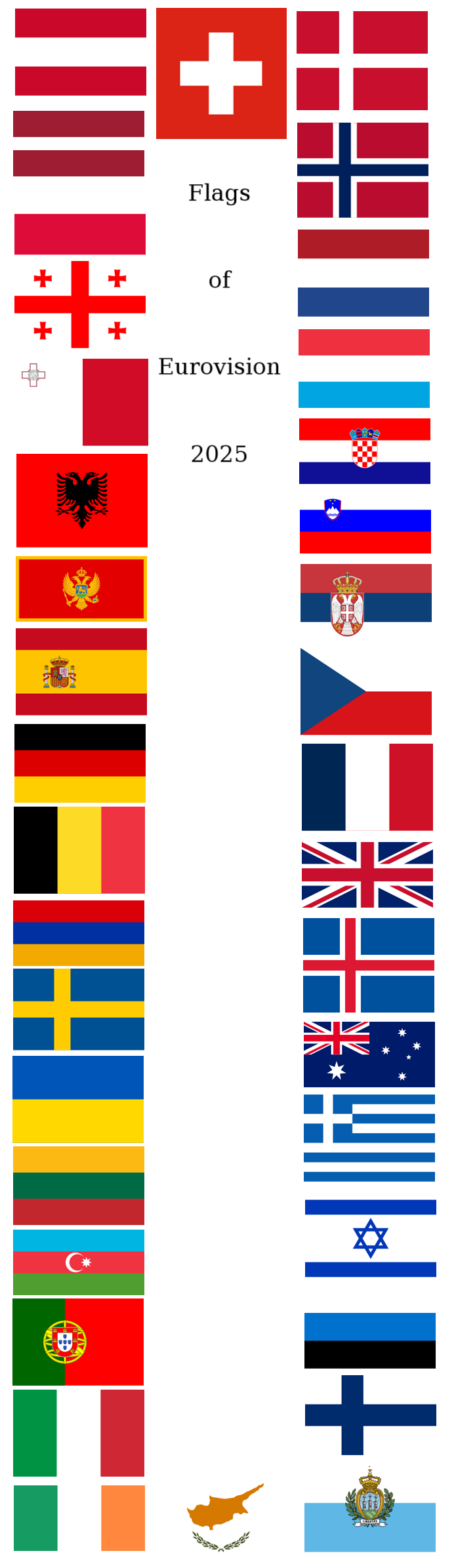
Every year when we watch the Eurovision Song Contest, I find myself distracted from the music and stage shows by all the European flags. I enjoy seeing all the different combinations of colors and designs, and every year I find myself thinking: “I wonder if I could organize the Eurovision flags in such a way that they flow from one to the next with similar colors and patterns?” Well, this year I finally decided to try it, so here it is! My Eurovision 2025 flag carousel, starting with this year’s host, Switzerland, and circling through the flags of all the other participating countries!
Why did I make this? No good reason. Just because I wanted to.
Should you care? I really can’t think of any reason why you would.
But if you’re a fellow fan of flags, I hope you enjoy it!
Do not be too sad, Sam. You cannot always be torn in two. You will have to be one and whole, for many years. You have so much to enjoy and to be, and to do.
– Frodo, in The Return of the King
I recently reread The Lord of the Rings for the first time in over a decade. It is also the first time I’ve read the book since we moved from the US to Finland. This line, from Frodo to Sam before his departure from the Grey Havens at the end of the novel, was always a beautiful line, but it hit me harder now.
Eppu and I have always lived a life torn in two. Coming from two different countries on different continents, we always knew that to be together, one of us would have to be far away from the people, places, and things we have grown up with and loved. For many years, she was the one who was far from home, as we lived in the US for my studies and work. Since we moved to Finland a few years ago, now I am the one whose familiar places and people are far away.
You might think that the romance between the human Aragorn and the Elf Arwen would speak to me the most, but their love story plays out on the scope of high mythology, beautiful but too remote to relate to. The simple words of a Hobbit, wishing healing and hope to a beloved friend, struck my heart.
We cannot always be torn in two. Love makes us one and whole.
Tolkien, J. R. R. The Lord of the Rings. Harper Collins edition, 1994, p. 1006.
Serving exactly what it sounds like, the Quotes feature excerpts other people’s thoughts.
Bara bada bastu by KAJ is the song representing Sweden in the Eurovision Song Contest 2025, and it’s been shaking things up in Sweden, Finland, and the Eurovision bubble as a whole. If you haven’t been following the run-up to Eurovision 2025, you may not know the story of Bara bada bastu and why it matters so much to so many people. Here’s a short introduction to get you caught up.
Finland, Sweden, and Swedish-speaking Finns
Finland and Sweden have a long and complicated history, grounded in the fact that what is today Finland was conquered by Sweden in the Middle Ages and ruled as part of the Swedish kingdom for centuries. Until recently, Finland was largely a poor and undeveloped area compared with metropolitan Sweden. The elite in Finland were traditionally Swedish transplants or had close social ties to Sweden. As a result, the typical Finnish stereotype of a Swede is a stuck-up, rich dandy, while the Swedish stereotype of a Finn is an uncultured, violent drunk. It is an old joke in Finland to say (of a hockey game, or some other equally serious contest) “I don’t care who wins as long as Sweden loses.”
Relations are not purely hostile. The two countries also have a history of cooperation and mutual support. Sweden supported Finland’s self-defense against and recovery from Russian invasion in World War II, and it has long been a commonplace that Finland is Sweden’s first line of defense. Despite this solidarity, there is still a lingering antagonism. When Finland and Sweden joined NATO in response to Russian aggression in Ukraine, it was important to both sides that they join together. It was also important to Finns that Finland was accepted into the alliance first.
Caught in the midst of this sibling rivalry are the Swedish-speaking Finns. Finland has a minority population who speak Swedish as their mother tongue, mostly concentrated in the cities in the south and along the western coast and islands. They make up about five percent of the population. Some are descended from the old Swedish aristocracy, but most of them these days are just ordinary folks, not much different from other Finns. Because of this population and Finland’s historical ties to Sweden, Swedish is the second official language in Finland, and Finnish-speakers are required to learn Swedish in school (just as Swedish-speakers are required to learn Finnish). Many Finnish-speaking Finns resent this language requirement, and some turn that resentment against their Swedish-speaking neighbors. Swedish-speaking Finns are stereotyped in much the same way as Swedes: rich, snobby, and stuck-up. While Swedish-speaking Finns are subject to this sort of low-level resentment and caricaturing at home, they are practically invisible to the rest of the world. Even in Sweden, not everyone knows that some of their Finnish neighbors speak Swedish as their first language.
The Eurovision Song Contest
Leaving aside the world of frosty Finns and snooty Swedes for a moment, let me introduce you to the next thing you need to know about: the Eurovision Song Contest. The Eurovision Song Contest (commonly just called Eurovision) is an annual multinational extravaganza in which countries from around Europe and beyond (G’day, Australia!) compete in putting on musical performances. The exact format and rules have changed frequently since the contest was first held in 1956, but if you’re not up on Eurovision, here are the essentials you need to know.
Every participating country sends one stage act with a song (not longer than three minutes).
Every country chooses its competing act in whatever way it likes. Many production and performance teams are international, and while at least some members of the overall team usually come from the country they are representing, nothing requires the artists appearing onstage to come from or be in any way connected with that country. (Write this down! It’ll be important later!)
The participating acts compete against one another in two semifinals. The viewing audience votes a set number of acts from each semifinal into the four-hour grand final, where they join a small set of acts from countries who get an automatic place by paying the major costs of the broadcast (currently: France, Germany, Italy, Spain, and the United Kingdom).
After all the acts have performed in the grand final, two sets of votes are collated. In each participating country, a jury made up of music industry professionals awards points to their top ten favorite songs. The top song gets 12 points, the second 10, and rest from 8 down to 1. The viewing audience in each country also gets to vote on their favorite songs, with points awarded in the same way. (Neither juries nor audience are allowed to vote for their own country.)
The points are announced onstage in dramatic fashion, and the country with the most combined points wins.
Traditionally, the winning country each year hosts the next year’s contest, although exceptions are sometimes made (such as in 2023, when Ukraine won the contest, but because of the ongoing war, the runner-up, United Kingdom, stepped in as host).
The Eurovision Song Contest has been a venue for good-spirited competition between nations, using music to foster both national pride and international solidarity in much the same way the Olympic Games use sports. It has also created its own subculture with traditions, factions, customs, and quirks of its own.
One of the long-running truisms of Eurovision is that juries and audiences tend to favor different kinds of songs. Conventional wisdom says that juries like serious songs that demonstrate artistic virtuosity and range, while audiences like wacky stage hijinks, fun gimmicks, and a danceable beat. Neither assumption is entirely borne out by the voting results, but Eurovision acts often try to court one set of votes or the other. The way points are divided often means that a song that would have won on the strength of audience votes doesn’t win because the juries favor something else, sometimes to ire of some fans who feel their favorite was cheated.
Finland has traditionally done quite poorly in Eurovision. The country has only one win to its credit, 2006, when the monster metal band Lordi unexpectedly pulled off a win in what is seen as the audience rebelling against a contest they felt had grown stale with too much bland, predictable pop music.
Finland has become a semi-reliable source of audaciously weird contributions to Eurovision, most of which fall absolutely flat in the voting results, but which appeal to some parts of the audience by standing out against a background of highly-polished pop.
Sweden, on the other hand, is a Eurovision powerhouse, with a current total of seven wins to its credit. Highly-polished pop is Sweden’s Eurovision bread and butter, and they pull it off better than most other countries, earning frequent recognition from juries. Sweden is home to a major pop music industry, and Swedish composers, lyricists, and choreographers are frequently found working on other countries’ Eurovision entries.
Recent Eurovision history
With the stage set, we turn to the recent history of the Eurovision Song Contest to see how these deeply-rooted forces have played out to lead us to this year.
In 2012, the Eurovision Song Contest was hosted in Azerbaijan and won by the Swedish singer Loreen with her song Euphoria. While Euphoria leaned a little to the weird side for Sweden, it was still highly produced and sung in English, making it easy for an international audience to follow. Euphoria swept both the audience and the juries.
Sweden took home the trophy again just three years later in 2015, when Austria was hosting. The singer Måns Zelmerlöw won with his song Heroes. Like the usual Swedish entry, Heroes was an immaculate pop anthem with a clever stage show, but it caught the heart of Europe. While Italy and Russia did better in the audience vote, Heroes soared with the juries, and Måns’s telegenic charisma won over even those fans who didn’t place Sweden first.
The next year, 2016, Sweden hosted the contest. Måns returned to the stage not just as a performer but as co-host of the festivities along with comedian Petra Mede. The 2016 show was carried off brilliantly and established Måns as not just a beloved past winner but one of the contemporary faces of the contest. He reappeared in several following contests as part of the general entertainment and the interval acts that fill up time while votes are counted. (2016 also gave us Peace Peace, Love Love, a loving parody of the contest itself, performed by Petra and Måns.)
In the following years, Finland and Sweden continued their usual patterns. Swedish songs routinely scored well with juries, and Finland’s songs occasionally excited some fans while mostly ending up near the bottom of the vote tallies. Then came Käärijä.
Finland chooses its Eurovision act with a televised national contest called Uuden Musiikin Kilpailu (New Music Contest, abbreviated UMK). In 2023, a young Finnish rapper/singer known as Käärijä had a runaway victory at UMK with his song Cha Cha Cha and quickly became a sensation among Eurovision fans. Cha Cha Cha was a challenging song: unabashedly weird, sung in Finnish rather than internationally-friendly English, and reflecting in complicated ways on Finnish alcohol and dance culture, but something about it spoke to a wide and adoring audience in Europe.
Sweden selects its competitor with Melodifestivalen (Melody Festival, casually known as Melfest or Mello), a multi-week tournament of songs which finally crowns a winner after several rounds. In 2023, Loreen returned to Eurovision by winning Melfest with Tattoo, a smooth jury-pleasing vocal performance.
Going into Eurovision 2023 (hosted in the United Kingdom on behalf of Ukraine), Finland was in the strange position of audience favorite. The outpouring of fan love for Käärijä and Cha Cha Cha was unheard-of in Finland’s Eurovision history. It quickly became clear that Tattoo was also gathering momentum. In the final voting tally, Finland came out way ahead with the audience, but the juries showed Finland much less love and delivered the victory to Sweden.
The 2023 contest felt like an encapsulation of the Finland-Sweden relationship: Finland the scrappy, weird underdog went up against Sweden the polished, practiced former winner, and the juries swung for Sweden. In the days after the contest there was a lot of resentment from Eurovision fans who felt the juries had cheated Käärijä of a win and the audience of their favorite. Finns felt deflated, and losing to Sweden rankled especially hard. Unkind things were said. In time, tempers cooled, and Finns and Swedes got back to the usual routine of quiet mutual disdain.
The 2024 contest, hosted again by Sweden, did what it could to soothe tempers. The Swedish hosts (Petra Mede again and actress Malin Åkerman) had plenty of self-deprecating jokes about Sweden’s Eurovision obsession, and Käärijä himself performed in one interval act.
It was a turbulent contest, however. Protesters demonstrated against Israel’s participation, and there were rumors about the Israeli delegation at the contest harassing other performers. The biggest cause of discontent, however, was when the Dutch performer, Joost Klein, an audience favorite and one of the leading contenders for victory, was suddenly booted from the contest after an altercation with a camera operator. The details of the incident are murky, but it was widely seen as an overreaction by Eurovision’s governing body. The live audience at the event was vocal with its displeasure, and in the aftermath many Finns enjoyed some schadenfreude at Sweden’s expense.
When do we get to the sauna brothers?
We’re almost there! I promise!
Finally we come to 2025. This year, Finland selected Erika Vikman’s Ich komme (I’m coming) to represent the country. Ich komme is a pumping, upbeat song celebrating a woman’s sexual desire. Sexiness is no stranger to the Eurovision stage, but it traditionally caters to the male gaze. Ich komme, though plenty sexy, is very clear in being about a woman’s own joy in her body and does it without disparaging men, either, a novelty for Eurovision. After UMK, Ich komme gathered some positive buzz, and, while probably not a winner, looks like it may do well at the contest.
And then came this year’s Melfest. As usual, it was a smörgåsbord of well-known Swedish pop music talent, but the star attraction was the return of Måns Zelmerlöw. Måns competed with Revolution, another highly-polished pop anthem in the same spirit as his winning Heroes.
Other great names in Swedish music filled the roster, including John Lundvik, a former Eurovision contestant who came close to winning in 2019. And then there was KAJ.
KAJ is a Finnish comedy group made up of three Swedish-speaking Finns from one of the smaller municipalities on Finland’s west coast. The group takes its name from the first letters of its performers’ names: Kevin, Axel, and Jakob. Although they were locally popular, they were not well known even on the national stage, and were practically unheard-of outside of Finland. KAJ was invited to join Melfest by one of the festival’s producers, and the trio figured it might be a good way to increase their name recognition and maybe score a few more gigs in Sweden but without much hope of anything more. KAJ joined the contest with Bara bada bastu (Just having a sauna), a light-hearted but sincere tribute to the joys of relaxing in sauna after a long day, performed in their own regional dialect of Finland Swedish. KAJ and Måns went up against each other in one of the last rounds of the competition and both passed through to the final.
KAJ stood out from the other performers in the final. Surrounded by media-sexy pop stars and their slickly-produced English-language international hits, the performers in KAJ were self-consciously nerdy, unfashionably authentic, and the only contestants so gauche, so outré, so utterly unsophisticated as to show up to the Swedish song-selection contest and sing in Swedish! Yet the audience loved them! When the votes were counted (Melfest uses a voting system similar to Eurovision’s), it came down to KAJ and Måns. It felt like Käärijä and Loreen all over again: the weird, provincial Finnish nobodies singing a niche but heartfelt little song in their own language up against Eurovision royalty with a whole national pop music industry behind him belting out a focus-group-perfect anthem in English.
And then the impossible happened: KAJ won! The juries broke just barely in Måns’s favor, but the Swedish audience went for KAJ by a million votes, giving KAJ the most audience votes in Melfest history! In this year’s Eurovision Song Contest, Sweden will be represented by a little-known humor group from Finland!
(Måns was less than gracious about his loss. One might have forgiven him for a few unguarded comments in the heat of emotion after a tense contest, but in the weeks since the Melfest final Måns’s wife has announced a divorce with allegations of abuse and drug use that have tarnished Måns’s reputation. Many Swedes are relieved that he will not be representing them on the international stage, especially not with the bitter aftertaste of 2024’s contest.)
The effects of the win have been remarkable to witness. Coming after the rancor of 2023 and chaos of 2024, Swedes and Finns are finding a new spirit of Eurovision togetherness. KAJ’s win has gone some way to patch over old resentments and break down timeworn stereotypes. It has also brought some international recognition to the little-known Swedish-speaking minority in Finland.
This year’s Eurovision Song Contest will be held in Switzerland in the middle of May. We will see what the rest of Europe makes of Ich komme and Bara bada bastu. At this moment, the boys in the sauna are running strong for the top spot, and if they win, then for once Finns will be just as happy for Sweden’s victory as the Swedes are.
An occasional feature on music and sound-related notions.