Dining in Middle Earth: Supper at the Prancing Pony

“In a twinkling the table was laid. There was hot soup, cold meats, a blackberry tart, new loaves, slabs of butter, and half a ripe cheese: good plain food, as good as the Shire could show, and homelike enough to dispel the last of Sam’s misgivings (already much relieved by the excellence of the beer).”

LotR Dinner3 Dessert

Barliman Butterbur serves up a filling supper of good home cooking at the Prancing Pony and we’ve done our best to do his fare justice. We have a soup of roasted root vegetables, cold chicken and ham, and bread with butter and cheese. A simple blackberry tart makes a satisfying dessert and a home-brewed blackberry stout goes with it all.

LotR Dinner3

We imagined a material culture in Bree-land that combines Hobbit and Bree Human features, possibly with some Dwarven-made touches. The color white is pulled from Mr. Butterbur’s white apron and the white tablecloth on the four Hobbits’ dinner table. Expanding on that, we used mostly white dishes, white candles, and clear glass. The soup bowl with leaf imprints on its inner surface is similar to the green one in the Long-Expected Party. A fabric-lined basket holds a variety of bread, and half a wheel of cheese invites nibbling.

LotR Dinner3 Main

And there’s pie!

LotR Dinner3 BW

Check out what’s it about in the introduction, or read the how-to!

Images by Eppu Jensen

Geeks eat, too! Second Breakfast is an occasional feature in which we talk about food with geeky connections and maybe make some of our own. Yum!


What If There Was White Moose Cavalry for Fantasy Winter Warfare?

What if there was a fantasy world where moose were tamed and selectively bred for cavalry? I spent some time pondering it after a couple of things found online collided in my head.

First, there’s this animated gif of a moose rushing through a deep snow-filled field:

moose rushing through a snow-filled field

Their size, speed, and ability to gallop through deep snowbanks make moose fearsome and pretty near unstoppable. Imagine a line of ginormous moose thundering at full tilt towards you across a field – that’s a truly frightening thought! Also bogs don’t slow them down by much, I believe, which might conceivably tip the scales in the right kind of a campaign.

Then, I saw this photo of an albino moose:

Yle Antti Terava valkoinen hirvi

Natural snow camouflage. Hmmm.

It’s not that far-fetched an idea, apparently. The Soviet Union attempted to build a moose cavalry in the first half of the 20th century, but they were unsuccessful. In our world, the solitary habits of moose seem to be standing in the way of domestication. If we’re talking about a fantasy world, however, I don’t see why not.

Images: Rushing moose gif via Crazy Hyena. White moose by Antti Terävä via Yle

The Visual Inspiration occasional feature pulls the unusual from our world to inspire design, story-telling, and worldbuilding. If stuff like this already exists, what else could we imagine?

Mariachi Cover of Star Wars: Episode IV Throne Room Theme

Did you know there’s a band dedicated to making mariachi-style covers of video game and pop culture themes? I didn’t, until today. And, boy, Mariachi Entertainment System is brilliant! Here is just one of their recent productions: the throne room theme from the end of Star Wars: Episode IV – A New Hope:

Star Wars – Mariachi Cover – The Throne Room by Mariachi Entertainment System

That really works! Visit their YouTube channel for more videos.

(Don’t you just love the Internet for finding new, cool stuff!?)

Hey, look! We found a thing on the internet! We thought it was cool, and wanted to share it with you.

Quotes: You Can’t Unite Woman and Human

“There is the vanity training, the obedience training, the self-effacement training, the deference training, the dependency training, the passivity training, the rivalry training, the stupidity training, the placation training. How am I to put this together with my human life, my intellectual life, my solitude, my transcendence, my brains, and my fearful, fearful ambition? I failed miserably and thought it was my own fault. You can’t unite woman and human any more than you can unite matter and anti-matter; they are designed not to be stable together and they make just as big an explosion inside the head of the unfortunate girl who believes in both.”

– Joanna Russ: The Female Man

A somber view of what it’s to be an intelligent, determined woman in a world run by men who don’t recognize their value.

Russ, Joanna: The Female Man. Boston, MA: Beacon Press, 1975, p. 151.

(This quote comes from my 21 new-to-me SFF authors reading project.)

Serving exactly what it sounds like, the Quotes feature excerpts other people’s thoughts.

An End and a New Beginning for Bede’s World

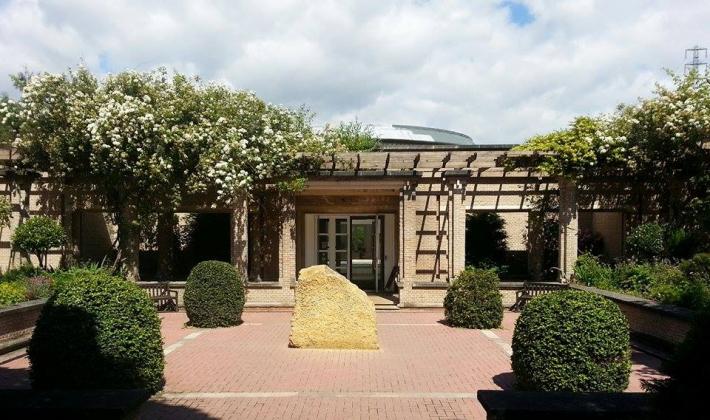
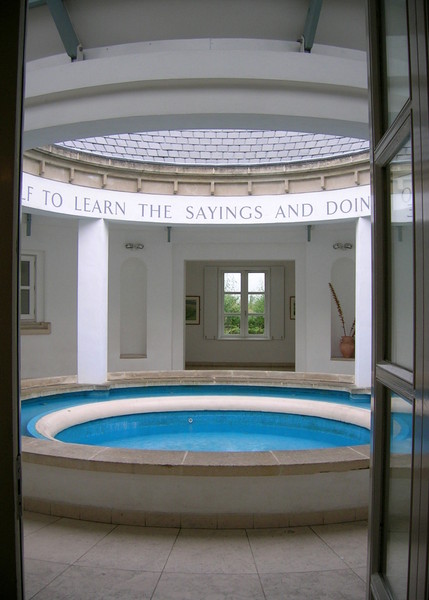
Bede’s World, a small museum in Jarrow, Tyne & Wear, Northumbria, dedicated to the Venerable Bede and 7th-century England, shut down its operations in February 2016.

Bedes World Main Entry

Bedes World Entrance Inside

In addition to indoor exhibits, the museum includes several replica wattle and daub buildings, modeled on structures excavated in Anglo-Saxon Northumbria and built with original materials and contemporary methods. On the grounds there is also a herb garden and a working farm with a small collection of rare breed animals resembling those that lived 1,300 years ago.

Bedes World Collage

The museum issued the following statement:

“It is with great regret that the Trustee Board took the decision for Bedes World [sic] to cease operation from Friday 12 February 2016 due to a lack of funds.

“Steps are being taken to put the company into administration through the appointment of an Insolvency Practitioner.

“The Trustee Board have made arrangements for the immediate care of the farm animals and the security of the site.

“The Board would like thank all staff, volunteers and stakeholders for their hard work and dedication to Bedes World. [sic]”

Fortunately, only a few weeks afterwards better news surfaced: a new operator was found to run the site. At this writing it isn’t clear what their plans for Bede’s World are, though. (Follow this link to read the statement by Groundwork South Tyneside and Newcastle, the new operator.)

Found via Anne Bennett and BBC.

Images: Bede’s World main entrance, outside view via Bede’s World. Other photographs by Eppu Jensen

Tove Jansson to Be Inducted into Eisner Hall of Fame

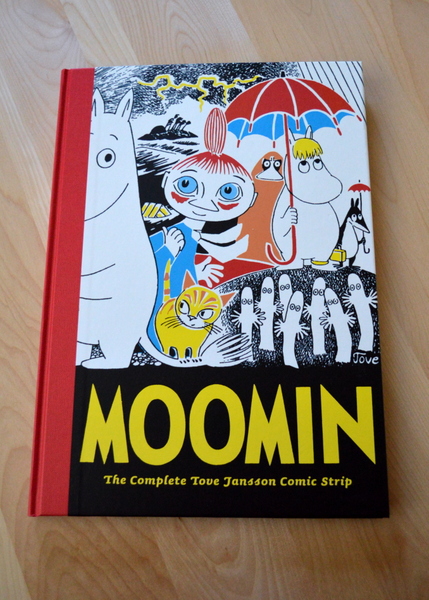
According to Comic-Con International, Tove Jansson, a Finnish visual artist and author, has been selected by the Eisner Award judges to be automatically inducted into the Will Eisner Comic Awards Hall of Fame for 2016. Hooray, Tove!

Tove Jansson Complete Moomin Comic Strip

Jansson (1914-2001) is best known as the creator of the incredibly popular Moomins books and comics. Besides Jansson, there’s a second automatic inductee: Carl Burgos, Golden Age creator of The Human Torch.

In addition, the judges have also chosen 14 nominees from which voters will select four to be inducted in the Hall of Fame. Visit the Comic-Con International: San Diego Eisner Awards page for details. The ceremony takes place July 22, 2016, in San Diego.

Found via File 770.

Image by Eppu Jensen

Quality Research Resources by Private Individuals

I wrote last week about what a fantastic thing it is to have a wealth of primary sources stored in libraries and museums, nowadays increasingly being made available online. For completeness’s sake, it needs to be mentioned that it’s not only library and museum professionals that share quality research or materials online.

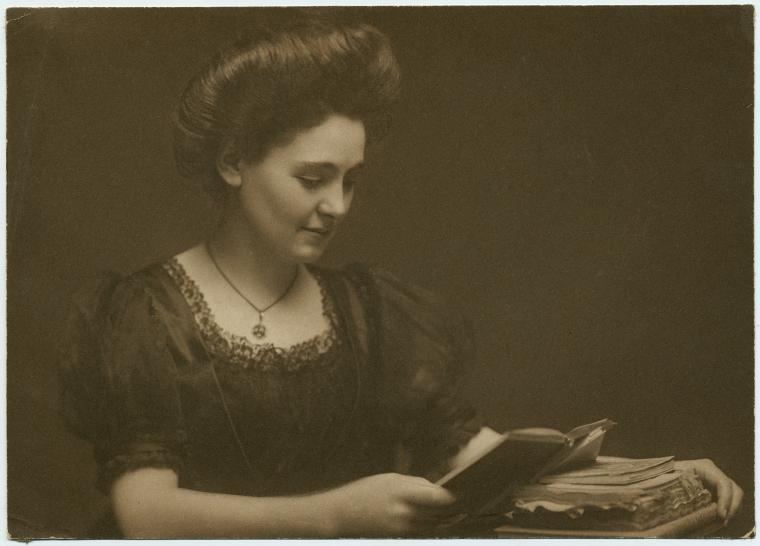
nypl-unidentified-woman-reading-a-book
Unidentified woman reading a book via NYPL, Manuscripts and Archives Division (1913; photograph)

Below I list a (very) few linguistic and historical resources put together by dedicated private individuals. They’re all diligent in documenting their steps and sources, and providing info and links for those interested in finding more. Thorough documentation is, again, not a surefire way to avoid mistakes, but it does allow tracking sources and re-creating the research.

A short list, to be sure, but what better than that to add to. 🙂

Out There is an occasional feature highlighting intriguing art, spaces, places, phenomena, flora, and fauna.

Starships!

Three years old at this point, but still, oh, so, SO great: Starships!

https://vimeo.com/46927209

Starships! by bironic

“A celebration of pilots, captains, engineers, crew members, and the spacecraft they love to fly. (And race, and crash, and fix, and play in, and fight in, and…)”

bironic

It’s a great time to be a geek – not only are more SFFnal stories than before being published and adapted to the screen and stage, but making, remixing, and sharing our own content is incredibly easy.

P.S. Be sure to read bironic’s making-of note!

Hey, look! We found a thing on the internet! We thought it was cool, and wanted to share it with you.

Museum Materials: Volcano Day in Pompeii

Speaking of the excellence of museum and library collections: below are resources on the destruction of Pompeii I found by visiting only two museum sites.

“A Day in Pompeii” is an 8-minute high-definition video on how a series of eruptions wiped out Pompeii over 48 hours, produced by Museum Victoria (Melbourne Museum) and Zero One Animation for an exhibition at Melbourne Museum in 2009.

A Day in Pompeii – Full-length animation via Zero One Animation

It would’ve been more stunning with changes in the POV rather than a static camera, but it was still interesting.

To accompany the exhibit, Melbourne Museum produced a wealth of additional online material.

Melbourne Museum Day in Pompeii Box

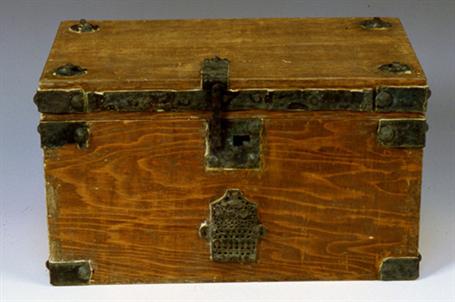
Unfortunately there’s currently no index page, but articles are still available on the Museum website (do a search for Pompeii). For example, House of the Vine is a nifty virtual recreation of a beautiful Pompeian house. And did you know that Pompeii had running water and lavatories? There is even a replica of a loaf of bread from Pompeii:

Melbourne Museum Day in Pompeii Loaf of Bread

After Melbourne, the exhibition traveled to other places. The Western Australian Museum also built a helpful site, still fully available, to go with their 2010 version in Perth.

Complementary views can be found from photos of the current state of the city at Pompeii in Pictures, website by Jackie and Bob Dunn. (Getting to the photos themselves takes a bit of clicking through the menus, but they’re there.)

Images: Box, (c) Soprintendenza Speciale per i Beni Archeologici di Napoli e Pompei via Melbourne Museum (House of Julius Polybius, Pompeii; original iron and bronze fittings and wood reconstruction). Loaf of bread via Melbourne Museum (bakery in Pompeii; plaster copy of an original, carbonized loaf)

The Visual Inspiration occasional feature pulls the unusual from our world to inspire design, story-telling, and worldbuilding. If stuff like this already exists, what else could we imagine?

The Glory of Library and Museum Materials

I really love the Internet for research. It connects us to materials and people around the world. As a visual person, I find the availability of photographs and other visualizations on just about any subject especially gratifying. You can visit places and eras that you physically may not be able to.

NYPL Digital The Drawbridge

One of the invaluable services libraries and museums provide, especially now that more of their collections are being digitized, is access to historical periods and obscure topics. (Like the Peter Parker collection of 80 paintings of Chinese patients with large tumors or other major deformities – that’s not a joke!)

And that’s only the beginning – using library and museum websites and digital collections to find primary sources for research has other benefits as well:

  • Copious metadata: the provenance (origins and history) of documents or items, including details like dates, original creators, owners, and chain of custody, are clearly marked when known, and when unknown, that is clearly stated, too.
  • Materials that physical items were made of are also given, often with information on the techniques involved or links to further reading in connection with museum exhibits.
  • Many libraries and museums group items in their digital collections into more easily browsable subgroups, for example by era, style, type, or topic.
  • Copyright information is easily available: any limitations to re-using the materials are clearly given. There are also collections that concentrate on items that are in public domain.
  • If digital materials are made available for re-using, often there are multiple formats, sizes, or resolutions. That’s great service!
  • Sets of search results are often smaller than online in general. Finding an answer is faster!
  • Digital collections are created by professionals. While this doesn’t completely eliminate the possibility of errors, online materials at libraries and museums are researched, curated, and checked, which increases the reliability of the information provided.
  • If additional information or clarification is needed, it’s the job of museums and libraries to at least try to help. That’s literally why they’re there!

Below are just some amazing digital collections from museums and libraries around the world:

Must. Resist. Internet. Rabbit. Holes!

Image: The Drawbridge via NYPL (The Miriam and Ira D. Wallach Division of Art, Prints and Photographs: Print Collection, The New York Public Library, New York Public Library Digital Collections; 1748-1751; etching; by Giovanni Battista Piranesi)

Out There is an occasional feature highlighting intriguing art, spaces, places, phenomena, flora, and fauna.