Life Cycle of a Book Infographic

This may be of interest to prospective writers (or anyone wishing to better understand the steps involved with traditional publishing): an infographic by Rachel Doll, University Press of Florida, shows a book’s journey from conception to publication.

UPF Life Cycle of a Book
Life Cycle of a Book, screencap of pdf by Rachel Doll, University Press of Florida

It lays out explicitly at what point in the process the page proofs or the book itself, for example, will be available, and some of the times that each step requires. The graphic is available for download as .pdf from University Press of Florida.

How It Happens is an occasional feature looking at the inner workings of various creative efforts.

Racism and Ancient Aliens

The notion that ancient monuments, myths, and artworks reflect the visitation of Earth by alien beings is not one that is taken very seriously in the world of scholarly history, nor much outside of it, either. Still, it is one of those fictions, like astrology or vaccine scares, that continue to float through popular culture and appeal to some people because they offer simple answers to difficult questions. Who built the pyramids? Who drew the Nazca lines? Aliens!

It’s easy to dismiss ancient aliens as just another silly idea that most people don’t take seriously, but even silly ideas can be insidious. How we think about people in the past shapes and is shaped by how we think about people in the present. Especially when we’re looking to the past to inspire works of speculative fiction, we have to be conscious of the assumptions that underlie our ways of interpreting and explaining history. As harmless and even goofy as the ancient alien hypothesis may seem, it operates on a logic that is fundamentally racist and entangled with imperialist ideology.
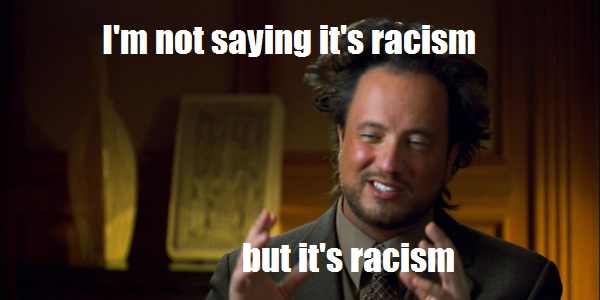
160530racismI’ve written before about the dynastic race theory of Egyptian history. In brief, Europeans of the eighteenth through early twentieth centuries didn’t believe that Africans were capable of creating an advanced civilization on their own, so they invented a superior race of foreign invaders who they believed had conquered and ruled Egypt, bringing their advanced culture with them. This theory justified European imperialism by creating a historical precedent: the brown people of the world needed superior white rulers to teach them how to be civilized, both in the past and the present.

The racism and imperialism inherent in dynastic race theory is obvious to us today, but the ancient alien hypothesis rests on the same assumption: that those people couldn’t possibly have been capable of creating such sophisticated artworks, monuments, and cultures on their own. Although ancient alien crackpots can conjure little green men to explain anything from the past, you’ll notice that the popular examples are all things created by non-Europeans: the pyramids of Egypt, the temples of the Maya and Aztecs, the Nazca lines, the Rapa Nui (Easter Island) stone heads, and so forth. You don’t often hear arguments that aliens built the Parthenon in Greece or the Cathedral of Notre Dame de Paris.

(The one European monument that regularly gets the ancient alien treatment is Stonehenge, which is a complicated case. The invasion theory of European history, which also clings on in popular culture despite being thoroughly discredited in scholarship, posits that the people who built Stonehenge were overrun and replaced by invaders from continental Europe, which makes them not really like modern Europeans and Euro-Americans. Some versions of the invasion theory even explicitly call the pre-invasion population non-white.)

But, some might say, that’s just because we know who built the Parthenon and we don’t know who built the pyramids, so the alien hypothesis is just filling in a mystery. Except that we do know. Egyptians built the pyramids. Mayans built the Maya temples and Aztecs built the Aztec temples. The Nazca people created the Nazca lines and Polynesians erected the stone heads on Rapa Nui. We have a pretty good understanding of how and why they all did those things, too, even if we’re still piecing together some of the details. None of this has ever seriously been in doubt. There is no mystery, just a reluctance on the part of white westerners to acknowledge the cultural attainments of non-white non-westerners. No aliens need apply.

The ancient alien hypothesis does much the same work for a modern audience that dynastic race theory did for an earlier one: it reassures us descendants of European imperialists and colonizers that the peoples our ancestors conquered, subjugated, and destroyed weren’t really up to snuff anyway. They didn’t build great monuments, figure out sophisticated mathematics and physics, or organize labor on a massive scale, space aliens did it for them. They didn’t compose great works of literature and mythology, they just handed down hazily-remembered stories about men from the sky. Invoking ancient aliens saves us the trouble of respecting other peoples’ cultures or acknowledging the tragedy of their destruction by assuring us that they don’t really count.

Thoughts for writers

We have a responsibility to the people of the past and to our audience in the present. False interpretations of history have underlain some of the worst atrocities that human beings have committed against one another. We have a duty not to perpetuate harmful assumptions, even when they come dressed up like silly alien stories. This duty lies upon us even when we aren’t doing serious scholarly study and are just mining history for interesting storytelling material. The stories we tell matter.

This doesn’t mean that ancient aliens are off-limits for storytelling. I have no doubt that there are good fantasy and sci-fi stories to be told about aliens visiting Earth in the past, stories that don’t deny the agency, ingenuity, and persistence of ancient peoples. Let’s see some of those.

Image by Erik Jensen, based on “Ancient Aliens Guy” via Know Your Meme

History for Writers is a weekly feature which looks at how history can be a fiction writer’s most useful tool. From worldbuilding to dialogue, history helps you write. Check out the introduction to History for Writers here.

Fizzled Towel Day Salmiakki Babel Fish

My Towel Day celebrating fizzled: the candy from my stash that I thought was salmiakki fish (for Babel fish) weren’t fish at all but cars.

Salmiakki Selection

Ohwell. At least I was able to nom some salmiakki. Also, I spotted news from my old haunts (Turku, Finland) on the towelday.org site:

“In Turku, Cosmic Comic Cafe presents its 10th annual Towel Day. Yes, Cosmic Comic Cafe has been celebrating towelness for a decade already! Theirs might be the first and oldest ongoing bad poetry night on Towel Day, they started in 2006. Unlike everywhere else in this galactic sector, their poetry night is not a competition: anyone’s and everyone’s poem (including Vogons) will be recited immediately. You churn it up, we blurt it out! The poetry shows start at 20.00 and repeats every hour till 23.00. The DJ will provide entertainment between shows. The programme ends at midnight with the Most Evil Laughter in the Universe competition. Froods carrying a towel will get a discount on Pan Galactic Gargle Blasters. While waiting for the t-day, the Finnish Towel Day site and Facebook page will be publishing daily horrible poems dug up from the last year’s archive, and introducing Towel Day activities around the globe.” [original emphasis]

(Also, apparently in Pieterburen, Netherlands, the seal rescue centre is collecting secondhand towels. Aww!)

Bonus video from 2015: ESA astronaut Samantha Cristoforetti reads an excerpt from The Hitchhiker’s Guide to the Galaxy seemingly upside down on the International Space Station:

Towel day on the International Space Station by European Space Agency, ESA

Any Towel Day activities you’re up to?

Some things are just too silly not to share!

Connections: Denmark and Egypt

More than 3,500 kilometers separate the tombs of the Valley of the Kings in Egypt from the village of Ølby in Denmark, but thousands of years ago they were connected by trade.

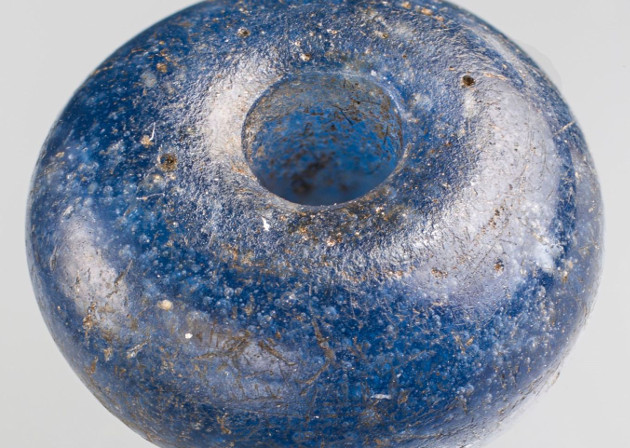
160523mapRecent archaeological work has identified a blue glass bead found in a bronze age woman’s grave in Ølby as originally Egyptian. In fact, based on the composition of the glass, researchers have suggested that the glass bead was made in the same workshop that produced the blue glass inlay on Pharaoh Tutankhamun’s gold funerary mask. Similar beads are known from several other Danish burials. In an age when glass-making as a skill known only in a few regions, colorful glass beads were as precious as gemstones.

160523glassGlass beads like these could have come to Denmark in exchange for amber from the shores of the Baltic Sea. Amber was highly prized in the ancient Mediterranean and not just as jewelry. It was sometimes fashioned into amulets for warding away evil or burned like incense. (The Roman naturalist Pliny the Elder complained about his fellow Romans’ superstitions about it; see: Pliny, Natural History 37.11.)

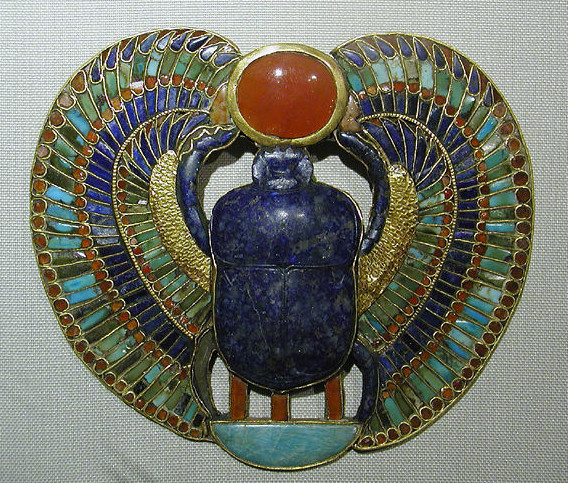
Amber has not been found in large quantities in Egypt, but it was used in some jewelry. In fact, one of the pectorals (pendants worn over the chest as amulets) wrapped up in the linen with Tutankhamun’s mummy is set with a piece of amber.

160523scarabIt’s unlikely that many Danes traveled to Egypt or Egyptians to Denmark in the bronze age. More likely both amber pieces and glass beads were carried short distances by chains of traders in between. Small, easily portable, but high-value objects like beads and gemstones are perfectly suited to this sort of down-the-line trade. A ship that was wrecked off the coast of Turkey around the same time as Tutankhamun’s burial (known as the Uluburun or Kaş Shipwreck) may have been part of that trade network. The ship, whose home port may have been in northern Syria or on Cyprus, was carrying both blue Egyptian glass and Baltic amber when it went down. Also in the ship’s cargo, interestingly, was a gold scarab inscribed with the name of Nefertiti, queen to Tutankhamun’s father Akhenaten (though she was not Tutankhamun’s mother).

Thoughts for writers

The evidence of archaeology is always a bit haphazard in nature. So much is unpredictable about what artifacts survive and what gets found. We are lucky to have the evidence from both the tombs of Tutankhamun and the woman in Ølby, as well as the Uluburun shipwreck, to help us trace out the lines of connection between Egypt and the Baltic. There is no question that connections between different peoples in the distant past were deeper and stronger than we know, but the evidence to document those connections has been lost.

Historians (at least those of the responsible sort) are limited by evidence, but fiction writers don’t have to be. When building your fictional worlds, let the fragments of evidence from our own inspire you to imagine far-flung connections and enterprising traders. Connections like these have always been important.

Images: Map by Erik Jensen based on Portable Atlas. Blue glass bead, detail of photograph by Roberto Fortuna and Kira Ursem via Haaretz (Ølby; 14th c. BCE; glass). Scarab pectoral, photograph by Jon Bodsworth via Wikimedia (tomb of Tutankhamun; 14th c. BCE; gold, glass, and precious stones)

History for Writers is a weekly feature which looks at how history can be a fiction writer’s most useful tool. From worldbuilding to dialogue, history helps you write. Check out the introduction to History for Writers here.

Making In the House of Elrond

Here’s a look at how we made yesterday’s In the House of Elrond.

The menu

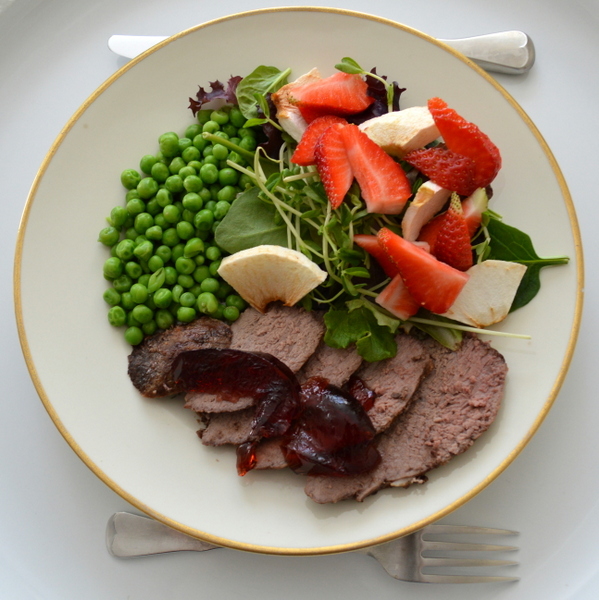
  • Roast lamb
  • Peas
  • Salad with strawberries and roasted apples
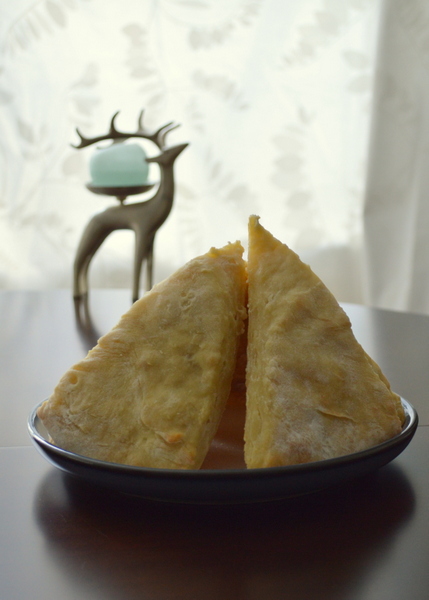
  • Bannocks
  • Cardamom buns

erikchef1Elven food leaves us in a bit of a pickle, as Sam Gamgee would say. We know that Elves eat and drink, but Tolkien’s descriptions of their food, as with most things Elven, are long on ethereal glamour and short on detail. (Most of our information about Elven food comes from The Hobbit. The Lord of the Rings is a little more circumspect about what exactly Elves eat.) We have to do a little detective work to come up with a menu.

Dinner5 Main

Continue reading

Dining in Middle Earth: In the House of Elrond

“Pippin afterwards recalled little of either food or drink, for his mind was filled with the light upon the elf-faces, and the sound of voices so various and so beautiful that he felt in a waking dream. But he remembered that there was bread, surpassing the savour of a fair white loaf to one who is starving; and fruits sweet as wildberries and richer than the tended fruits of gardens; he drained a cup that was filled with a fragrant draught, cool as a clear fountain, golden as a summer afternoon.”

LotR Dinner5

This month we present an Elven dinner such as Frodo and his companions might have enjoyed during their stay in Rivendell. With very little information from Tolkien to go on, we have put together a dinner of roast lamb, peas, bannocks, and salad, with cardamom buns for dessert and wine to go with it.

LotR Dinner5 Main

The dark wood beams Frodo saw upon waking in Rivendell inspired us to use a dark table. The vibrant greens, reds and browns of this dinner prevent the mostly white table setting from getting monotonous. A printed white on white tablecloth with meandering vines provides a thematically appropriate background. A silver-stemmed martini glass and a reindeer candle holder bring glimmers of silver to the table.

LotR Dinner5 Bread

LotR Dinner5 Salad

The dessert is as delicious to the eye as to the mouth: Erik’s cardamom buns are pretty enough on their own not to require a more ornate plate, especially with a small mound of strawberries placed in the middle.

LotR Dinner5 Dessert

Check out what’s it about in the introduction, or read the how-to!

Images by Eppu Jensen

Geeks eat, too! Second Breakfast is an occasional feature in which we talk about food with geeky connections and maybe make some of our own. Yum!

Travel: Water

160516junkTraveling over land is familiar. Many of us do it every day (even if we don’t do it as part of an army or with pack animals), but travel over water, though vital to the modern economy, isn’t part of daily life for most of us. Sometimes, though, the characters in your stories or games need to ride a raft downriver, strike out across the ocean in an outrigger canoe, or hoist the sails of a ship of the line. In this installment of the travel series, we look at types of pre-industrial water transport, the speeds and distances ships can travel, how much cargo ships can carry, and what it takes to make a successful voyage over water.

Speed

Ship speeds are conventionally measured in knots, equivalent to 1 nautical mile (1.151 statute miles or 1.852 km) per hour. 1 km/h is equal to 0.54 knots. In this post, I have given all speeds in terms of km/h for consistency with the other travel posts.

Types of transport

There are many different types of watercraft, from one-person rafts to massive cargo ships, but one essential way of distinguishing them is by means of propulsion. Pre-modern vessels had four basic options for propulsion: current, wind, paddles/oars, or draft.

Continue reading

Two Star Wars Tributes in the Style of James Bond and Top Gun

Serendipity delivers again: in today’s online reading there were links to two gorgeous and skillfully made Star Wars video tributes. One is made to Spectre by Radiohead in the style of James Bond opening credits.

Star Wars – Episode V “The Empire Strikes Back” Homage (Title Sequence) by KROFL

The Empire Strikes Back Homage is designed, directed, and produced by Kurt Rauffer. The other, by Weston Wong, mashes up SW with Kenny Loggin’s Danger Zone from the movie Top Gun.

Star Wars – Danger Zone – Kenny Loggins by Weston Wong

Uh oh, now I have 80s movie music in my head… 🙂

Hey, look! We found a thing on the internet! We thought it was cool, and wanted to share it with you.

Quotes: Books Do Something for the Human Brain

“Books do something for the human brain that nothing else can. With books comes happiness, and people build empathy for one another. [We’re trying to offer] new perspectives and reignite an enthusiasm for reading.”

– Alicia Tapia

Books make your world larger. What a delightful excuse to read. 🙂

Quote attributed to GOOD Magazine, found via American Libraries November / December 2015, p. 28. Alicia Tapia is a librarian in San Francisco, CA and heads the Bibliobicicleta initiative.

Serving exactly what it sounds like, the Quotes feature excerpts other people’s thoughts.