New Ancient Mediterranean Database: Public Monuments in Roman Greece

A new project called Monuments of Roman Greece is under development at the University of Oxford. It covers about four centuries, c. 200 BCE – 200 CE, from when Rome began to expand into the Greek area of influence to the height of the Roman Empire, and will result in a series of articles plus a database.

The Met Bronze Veiled Masked Dancer

From the project website:

“Under the Roman Empire the marketplaces, streets, gymnasia and theatres of the cities of Greece were full of monuments such as tombs, inscribed stelai and – most numerous of all – statues. There were statues of bronze and of marble, portraying gods, heroes, emperors, kings and local dignitaries. Some of these monuments had already stood for centuries; others were fairly recent. Arguably no urban culture in history, with the possible exception of Rome itself, has set up such vast numbers of monuments in its public spaces. The nearest modern analogy for the amount of cultural material on display in the Roman period polis would be the museum. Yet the analogy falls short – the settings where these monuments stood were not places designed primarily for the passive viewing of works of art, they were vibrant public spaces, alive with the tumult and commotion of the city. If we are to understand the society and culture of these cities it is vital that we understand the impact of public monuments on the people who moved about them in their daily lives.“

The work is carried out by Dr. C. P. Dickenson at the Faculty of Classics, with Prof. R. R. R. Smith as scientific adviser. Both the website and the database are still in progress. Also, it sounds like the final home of the database is not finalized at the time of this writing; however, a browsable version is currently up on the University of Oxford website.

Visit the Public Monuments in Roman Greece website for scope and instructions on searching plus more info, or read Dr. Dickenson’s blog for behind-the-scenes tidbits on the development work, among other things.

Image: Bronze statuette of a veiled and masked dancer, from the collections of The Metropolitan Museum of Art, bequest of Walter C. Baker in 1971, accession number 1972.118.95, by Eppu Jensen (Greek; 3rd-2nd century BCE)

Quotes: Archers String Their Bows Only When They Need Them

This was how Amasis managed the affairs of the Egyptians: from dawn until midday he handled all the matters that were brought before him; the rest of the day he gave over to drinking and joking with his companions.

His advisers, being vexed by his behavior, admonished him: “Majesty, it is not right that you should behave so foolishly. You should be seated on your august throne throughout the day conducting affairs of state. Thus the Egyptians would be certain that they are ruled by a great man and you would have a better reputation. What you do now is not at all kingly.”

But he replied: “Archers string their bows only when they need them. If they were kept strung all the time, bows would snap and be of no use when needed. It is the same with people: if you try to be serious all the time and not allow yourself a share of relaxation, you will surely either go insane or fall dead of a stroke. Knowing this, I take both business and leisure in turn.”

– Herodotus, The Histories 2.173


The Egyptian king Amasis, as reported by Herodotus, giving some good advice about making time for yourself.

A DIY Star Wars Day T-Shirt Project

May the Fourth is a week away! Just time enough to figure out a small something to celebrate Star Wars with, if you’re so inclined. The Makeup Dummy shared a tutorial for a painted t-shirt with a Yoda-inspired quote:

How-To-DIY-Galaxy-Quote-Print-Shirt-Tutorial-by-The-Makeup-Dummy
The Makeup Dummy

Nice use of negative space on a starry sky. Also, using stickers to create the lettering is clever; it removes the need for messing with stencils (which can be a pain in the hindquarters to make if you don’t happen to have an electronic cutting machine or somesuch).

Bonus project: This wall art piece made with neon rods from a room designed by cityhomeCOLLECTIVE is decidedly lightsaber-like, if you ask me:

Desire to Inspire cityhomecollectivesmith-family-design-3
Interior design by cityhomeCOLLECTIVE, via Desire to Inspire

Do you have any Star Wars projects on the way? Do share!

In Making Stuff occasional feature, we share fun arts and crafts done by us and our fellow geeks and nerds.

The Trouble With Primary Sources

160425hoplitePrimary sources are great. They are essential. Without them, we would know vastly less about history than we do.

Because primary sources are so essential to our knowledge of history, it is easy to make the mistake of taking them too much at their word. Primary sources are like every other piece of writing: limited by the author’s perspective and subject to scrutiny and challenge. The trouble isn’t even just that primary sources can be wrong (although they can), but that the really interesting questions rarely have just one right answer. The answer we get from one primary source may be incomplete, even if it’s not wrong.

For example, suppose you’re writing a story about an ancient Greek who ran away from a battle. What would his fellow Greeks think of him? What would he think of himself? With a little research you might come across this fragment of a poem by Tyrtaeus:

Continue reading

Quotes: Things Were Never Just What People Said with Words

“I was here alone and Evan wasn’t going to protect me. He never had. He wanted things from me, like everyone else. But those things were never just what people said with words. Everything about it, instead, was meant to manipulate you to feel something you wouldn’t otherwise feel, and screw up your steady, rational thoughts.”

– Karin Lowachee: Warchild

Protagonist Jos struggles with the pervasiveness of childhood traumas years after the events.

Lowachee, Karin. Warchild. New York, NY: Warner Books, 2002, p. 329.

(This quote comes from my 21 new-to-me SFF authors reading project.)

Serving exactly what it sounds like, the Quotes feature excerpts other people’s thoughts.

Why Wouldn’t Playing Games Get You a Job?

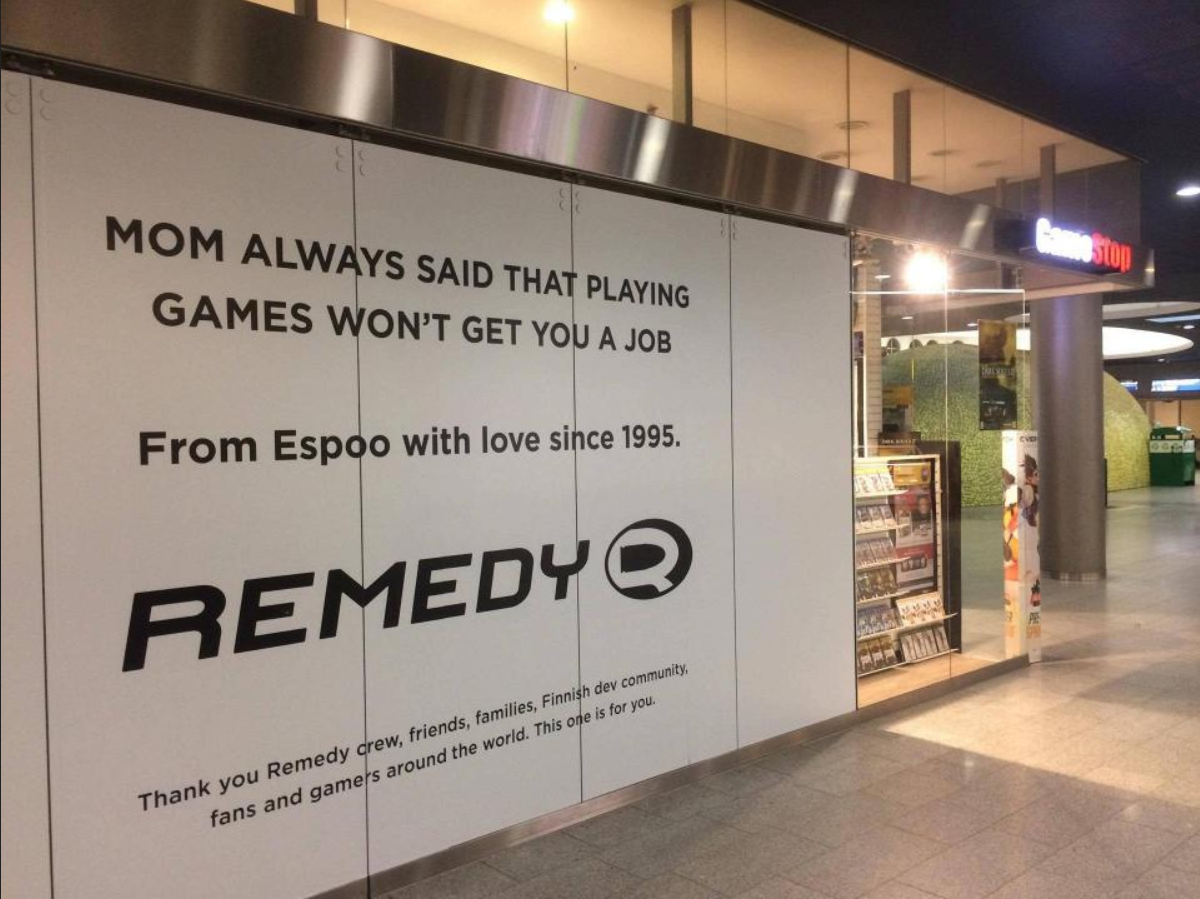
This wall ad by the Finnish game house Remedy deserves wider circulation:

NYT Jussi Pullinen Remedy Wall Ad

“Mom always said that playing games won’t get you a job. From Espoo with love since 1995. Thank you Remedy crew, friends, families, Finnish dev community, fans and gamers around the world. This one is for you.”

Remedy (of the Max Payne and Alan Wake fame) designed this ad to celebrate their April 05, 2016, launch of a new game, Quantum Break, reportedly the most expensive entertainment production ever made in Finland.

The ad’s irony at one’s own expense sounds very Finnish to me. In Finland, it’s a little embarrassing to be successful or rich, and Finns don’t tend to draw attention to their achievements. At the same time, as a Finn, it’s very satisfying to see Finnish game companies grow up into mature businesses with large, world-wide audiences.

It’s also high time for people to recognize that storytelling is an integral part of human nature and that games are just as viable a medium for telling stories as are myths, songs, novels, image-based art, and the like.

Image by Jussi Pullinen via Nyt.

Disclosure: A friend of mine works at Remedy, but this post is in no way compensated or even requested by them.

Of Dice and Dragons is an occasional feature about games and gaming.

How We Got Here, or A Field Guide to World History

The term world history may send your mind spinning back to high school, but world history is an important genre of historical study. It means history that is not bounded by the past of one nation or people. It is the story of how we got here as a whole, enmeshed world, not just as discrete national or ethnic groups. If you’re researching historical topics that connect different peoples together, you’re looking for world history. (World history is related to but not the same as universal history, which is a history of the entire world; world history may be selective about what parts of the world it covers, as long as it isn’t limited by national/cultural boundaries. Yes, it’s confusing.)

There are many different approaches to world history, however, and which one you want to look for depends on what you need. Here’s a brief spotter’s guide to some of the main varieties of world history you’ll find in the scholarship, how to recognize them, and what you might want to go to them for as a writer. These are not the only varieties of world history out there, but knowing these types will help you sort through the sources you will come across in your research.

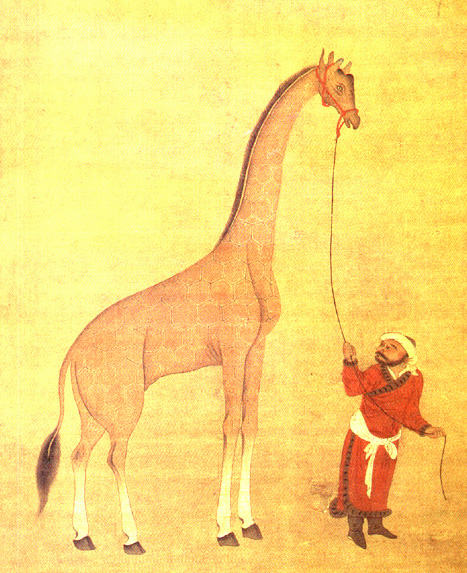
160418giraffe

1. Interconnected History

Or: “Whoa, This Stuff Is All Connected And Stuff, Man”

Historical events don’t happen in a vacuum. Cultures communicate and trade with each other. People travel, taking goods and ideas with them. Interconnected History is about tracing these lines of communication and commerce and discovering how events in one part of the world affected other parts.

Continue reading

Making Food in the Wild

Here’s a look at how we made yesterday’s Food in the Wild.

The menu

  • Pan-braised game hens with root vegetables
  • Leaf and herb salad
  • Blackberries with mint leaves

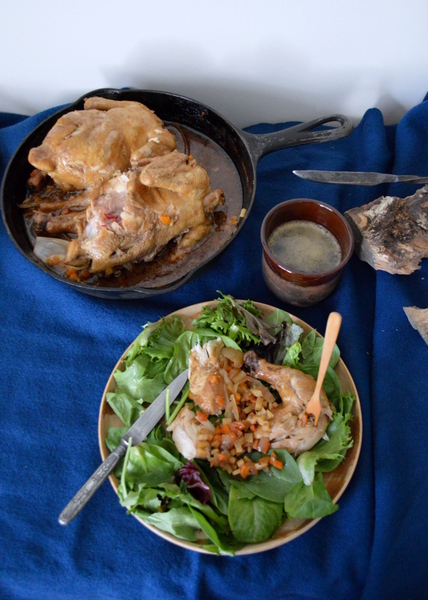
erikchef1Our heroes were in too much of a hurry to do any good eating in the wild between Bree and Rivendell, but we’ve tried to imagine what a ranger might have been able to cook up in better times. Strider mentions four different kinds of wild food: berries, roots, herbs, and game, and we’ve used a little of each in this meal. (1.11)

Dinner4 Main

The main course is pan-braised game hens. It is the only dish that needs cooking and can be cooked in a shallow pan over a campfire. We used commercially raised game hens and farmed roots for our version, but wild-caught birds and carefully dug wild root vegetables would also do. We also used farmed greens and blackberries, but there are many wild-growing plants whose young leaves can be eaten (the full-grown leaves of most edible wild plants, in contrast to their cultivated cousins, are too tough or bitter to be eaten raw, but may still be useful for cooking). Wild blackberries are common in many forested areas—and they seem to be especially common in Middle Earth, as Bilbo frequently wishes for blackberries while traveling and the Prancing Pony offers a blackberry tart (H4, H6, 1.9)

Continue reading

Dining in Middle Earth: Food in the Wild

“‘There is food in the wild,’ said Strider; ‘berry, root, and herb; and I have some skill as a hunter at need.’”

LotR Dinner4

For this month’s dinner, we take up Strider on his offer and imagine what sort of a meal a ranger could have created in the wild at the best of times. This is what Strider might have cooked up for a party of hungry Hobbits if they hadn’t been running for their lives from ringwraiths: pan-braised game hens with root vegetables on a bed of green leaf and herb salad with fresh blackberries for dessert.

LotR Dinner4 Drink

Cooking would’ve been done with a cast iron spider, and light-weight wooden plates and small utensils wouldn’t add too much to the burden. Small pieces of fabric and sacks provide storage, and a rough piece of firewood functions as a makeshift stool or table. Everything is laid on rich, deep blue wool blend that nods towards Aragorn’s high status as the heir of Elendil.

Check out what’s it about in the introduction, or read the how-to!

Images by Eppu Jensen

Geeks eat, too! Second Breakfast is an occasional feature in which we talk about food with geeky connections and maybe make some of our own. Yum!

Quotes: Shrug off the Condescension that People Have toward ‘Lower’ Genres

“On the verge of débuting his late, lamented sci-fi series ‘Firefly,’ which was cancelled after less than one season of Fox mismanagement, Joss Whedon remarked that his goal was not to create ‘grownup’ TV but to ‘invade people’s dreams’ – to create mythologies, which last so much longer than the mortal form of a TV series. Cult shows, such as ‘Doctor Who’ and ‘Community,’ often have this quality: they shrug off the condescension that people have toward their ‘lower’ genres, using their constraints to find a greater freedom. When you look at a show like that from a distance, it might seem too narrow to contain much of interest. But it’s so much larger when you’re on the inside.”

– Emily Nussbaum

Two thoughts. One: Ha, Joss Whedon wants to do a George Lucas. Two: Just like, say, fly fishing might look narrow on the outside, there are hidden depths and intricacies in just about any hobby or interest. Not sure why it’s still such a surprise to those condescending types.

Nussbaum, Emily. “Fantastic voyage: ‘Doctor Who,’ ‘Community,’ and the passionate fan,” The New Yorker (June 4 & 11, 2012) 127.

Serving exactly what it sounds like, the Quotes feature excerpts other people’s thoughts.