Down with Dull Dystopias

The other day, Erik and I were at the library borrowing some light evening viewing. On my way to the circ desk my eye fell on the Just Returned cart and on a relatively recent SFF novel that I’ve heard good things about. (I always stop to check the cart. It’s often the best spot to pick up the popular new acquisitions.)

I picked it up and flipped over to the book description to remind myself what it was about. The novel is set in an apocalyptic or dystopic world with major environmental issues. And that made me promptly put it back down. I didn’t even finish reading the book description.

What my reaction made me realize is that, for now, I’ve reached my tolerance for dark storylines with brooding characters in dire situations.

Supermoon Lunar Eclipse Starting Sm

My little episode at the library collided with two random online pieces.

I was reading Tor.com’s coverage on the 2016 Arthur C. Clarke Award. In his acceptance speech, winner Adrian Tchaikovsky praised the other five shortlisted nominees for a recurring theme:

“One of the things that struck me about the shortlist for this year is empathy as a theme that runs through a lot of these books. Empathy across races, across borders… One of the things [my] book is about is the ability of humanity to seize value in things that are different, and the danger when that doesn’t happen.”

Tchaikovsky’s comment made me conscious of not just how done I am with dystopia, but also how much I’ve been missing stories where the nicer aspects of humanity are clearly present. That doesn’t mean all feel-good stories all the time. It does mean that lifting the darker side of humanity up into the limelight is not enough if, at most, the positive universals get slapped on like a thin coat of paint on a dilapidated theater.

The next day, I ran into an article at Literary Hub by Brandon Taylor. “There is No Secret to Writing About People Who Do Not Look Like You” focuses on the importance of empathy as an aspect of the writing craft:

“Stories have many functions: entertainment, healing, education, illustration, explanation, misdirection, persuasion. Stories have the power to shape worlds and to change lives, and so there is a lot at stake when an author sits down to write. Many people fold stories like delicate paper ships and launch them from obscure corners of the world, hoping that their ships land on distant shores and spread some of the truth of their lives to strangers. It is an act of communion, an act of humanity, the sharing of your story with another person. We each contain within us a private cosmos, and when we write of ourselves, we make visible the constellations that constitute our experience and identity.

[…]

“There can be no story without empathy. Our stories begin because we are able to enter the lives of other people. We are able to imagine how a person might move through the world, how their family might operate, what their favorite foods might be, how their nation works, how their town works, and the smallest, most inconsequential aspects of their lives rise up to meet us at our desks. You can’t write if you can’t empathize. Solipsism is anathema to good writing.”

Taylor’s piece crystallized in my mind why dystopias drag me down. It’s because many dystopic stories ignore or trivialize humane acts or traits like cooperative labor or generosity, and in doing so, they omit crucial aspects of humanity. And that—unless extremely, extremely skillfully executed—makes dystopias unsatisfying for me, exactly as I tend to think many utopian stories boring.

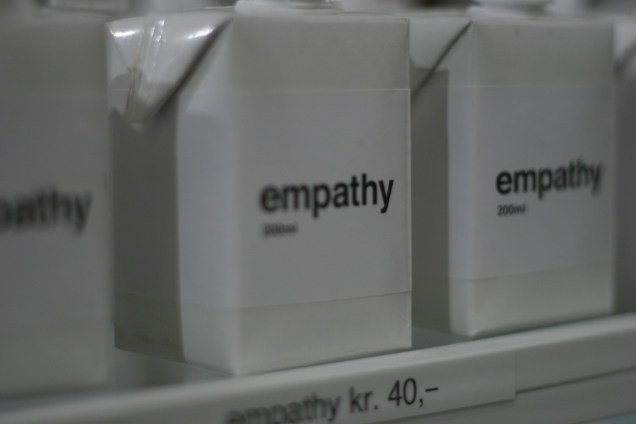
Empathy

Just like darker traits, selfless characteristics exist today because in the past they helped us survive. They still do. We need them, and we’re better for it.

So much of my reading lately has included dystopic worldbuilding. I didn’t realize quite how much that’s been subconsciously bothering me. I’m full, thank you. No wonder books like The Long Way to a Small Angry Planet by Becky Chambers—one of the Clarke nominees, by the by—make such joyful reading experiences.

Images: Supermoon Lunar Eclipse Starting by Eppu Jensen; Empathy by Pierre Phaneuf (pphaneuf) on Flickr (CC BY-NC-SA 2.0)

This post has been edited for clarity.

Story Time is an occasional feature all about stories and story-telling. Whether it’s on the page or on the screen, this is about how stories work and what makes us love the ones we love.

Impressions on Arrival Trailer #1

Have you heard of Arrival? It’s a forthcoming science fiction movie about a first contact situation on earth, and the more I read about it the more curious I get.

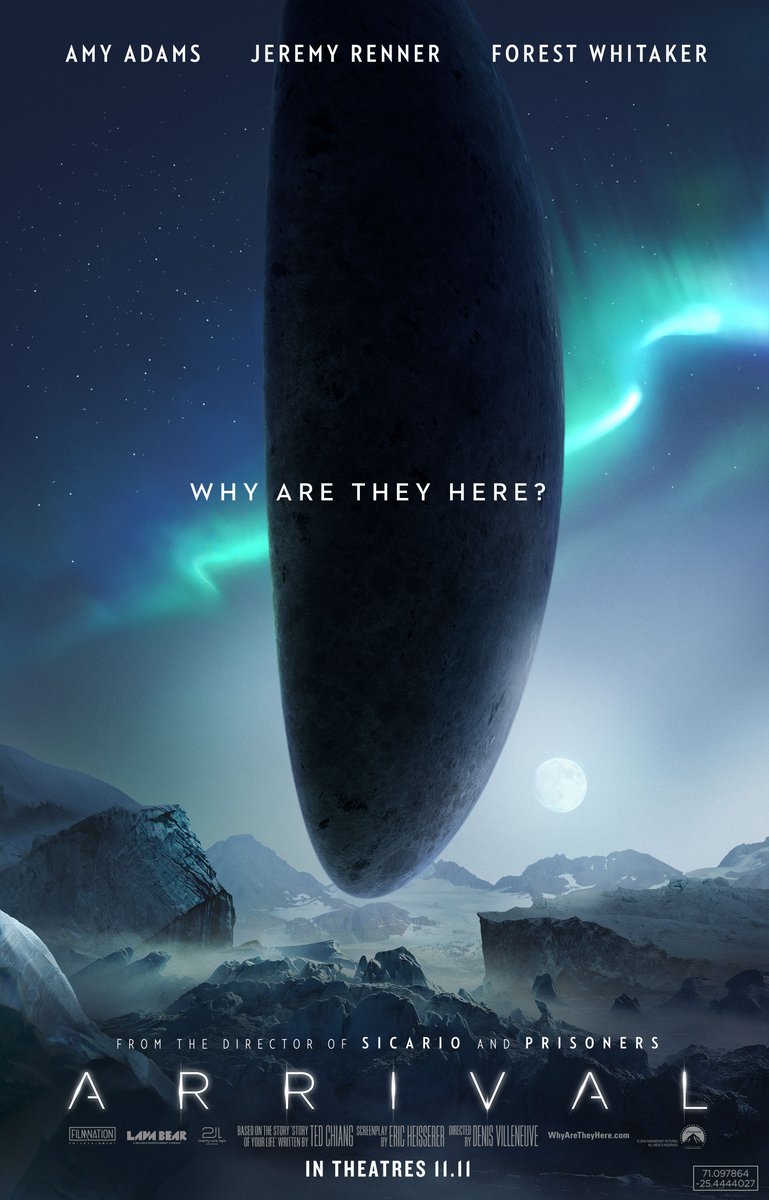
Twitter Arrival Movie Poster Aug 16 2016

The story is based on Ted Chiang’s 1998 novella “Story of Your Life,” adapted to screen by Eric Heisserer and directed by Denis Villeneuve. Chiang won both the Nebula and Sturgeon Awards with it.

The main interest for me is that Dr. Louise Banks, the character played by Amy Adams, is a linguist. Since we don’t generally get much screen time, it’s exciting, as is having languages / linguistics as a story focus. There’s also a little bit of Nordic involvement: the score is by Icelandic composer Jóhann Jóhannsson.

The first official trailer is looking great:

Arrival Trailer #1 (2016) – Paramount Pictures by Paramount Pictures

I love the fact that for a change the UFO that lands in the U.S. touches down in Montana, not New Frigging York City. That horse is thoroughly, properly dead, ladies and gentlemen of Hollywood. Thank you for not going there.

Judging by the trailer, the movie also avoids one of my pet peeves. It looks like finding a way to communicate with the aliens is going to take a lot of effort and a good, long while. We get glimpses of various graphics on computer screens, but it’s clear that the bulk of the work consists of human effort assisted by computers. In other words, people are doing the actual analyzing while computers number-crunch. Compare it, for instance, with the mothership scene in Close Encounters of the Third Kind (a clip of the scene here). As fascinating as the tonal-color language is, I’m so disappointed with the perfunctory and hand-wavy treatment the linguistic mystery got. I do hope that the Arrival trailer is accurate in acknowledging the effort that not only communication but of all kinds of intellectual work require.

And it may indeed be: The USA Today sneak peek quotes the male lead Jeremy Renner: “It’s big and there are thriller elements and tension, but it’s going to lean much more into a thinking person’s film.” There are also hints that Adams’ character will begin dreaming in the aliens’ language, which is a phenomenon I find fascinating. (I sometimes dream in multiple languages. The highest count I can remember is four.)

I discovered one interesting factoid. In the U.S. trailer, Dr. Banks can be heard commenting on the emerging common language like this: “We need to make sure that they [aliens] understand the difference between a weapon and a tool. Language is messy, and sometimes one can be both.”

The international trailer suggests a different story angle, however. Have a look:

ARRIVAL – International Trailer (HD) via Sony Pictures Entertainment

In it, instead of “[w]e need to make sure that they understand,” Dr. Banks says: “We don’t know if they understand the difference between a weapon and a tool [my emphasis].”

I don’t know what to make of the decision, and I can’t wait to see which one the movie actually goes with. Fortunately I don’t have that long to wait: the U.S. release date is November 11, 2016.

Image via Arrival Movie on Twitter

On, of, and about languages.

Leena Krohn Is a 2016 World Fantasy Awards Finalist

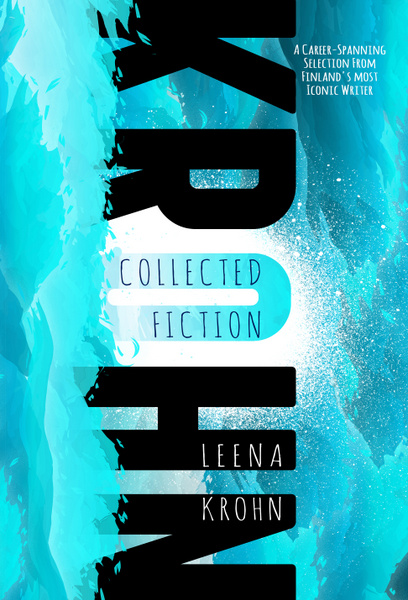
Finnish author Leena Krohn’s English-language anthology Collected Fiction (Cheeky Frawg Books, 2015) is a finalist for the World Fantasy Awards in the Collection category.

Cheeky Frawg krohn-cover-large

Collected Fiction appeared on The New Yorker‘s and The A.V. Club‘s best-of lists last year (see previous posts here and here). It was also recommended by the New York Public Library.

The awards will be presented during the World Fantasy Convention, held October 27-30, 2016 in Columbus, Ohio. Congratulations for the nomination!

Found via Locus Online.

Image via Cheeky Frawg Books.

Quotes: You Can’t Unite Woman and Human

“There is the vanity training, the obedience training, the self-effacement training, the deference training, the dependency training, the passivity training, the rivalry training, the stupidity training, the placation training. How am I to put this together with my human life, my intellectual life, my solitude, my transcendence, my brains, and my fearful, fearful ambition? I failed miserably and thought it was my own fault. You can’t unite woman and human any more than you can unite matter and anti-matter; they are designed not to be stable together and they make just as big an explosion inside the head of the unfortunate girl who believes in both.”

– Joanna Russ: The Female Man

A somber view of what it’s to be an intelligent, determined woman in a world run by men who don’t recognize their value.

Russ, Joanna: The Female Man. Boston, MA: Beacon Press, 1975, p. 151.

(This quote comes from my 21 new-to-me SFF authors reading project.)

Serving exactly what it sounds like, the Quotes feature excerpts other people’s thoughts.

Quotes: An Agreed, Understood Silence

“Secrecy in Karhide is to an extraordinary extent a matter of discretion, of an agreed, understood silence – an omission of questions, yet not an omission of answers.”

– Ursula K. Le Guin: The Left Hand of Darkness

In the country of Karhide on planet Gethen, acceptable modes of behavior and communication—and through them, people’s social standing—depend on what isn’t said as much as what is. In that sense, the world reminds me of Jane Austen’s novels, where discretion and the ability to read other people’s reactions are highly valued. And as a Finn, I certainly know and sympathize with an understood silence. In Finland, silence—even beyond an understood silence—is normal. In the U.S., for me, silence is a way to connect to my home country and therefore a solace.

Le Guin, Ursula K.: The Left Hand of Darkness. New York, NY: Ace Books, 1976 [originally published 1969], p. 287.

(This quote comes from my 21 new-to-me SFF authors reading project.)

This post has been edited to correct spelling errors and for style.

Serving exactly what it sounds like, the Quotes feature excerpts other people’s thoughts.

Bloody Lovely: Pride and Prejudice and Zombies

Pride and Prejudice and Zombies opens tomorrow!

IMDB PPZ Poster Lizzy Darcy

Now, I don’t typically go for horror or zombies, but I’m actually looking forward to this one: the trailers and clips make PPZ look kick-ass. Check ’em out:

Pride and Prejudice and Zombies | official trailer #1 US (2016) Lily James Matt Smith via moviemaniacsDE

“My daughters were trained for battle, sir, not the kitchen.” – Mr. Bennet

Pride and Prejudice and Zombies Official Trailer #1 (2016) – Lily James Horror Movie HD via Movieclips Trailers

(There seems to be a bit of perv cam action going on. I hope this is as much as there is.)

I know nothing of the 2009 novel by Seth Grahame-Smith, but I do love some of the movie adaptation’s stars: Lily James as Elizabeth Bennet (James is no stranger to elegance based on her work in Downton Abbey) and Matt Smith (of the 11th Doctor fame) as Mr. Collins, and, finally, Charles Dance and Lena Headey (most lately, in genre interest, of the Game of Thrones excellence) as Mr. Bennet and Lady Catherine de Bourgh.

Pride and Prejudice and Zombies Movie Clip – Admire via Sony Pictures Entertainment

“I do not know what I admire more, Elizabeth Bennet, your skill as a warrior or your resolve as a woman.” – Lady Catherine de Bourgh

Pride and Prejudice and Zombies – Bloody Good Sneak Peek via Sony Pictures Entertainment

Ugh, pretty gruesome. Then again, it is a truth universally acknowledged, that to see and enjoy Pride and Prejudice and Zombies, one must be in a suitable frame of mind.

Showbizjunkies bennet-sisters-pride-prejudice-zombies

There will be murder and mayhem, surely…

Pride and Prejudice and Zombies Movie Clip – Enviable Talent via Sony Pictures Entertainment

…aaand apparently everything ends in a double wedding:

EW ppz-pride-and-prejudice-and-zombies-2zz

Seems like a combination of very silly and very kick-ass – “hopefully magnificently so,” to quote husband. 🙂

Images: Poster via IMDB. Bennet sisters by CTMG Inc. via Showbizjunkies. Double wedding by Jay Maidment via Entertainment Weekly.

In the Seen on Screen occasional feature, we discuss movies and television shows of interest.

Ursula Le Guin: The Left Hand of Darkness

My latest reading project rolls on with The Left Hand of Darknessby Ursula Le Guin (first published in 1969).

The Left Hand of Darkness

Genly Ai is sent to planet Gethen (also known as Winter due to its extremely cold climate) as an envoy for the Ekumen of Known Worlds, an interstellar conglomeration for trade and cultural exchange. His mission is to convince the planet to join the Ekumen, easier said than done on a world where the conditions are semi-arctic even at the warmest time of the year and where cultures and technologies change at a glacial pace. (Pardon the pun!)

I knew a little of Left Hand before reading it. I knew that it’s highly regarded, that the inhabitants of the world are androgynous (or something) and that there’s an arduous trek across a glacier (or snowy steppes or somesuch) that’s somehow significant.

I also knew that some people describe the book as being about gender. Gethenians are all of the same sex – or, rather, of no sex until their monthly reproductive cycle known as kemmer comes around. At that point, depending on who else is in kemmer nearby, a person may turn either into a Gethenian male or female, and it’s quite usual for someone to be both a mother and a father.

I’m not entirely sure yet what Left Hand is about for me. The Gethenian biology does get a lot of attention, but I suspect it’s because it’s so unfathomable to Ai. The importance of hospitality and cooperation in the cold climate is also significant, as are the balancing of opposite forces (like you-me or individual-society), the complex Gethenian honor system shifgrethor and their aversion to war. Karhide’s neighboring country Orgoreyn sounds like a communist regime, with its people described as units instead of citizens and its communal resources or endless bureaucracy; Orgoreyn may, in an unprecedented step, be moving towards starting a war with Karhide, and we might have a Cold War echo there.

Structurally, Left Hand avoids infodump by alternating the present-day narrative chapters with short chapters on Gethenian mythology. I was a little bothered by how much longer the primary narrative chapters were, for it made reading the novel choppy; I may well change my mind about that if I read Left Hand again.

I’ve seen Le Guin’s writing described as zen-like. The descriptor fits her style in Left Hand well, especially when she’s describing traveling across the icy landscape. A fascinating read, and one I may well like to get back to after mulling it over. Considering that I very much enjoy and have read Le Guin’s Earthsea stories several times in two languages, I can’t believe I haven’t read The Left Hand of Darkness before!

Image by Eppu Jensen

This post has been edited.

ICBIHRTBpronounced ICK-bert-bee—is short for ‘I Can’t Believe I Haven’t Read This Before’. It’s an occasional feature for book classics that have for some reason escaped our notice thus far.

Quotes: Don’t Have to Understand Things for Them to Be

“I don’t understand it any more than you do, but one thing I’ve learned is that you don’t have to understand things for them to be.”

– Madeleine L’Engle: A Wrinkle in Time

Ain’t that the truth! (Understanding does help, though, I find.)

L’Engle, Madeleine. A Wrinkle in Time. New York, NY: Square Fish, 2007 [originally published 1969], p. 29.

(This quote comes from my 21 new-to-me SFF authors reading project.)

Serving exactly what it sounds like, the Quotes feature excerpts other people’s thoughts.

Quotes: That Is a Strange Country

“I would say that [the Russians] are located somewhere near the Baltic Sea. There are old trade routes there, and in our own time it is a territory closed to us. Their installation may be close to the Finnish border. They could disguise their modern station under half a dozen covers; that is a strange country.”

– Andre Norton: The Time Traders

Did Andre Norton just insult Russia? (And yay, Finland was mentioned!)

Norton, Andre. The Time Traders / Galactic Derelicts [omnibus edition]. Riverdale, NY: Baen Books, 2000 [originally published 1958 / 1959].

(This quote comes from my 21 new-to-me SFF authors reading project. Note: A free e-version is available via Baen Books.)

This post has been edited for clarity.

Serving exactly what it sounds like, the Quotes feature excerpts other people’s thoughts.


Leena Krohn on The New Yorker’s Best of 2015

Leena Krohn’s Collected Fiction, an anthology edited by Ann and Jeff VanderMeer, made it onto The New Yorker‘s best-of list!

Cheeky Frawg krohn-cover-largeJoshua Rothman writes of his selection of Krohn for The Books We Loved in 2015 like this:

“I also found myself hypnotized by Leena Krohn, a Finnish writer whose collected stories and novels, rendered into English by many different translators, have just been published as a single volume, ‘Leena Krohn: Collected Fiction.’ Broadly speaking, Krohn is a speculative writer; one of the novels in the collection, for example, consists of thirty letters written from an insect city. (‘It is summer and one can look at the flowers face to face.’) Krohn writes like a fantastical Lydia Davis, in short chapters the length of prose poems. Her characters often have a noirish toughness; one, explaining her approach to philosophy, says that when she asks an existential question, ‘life answers. It is generally a long and thorough answer.’”

Just a week ago, Krohn’s anthology appeared on The A.V. Club‘s Best of 2015 list (along with The Rabbit Back Literature Society by Pasi Ilmari Jääskeläinen). Again, congratulations!

Found via Helsingin Sanomat.

P.S. Try Krohn’s Lucilia Illustris for free, published in December 2015 by Electric Literature.

Image via Cheeky Frawg Books