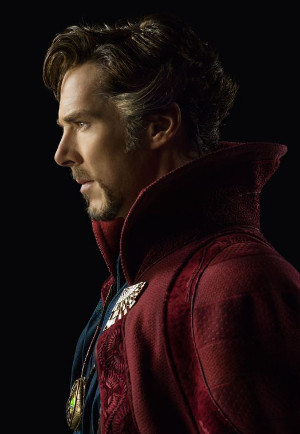
It’s now just over a week until Doctor Strange opens. (Gosh, November is so close!) There are a bunch of trailers on the InterTubes, for instance the official ones by Marvel:
I have to say I know next to nothing about Doctor Strange. The character was referred to from time to time in the translated X-Men I read in my youth in Finland, but “odd name” and “magic user of some sort” was pretty much what I got out of them.
The cast is something to look forward to. I loved Chiwetel Ejiofor in Serenity and The Martian, and Benedict Cumberbatch should be marvelous (I’d listen to him pretty much just reading a phone book). Mads Mikkelsen looks like the quintessential bad guy. Perhaps too much so; I fear I might find his character too corny, but we’ll see.
Tilda Swinton I’m conflicted over. I’ve enjoyed her past performances. Her character in this movie, The Ancient One, has been gender-swapped, which is really cool. However, apparently the role is whitewashed. I guess we’ll see.
I also know nothing of the director Scott Derrickson; again, we’ll see. It’s been such a slow latter half of the year, movie-wise, that I’m looking forward to Doctor Strange even if I’m not sure whether it’s exactly my cup of tea.
Hey, look! We found a thing on the internet! We thought it was cool, and wanted to share it with you.
The movie summer and early fall have been rather dry, as has the actual weather here. I’m eagerly awaiting November when Doctor Strange (six weeks to go!) and Arrival (seven weeks!) open a hopefully more thirst-quenching end of the year. And the more I hear about Arrival, the more intriguing it sounds.
Mark Liberman at Language Log was asked to provide a linguist’s perspective on first-encounter communication strategies. His post is both lengthy and enlightening.
Specifically, he answers the question “An alien is standing in front of you, apparently peaceably. What is the first thing you try, in an attempt to communicate with it?”
The meatiest bit is this:
“There’s no guarantee that their senses and their modes of action are going to be a good fit to ours. They might communicate via skin color changes like cuttlefish, except maybe theirs are only visible in the ultraviolet. Or maybe they can modulate and sense electric fields, like electric eels. They might use gestural and postural changes in a body that’s very different from ours, or rapid morse-code-like modulations of sound at a dozen different frequencies independently and simultaneously. Maybe pheremone-like chemical signals are a crucial part of the process.
“Whatever the modalities of communication, it’s quite likely that we won’t be able to imitate them without building some specialized apparatus. And it’s quite possible that it would be hard even to recognize the fact that they’re communicating with one another, before we even get to the point of trying to understand and imitate.
“More likely, the process would be:
(1) Persuade them not to kill us, and vice versa;
(2) Persuade (or coerce) them to let us observe their within-species interactions, or vice versa;
(3) Design and build systems for recording, analyzing, and synthesizing their communicative signals (or wait for them to do the same thing for ours);
(4) Use those systems to engage in a sort of “monolingual demonstration”, and hope that we can come to understand them and communicate with them to some extent.”
According to Liberman, Ted Chiang’s short story “Stories of Your Life” (that the movie is based on) also mentions “in a mild way” a few of these issues:
“[Protagonist, linguist Dr. Louise Banks] needs to use a ‘sound spectrograph’ to analyze the aliens’ utterances, which sound to her ears ‘vaguely like […] a wet dog shaking the water out of its fur’, and she needs recording and playback to communicate in the other direction, since they don’t recognize her attempts to imitate their speech.”
On the basis of the Arrival trailers released so far it’s hard to say whether the movie will be focusing on linguistics specifically, or whether the intellectual mystery will be rounded up into a more generic academic exercise. It does look like the script at least attempts to stay with Chiang’s story. Like Liberman, I’m very interested to see how much of the linguistics makes it on screen.
Image: sign language : friend via Flickr (2008; colored pencil on charcoal paper; by R.A. Olea) CC BY 2.0
This year marked the 30th anniversary of the release of Labyrinth by director Jim Henson. This past weekend FantomEvents ran some special Labyrinth showings in theaters. We didn’t go due to schedule issues (=work, work, work) but instead watched it at home.
As a geeky kid of the 80s, I have very fond memories of the movie. It’s mostly because of its visuals, but I do like the fantastic lines—great for learning English with—and voice acting as well.
Sarah: “Did you say ‘Hello’?”
Worm: “No, I said ‘allo’, but that’s close enough.”
(The worm was one of my very first tastes of dialectal / regional English!)
If my memory serves, the puppetry effects in Labyrinth are mostly better than in The Dark Crystal, Jim Henson’s previous fantasy movie. (Note to self: Find out if I can rent / streamThe Dark Crystal. Local library to the rescue!)
Some of the songs, too, have become long-time favorites, especially “As the World Falls Down” by David Bowie.
As a kid, I didn’t really understand how someone could like Bowie’s music, but that one song opened my eyes. (Ears?) I still love it, and the ballroom scene with its floating props.
Included are shots of practice runs of some of the vehicle stunts. The skill of those production designers, explosion experts, cinematographers, stunt people, and drivers is staggering.
I’m most interested in Arrival (based on a story by Ted Chiang and out very soon now!), Altered Carbon by Richard K. Morgan, and Lilith’s Brood by Octavia E. Butler. It would also be great to see Ann Leckie’s Ancillary series, Red Mars by Kim Stanley Robinson, and Daniel José Older’s Bone Street books on screen.
It was also intriguing to see Roadside Picnic by Arkady and Boris Strugatsky on the list, for I’m not used to seeing Eastern bloc SFF authors in the Anglo-American market. According to the all-knowing Internets, Roadside Picnic was turned into a Russian SFF art film Stalker in 1979. I never saw that, but did read the Finnish translation (Stalker: huviretki tienpientarelle) when I was too young to really understand it, so it would be nice to refresh my memory.
Besides works in progress mentioned in Zutter’s list, I’m looking forward to OtherLife. It’s adapted from Kelley Eskridge’s Solitaire (2002), which I read only this year and loved. Unfortunately, OtherLife seems currently to have paused in post-production. We live in hope, though! (I’ve been following the story of its development on Eskridge’s blog; do visit for a glimpse of indie movie projects from a writer’s perspective.)
Anything on your radar that especially tickles your fancy? Do share!
Have you heard of Arrival? It’s a forthcoming science fiction movie about a first contact situation on earth, and the more I read about it the more curious I get.
The story is based on Ted Chiang’s 1998 novella “Story of Your Life,” adapted to screen by Eric Heisserer and directed by Denis Villeneuve. Chiang won both the Nebula and Sturgeon Awards with it.
The main interest for me is that Dr. Louise Banks, the character played by Amy Adams, is a linguist. Since we don’t generally get much screen time, it’s exciting, as is having languages / linguistics as a story focus. There’s also a little bit of Nordic involvement: the score is by Icelandic composer Jóhann Jóhannsson.
I love the fact that for a change the UFO that lands in the U.S. touches down in Montana, not New Frigging York City. That horse is thoroughly, properly dead, ladies and gentlemen of Hollywood. Thank you for not going there.
Judging by the trailer, the movie also avoids one of my pet peeves. It looks like finding a way to communicate with the aliens is going to take a lot of effort and a good, long while. We get glimpses of various graphics on computer screens, but it’s clear that the bulk of the work consists of human effort assisted by computers. In other words, people are doing the actual analyzing while computers number-crunch. Compare it, for instance, with the mothership scene in Close Encounters of the Third Kind (a clip of the scene here). As fascinating as the tonal-color language is, I’m so disappointed with the perfunctory and hand-wavy treatment the linguistic mystery got. I do hope that the Arrival trailer is accurate in acknowledging the effort that not only communication but of all kinds of intellectual work require.
And it may indeed be: The USA Today sneak peek quotes the male lead Jeremy Renner: “It’s big and there are thriller elements and tension, but it’s going to lean much more into a thinking person’s film.” There are also hints that Adams’ character will begin dreaming in the aliens’ language, which is a phenomenon I find fascinating. (I sometimes dream in multiple languages. The highest count I can remember is four.)
I discovered one interesting factoid. In the U.S. trailer, Dr. Banks can be heard commenting on the emerging common language like this: “We need to make sure that they [aliens] understand the difference between a weapon and a tool. Language is messy, and sometimes one can be both.”
The international trailer suggests a different story angle, however. Have a look:
In it, instead of “[w]e need to make sure that they understand,” Dr. Banks says: “We don’t know if they understand the difference between a weapon and a tool [my emphasis].”
I don’t know what to make of the decision, and I can’t wait to see which one the movie actually goes with. Fortunately I don’t have that long to wait: the U.S. release date is November 11, 2016.
Monday is when I write, from a historian’s perspective, about some interesting or useful tidbit for writers, especially writers of genre fiction. I’m doing that again today, but from a different angle. Today I want to talk about representation, specifically the representation of people who are not straight white cis men in books, television, movies, games, and other media.
First things first: I’m a straight white cis man with no significant mental or physical challenges. I am a native-born citizen of the country in which I live and a native speaker of its majority language. I am financially secure and socially comfortable. I am not, as far as I know, heir to any titles of nobility, but other than that, if a privilege exists in the world, I’ve probably got it.
Yeah. I’m about to talk about representation. If anyone wants to get off this ride, now’s the time.
When creators and fans talk about adding representation to popular media, the refrain from people who look like me is often: “Why do we have to have X in this story? What do you mean you can’t identify with the characters? Why can’t all you Xes identify with people who aren’t exactly like yourselves?”
I understand where this response comes from. There are white guys all over the place in popular media, but I’ve never identified with a character just because he was a white guy. There are so many of them that I couldn’t identify with them all if I wanted to. When I look at a character and think Hey! That’s me! it comes from traits other than outward identities. Here are some of the characters I’ve felt connected to over the years:
Spock (Star Trek), Guinan (Star Trek: The Next Generation), Brother Cadfael (Cadfael novels and tv series), Minerva MacGonagall (Harry Potter novels and films), Gil Grissom (CSI), Sister Monica Joan (Call the Midwife), Mr. Bennet (Pride and Prejudice), Cora Crawley (Downton Abbey), Tuvok (Star Trek: Voyager)
They’re not all the same gender, race, age, or even species as I am. Two of them are members of a religious order, and I’m not religious at all. Most of them don’t even (fictionally) live in this century.
What can we learn from this collection? (Other than that I have a thing for Vulcans and a rather inflated sense of my ability to dole out wise advice to young ‘uns.) That representation is an aspect of privilege even when you’re not being represented. Having white guys all over the place frees me to look at the characters in my media and identify with them not based on the outward categories they fall into but because they’re thoughtful, introverted, curious, even-tempered, and passionate about knowledge.
On the other hand, I am a member of a very small minority who is rarely represented in media, and then usually in a dismissive, stereotyped, even offensive way: history professors. According to most books, movies, and tv shows, we are boring, joyless pedants in tweed jackets with elbow patches who obsess over minutiae and care only about names and dates.
“Easily the most boring class was History of Magic, which was the only one taught by a ghost. Professor Binns had been very old indeed when he fell asleep in front of the staff room fire and got up the next morning to teach, and left his body behind him. Binns droned on and on while they scribbled down names and dates, and got Emeric the Evil and Uric the Oddball mixed up.”
– J. K. Rowling, Harry Potter and the Philosopher’s / Sorcerer’s Stone Ch. 8
We always wear period clothes and are at best dimly aware of what century we actually live in, if not actively in denial about it.
Professor Dwayne Cravitz from Rizzoli and Isles s. 2 ep. 6 “Rebel Without a Pause”
(Not to mention that we make our (black) graduate students do unpaid labor so that they can have the “authentic slave experience.”)
Oh, and if we’re medieval historians, we’re indistinguishable from renfaire performers. (I can’t find a link to it now, but the memory is seared in my mind of an NPR interview with a scholar attending the annual medieval studies conference in Kalamazoo which made it clear the interviewer thought it was basically a fantasy convention.)
Come on by my history class sometime. I won’t be wearing a costume or droning on about names and dates. I’ll be deep in conversation with my students about social structures, economic forces, multicultrual interactions, source analysis, and all the other interesting parts of history.
Now, history professors are not, by any stretch of the imagination, a historically oppressed or marginalized group. I know how aggravating it can be to be badly represented even as a comfortably privileged middle class white man, but I can’t really imagine what it must be like to be, say, a Native American woman, or a gay man who uses a wheelchair, or a Muslim teenager with Asperger’s, and have to deal with not only the weight of the social disadvantages that come with that and seeing people like myself so rarely and poorly portrayed in media.
Of course we can all identify with people who aren’t like us. That’s not the point. The point is that, no matter who we are, we all deserve to see enough people outwardly like ourselves in books, television, movies, and other media that we don’t have to identify with them just to feel like we’re there.
History for Writers is a weekly feature which looks at how history can be a fiction writer’s most useful tool. From worldbuilding to dialogue, history helps you write. Check out the introduction to History for Writers here.
MARVEL || Glitter & Gold (collab w/ djcprod) by Grable424
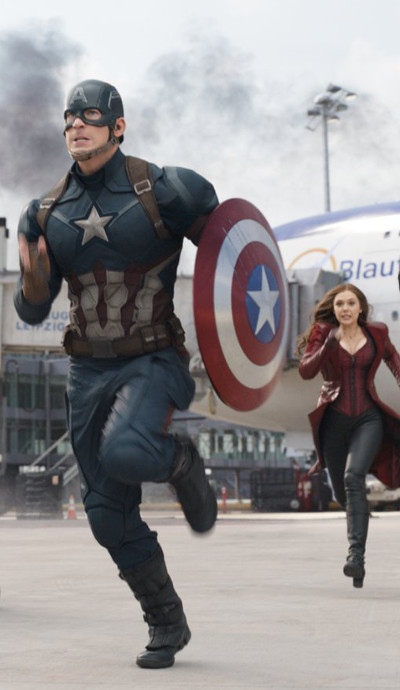
They’ve skillfully intercut clips from Iron Man and Captain America movies, Guardians of the Galaxy, and Ant-Man, among others; the Doctor Strange trailer also features, even if the movie wasn’t out yet. The song is “Glitter & Gold” by new-to-me artist Barns Courtney, and very catchy. Love it!
Hey, look! We found a thing on the internet! We thought it was cool, and wanted to share it with you.