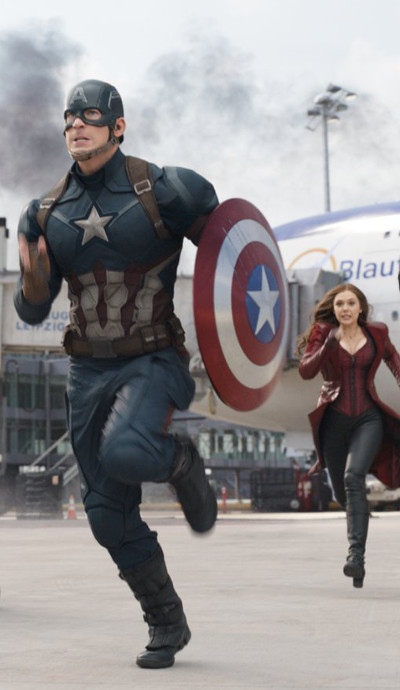
Captain America: Civil War and Red Herring Overload

170105civilwarWhen I saw Captain America: Civil War in the theatre, something bothered me about the story. It’s not that I didn’t like it. I find Civil War one of the best, most polished films in the Marvel Cinematic Universe. In my headcanon, Civil War is the actual Avengers 2 while Age of Ultron is Iron Man 4 at best. But still, something about the story just bugs me and the first couple times I saw the movie I couldn’t put my finger on it. (To be fair, that movie gave us plenty to talk about.) Now that it’s out on DVD and I’ve gotten to see it a few more times, I think I can name the problem: red herring overload.

Here’s what I mean. Going into the movie, having seen the trailers, you think it’s going to be about Steve Rogers / Captain America and Tony Stark / Iron Man having a falling out. But it isn’t.

Then the movie starts and you think it’s going to be about Bucky Barnes / the Winter Soldier. But it isn’t.

Then you think it’s going to be about the blue goo in Howard Stark’s trunk. But it isn’t.

Then you think it’s going to be about a stolen vial of disease. But it isn’t.

Then you think it’s going to be about the Sokovia Accords. But it isn’t.

Then you think it’s going to be about Steve’s relationship with Bucky. But it isn’t.

Then you think it’s going to be about T’Challa’s quest for revenge and his rise as a hero. But it isn’t.

Then you think it’s going to be about Zemo and his all-new all-different gang of Winter Soldiers. But it isn’t.

Then you think it’s going to be about the Avengers splitting up over different ideas of what it means to be a hero. But it isn’t.

Finally, finally, at the end of the movie, we discover what it’s actually been about all along: Tony Stark’s unresolved emotional issues.

I still think that Civil War is an excellent movie and one of the highlights of Marvel’s cinematic work, but this is a serious weakness in its writing. Not only did we not really need another movie about Tony’s unresolved issues (we’ve got four already), but it deflates the narrative power of the story to have so much of the plot either fizzle out or just be left hanging at the end. By the end of the movie, the mantelpiece is littered with unfired guns and instead we get to watch two exhausted, angry men slug each other.

Maybe, if this had been a different movie, that would have been a satisfying ending. But it wasn’t.

Image: Captain America: Civil War still via IMDb

In the Seen on Screen occasional feature, we discuss movies and television shows of interest.
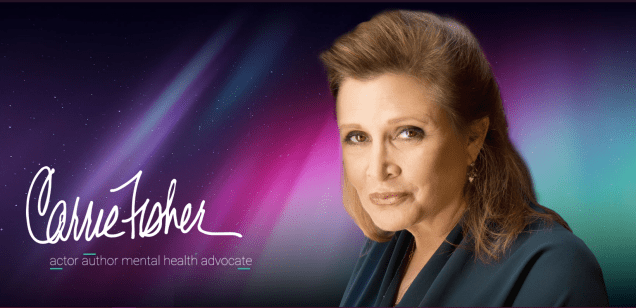
R.I.P. Carrie Fisher

Carrie Fisher, actor, author, advocate, script doctor, and Resistance General extraordinaire, has passed at the age of 60.

Carrie Fisher Homepage

Rest in peace, dear Ms. Fisher. Your honesty, fearlessness, and spirit will be missed.

In the words of Tough Love Leia on Twitter:


Image via carriefisher.com

Post edited for formatting.

2 weeks to Rogue One—Check out This R1 Trailers Supercut

The peeps at GameSpot Universe went through Rogue One trailers and combined them into this supercut:

Trailer Supercut: All Rogue One Clips In Chronological Order by GameSpot Universe

Their goal was to put the clips in chronological order, by which I’m guessing the order they will appear in the movie. Looks like a reasonable guess to me!

Two weeks—can’t wait!

Hey, look! We found a thing on the internet! We thought it was cool, and wanted to share it with you.

Arrival Recap

So, here are some initial thoughts on Arrival. Spoiler alert is most definitely in effect!

Twitter Arrival Movie Poster Aug 16 2016

Things I loved:

  • No stealth female protagonists here, but an actual, full-time, proper female lead who isn’t there for her boobs and butt, but brains!
  • Top notch plotting, dialogue, and characters, all in all. Also the directing, sets, music, and effects were impressive.
  • Some of the trailers make it look like the linguistics lecture in the very beginning is in a huge auditorium with only a handful of students attending, which might have meant that the movie university was going to have a neglected linguistics department or lukewarm students. Not so. There was a good reason why students didn’t show up, i.e., the alien landing.
  • Dr. Louise Banks (Amy Adams) was treated as an expert almost universally. Notable exceptions were a CIA bloke at the Montana camp and Dr. Ian Donnelly (Jeremy Renner), the male lead. The latter, upon meeting Dr. Banks for the very first time, quoted something she’d written and said something to the effect of “Too bad it’s wrong.” Tut tut. He got over himself, though.
  • Colonel Weber (Forest Whitaker), the army liaison for the civilian consultants, was an actual ally to Dr. Banks and Dr. Donnelly, not an antagonist. It would’ve been so easy to take the lazy road. (Then again, they did take it with the antagonistic CIA bloke.)
  • The complexities of language and communication were explained with easily understandable comparisons.
  • Languages were treated as the complex systems that they are, i.e., other levels beyond the lexicon got attention.
  • Many of the English translations of the heptapods’ language were messy (e.g., “Abbott is death process” = “Abbot is dying”). As a non-native English speaker who operates with two languages on a daily basis, I found it very realistic. There are times when quick and dirty is what you need, and others when you can spend more time pondering. In a first contact situation where political and military pressures are high, there might not even be a need to polish the English syntax as long as the message is unambiguous.
  • Some of the aliens’ language was subtitled. I’m a visual person; in addition, I can’t always hear everything in noisy environments such as movie theaters or restaurants. ❤ subtitles!
  • The story is very explicit about the need for people work together to solve problems without feeling preachy. YMMV.
  • A male hero doesn’t punch an alien in the face at the end. I’m all for punching the bad guys—now and then. I explicitly do not want all of my reading and viewing rehashing the same old stories over and over, because SFF is explicitly about examining other possibilities. It feels (’cause I haven’t seen any statistics or anything) like lately we’ve mostly gotten the punchy kind of SFF. It was so nice to face a different fare for a change.

Things I didn’t think were quite as successful:

  • Only one prominent female speaking role. For realz. Surely you’re better than that, writing team.
  • The conflation of linguistics and translating. Of course the two disciplines are related, but each comes with its own set of principles and tools.
  • Dr. Banks and Dr. Donnelly each got their own team in Montana, but the teams were hugely underused. They might have been completely omitted for all the difference they made.
  • Dr. Banks’s visions affected her thinking and behavior, but weren’t integrated into the dialogue terribly well. The one time they tried (“Are you dreaming in their language?”), she responded very defensively, and the matter was dropped without further exploration.
  • Non-linear time as part of the plot. It’s a very difficult concept to pull off successfully. I haven’t come across a story yet where I think it works to its full effect. (I might feel differently about “Story of Your Life.” Note to self: Find it & read.) Even so, the execution in Arrival was one of the most elegant I’ve encountered, and the reveals were well-paced.
  • At the end, the aliens indicate that they’re sharing their full language with Dr. Banks because in 3,000 years they will need humanity, but that was it. What a cliffhanger!

I’ll finish with a couple of links:

How the writer of ‘Arrival’ spent a decade getting his sci-fi Oscar contender made. An interview with screenwriter Erik Heisserer that sheds light to the difficulties in getting a movie project greenlit and adapting the inspiration story.

‘Arrival’ Author’s Approach To Science Fiction? Slow, Steady And Successful. An interview with Ted Chiang, whose short story “Story of Your Life” (1998) was the basis for Arrival.

Ted Chiang, the science fiction genius behind Arrival. Another focus piece on Chiang.

Image via Arrival Movie on Twitter

In the Seen on Screen occasional feature, we discuss movies and television shows of interest.

Random Thoughts on Doctor Strange

161107strangeIn no particular order. Spoiler warning in effect.

  • Doctor Strange is a perfectly good movie, but not the great movie I hoped it might have been. This year, and this fall in particular, have been so lacking in entertaining movies, though, that I’ll happily take “perfectly good.”
  • In terms of narrative structure, character arcs, and facial hair, this was pretty much just Iron Man with magic instead of tech. Iron Man was great, and if anybody can both live up to Robert Downey Jr.’s Tony Stark and at the same time make his version of the insufferable arrogant genius not feel like a poor copy, it’s Benedict Cumberbatch, but I still feel like I’ve seen this movie enough times already.
  • Speaking of insufferable arrogant geniuses, it’s been noted that Cumberbatch is already pretty adept at playing them. Which he is, but his Dr. Strange is, again, a distinctly different kind of insufferable arrogant genius from his Sherlock Holmes. Cumberbatch doesn’t just do insufferable arrogant genius well, he does it with specificity and nuance, which is what makes him such a great actor.
  • Speaking of great acting, Tilda Swinton’s Ancient One is a delight to watch: mysterious without being obscure, playful without being childish, dangerous without being menacing. She and Strange play off one another beautifully.
  • The erasure of Asian people from their own culture and history is a problem, one to which this movie has contributed. This and the above are both true; neither one negates the other.
  • Speaking of erasure, it’s really rather pathetic that there are only two female characters in this movie. One of them dies and a cape has more of an independent story than the other one. Marvel has seriously got to do better.
  • Chiwetel Ejiofor is playing his Serenity character in reverse.
  • The magic in this movie is a beautiful combination of movement and color. This is what magic should look like in film.

Image: Doctor Strange poster via IMDb

In the Seen on Screen occasional feature, we discuss movies and television shows of interest.

Arrival—Establishing Common Ground

A new Arrival screen ad is out! (Published today, in fact!) In an atypical move, the trailer (if you can call it that) starts with several completely unrelated clips of people in an experimental situation:

Arrival (2016) – “Common Ground” – Paramount Pictures by Paramount Pictures

…except that, of course, the clips aren’t unrelated. They show two strangers with no shared language trying to figure out what they have in common. It’s quite clever; see for yourself.

Two weeks to go till opening night!

Hey, look! We found a thing on the internet! We thought it was cool, and wanted to share it with you.

Doctor Strange Trailers

It’s now just over a week until Doctor Strange opens. (Gosh, November is so close!) There are a bunch of trailers on the InterTubes, for instance the official ones by Marvel:

Marvel’s Doctor Strange Teaser Trailer by Marvel Entertainment

Doctor Strange Official Trailer 2 by Marvel Entertainment

The tv spot from the end of September, however, is my favorite:

Doctor Strange TV Spot by Marvel Entertainment

Kaecilius: “Mister…?”

Strange: “Doctor.”

Kaecilius: “Mister Doctor.”

Strange: “It’s Strange.”

Kaecilius: “Maybe. Who am I to judge?”

Harf! 🙂

I have to say I know next to nothing about Doctor Strange. The character was referred to from time to time in the translated X-Men I read in my youth in Finland, but “odd name” and “magic user of some sort” was pretty much what I got out of them.

The cast is something to look forward to. I loved Chiwetel Ejiofor in Serenity and The Martian, and Benedict Cumberbatch should be marvelous (I’d listen to him pretty much just reading a phone book). Mads Mikkelsen looks like the quintessential bad guy. Perhaps too much so; I fear I might find his character too corny, but we’ll see.

Tilda Swinton I’m conflicted over. I’ve enjoyed her past performances. Her character in this movie, The Ancient One, has been gender-swapped, which is really cool. However, apparently the role is whitewashed. I guess we’ll see.

I also know nothing of the director Scott Derrickson; again, we’ll see. It’s been such a slow latter half of the year, movie-wise, that I’m looking forward to Doctor Strange even if I’m not sure whether it’s exactly my cup of tea.

Hey, look! We found a thing on the internet! We thought it was cool, and wanted to share it with you.

On First Contact Communication in Arrival

The movie summer and early fall have been rather dry, as has the actual weather here. I’m eagerly awaiting November when Doctor Strange (six weeks to go!) and Arrival (seven weeks!) open a hopefully more thirst-quenching end of the year. And the more I hear about Arrival, the more intriguing it sounds.

Mark Liberman at Language Log was asked to provide a linguist’s perspective on first-encounter communication strategies. His post is both lengthy and enlightening.

RA Olea Flickr Sign Language Friend

Specifically, he answers the question “An alien is standing in front of you, apparently peaceably. What is the first thing you try, in an attempt to communicate with it?”

The meatiest bit is this:

“There’s no guarantee that their senses and their modes of action are going to be a good fit to ours. They might communicate via skin color changes like cuttlefish, except maybe theirs are only visible in the ultraviolet. Or maybe they can modulate and sense electric fields, like electric eels. They might use gestural and postural changes in a body that’s very different from ours, or rapid morse-code-like modulations of sound at a dozen different frequencies independently and simultaneously. Maybe pheremone-like chemical signals are a crucial part of the process.

“Whatever the modalities of communication, it’s quite likely that we won’t be able to imitate them without building some specialized apparatus. And it’s quite possible that it would be hard even to recognize the fact that they’re communicating with one another, before we even get to the point of trying to understand and imitate.

“More likely, the process would be:

(1) Persuade them not to kill us, and vice versa;
(2) Persuade (or coerce) them to let us observe their within-species interactions, or vice versa;
(3) Design and build systems for recording, analyzing, and synthesizing their communicative signals (or wait for them to do the same thing for ours);
(4) Use those systems to engage in a sort of “monolingual demonstration”, and hope that we can come to understand them and communicate with them to some extent.”

According to Liberman, Ted Chiang’s short story “Stories of Your Life” (that the movie is based on) also mentions “in a mild way” a few of these issues:

“[Protagonist, linguist Dr. Louise Banks] needs to use a ‘sound spectrograph’ to analyze the aliens’ utterances, which sound to her ears ‘vaguely like […] a wet dog shaking the water out of its fur’, and she needs recording and playback to communicate in the other direction, since they don’t recognize her attempts to imitate their speech.”

Visit Language Log for more.

On the basis of the Arrival trailers released so far it’s hard to say whether the movie will be focusing on linguistics specifically, or whether the intellectual mystery will be rounded up into a more generic academic exercise. It does look like the script at least attempts to stay with Chiang’s story. Like Liberman, I’m very interested to see how much of the linguistics makes it on screen.

Image: sign language : friend via Flickr (2008; colored pencil on charcoal paper; by R.A. Olea) CC BY 2.0

On, of, and about languages.