Built-in Brick Space Invaders

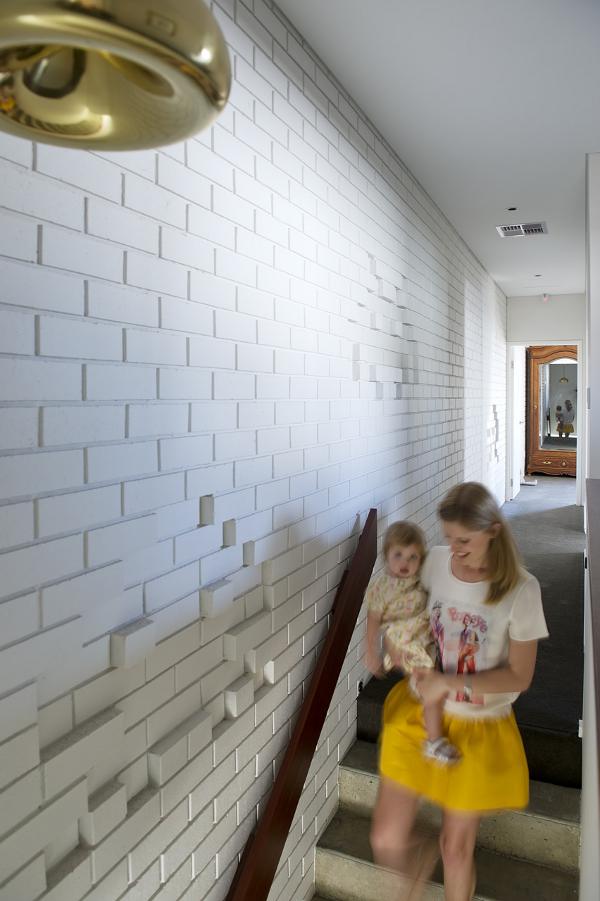
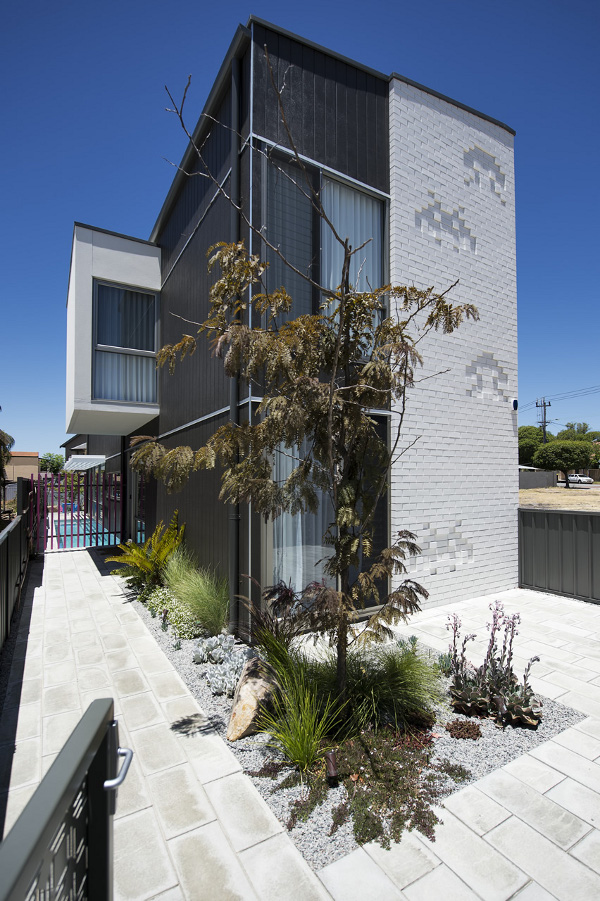
When you really love a game: Klopper & Davis Architects in Perth, West Australia, built Space Invaders critters into the walls of this house. The critters are made with depressed brick, and appear both indoors and outdoors. Take a look:

Desire to Inspire florence_141

Desire to Inspire florence_231

Desire to Inspire florence_363

Not an easily DIY-able project, but very neat.

Found via Desire to Inspire. (Visit the DtI blog post for additional Space Invaders views!)

Images: Klopper & Davis Architects, via Desire to Inspire

In Here is an occasional feature highlighting geeky spaces created by our fellow geeks all over the world.

Gleaned from Bodleian Libraries Workshop on Ultramarine Blue

Did you know that the Bodleian Libraries at the University of Oxford have a Tumblr micro blog? I didn’t until just recently. And oh my, it’s a treasure trove!

Bodleian Libraries Ultramarine Young Man Blue Rock Bodl MS Elliott 287 fol34a

A short post gives a few tantalising details on lapis lazuli, the mineral that was ground down to get bright blue pigment for example for illuminating Medieval manuscripts:

“In his travels Marco Polo vividly described the cold province of Badakhshan, a prosperous land where horses that descended from Alexander’s horse Bucephalus were once bred and where priceless rubies and the finest lapis lazuli were found.

“Since ancient times lapis lazuli has been sourced in this remote region, north-east of modern Afghanistan, and exported over vast distances. Its mines on the steep Hindu Kush Mountains, above the Valley of the Kokcha River, can only be reached through a tortuous and dangerous route.

“Lapis lazuli consists of a large number of minerals, including the blue mineral lazurite, the white mineral calcite and golden specks of iron pyrites.

“A laborious process transforms this composite mineral into the pigment ultramarine; various grades of ultramarine can be obtained, from the purest extremely expensive deep blue, composed mostly of lazurite particles to the pale grey so-called ultramarine ash.”


Tumblr Bodleian Libraries Ultramarine Workshop Screencap

The conservators at Bodleian (Anita Chowdry, David Margulies and Marinita Stiglitz) learned how to make pigment from scratch in a two-day workshop, and shared their notes in a longer post.

Bodleian Libraries Ultramarine Detail Bodl MS Arab d98 fol1b

Both the historical process and conservators’ efforts are fascinating! Did you know, for instance, that before explosives were developed, lapis lazuli was mined with the help of large fires and cold water?

Visit the Tumblr post for more photos, and read more in the Bodleian blog post “Exploring Ultramarine”.

Found via MedievalPOC on Tumblr.

Images via Bodleian Libraries: Young man picks a blue rock, Bodleian Library, MS. Elliott 287, fol. 34a. Workshop image collage screencapped from Tumblr. Detail of Bodleian Library, MS. Arab. d. 98, fol. 1B.

How It Happens is an occasional feature looking at the inner workings of various creative efforts.

An Extant Map as Evidence of Native American Cartography

In the U.S., and indeed more widely in the Anglo-American world, Meriwether Lewis and William Clarke are known for their two-year expedition of the Louisiana territory (purchased from France in 1803) and the land beyond the “great rock mountains” in the west.

Less commonly remembered in cursory mentions is the extent of Lewis and Clarke’s interactions with local Native Americans. (Apart from Sacagawea, who is known at least in the U.S.) The whites didn’t just exchange gifts or talk about trade or clash with the local population; they received invaluable help and information (like when the expedition wintered with the Mandan people in present-day North Dakota).

Now it seems that western historians need to re-evaluate that extent.

According to The Jefferson Watch, cartographers have identified at least ten places in the journals of Lewis and Clarke where the captains talk about the maps by Native American hosts to help them figure out the lay of the land.

Christopher Steinke, at the time a graduate student at the University of New Mexico, found one of those maps at the archives of the Bibliothèque nationale de France (BnF) in Paris. It was drawn by Inquidanécharo, a chief of the Arikara (in French, Ricara), who was apparently also known as Too Né.

LudditeLabs on Twitter did some of the heavy lifting and linked to the BnF digital copy of the map:

BnF Gallica Inquidanecharo Map Missouri Valley

An article by Steinke is available at JSTOR, where this abstract comes from:

“The Bibliothèque nationale de France contains a hitherto unnoticed map attributed to Inquidanécharo, a Ricara chief. Lewis and Clark knew him as Too Né, an Arikara village leader who accompanied them upriver to the Mandan and Hidatsa villages in 1804. The map, which Too Né showed to playwright and artist William Dunlap when he visited Washington in 1806, is the most detailed surviving Indian representation of the Great Plains from this period. It invites scholars to reorient early American exploration and cartography from indigenous perspectives. Too Né interpreted his map as a work of history and cartography and situated the American explorers in the historical and religious landscape of the Arikara people.”

In “Here is My Country”, Steinke outlines some of the main features of Inquidanécharo’s map, and recounts some history surrounding it. He also lists a few other Native American maps from the eighteenth and early nineteenth centuries.

What most struck me, though, is that Native American maps seem to have contained more information than just geographical details—they also depicted cultural connections and ethnographical information.

I knew Native Americans used symbols and pictograms, and had to have—like people everywhere—a way of talking about and remembering locations outside their immediate surroundings. I had no idea, however, that Native American cartography was as polished or wide-reaching as it was (a hint for the Finnish school system), let alone that their maps might still be extant. Fascinating!

Found via bluecorncomics on Twitter.

This post has been edited to correct a typo.

In Live and Active Cultures we talk about cultures and cultural differences.

A Random Find: Ancient and Early Medieval Persian or Iranic Women’s Clothing

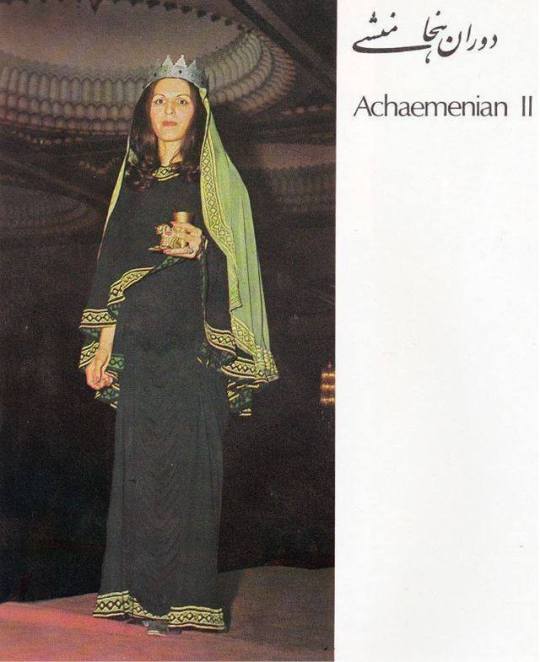
I randomly ran into a collection of recreations of Persian or Iranic women’s clothing from different eras, from ancient times to a few hundred years ago. Below are the five oldest outfits.

Tumblr Non-West Hist Persian Iranic 2nd Millenium BC
“Second Millennium B.C. From the collection of Ph. Ackerman”
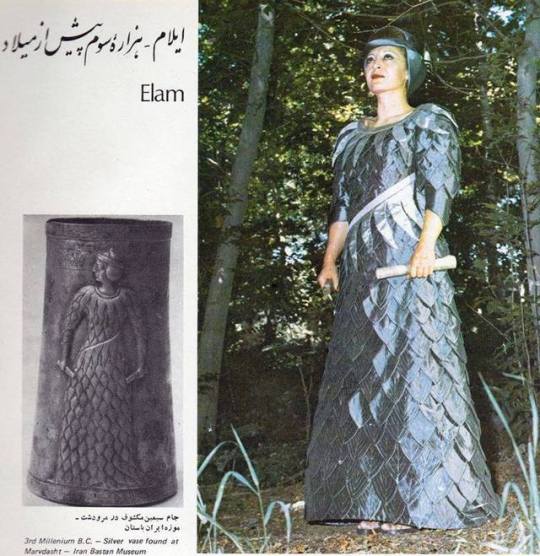
Tumblr Non-West Hist Persian Iranic Elam
“Elam. 3rd millennium B.C. – Silver vase found at Marvdasht – Iran Bastan Museum”

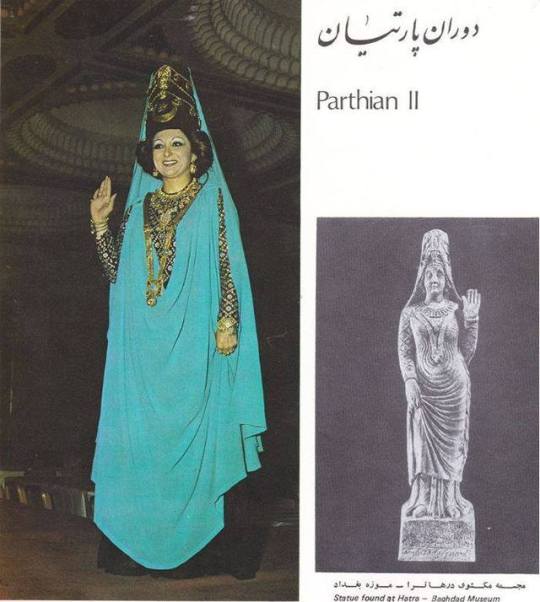
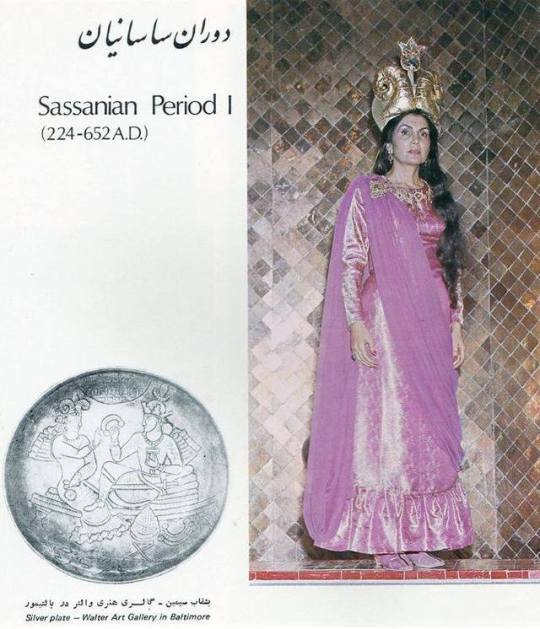
They seem to be images of modern interpretations based on artwork of various kinds: statuettes, carvings, reliefs, paintings, and drawings.

Tumblr Non-West Hist Persian Iranic Achaemenian
“Achaemenian II”
Tumblr Non-West Hist Persian Iranic Parthian
“Parthian II. Statue found at Harta – Baghdad Museum”
Tumblr Non-West Hist Persian Iranic Sassanian
“Sassanian period I (224-652 A.D.). Silver plate – Walter Art Gallery in Baltimore”


Aren’t they fascinating? The images clearly come from a print publication, but apart from that I unfortunately don’t have any source information.

I don’t know much about these eras and areas, but I can’t escape the impression that these recreations may be relatively old and, perhaps, not entirely reliable. For instance, the Sassanian dress seems very polyester-like (too shiny). On the other hand, a lot of the draping looks very plausible. It would be so interesting to read an analysis on each outfit by the researchers / creators.

I’ve long been into early history, specifically of textiles and clothing, usually the older the better. Sadly, it’s an area that we tend to have very spotty evidence. I’m so glad digitization and the Internet help get more information out to interested audiences. There are so many more sources and preserved fragments than many may realize, and now we get to see them!

Images found via Non-Western Historical Fashion on Tumblr.

Out There is an occasional feature highlighting intriguing art, spaces, places, phenomena, flora, and fauna.

A Science-Fictional Personal Transportation Drone Is Almost a Reality

On Twitter, CNET shared a video of test flight footage of an apparently functional, autonomous passenger drone. Take a look at it here:

The model is called Ehang 184. There’s a longer test flight video on EHANG’s YouTube channel:

EHANG 184 AAV Manned Flight Tests by EHANG on YouTube

There’s been some buzz—quite understandably, too, for the drone looks pretty neat—but the vehicle doesn’t seem to have been ready for the international market quite as soon as some western news outlets have reported. It sounds like the battery life is still rather limited, too. Fortunately the limitations of the current tech do not have to restrain a science fiction writer—just think of how much cell phone batteries have improved in the last ten years alone.

My goodness, it’s exciting to be living now! 🙂

The Visual Inspiration occasional feature pulls the unusual from our world to inspire design, story-telling, and worldbuilding. If stuff like this already exists, what else could we imagine?

Geeky, Feminist Motivational Posters for the International Women’s Day

Due to a post-winterstorm blackout a week more than two weeks ago, I’m still catching up on my Internet reading, so I only saw these awesome, nerdy motivational posters now after the International Women’s Day. It was worth the wait, though:

Tumblr Risa Rodil Poster Shuri Improved
Risa Rodil on Tumblr.

“Just because something works doesn’t mean it can’t be improved.”

Referring of course to Shuri from the movie Black Panther. As another tinkerer, I wholeheartedly agree! 😀

Tumblr Risa Rodil Poster Successful Woman Herself
Risa Rodil on Tumblr.

“Behind every successful woman is herself.”

The posters are by letterer, illustrator and designerd Risa Rodil. She posted them on Tumblr in honor of the International Women’s Day (March 08).

Visit Risa Tumblr post for more geeky feminist posters. And while there, look at the rest of her work – such a distinct, lively, whimsical style. I especially liked this library poster:

Tumblr Risa Rodil Poster When Doubt Library
Risa Rodil on Tumblr.

“When in doubt, go to the library.”

Find more about Risa on her website, including where to buy her designs.

Images by Risa Rodil via Tumblr: Shuri and successful woman. Library.

This post has been edited.

Out There is an occasional feature highlighting intriguing art, spaces, places, phenomena, flora, and fauna.

A Washington State Hobbit Hole

Kristie Wolfe built a Hobbit hole in the mountains of central Washington state. And what great work it is—the attention to detail is superb!

Zillow Kristie Wolfe Hobbit Hole View

The house hole has a bedroom, a small living room, and a bathroom with a large wooden oval jacuzzi. As befits a Hobbit hole, the structure is mostly underground and has a round door.

Zillow Kristie Wolfe Hobbit Hole Entry

The small yard is edged by a stick-and-branch fence woven by Wolfe’s landscaper sister.

Zillow Kristie Wolfe Hobbit Hole Yard

There are loads of thought-out details like the floors made of wooden disks of various sizes and a beautiful metal door decoration/knob. But where is the kitchen? Wolfe explains in this video:

A Hobbit House You Can Stay In by Zillow

In case you can’t access the video, she says she’s planning a total of three holes, and since it’s not very practical for each to have its own kitchen, she wants to build a bigger shared one in the style of an English pub.

Read the article at Zillow for more details and photos.

I can understand that you can’t always overcome restrictions, but I still think a kitchen is vital, VITAL, in a Hobbit home. On the other hand, an indoor bathroom is often omitted in favor of an outhouse when building in a challenging location, so full marks to Wolfe for including a full bath.

Also check out a Scottish Hobbit hole I blogged about earlier—which do you prefer and why?

In Here is an occasional feature highlighting geeky spaces created by our fellow geeks all over the world.

Inuit Tactile Maps

Maps tell us where we are and how to get where we’re going. Sometimes, the top-down, bird’s-eye-view style of map we are most used to today is not the most helpful tool for achieving that goal. Anyone who’s had to orient themselves in a strange landscape with a traditional map knows the frustration of trying to match the visible landmarks and shapes of the terrain to the lines and symbols of the map. There are also plenty of places where pulling out a flat paper map would be impractical.

From Greenland comes a different approach to mapping. These drawings show two carved wooden maps of the coastline around the eastern Greenland settlement of Sermiligaaq that were sold to Danish explorers by a local named Kunit in the 1880s.

These small carvings, known as the Ammassalik wooden maps, represent the shapes of the coastline. The narrower map represents a string of islands; the wider one records a stretch of the mainland coastline and is read in a continuous stretch up one side and down the other. They are small enough to be held inside a mitten so that a traveler paddling down the coast by kayak could feel their way along from one bay to the next.

Just another example of how human ingenuity finds different solutions to similar problems.

Image: Drawing of the Ammassalik maps via Wikimedia

Hey, look! We found a thing on the internet! We thought it was cool, and wanted to share it with you.

Ancient Clay Cup Animation

Oh, wow: quite possibly the oldest attempt at animation ever comes from some four thousand years ago. It’s a depiction of a goat jumping up a tree to eat the leaves:

The sequence laid flat looks like this:

Wikimedia Burnt City Iran Clay Cup Reproduction

And here’s a photo of the cup:

Wikimedia Burnt City Iran Clay Cup

Found via The Real Iran on Tumblr. My Tumblr source doesn’t unfortunately give any more info, but it sounds like the cup was found in the Bronze Age site of Shahr-e Sūkhté (or Shahr-e Sukhteh) in Sistan, southeastern Iran.

Just reading the Wikipedia page for Shahr-e Sūkhté makes my imagination run—a large trading route hub with connections to Mesopotamia, Central Asia, and India with rich material culture would make an excellent setting for historical or speculative fiction. (For example, among the archaeological finds from the Burnt City is apparently the world’s first artificial eyeball.)

Finding real-world inspiration like this is when I really wish I was a writer!

Images: Animation via Wikimedia. Reproduction via Wikimedia. Cup photo via Wikimedia (Shahr-e Sūkhté, Iran; late half of 3rd millennium BCE; clay).

The Visual Inspiration occasional feature pulls the unusual from our world to inspire design, story-telling, and worldbuilding. If stuff like this already exists, what else could we imagine?


Writing, Reading, Living Different Cultures

I saw a Twitter thread about writing culture by author Joan He, on the face of it about her (or your) own but by extension that of others, and it has plenty of food for thought:


As a reader, and specifially a reader of speculative and historical fiction primarily not in my native language, I run into differences in culture a lot. And as a person in a multicultural, multilingual relationship in a strange country where I’m a cultural and linguistic minority, from time to time I find myself slammed against more deep-seated cultural assumptions.

Joan pointed out that culture is a way of thinking, or cognition, or perspective. As an example, I’d like to share two failures of cultural expectations from my personal experience.
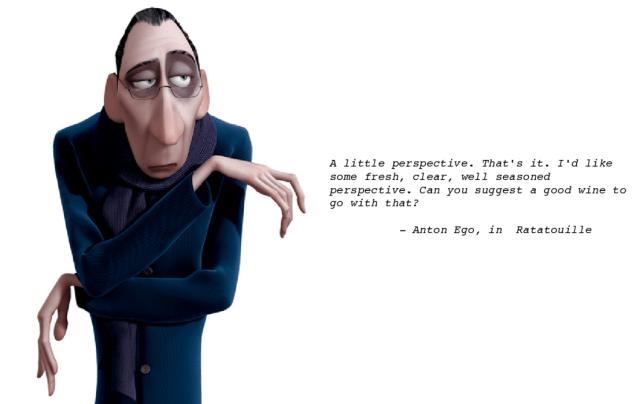
Ratatouille Anton Ego Perspective Quote

At a con once, I wanted to get a book signed by an American author. I happened to know from their online presence that the author is an introvert. Even though we were both at a public place where introverted authors and panelists often don a more outgoing persona than they do in private, as another introvert I wanted to make sure I’d be especially considerate. However, quite without intending to I tripped over a distinctly Finnish quirk.

One of the big unspoken assumptions in the Finnish culture is that silence isn’t a negative. (Erik and I have both written about it for instance here, here, and here.) In essence, how I understand it, silence means space, and space means respect to other people.

Accordingly, at the abovementioned autograph session, when it came my turn I said my hellos, presented the author with my book, and waited silently. It wasn’t until the author asked me “Did you read it?” that I realised they expected me to say something else. And I had thought I was being courteous not to burden them with yet another dose of chitchat on a weekend full of being “on” at a busy con. I can’t remember for sure, since it was a kind of a deer in the headlights moment for me, but I think I was able to stutter my way to an exit without actually breaking into a run. In any case, not terribly smooth on my part.

I’ve also had a previously friendly person walk away from me when, in the middle of a presentation, I (I’m guessing “merely”) nodded to them to acknowledge their presence and silently continued to listen to the speaker (I’m guessing instead of starting a conversation with the friendly person). Although it’s been years, I still find that an utterly, completely, and thoroughly puzzling reaction.

Over the years, I’ve built a store of strategies and stock exchanges I can pull out if needed, but it’s been hard to try and perform—for it is essentially a performance—in a way that feels unnatural and at times even rude to me. Even after 10+ years, I still can’t bring myself to commit to it wholeheartedly. I suspect I’ll always be the odd, quiet one in Anglo-American contexts, but that’s my background and temperament.

So: yes, cultural assumptions and perspectives are difficult to convey, whether in writing or otherwise. Adding surface details to a fictional culture is easy, and it can be a fantastic tool for both creating distance from the everyday world and deepening the invented one. I love seeing glimpses of the practicalities that fictional characters deal with; I would find—and have found—stories seriously lacking without them. Never, though, should the surface glitter be where invention on the part of author ends; that is as unsatisfying as a lack of external cultural markers.

Being a truly exceptional author has, for me, come to mean not only the ability to create layered, nuanced worlds (or convey the complexities of everyday life in historical fiction). In addition, skilled authors I enjoy the most are able to avoid massive infodumps and to suggest underlying cultural values subtly, as inseparable part of narration and dialogue. And that’s a very challenging thing to do. It sometimes takes me more than one read-through to feel I’m beginning to understand a story. Then again, worthwhile things often are the most difficult ones.

Image via The Autodidactic Hacker

In Live and Active Cultures we talk about cultures and cultural differences.