Grammatically Female Dwarves in Tolkien

Jimtheviking on Tumblr wrote about how the Dwarven names in J.R.R. Tolkien’s The Hobbit connect with Old Norse, especially Dwarf names listed in the poem Völuspá.

According to Jimtheviking, Tolkien chose a number of names from Old Norse and tweaked those names in an interesting way. Namely, Tolkien grasped Old Norse grammar well enough to know that the omission of one n from a name ending in –inn changed it from masculine to feminine. To quote Jimtheviking:

“Well, I give you the names of the Dwarves from the Hobbit, as they appear in Dvergatal (stanzas 14-16) and in the order they appear:

“Dvalins, Dáinn, Bívurr, Bávurr, Bömburr, Nóri, Óinn, Þorinn, Þráinn, Fíli, Kíli, Glóinn, Dóri, Óri

“Now, in the Hobbit, they’re named as follows:

“Dwalin, Dáin, Bifur, Bofur, Bombur, Nori, Óin, Thorin, Thráin, Fíli, Kíli, Glóin, Dori, Ori.

“Now, you notice something with the way those names got changed? That’s right, he changed the masculine -inn definite suffix to -in, which is feminine.

“That means that, at least grammatically, Dwalin, Dáin, Thorin, Thráin, and Glóin are female Dwarves.”


Then, moving on from purely linguistic, Jimtheviking continues with an intriguing argument:

“Since we know Tolkien was meticulous about his grammar, this was done most likely as an in-joke […] [emphasis original]

“But there’s a not-inconceivable chance that the Dwarves were using the masculine pronouns in Westron because that’s what the Men who met them used, despite the fact that a third of the company was female, and hey, it’s kinda neat to think he wrote a bunch of Dwarf-ladies going on an adventure.”

It is really interesting, isn’t it, to posit male and female Dwarves in Tolkien’s adventures?!

500px Alexander Turchanin Thorin Cosplay


Poking around, I found versions of Völuspá that differ from the Dwarf list as given by Jimtheviking*. Not just the list itself, but also spellings differ depending on the edition you’re using (which isn’t rare at all in philology). Nevertheless, the main point stands: Tolkien changed names that had –inn in the original to just –in in English.

Of all Tolkien’s Dwarf names, he seems to have adopted Durin, Dwalin, Náin, Dáin, Bifur, Bofur, Bombur, Nori, Óin, Thorin, Thrór, Thráin, Fíli, Kíli, Fundin, Náli, Oakenshield (Eikinskjaldi, cf. Icelandic ‘oak shield’), Glóin, Dori, and Ori from the Völuspá.

Of them, Durinn, Dvalinn, Náinn, Dáinn, Óinn, Þorinn, Þráinn, Fundinn, and Glóinn are all originally spelled with a double n. (In addition, there’s a change from a double r to a single one in Bívurr / Bívǫrr, Bávurr / Bávǫrr, and Bömburr / Bǫmburr, which Jimtheviking does also comment on.)

Anyway, the whole thing kinda reminds me of the first time I read The Lord of the Rings, decades ago now. I was young enough that it was in translation, which means the young me ploughing through LotR was quite confused over the gender of some characters. The Finnish language doesn’t have grammatical gender, you see. Instead of he or she, we just have one third-person singular pronoun, hän, which is used of all people regardless of sex, gender, age, kinship, marital status, whatever, just like the English third-person plural they is. Normatively, in Finnish everyone is a hän.

Even at that young age, I knew that (apart from Astrid Lindgren) most of the publications, including those for the younger audience, centered boys and male characters. Contextually, I could tell that Frodo and Sam were male. Same for Legolas and Gimli, Aragorn and Boromir, and Gandalf and Elrond. Arwen, Galadriel, and Eowyn were female.

But Glorfindel? Maybe male, I thought, but there is nothing explicit at all in the Finnish translation. And Merri and Pippin? Somehow at that time I couldn’t make them out at all; indeed, they’re the two characters whose gender confused the young me the most.

Having grown up reading the Moomins, Pippi Longstocking, Ronia the Robber’s Daughter, The Famous Five series, and The Dark Is Rising sequence, I saw nothing odd in girls and women also going on adventures. So I thought it was quite plausible that Merri and Pippin could be female, and was too young to read all of the textual cues that imply they aren’t. (Remember that in Finnish the gender-neutral pronoun hän gives absolutely no clue whatsoever about anyone’s gender.)

The possibility of a linguistic in-joke regarding these Dwarven names really tickles the imagination and would be completely plausible of Tolkien. Interestingly, the name Gandalf also originally comes from the Dvergatal (see e.g. stanza 12 in Pettit’s 2023 edition, which lists the name as Gandálfr). A Dwarven Gandalf would, indeed, give quite a different vibe to LotR.

And now I kinda want new movies of The Hobbit, with the amazing attention to detail that Weta lavished on the effects and props in Peter Jackson’s versions, but with more heedful writing and with half the Dwarves in the party female. That would be a truly intriguing take!

Images: Thorin cosplay by Alexander Turchanin on 500px.

*) Dwarves are named in stanzas 10-16, starting with Mótsognir and Durinn. The undated Völuspá version linked to by Jimtheviking, edited by Guðni Jónsson, includes more rows than the newest edition I found. The extra lines must come from (an)other extant version(s) of the text.

Names in the undated Völuspá version linked to by Jimtheviking (ed. Guðni Jónsson):

Durin (stanza 10: Durinn)

Dwalin (11: Dvalinn)

Náin (11: Náinn)

Dáin (11: Dáinn)

Bifur (11: Bívurr)

Bofur (11: Bávurr)

Bombur (11: Bömburr)

Nori (11: Nóri)

Óin (11: Óinn)

Thorin (12: Þorinn)

Thrór (12: Þrár)

Thráin (12: Þráinn)

Fíli (13)

Kíli (13)

Fundin (13: Fundinn)

Náli (13)

Oakenshield (13, 16: Eikinskjaldi)

Glóin (15: Glóinn)

Dori (15: Dóri)

Ori (15: Óri)

Names in Edward Pettit’s 2023 edition of the Völuspá:

Durin (stanza 10: Durinn)

Dwalin (11: Dvalinn)

Bifur (11: Bívǫrr)

Bofur (11: Bávǫrr)

Bombur (11: Bǫmburr)

Nori (11: Nóri)

Thrain (12: Þráinn)

Thorin (12: Þorinn)

Thrór (12: Þrór)

Fíli (13)

Kíli (13)

Fundin (13: Fundinn)

Náli (13)

Oakenshield (13, 16: Eikinskjaldi)

Gloin (15: Glói)

Note that Pettit’s version doesn’t include Náin, Dáin, Óin, Dori, or Ori.

Tomyris: Standing for Women

The Greek historian Herodotus tells us a story about the death of the Persian king Cyrus that centers a fascinating female character, Queen Tomyris of the Massagetae.

Cyrus, king of Persia, wanted to expand his empire eastward into the lands of the Massagetae, a nomadic people ruled by their widowed queen Tomyris. Cyrus at first proposed marriage to Tomyris as a ruse for conquest, but she refused him. He then mustered his army and prepared to invade.

Cyrus’ adviser Croesus cautioned Cyrus against trying to fight the wild Massagetae, but since Cyrus was determined to proceed, Croesus proposed a stratagem to overcome them. Following Croesus’ advice, Cyrus led his army into Massagetae territory, then had them make camp and prepare a sumptuous feast with plenty of wine, but they did not eat it. He then withdrew with most of his army, leaving behind his weakest soldiers.

When a part of the Massagetae army led by Tomyris’ son Spargapises came upon the Persian camp, they easily defeated the Persian troops there. Then they saw the feast. Being used to living rough, they had never seen such an amazing spread of food before, so they immediately sat down and filled their bellies. When the feast had made them all drunk and sleepy, Cyrus led the rest of his army back to attack them, easily defeating the Massagetae warriors and capturing Spargapises.

When Tomyris learned of her people’s defeat and her son’s capture, she sent a message to Cyrus proposing a peaceful end to the conflict: if Cyrus returned Spargapises safe, Tomyris would allow the rest of Cyrus’ army to retreat from her lands unharmed. If he refused, Tomyris promised to satisfy his desire for blood. Cyrus refused, and when Spargapises came to his senses and found himself a prisoner, he killed himself.

Tomyris then marshaled the rest of her people and fell upon the Persians. The fighting was intense, but at the end of the day the Persians were routed and Cyrus himself was killed. Tomyris found the body of Cyrus and thrust his head into a wineskin full of blood, fulfilling her promise to slake his thirst for blood.

It’s a good story, as many of Herodotus’ are, but what are we to do with this as historical evidence? Did any of these events happen? Did Tomyris even exist?

We have reasons to be skeptical. No other historian mentions Tomyris, not even other historians who wrote about the life of Cyrus. The story Herodotus tells is full of dramatic moments that sound like they come from a Greek tragedy rather than from history. Cyrus figures as the tragic hero, a noble leader driven by ambition to attempt something that wiser men warn against and meeting an ironically fitting end. Tomyris’ line about sating his thirst for blood is a bit too on-the-nose to be real. Does anything in this story hold up?

The Massagetae at least were a real people, known from plenty of other sources, one of many nomadic cultures of the Central Asia steppes. Ancient sources are uncertain about their location, placing them anywhere between the Caspian Sea and the Altai Mountains, although whether this variation reflects the migrations of a mobile people, smaller sub-groups joining and leaving a tribal coalition, or just the ignorance of Mediterranean writers about the geography of Central Asia is hard to say. Among many ancient steppe cultures, women could wield both weapons and power. The idea that Cyrus died while leading an unsuccessful campaign against steppe nomads is likely to be true, and it is plausible that those people might have been ruled by a woman.

The rest of Herodotus’ narrative has more to do with Greek literature and oral tradition than with historical events, but that narrative also serves a larger point for Herodotus. Many powerful and wise women feature in Herodotus’ account of history. Tomyris is the first whose story he tells in detail, but she is followed by many others in both large roles and small, with Artemisia of Halicarnassus, who commanded her own ships in Xerxes’ invasion of mainland Greece, among the most prominent. Tomyris in some ways prefigures Artemisia: a wise warrior queen who gives the Persian king a chance to save himself from defeat and embarrassment, though he fails to heed her.

Tomyris appears near the beginning of Herodotus’ history, playing a role in the life of the first Persian king; Artemisia comes in at the end, taking her place next to the last Persian king to feature in Herodotus’ text. The repetition of the theme of the wise warrior woman at both the beginning of Herodotus’ history and at the end gives it a particular weight and prompts us to consider what point the historian was making. Herodotus’ text is layered with subtle messages, and many of the stories he tells have some applicability to the audience he was writing for. Herodotus lived and worked in Classical Athens, a society in which the status of women was low.

Women’s participation in Athenian social and political life was a casualty of democracy: since Athenian democracy was based on solidarity between citizen men across class lines, as manifested in all-male institutions like the voting assembly and the hoplite militia, the stronger the democracy was, the more women were pushed aside. Herodotus was a fan of democracy. His text points out how democracy, and especially the Athenian version of it, gave the Greek allies the strength and resilience to resist invasion by the monarchic Persian Empire. At the same time, he also seems to have been warning his Athenian audience that by leaving women out of public life, they were squandering one of their most valuable resources.

While contemporary Greek philosophers and playwrights were denigrating women’s capacity for rational thought and scoffing at the idea of them playing a role in politics, Herodotus had a different message. In his narrative, women can both lead military forces to victory and give sound advice on political matters, two areas of life that Athenian women were barred from. Herodotus’ women keep their heads in a crisis, and powerful men would be better off if they listened to what women told them.

Tomyris may be a fictional or heavily fictionalized character, but she helps us understand a critique of Athenian democracy as framed by someone who both lived with and admired it.

Image: “Head of Cyrus Brought to Queen Tomyris” via Wikimedia (Museum of Fine Arts, Boston; c. 1622-1623; oil on canvas, by Peter Paul Rubens)

Representation Chart: Marvel Cinematic Universe, Phase 4

We all know that the representation of people of different genders and races is imbalanced in popular media, but sometimes putting it into visual form can help make the imbalance clear. Here’s a chart of the Phase 4 movies of Marvel’s Cinematic Universe (Black Widow, Shang Chi and the Legend of the Ten Rings, Eternals, Spider-Man: No Way Home, Doctor Strange in the Multiverse of Madness, Thor: Love and Thunder, Black Panther: Wakanda Forever)

Characters included

(Characters are listed in the first movie in which they qualify for inclusion under the rules given below. Multiple versions of the same character played by the same actor are not counted separately.)

  • Black Widow: Natasha Romanof / Black Widow, Melina, Yelena Bolova, Alexei / Red Guardian, Antonia Dreykov / Taskmaster, Dreykov
  • Shang-Chi and the Legend of the Ten Rings: Xu Wenwu, Ying Li, Xu Shang-Chi, Katy, Razor Fist, Xu Xialing, Trevor Slattery, Ying Nan
  • Eternals: Sersi, Ikaris, Ajak, Phastos, Makkari, Druig, Thena, Gilgamesh, Kingo, Sprite, Dane Whitman
  • Spider-Man: No Way Home: Peter Parker / Spider-Man 1, MJ Watson, J. Jonah Jameson, May Parker, “Happy” Hogan, Ned Leeds, “Flash” Thompson, Stephen Strange, Otto Octavius / Doctor Octopus, Norman Osborne / Green Goblin, Flint Marko / Sandman, Curtis Connors / Lizard, Max Dillon / Electro, Peter Parker / Spider-Man 2, Peter Parker / Spider-Man 3
  • Doctor Strange in the Multiverse of Madness: America Chavez, Christine Palmer, Wanda Maximoff / Scarlet Witch
  • Thor: Love and Thunder: Gorr, Thor, Jane Foster / Thor, Valkyrie, Axl, Zeus
  • Black Panther: Wakanda Forever: Shuri, Namor, Namora, Attuma, Ramonda, Okoye, Nakia, M-Baku, Everett Ross, Valentina Allegra de Fontaine, Riri Williams / Ironheart

Rules

In the interests of clarity, here’s the rules I’m following for who to include and where to place them:

  • I only count characters portrayed by an actor who appears in person on screen in more or less recognizable form (i.e. performances that are entirely CG, prosthetic, puppet, or voice do not count).
  • The judgment of which characters are significant enough to include is unavoidably subjective, but I generally include characters who have on-screen dialogue, who appear in more than one scene, and who are named on-screen (including nicknames, code names, etc.)
  • For human characters that can be reasonably clearly identified, I use the race and gender of the character.
  • For non-human characters or characters whose identity cannot be clearly determined, I use the race and gender of the actor.
  • I use four simplified categories for race and two for gender. Because human variety is much more complicated and diverse than this, there will inevitably be examples that don’t fit. I put such cases where they seem least inappropriate, or, if no existing option is adequate, give them their own separate categories.
  • “White” and “Black” are as conventionally defined in modern Western society. “Asian” means East, Central, or South Asian. “Indigenous” encompasses indigenous peoples of the Americas, Oceania, Australia, and other indigenous peoples from around the world.
  • There are many ethnic and gender categories that are relevant to questions of representation that are not covered here. There are also other kinds of diversity that are equally important for representation that are not covered here. A schematic view like this can never be perfect, but it is a place to start.

Corrections and suggestions welcome.

Image: Diagram by Erik Jensen

News on a Red Sonja Reboot

If I ever heard of a Red Sonja reboot project, I must’ve immediately forgotten it, for the fate of movie projects is unknowable and often fickle, and that is multiplied for genre projects starring women.

Now, though, it sounds like Millennium Media’s Red Sonja is due for release later this year in the UK and Ireland. This version is directed by M.J. Bassett and written by Tasha Huo and Roy Thomas on the basis of Robert E. Howard’s original comic book characters. Matilda Lutz plays Sonja.

At this writing, IMDB doesn’t list much information and has only 10 photos for the production, including a poster.

IMDB 2025 Red Sonja Poster

Interestingly, IMDB also lists Roy Thomas as an uncredited writer for the comic book. Thomas’s latest big-name project is Deadpool & Wolverine.

I hazily remember the previous adaptation from 1985 starring Brigitte Nielsen. ‘Twas the time when there were so few SFFnal movies and tv series in the boonies where I grew up that you pretty much had to see everything coming your way if you wanted to see anything. If I recall, it was like the 80s Conan adaptations—Conan the Barbarian in 1982 and Conan the Destroyer in 1984—which is to say pretty campy, but attempting very, very, very earnestly to bring epic fantasy to screen.

Bassett’s version is filmed in Bulgaria and Greece, and reportedly will have a different tone from male-gaze versions of the character. While both of these details sound promising, and while I would love to see more genre projects led and directed by women, somehow I seem to doubt the movie will be released on the big screen here in Finland. We’ll see.

Image via IMDB

A Competence Porn Viewing List

The other day, fueled by our discussion on what to watch after dinner, I started musing about a certain mood of mine and what connects the works I gravitate towards when in that mood. I landed on the term competence porn without realizing it is an existing term. (There’s even a Wikipedia article on competence porn.)

In alphabetical order, here is my short viewing list:

  • Charlie’s Angels (2019)
  • Elementary
  • Leverage
  • Ocean’s Eight
  • Rogue One
  • Wonder Woman

And a back-up list with works that fulfill some criteria, fail others, but that I nevertheless often like to watch when in that mood of mine:

  • Black Widow
  • Captain Marvel
  • Miss Marple (the series with Joan Hickson)
  • Murdoch Mysteries
  • Star Wars VII-IX (specifically Rey’s storyline)

There seems to be surprisingly much variance in the use of the term competence porn, so rather than dissect the alternatives, here is what I mean by it:

  • Typically has multiple competent, intelligent characters of different skills or areas of expertise working together, often towards a fairly big goal.
  • Involves complex problem-solving. Can but need not include a heist.
  • It helps if women are being awesome,
  • and/or, it helps if the characters are learning to work together.
  • It needs to be fun on some level. (Maybe?)

There’s a somewhat nebulous aspect I haven’t yet been able to quite define for myself. For example, on the surface, the action flick Gunpowder Milkshake fills the above requirements—it has multiple competent and intelligent characters, lots of problem-solving, women being awesome, and learning to work together, and yet I cannot count it as competence porn for my purposes. I guess it’s an aspect of fun? Or a lack of despair / despondency / dejection / melancholy / gloom?

Anyway, I’ll talk a little about why I’ve placed each of the works above onto my viewing list.

1. Charlie’s Angels

IMDB Charlies Angels 2019 Poster

I find the protagonist Elena (played by Naomi Scott) very irritating; on the other hand, Jane and Sabina (Ella Balinska’s and Kristen Stewart’s characters) plus Boz and Bosley (Elizabeth Banks and Djimon Hounsou) are great. Stewart has a bad rep, I guess, and I guess primarily from the Twilight movies (the only things I have seen her in), but on the basis of her performance here I’d suggest she does have skills but was just badly directed in that series. Anyway, it’s a learning to work together story, which I like a lot, and all the women down to the side characters are awesome.

2. Elementary (2012-2019)

IMDB Elementary s2 e12 The Diabolical Kind

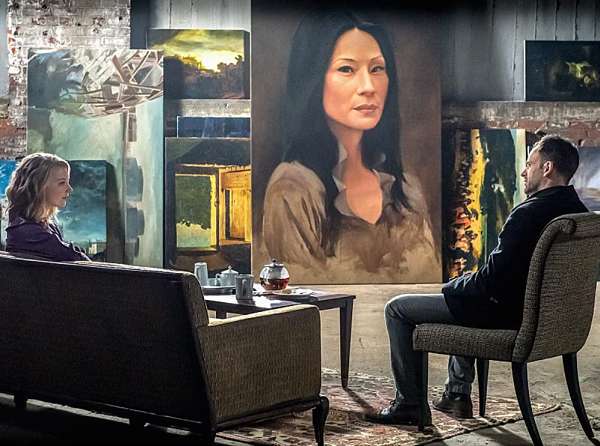
A modernized version of Sherlock Holmes set loose in New York City with a gender-flipper Watson. Both Jonny Lee Miller and Lucy Liu are fantastic as the detective duo, and the smart NYPD cast, Captain Gregson and Detective Bell (played by Aidan Quinn and Jon Michael Hill), also contribute their fair share. The Ms. Hudson and Moriarty versions were also interesting, but all in all there are too few women. (Still half of the population, hello?) Nevertheless, the astounding cases, quality acting, and scenes of real NYC in all its glitter and grime continue to keep my interest despite some less successful story lines.

3. Leverage (2008-2012)

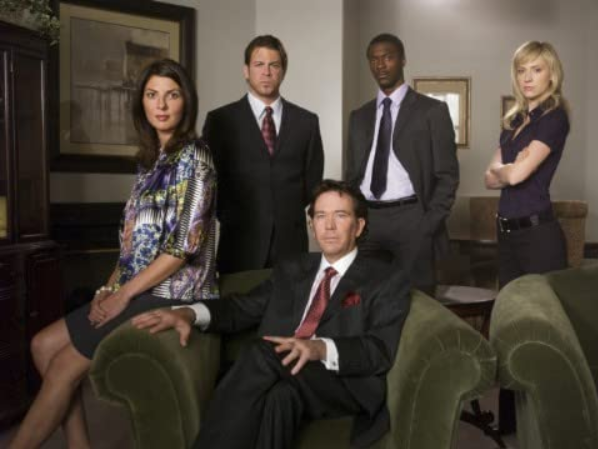
IMDB Leverage Group Shot

Yes, yes, yes—ticks all the boxes despite some unevenness in the writing. If only it didn’t have Nate nor the actor, Timothy Hutton; I’m so fed up with wallow-y man pain (and, whoo boy, does he wallow) with or without alcohol, but it’s infinitely worse with.

The three youngsters should’ve had a series of their own; THAT would’ve been great, and I would throw money at it!

4. Ocean’s Eight

IMDB Oceans Eight Poster

Yes, yes, YES! (Despite Sandra Bullock, Anne Hathaway, and Helena Bonham Carter, who all are far from favorites of mine.) Cate Blanchett, Mindy Kaling, and Rihanna were fabulous. The heist is simply staggering, and it helps it’s also a learning to work together story in part.

5. Rogue One

IMDB Rogue One Poster

Although in the beginning we only see a glimpse of Jyn Erso’s childhood and we hear little of how she lived afterwards, it’s clear that she can handle herself, backwards and blindfolded if needs be. I enjoy seeing just how the Rogue One group slowly comes together to run their desperate mission. It needs more women, though.

Rogue One is clearly the least fun of my six competence porn stories, which makes it really hard to put into words why it’s on my list. I just know that it is.

6. Wonder Woman

IMDB Wonder Woman Shot

There are some plotholes and/or weaknesses I’d rather do without, but the learning to work together aspect of the story nevertheless makes the movie work for me. And—need I say it?—SO many awesome women. I could spend more time seeing Amazon action on Themyscira!

Do you have a competence porn viewing or reading list? If so, I’d like to hear yours.

Images via IMDB: Charlie’s Angels. Elementary (s. 2, ep. 12, “The Diabolical Kind”). Leverage. Ocean’s Eight. Rogue One. Wonder Woman.

In Seen on Screen, we discuss movies and television shows of interest.

Discovering Genderbent Ori Cosplays from The Hobbit

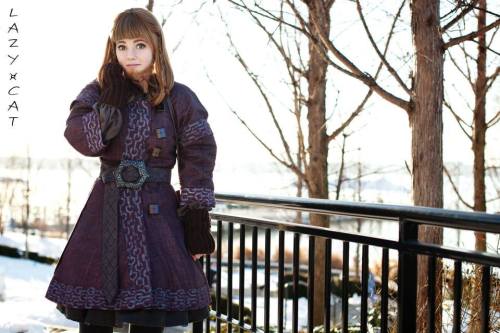
The other day I fell into the rabbit hole of cosplay from Peter Jackson’s Hobbit trilogy. I was sure there’d be a lot, but I was surprised of how much there actually is. And so much of it exquisite! The cutest ones by far are female versions of Ori, the youngest Dwarf in Jackson’s movies. I found three. Lizard Leigh both made and modeled this detailed outfit:

Tumblr frauleinninja Ori Cosplay1
Tumblr frauleinninja Ori Cosplay2

AmeZaRain’s version of Ori was a group effort:

DeviantArt AmeZaRain Ori Cosplay

This unknown cosplayer…

Alexander Turchanin Unknown Ori Cosplay

… even looks a little like Adam Brown from the movies!

Pinterest Chen Ori Portrait

I do love how she included Ori’s notebook and quill; a very nice detail that’s also beautifully included in the photo.

Here’s Ori’s base costume on display for comparison:

Pinterest Sofia Ferreira Oris Costume on Display

They all did a great job invoking the essence of the character, didn’t they?

Images: Lizard Leigh’s Ori by Karina as Lazy Cat via Leigh’s Tumblr (frauleinninja). AmeZaRain’s Ori by Elemental Sight via AmeZaRain’s DeviantArt account. Unknown Ori cosplay by Alexander Turchanin on 500px. Ori portrait found via Chen on Pinterest. Ori’s costume on display found via Sofia Ferreira on Pinterest.

In Making Stuff we share fun arts and crafts done by us and our fellow geeks and nerds.

Quotes: By Her Efforts She Learned Writing

The lives of women in history are so often invisible to us that we become accustomed to not seeing them. Sometimes even when we do see them, we don’t always realize what we’re seeing. The ancient Greek antiquarian Plutarch certainly didn’t know what he was seeing when he quoted this poem (probably composed to be inscribed on the base of a statue) by the Macedonian queen Eurydice.

Eurydice, daughter of Sirra, dedicated this to the local

Muses when she had seized her soul’s desire.

For as a mother of young men, by her efforts

she learned writing, the record of knowledge.


– Eurydice, quoted in Plutarch Moralia 1.20 (=14a-b)

(My own translation)

Plutarch praises Eurydice for learning to read in order to help educate her sons (all of whom went on to become kings of Macedon, one of them the father of Alexander the Great). But although Eurydice does mention her sons, there is much more to this poem.

Eurydice identifies herself in relation to her mother, Sirra, not her father or husband, as would have been typical in ancient Macedon. She directs her praise to the Muses, nine female divine figures, not to Hermes, Apollo, or another male deity equally connected with learning and writing. She does mention her sons, but as an attribute of herself: she does not say (as Plutarch assumed) that she learned in order to teach them, but rather positions her achievement of learning as noteworthy for someone who has undergone the rigors of childbirth and is old enough to have sons on the cusp of adulthood. Eurydice describes her learning in a context that is defined by women and women’s experiences, not men.

While Eurydice makes her accomplishment a feminine one, she uses typically masculine language to describe it. Her language in the original Greek is active, even aggressive. When she says that she accomplished her goal, she uses the same word that other writers used to describe an army capturing a city; when she speaks of her efforts to learn, her words echo those used to describe men training for battle. She positions her learning as the work of a woman surrounded by women, both human and divine, but equal to the work of the male warrior kings in her family.

Eurydice was proud of her learning, as she had every right to be. Literacy was a rare skill in antiquity, and to have learned by her own efforts as an adult shows intelligence and determination. She was doing far more than setting a good example for her sons.

Like Plutarch, traditional history is accustomed to seeing women only in the background of men’s lives, but the records of women’s lives are still there, some of them speaking directly to us if we are just prepared to listen. Many more women like Eurydice have left a “record of knowledge” for us to learn from.

Serving exactly what it sounds like, the Quotes feature excerpts other people’s thoughts.

Quotes: Being Awesome While Female

Sam Hawke guest posted at Fantasy Book Cafe about tomboy protagonists for the blog’s annual Women in SF&F feature in 2019:

“There is a particular kind of character in SFF. You know her. She’s smart and tough, determined, decisive, and she can kick the collective arses of any takers. She comes in a few varieties—in better stories she’s an Alanna of Trebond or a Brienne of Tarth, with depth and history and more than one dimension; in weaker ones she’s an empty Strong Female Character™ who has no real contribution to the plot other than Being Awesome While Female—but either way it’s her prowess at fighting, particularly against men, that sets her apart. […]

“Instead, I wrote a woman, Kalina, with a chronic illness who couldn’t fight to save her life. Literally. I wrote a book in which the main characters’ problems couldn’t be solved by the strategic and entertaining use of violence even if they had the skills to deploy, and I did it purposefully. I did it in part in response to my own sewing test.

“Let me explain.

“The sewing test is failed when a book deploys a lazy code to tell me how much better, more interesting, more deserving, the female character is than those silly other women by making a point of having her hate sewing or embroidery or [insert other feminine-coded activity or trait of your choice—but you wouldn’t believe how often it’s sewing]. These days, if a book does this, I’m out. It’s not just lazy, it’s not just a cliché, it’s a statement by the author that I’m expected to cheer on one woman by disparaging the rest of them. […]

“Basically, there’s a nasty underbelly to over-reliance on this very limited model of ‘strength’, and it’s rooted in the same insidious patriarchal BS that gave us the old style women-as-objects-to-be-rescued stories: here are traits which are traditionally coded as masculine, which you have been taught are more valuable than traits which are coded as feminine. See how you should cheer on this woman because she’s different and better than those other women, who are weak and shallow and worthless. Reward her for those traits, and punish those who lack them.”

author Sam Hawke at Fantasy Book Cafe blog, 2019
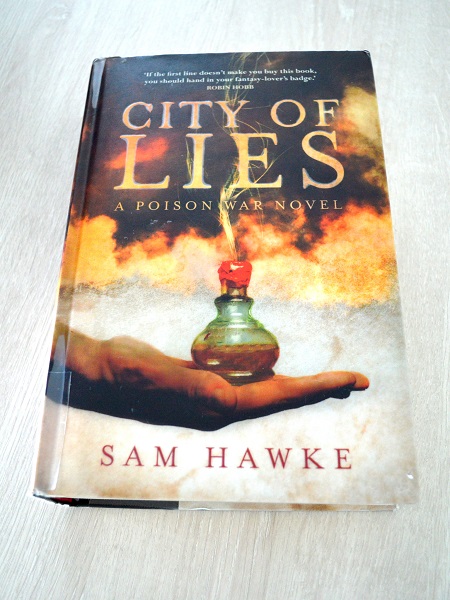
Hawke City of Lies

Hawke is perfectly right, if you ask me. As awesome as ass-kicking women are, other ways of being awesome exist and should be recognized more widely. Because the variety of life skills to be excelled in is much, much wider than merely physical prowess, fighting skill, or attitude.

Moreover, as we all know, there are situations where the application of know-how or just the right tool will create such a better outcome than anything else that at best it’s not even fair to compare them. Why should genre literature forget these skills when women stand in the protagonists’ shoes?

I’m going to be adopting the phrase “being awesome while female” for all kinds of amazing things that women do. It’s just that awesome. 🙂

P.S. I just read City of Lies, Hawke’s book with the female protagonist who has a chronic illness. I thoroughly enjoyed her strategic and entertaining use of her brain—and ditto for the male protagonists, Kalina’s brother and his best friend.

Image by Eppu Jensen

Serving exactly what it sounds like, the Quotes feature excerpts other people’s thoughts.

The Obligatory Male Protagonist

Tv shows or movies with an ensemble cast will nearly always have a man as de facto main character. (Studios, networks, and advertisers have apparently not yet caught on to the fact that people who aren’t 18-35-year-old white men also watch tv and go to the movies.) These obligatory protagonists come in a few different varieties. Here’s a spotter’s guide for some of the major types (mind you, more than a few characters cross the lines from one category to another).

Captain Competence

James Kirk from Star Trek via IMDb; Gil Grissom from CSI via CSI Fandom; Gregory House from House via IMDb

He’s better than everyone at everything. He always has the right answer. While other characters may have their particular areas of expertise, he’s always the one to solve the real problem. To be frank, the only reason there are other people on the show is so that he has someone to be better than.

The Fixer-Upper

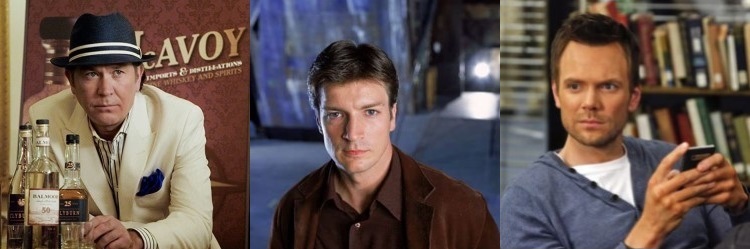
Nate Ford from Leverage via IMDb; Mal from Firefly via IMDb; Jeff Winger from Community via IMDb

He’s a damaged, bitter, broken man, but that doesn’t stop him from being the center of attention. Expect the women in the cast to do a lot of emotional work for him, such as holding his hand while he cries, calming him down when he lashes out, and making excuses for him to the people he hurts. He may pull himself together over time. Then again, he may not.

The Overgrown Child

Phil Dunfy from Modern Family via IMDb; Castle from Castle via IMDb; Jake Peralta from Brooklyn 99 via IMDb

This guy just never grew up. He lives his adult life with the blissful joy of a child, which would be fine except that it also means he never takes responsibility for anything, is clueless about how his actions affect the people around him, and gets pouty and petty when things don’t go his way. The women in his life usually fall into the role of surrogate mother, saying “no” to his worst ideas and cleaning up his messes when he does them anyway.

The Plot-Jacker

Peter Quill (and Gamora) from Guardians of the Galaxy via IMDb; Emmet (and Wild Style) from The Lego Movie via IMDb; Owen (and Claire) from Jurassic World via IMDb

(Also known as the “Chris Pratt Special.”) There’s a female character in the cast who not only has the knowledge, skills, and background to be the hero of the story, but also has a good reason to take on the mission or challenge the big bad. Then this guy wanders in out of nowhere and takes over, doing better by sheer guts and grit than she did with all her knowledge and skill. Expect her to fall into his arms at the end.

If you spot any of these types in the wild, you know what to expect.

In Character is an occasional feature looking at some of our favorite characters from written works and media to see what drives them, what makes them work, and what makes us love them so much.

A Busy Paeonian Woman

The Greek historian Herodotus tells a story about how the Persians were induced to conquer the Paeonians, a people of the southern Balkans. Like many of Herodotus’ stories, this one is probably more folklore than fact, but it’s a story with a point.

The story takes place while the Persian king Darius was campaigning in the Aegean from his base in the Lydian city of Sardis. A couple of ambitious Paeonian aristocrats figured that if they could convince Darius to conquer Paeonia, they could set themselves up as his local representatives and rule the Paeonians in his name. Here’s how they went about piquing Darius’ interest:

After Darius had crossed over to Asia, two Paeonians by the names of Pigres and Mantyes came to Sardis along with their tall and beautiful sister. They wanted to make themselves tyrants over the Paeonians, and when they had observed Darius sitting outside the town of the Lydians to hold his court, they went about it like this: they dressed their sister up in her best and sent her to fetch water carrying a pitcher on her head while leading a horse by her shoulder and spinning flax. Went she went by, the sight of her caught Darius’ interest, since no Persian or Lydian woman did what she did, indeed no woman of Asia at all did. He was so intrigued that he sent some of his guards to keep an eye on the woman and see what she did with the horse. They reported what they had seen: when she reached the river, she watered the horse, filled the pitcher up to the top with water, and went back again by the same route, carrying the water on her head, leading the horse by her shoulder, and turning her spindle.

– Herodotus, Histories 5.12

(My own translation)

Darius falls for the trick and is convinced that such amazingly hardworking people should be added to his empire.

There are some things to notice about this story. One is some rather complicated gender politics. On one hand, you could hardly find a more literal example of men exploiting the hard work of women for their own gain. On the other hand, it’s interesting that the Paeonian brothers thought that the best way to impress the Persian king was not with the bravery or endurance of Paeonian men but with the diligence and skill of Paeonian women. The fact that it worked implies that Darius both appreciated how difficult a task it was to do three things at once—fetch water, manage a horse, and spin flax—and saw such skill as a good addition to his empire. Herodotus’ story is likely fictional, but it may suggest some Greek awareness of how highly women’s labor was valued in Persia.

To look at it from a different point of view, however, we have to remember that the whole thing was a con, and Darius was the dupe who fell for it. Ordinary Paeonian women weren’t going around carrying jugs, watering horses, and spinning all at the same time while looking their best, and Darius was a fool for thinking they did. That’s something for all of us to remember in these days of social media and the fetishization of busy-ness. We are all like Darius, seated outside the city walls watching carefully curated false images of people doing impossible amounts of work and looking fabulous doing it. And, just like Darius, we’ll all be better off it we recognize it for the lie that it is.

History for Writers looks at how history can be a fiction writer’s most useful tool. From worldbuilding to dialogue, history helps you write.