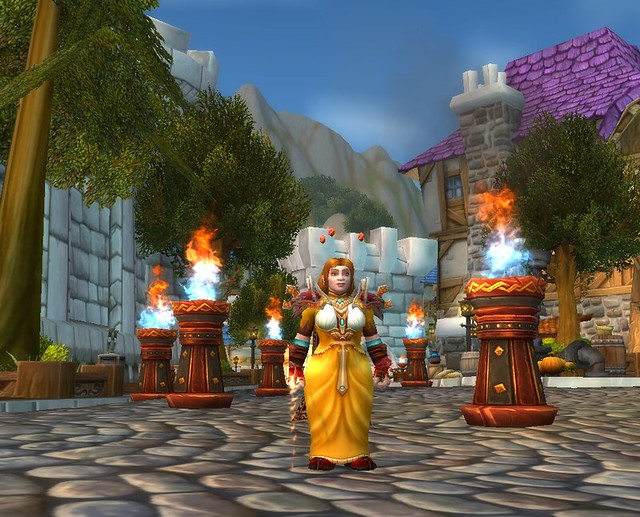
We got our first toons leveled to 120 about two months ago. Typically we level our Night Elf druid pair first because you just can’t beat a druid duo of a tank plus dps with an occasional heal for versatility! This time, though, we chose two humans for strategic reasons.
We haven’t played these two together before. A paladin tank and a mistweaver monk work together fine, though. We just won’t do anything terribly fast—our damage output isn’t high, but we do tend to stay alive through everything except the nastiest dps-heavy fights.
Because of real life, we’ve been going slowly but steadily, working on accumulating the required reputation to unlock allied races. We’re not yet there on the Horde side, but we just made it to exalted with the 7th Legion on our humans!
Allied races, here we come! 😀
Of Dice and Dragons is an occasional feature about games and gaming.
I actually made this transmog set for my protection paladin a while ago, but since it’s appropriately nautical, I’ve decided to make this her look for Battle for Azeroth‘s seaborne adventures.
My very first WoW character, created towards the end of vanilla, was a female gnome mage. I still have her—specced the same, too—although I don’t play her as my primary anymore.
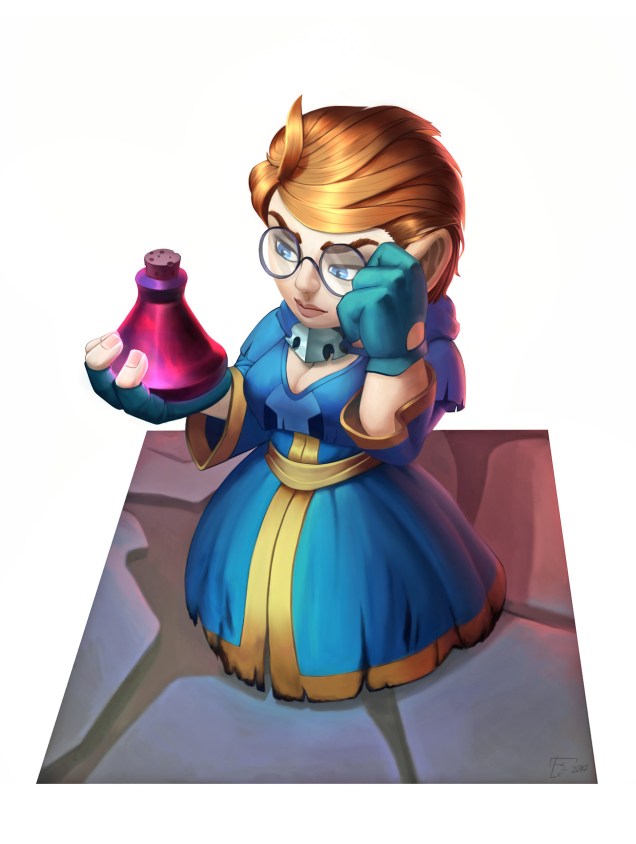
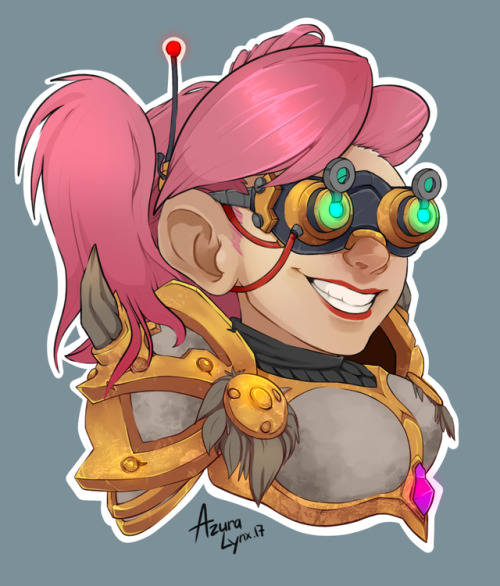
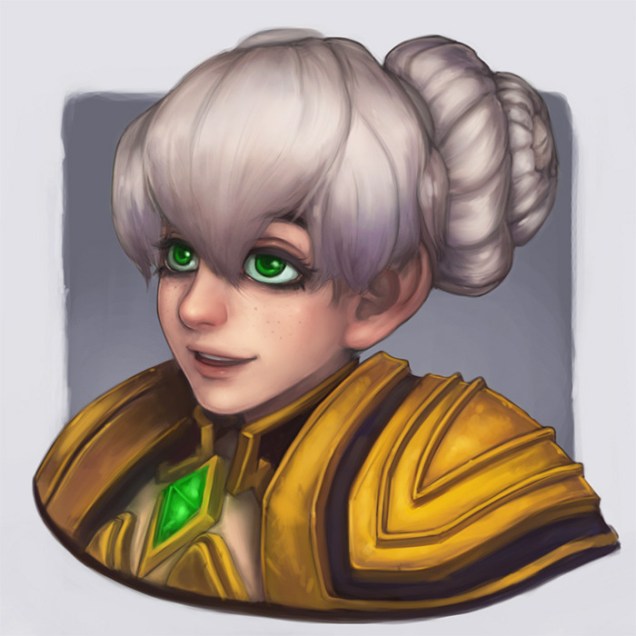
Anyway, I was looking for something else on the Internet when I fell into a hole on Tumblr and found all of this AWESOME female gnome fanart. I’ll share just five of my favorites below. And this is just the tip of the iceberg!
An alchemist by Boz:
Love the thoughtful expression!
A custom portrait of a gnome with goggles by Azuralynx (aka Niniel-Gnoll):
The grin! 😀
Sketch of a mage by Bryss (aka Alynissia):
Chromie, the dragon who prefers a gnome humanoid form, by mhazaru:
A death knight by Flyingterra—she clearly means business!
The range of illustration techniques is impressive, but even more so is how all of these artists capture the range of possibilities for gnome characters.
It has come to my attention that some folks online have been making a fuss about the fact that the strategy game Rome: Total War II allows players to recruit women as generals to lead their armies in fighting around the ancient Mediterranean. They decry this addition to the game as modern politics intruding anachronistically on the purely masculine history of war. Well, that’s a load of hogwash.
As your friendly neighborhood ancient historian, I’m happy to present a brief, selective, far-from-comprehensive list of women who led military forces in antiquity. Enjoy.
(All translations my own)
Amage
A Sarmatian queen, 2nd century BCE, who led her people against foreign invaders.
Amage, wife of Medosaccus, a Sarmatian king… seeing that her husband was diverted by luxury, took matters in hand, giving many judgments, organizing the defense of the realm, and fighting off foreign attacks.
– Polyaenus, Strategms 8.56
Amanirenas
A Kushite queen, 1st century BCE, who led forces against Roman armies encroaching on her territory from southern Egypt. (Strabo mistakes her title, Candace, for her name)
Queen Candace, in my day the ruler of the Ethiopians, a masculine woman who was blind in one eye… led an army many thousands strong against the [Roman] garrison
We haven’t talked about music lately. Time to fix it!
One of the new allied races in Battle for Azeroth, the latest World of Warcraft expansion, is Dark Iron Dwarves. (Note: I don’t think there’s much actual info as of yet, but people have been gathering mentions at a Wowhead thread.)
As I’ve mentioned before, female Dwarves are my absolute favorite race / gender combo to play in WoW, so I’m going to want at least one. 🙂 Consequently, my WoW thoughts have revolved heavily enough around Dwarves to push into the real life in the form of music befitting these mountain-dwellers.
Below are some of my current most favorite Dwarf-ish pieces, whether originally something quite different or composed specifically with Dwarves in mind.
“Beware! Beware! For the wind blows high. Blood will rain down on men’s bared bodies. Point and edge will share all men’s inheritance, now that the sword-age cuts sharply upon us.”
To my mind, the lyrics are very reminiscent of Vikings or Anglo-Saxons, but I could also see them applying to a fantasy race in WoW. (After all, the game is called World of Warcraft.)
This version of the old Christmas carol “Masters in This Hall” from the album A Feast of Songs by Barry and Beth Hall also reminds me of Dwarves because of the steady rhythm and low key.
The next is a bit special. A music-heavy version of The Lord of the Rings was produced by the Finnish theater company Ryhmäteatteri in 1988 and 1989. Bilbo’s song “I Sit Beside the Fire and Think” from The Fellowship of the Ring, book 2, chapter III (“The Ring Goes South”) was turned into a song for the play, and it’s wonderfully meditative and solemn.
The lyrics were originally translated into the Finnish version (Taru sormusten herrasta) by Panu Pekkanen; for the play they were slightly modified. The melody was composed by Toni Edelmann and sung by Timo Torikka.
This next piece was made by Simon Swerwer for the 2012 computer game Dwarf Fortress:
Lastly, Neil Finn’s “Song of the Lonely Mountain” (the end credits song for Hobbit: An Unexpected Journey) because of the bittersweetness, melancholy, and—just perhaps—glimmer of hope that comes through.
There is one phrase I hate to hear more than any other from authors, scriptwriters, game designers, and other creative people: “At least it made you feel something.” It is a phrase that is sometimes trotted out when audiences voice hurt, anger, or annoyance over how a story that they were emotionally invested in turned out, and it is a load of crap.
We all understand that no story is going to satisfy all audiences. Good stories move us, and sometimes they move us to tears or to rage. Some people want stories to leave them angry or sad, and that’s as legitimate as wanting a story to leave you smiling. But a good story should not leave you hurt or annoyed.
There are good ways for creators to respond to upset audiences (which, I note, is not the same as responding to trolls—that’s a different game altogether). They can say: “I’m sorry, I’ll try to learn from this experience and do a better job in the future.” They can say: “This was the story I wanted to tell, but clearly it wasn’t the story you wanted to hear, so you should find a different story.” They can say: “I think this story matters and I don’t care that you didn’t like it.” All of these are appropriate responses. They are honest and respect the validity of peoples’ feelings, even the ones we don’t share. Even no response at all is perfectly acceptable; no creator owes their audience any engagement they don’t feel like giving.
But if a creator does choose to respond to criticism, “At least it made you feel something” is no kind of response at all. What’s wrong with it?
It sets the bar absurdly low
Good stories make us feel things, but that doesn’t mean that it doesn’t matter what a story makes us feel as long as it makes us feel something. To put it another way: if I kicked you in the shins, it would definitely make you feel something, but you would be perfectly justified in saying that that wasn’t the feeling you wanted.
It dismisses criticism
Criticism is legitimate. People have a right to have opinions about your story, whether you agree with them or not. Simply dismissing all criticism with “It made you feel something” denies that what your audience feels is just as relevant as how strongly they feel it.
It is self-congratulatory at best, selfish at worst
Reacting to an audience’s complaints with “It made you feel something” is a reach-around self-compliment. Even worse is if you actually take satisfaction in your ability to make others feel bad.
It betrays a lack of belief in the merits of the story
“It made you feel something” is close kin to “There’s no such thing as bad publicity.” In a social media world, creators may think that making their audience angry enough post online tirades about their work is the cheapest advertising they can get, but it is also a signal to the audience that the creators don’t care enough about their work or don’t have enough confidence in it to sell it on its own merits.
Stories often make us feel things. That is a huge part of why we read, watch, and play them. To open a book, watch a movie, or play a game is to entrust your feelings to another person for a time, and we have every right to speak up when we feel that our trust has been abused.
If what I feel about your story is hurt that you killed my favorite character, frustrated by the direction of the plot, or annoyed that you railroaded me into playing a villain, you don’t have to agree with me. You don’t have to take any account of my feelings at all if you don’t want to. But don’t waste my time with: “At least it made you feel something.”
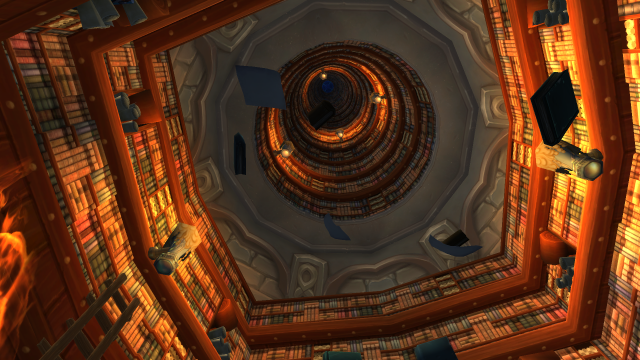
I was browsing my WoW screencaps for something entirely different when my eye fell on two shots from the Dalaran inscription trainer’s place. (This is in the Legion version of Dalaran.) Both are actually from inside the book-filled cupola: the first looks up towards the impossibly high ceiling, the second down towards the trainers’ room floor.
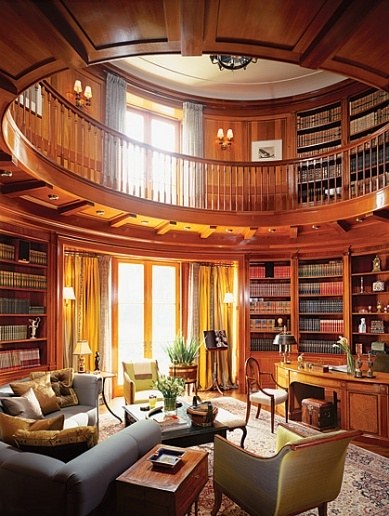
Neat, right? Well, I wondered whether anyone’s actually done anything similar for real and hit the Internet. And I found some!
The library is situated in the neo-Gothic Morrice Hall building that previously housed the Presbyterian College of Montreal from 1871 to 1961.
None of them are exactly the same as the game library cupola, of course: apart from the the scale of the rooms, the scale and direction of the bookcases might differ. But apparently it isn’t terribly far-fetched to make a round multi-storey library and pack it chock-full. 😀
When you really love a game: Klopper & Davis Architects in Perth, West Australia, built Space Invaders critters into the walls of this house. The critters are made with depressed brick, and appear both indoors and outdoors. Take a look:
Not an easily DIY-able project, but very neat.
Found via Desire to Inspire. (Visit the DtI blog post for additional Space Invaders views!)
For my Tauren shaman, the Midsummer celebration is very important. It is a time to honor the spirits of the fire, which she does by dancing in her Flamedancer Regalia.
My Gnomish warlock is a different case. You see, when it comes to fire, warlocks are professionals, so the Fire Festival is a bit of a bus-driver’s holiday for her. It’s the one time of the year when people who don’t know what they’re doing try to set things on fire, so if she hung around the festivities she would just find herself screaming at everyone:
“You’ve built that bonfire all wrong! There’s nowhere near enough kindling, the wood isn’t properly seasoned, it’s too close to the tent, and you put it upwind of the dance pole! Does no one here know what they’re doing but me!?”
So, for her, Midsummer is a time to get away from it all and go have her own private little fire way up in the snowy mountains where no one will bother her. She dresses appropriately for the climate in her Aurora-Seeker’s Garb.
I was able to find a decently matching shirt, so it looks like the dress has sleeves (Elegant Robes plus Golden Filigreed Shirt). Otherwise, I pushed the accent colors (headpiece, boots, gloves, shoulders, cloak) more towards red and orange. Finally, I borrowed a red wand and a red flower (Flash Wand, Penelope’s Rose) from my arcane mage’s Love Is in the Air mog.
Juhannus is the Finnish celebration of midsummer. People usually go to a summer cottage, burn bonfires, sauna bathe, and enjoy fresh food.
Or… in our case, this year, stay in town and play! I’ve just started cleaning up my quest lists and churning out the last Legion achievements etc. in earnest before Battle for Azeroth launches in August.
I could even have a juhannus sauna in game. I’m pretty sure one of the Pinchwhistle Point huts in Spires of Arak is a sauna:
Tile floor, wooden benches, a large wood pail, and a stove for heating and making steam—sounds like a sauna to me!
Happy Midsummer! Hyvää juhannusta!
Images: 3-laptop evening by Eppu Jensen. Screencap from the MMORPG World of Warcraft, Warlords of Draenor expansion.
Of Dice and Dragons is an occasional feature about games and gaming.