Living Vicariously Through Social Media: Red Lights in the Vatican

In his work, video director, photographer, and art director Aishy plays with color and light. One of his most striking projects is the Red Lights: Vatican series. Interior views from St. Peter’s Basilica in Vatican City become striking and very different from their everyday state.

Instagram Aishy St Peters Basilica Dome

Aishy’s work is often described as having a sci-fi or cyberpunk flair. However, what his Vatican photos remind me of is how ancient Mediterranean statues and buildings in their original state were not the bland off-white or grey we currently know, but vibrantly painted.
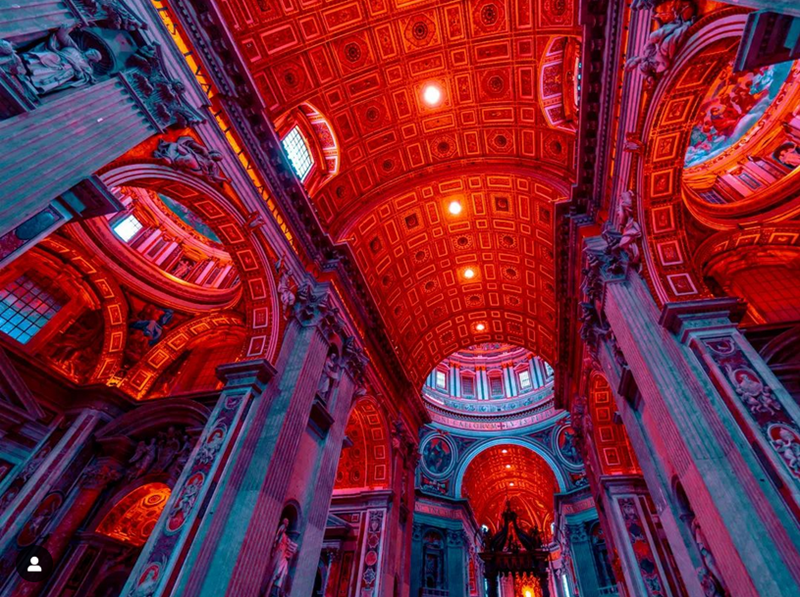
Instagram Aishy St Peters Basilica Vault

And to get back to the cyberpunk idea: wouldn’t it be more interesting—or at the very least less ubiquitous—if your next dystopia were not visually mostly black or grey, but eyeball-bustingly garish in color? Surely that could also be quite dystopic, right?

There are some specific examples I can think of. The throne room in Star Wars: Episode VIII – The Last Jedi, for starters, looks magnificently arresting. I’m just a little tired of red (or the combination of red and black). Sure, it’s a strong color often linked to strong emotions, but it tends to be overused. How about orange instead, like the Las Vegas of Blade Runner 2049? Or in Jupiter Ascending? Perhaps purple, turquoise, or chartreuse?

Just tone down the use of those ever-present blacks and greys, thanks.

(As a sidenote, the ancestry festival in Star Wars: Episode IX – The Rise of Skywalker delighted me for its happy colors, even if the planet itself was another desert.)

Images by Aishy via Instagram: Dome. Vaulted ceiling.

A Eurovision 2025 Flag Carousel

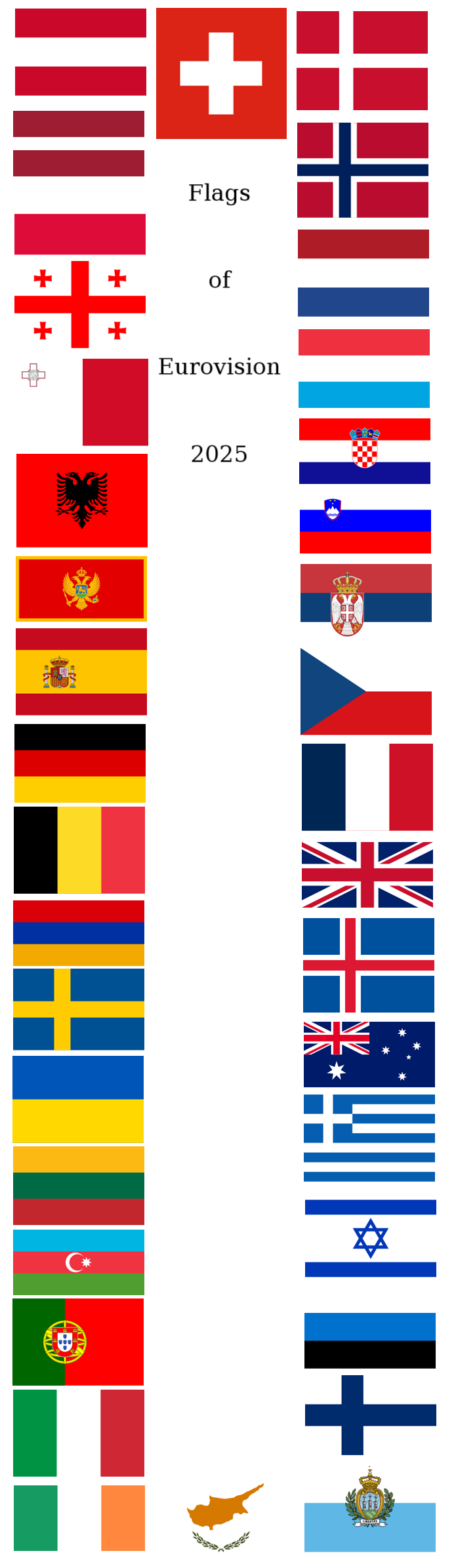
Every year when we watch the Eurovision Song Contest, I find myself distracted from the music and stage shows by all the European flags. I enjoy seeing all the different combinations of colors and designs, and every year I find myself thinking: “I wonder if I could organize the Eurovision flags in such a way that they flow from one to the next with similar colors and patterns?” Well, this year I finally decided to try it, so here it is! My Eurovision 2025 flag carousel, starting with this year’s host, Switzerland, and circling through the flags of all the other participating countries!

Why did I make this? No good reason. Just because I wanted to.

Should you care? I really can’t think of any reason why you would.

But if you’re a fellow fan of flags, I hope you enjoy it!

Image: Flag collage by Erik Jensen; flag images from each country’s Eurovision Wikipedia page

Three Years of War in Ukraine

Today marks three years since the beginning of Russia’s needless and embarrassing three-day special operation war in Ukraine. I very fervently wish I had been wrong about the length of the conflict.

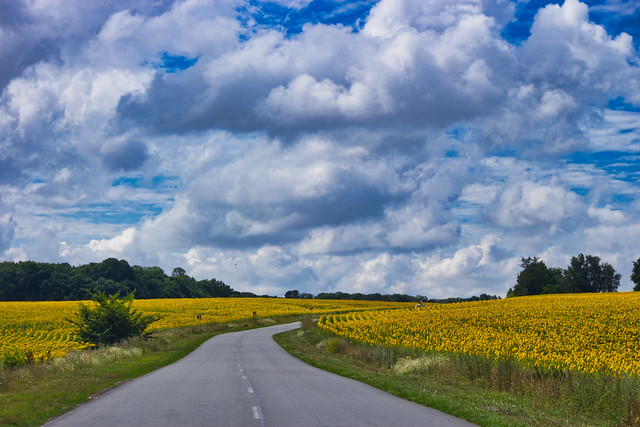
Flickr Oleksandr K IMG_6390

As a Finn, it’s a little bewildering to think that technically our neighboring country is at war, for the fighting is so distant, literally a thousand kilometers away. Or was initially; as the years have gone by, action has been inching closer.

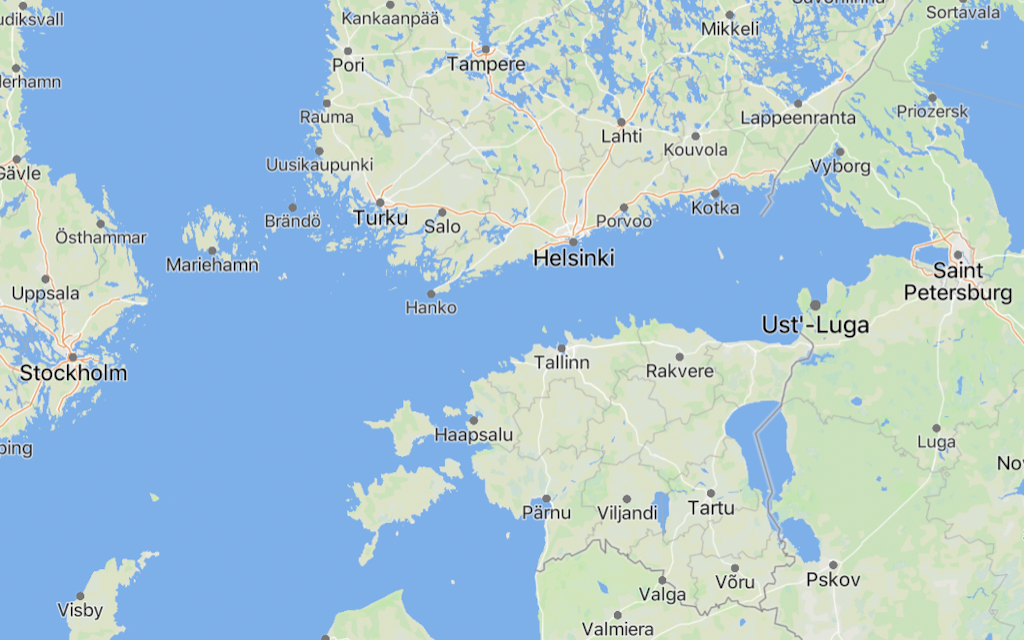
For one, Ukraine has started striking at targets within Russia. The closest target facility to us (so far, I think) is in Ust-Luga on the Gulf of Finland (its seaport handling oil and gas has seen more than one drone hit). That’s some 200 km / 130 miles as the bird flies from Helsinki—not that far away, really.

Mapcarta Baltic Sea w Ust-Luga

For another, there’s increased harassment outside active conflict zones. The biggest change in our neck of the woods came after Finland’s record-fast NATO membership in April 2023. Russian planes have a long history of breaching Finnish airspace from time to time, either as a test or out of boredom, or I don’t even know why. That’s nothing new, and they’ve continued the habit. In addition, now we and our European allies are facing acts like suspected potential sabotage of undersea cables and other forms of attempted hybrid influencing—break-ins at water treatment plants or reservoirs, unidentified drone sightings, hacking of computer systems, instrumentalizing of migrants heading to the EU, incendiary parcels, and GPS jamming, among others.

Reportedly, this type of disruption has been called “cognitive warfare”. The feel I get is that at the national level this sort of pestering is largely seen as an attempt at provocation, an old tactic we have some experience with.

From my point of view, the conflict in Ukraine feels like a proxy war. Their ability to mount an effective defense keeps the rest of us on the perimeter of Russia’s ambitions safe—or if not safe, exactly, at least safer and at least for now. As awful as it is, I kinda want the war to go on longer, because it engages Russia’s forces and focus in one place; when it ends, they will again have the resources to plan “special operations” elsewhere. Continuing conflict gives us time to update our readiness plans, train with NATO and JEF forces, and channel more help to Ukraine.

But at the same time, I definitely do not want the war to continue. It’s dreadful, and it needs to end, with Ukraine’s independence intact. Please and thank you.

Images: Field in Ukraine by Oleksandr K via Flickr (CC BY-SA 2.0). Map of Ust-Luga on the Baltic Sea via Mapcarta.

Greenhouses Fill the Almería Peninsula in Southern Spain

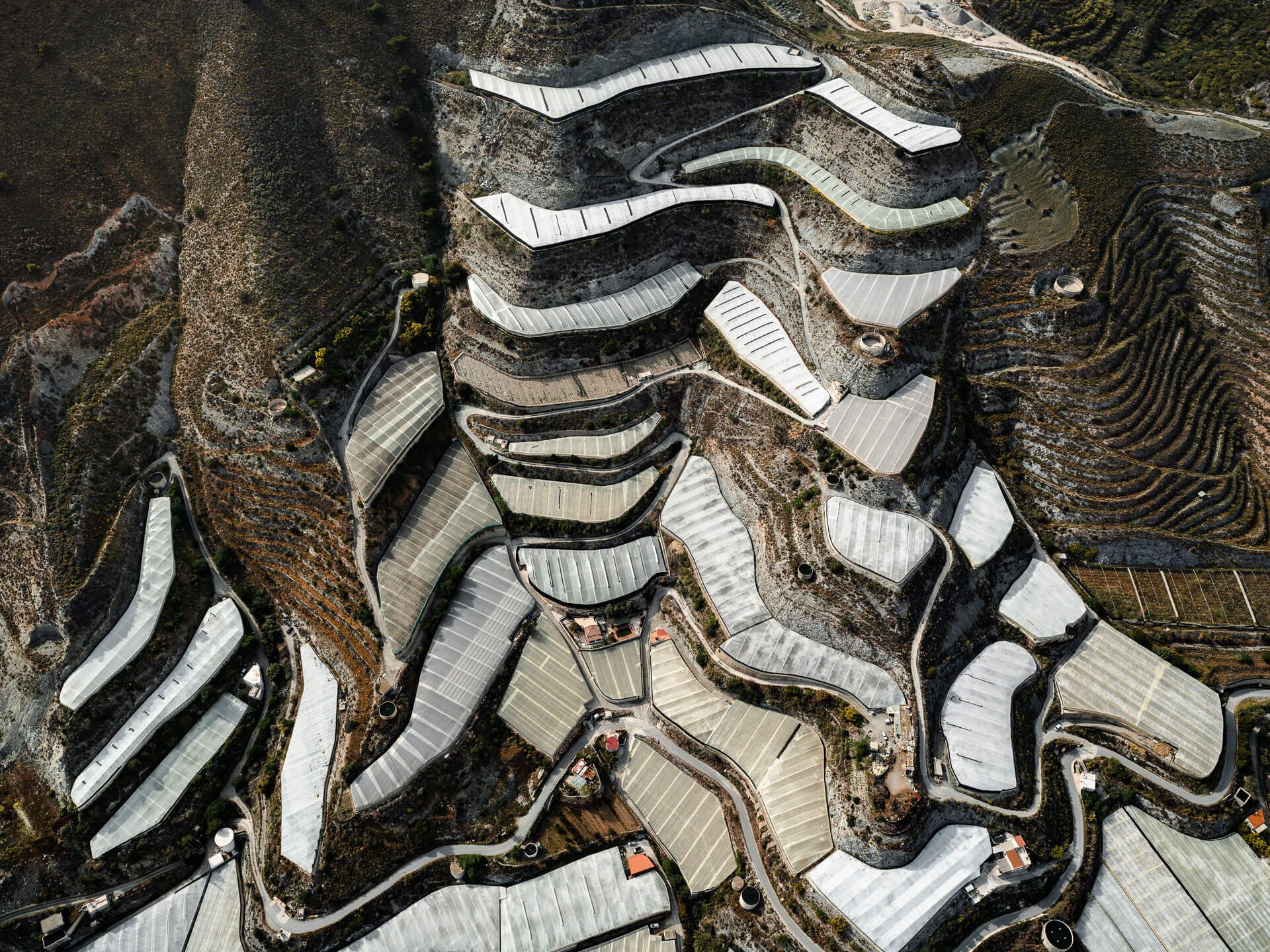
Aerial photographer Tom Hegen documents the extensive impact of human presence on earth and the traces we leave behind. His Greenhouse Series II deals with the Almería peninsula in southern Spain, where most of the available land—both flatland and ridges—is covered with greenhouses.

Tom Hegen Greenhouse Series II 09
Tom Hegen Greenhouse Series II 04

The stunning scenery reminds me of a tightly-built agricultural area or East Asia’s terraced rice fields, if the crops were all white, or perhaps snowy fields separated by hedges.

While I have some admiration for the productivity (30 times higher than average European farmland, apparently) and efficient land use, the accompanying plastic waste and pollution are unacceptable and unsustainable.

However, I could easily imagine seeing something like this on a not-quite-terraformed world in the Alien movies, for example, or one of the more dystopic locations in the Star Wars franchise.

Found via Colossal.

Images by Tom Hegen

Visual Inspiration pulls the unusual from our world to inspire design, story-telling, and worldbuilding. If stuff like this already exists, what else could we imagine?
Sound Sample Played on a Paleolithic Instrument Replica

A group of French researchers published their study of a conch shell from the Upper Paleolithic period based on an assumption that it was used as a musical instrument. The article includes a sound sample gained by blowing into it—the first such sample published.

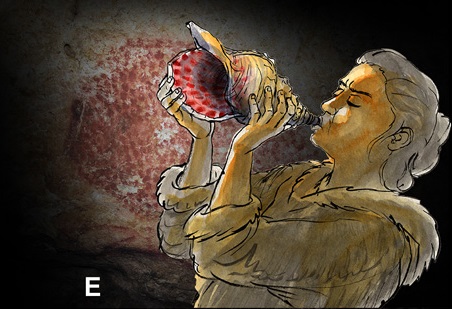
The conch shell in question, a Charonia lampas—a handsome marine mollusk—was found already in 1931 at the cave of Marsoulas, which is a so-called decorated cave. The shell is dated to roughly 16,000 BCE. And, interestingly, the shell was not only modified—presumably to make it fit a human mouth more easily—but also decorated with traces of colors and engravings.

Science Advances Conch Shell Horn Sm

The color is mostly found in fingerprint-sized and -shaped red dots on the internal surface of the shell. They are similar to motifs present on the cave walls, including a bison covered with a layer of red dots (seen in the background of the image above).

Aren’t the dot decorations fascinating? Apparently, similar conch shells have been used around the world as musical instruments in later periods, with similar modifications. Also, the oldest known flutes discovered thus far come from earlier paleolithic periods, roughly 40,000-20,000 years BCE, so the the concept of horn or flute should have been known. It certainly would make sense, then, that this shell was a horn.

You can hear the sound by downloading an audio file attached to the article.

Fritz, C. et al. “First record of the sound produced by the oldest Upper Paleolithic seashell horn” in Science Advances, Vol 7, Issue 7 (10 February 2021). https://doi.org/10.1126/sciadv.abe9510

Image by G. Tosello via Science Advances

An occasional feature on music and sound-related notions.

Living Vicariously Through Social Media: Sandy Pyrenees

Now that it’s cold again in the northern hemisphere, it doesn’t feel wrong to post about this phenomemon.

I discovered that in March 2022, storms in Sahara threw a lot of dust into the atmosphere, and winds carried it hundreds of miles away. Here’s a photo from a ski resort in the French Pyrenees, where the slopes were covered with a layer of reddish sand:

Twitter BBC Weather Saharan Dust in Pyrenees

An amazing sight, isn’t it?

Although, as someone who’s grown up using sand and gravel on snow to stop motion, I do have to wonder at one thing: how on earth are you able to ski down these slopes?

(Being the wrong kind of Master of Science, I can only guess it has to do with the skier’s weight pushing the skis below the surface of the snow, therefore escaping the sand friction and still enabling skiing, but I don’t know.)

Image by BBC Weather on Twitter

Out There highlights intriguing art, places, phenomena, flora, and fauna.

Ukraine Has Been at War for 105 Days

Ukraine has been at war for 105 days now. That’s 15 long, grueling weeks. (Also the length of Finland’s Winter War with the USSR, which is why the number is significant to me.)

Twitter Helsingin kaupungintalo valaistu

Russia’s craven attack (despite the incompetence it seems to have been implemented with) did change the world, albeit a bit differently than intended. Ukraine, Moldova, and Georgia have submitted their applications to join the EU.* There’s an unprecedented feeling and showing of solidarity towards Ukraine in Europe. Russia—and especially their petty, piddling thing of a presidential figure—is becoming something of a pariah at least in the Euro-American world. Furthermore, Finland and Sweden are joining NATO, ditching their long-cherished military independence.**

That’s in the first three months. Much like the beginning of the covid-19 pandemic, it’s felt three times as long. Unfortunately, I’m afraid this conflict will be a matter of years. Sigh.

World, any time you want to return to duller times is okay by me.

*) Getting even a membership candidate status isn’t simple, though, so this isn’t happening soon.

**) And thanks to Turkey’s pretentions of power-playing, this isn’t going to be as much of an open-and-shut case as we thought, either. Ohwell. I do believe Finland’s and Sweden’s NATO membership will happen eventually.

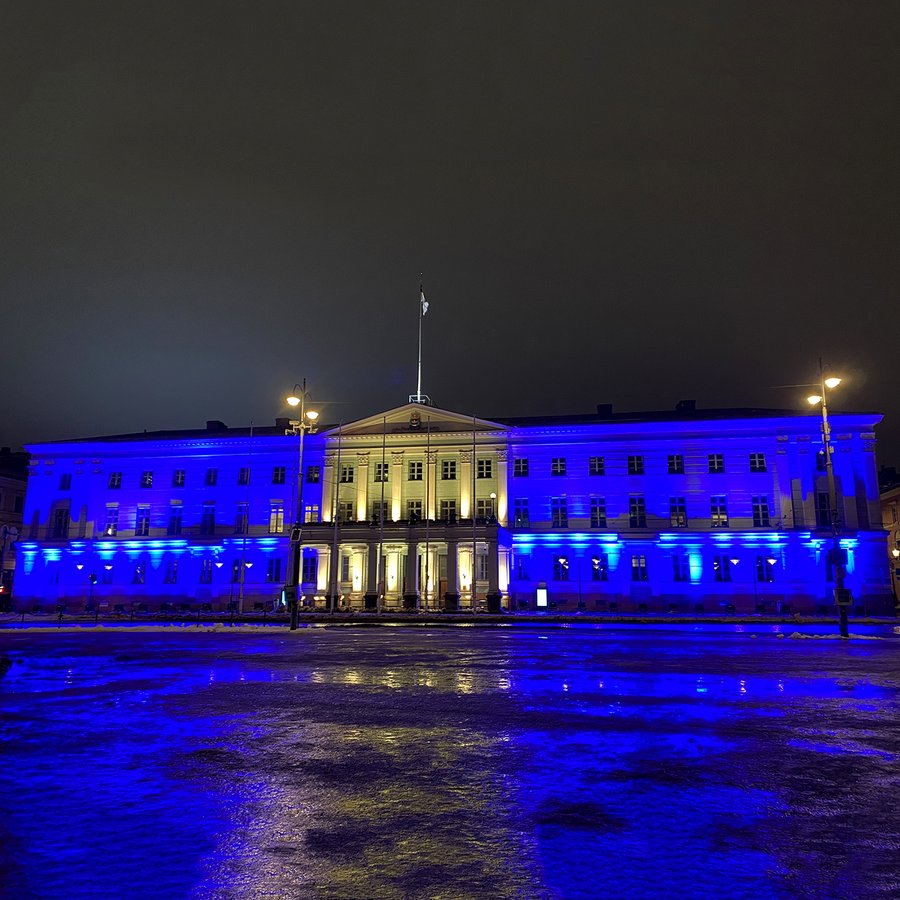
Image: Helsinki City Hall lit in blue and yellow in solidarity with Ukraine by the city of Helsinki on Twitter

When the suckage just sucks too much.

Ukraine Is at War, and I’m Not Okay

Russia has attacked Ukraine, and I’m not okay.

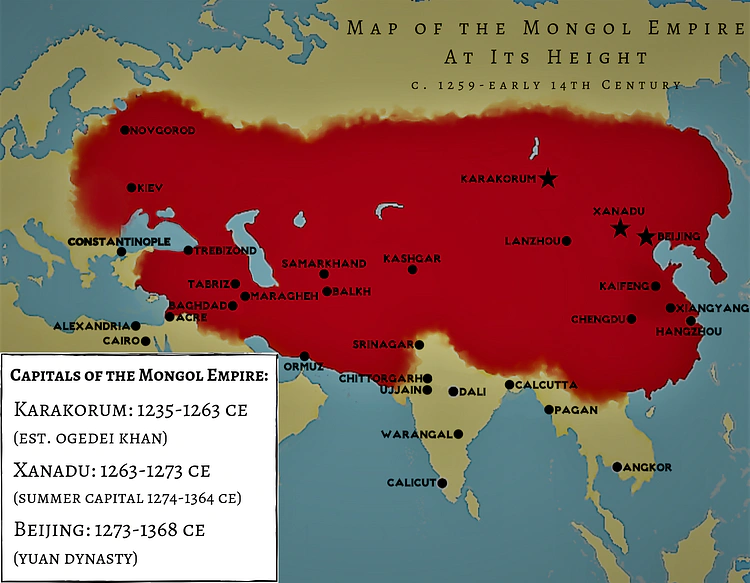
Russia’s unprovoked attack is not okay. The Russian president’s mumbo jumbo about annexation of historical areas is exactly that. Neither the Russian Empire nor Soviet Union exist anymore. If we go down that path, we might as well cry out for the restoration of the Roman Empire, other empires, or basically any polities for “historical” “reasons”.

Arienne King World History Encyclopedia Map of the Mongol Empire

As a Finn, I am not intellectually okay with this.

Twitter Jon Copper Map of Not Russia

Nor do I feel okay.

My age group has grown up in peace, but we have grandparents who lived through our two modern wars with Russia, and you can bet your pants some of our parents carry some inherited wounds. I have a friend, in fact, who grew up in the east near the Russian border. People there had a habit of saying “When the Russians come, [blah blah blah]”. Not ifwhen.

We remember.

The responsibility for this heinous act lies with Russia, and Russia alone.

Ukraine may be a lot bigger than Finland, but I wish them every ounce of dedication, not to mention willfulness and obstinancy I can muster.

I’m not okay. But I will be better. In the meanwhile, I’ve made donations, and I’m following the situation.

Images: Map of the Mongol empire by Arienne King via World History Encyclopedia (CC BY-NC -SA 4.0). Map of not Russia via Jon Cooper on Twitter.

Announcements from your hosts.

Living Vicariously Through Social Media: Herons in Amsterdam

Would you ever have thought large birds could live in cities? I would’ve found it a stretch on the basis of my experience, but apparently in Amsterdam in the Netherlands there is a large urban population of herons. Photographer Julie Hrudová has been documenting them, and the photos are very arresting.

Julie Hrudova Herons Amsterdam on Roofs

Some of the birds seem to be getting quite bold:

Julie Hrudova Herons Amsterdam Indoors Sm

Fascinating, isn’t it? Also, the pictures gives me all sorts of ideas for secondary worldbuilding. I could easily imagine semi-domesticated herons in a story, rather like the reindeer in Lapland.

Found via Colossal.

Images: On roofs by Julie Hrudová. Indoors by Julie Hrudová via Colossal.

The Visual Inspiration occasional feature pulls the unusual from our world to inspire design, story-telling, and worldbuilding. If stuff like this already exists, what else could we imagine?
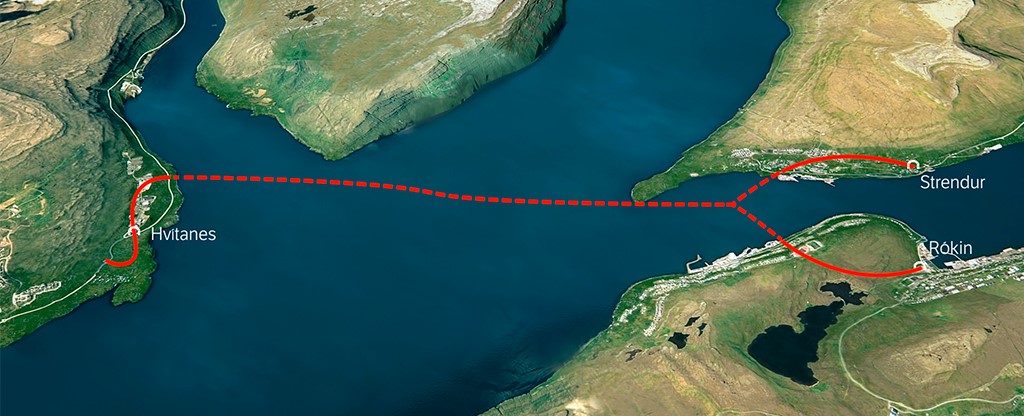
Living Vicariously Through Social Media: An Undersea Roundabout in the Faroe Islands

The Faroe Islands—an autonomous region of Denmark—has built bridges and tunnels before to connect the numerous islands or islets and its 50,000-some residents. Never before, however, have they dug an undersea tunnel as deep or as long as the brand-new Eysturoyartunnilin, nor built an undersea roundabout.

Eysturoyartunnil Interior Green

The roundabout is part of a tunnel measuring about 11 km (6.8 miles), the third sub-sea tunnel in the islands. It connects the islands of Streymoy and Eysturoy, and reaches at its deepest 187 meters (roughly 200 yards) below sea level. At this writing the tunnel’s been in use for about a month.

Eysturoyartunnil Map

The roundabout comes with art—sculptures and light effects—designed by the Faroese artist Tróndur Patursson. You can read more about the tunnel at BBC or the P/F Eysturoyar- og Sandoyartunnil project website.

Eysturoyartunnil Interior Blue

Oh, my goodness. It’s obviously not a solution that suits every location, and I assume the cost plus know-how involved can also be a deterrent, but what a feat of engineering and vision it is. This is yet another reason why it’s (pandemic aside) exciting to be living now!

Found via Kristina Háfoss on Twitter.

Images: Map by P/F Eysturoyar- og Sandoyartunnil. Interior images by Estunlar.fo via BBC.

Out There is an occasional feature highlighting intriguing art, spaces, places, phenomena, flora, and fauna.